From factory floors to cubicles, Zoom rooms, gig apps, AI copilots, and debates over universal basic income—how earning a living keeps being reinvented.
Factory -> OfficeRemote & gigAI & UBI
Why the Future of Work Matters
Where and how people earn shapes cities, families, inequality, and politics. Each wave—machines, offices, networks, platforms, AI—rewrites skills and security. Understanding that arc helps students and workers prepare for what comes next.
This timeline follows industrial labour, office culture, remote work, the gig economy, AI copilots, and UBI debates as one continuous story.
Big picture
Work futures in one view
Mills and shifts give way to desks and managers; then laptops untether the desk; apps sell tasks by the job; copilots draft beside you; and societies ask whether cash without a job should be a floor under everyone.
From factory clocks to AI suggestions and income debates.
Factory Clock1760s - mid 20th c.
Industrial Labor
Steam, mills, and assembly lines pulled work into factories. Wage labour, long shifts, and urban migration remade society—along with unions, labour laws, and the idea of a “job” as a timed place you go to.
Industrial era: machines, shifts, and the modern wage.
Mass production creates new skills—and dangerous conditions.
Labour movements win shorter hours and safety rules over time.
Technology Used
Steam & later electricity: Power for mills and lines.
Machine tools: Repeatable manufacturing.
Timekeeping: Clocks and punch cards define the day.
Features
Place-bound: You must be at the plant.
Hierarchy: Foremen and managers structure output.
Collective action: Unions become a political force.
White Collarlate 19th c. - 2010s
Office Work
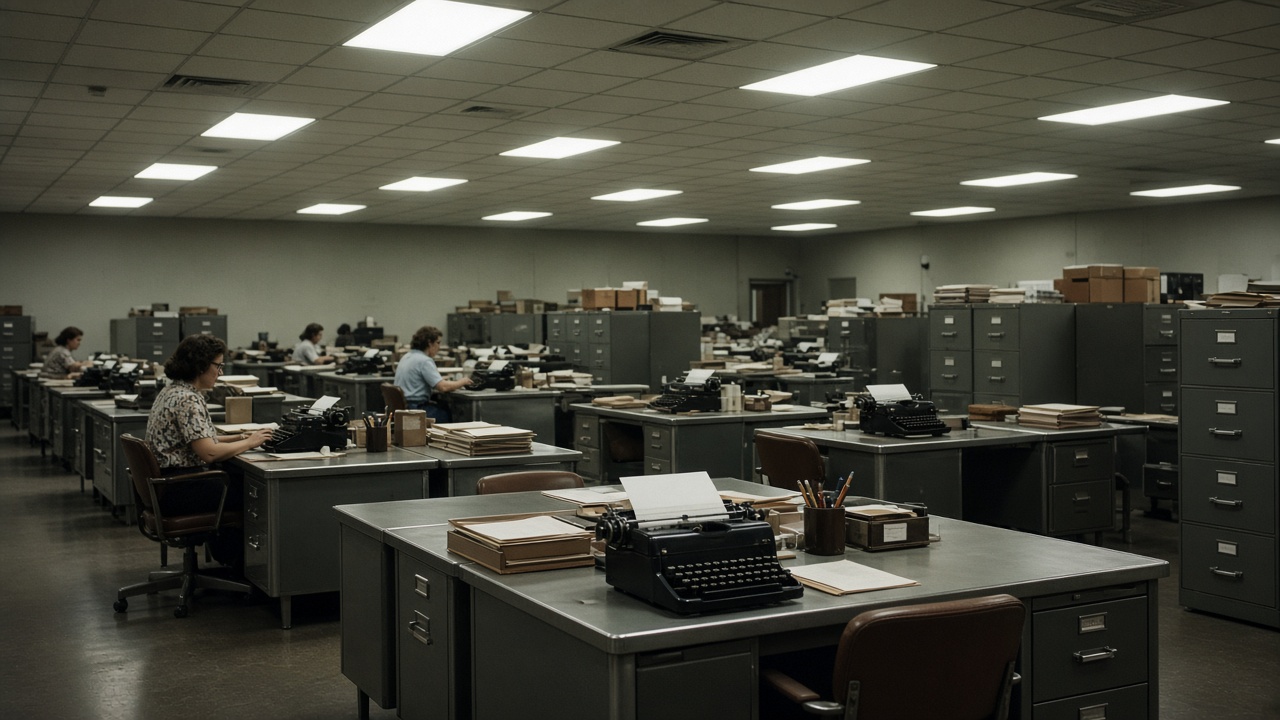
Clerical and managerial jobs grew with corporations, typewriters, telephones, then PCs and cubicles. Knowledge work became the aspiration career for millions—commutes, meetings, and career ladders included.
Office era: desks, files, and the corporate day.
Typewriters and carbon copies invent modern paperwork.
Computers and email accelerate information jobs.
India’s IT/BPO boom exports office work globally.
Technology Used
Typewriters → PCs: Document production.
PBX & email: Coordination at scale.
ERP & spreadsheets: Corporate control systems.
Features
Salaried careers: Benefits and ladders (for some).
Commuter cities: CBD towers and suburban sprawl.
Presenteeism: Being seen at the desk often mattered.
Anywhere Desk1990s - Present
Remote Work
Broadband, laptops, and collaboration apps made “work from home” real for knowledge workers. COVID-19 forced a mass experiment; hybrid policies now negotiate trust, productivity, and who still must show up in person.
Remote era: the living room as workplace.
Early telework and outsourcing foreshadow full remote.
2020 lockdowns normalise Zoom-era collaboration.
Hybrid returns: some offices refill, many stay flexible.
Technology Used
Video & chat: Teams, Meet, Slack-style tools.
Cloud docs: Real-time co-editing.
VPN & security: Access without the office LAN.
Features
Location flexibility: Talent beyond metro cores.
Blurred hours: Always-on risk.
Uneven access: Not all jobs can go remote.
Task by Task2010s - Present
Gig Economy
Platforms match riders, drivers, freelancers, and clients in minutes. Flexibility is the pitch; income volatility and thin benefits are the critique. India’s delivery and cab apps made “gig” a mainstream livelihood debate.
Gig era: apps sell tasks, not always careers.
Ride-hailing and delivery scale urban platform labour.
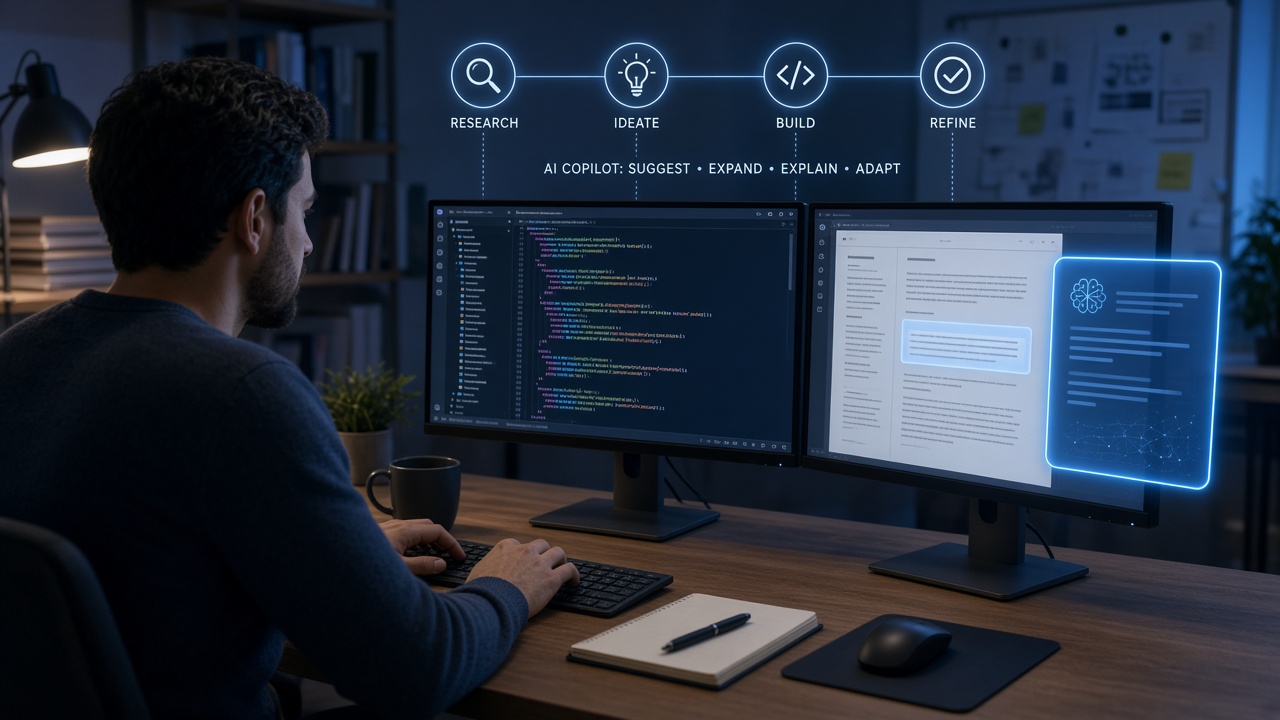
Large language models and coding assistants draft, summarise, and suggest beside humans. The near-term story is augmentation and task remix—not empty offices overnight—while some routine cognitive roles face rapid pressure.
AI era: software that works with you, not only for you.
Chat and code copilots enter everyday professional tools.
Firms rewrite job descriptions around human+AI workflows.
Education and reskilling become continuous, not one-and-done.
Technology Used
LLMs & plugins: Drafting and retrieval.
IDE assistants: Code completion and review.
Enterprise governance: Data leak and hallucination controls.
Features
Speed: First drafts in seconds.
Skill shift: Prompting, verification, taste matter more.
Inequality risk: Gains may concentrate among skilled users.
Income Floor2010s - Future
Universal Basic Income Debates
If automation and platforms thin traditional jobs, should everyone get unconditional cash? Pilots and arguments swirl worldwide. India already runs large cash-transfer and welfare programmes—UBI is the stronger, more universal cousin of that debate.
UBI era: cash, dignity, and the meaning of work.
Pilots test effects on work, health, and entrepreneurship.
Critics worry about cost, inflation, and labour supply.
Supporters see resilience against gig precarity and AI shocks.
Technology Used
Digital payments: Direct benefit transfers at scale.
ID & registries: Targeting vs universality trade-offs.
Evidence platforms: RCTs and administrative data.
Features
Unconditional cash: Fewer strings than classic welfare.
Fiscal debate: Tax and priority fights.
Culture question: What should “earning a living” mean?
Future of Work Summary
Year / Era
Milestone
Why it matters
1760s–mid 1900s
Industrial labor
Factories define the modern job.
late 1800s–2010s
Office work
Knowledge careers and commute culture.
1990s–
Remote work
Place uncouples from many tasks.
2010s–
Gig economy
Platforms sell tasks, not always careers.
2020s–
AI copilots
Software augments cognitive work.
2010s–future
UBI debates
Income floors vs job-centred security.
Key Historical Events
Event
Year
Significance
Industrial Revolution spreads
1760s–
Wage factory labour becomes central.
Office & clerical boom
late 1800s–
White-collar middle classes grow.
PC / internet workplace
1980s–90s
Digital tools reshape office tasks.
Platform gig apps scale
2010s
On-demand labour goes mainstream.
COVID remote surge
2020
Mass work-from-home experiment.
Generative AI copilots
2022–
Everyday drafting/coding assistance.
UBI pilots & debates
2010s–
Cash floors tested as policy ideas.
Gig social-security rules
ongoing
Platform worker rights evolve.
Work Models at a Glance
Model
Strength
Limit
Industrial / factory
Scale production
Rigid place & shifts
Office employment
Careers & benefits (often)
Commute & hierarchy
Remote / hybrid
Flexibility
Not for all roles
Gig / platform
Easy entry
Income & benefits risk
AI-augmented
Speed & leverage
Skill & displacement gaps
UBI / transfers
Income floor idea
Cost & politics
Then vs Now
Factory clock to laptop calendar—and AI in the sidebar.
Metric
Then
Now / next
Place
Plant or office
+ home, café, anywhere
Contract
Wage / salary job
+ gigs, contracts, hybrid
Tools
Machines, typewriters
Cloud, apps, AI copilots
Security
Unions / employer
Platform rules + policy debates
Big question
Hours & safety
Displacement & income floors
Future Predictions
Near term: Hybrid sticks for knowledge work; frontline stays place-bound.
AI: Copilots become default in office software; verification skills rise.
Gig: More social-security experiments for platform workers.
UBI: Remains contested; targeted cash transfers expand first in many places.
India spotlight
Future of Work in India
India mixes factory and informal labour with a huge IT services export engine, booming delivery gigs, and remote freelancing. Policy now wrestles with skilling, platform worker codes, and whether cash transfers can soften shocks from automation.
India spotlight: IT desks, gig streets, and skill missions.
Mills & plants
Industrial & informal
Factories and vast informal work remain core livelihoods.
1990s–
IT / BPO offices
India becomes a global hub for outsourced knowledge work.
2010s
Platform gigs
Ride-hailing and delivery redefine urban youth work.
Jump to any other future timeline on WorldTimelineHub.
Disclaimer: This content is AI-generated for educational purposes and may contain errors or outdated details. For correct and authoritative information, please refer to official and reliable sources such as government publications, manufacturers, museums, and academic references.