From bead frames and Pascal’s geared dials to office adding machines, pocket chips, graphing screens, and the calculator app on every phone — arithmetic left the desk and entered the backpack.
Same gadgets spine pattern as the watch page, with a keypad hero, cyan-blue chips, and calculator-specific chapters.
Abacus → AppsPocket BoomScientific & Graphing
Why calculators matter
A calculator turns arithmetic into a tool you can press, not just a skill you must memorise under pressure. That shift sped up accounting, engineering homework, shopkeeping, and exam halls—and today lives as an icon on every smartphone.
Four key milestones: counting frames, geared machines, the pocket silicon boom, and software that plots and solves on screens.
1642
Pascaline era
1887
Comptometer
1970s
Pocket boom
Now
Apps everywhere
Calculator evolution: from abacus beads and geared machines to pocket chips, graphing screens, and phone apps.
Abacus era: bead frames made place value tangible long before electronic calculators.
Counting framesto 1600s
Abacus and counting boards
Merchants and students moved beads to add, subtract, and multiply. Variants from East Asia to Europe made place value tangible — a human-powered calculator you could hear click.
Soroban and suanpan styles refine bead layouts.
Counting boards and jetons support European commerce.
Mental abacus training continues in many schools today.
Mechanical era: Pascaline-style geared dials proved arithmetic could be automated.
Geared arithmetic1640s – 1890s
Pascaline to stepped reckoner
Blaise Pascal’s Pascaline (1640s) added with dials; Leibniz and later makers pursued multiplication. These machines were rare, expensive, and proof that calculation could be automated.
19th-century inventors refine carry mechanisms and reliability.
Technology
Toothed wheels and carry levers
Hand-cranked registers
Precision brass and later steel parts
Office era: Comptometers and adding machines brought industrial-speed bookkeeping.
Office workhorses1890s – 1950s
Comptometers and adding machines
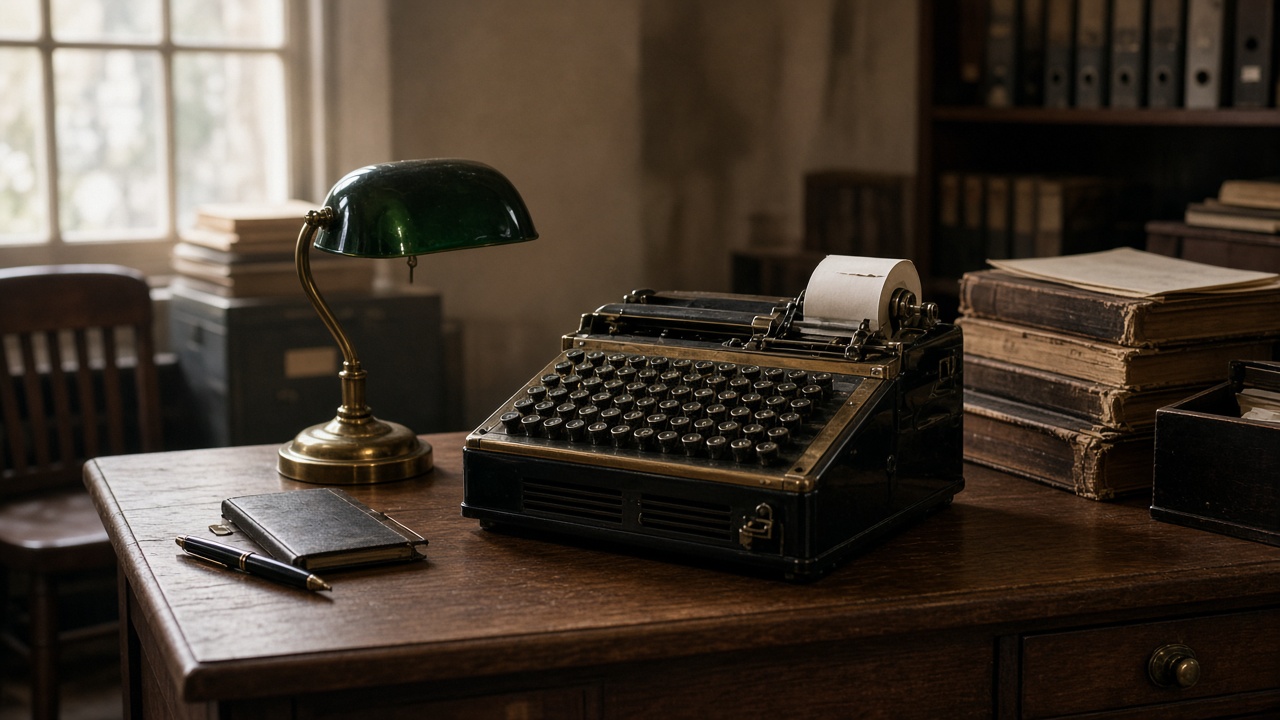
Key-driven machines like the Comptometer (1887 onward) and printing adding machines filled banks, shops, and government desks. Operators trained for speed contests; paper rolls recorded totals.
Mechanical keyboards with columns of digits
Electric motors appear on later models
Slide rules still dominate engineering estimates
Electronic era: tubes and transistors replaced gears with silent desktop totals.
Silent electronics1950s – 1969
Electronic desktop calculators
Vacuum-tube and then transistor desktops (including early ANITA models) calculate without gears. They are still large and costly — status tools for labs and offices before chips shrink them.
Nixie / early digital displays show results
Transistors cut size and heat versus tubes
Price still limits home ownership
Pocket boom: affordable chips put four-function and scientific calculators in schoolbags.
Silicon for everyone1970 – 1989
Pocket calculator boom
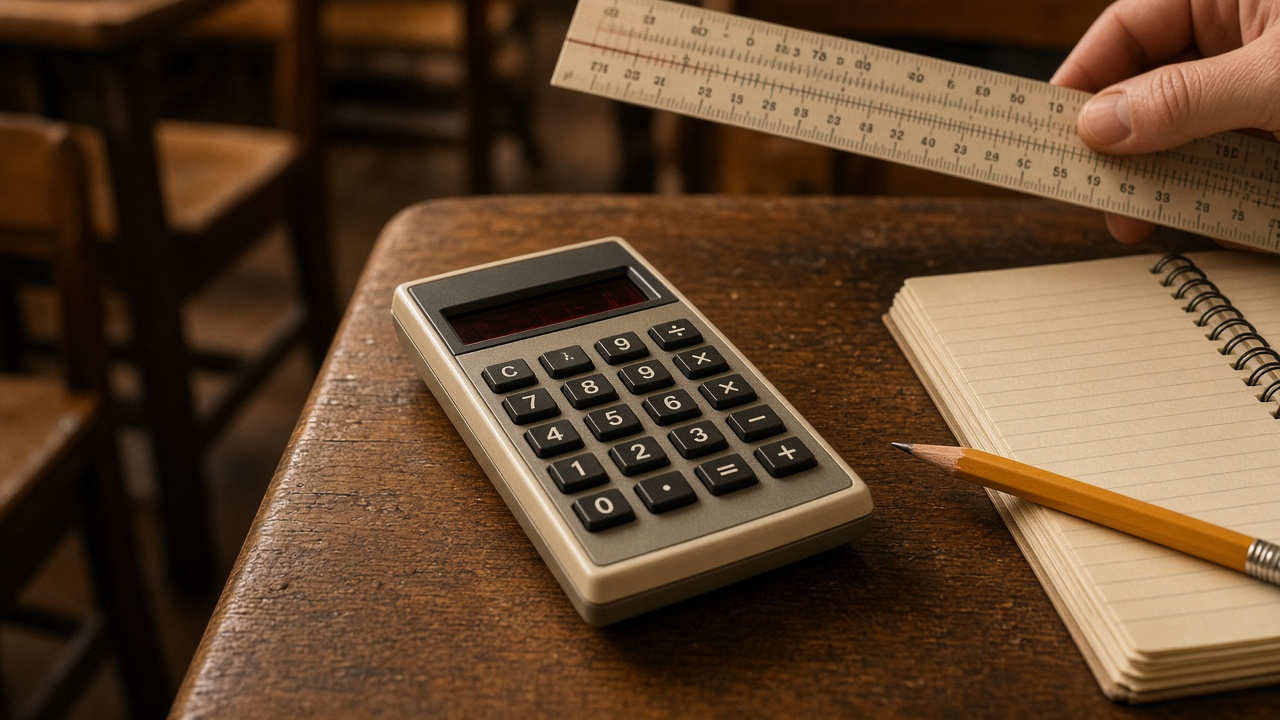
LED and LCD handhelds from Texas Instruments, Casio, Sharp, HP, and others flood schools and shops. Slide rules fade; four-function and scientific models become exam companions (where rules allow).
Integrated circuits slash cost and size
Scientific keys: sin, cos, log, exp
HP popularises RPN on some professional models
Graphing and apps era: plots, CAS, and phone calculators bring maths onto every screen.
Screens & software1990 – Present
Graphing, CAS, and phone apps
Graphing calculators plot functions for classrooms; computer algebra systems solve symbolically. Phones and PCs ship free calculator apps, while exam boards still specify which physical models are allowed.
TI / Casio graphing lines dominate many curricula
Solar and dual-power school calculators
Apps + AI solvers raise new academic-integrity questions
Calculator timeline summary
Era
Milestone
Why it matters
Ancient–early modern
Abacus & boards
Physical place-value arithmetic
1640s+
Pascaline & gears
Proof that machines can calculate
1890s–1950s
Office key machines
Business math at industrial speed
1950s–60s
Electronic desktops
Silent, faster, still expensive
1970s–80s
Pocket boom
Students and shops get handhelds
1990s–now
Graphing & apps
Plots, CAS, and phone calculators
Calculator types at a glance
Types of calculators today: from abacus and mechanical machines to scientific, graphing, and apps.
Abacus / mental
Beads or visualisation — no electricity, strong place-value training.
Mechanical
Gears and keys; office workhorses before chips.
Four-function
+, −, ×, ÷ for shops, homework, and quick totals.
Scientific
Trig, logs, exponents for school science and engineering.
Graphing / CAS
Plots curves; some solve algebra symbolically.
App / software
Phone, web, and spreadsheet calculators always nearby.
Then vs now
Then (office era)
Heavy desktop adding machines
Trained operators and paper tapes
Slide rules for engineers
Calculation as specialised labour
Now (pocket & app)
Scientific / graphing in school bags
Phone calculator in one tap
Exam rules still gate features
Calculation as everyday utility
India spotlight
Calculators in India
From shop counters and bank desks to board-exam rules and phone apps, calculators reshaped how Indian students and traders do numbers.
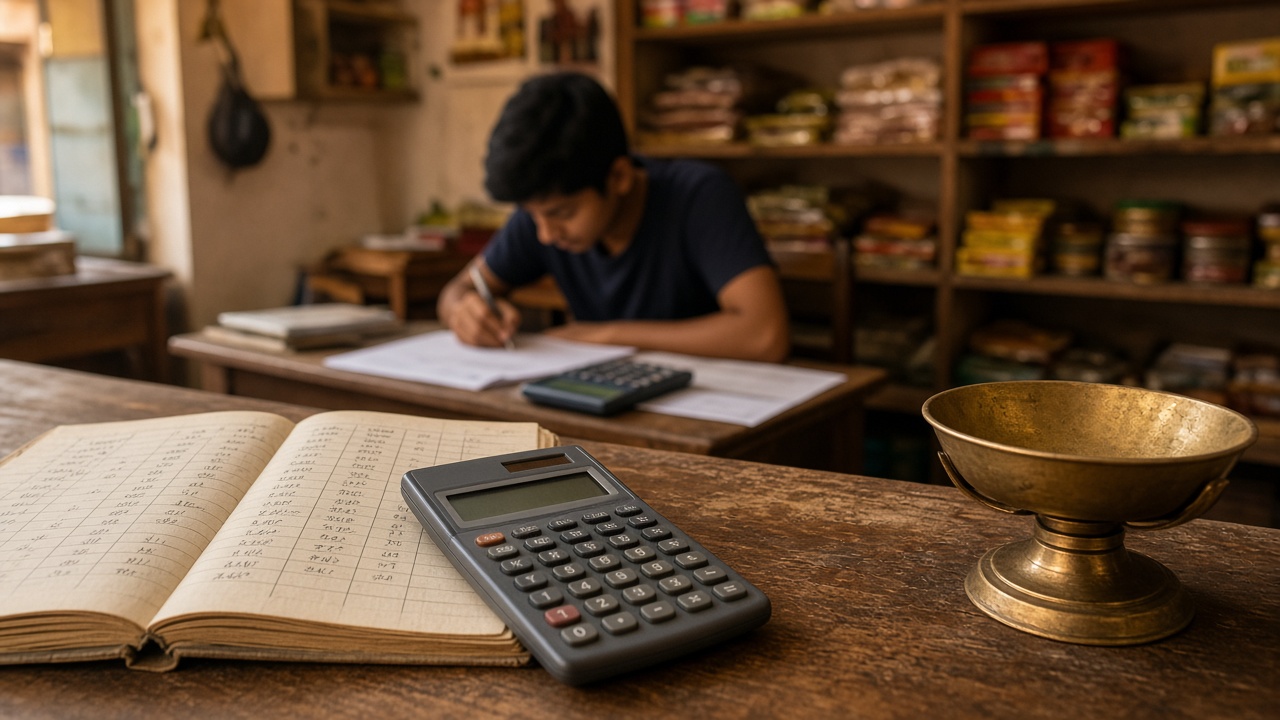
India spotlight: ledgers and mental maths to pocket chips, exam rules, and phone calculator apps.
Pre-1970s
Ledgers & mental maths
Kirana shops and offices rely on ledgers, mental arithmetic, and occasional mechanical adders.
1970s–90s
Pocket arrives
Imported and later local electronic calculators appear in colleges, banks, and coaching centres.
2000s
Exam culture
Scientific models become common for engineering streams; boards publish allowed/banned lists.
2010s+
Phone calculators
Android and iOS apps handle daily sums; dedicated devices remain for timed exams and classrooms.
Key events
Event
Year
Significance
Pascaline
~1642
Early successful mechanical adder
Comptometer patented
1887
Key-driven office calculation boom
Electronic desktops
1960s
Gears give way to electronics
Pocket calculator mass market
1970s
Affordable handhelds for schools
Scientific handhelds mainstream
1970s–80s
Trig/log keys for STEM students
Graphing calculators in curricula
1990s+
Plotting and programming in class
Smartphone calculator apps
2000s–10s
Everyday arithmetic without a dedicated device
Test Your Knowledge
20 questions from this calculator timeline. Open a question to reveal the answer.
Answer: A bead counting frame for arithmetic.
Answer: Blaise Pascal.
Answer: 1640s.
Answer: A key-driven mechanical office adding machine.
Jump to any other gadgets timeline on WorldTimelineHub.
Disclaimer: This content is AI-generated for educational purposes and may contain errors or outdated details. For correct and authoritative information, please refer to official and reliable sources such as government publications, manufacturers, museums, and academic references.