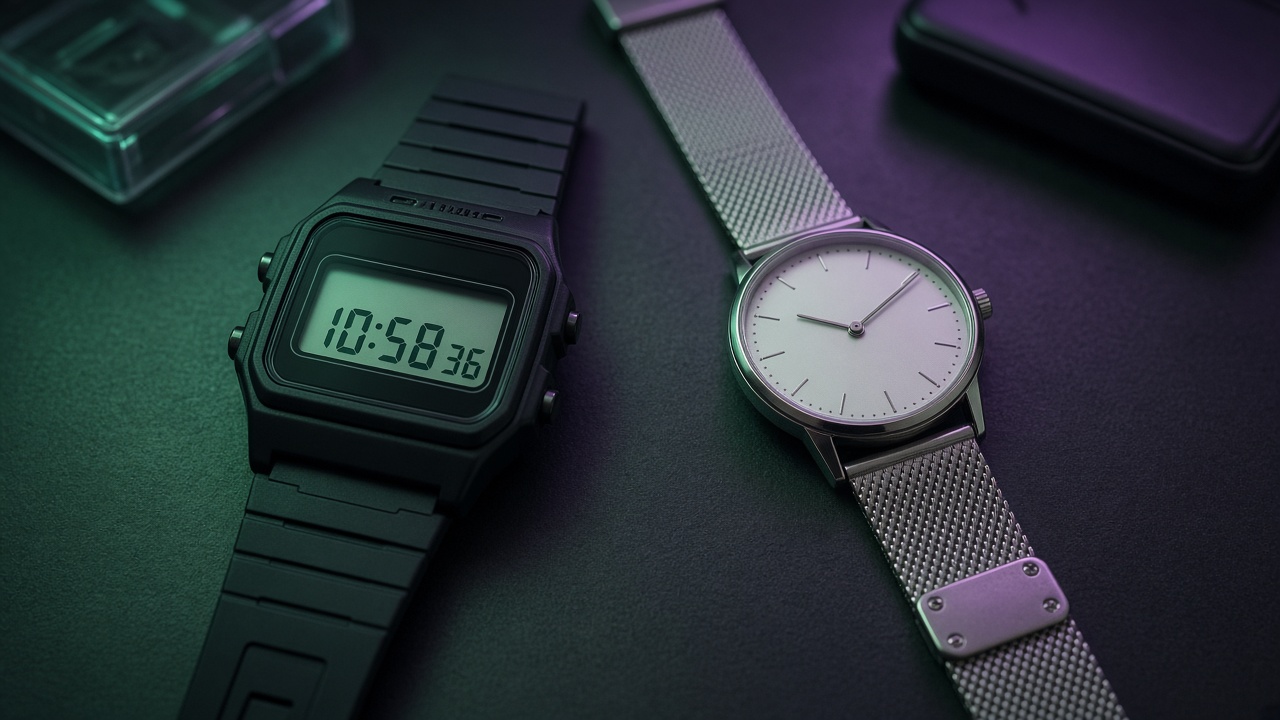
From engraved pocket chronometers and railway timekeepers to automatic rotors, quartz crystals, digital LCDs, and sensor-packed smartwatches — timekeeping moved onto the wrist and into daily life.
This page uses a dial-and-spine layout (not the TV card grid): scroll the era chips, then follow alternating chapters down the brass-teal timeline.
1500s → PresentPocket → WristQuartz → Smart
Why watches matter
A watch is portable time: a machine small enough to carry that still divides the day into reliable minutes. That idea powered navigation, railways, factories, fashion, sports timing, and today’s health sensors on the wrist.
Four hour-marks on the story dial: portable mechanics, industrial precision, the quartz shake-up, and connected wearables.
1675
Balance spring era
1910s
Wristwatch surge
1969
Quartz wristwatch
2015
Apple Watch wave
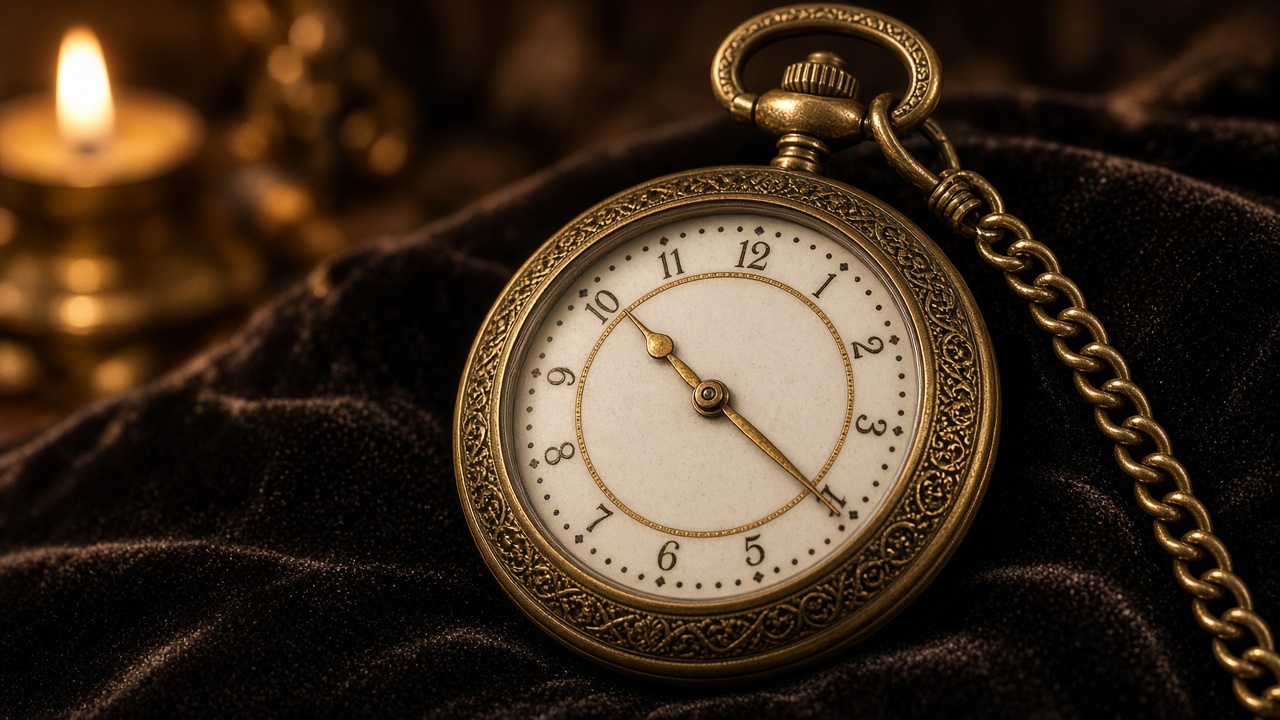
Three eras in one view: pocket brass, mechanical gold, and a connected smartwatch.
Portable time leaves the clock tower for the pocket.
Pocket beginnings1500 – 1850
From clocks to pocket watches
Spring-driven portable clocks shrank into watch forms. The balance spring (often linked to Huygens, 1670s) improved regularity; ornate cases made watches jewellery as much as instruments.
1500s–1600s: Early portable spring clocks appear in Europe.
1700s–1800s: Pocket watches become status objects for merchants and officers.
Technology
Mainspring power and verge / later escapements
Fusee chains on higher-grade pieces
Hand-finished brass movements in precious cases
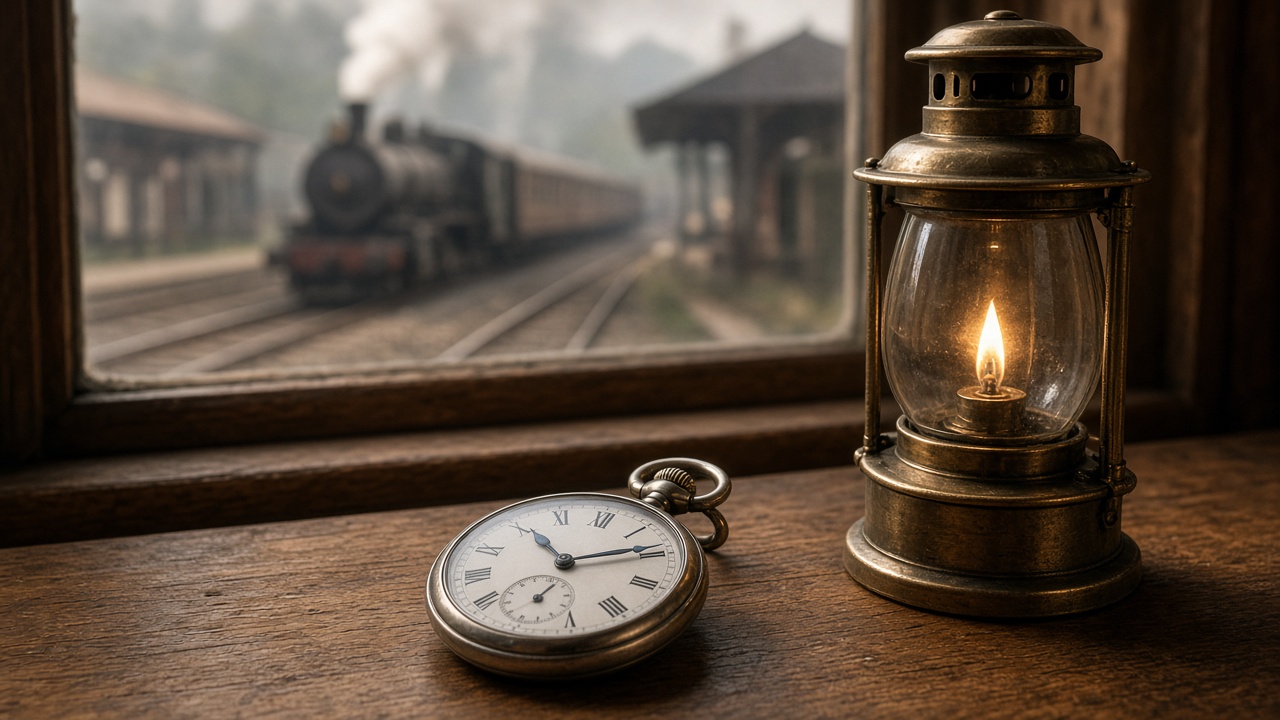
Railways demanded synchronised watches across stations.
Precision industry1850 – 1914
Chronometers, factories, and railway time
Marine chronometers solved longitude at sea; on land, railway companies certified pocket watches so schedules stayed safe. American and Swiss factories scaled interchangeable parts.
Observatory contests push accuracy standards.
Mass production lowers prices for middle-class buyers.
Standard time zones make synchronized watches essential.
Features
Lever escapements dominate quality pocket watches
Railroad-grade dials with clear minute tracks
Jewelled bearings reduce friction and wear
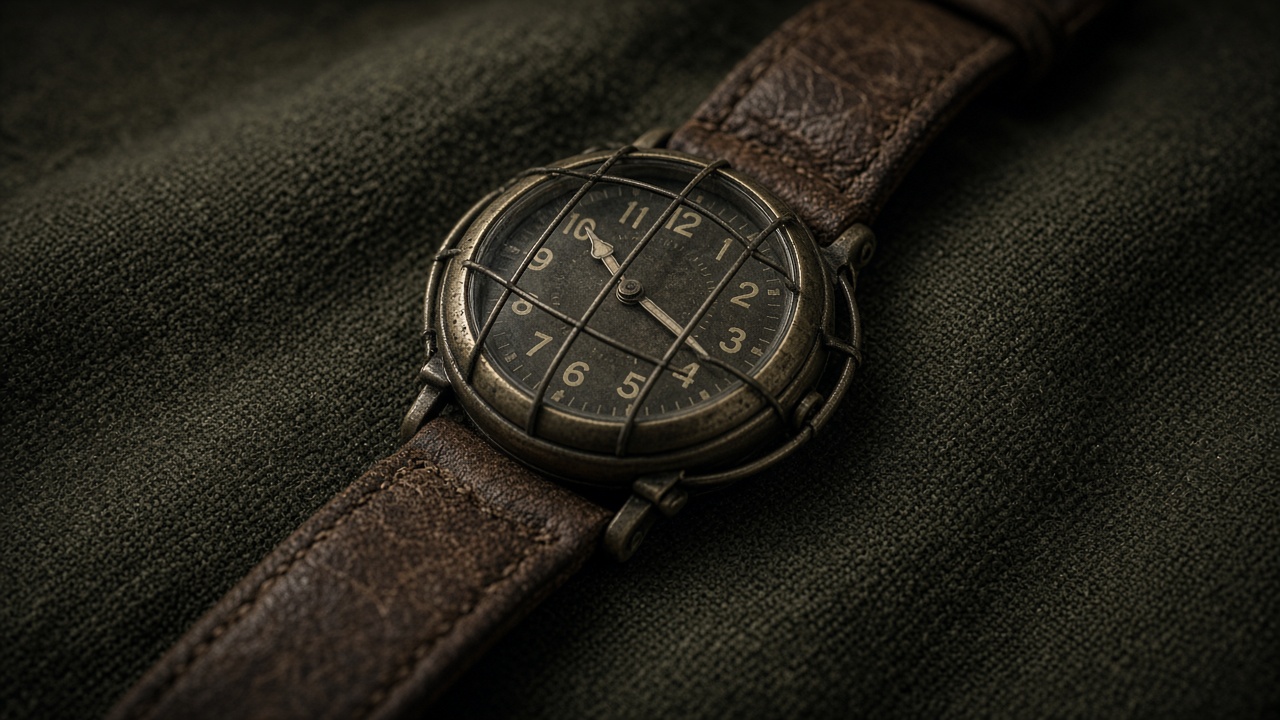
Straps put time on the wrist for pilots, nurses, and trench officers.
Wrist takes over1914 – 1945
Wristwatches in war and work
World War I made wristwatches practical tools. Luminous dials, shatter guards, and pilot watches followed. By mid-century, the pocket watch was fading from daily wear.
Trench watches and wire cages protect crystals.
Aviation and diving create specialist tool watches.
Marketing shifts fashion toward the wrist for men and women.
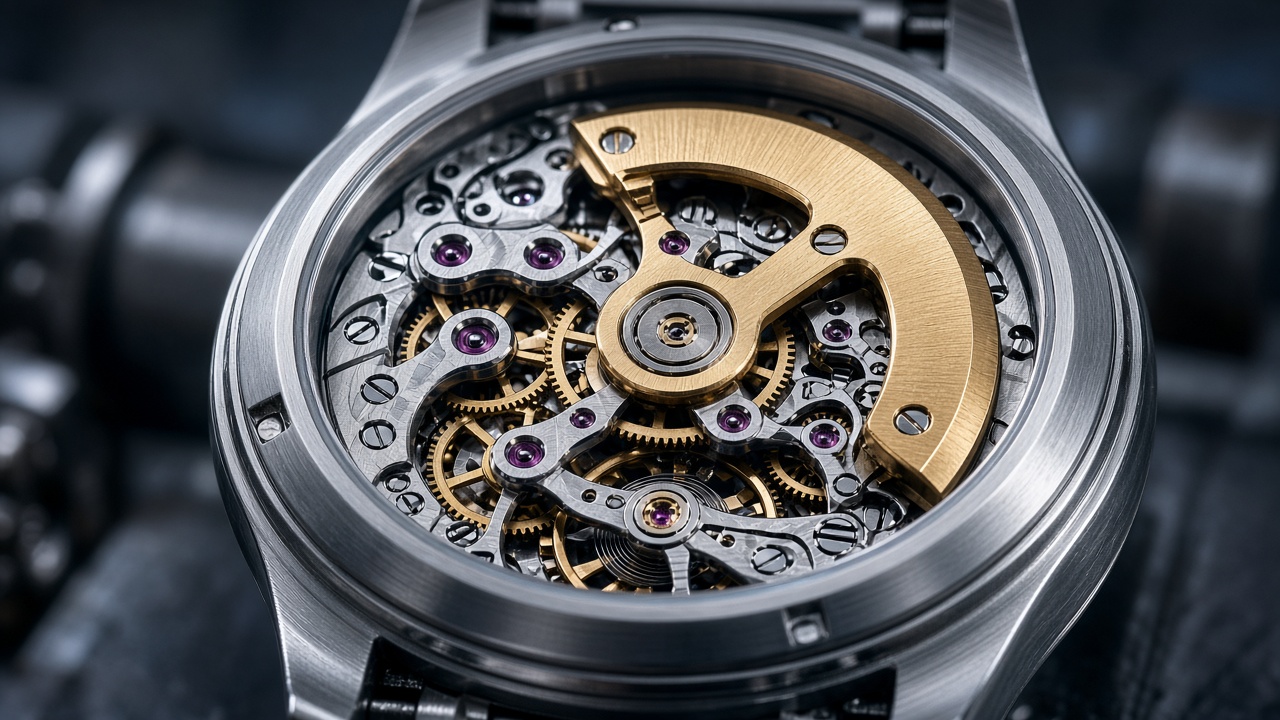
A rotor winds the mainspring as the wrist moves.
Self-winding boom1945 – 1969
Automatic golden age
Self-winding rotors, waterproof cases, and chronograph sports watches define mid-century prestige. Swiss brands lead luxury; Japan builds durable everyday pieces.
Screw-down crowns and Oyster-style cases popularise water resistance.
Date windows and chronographs become common complications.
Quartz crystals and LCDs made exact time cheap and digital.
Crystal accuracy1969 – 1999
Quartz revolution and digital boom
Seiko’s Astron (1969) and later mass quartz movements undercut mechanical prices. LED/LCD digitals, calculator watches, and battery-powered fashion pieces reshaped the industry — the so-called quartz crisis for traditional makers.
Digital modules add alarms, stopwatches, and games.
Swiss industry consolidates; mechanical watches survive as craft and luxury.
Connected wrists: notifications, GPS, and health sensors.
Sensors on wrist2000 – Present
Smartwatches and hybrid futures
Fitness bands matured into full smartwatches with apps, GPS, ECG, and payment chips. Mechanical watches remain cultural luxury; hybrids and solar quartz bridge both worlds.
2010s: fitness trackers popularise continuous step and heart data.
2015+: major platforms push watch OS ecosystems.
Today: privacy, battery life, and medical features shape the next dial.
Watch timeline summary
Quick map of turning points before the movement cards, India spotlight, and quiz.
Era
Milestone
Why it matters
1600s–1700s
Balance spring & pocket forms
Portable time becomes useful outdoors
1800s
Chronometers & railway grades
Navigation and schedules demand accuracy
1914–1945
Wristwatch adoption
Hands-free timing for war and work
1945–1969
Automatic & tool watches
Self-winding convenience and sports prestige
1969–1990s
Quartz & digital
Cheap precision reshapes the industry
2010s–now
Smartwatches
Health sensors and phones on the wrist
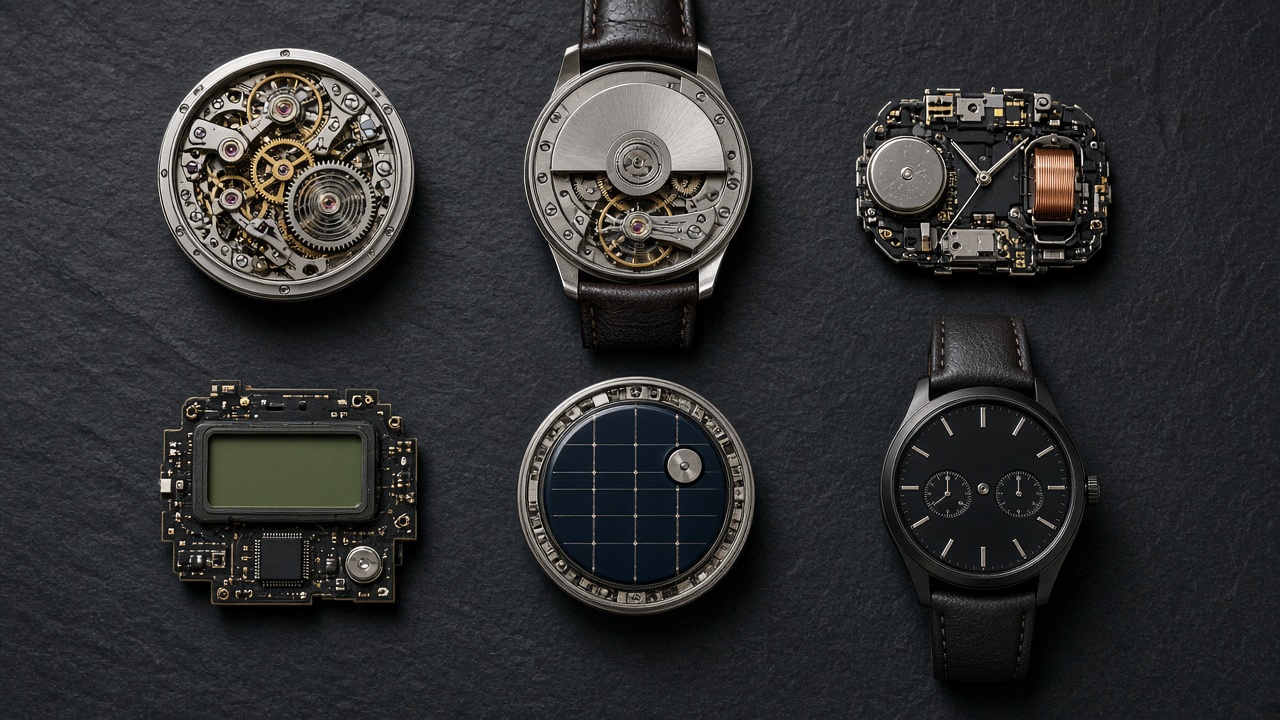
Movement types at a glance
Instead of one long display table (as on the TV page), compare movement families as compact cards.
Manual mechanical
Wind the crown; gears and a balance wheel keep time. Favoured by collectors for craft.
Automatic
Rotor winds the spring while you wear it. Still fully mechanical.
Quartz analog
Battery + crystal stepper motor moves hands with high accuracy.
Digital quartz
LED/LCD modules show numbers, alarms, and timers.
Solar / kinetic
Light or motion recharges a cell — fewer battery swaps.
Smart / hybrid
Processors, radios, and sensors; hybrids keep hands with smart guts.
Then vs now
Side-by-side panels replace a three-column metric table.
Then (pocket era)
Carried in a waistcoat pocket
Hand-wound mechanical movement
Accuracy measured in minutes per day
Status jewellery + railway tool
Now (smart wrist)
Strapped to the wrist all day
Apps, GPS, heart sensors
Network time synced in seconds
Health coach + notification hub
India spotlight
Watches in India
India moved from imported pocket pieces to public-sector manufacturing, fashion quartz, and a booming affordable smartwatch market.
1960s
HMT watches
Hindustan Machine Tools builds a national watch brand — school prizes, first jobs, and wedding gifts often meant an HMT.
1984+
Titan era
Titan popularises stylish quartz watches with nationwide retail and advertising.
2000s
Fashion & Fasttrack
Youth brands, malls, and online stores widen choice beyond one heirloom watch.
2018+
Smartwatch boom
Noise, Fire-Boltt, and global brands ride UPI-era online retail; feature phones’ cousins become health gadgets on Indian wrists.
Key events
Event
Year
Significance
Balance spring era
~1675
Major leap in portable accuracy
Marine chronometer maturity
1700s–1800s
Safe ocean navigation with precise time
Wristwatch wartime adoption
1914–1918
Hands-free timing becomes mainstream
Automatic wristwatches spread
1940s–50s
Self-winding convenience
Seiko Astron quartz
1969
Commercial quartz wristwatch landmark
Digital LCD boom
1970s–80s
Cheap exact readout and gadgets
Apple Watch launch wave
2015
Smartwatch as mass consumer platform
Test Your Knowledge
20 questions from this watch timeline. Open a question to reveal the answer.
Answer: Regularity / accuracy of portable timepieces.
Answer: Synchronised schedules and safety across stations.
Answer: During and after World War I.
Answer: A high-precision, often certified, timekeeper.
Answer: A rotor moves with the wrist to wind the mainspring.
Answer: 1969.
Answer: Cheap accurate quartz disrupting mechanical watchmaking.
Answer: HMT.
Answer: Titan.
Answer: A battery (or rechargeable cell) plus quartz crystal.
Answer: Digits / segments on a liquid-crystal screen.
Answer: Positional timing errors in mechanical watches.
Answer: Durability, legibility, water resistance, or timing functions.
Answer: Sensors, apps, and wireless connectivity.
Answer: Traditional hands with smart electronics.
Answer: Reading time in darkness without a light.
Answer: Longitude / navigation at sea.
Answer: Battery life / privacy of health data (either acceptable).
Jump to any other gadgets timeline on WorldTimelineHub.
Disclaimer: This content is AI-generated for educational purposes and may contain errors or outdated details. For correct and authoritative information, please refer to official and reliable sources such as government publications, manufacturers, museums, and academic references.