From letters traced in sand and slates with slate pencils to chalk pieces on blackboards, fountain and ballpoint pens,
overhead projectors, marker boards, and interactive digital boards — classroom tools have transformed how teachers teach and students learn.
This timeline follows the tools used in Indian classrooms — village slates, chalk and duster, ink pens and pencils,
projectors and TV lessons, whiteboards and markers, smart classes, and the VR and AI tools of tomorrow.
Before 1800 → PresentSlate → Chalkboard → Smart BoardWrite · Show · Interact
Why Classroom Tools Matter
Every classroom tool answers two questions: how does a student practise, and how does a teacher show the whole class?
Slates and pens solved the first; blackboards, projectors, and digital boards solved the second. Each new tool made lessons
clearer, faster, or more interactive — and India’s classrooms today often use several generations of tools side by side.
Big picture
Classroom tools in one view
Writing tools moved from sand and slates to pens and tablets, while display tools moved from blackboards to projectors and
interactive screens. Related timelines:
printing & publishing,
computers,
television,
AI.
c. 1801
Wall blackboards spread
1938
Ballpoint pen patent
1987
Operation Blackboard
1991
Interactive whiteboard
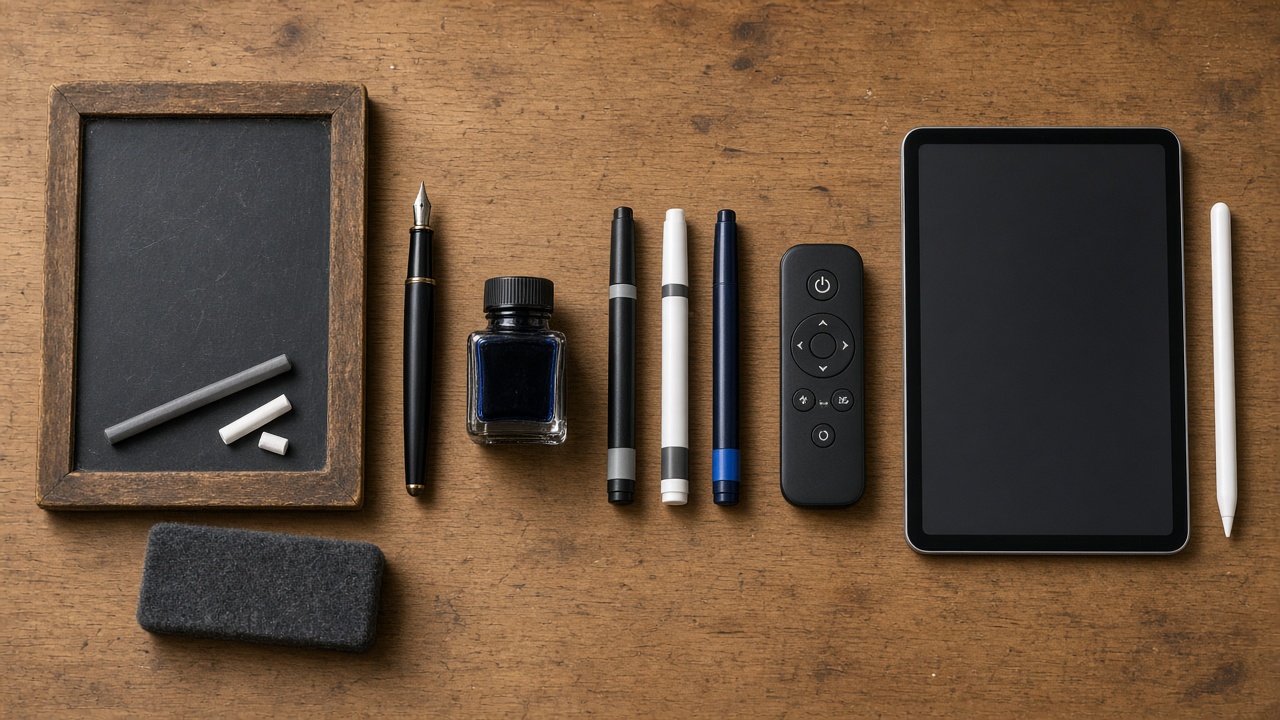
From slate and chalk to markers, projectors, and tablets — classroom tools across the generations.
🪨 First Writing SurfacesBefore 1800
Sand, Boards & Slates
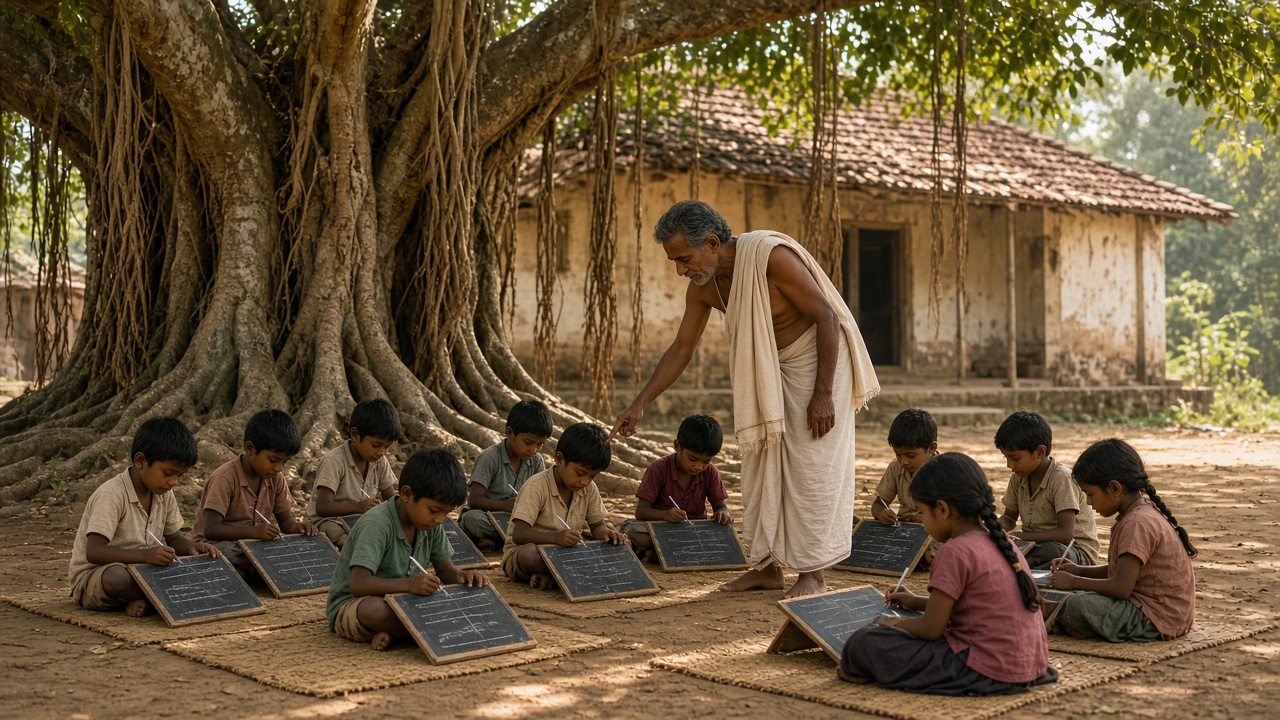
Children in Indian village schools and pathshalas first traced letters in sand or on wooden boards (patti / takhti). Slates with slate pencils later became the classic reusable practice surface for generations of young learners.
Slates and slate pencils: cheap, reusable, and wiped clean for the next lesson.
Sand writing: Letters and numbers traced with a finger on the ground or a sand tray.
Wooden boards: Takhti / patti boards coated with clay or chalk, written on with reed pens.
Slates: Thin framed slate stone written on with a softer slate pencil.
Memory learning: Recitation and repetition supported limited writing materials.
Technology Used
Natural slate: Layered rock split into thin, smooth writing sheets.
Slate pencil: A soft stick of slate or soapstone that leaves a grey mark.
Reed pens & soot ink: Used on wooden boards and palm leaves.
Features
Reusable: Wiped with a cloth or water, no paper needed.
Low cost: Affordable for poor families and village schools.
No permanent record: Work disappeared once erased.
⬛ Chalk & Duster1800 – 1960
Chalk & Blackboards
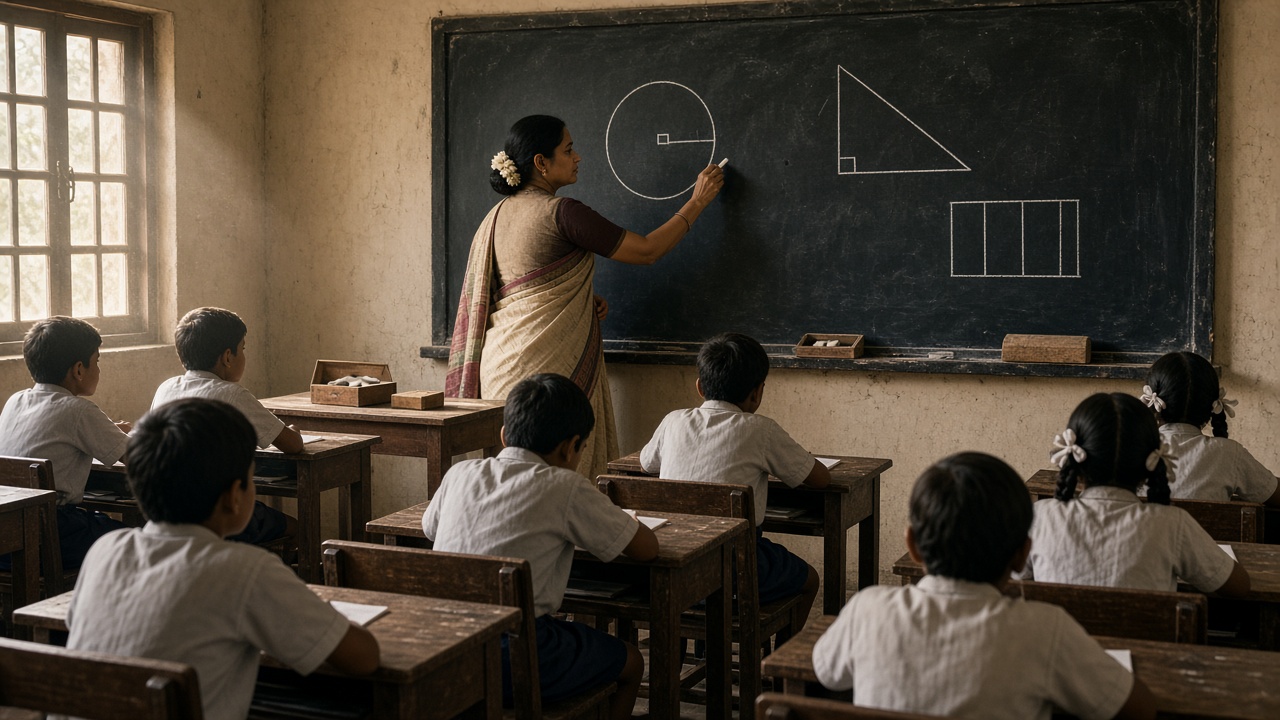
The large wall blackboard let one teacher show a lesson to the whole class. With a chalk piece and a duster, the blackboard became the heart of classrooms across India and the world for more than a century.
Chalk, duster, and blackboard — the classic Indian classroom for generations.
c. 1801: Educator James Pillans in Edinburgh is often credited with popularising the large classroom blackboard.
1800s: Blackboards spread through mission, government, and princely-state schools in India.
Early 1900s: Factory-made chalk sticks and felt dusters become standard supplies.
1960s: Green chalkboards (enamel-coated) appear as easier-on-the-eyes alternatives.
Technology Used
Painted boards: Wood or slate painted matt black for contrast.
Chalk sticks: Calcium carbonate or gypsum pressed into sticks, white and coloured.
Duster: Wooden block with felt to wipe chalk away.
Features
Whole-class teaching: Everyone sees the same diagram at once.
Very cheap to run: Chalk costs little and boards last decades.
Chalk dust: Messy and can trouble people with allergies.
✒️ Writing Instruments1850 – 1980
Ink, Pens & Pencils
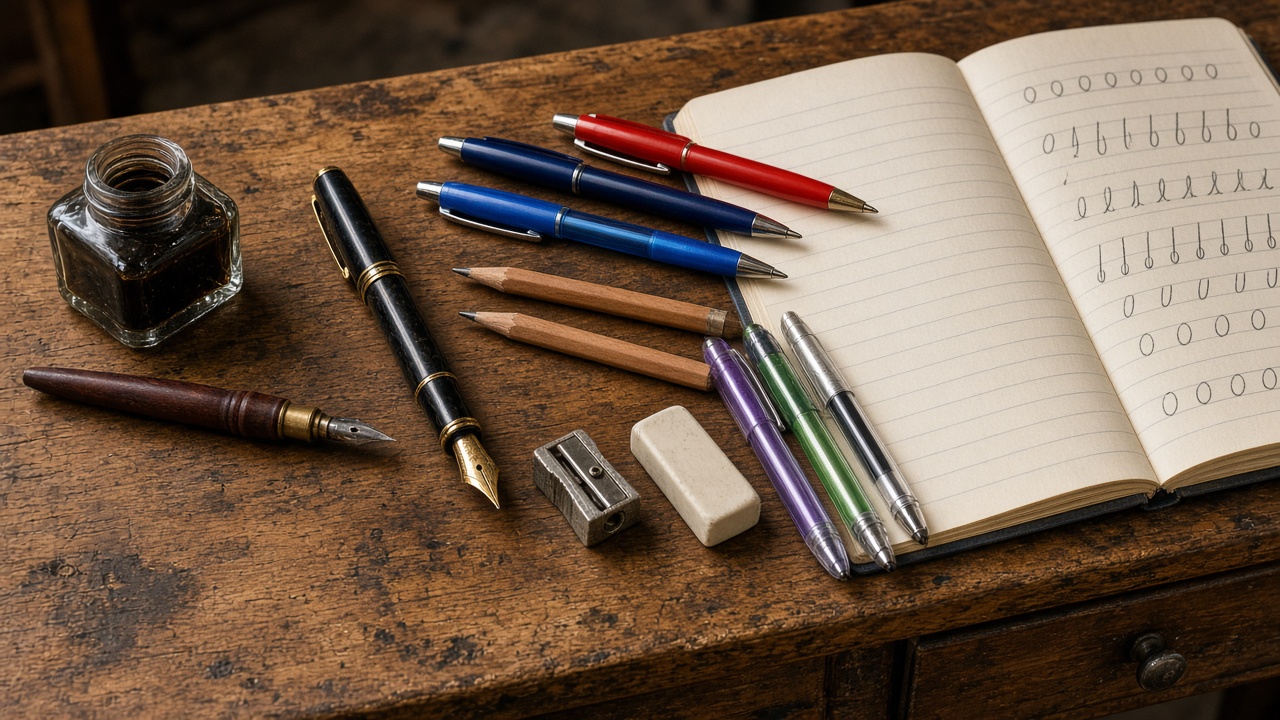
Students moved from slates to paper notebooks — first with nib pens and inkpots, then fountain pens, pencils, and finally cheap ballpoint pens. Indian pen and pencil makers helped put writing tools in every school bag.
Nib pens, fountain pens, pencils, and ballpoints — how students learned to write on paper.
1800s: Steel-nib dip pens and desk inkwells replace quill pens in schools.
1884: Lewis Waterman patents an improved fountain pen; 1932: Ratnam Pen Works in Rajahmundry makes Indian fountain pens.
1938: László Bíró patents the ballpoint pen; cheap ballpoints spread from the 1950s.
1931 / 1958: Indian stationery brands such as Camlin and Hindustan Pencils (Nataraj) grow.
Technology Used
Fountain pen: Internal ink reservoir feeds a metal nib.
Graphite pencil: Graphite and clay core inside a wooden case.
Ballpoint: A tiny rolling ball spreads quick-drying oil-based ink.
Features
Permanent notes: Students keep notebooks for revision.
Handwriting culture: Cursive practice and neat copybooks.
Affordable writing: Pencils and ballpoints cost very little.
📽️ Show & Tell1950 – 1995
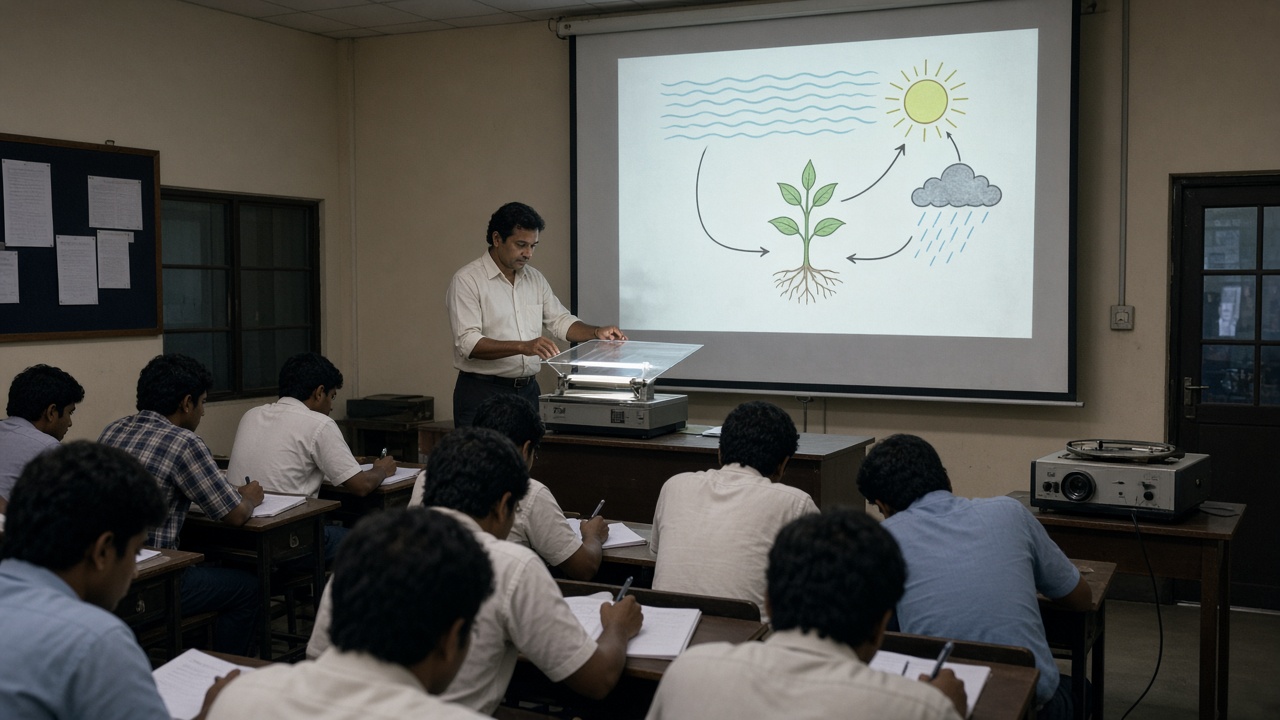
Projectors & Audio-Visual Aids
Overhead projectors, slide and filmstrip projectors, radio lessons, and educational TV brought images and sound into classrooms. In India, satellite TV experiments and national schemes expanded audio-visual learning.
Overhead and slide projectors put large, clear diagrams in front of the whole class.
1950s–60s: Overhead projectors (OHP) with transparency sheets spread in colleges and schools.
1960s–80s: Slide and filmstrip projectors show photos, maps, and science visuals.
1975–76: India’s SITE satellite TV experiment beams lessons to about 2,400 villages.
1987: Operation Blackboard supplies primary schools with blackboards and teaching materials.
Technology Used
Overhead projector: Lamp and mirror project transparent sheets onto a screen.
Slide projector: Shows 35 mm photo slides one by one.
Educational TV & radio: Broadcast lessons for schools and villages.
Features
Visual learning: Photos and diagrams bigger than any textbook page.
Reusable slides: Teachers prepare transparencies once and reuse them.
Needs power: Bulbs, electricity, and dark rooms were practical limits.
🖊️ Dust-Free Boards1990 – 2010
Whiteboards & Markers
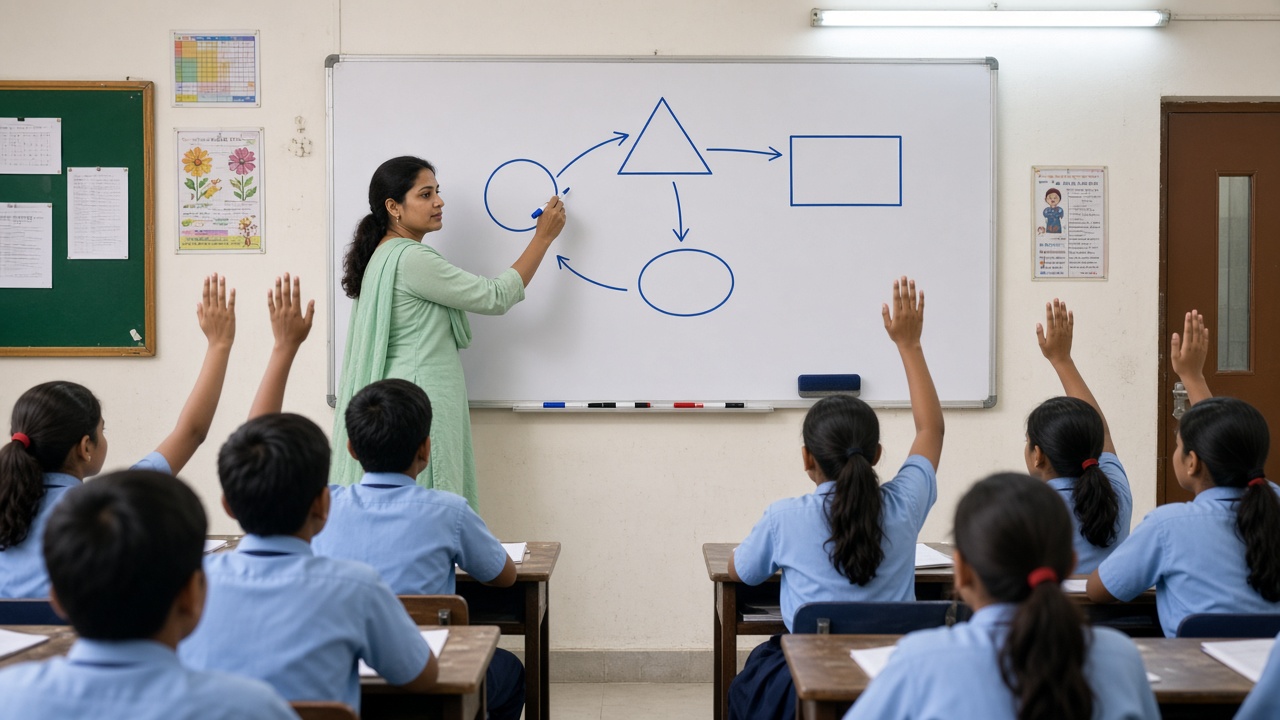
White marker boards and dry-erase markers replaced chalk in many schools, colleges, and coaching centres. LCD projectors and presentation software joined them, especially near computer labs.
Marker boards: bright colours, no chalk dust, and quick wipe-clean erasing.
1975: The dry-erase marker is developed, making whiteboards practical.
1987 / 1990s: Presentation software and LCD projectors reach colleges and offices.
1990s–2000s: Whiteboards spread in private schools, coaching centres, and computer labs.
2004: India’s ICT@Schools scheme supports computer labs in government schools.
Technology Used
Melamine / enamel boards: Smooth, non-porous white surfaces.
Dry-erase ink: Pigment with a release agent that wipes off easily.
LCD projector: Projects a computer screen directly onto a wall or board.
Features
No chalk dust: Cleaner rooms and safer for computers.
Colour coding: Multiple marker colours make notes clearer.
Running cost: Markers dry out and cost more than chalk.
🖥️ Touch & Interact2005 – Present
Smart & Digital Boards
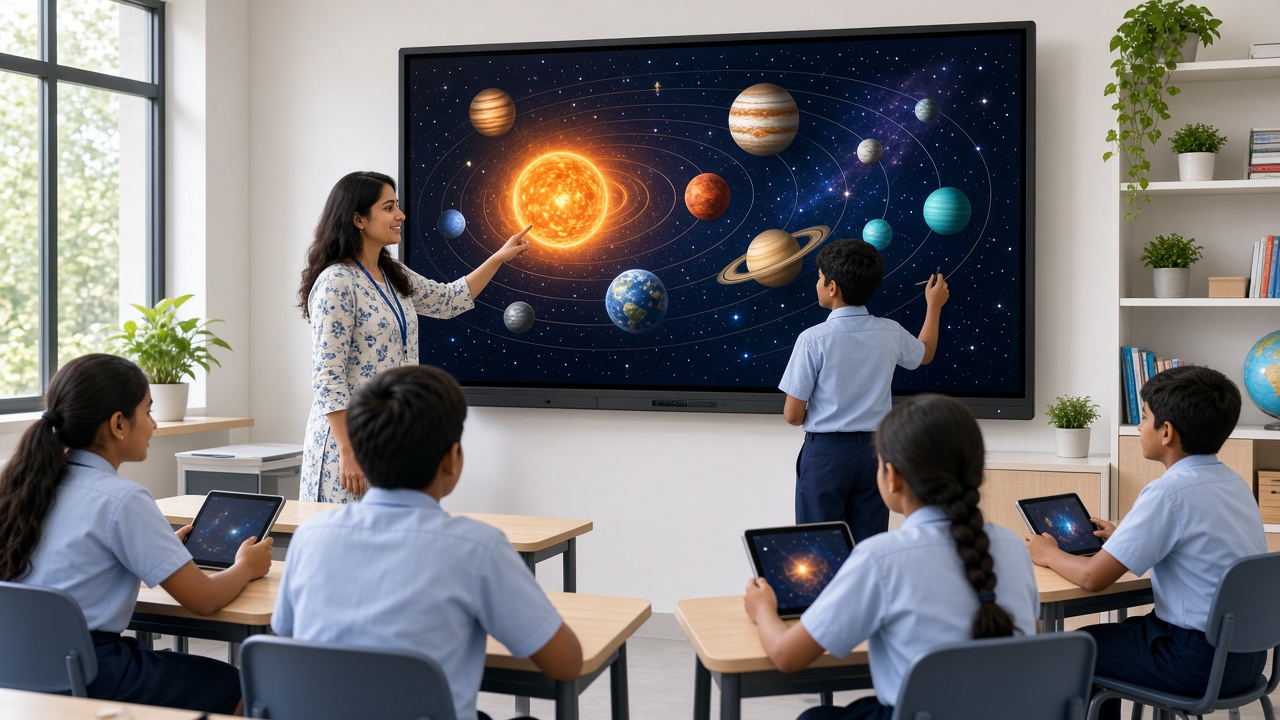
Interactive whiteboards and touch flat panels let teachers write, play videos, run simulations, and save lessons. Smart classes, tablets, and document cameras now sit alongside chalkboards in many Indian schools.
Interactive digital boards bring 3D models, videos, and touch activities into the classroom.
1991: The first commercial interactive whiteboard (SMART Board) is introduced.
2000s: Smart-class programmes bring digital content and projectors to Indian schools.
2010s: Interactive flat panels, visualisers, and tablets replace many projector setups.
2018–2020s: Samagra Shiksha funds smart classrooms; VR labs and AI tools begin to appear.
Technology Used
Touch flat panels: Large LED screens with multi-touch and stylus input.
Document camera: Shows books and objects live on screen.
Cloud & AI software: Save lessons, share notes, and personalise practice.
Features
Interactive lessons: Students drag, draw, and solve on the board.
Multimedia: Videos, animations, and simulations in one place.
Cost & training: Hardware, power, and teacher training are key needs.
Classroom Tools Compared
Each tool solved a problem of its time. Many Indian classrooms still combine several of them depending on budget, power supply, and subject.
Tool
Main use
Strength
Limitation
Slate & slate pencil
Student writing practice
Reusable, very cheap
No permanent record
Chalk & blackboard
Whole-class teaching
Low cost, no power needed
Chalk dust, fixed size
Pens & pencils
Notes and exams on paper
Permanent, portable
Paper and ink costs
Overhead projector
Showing prepared diagrams
Large, clear visuals
Needs power, bulbs, dark room
Whiteboard & markers
Colourful board work
Dust-free, bright colours
Markers dry out, glare
LCD projector
Slides and videos
Shows any computer content
Needs laptop and power
Smart / digital board
Interactive multimedia lessons
Touch, save, share lessons
High cost, training needed
Tablets & VR
Personal and immersive learning
Self-paced, 3D experiences
Devices, internet, screen time
India Spotlight: Classroom Tools Milestones
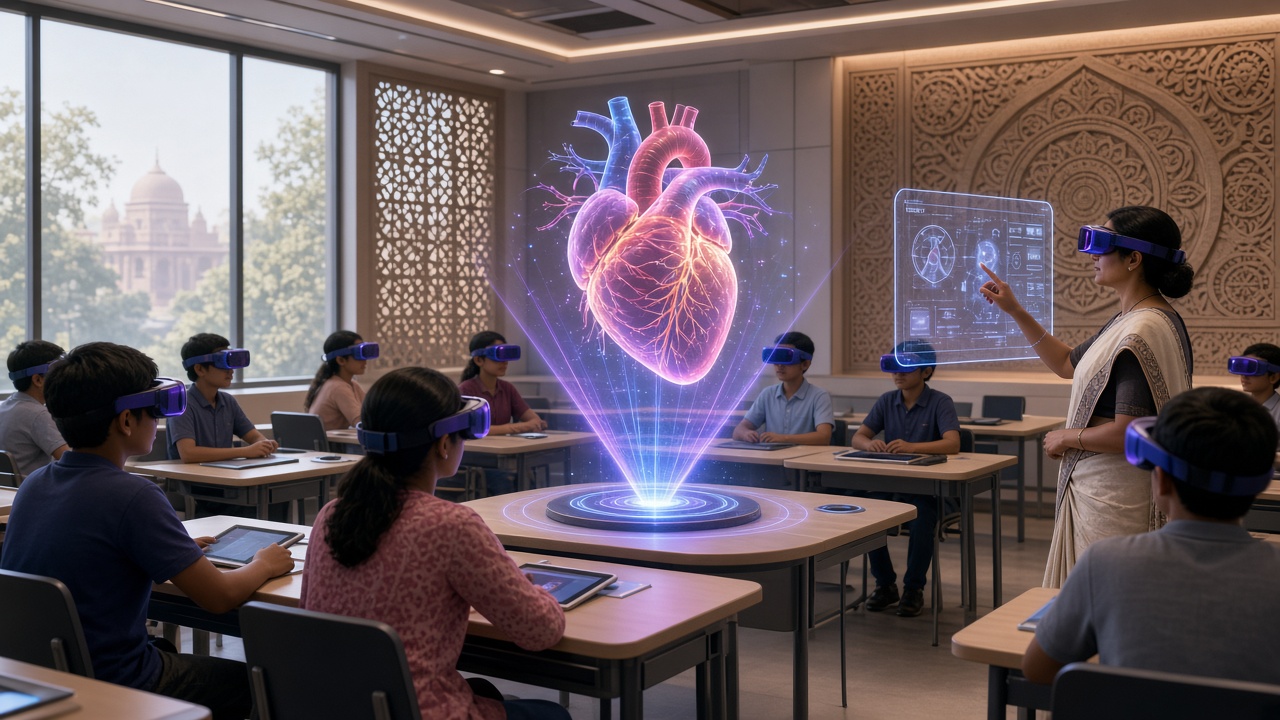
Next-generation classrooms may use VR headsets, holograms, and AI-driven displays.
Year / Era
Milestone
Significance
Pre-1800
Sand writing, takhti boards, and slates in pathshalas
Low-cost literacy in village schools.
1800s
Blackboards enter mission and government schools
Whole-class teaching becomes standard.
1932
Ratnam Pen Works makes Indian fountain pens
Swadeshi writing instruments for students.
1975–76
SITE satellite TV lessons in villages
Early mass audio-visual education.
1987
Operation Blackboard
Basic teaching aids for primary schools nationwide.
2004
ICT@Schools scheme
Computer labs and projectors in government schools.
2018
Samagra Shiksha smart classrooms
Digital boards funded in public schools.
2020s
Interactive panels, tablets, VR, and AI tools
Blended and immersive classrooms grow.
Education Tools Timeline Summary
Year / Era
Milestone
Before 1800
Sand writing, wooden boards, and slates
c. 1801
Large classroom blackboards popularised
1800s
Steel-nib dip pens and inkwells
1884
Improved fountain pen patented
1938
Ballpoint pen patented
1950s–60s
Overhead projectors enter classrooms
1960s
Green chalkboards appear
1975
Dry-erase marker developed
1987
Operation Blackboard in India
1991
First commercial interactive whiteboard
2010s
Interactive flat panels and tablets
2020s
Smart classrooms, VR labs, and AI tools
Test Your Knowledge
20 quick questions from the education tools timeline. Click each question to reveal the answer.
Answer: A slate pencil.
Answer: They were cheap and reusable, so no paper was needed.
Answer: A wooden writing board used in traditional Indian schools.
Answer: James Pillans (Edinburgh, c. 1801).
Answer: Gypsum (calcium sulfate).
Answer: A duster.
Answer: They were easier on the eyes and more durable (enamel-coated).
Answer: A fountain pen.
Answer: Ratnam Pen Works.
Answer: László Bíró.
Answer: Graphite mixed with clay (not lead).
Answer: Writing and diagrams on transparent sheets.
Answer: A satellite TV experiment that broadcast educational programmes to Indian villages.
Answer: To give primary schools basic facilities like blackboards and teaching materials.
Answer: The dry-erase marker.
Answer: No chalk dust / brighter colours / safer near computers.
Answer: 1991.
Answer: Shows books, worksheets, or objects live on a screen.
Answer: High cost, power supply, or teacher training.
Answer: From slates and chalkboards to pens, projectors, whiteboards, and interactive digital boards.
Classroom activity
Students Tasks
Use these prompts for discussion or projects on how classroom tools have changed.
Click any panel to expand and explore the visual mood.
Classroom tools in pictures — slates, chalkboards, pens, projectors, marker boards, smart boards, and future classrooms.
Slates
Village school practice
Chalk & Blackboard
Whole-class teaching
Pens & Pencils
Nib to ballpoint
Projectors
OHP and slides
Marker Boards
Dust-free colour
Digital Boards
Touch and multimedia
Tools Through Time
Slate to tablet
Future Classroom
VR and holograms
Explore all education timelines
Jump to any other education timeline on WorldTimelineHub.
Disclaimer: This content is AI-generated for educational purposes and may contain errors or outdated details. For correct and authoritative information, please refer to official and reliable sources such as government publications, manufacturers, museums, and academic references.