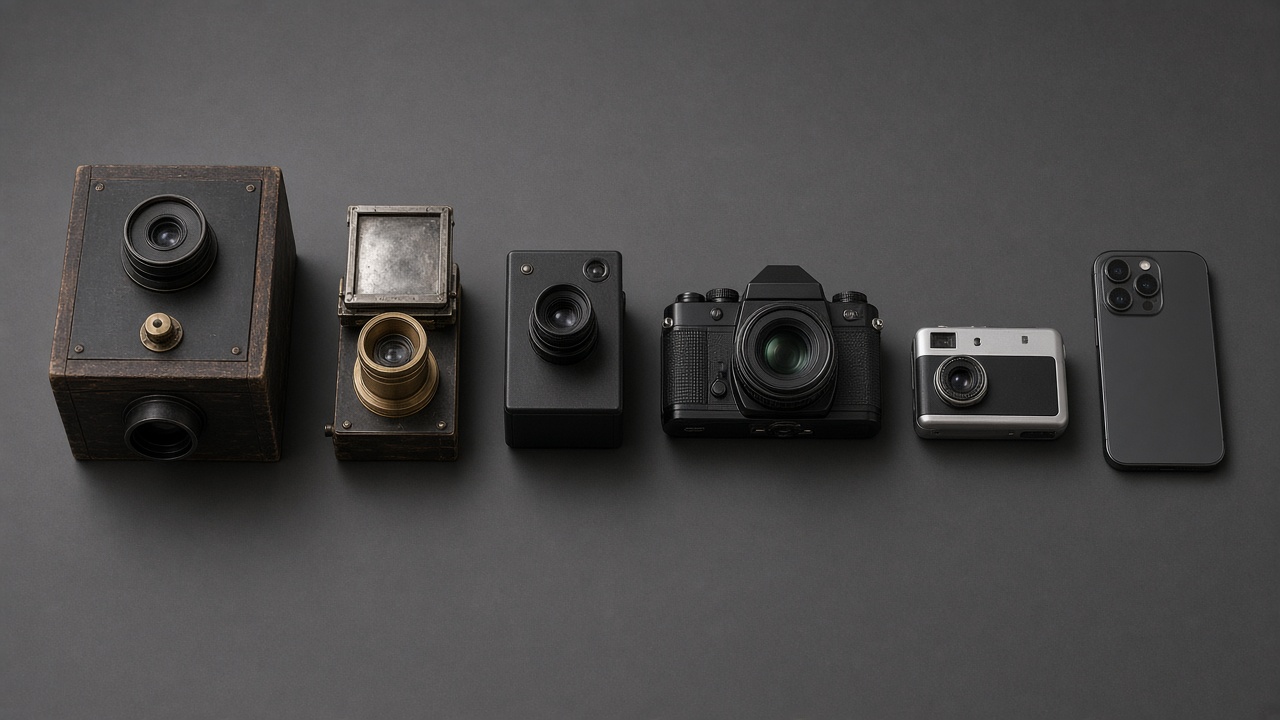
From dark-room projections and silver plates to film rolls, SLR lenses, digital sensors, and the multi-lens phone in your pocket — cameras turned light into lasting memory.
Obscura → PhoneFilm → DigitalGadgets focus
Camera Invention
Cameras grew from optics first: the camera obscura projected scenes for artists long before chemistry could freeze them. In 1839, practical photographic processes made permanent images on plates. Later inventions — roll film, SLR viewfinders, digital sensors, and phone camera modules — turned photography from a studio craft into an everyday gadget.
Imaging moved from projected light and chemical plates to flexible film, precise SLR optics, electronic sensors, and computational photography on phones. Each leap made cameras smaller, faster, and more available — until almost everyone carried one.
1839
Daguerreotype era
1888+
Roll-film cameras
1990s+
Digital boom
Now
Phone cameras
Optics firstto 1830s
Camera Obscura and Early Optics
Camera obscura: a hole or lens projects a living scene — the optical idea behind every later camera.
Dark rooms and portable boxes project inverted outdoor scenes.
Artists use the projection to study perspective and draft compositions.
Lenses improve brightness and sharpness long before chemical fixing.
Before photography, a camera was an optical gadget: light entered a small aperture and painted a temporary image. The missing piece was chemistry that could make that image permanent.
Technology Used
Aperture / pinhole: Forms the projected image.
Lenses: Focus and brighten the scene.
Dark chamber: Blocks stray light so the projection is visible.
Features
Live image only: No lasting capture yet.
Drawing aid: Used by painters and scientists.
Portable boxes: Smaller obscuras travel outdoors.
Fixed images1839 – 1880s
Daguerreotype and Early Photography
Studio plate cameras: silvered plates and long exposures made the first lasting portraits.
1839: Daguerreotype process publicly announced.
Portrait studios open; sitters hold still for long exposures.
Other early processes (calotype, wet plate) expand paper and glass negatives.
Combining a lens box with light-sensitive plates turned the camera into a recording gadget. Images were unique, fragile, and precious — photography as a specialised craft.
Brass lenses & bellows: Focus and composition control.
Chemical development: Mercury vapour and baths fix the image.
Features
One-off plates: Hard to copy cheaply.
Studio ritual: Posing stands and long sits.
High status object: Portraits as luxury keepsakes.
Everyone can shoot1888 – 1950s
Film Rolls and Snapshot Cameras
Box cameras and roll film: press the button, send the camera for processing, get prints back.
Flexible roll film replaces many glass plates.
Simple box cameras popularise family snapshots.
Photo labs and mail-order processing create a consumer industry.
When film became a roll and cameras became boxes anyone could load (or hand to a lab), photography left the professional studio and entered picnics, holidays, and school days.
Technology Used
Celluloid / roll film: Multiple exposures on one strip.
Fixed-focus box cameras: Simple shutters for amateurs.
Central processing labs: Developing and printing at scale.
Features
Point-and-shoot simplicity: Minimal settings.
Print culture: Albums and wallet photos.
Mass market prices: Cameras for middle-class homes.
See what you shoot1950s – 1990s
SLR and Consumer Film Boom
35mm SLRs: interchangeable lenses and through-the-lens viewing for enthusiasts and professionals.
Single-lens reflex bodies dominate serious still photography.
Colour film, autofocus, and zoom lenses expand consumer choice.
Compact point-and-shoots fill travel bags alongside SLRs.
The SLR made the camera a modular gadget: swap lenses, meter light accurately, and compose through the taking lens. Film quality and automation peaked just as digital sensors waited in the wings.
Technology Used
Mirror & pentaprism: Through-the-lens viewing.
35mm film cassettes: Standard consumer format.
Electronic metering / AF: Easier exposure and focus.
Features
Lens ecosystems: Wide, tele, macro, and zoom.
Hobbyist culture: Clubs, magazines, and darkrooms.
Pro + consumer split: Compacts for trips; SLRs for craft.
Pixels replace film1990s – 2010s
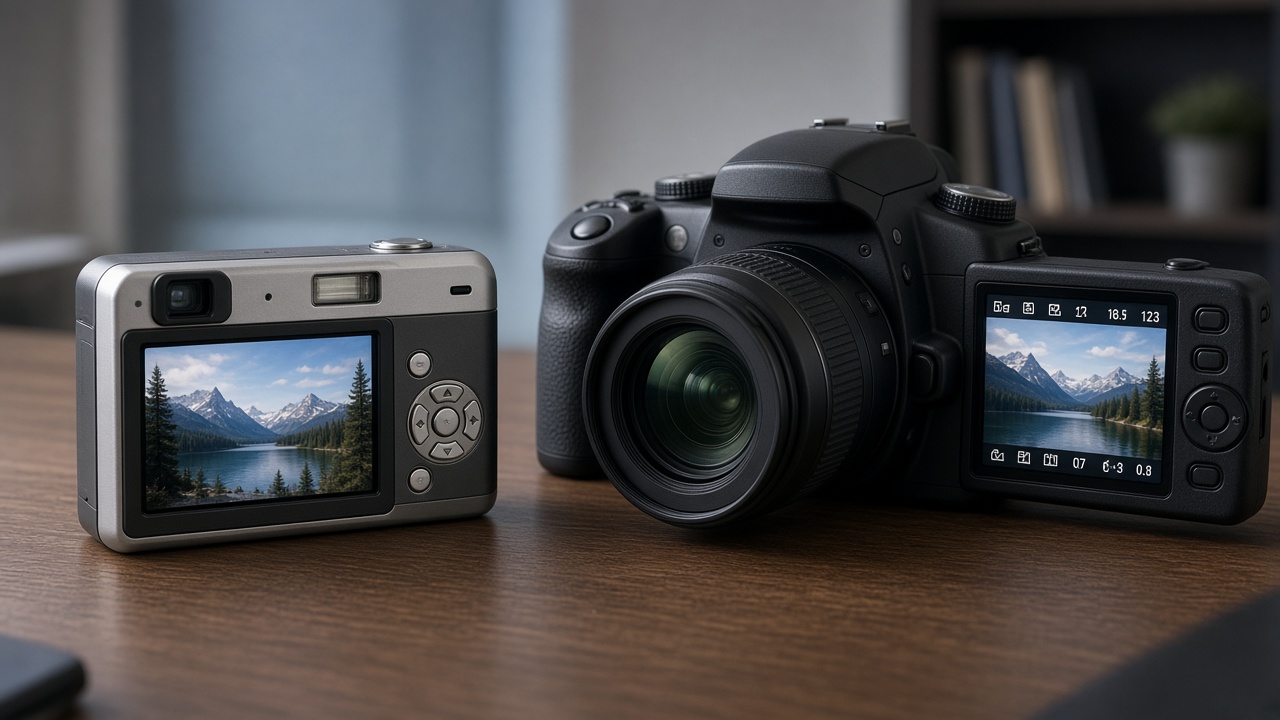
Digital Cameras
Digicams and DSLRs: instant review on LCD screens and files instead of film rolls.
CCD/CMOS sensors capture images as files on memory cards.
Instant delete/review changes how people shoot and share.
Digital sensors removed chemical delay. Megapixels rose quickly, costs fell, and cameras became electronic gadgets with batteries, menus, and USB cables — until phones absorbed the point-and-shoot job.
Technology Used
Image sensors: CCD then CMOS arrays.
Memory cards: Removable digital storage.
LCD previews: Instant composition feedback.
Features
Zero film cost per shot: Experiment freely.
Home printing & email: New sharing paths.
Video modes: Still cameras gain motion capture.
Always in pocket2010s – Present
Smartphone Camera Era
Phone cameras: multi-lens modules, night modes, and instant social sharing.
Multi-lens arrays (wide, ultra-wide, tele) become common.
Computational photography stacks frames for night and portrait modes.
The camera gadget merged with the phone. Software now does work once left to film chemistry and darkroom skill — while interchangeable-lens cameras remain the tool for creators who need absolute control.
Technology Used
Stacked CMOS sensors: Fast readout and low light.
ISP + AI chips: Scene detection and noise reduction.
Cloud & apps: Instant backup and social publish.
Features
Always ready: No separate camera to remember.
Video + photo + AR: One module, many modes.
Creator economy: Reels, vlogs, and live streams.
Camera Timeline Summary
Major turning points from optical projection to pocket sensors.
Joseph Nicéphore Niépce: Early permanent photographic experiments.
Louis Daguerre: Practical daguerreotype process announced in 1839.
William Henry Fox Talbot: Negative–positive approach with paper processes.
George Eastman: Roll film and mass-market snapshot cameras.
Modern sensor & phone teams: CMOS sensors and computational photography in today’s gadgets.
Camera Types at a Glance
Device families: optics box, plate camera, film box, SLR, digicam, and phone.
Type
Recording medium
Typical use
Camera obscura
None (live projection)
Art and science viewing
Plate camera
Metal / glass plates
Early studio portraits
Box / compact film
Roll film
Family snapshots
SLR / mirrorless
Film or digital sensor
Enthusiast and pro work
Digital compact
Sensor + card
Travel point-and-shoot
Smartphone
Multi-lens CMOS
Everyday photo and video
Then vs Now
Then (film gadget)
Buy and load film rolls
Wait for lab prints
Limited shots per roll
Separate camera to carry
Now (phone gadget)
Shoot unlimited digital frames
Instant preview and edit
Night modes and AI assist
Camera always in the pocket
India spotlight
Cameras in India
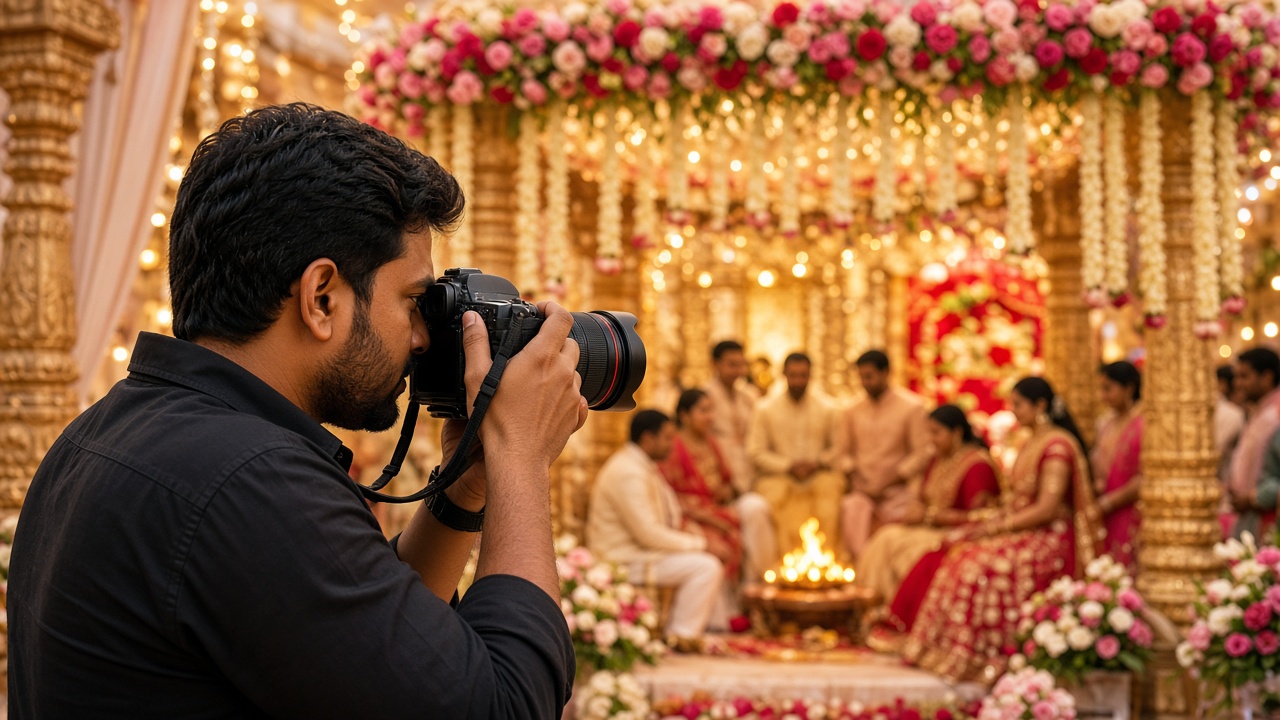
From town photo studios and wedding albums to digital DSLRs and phone cameras that document every festival and selfie, India remade how cameras are bought, hired, and used.
India spotlight: studio portraits to wedding DSLRs and phone cameras at every celebration.
Colonial–1950s
Studio portrait culture
Town studios shoot formal portraits on plates and film for families and officials.
1960s–90s
Film cameras at home
Imported and later local film cameras; labs print wedding and holiday albums.
2000s
Digital & DSLR wave
Digicams and DSLRs reshape wedding photography and journalism; memory cards replace rolls.
2010s+
Phone-first imaging
Affordable smartphones put cameras in almost every hand; social apps become the new album.
Key Events
Event
Year
Significance
Daguerreotype announced
1839
Practical lasting photography begins
Kodak roll-film cameras
1888+
Snapshot photography for amateurs
35mm SLR mainstream
1950s–60s
Interchangeable-lens serious cameras
Consumer digital cameras
1990s–2000s
Sensors replace film for many users
Camera phones mature
2000s–10s
Imaging merges with the mobile phone
Computational photography
2010s–now
Software stacks frames for night/portrait modes
Test Your Knowledge
20 quick questions from the camera timeline. Click each question to reveal the answer.
Answer: A darkened room or box that projects an inverted image of the outside scene through a small hole or lens.
Answer: 1839.
Answer: Louis Daguerre.
Answer: Roll film (and simple box cameras).
Answer: Single-Lens Reflex.
Answer: You compose with the same lens that takes the photo, improving framing accuracy.
Answer: An image sensor and a memory card.
Answer: CMOS (or CCD).
Answer: Smartphone cameras.
Answer: Using software (often multi-frame) to improve images — for example night mode or portrait blur.
Answer: George Eastman (Kodak).
Answer: Long exposure times — they had to stay very still.
Answer: Instant preview and no per-shot film cost.
Answer: Interchangeable-lens cameras (DSLR or mirrorless).
Answer: From studio/film albums toward digital DSLRs, video, and phone candids throughout the event.
Answer: The camera obscura.
Answer: Combinations such as wide, ultra-wide, and telephoto cameras.
Answer: Local photo labs / studios.
Answer: It focuses on the camera device; the photography timeline covers studios, albums, and sharing culture.
Answer: Smaller, faster, cheaper gadgets — from optics and chemistry to sensors and phone software.
Classroom activity
Students Tasks
Use these 10 prompts for discussion, projects, or classroom presentations.
Device historyOptics & sensorsThen vs nowIndia context
Explain how a camera obscura works without using chemical film.
Why were early photographic portraits so expensive and formal?
Compare a box snapshot camera with a 35mm SLR for a family holiday.
List three advantages of digital cameras over film for beginners.
How did interchangeable lenses change what photographers could capture?
Describe computational photography with one phone-camera example.
Interview an elder about film rolls and photo labs in your town.
Why do professionals still buy dedicated cameras when phones are excellent?
Map how Indian wedding photography changed from albums to phones.
Predict one future camera gadget feature and justify it.
Jump to any other gadgets timeline on WorldTimelineHub.
Disclaimer: This content is AI-generated for educational purposes and may contain errors or outdated details. For correct and authoritative information, please refer to official and reliable sources such as government publications, manufacturers, museums, and academic references.