Photography Timeline of India: Studio Portraits → Film Cameras → Digital → Smartphones → Cloud
In the 1950s a family dressed in its best and visited the neighbourhood studio for one precious portrait. Film cameras and photo labs brought holiday snapshots in the 1980s, digital cameras
showed photos instantly in the 2000s, smartphones made everyone a photographer in the 2010s, and in the 2020s thousands of memories live safely in the cloud.
This timeline covers daguerreotypes and photographic societies, royal court photographers and Lala Deen Dayal, hand-coloured portraits, neighbourhood studios and painted backdrops,
darkrooms, pioneering photojournalists, film rolls and photo labs, wedding albums, digital cameras and camera phones, selfies and Instagram, cloud backup, and AI photo editing.
1950s Studios → 1980s Film2000s Digital → 2010s Smartphones2020s Cloud & AI
Why the Photography Story Matters
Photographs are how families remember weddings, births, festivals, and loved ones who are gone, and how a nation records its history. In India the journey from one formal studio portrait
in a lifetime to billions of phone photos a day shows how technology, prices, and social media changed not only how we take pictures but how we see ourselves.
Big picture
India’s photography journey in one view
Photography arrived in India within a year of its invention and was first enjoyed by royalty and officials. After independence neighbourhood studios made portraits for every family,
film cameras and colour labs spread in the 1980s and 1990s, digital cameras arrived in the 2000s, smartphones and social media turned the 2010s into the selfie decade, and the 2020s
brought cloud albums and AI editing. Related timelines:
mobile phones,
computer storage,
the internet.
1840
Daguerreotype cameras reach Calcutta
1854
Photographic Society of Bombay founded
1984
Indian photo wins World Press Photo
2022
DigiYatra face scan at airports
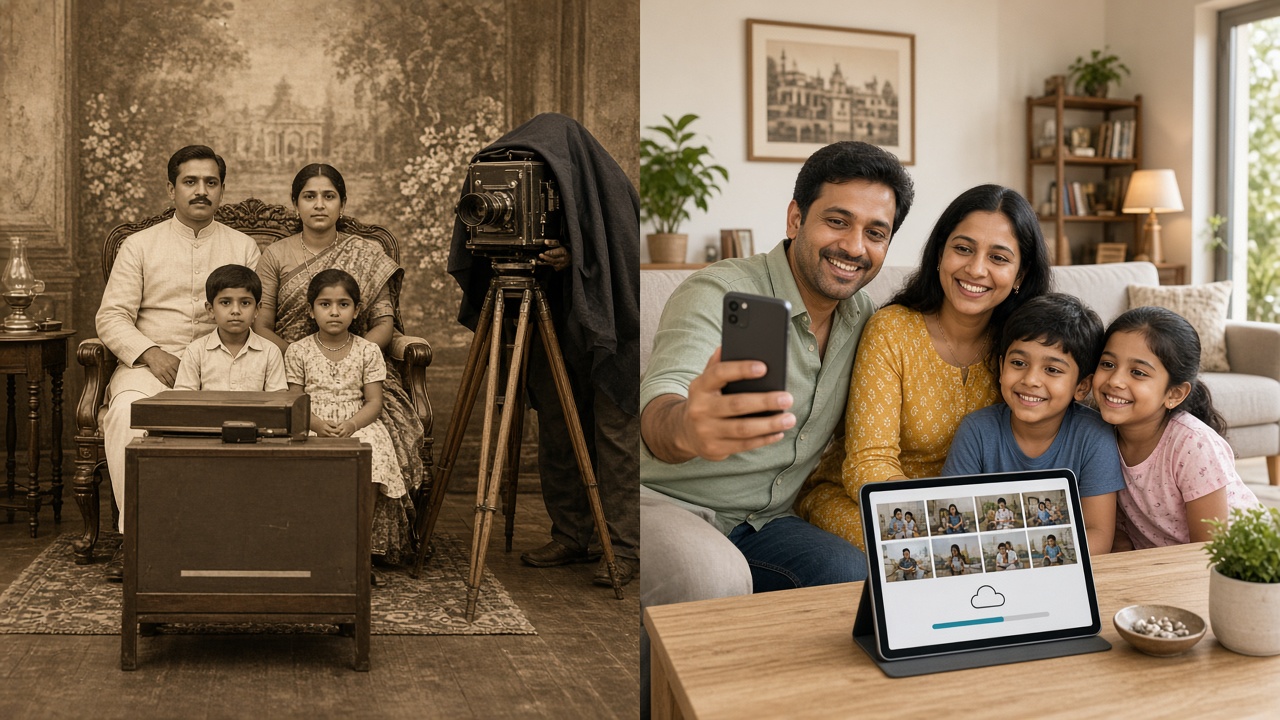
From one formal studio portrait to a family selfie backed up to the cloud (artistic illustration).
Photography Then vs Now at a Glance
Feature
Then
Now
Who took photos
Professional studio photographer
Everyone with a phone
How many
A few portraits in a lifetime
Thousands every year
Colour
Black and white, hand-tinted
Full colour, HDR, filters
Seeing the photo
Days later, after developing
Instantly on screen
Cost per photo
High — every shot counted
Almost free
Storage
Albums, frames, negatives in tins
Phone gallery and cloud
Sharing
Prints posted to relatives
Messaging apps and social media
Editing
Retouching negatives by hand
Filters and AI edits in seconds
Pose
Formal, serious, still
Candid, smiling, selfies
Biggest risk
Fading, damp, fire
Lost phones, privacy, fake images
👑 Royal Studios1840 – 1946
Royal Studios & Early Photographers
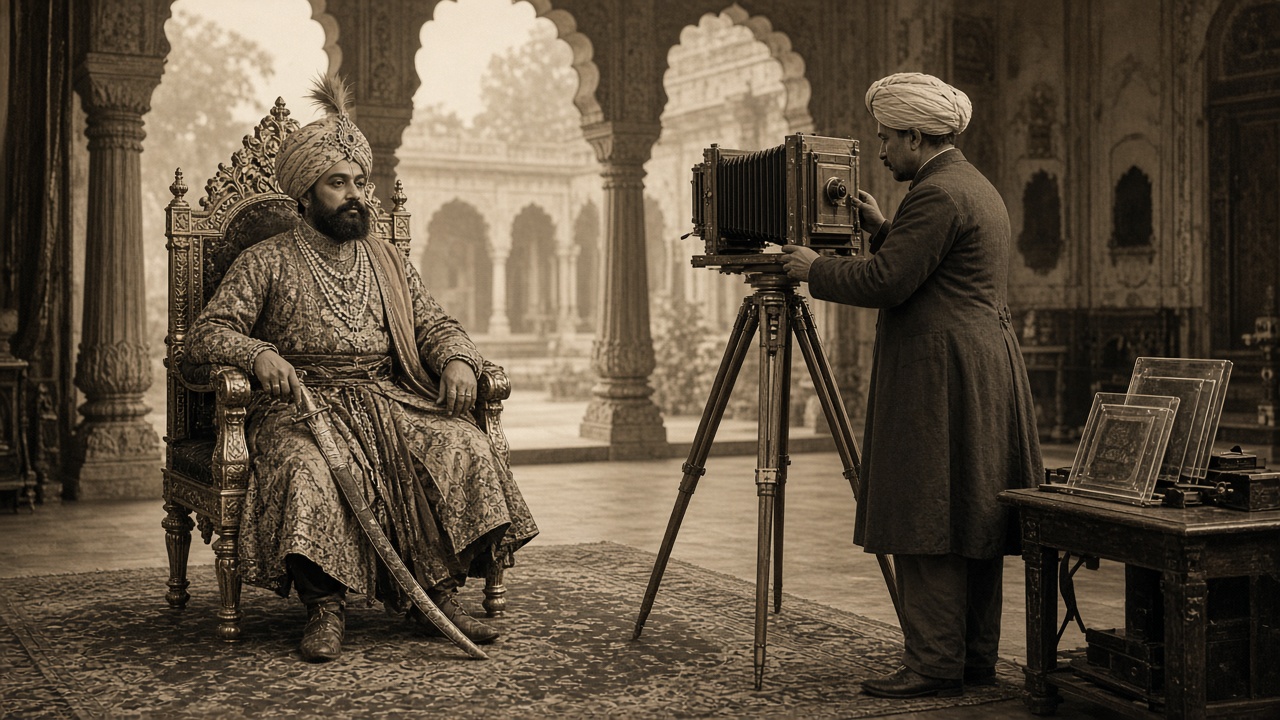
Photography reached India almost as soon as it was invented. Early photographers recorded monuments, landscapes, and royal courts using heavy wooden cameras and glass plates, maharajas became keen photographers themselves, and by the 1930s Indian photojournalists were recording the freedom struggle.
A court photographer and his bellows camera at a royal sitting (artistic illustration).
1840: Daguerreotype cameras are advertised in Calcutta, barely a year after the invention of photography was announced in Paris.
1854–1856: The Photographic Society of Bombay (1854) and the Photographic Society of Bengal (1856) are founded, among the earliest such societies in the world.
1860s–1900s: Studios such as Bourne & Shepherd photograph landscapes and people, Maharaja Sawai Ram Singh II of Jaipur takes photographs himself, and Lala Deen Dayal becomes court photographer to the Nizam of Hyderabad.
Late 1930s–1940s: Homai Vyarawalla, India’s first woman photojournalist, and photographers such as Sunil Janah and Kulwant Roy document the freedom movement and the 1943 Bengal famine.
Technology
Daguerreotypes: Images on silvered plates.
Glass plates: Sharp negatives.
Bellows cameras: Wood and brass.
Features
Long exposures: Sit very still.
Hand-colouring: Painted photos.
Royal patrons: Palace studios.
🖼️ Studios1947 – 1969
Studio Portraits
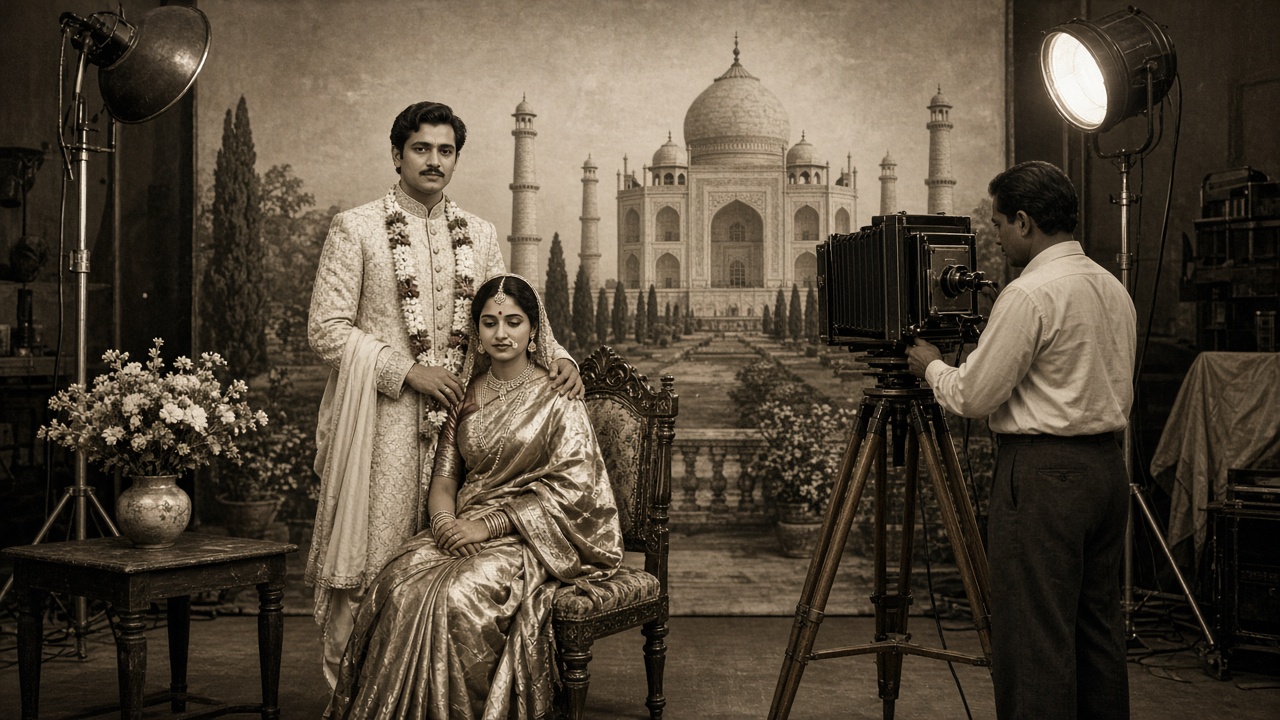
In the 1950s few families owned a camera, so every town had a photo studio with painted backdrops, a carved chair, and a flower vase. Families dressed up for wedding portraits, children’s first photos, and group photos on festivals, and prints were framed on the wall for generations.
A newly-wed couple poses before a painted Taj Mahal backdrop (artistic illustration).
1947: Homai Vyarawalla and other photojournalists capture the first Independence Day, including the flag hoisting at the Red Fort.
1950s: Neighbourhood studios make formal black-and-white portraits for weddings, jobs, and matrimonial proposals, often with painted backdrops and props.
1950s–1960s: Studio artists hand-tint photographs with colours; passport and identity photos become a steady business.
1960s: Simple box and roll-film cameras reach some middle-class homes, and photojournalists such as Raghu Rai begin their careers.
Technology
Studio cameras: Large-format negatives.
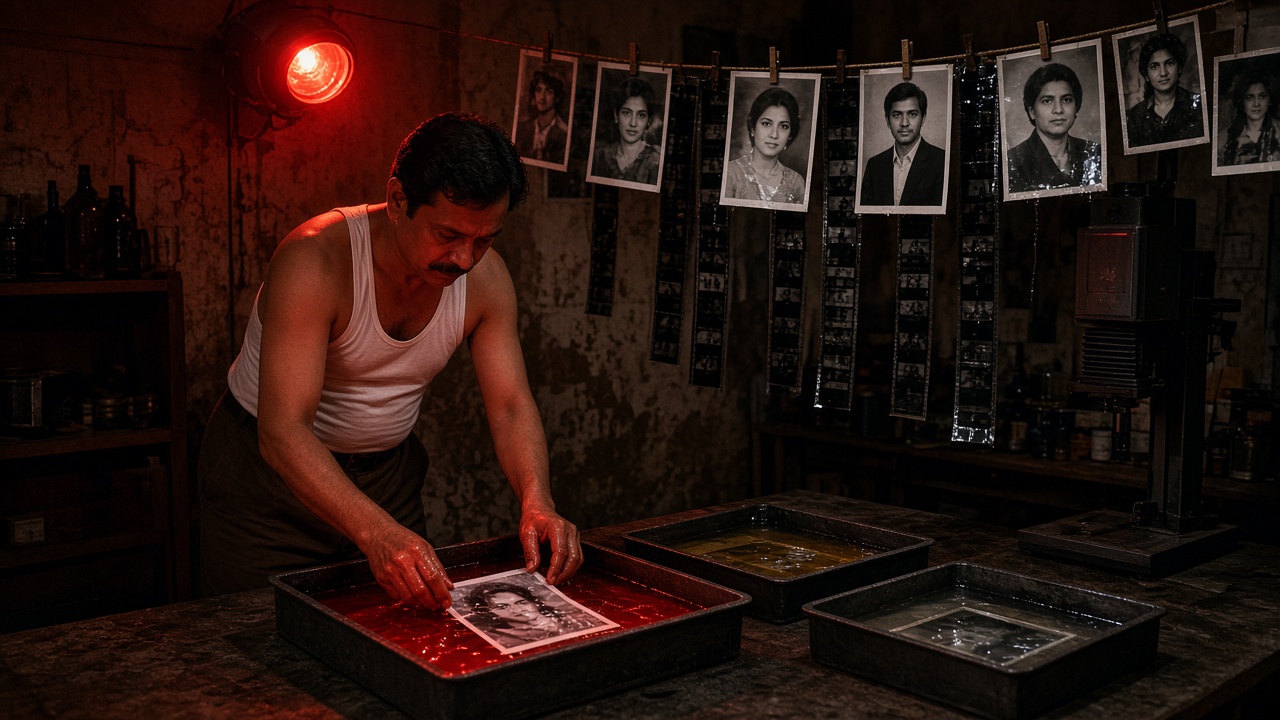
Darkrooms: Hand-developed prints.
Box cameras: Simple roll film.
Features
Painted backdrops: Gardens and palaces.
Formal poses: Serious faces.
Framed portraits: On the wall.
🎞️ Film1970 – 1999
Film Cameras & Photo Labs
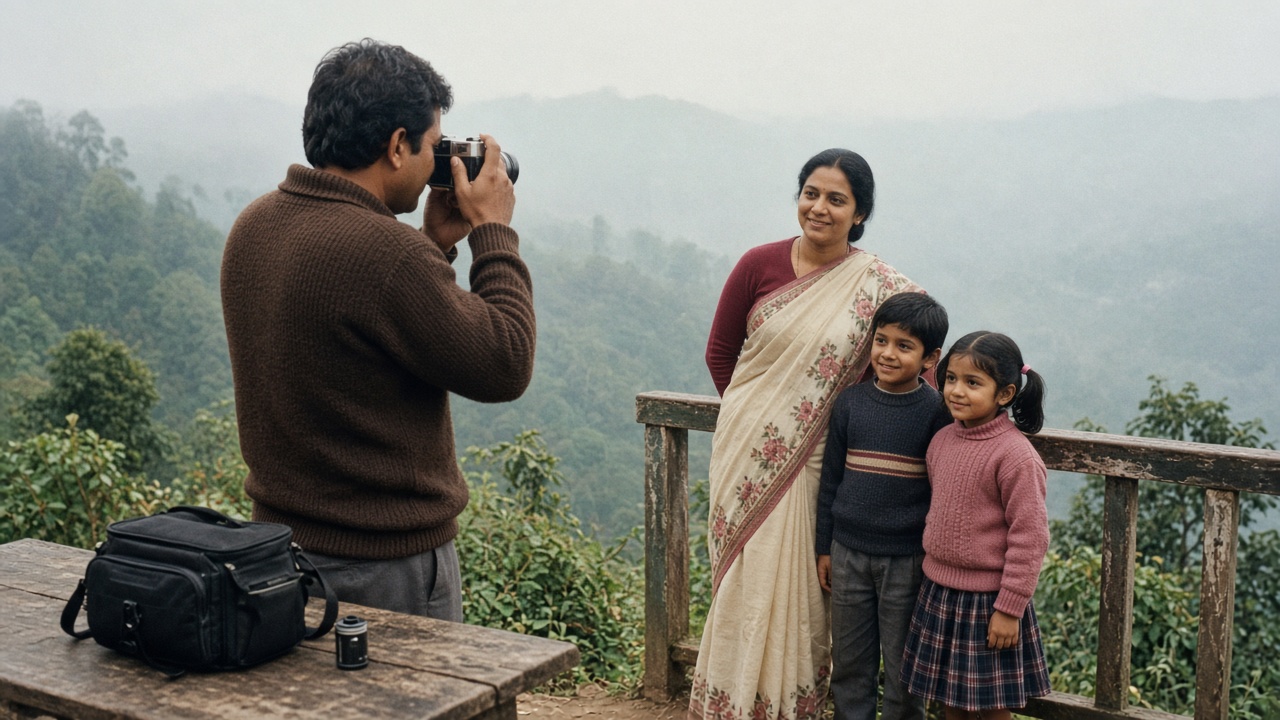
Compact 35 mm cameras and colour film turned photography into a family hobby. A roll of 24 or 36 exposures was saved for birthdays, holidays, and weddings, then handed to the local lab — and everyone waited eagerly to see which shots came out well.
One careful click on a precious roll of film at a hill station (artistic illustration).
1970s: Colour portraits appear in studios, and compact 35 mm cameras become aspirational gifts, often bought abroad by relatives.
1980s: Colour film rolls and automated minilabs spread; photos of holidays, school events, and the 1982 Asian Games fill family albums.
1984: Pablo Bartholomew’s photograph from the Bhopal gas tragedy wins the World Press Photo of the Year.
1990s: Automatic point-and-shoot cameras with built-in flash are common, and weddings are covered with thick albums and video cassettes.
Technology
35 mm film: 24 or 36 shots.
Minilabs: Fast colour prints.
Built-in flash: Indoor photos.
Features
Every shot counted: Limited film.
The wait: Prints in days.
Family albums: Plastic sleeves.
💾 Digital2000 – 2009
Digital Cameras
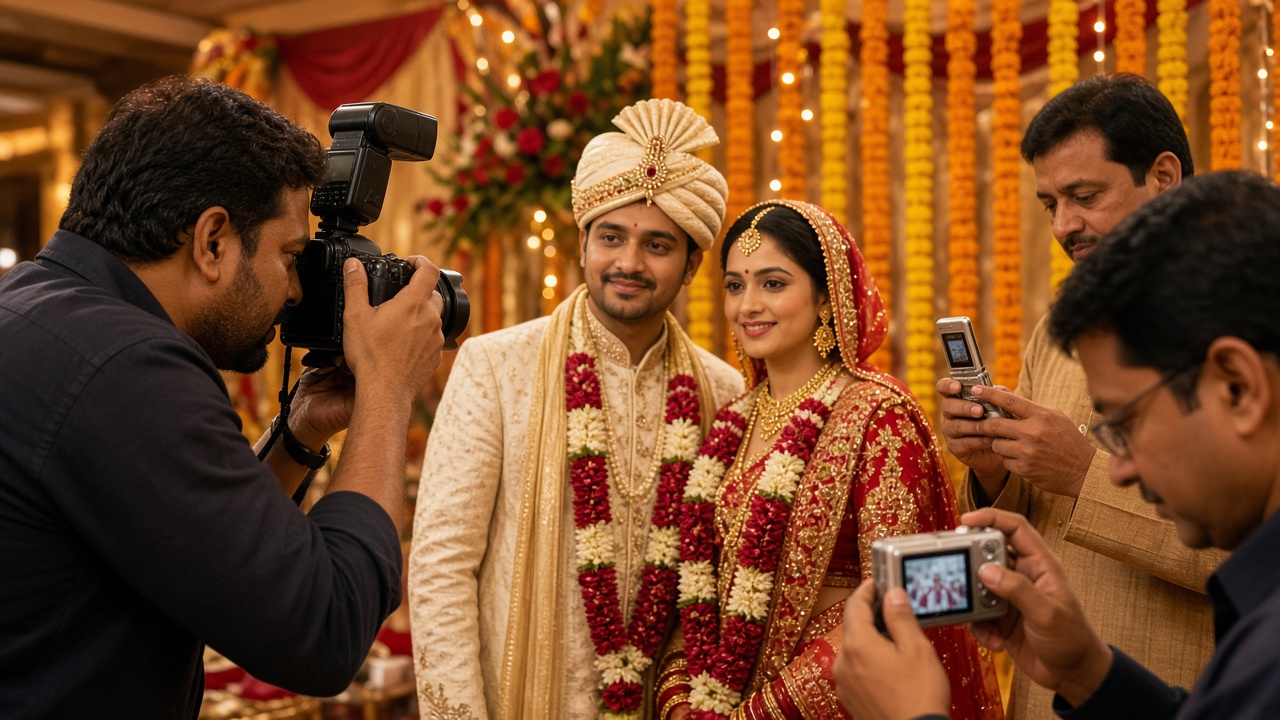
Digital cameras ended the wait: photos appeared instantly on a small screen and bad shots could simply be deleted. Memory cards, computers, and CDs replaced negatives, camera phones arrived, and wedding photographers switched to digital SLRs and computer editing.
A DSLR, a digital compact, and an early camera phone at a wedding (artistic illustration).
Early 2000s: Affordable digital compact cameras and memory cards reach Indian cities; photos are viewed instantly and stored on computers and CDs.
2003–2006: The first camera phones arrive, and photos are shared by MMS and Bluetooth.
Mid-2000s: Wedding and studio photographers move to digital SLRs and computer retouching; digital photo kiosks and printed photo books appear.
Late 2000s: Social networks such as Orkut and Facebook make online photo albums popular, and film sales and photo labs decline.
Technology
Image sensors: No film needed.
Memory cards: Hundreds of photos.
Photo software: Edit on a computer.
Features
Instant preview: Delete and retake.
Megapixel race: Sharper images.
Online albums: Share with friends.
🤳 Smartphones2010 – 2019
Smartphones & Selfies
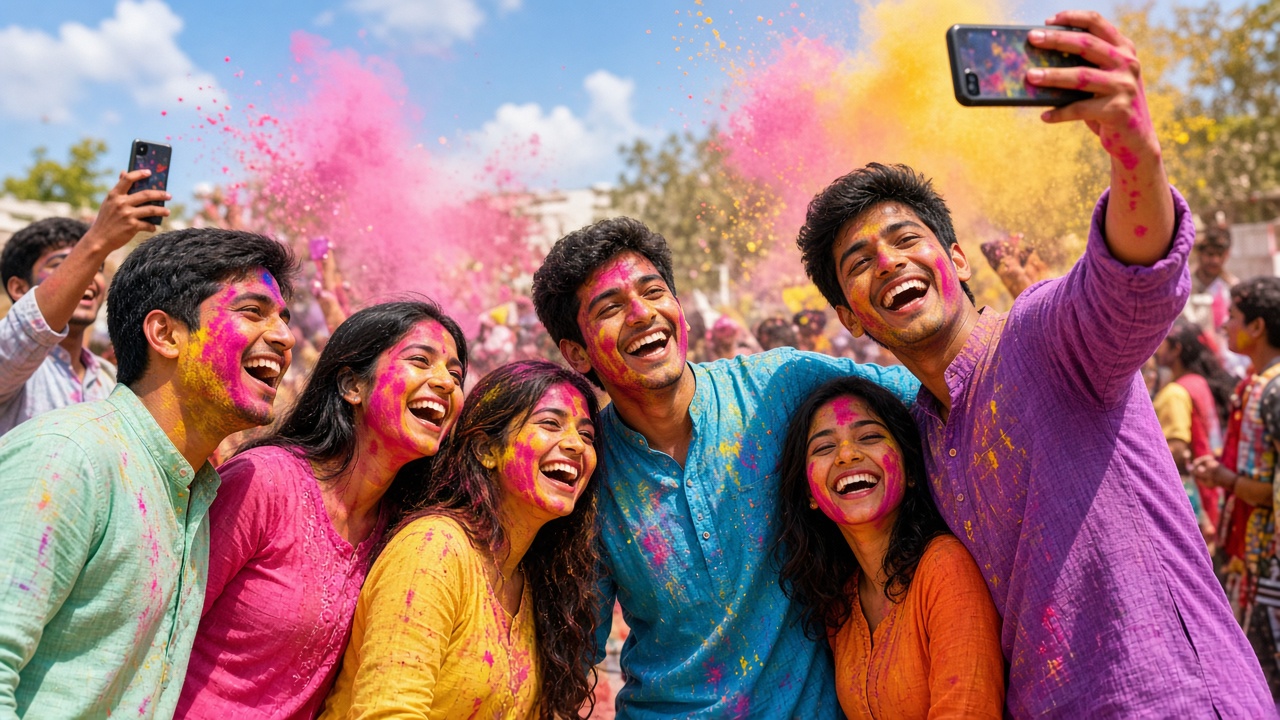
Low-cost smartphones with good cameras put a camera in almost every pocket. Front cameras started the selfie craze, messaging apps and Instagram made sharing instant, and weddings added candid photographers, pre-wedding shoots, and drones.
A Holi group selfie — the smartphone era in one click (artistic illustration).
Early 2010s: Affordable Android smartphones with front cameras spread; “selfie” becomes a global word of the year in 2013.
2010s: Instagram and messaging apps make photo sharing instant; food, travel, and festival photos flood social media.
2015–2016: Free cloud photo backup services arrive and cheap 4G data makes sharing photos and videos effortless.
Late 2010s: Candid wedding photography, pre-wedding shoots, and drone photography become popular; multi-lens phones and portrait mode improve pictures.
Technology
Front cameras: Selfies.
Multi-lens phones: Wide and zoom.
Drones: Photos from the sky.
Features
Everyone a photographer: Phones everywhere.
Filters: One-tap looks.
Selfie safety: Risky spots warned.
☁️ Cloud2020s – Future
Cloud Albums & AI Photos
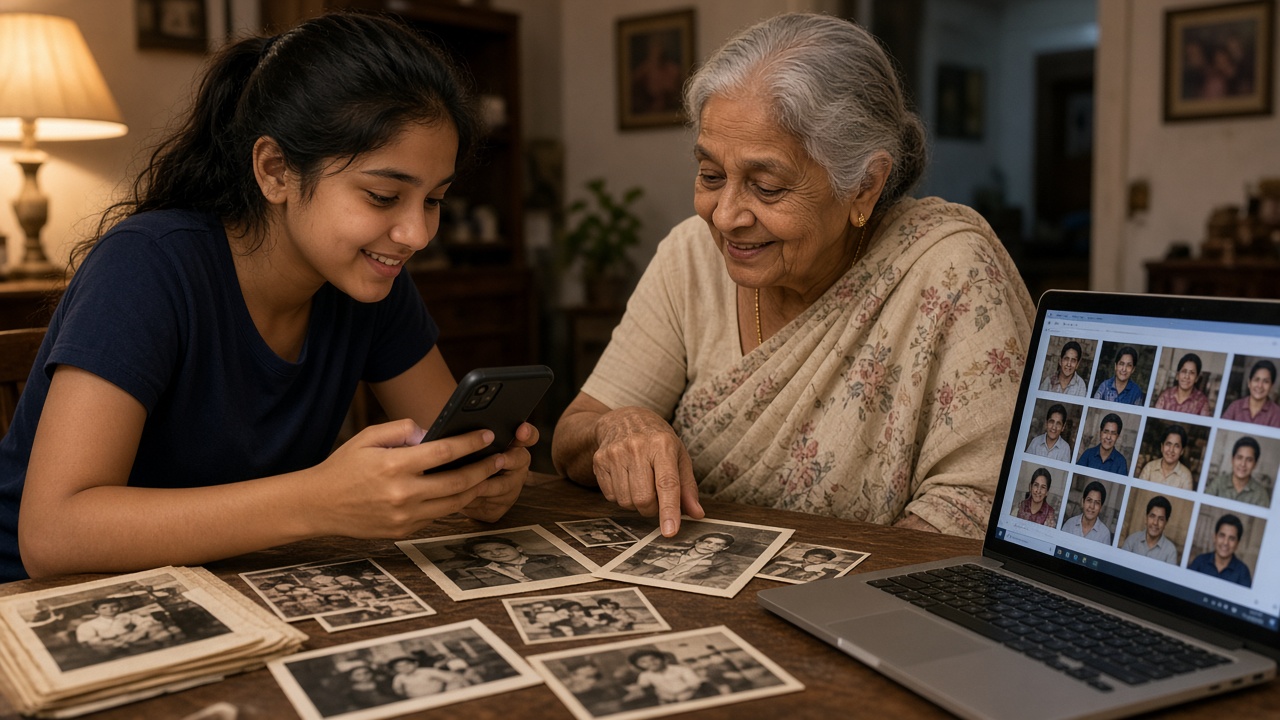
In the 2020s photos are backed up automatically to the cloud, searched by face or place, and improved by AI in seconds. Families scan and restore old prints, face recognition is used at airports, and new rules and tools try to tackle fake and AI-generated images.
Old family prints scanned, restored, and saved to the cloud (artistic illustration).
2020–2021: Lockdown video calls and phone photos keep families connected; Google Photos ends free unlimited storage on 1 June 2021, and paid cloud plans grow.
2022: DigiYatra face-recognition boarding begins at Delhi, Bengaluru, and Varanasi airports on 1 December.
2020s: Computational photography brings night mode, portrait blur, and very high-megapixel phone cameras; AI apps restore and colourise old photos.
Future: AI-generated images, deepfake labelling, content credentials, and smart glasses will change how photos are taken and trusted.
Click any panel to expand and explore the visual mood.
India’s photography journey in pictures — the royal court camera, the 1950s studio portrait, the darkroom, holiday film, digital weddings, Holi selfies, cloud albums, and then versus now.
Royal Studio
Glass plates and bellows
1950s Studio
Painted backdrops
Darkroom
Red light prints
1980s Film
36 precious shots
2000s Digital
Instant preview
Selfies
Holi in one click
Cloud Albums
Old photos revived
Then vs Now
Studio to cloud
Explore all daily life timelines
Jump to any other daily life timeline on WorldTimelineHub.
Disclaimer: This content is AI-generated for educational purposes and may contain errors or outdated details. For correct and authoritative information, please refer to official and reliable sources such as government publications, manufacturers, museums, and academic references.