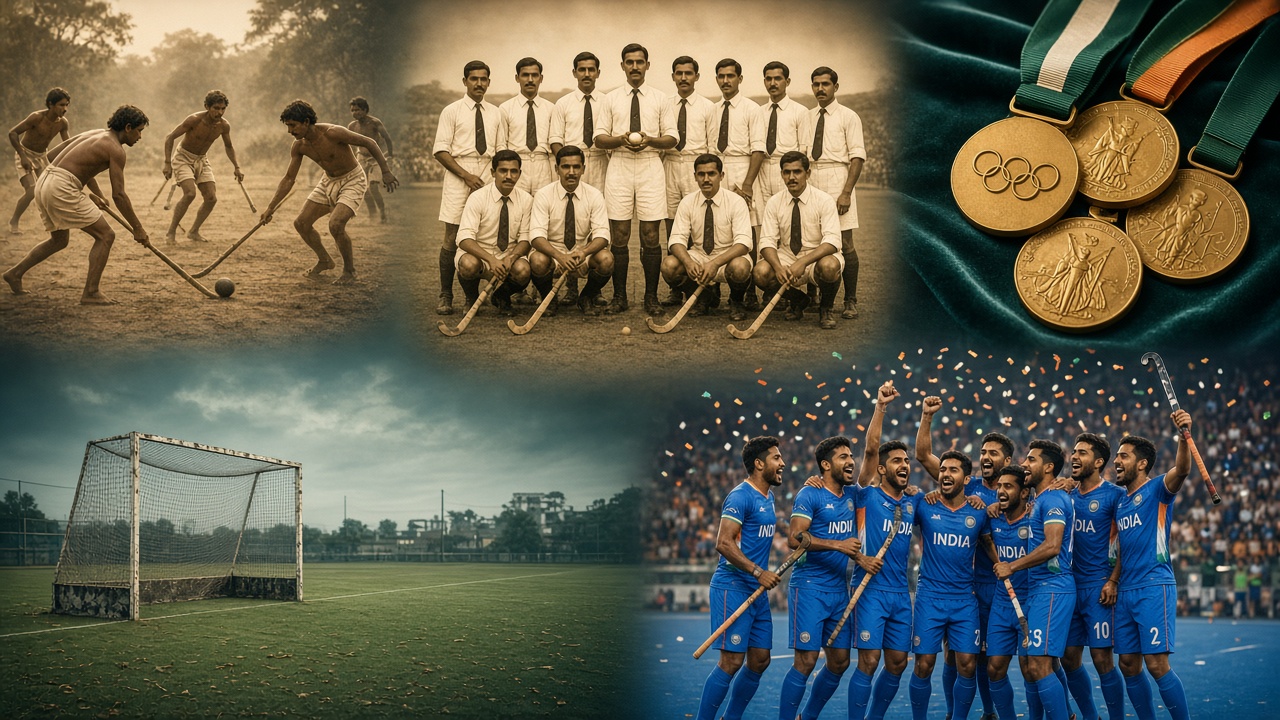
From ancient stick-and-ball games to Amsterdam 1928, eight Olympic golds, a long decline, and a hard-won revival —
field hockey is India’s original Olympic love story.
This timeline follows five turns: deep stick-game roots, the first Olympic gold, a golden dynasty, the decades of struggle,
and the modern comeback on blue turf.
Stick Games → Revival8 Olympic GoldsGrass → AstroTurf
Why Hockey Matters in India
Long before cricket filled living rooms, hockey filled India’s Olympic identity. Stick games trained bodies and communities;
Amsterdam 1928 announced a new sporting nation; eight golds built a dynasty; decline taught hard lessons about surfaces,
systems, and attention; revival shows what high-performance pathways and belief can still unlock.
Big picture
Hockey in one view
India’s hockey story is Olympic-first: skill on grass, then adaptation to turf, then a climb back into medal contention.
Related timelines:
Olympics,
cricket,
Women Who Changed India,
fitness.
1928
First Olympic gold
8
Olympic golds
1980
Last Olympic gold
2020s
Olympic bronze returns
From stick games to Amsterdam gold, eight Olympic titles, decline, and revival.
🪵 Deep RootsDeep Roots
Ancient Stick Games
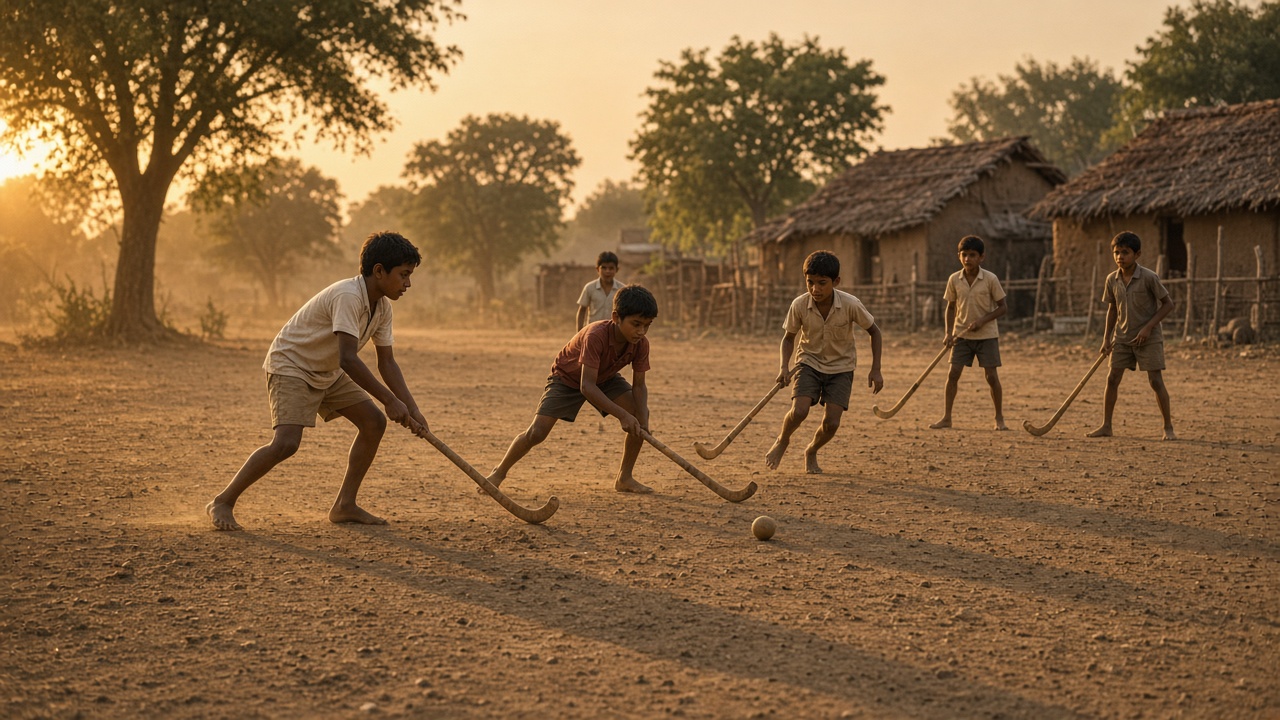
Long before Olympic rules, people played stick-and-ball games on open ground. Across India and the wider world, curved sticks, small balls, and village contests built hand-eye skill, teamwork, and the culture that later met organised field hockey.
Stick games: skill before stadiums.
Shared craft: Stick control, passing angles, and open-field running appear in many folk games.
Village grounds: Local contests taught courage and coordination without formal kits.
Colonial-era clubs: Organised hockey spreads through schools, regiments, and clubs in India.
Talent pipeline: Regions with stick-game culture feed early national teams.
Ideas & Practices
Wooden sticks: Hand-shaped curves and local woodworking.
Grass fields: Natural surfaces reward dribbling and close control.
Informal rules: Game length and team size flex by place and festival.
Features
Access: Open space and a stick can start a match.
Body literacy: Balance, anticipation, and peripheral vision.
Continuity: Folk play softens the jump into formal hockey.
🥇 First Gold1928
1928 Amsterdam Gold
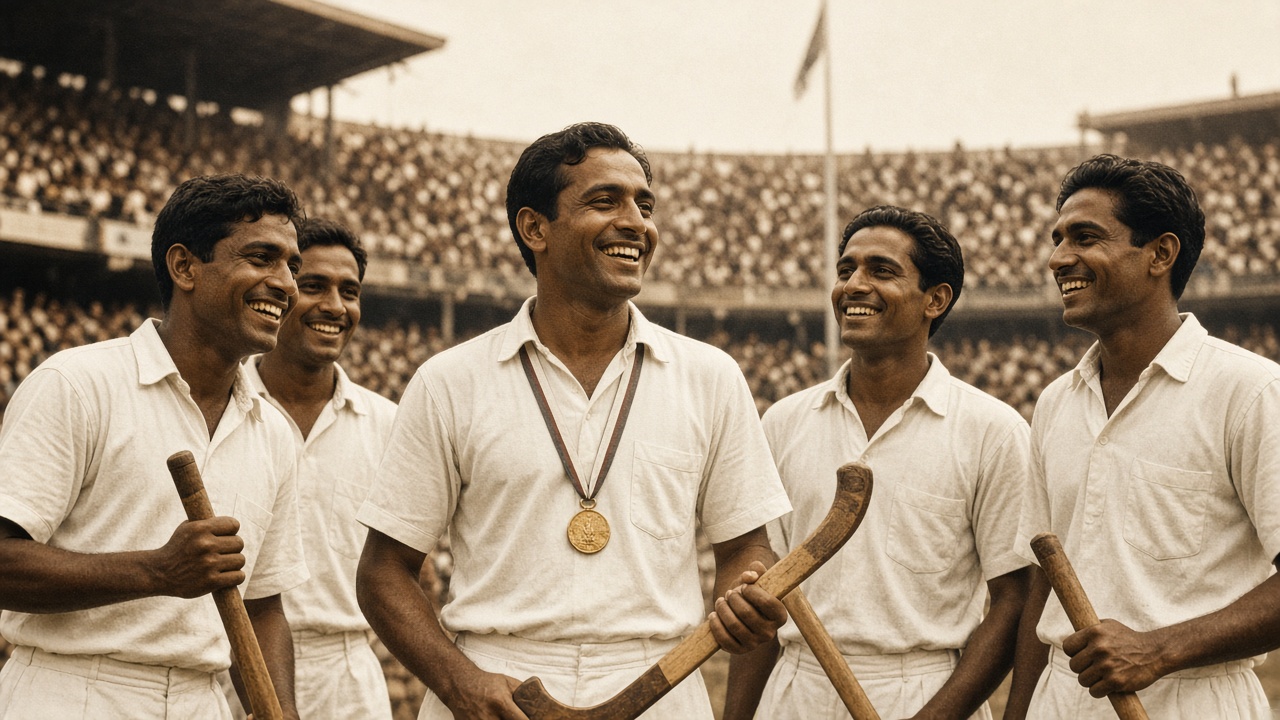
At the 1928 Amsterdam Olympics, India’s men’s hockey team won gold — the country’s first Olympic hockey title and a founding myth of Indian sport. Skill on grass, calm finishing, and collective confidence announced India on the world stage.
Amsterdam 1928: India’s first Olympic hockey gold.
Olympic debut gold: India takes the title at Amsterdam 1928.
Style signature: Fluid stick-work and short passing shine on natural grass.
National symbol: Hockey becomes India’s Olympic calling card.
Legend path: Stars of the era, including Dhyan Chand’s generation, become cultural icons.
Technology Used
Grass pitches: Soft bounce favours Indian dribbling craft.
Wooden sticks & leather balls: Classic equipment of the era.
Touring logistics: Long sea journeys to distant Games.
Features
Belief effect: One gold makes the next seem possible.
Identity: Sport and nation braid together in public memory.
Template: Sets the tone for a multi-decade dynasty.
🏆 Golden Dynasty1928 – 1980
8 Olympic Golds
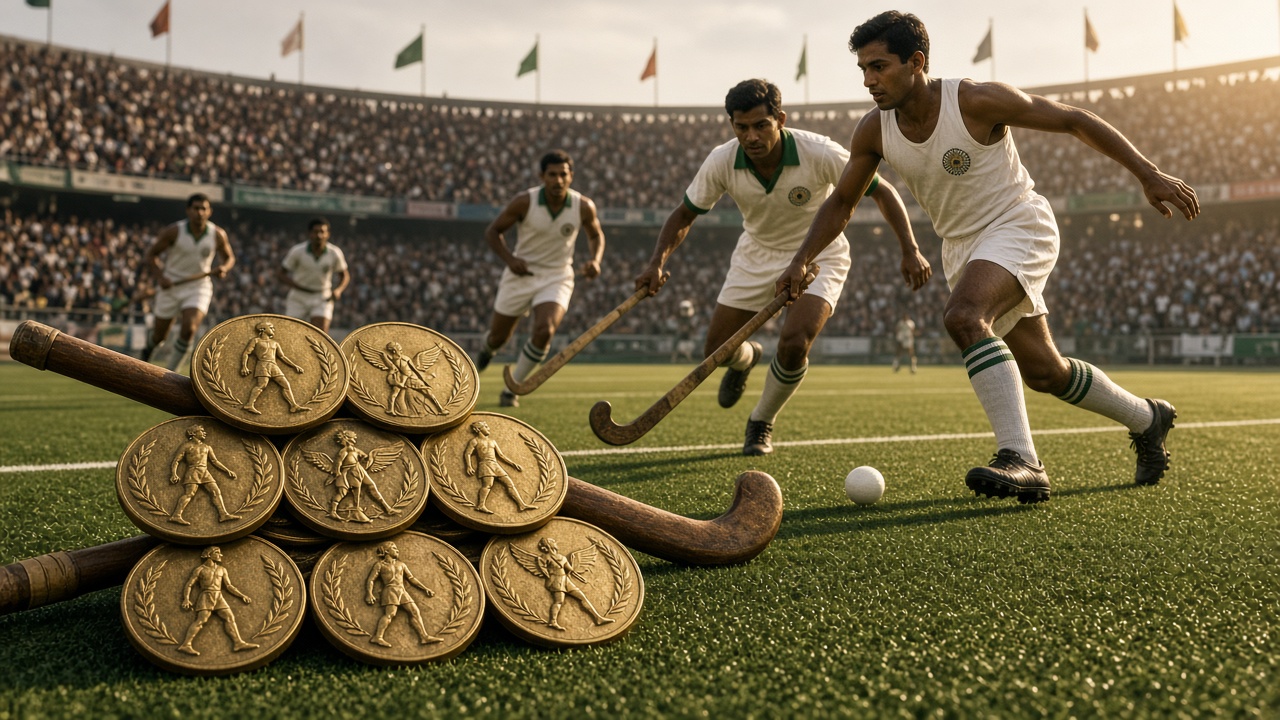
India’s men won Olympic hockey gold in 1928, 1932, 1936, 1948, 1952, 1956, 1964, and 1980 — eight titles that still define the sport’s peak. From Berlin magic to post-Independence pride and Moscow’s last gold, hockey was India’s medal machine.
Eight Olympic golds: India’s hockey dynasty.
Pre-war hat-trick: Gold in 1928, 1932, and 1936.
Independence era: Titles in 1948, 1952, and 1956 keep the streak alive.
1964 Tokyo: Another gold after a brief interruption.
1980 Moscow: The eighth — and so far final — Olympic hockey gold.
Systems & Style
Grass mastery: Indian technique thrives on natural surfaces.
Forward genius: Goal-scoring wizards lead attack after attack.
Team continuity: Strong club and services pathways feed the XI.
Features
Global respect: Opponents study Indian stick-work.
Cultural memory: Schoolbooks and films keep the era alive.
High bar: Later generations inherit glory — and pressure.
📉 Hard Years1980s – 2010s
Decline
After 1980, Olympic golds stopped. Synthetic AstroTurf changed the game’s speed and physique; India adapted slowly. Cricket’s TV boom, uneven coaching systems, and missed Games qualifications turned hockey from automatic medal hope into a sport fighting for attention.
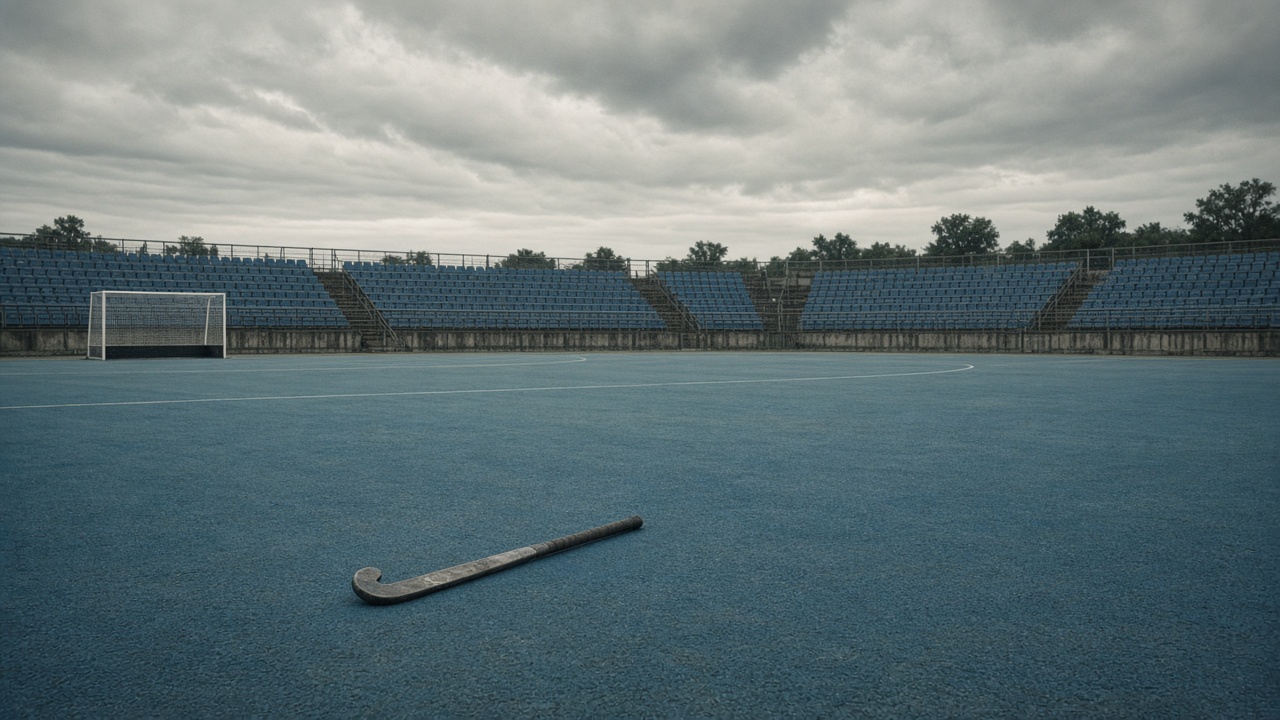
Decline: empty seats, new surfaces, hard questions.
Surface shock: AstroTurf rewards different skills than soft Indian grass.
Results drought: Fewer deep Olympic runs; occasional qualification misses sting.
Attention shift: Cricket and other sports crowd media space.
Structure gaps: Domestic leagues and academies lag rivals abroad.
Challenges
Turf access: Quality pitches and floodlit training remain uneven.
Sports science lag: Strength, recovery, and video analysis arrive late.
Nostalgia vs now: Fans compare every XI to the golden past.
Learning curve: Administrators rethink pathways and coaching.
Seeds of return: Junior programmes and turf facilities slowly expand.
🌅 Comeback2010s – Present
Revival
Modern Indian hockey rebuilt with professional leagues, better high-performance centres, and belief. Olympic bronzes for the men at Tokyo 2020 and Paris 2024, strong women’s campaigns, and louder crowds show a sport reclaiming pride — not by copying 1936, but by mastering today’s turf game.
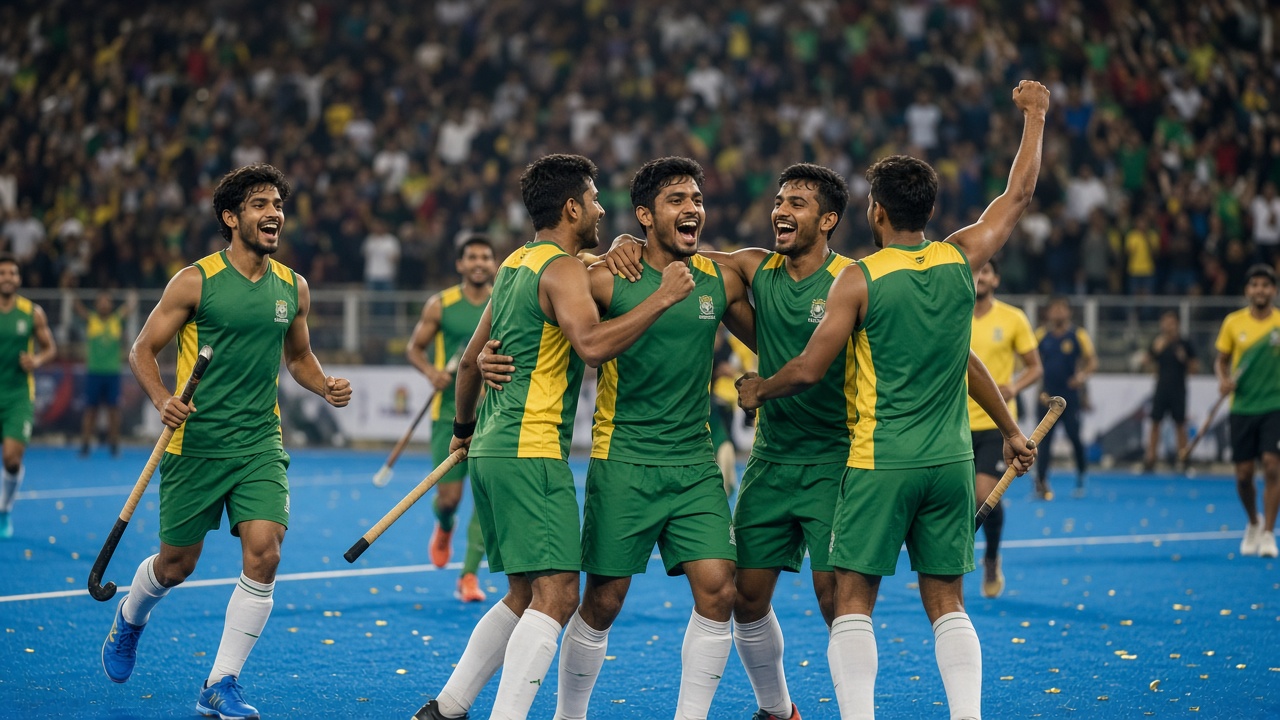
Revival: medals, turf craft, and fresh belief.
Olympic returns: Men’s bronze at Tokyo 2020 and Paris 2024 end a long medal drought narrative.
Women’s rise: Deep Olympic runs lift visibility and inspire girls’ pathways.
League culture: Domestic professional seasons add match sharpness and careers.
Systems upgrade: Coaches, analytics, and turf centres professionalise preparation.
Modern Tools
Blue turf: Fast surfaces and set-piece science.
Video & GPS: Load management and opposition analysis.
Broadcast push: More live windows rebuild the audience.
Features
Pride renewed: Hockey re-enters national sports conversation.
Unfinished work: Consistency, depth, and grassroots funding still need care.
Next target: Contending for Olympic gold again — on modern terms.
Hockey Eras Compared
Each era answers a different need: folk skill, breakthrough gold, dynasty, hard lessons, and modern rebuild.
Era
Main idea
Strength
Limitation
Ancient stick games
Folk skill base
Access & body craft
Informal, uneven structure
1928 Amsterdam gold
Olympic breakthrough
National sporting identity
One tournament — still early
8 Olympic golds
Dynasty on grass
World-leading technique
Surface change later hurts
Decline
Adaptation gap
Hard lessons for reform
Results & attention fall
Revival
Modern rebuild
Medals, leagues, science
Gold still the unfinished goal
India Spotlight: Hockey Milestones
From Amsterdam 1928 to Olympic bronzes in the 2020s.
Year / Era
Milestone
Significance
Deep roots
Stick-and-ball folk games
Skill culture before Olympics.
1928
Amsterdam Olympic gold
India’s first hockey Olympic title.
1928–1980
Eight Olympic golds
India’s hockey dynasty.
1980s–2010s
Results & attention decline
Turf transition and system gaps.
2021 / 2024
Olympic bronzes (men)
Revival proof on the biggest stage.
Hockey Timeline Summary
Year / Era
Milestone
Deep roots
Ancient and folk stick games
1928
Amsterdam Olympic gold
1928–1980
Eight Olympic gold medals
1980s–2010s
Decline after the golden era
2010s–present
Revival — leagues, systems, Olympic medals
Test Your Knowledge
10 quick questions from the hockey timeline. Click each question to reveal the answer.
Answer: Ancient / folk stick-and-ball games.
Answer: Amsterdam, 1928.
Answer: Eight.
Answer: 1980 (Moscow).
Answer: The move to synthetic AstroTurf.
Answer: AstroTurf transition, weaker systems, or cricket’s media dominance (any one).
Answer: Tokyo 2020 (held in 2021).
Answer: Paris 2024.
Answer: Major Dhyan Chand.
Answer: Hockey India.
Classroom activity
Students Tasks
Use these prompts for discussion or projects on Indian hockey.
OlympicsHistorySurfaces & skillRevival
Sketch a folk stick game and list three skills it shares with modern hockey.
Make a five-panel poster from ancient stick games to revival.
List India’s eight Olympic hockey gold years and mark them on a map of host cities.
Explain why AstroTurf changed Indian hockey’s advantage.
Write a short profile of Dhyan Chand for a school notice board.
Compare men’s and women’s hockey visibility in India today.
Debate: “Cricket caused hockey’s decline” vs “Systems and surfaces caused it.”
Design a local turf-training plan for a school hockey team.
Research one revival milestone (Tokyo or Paris bronze) and present three facts.
Predict one change Indian hockey will need by 2040 to win Olympic gold again.
Continue exploring
Hockey connects to Olympics, cricket’s media story, and women’s sport. Explore those timelines next.
Click any panel to expand and explore the visual mood.
Hockey in pictures — stick games, Amsterdam gold, eight titles, decline, and revival.
Stick Games
Deep roots
1928 Gold
Amsterdam
8 Golds
Dynasty
Decline
Hard years
Revival
Comeback
Through Time
Stick to revival
Explore all sports timelines
Jump to any other sports timeline on WorldTimelineHub.
Disclaimer: This content is AI-generated for educational purposes and may contain errors or outdated details. For correct and authoritative information, please refer to official and reliable sources such as government publications, manufacturers, museums, and academic references.