Fitness Timeline of India: Yoga → Gyms → Home Workouts → Fitness Apps → Wearables
In the 1950s fitness in India meant yoga at dawn, wrestling in the village akhara, school PT drills, and long walks and cycle rides as part of daily life. Neighbourhood gyms and aerobics arrived in
the 1980s, TV yoga camps and home treadmills in the 2000s, fitness apps and International Yoga Day in the 2010s, and in the 2020s smartwatches and smart rings track every step, heartbeat, and hour of sleep.
This timeline covers Patanjali’s yoga, surya namaskar, kushti, mallakhamb, and kalaripayattu, yoga institutes and ashrams, NCC and PT drills, neighbourhood gyms and bodybuilding, aerobics and jogging,
TV yoga and exercise DVDs, marathons, fitness apps and studios, International Day of Yoga, Fit India, lockdown workouts, and wearables with heart-rate, SpO2, and sleep tracking.
For most of history Indians stayed active simply by living — walking to fields and markets, drawing water, grinding grain, and cycling to work. As life became more urban and desk-bound, fitness turned
into something people had to plan for. India’s journey from yoga and akharas to gyms, TV yoga, apps, and wearables shows how technology, media, cities, and health worries changed the way a nation exercises.
Big picture
India’s fitness journey in one view
For centuries Indians practised yoga, wrestled in akharas, and trained in martial arts such as kalaripayattu. After independence schools ran PT drills and yoga institutes grew, gyms and aerobics spread
in the 1980s and 1990s, television brought yoga and workouts into homes in the 2000s, apps and studios took over in the 2010s, and wearables arrived in the 2020s. Related timelines:
television,
mobile phones,
footwear and athleisure.
1918
The Yoga Institute opens in Bombay
1990s
Gym culture booms in cities
2015
First International Day of Yoga
2020s
Smartwatch boom across India
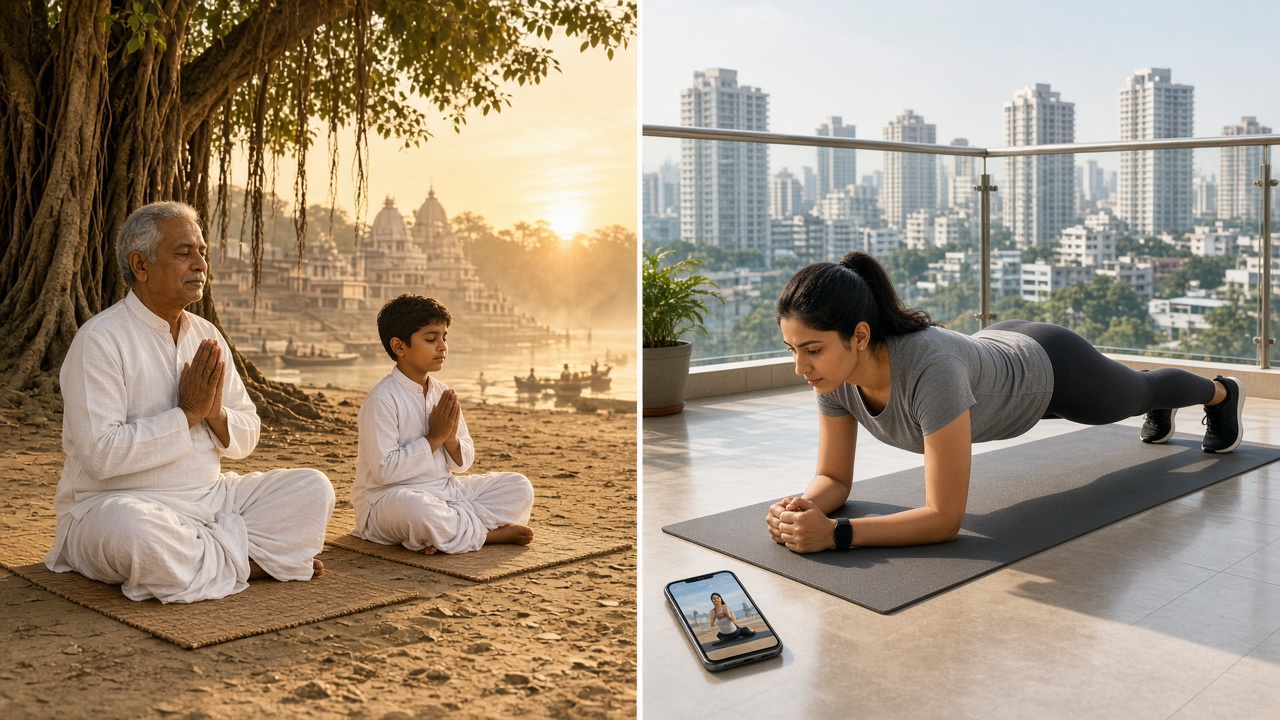
From yoga by the river at dawn to a balcony workout tracked on a smartwatch (artistic illustration).
Fitness in India Then vs Now at a Glance
Feature
Then
Now
Daily activity
Walking, cycling, and manual work
Desk jobs, cars, and planned workouts
Where
Riverbanks, akharas, and school grounds
Gyms, studios, parks, and living rooms
Guide
Guru, pehlwan, or PT teacher
Trainers, apps, videos, and AI coaches
Equipment
Mats, clay pits, clubs, and poles
Machines, dumbbells, bands, and smart bikes
Clothing
Dhoti, langot, and cotton kurta
Athleisure and running shoes
Tracking
Counting breaths and repetitions
Steps, heart rate, SpO2, and sleep data
Diet advice
Ghee, milk, almonds, and home food
Protein, calorie apps, and nutritionists
Motivation
Health, discipline, and tradition
Health, looks, social media, and challenges
Women
Mostly home and household work
Gyms, running clubs, and yoga classes
Cost
Almost free
Free apps to costly memberships
🧘 YogaAncient – 1946
Yoga, Akharas & Kalaripayattu
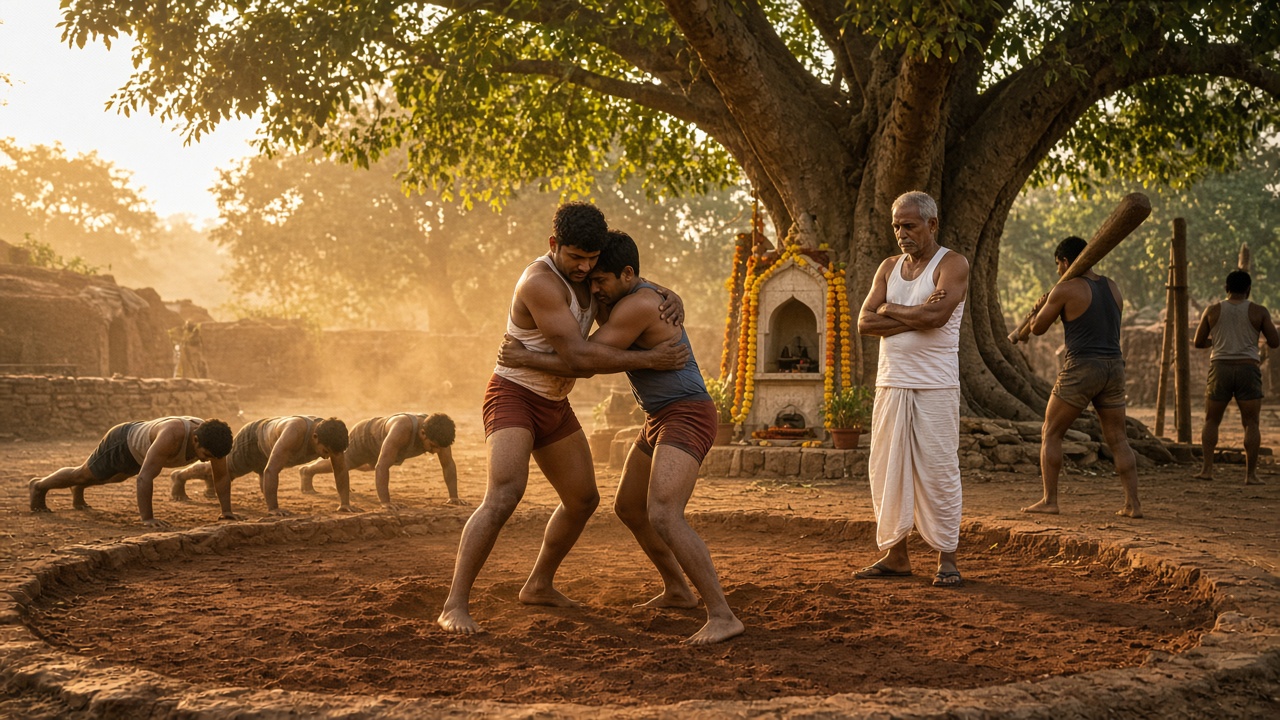
India developed some of the world’s oldest systems of body and mind training. Yoga combined posture, breath, and meditation, wrestlers trained in akharas with dand-baithak and heavy clubs, and martial arts such as kalaripayattu built strength and agility. In the early 20th century yoga institutes began studying and teaching yoga in a modern way.
Kushti on the clay pit, dand push-ups, and club swinging in a village akhara (artistic illustration).
Ancient times: The Yoga Sutras of Patanjali, compiled roughly 2,000 years ago, describe the eight limbs of yoga, and wrestling and martial training are part of Indian life.
12th century: The Sanskrit text Manasollasa describes wrestlers’ exercises linked to mallakhamb, and kalaripayattu develops as a martial art in Kerala.
1910–1924: The Great Gama wins a world wrestling title in London (1910), Shri Yogendra founds The Yoga Institute in Bombay (1918), and Swami Kuvalayananda founds Kaivalyadhama in Lonavala (1924).
1920s–1930s: The Raja of Aundh popularises surya namaskar, and T. Krishnamacharya teaches yoga at the Mysore Palace, shaping modern posture-based yoga.
Technology
Clay pits: Soft wrestling ground.
Gada and jodi: Wooden training clubs.
Mallakhamb pole: Strength and balance.
Features
Guru-led: Personal training.
Mind and body: Breath and posture.
Strict routine: Diet and discipline.
🌅 Drills1947 – 1979
Yoga Ashrams, Akharas & PT Drills
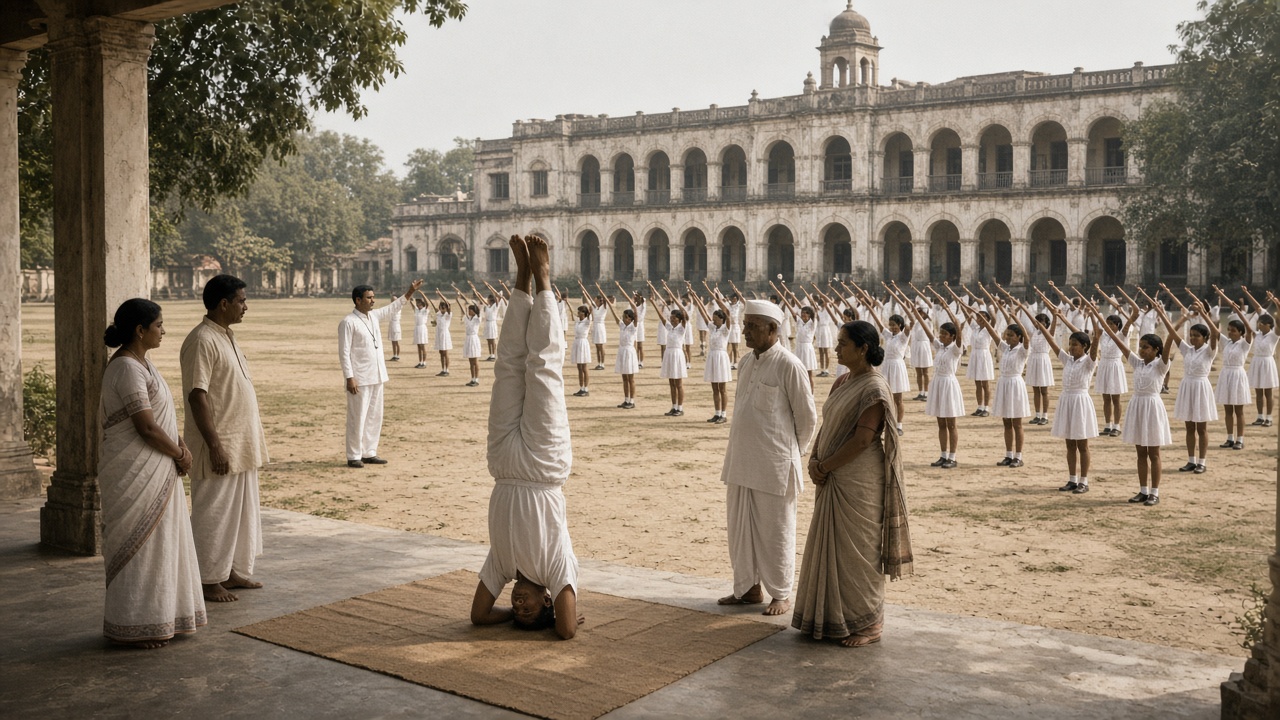
After independence most Indians stayed fit through daily walking, cycling, and physical work. Schools held PT drills and NCC parades, akhara wrestling remained popular in villages and towns, and yoga teachers and ashrams spread yoga across India and the world.
A school PT drill on the ground and a headstand demonstration on the verandah (artistic illustration).
1948: The National Cadet Corps (NCC) is formed, and daily PT drills and exercises at school assembly become common across India.
1952: Bodybuilder Manohar Aich wins the Mr. Universe title, and B.K.S. Iyengar begins teaching violinist Yehudi Menuhin, helping take yoga abroad.
1961–1966: The National Institute of Sports opens at Patiala (1961), the Bihar School of Yoga is founded (1963), and Iyengar’s book Light on Yoga is published (1966).
1970s: Morning walks, cycling, kabaddi and kho-kho, and akhara wrestling remain everyday fitness, and yoga lessons begin to appear on Doordarshan.
Technology
Whistle and drill: Group PT.
Yoga books: Illustrated asanas.
Bicycles: Daily exercise.
Features
School fitness: PT and NCC.
Yoga goes global: Teachers abroad.
Active life: Walking and work.
🏋️ Gyms1980 – 1999
Gyms, Aerobics & Bodybuilding
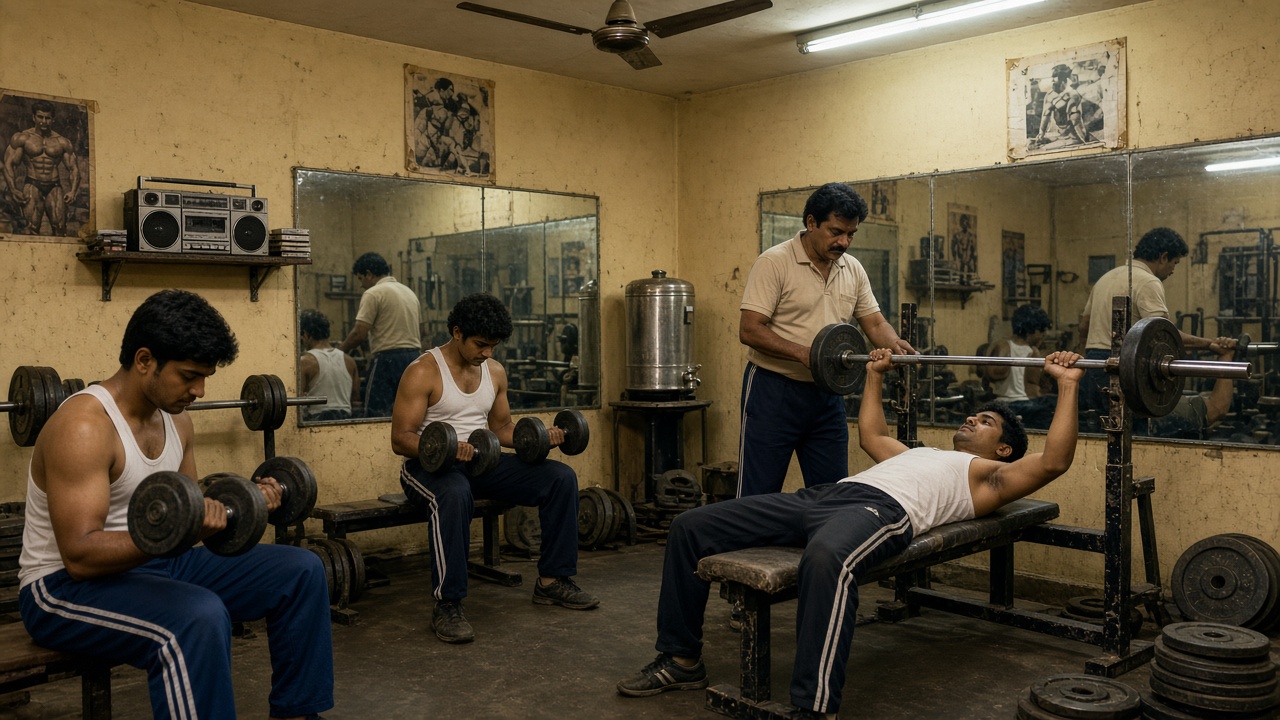
In the 1980s and 1990s neighbourhood gyms with iron dumbbells, barbells, and big mirrors opened in city lanes, aerobics classes drew women to group exercise, and jogging became a hobby. Film heroes with gym-built bodies made muscles fashionable, and after liberalisation tracksuits, sports shoes, and protein powders arrived in shops.
Iron weights, mirrors, and a cassette player in a 1990s neighbourhood gym (artistic illustration).
1982: New Delhi hosts the Asian Games, building stadiums and sparking public interest in sport and fitness, and the Sports Authority of India is set up in 1984.
1980s: Neighbourhood gyms with iron weights open in cities, aerobics classes and jogging catch on, and exercise shows appear on television.
1990s: Film heroes with muscular, gym-built bodies make bodybuilding fashionable, and gyms multiply in cities and small towns.
1990s: After liberalisation, imported gym machines, sports shoes, tracksuits, and protein supplements become available, and gym chains such as Talwalkars expand.
Technology
Free weights: Dumbbells and barbells.
Gym machines: Multi-station units.
Cassette music: Aerobics beats.
Features
Body goals: Film-star physiques.
Group aerobics: Women’s fitness.
Monthly fees: Gym memberships.
📺 Home2000 – 2014
TV Yoga, Home Workouts & Marathons
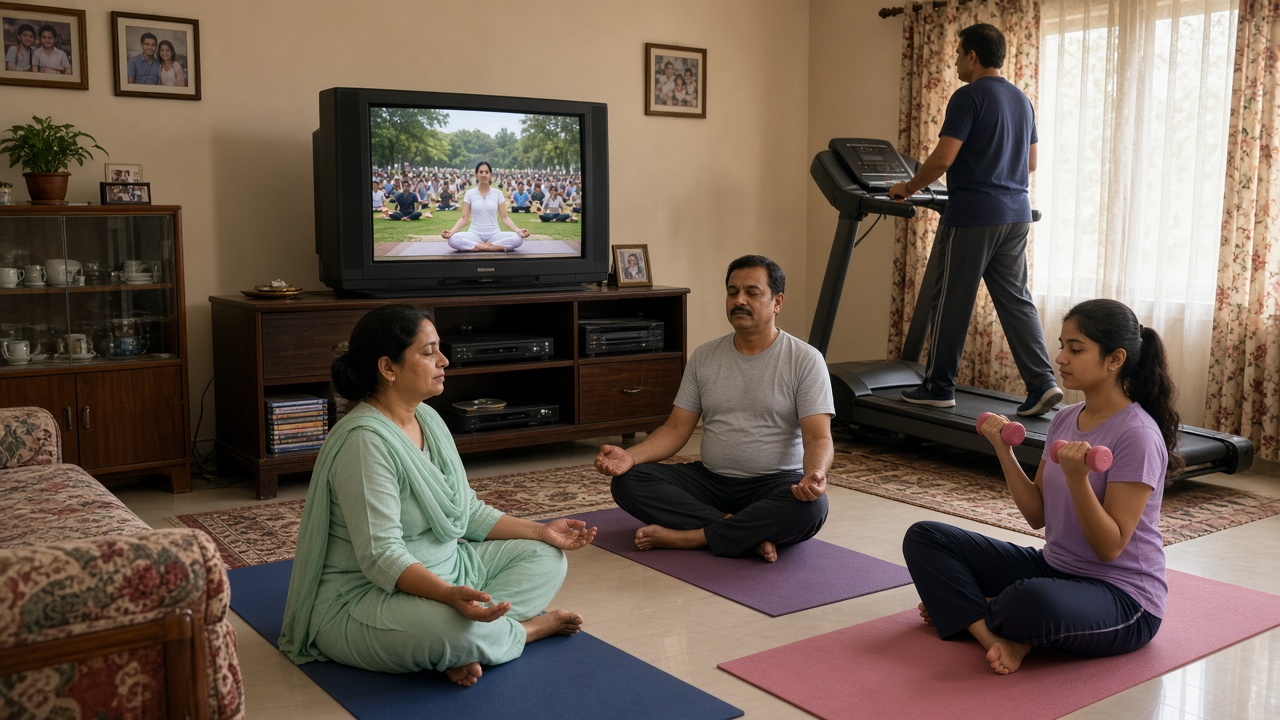
In the 2000s fitness came home. Televised yoga camps taught pranayama and asanas to millions in their living rooms, families bought treadmills and exercise cycles, and aerobics and power-yoga discs played on DVD players. City marathons and running clubs also began a new running culture.
Following a TV yoga camp at home, with a treadmill and dumbbells nearby (artistic illustration).
Early 2000s: Televised yoga camps led by Baba Ramdev make pranayama and yoga a daily home routine for millions of families.
2000s: Home treadmills, exercise cycles, and teleshopping fitness gadgets sell widely, and aerobics and power-yoga VCDs and DVDs are popular.
2004: The first Mumbai Marathon is held, and city marathons and running clubs start India’s running boom.
2010–2014: Zumba, power yoga, and pilates classes spread, YouTube workout videos grow, and early calorie and diet apps such as HealthifyMe (2012) appear.
Technology
TV channels: Daily yoga shows.
Treadmills: Walking indoors.
DVDs: Guided workouts.
Features
Family workouts: In the living room.
Pranayama: Breathing for health.
Running clubs: City marathons.
📱 Apps2015 – 2019
Fitness Apps, Studios & Yoga Day
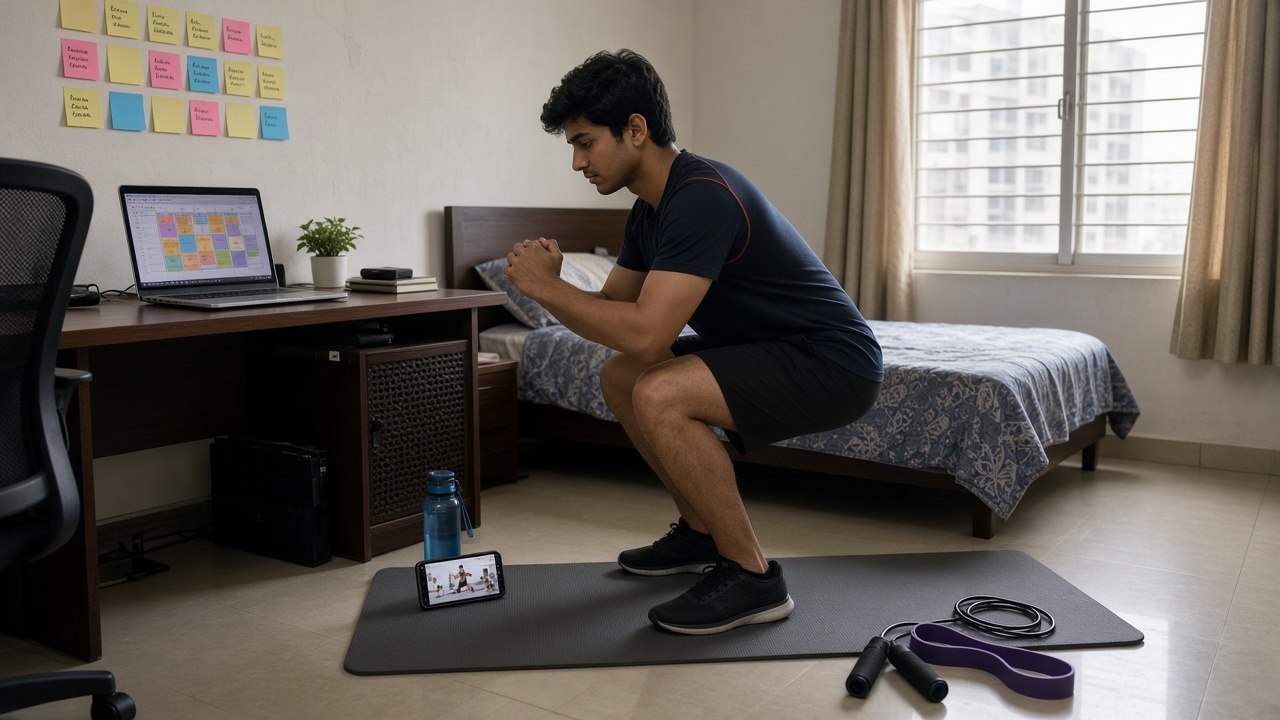
Cheap smartphones and 4G data put a personal trainer in every pocket. Fitness apps offered workout videos, step counters, and calorie tracking, app-based studios ran group classes, and fitness bands counted steps and sleep. International Day of Yoga and the Fit India Movement turned fitness into a national campaign.
A workout guided by a phone app, with a training plan on the laptop (artistic illustration).
2015: The first International Day of Yoga is held on 21 June, and a mass yoga session on Rajpath in New Delhi sets a Guinness World Record.
2016: Cure.fit (now cult.fit) is founded, combining group workout centres with an app, and app-based gym passes and home trainers grow.
2016–2018: Cheap 4G data boosts workout videos and fitness apps, fitness bands count steps and sleep, and the Khelo India programme launches its school games (2018).
2019: The Fit India Movement is launched on 29 August, National Sports Day, to encourage every citizen to be active every day.
Technology
Fitness apps: Plans and videos.
Step counters: Phone sensors.
Fitness bands: Steps and sleep.
Features
Yoga Day: 21 June every year.
Group classes: Book on an app.
Fit India: National campaign.
⌚ Wearables2020s – Future
Wearables, Online Classes & AI Coaches
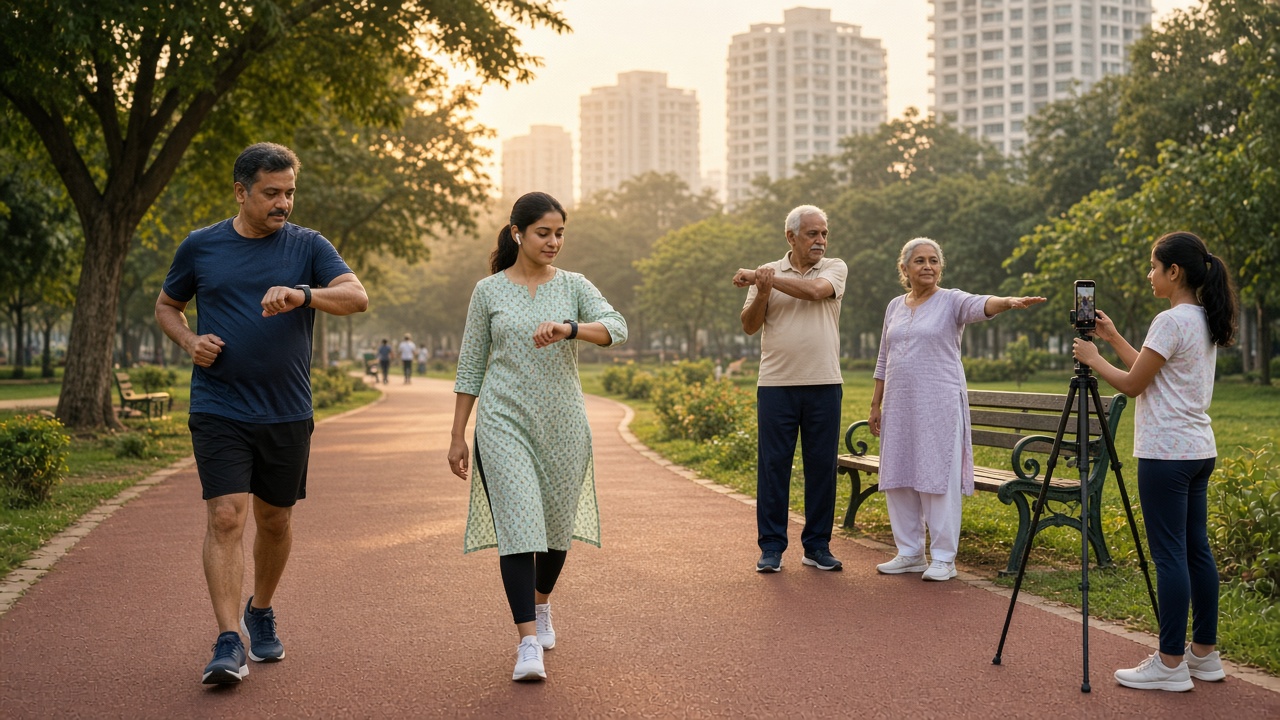
When gyms shut during the 2020 lockdown, Indians exercised on balconies and rooftops and joined live online yoga and workout classes. Affordable smartwatches from Indian brands then put heart-rate, SpO2, and sleep tracking on millions of wrists, and smart rings and AI coaches point to a future of data-driven, preventive fitness.
Smartwatches, fitness bands, and phone workouts in the morning park (artistic illustration).
2020: During the lockdown gyms close, live online classes and home workouts boom, yoga and pranayama are practised for breathing and stress, and the Fit India Freedom Run is held virtually.
2020–2021: The government recognises yogasana as a competitive sport (2020), and the Ministry of AYUSH launches the Y-Break yoga app for office workers (2021).
2020s: Low-cost smartwatches from Indian brands make India one of the world’s biggest smartwatch markets, tracking steps, heart rate, SpO2, sleep, and stress.
Future: Smart rings, glucose monitors, AI coaches that adjust workouts to your data, connected home gym equipment, and virtual-reality fitness.
Technology
Smartwatches: Heart rate and SpO2.
Smart rings: Sleep and recovery.
AI coaching: Personalised plans.
Features
Live classes: Exercise from home.
Health data: Trends on your phone.
Challenges: Step goals with friends.
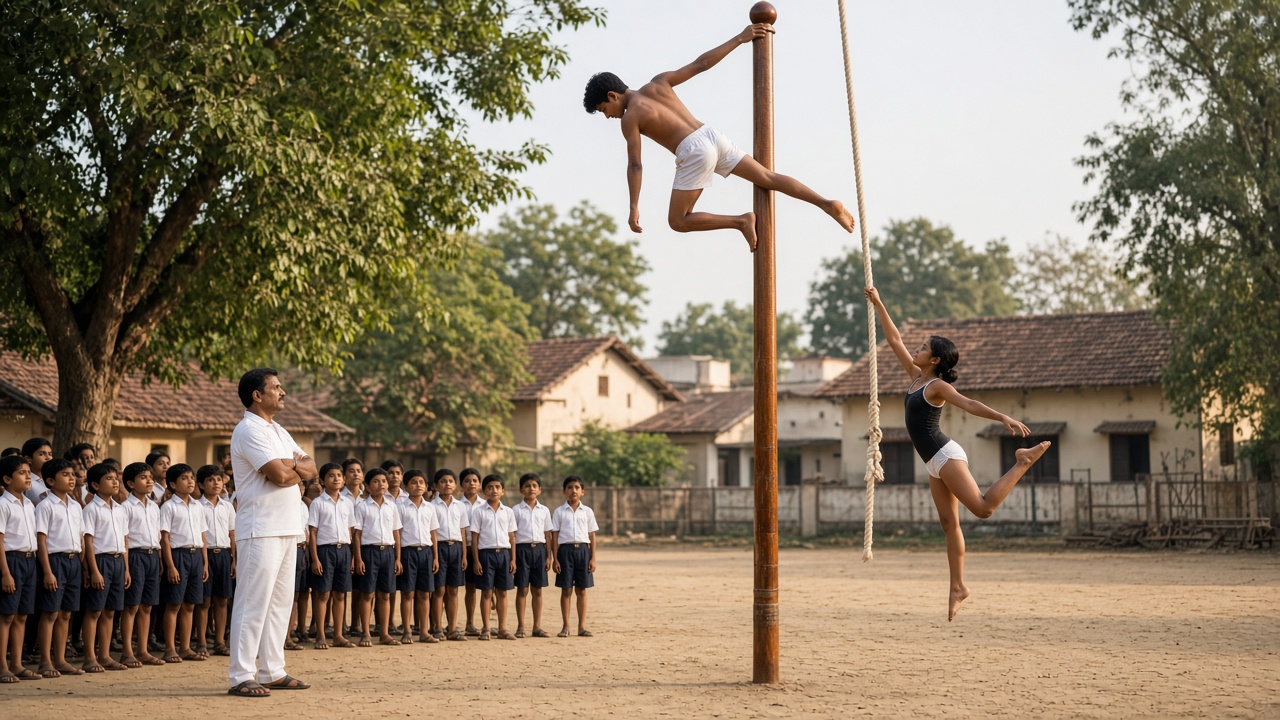
Traditional Indian Fitness Systems
Pole and rope mallakhamb, a traditional Indian sport of strength and balance (artistic illustration).
System
Region
What it builds
Yoga and pranayama
All India
Flexibility, breath control, and calm
Surya namaskar
All India
Full-body strength and flexibility
Kushti (pehlwani)
North and West India
Strength, stamina, and grip
Dand-baithak and club swinging
Akharas across India
Upper-body and leg endurance
Mallakhamb
Maharashtra and Madhya Pradesh
Balance, grip, and agility
Kalaripayattu
Kerala
Agility, flexibility, and combat skill
Gatka
Punjab
Coordination and stick-fighting skill
Silambam
Tamil Nadu
Stamina and staff-fighting skill
Thang-ta
Manipur
Sword and spear technique and reflexes
From Pulse to Smart Ring: How Fitness Was Measured
Tool
Common from
What it measured
Counting pulse and breaths
Traditional
Effort and recovery
Coin weighing machines
Mid-20th century (railway stations)
Body weight, often with a printed card
Bathroom scales
1980s–1990s
Weight at home
Stopwatch and measuring tape
School sports days
Speed and body size
Digital BP monitors
2000s
Blood pressure at home
Phone step counters
2010s
Daily steps
Fitness bands
Mid–late 2010s
Steps, sleep, and heart rate
Smartwatches
2020s
Heart rate, SpO2, stress, and workouts
Smart rings and glucose monitors
2020s
Sleep, recovery, and blood sugar trends
Government Fitness and Sports Initiatives
Initiative
Year
Purpose
National Cadet Corps (NCC)
1948
Discipline, drill, and fitness for students
National Institute of Sports, Patiala
1961
Training coaches and athletes
Sports Authority of India
1984
Developing sport across the country
International Day of Yoga
2015
Yoga for everyone on 21 June
Khelo India
2018
School and youth games and talent search
Fit India Movement
2019
Daily physical activity for all citizens
Yogasana as a competitive sport
2020
Yoga competitions and championships
Y-Break app
2021
Short yoga breaks at the workplace
Fitness Timeline Summary
Year / Era
Milestone
Ancient times
Yoga Sutras of Patanjali; akhara wrestling
12th century
Manasollasa describes wrestlers’ pole exercises
1910
The Great Gama wins in London
1918
The Yoga Institute, Bombay
1924
Kaivalyadhama, Lonavala
1948
NCC formed; school PT drills
1952
Manohar Aich wins Mr. Universe
1961
National Institute of Sports, Patiala
1966
Light on Yoga published
1982
Asian Games in New Delhi
1990s
Gym and bodybuilding boom
Early 2000s
Televised yoga camps
2004
First Mumbai Marathon
2015
First International Day of Yoga
2016
App-based fitness studios
2019
Fit India Movement
2020
Lockdown home workouts and online classes
2021
Y-Break yoga app
2020s
Smartwatch and smart ring boom
Future
AI coaches and preventive health tracking
Test Your Knowledge
20 quick questions from the fitness timeline. Click each question to reveal the answer.
Answer: The Yoga Sutras of Patanjali.
Answer: A traditional Indian wrestling school.
Answer: Indian push-ups and Indian squats.
Answer: A vertical wooden pole or a hanging rope.
Answer: Kerala.
Answer: 1918.
Answer: Swami Kuvalayananda.
Answer: The Great Gama.
Answer: 1948.
Answer: Manohar Aich.
Answer: Light on Yoga.
Answer: Patiala, Punjab.
Answer: New Delhi.
Answer: Yogic breathing exercises.
Answer: 2004.
Answer: 21 June.
Answer: 29 August 2019, National Sports Day.
Answer: The oxygen level in the blood.
Answer: The Ministry of AYUSH.
Answer: Gyms closed during the COVID-19 lockdowns.
Classroom activity
Students Tasks
Use these prompts for discussion or projects on how Indians have kept fit over time.
Timeline understandingHealthy habitsTraditional sportsHealth data
Interview a grandparent about how they stayed fit when they were young and what games they played.
Make a timeline poster: yoga (1950s), gyms (1980s), home workouts (2000s), fitness apps (2010s), and wearables (2020s).
Learn and practise the 12 steps of surya namaskar with your class, and note how you feel afterwards.
Research one traditional sport — mallakhamb, kalaripayattu, gatka, silambam, or thang-ta — and present it to the class.
Count your steps for one week using a phone or pedometer and compare school days with holidays.
Measure your resting pulse by hand, then after one minute of skipping, and explain the difference.
Compare a gym membership, a fitness app, and free exercise in a park on cost and benefits.
Find out how International Day of Yoga and the Fit India Movement are celebrated in your school.
Discuss what personal health data a smartwatch collects and how that data should be kept private.
Debate: “Smartwatches make people fitter than traditional exercise.”
Continue exploring
Fitness changed with mobile phones, artificial intelligence, television, and sportswear. Explore these connected timelines next.
Click any panel to expand and explore the visual mood.
India’s fitness journey in pictures — the village akhara, school PT drills and yoga, the 1990s gym, TV yoga at home, the fitness app workout, wearables in the park, mallakhamb, and then versus now.
Akhara
Kushti on clay
PT & Yoga
1950s school ground
Neighbourhood Gym
Iron and mirrors
TV Yoga
Living-room workouts
Fitness App
Trainer in your pocket
Wearables
Heart rate and steps
Mallakhamb
Pole and rope
Then vs Now
Riverbank to smartwatch
Explore all health timelines
Jump to any other health timeline on WorldTimelineHub.
Disclaimer: This content is AI-generated for educational purposes and may contain errors or outdated details. For correct and authoritative information, please refer to official and reliable sources such as government publications, manufacturers, museums, and academic references.