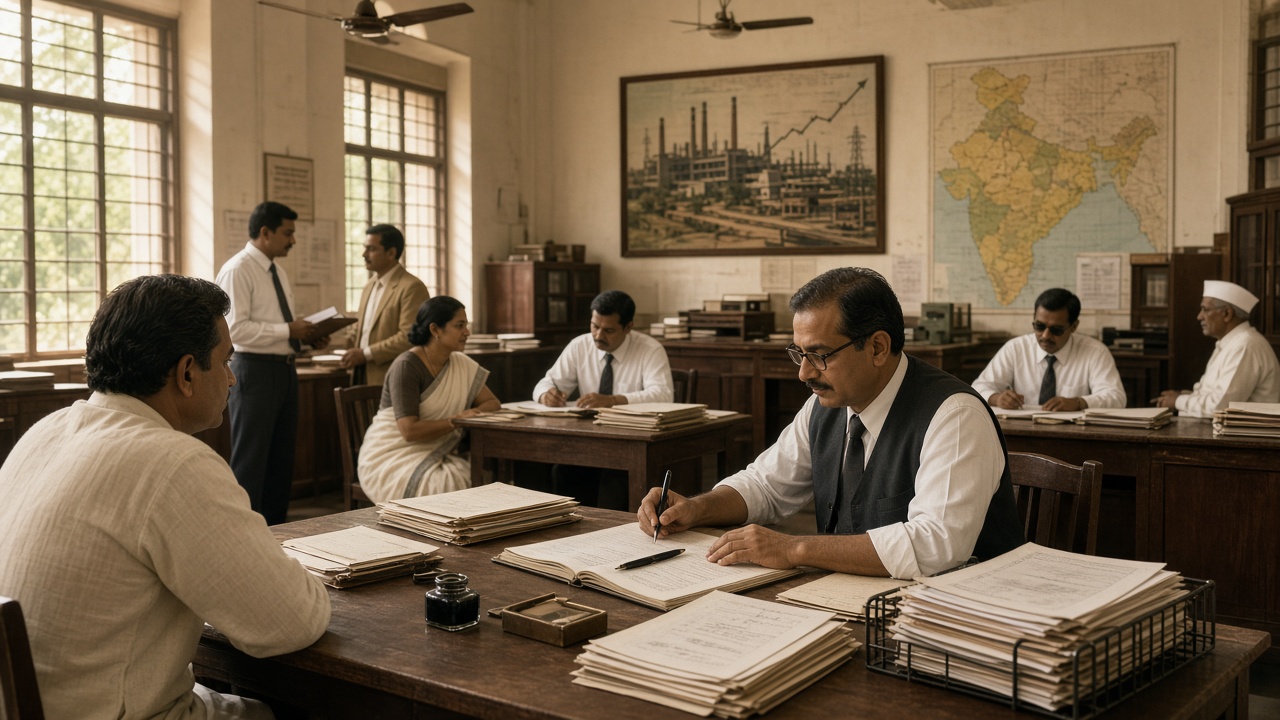
From Lloyd’s Coffee House and life insurance to LIC, privatisation, and insurtech—how risk-sharing became an industry, then an app.
Marine rootsLIC & marketsDigital cover
Why Insurance Matters
Insurance pools risk so one loss does not ruin a family or firm. From shipwrecks at Lloyd’s to life policies, India’s LIC era, open markets, and phone-based cover, each leap widens who can buy protection—and how claims are paid.
This timeline follows Lloyd’s Coffee House, life insurance, LIC, privatisation, and insurtech as linked turning points.
Big picture
Insurance in one view
Merchants underwrite ships over coffee; actuaries price life risk; India nationalises into LIC; markets reopen under IRDAI; apps sell and settle policies online.
From coffee-house underwriting to phone-first policies.
Marine Underwriting1680s
Lloyd's Coffee House
In late-17th-century London, Edward Lloyd’s coffee house became a hub where shipowners, merchants, and underwriters shared voyage news and wrote marine risks. That informal marketplace grew into Lloyd’s of London—a lasting model of pooled underwriting for ships, cargo, and later many other risks.
Lloyd’s era: insure the voyage over coffee.
Marine insurance organised around shipping intelligence.
Underwriters take shares of risk for premium.
Roots of a global insurance marketplace brand.
Protecting Families1700s–1900s
Life Insurance
Life insurance turned mortality into a priced product: premiums funded death benefits and savings-linked plans. Actuarial tables and companies spread the idea through Europe, then colonial and independent India—where private life offices operated until mid-20th-century nationalisation.
Life era: premiums buy protection for dependents.
Pools of lives replace one family’s catastrophic loss.
Actuaries and mortality tables professionalise pricing.
Agents and policies reach middle-class households.
Public-Sector Giant1956
LIC
In 1956 India nationalised private life insurers into the Life Insurance Corporation of India. LIC became the dominant life insurer—selling through agents nationwide, channeling savings into development, and shaping how generations of Indians thought about “policy” as security and investment.
LIC era: one public corporation for life cover.
1956 Act merges life offices into LIC.
Massive agent network and household brand trust.
Long monopoly until sector reopening.
Markets Reopen2000+
Privatization
With the IRDA Act and sector reforms around 2000, private and foreign-partnered insurers returned to life and non-life markets under a regulator (now IRDAI). Competition brought new products, bancassurance, and marketing—while LIC remained a powerful public player (later listing on exchanges).
Privatisation era: choice under IRDAI rules.
Private insurers licensed after decades of public dominance.
Unit-linked and health products expand options.
Regulation balances growth and policyholder protection.
Insurance by AppToday
Insurtech
Insurtech uses smartphones, data, and AI to sell, underwrite, and settle insurance—instant quotes, digital KYC, embedded cover at checkout, and faster claims. Start-ups and incumbents alike race to make insurance as easy as UPI, while regulators watch for fairness and cyber risk.
Insurtech era: cover sold and claimed on the phone.
Digital onboarding and paperless policies.
Embedded insurance in travel, gadgets, and lending.
Data-driven pricing with new ethics questions.
Key Milestones
Milestone
When
Why it matters
Lloyd’s Coffee House underwriting
late 1600s
Organised marine insurance marketplace.
Commercial life insurance grows
1700s–1900s
Mortality risk becomes a priced product.
LIC formed
1956
Life insurance nationalised in India.
IRDA / private entry
~2000
Sector opens to competition.
Insurtech & digital policies
2010s–today
Apps reshape buying and claims.
Ideas at a Glance
Era
Core question
Modern echo
Lloyd’s
Who shares ship risk?
Specialty / reinsurance markets
Life insurance
How to protect dependents?
Term & savings plans
LIC
Can a public giant serve all?
Large public-sector brand
Privatization
Does competition improve choice?
Many insurers + IRDAI
Insurtech
Can cover be instant?
App quotes & embedded insurance
Then vs Now
From coffee-house slips to digital KYC.
Metric
Then
Now
Place
Coffee house / agent desk
App, web, bank branch
India market
LIC monopoly (life)
LIC + private + digital players
Documents
Paper policies & stamps
e-policies & e-KYC
Claims
Slow paper trails
Faster digital claims (still uneven)
Trust
Personal underwriter / agent
Brand + regulator + ratings
Future Predictions
Embedded cover: More insurance sold inside UPI, e-commerce, and lending flows.
Health + life: Bundled wellness and parametric products grow.
AI underwriting: Faster quotes with sharper privacy and bias rules.
India: Higher insurance penetration outside metros remains the big goal.
India spotlight
Insurance & India
India’s insurance story runs from colonial-era companies through 1956 nationalisation (LIC), IRDAI-era privatisation, and today’s mix of public giants, private insurers, and insurtech apps—still racing to raise coverage for a large population.
India spotlight: LIC trust to digital competition.
Pre-1956
Private life offices
Many companies sell life cover before nationalisation.
1956
LIC born
Life insurance consolidates into one public corporation.
~2000
Markets open
IRDA/IRDAI era brings private competition.
Today
Insurtech
Apps, UPI-linked payments, and online claims scale.
Strength: Deep agent networks and growing digital rails.
Jump to any other economy timeline on WorldTimelineHub.
Disclaimer: This content is AI-generated for educational purposes and may contain errors or outdated details. For correct and authoritative information, please refer to official and reliable sources such as government publications, manufacturers, museums, and academic references.