From cottage industries and Five Year Plans through the License Raj and 1991 reforms to Make in India and PLI schemes—how India tried to build factories and jobs.
Industrial policy decides what gets built, who can enter markets, and which sectors get state support. India’s path runs from village crafts and planned heavy industry to dismantling controls, then courting factories again with campaigns and production incentives.
This timeline follows cottage industries, Five Year Plans, License Raj, 1991 reforms, Make in India, and PLI schemes as linked turning points.
Big picture
Policy in one view
Handlooms and village workshops; five-year targets for steel and dams; permits to open a factory; crisis-driven liberalisation; a manufacturing pitch; cash rewards for making more in India.
From village workshops to production-linked incentives.
Village ProductionPre-plan
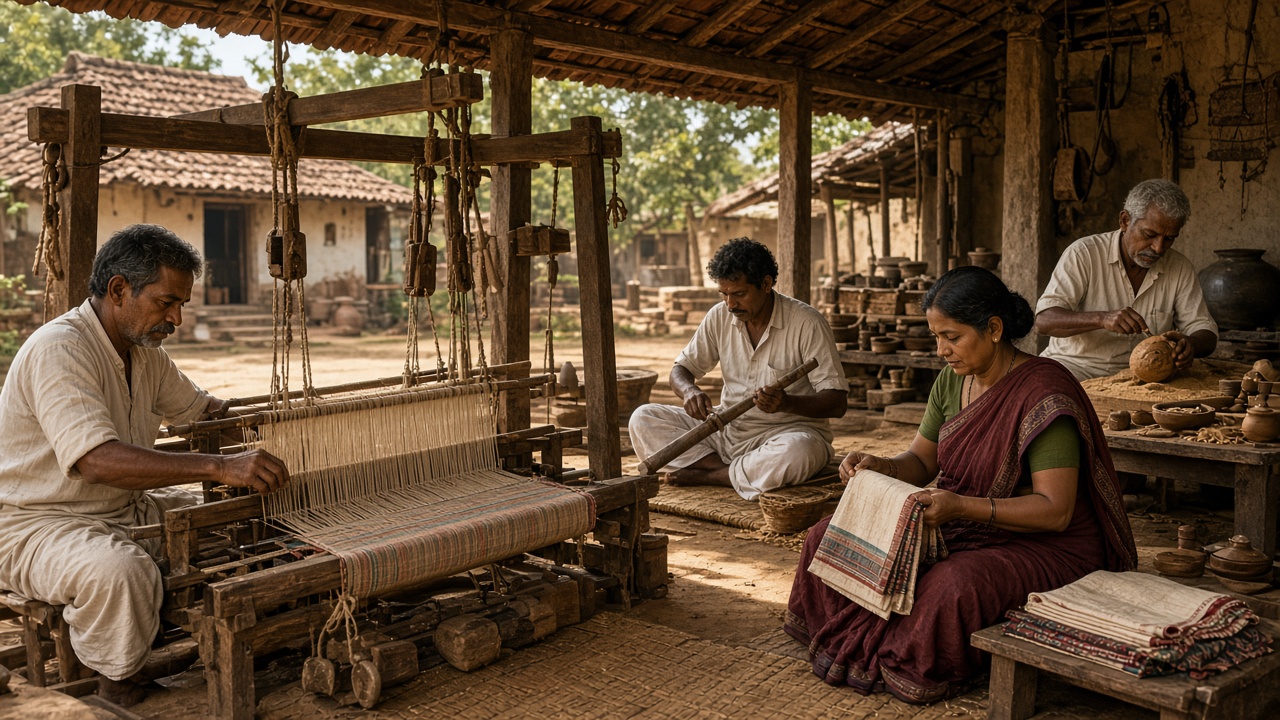
Cottage Industries
Before large factories dominated policy talk, India’s industrial base included handlooms, crafts, and small workshops. Freedom-era debates weighed cottage industry employment against modern mills—a tension that still echoes in MSME and handicraft support.
Cottage era: livelihoods rooted in local craft.
Handlooms, crafts, and home-based production.
Employment-intensive alternative to big mills.
Policy roots of today’s MSME focus.
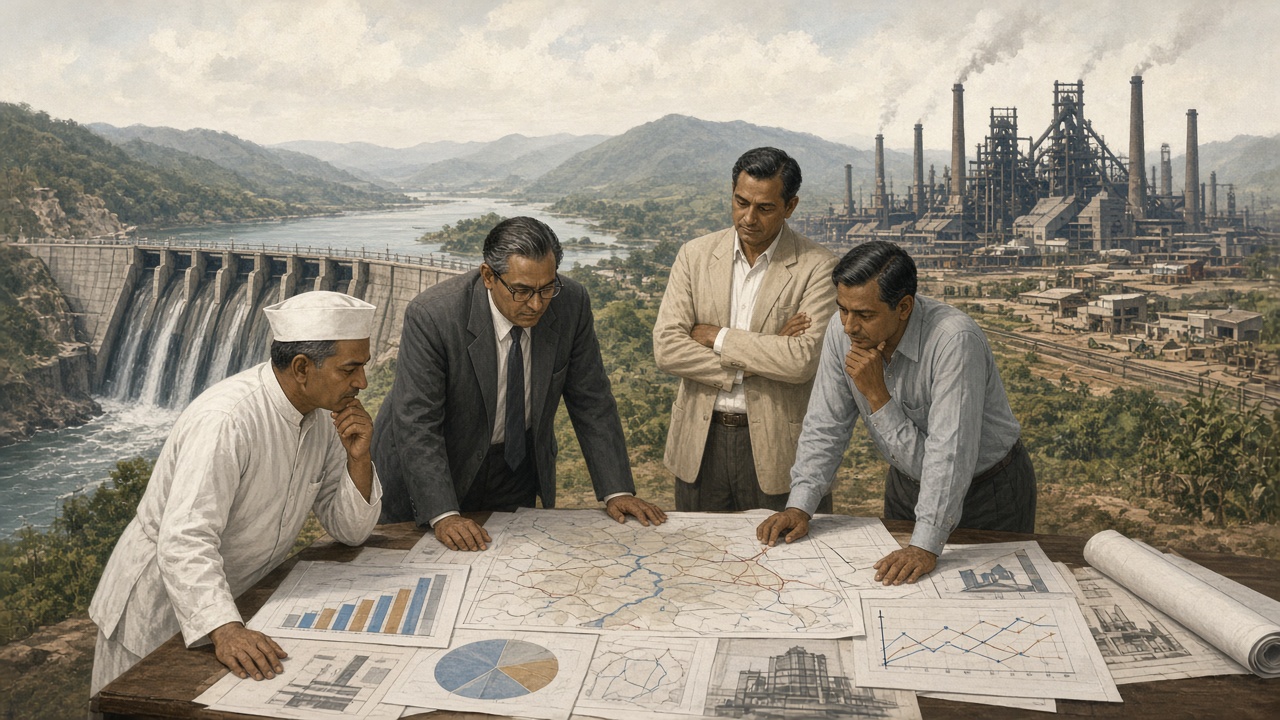
Planned Industrialisation1951+
Five Year Plans
From 1951, Five Year Plans set national investment priorities. Early plans emphasised heavy industry, steel, power, and machinery—building public-sector capacity so India could make machines that make machines, not only consumer goods.
Plan era: targets for steel, power, and industry.
Planning Commission–era investment roadmaps.
Public-sector heavy industry push.
Growth with state as lead investor.
Permits to ProduceControls era
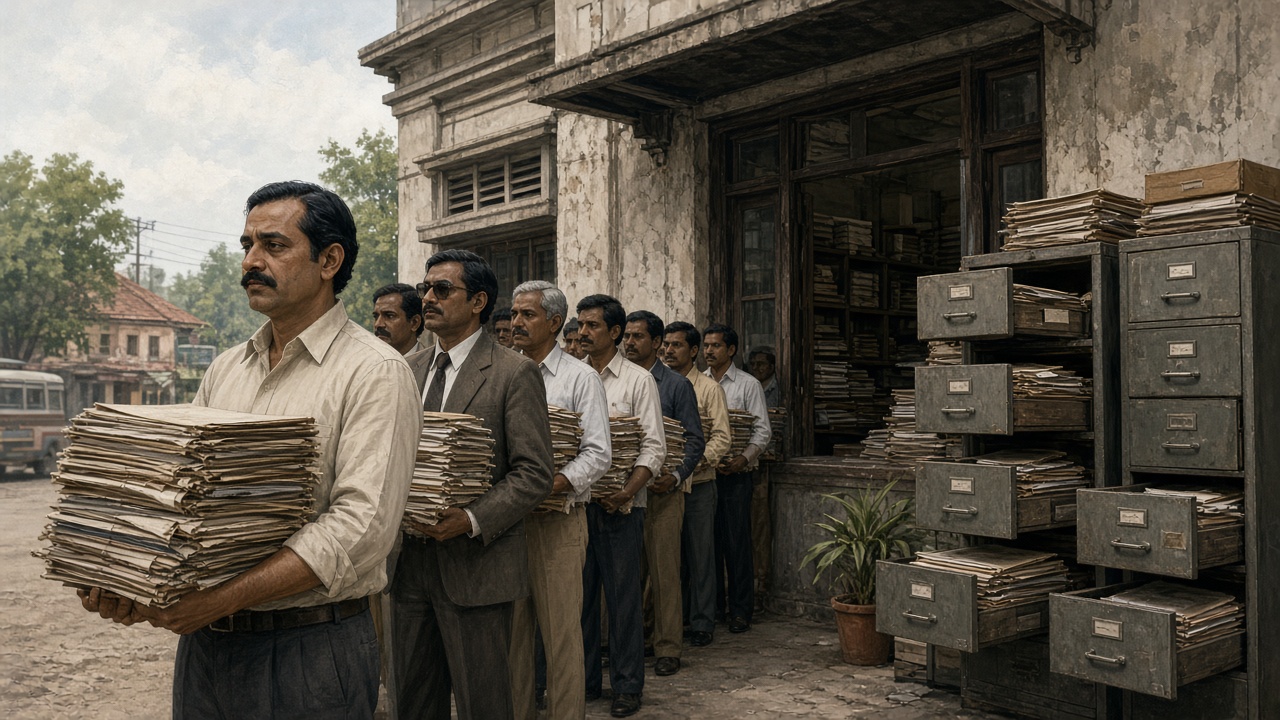
License Raj
Industrial licensing and capacity controls meant many firms needed government permission to enter or expand. Critics dubbed it the License Raj: delays, shortages, and protected incumbents. Defenders saw controls as tools for planned allocation—until crisis forced a rethink.
License Raj era: growth gated by permits.
Licenses for entry, expansion, and product lines.
High compliance costs and limited competition.
Pressure builds toward liberalisation.
Opening the Economy1991
1991 Reforms
A balance-of-payments crisis catalysed sweeping reforms: industrial licensing was largely dismantled, trade barriers fell, and foreign investment rules loosened. 1991 marks the shift from control-heavy industrial policy toward markets, competition, and global integration.
1991 era: dismantle licenses, open trade.
End of most industrial licensing.
Trade and investment liberalisation.
Private sector expands in new industries.
Manufacturing Pitch2014+
Make in India
Launched in 2014, Make in India aimed to attract investment, ease doing business, and raise manufacturing’s share of growth and jobs. It reframed industrial policy as a national brand: India as a factory destination for electronics, autos, defence, and more.
Make in India era: invite factories and jobs.
Investment promotion and sector focus lists.
Ease-of-doing-business reforms narrative.
Sets stage for stronger production incentives.
Pay for Production2020+
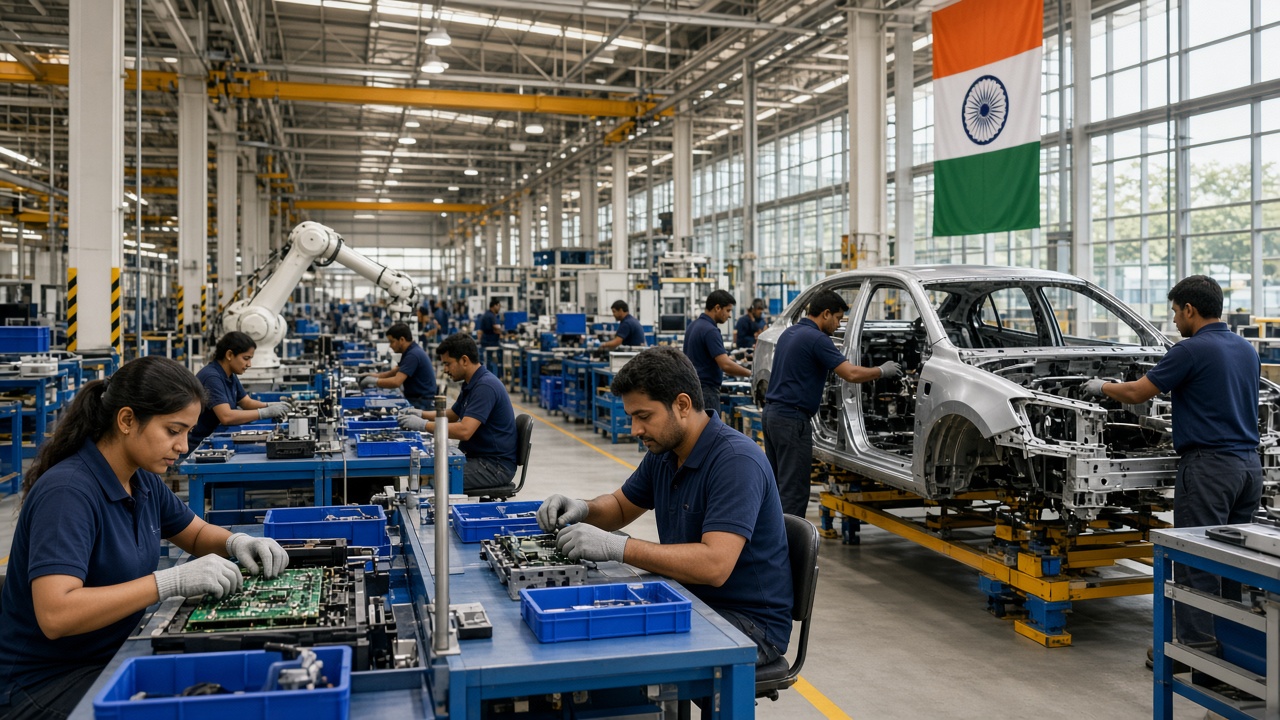
PLI Schemes
Production Linked Incentive (PLI) schemes reward firms for incremental output in priority sectors—electronics, pharmaceuticals, solar, autos, and others. Policy shifts from blanket licensing to targeted cash incentives tied to making more in India.
PLI era: incentives linked to output growth.
Sector-specific production targets and payouts.
Aim: supply chains and scale in India.
Debate over costs, jobs, and who benefits.
Key Milestones
Milestone
When
Why it matters
Cottage / small industry emphasis
Pre- & early independence
Employment-first craft production.
First Five Year Plan
1951
Formal planning for industry & growth.
License Raj controls
Mid-century–1991
Permits shape who can manufacture.
Liberalisation package
1991
Licensing largely dismantled.
Make in India launch
2014
Manufacturing as national campaign.
PLI schemes expand
2020+
Pay for incremental production.
Policy Tools at a Glance
Era
Core tool
Goal
Cottage
Craft & village production
Jobs & local goods
Five Year Plans
Public investment targets
Heavy industry base
License Raj
Permits & capacity controls
Allocate / restrict entry
1991
Deregulation & openness
Competition & FDI
Make in India
Promotion & ease of business
Attract factories
PLI
Output-linked incentives
Scale priority sectors
Then vs Now
From permit queues to production incentives.
Metric
Then
Now
Entry to industry
Often needs a license
Mostly open; sector rules remain
State role
Owner + planner + licensor
Regulator + promoter + incentiviser
Trade
High barriers
More integrated supply chains
Focus
Heavy industry & import substitution
Exports, electronics, green mfg
Small industry
Cottage as ideology
MSMEs + PLI giants side by side
Future Predictions
PLI 2.0: More sectors and tighter job/value-add conditions.
Green industry: Incentives tilt to EVs, batteries, and renewables manufacturing.
Supply chains: China+1 shifts deepen electronics and pharma capacity.
MSMEs: Policy tries to link small suppliers into PLI ecosystems.
India spotlight
Industrial Policy & India
India’s industrial story is a long experiment: protect crafts, plan steel, license factories, open markets, then subsidise production. Each phase answered a different fear—colonial deindustrialisation, scarcity, bureaucracy, or missing manufacturing jobs.
India spotlight: build capacity, then compete globally.
Early
Cottage & small industry
Craft livelihoods shape early industrial thinking.
1951+
Plans & PSU industry
Five Year Plans drive heavy industry.
Controls
License Raj
Permits dominate entry and expansion.
1991
Liberalisation
Markets open; licensing shrinks.
2014–now
Make in India & PLI
Promotion plus production incentives.
Strength: Scale, talent, and growing electronics/pharma capacity.
Need: Skills, logistics, and reliable power for factories.
Debate: Free markets vs active industrial policy; PLI cost vs jobs.
Test Your Knowledge
20 questions on India’s industrial policy. Click to reveal answers.
Answer: Small-scale / village or home-based production.
Answer: 1951.
Answer: Heavy industry / infrastructure (broadly).
Answer: Heavy industrial licensing / permit controls.
Answer: Delays, red tape, less competition (among others).
Answer: Balance-of-payments / economic crisis.
Answer: Largely dismantled industrial licensing.
Answer: 2014.
Answer: Boost manufacturing / investment / jobs.
Answer: Production Linked Incentive.
Answer: Incremental production / output growth.
Answer: Electronics, pharma, solar (among others).
Answer: Micro, small and medium enterprises (small industry).
Answer: Make at home instead of importing.
Answer: Public Sector Undertaking / state-owned enterprise.
Answer: Reducing controls and opening markets.
Answer: Build capacity for machines, steel, power.
Answer: Campaign/promotion vs cash incentives for output.
Answer: Cottage / traditional small industry.
Answer: Cottage → Five Year Plans → License Raj → 1991 → Make in India → PLI.
Classroom activity
Students Tasks
Ten prompts on industrial policy for projects and debate.
EconomyPolicyIndiaManufacturing
Poster: Cottage → Plans → License Raj → 1991 → Make in India → PLI.
Interview a local artisan or MSME owner about challenges (with respect).
One-page: pros and cons of the License Raj.
Explain why 1991 is called a turning point in three paragraphs.
Debate: Should India subsidise manufacturing with PLI?
Pick one PLI sector and list what India hopes to make.
Compare cottage industry jobs vs large factory jobs in a table.
Map three public-sector steel or power projects from the plan era.
Comic: a factory permit queue becomes a Make in India ribbon-cutting.
Design a class “mini PLI”: reward output of a classroom product.
Continue exploring
Industrial policy links banking, the rupee, markets, and world industry.
Jump to any other economy timeline on WorldTimelineHub.
Disclaimer: This content is AI-generated for educational purposes and may contain errors or outdated details. For correct and authoritative information, please refer to official and reliable sources such as government publications, manufacturers, museums, and academic references.