From family businesses and the dotcom boom to Flipkart, unicorns, deep tech, and decacorns—how India learned to fund and scale new companies.
Shops → sitesVC & unicornsDeep tech scale
Why Startups Matter
Startups turn ideas into companies that hire, export, and reshape daily life—from shops and trading houses to venture-backed apps and labs. India’s path runs from family enterprise through internet hype and e-commerce breakthroughs to billion-dollar valuations and hard-tech bets.
This timeline follows family businesses, the dotcom boom, Flipkart, the unicorn era, deep tech, and decacorns as linked turning points.
Big picture
Startups in one view
Family firms build patiently; the net boom teaches boom–bust; Flipkart proves consumer internet at Indian scale; unicorns multiply; deep tech aims at chips and robots; decacorns chase global mega-valuations.
For generations, India’s private enterprise meant family trading houses, mills, and shops—capital from kinship networks, control within the family, and growth over decades. That model still dominates employment and wealth even as venture startups grab headlines.
Family era: build slowly, keep control.
Trading, manufacturing, and retail houses.
Patient capital and succession across generations.
Foundation for later corporate and startup talent.
Internet Hype Wave~2000
Dotcom Boom
The global late-1990s internet boom reached India through portals, early e-commerce experiments, and Y2K-era IT services demand. The bust that followed taught founders and investors that eyeballs are not a business model—cash flow and product still matter.
Dotcom era: first taste of internet company mania.
Early web companies and IT services surge.
Boom–bust filters weak ideas from survivors.
Seeds India’s later consumer internet talent pool.
E-commerce Breakthrough2007+
Flipkart
Founded in 2007, Flipkart became the flagship story of Indian consumer internet—books then everything, cash-on-delivery logistics, and venture capital at scale. It proved that India could build marketplace giants, not only outsource software for the world.
Flipkart era: order online, deliver India-wide.
Consumer e-commerce as a national category.
VC playbooks and founder culture go mainstream.
Opens path for payments, food, and mobility apps.
Billion-Dollar Club2010s–20s
Unicorn Era
Cheap smartphones, data, and digital payments fuelled a wave of Indian unicorns—$1B+ private valuations across fintech, commerce, edtech, SaaS, and mobility. Bengaluru, Delhi-NCR, and other hubs became global VC destinations, even as later funding winters tested fragile models.
Unicorn era: India mints billion-dollar startups.
$1B+ valuations become a cultural milestone.
UPI and smartphones expand addressable markets.
Governance and unit economics face hard scrutiny.
Hard Science VenturesRising
Deep Tech
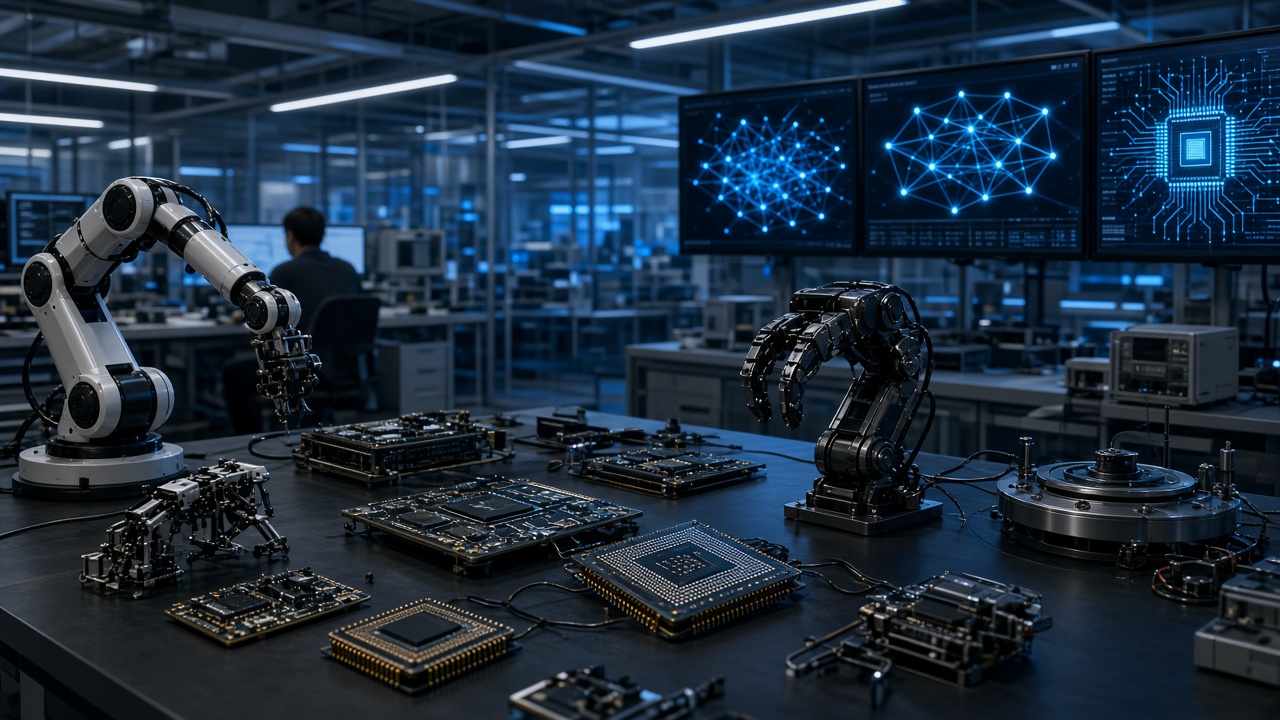
Beyond consumer apps, deep-tech startups tackle semiconductors, space, robotics, climate tech, biotech, and AI infrastructure. Longer R&D cycles need patient capital and labs—shifting India’s startup story from clones and marketplaces toward original engineering.
Deep-tech era: build the hard stuff.
IP and engineering as the core product.
Links to PLI, space, and semiconductor policy.
Patient capital vs quick consumer growth hacks.
Ten-Billion ScaleMega-scale
Decacorns
Decacorns—private companies valued at $10B+—mark the next ambition rung after unicorn status. A few Indian-founded firms reached or approached this tier as global capital chased mega-rounds, raising questions about durability, listing paths, and who captures the upside.
Decacorn era: mega-valuations and global ambition.
$10B+ private valuation as a new bar.
Mega-rounds, secondary sales, and IPO debates.
Pressure to show profits after growth-at-all-costs.
Key Milestones
Milestone
When
Why it matters
Family enterprise dominant
Longstanding
Baseline model of Indian private business.
Dotcom boom & bust
~1999–2001
First internet company cycle lessons.
Flipkart founded
2007
Consumer e-commerce at Indian scale.
Unicorn wave
2010s–2020s
Many $1B+ startups across sectors.
Deep-tech push
Late 2010s+
Hardware/IP ventures rise.
Decacorn ambition
2020s
$10B+ valuations enter the conversation.
Models at a Glance
Era
Capital style
Typical goal
Family business
Retained earnings / kin
Control & longevity
Dotcom
Early VC / markets hype
Web scale (often too early)
Flipkart
Venture rounds
Category leadership
Unicorn
Global VC / growth equity
$1B valuation club
Deep tech
Patient / strategic capital
Hard IP & products
Decacorn
Mega-rounds
$10B+ global scale
Then vs Now
From family ledgers to mega-round pitch decks.
Metric
Then
Now
Founding capital
Family / bank loans
Angels, VCs, corporates
Speed
Decades of compounding
Months of burn for growth
Success marker
Respect & market share
Valuation headlines
Tech stack
Shop floor & ledgers
Cloud, apps, AI, labs
Exit paths
Succession / listing rare
IPO, M&A, secondaries
Future Predictions
Profitability: Markets reward sustainable unit economics over vanity growth.
Deep tech: More chips, space, and climate startups reach Series B+.
Tier-2 hubs: Startup activity spreads beyond Bengaluru and NCR.
Family + startup: More family offices fund and professionalise next-gen ventures.
India spotlight
Startups & India
India’s startup story overlays an older family-business economy: IT services and liberalisation prepared talent; Flipkart-era e-commerce proved domestic markets; unicorns rode UPI and smartphones; deep tech and decacorns now test whether India can build global hard companies, not only consumer apps.
India spotlight: services to consumer internet to deep tech.
Long arc
Family houses
Trading and industry groups define private enterprise.
~2000
Dotcom cycle
Internet hype meets IT services strength.
2007+
Flipkart & consumer net
E-commerce becomes a national category.
2015+
Unicorns
VC and digital rails mint many $1B firms.
Today
Deep tech & decacorns
Hard tech and mega-valuations set new goals.
Strength: Talent, domestic market, digital public rails.
Need: Patient capital for deep tech and better public markets exits.
Debate: Valuation vs value; founder celebrity vs governance.
Test Your Knowledge
20 questions from family firms to decacorns. Click to reveal answers.
Answer: Retained earnings / family capital (broadly).
Answer: Late 1990s / ~2000.
Answer: Hype without revenue fails.
Answer: 2007.
Answer: E-commerce / online retail.
Answer: $1 billion.
Answer: Smartphones, cheap data, digital payments / UPI (among factors).
Answer: Venture capital.
Answer: Hard science / engineering / IP-heavy products.
Answer: Semiconductors, robotics, space, biotech, AI infra (any).
Answer: $10 billion.
Answer: Startups often seek rapid VC-backed scale; family firms favour control.
Answer: Bengaluru (among others).
Answer: Built trust for early online shoppers.
Answer: Period of scarce / cautious venture capital.
Answer: Profitability of serving one customer / unit.
Answer: Initial public offering / listing on a stock exchange.
Answer: Longer R&D cycles before revenue.
Answer: No — valuations can fall.
Answer: Family businesses → dotcom → Flipkart → unicorns → deep tech → decacorns.
Classroom activity
Students Tasks
Ten prompts from family firms to decacorns for projects and debate.
StartupsEconomyIndiaInnovation
Poster: Family → Dotcom → Flipkart → Unicorn → Deep tech → Decacorn.
Interview a local family business about how they fund growth.
Jump to any other economy timeline on WorldTimelineHub.
Disclaimer: This content is AI-generated for educational purposes and may contain errors or outdated details. For correct and authoritative information, please refer to official and reliable sources such as government publications, manufacturers, museums, and academic references.