From colonial famine codes and the Bhopal gas tragedy to the Odisha super-cyclone, NDMA, and modern early warning —
India rebuilt disaster response from relief paperwork to preparedness systems.
This timeline follows five turns: administrative famine rules, industrial catastrophe, a cyclone that remade coastal preparedness,
a national disaster authority, and the science of alerts that reach villages in time.
Disasters are not only natural events — they are failures of warning, planning, and justice as much as storms or leaks.
India’s story moves from colonial famine bureaucracy to industrial liability, cyclone shelters, a national authority,
and alerts that aim to give every coastal village hours — not minutes — to act.
From famine codes and Bhopal to cyclone shelters, NDMA, and early warnings.
📜 Relief Bureaucracy1870s – 1940s
Famine Codes
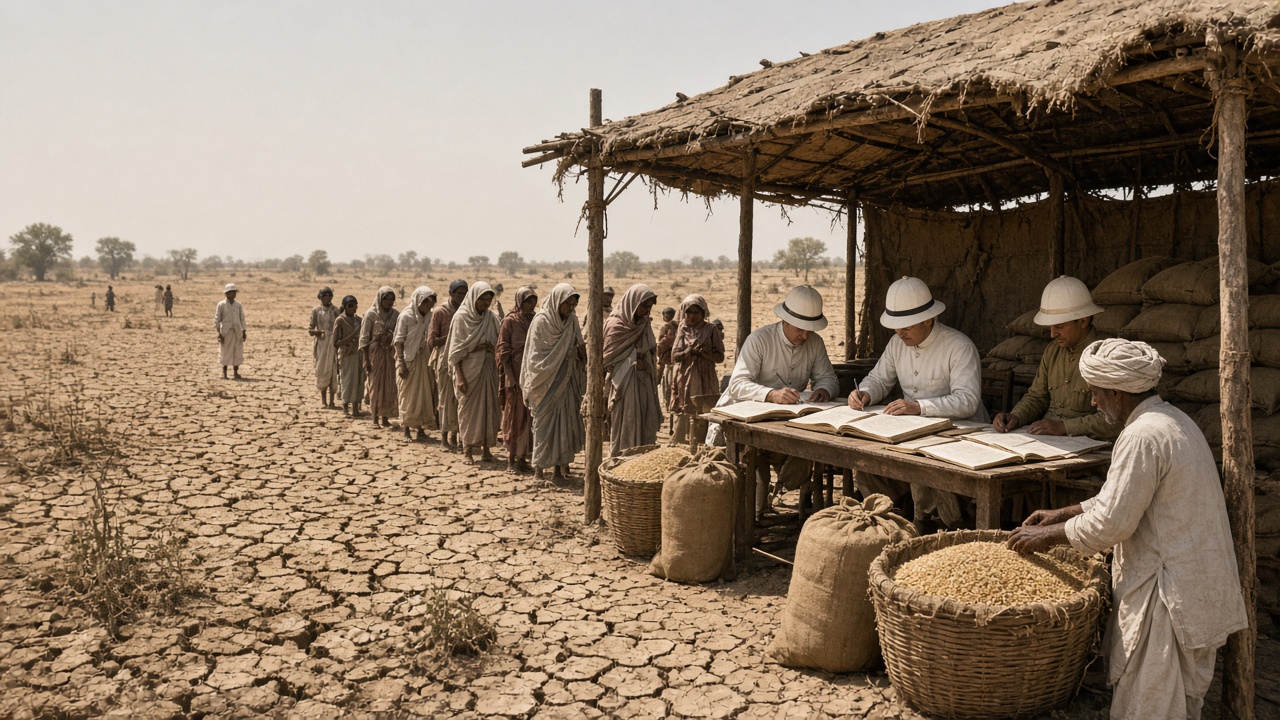
After devastating 19th-century famines, the colonial state wrote Famine Codes — rules for declaring scarcity, opening relief works, and setting wages. They were administration as disaster policy: late, limited, and contested.
Famine Codes: when drought became paperwork — and sometimes relief.
Famine Commissions: Inquiries after crises (notably after 1876–78 and 1899–1900) shaped code principles.
Trigger rules: Price spikes, crop failure, and distress signals guided when to act.
Relief works: Labour for wages on public works — criticised for harsh tests and delayed help.
Legacy: Independent India later built food security systems (PDS, later NFSA) beyond colonial code logic.
Ideas & Practices
Administrative thresholds: Formal tests for declaring famine or scarcity.
Public works relief: Employment as the main safety net.
Grain trade views: Debates over free trade versus state grain movement.
Features
Codified response: Reduced pure ad-hoc improvisation.
Thin entitlements: Often too little, too late for the poorest.
Historical lesson: Prevention and rights matter more than post-crisis charity.
⚗️ Industrial Catastrophe1984
Bhopal
On 2–3 December 1984, a methyl isocyanate leak from the Union Carbide plant turned Bhopal into the world’s deadliest industrial disaster — forcing India to confront chemical safety, liability, and long-term health justice.
Bhopal: when a factory leak became a national wound.
The night: Toxic gas spread through densely populated neighbourhoods near the plant.
Immediate toll: Thousands died within days; tens of thousands suffered lasting injuries.
Legal & medical aftershocks: Compensation battles, contamination debates, and chronic illness continue for decades.
Policy imprint: Stronger hazardous-industry regulation and the Environment Protection Act era context.
Issues Exposed
Plant safety systems: Failures in maintenance, alarms, and emergency response.
Urban proximity: Hazardous industry next to homes.
Information gaps: Communities lacked clear warning and medical protocols.
Features
Man-made disaster: Not a storm — a systems failure.
Intergenerational harm: Health and environment effects lasting generations.
Accountability lesson: Corporate liability and state oversight remain central debates.
🌀 Coastal Catastrophe1999
Odisha Super-Cyclone
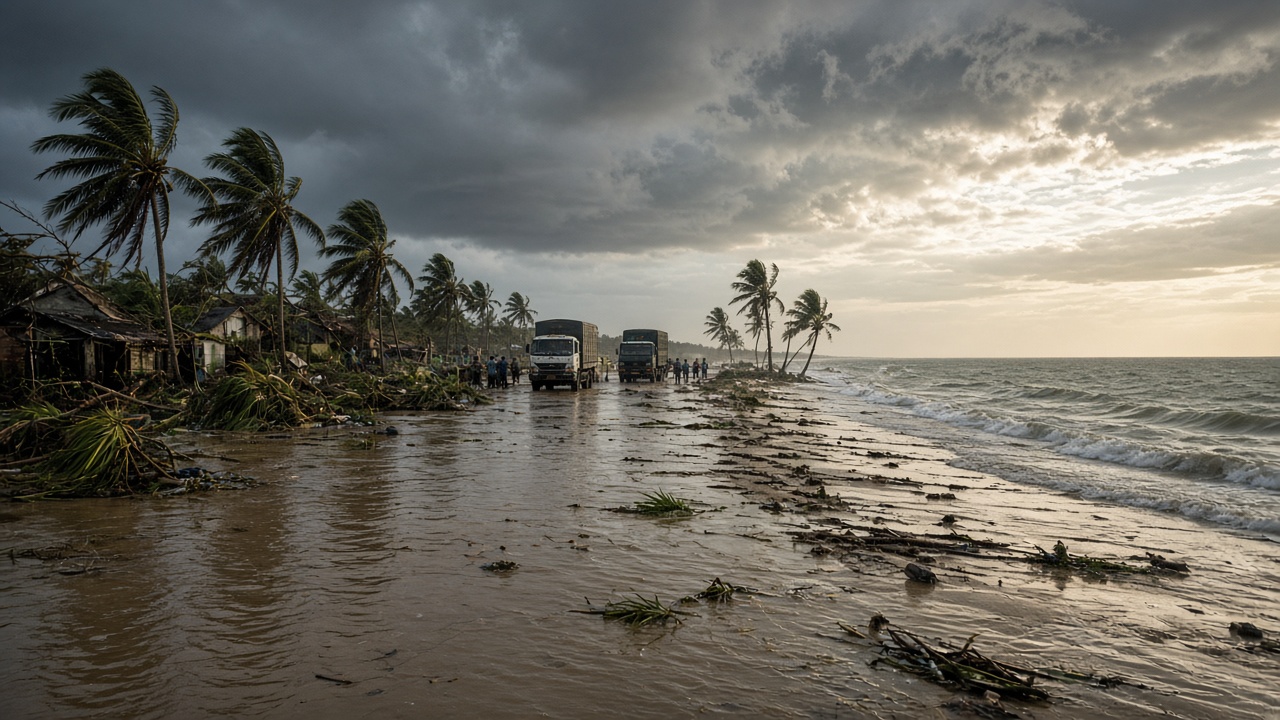
In October 1999, a super-cyclone devastated Odisha’s coast — killing around 10,000 people. The shock became a turning point for shelters, evacuation culture, and state disaster preparedness.
1999: the storm that remade Odisha’s disaster playbook.
Storm surge & wind: Coastal districts hit by extreme winds and seawater inundation.
Communication collapse: Warnings and relief struggled as networks failed.
Aftermath reforms: Multipurpose cyclone shelters, drills, and stronger state machinery.
Later tests: Cyclone Phailin (2013) showed mass evacuation could slash death tolls.
Technology Used
Satellite & IMD forecasts: Improving track and intensity prediction.
Cyclone shelters: Elevated community buildings for surge refuge.
Evacuation logistics: Buses, local officials, and village volunteers.
Features
Preparedness dividend: Investment after 1999 saved lives later.
Community role: Local trust decides whether people move.
Climate context: Intense cyclones remain a rising coastal risk.
🏛️ National Authority2005 – Present
NDMA
The Disaster Management Act 2005 created the National Disaster Management Authority (NDMA) — shifting India from ad-hoc relief toward a structured national, state, and district disaster system.
NDMA: policy, plans, and coordination as national infrastructure.
DM Act 2005: Legal backbone for NDMA, SDMAs, and DDMAs.
Nodal coordination: Works with NDRF, IMD, states, and ministries during crises.
Living mandate: Floods, quakes, heatwaves, pandemics, and industrial hazards all fall in scope.
Institutions & Tools
Disaster plans: National / state / district disaster management plans.
NDRF: Specialised response force for rescue and relief.
Guidelines: Hazard-specific manuals for schools, hospitals, and cities.
Features
Federal design: Centre–state–district layers of responsibility.
Capacity building: Training and mock drills as routine practice.
Implementation gaps: Plans on paper still need local readiness.
📡 Warn Early, Act Fast2000s – Present
Early Warning Systems
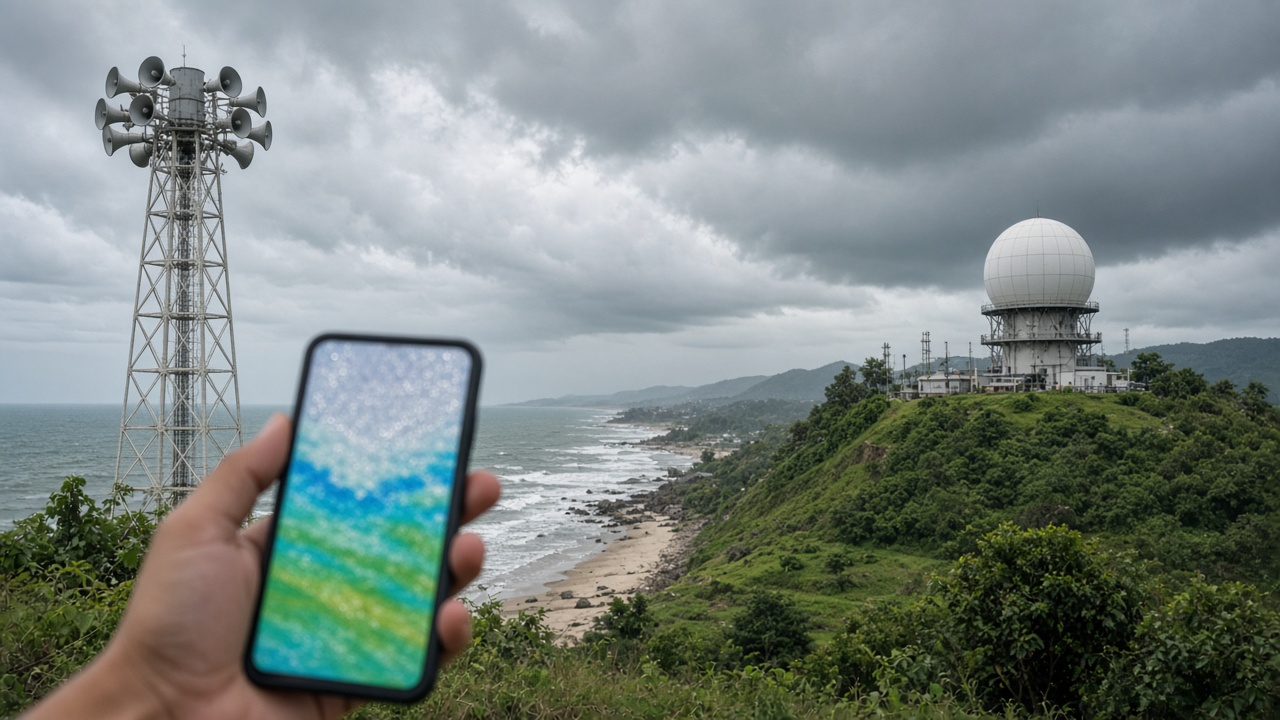
Radar, satellites, sirens, SMS, and Common Alerting Protocol turn forecasts into public action. India’s early warning goal is simple: everyone at risk gets a clear message in time to move.
Early warning: science plus last-mile communication.
IMD & ocean systems: Cyclone, monsoon, and severe weather forecasting improve year by year.
Multi-hazard alerts: Floods, heatwaves, landslides, and tsunamis join cyclone warnings.
Last mile: Cell broadcasts, apps, radio, and village sirens try to reach every household.
People-centred warning: Alerts must be understood, trusted, and actionable — not just accurate.
Technology Used
Doppler radar & satellites: Track storms and rainfall in near-real time.
CAP / cell broadcast: Standardised multi-channel public alerts.
Decision support: Control rooms fuse forecasts with evacuation maps.
Features
Lead time saves lives: Hours of warning beat minutes of panic.
Inclusion challenge: Reach people without smartphones or literacy barriers.
Never finished: Climate extremes keep raising the bar for systems.
Disaster Approaches Compared
Each era answered a different failure mode: hunger administration, industrial safety, cyclone preparedness, national coordination, and timely alerts.
Approach
Main focus
Strength
Limitation
Famine Codes
Drought / food crisis rules
Codified triggers for relief
Often late, harsh, thin entitlements
Post-Bhopal safety
Industrial & chemical risk
Liability and regulation debates
Justice and remediation unfinished
Odisha model
Cyclone shelters & evacuation
Proven life-saving later storms
Needs constant drills & maintenance
NDMA system
National–state–district plans
Institutional continuity
Uneven local capacity
Early warning
Forecast → alert → action
Lead time for evacuation
Last-mile and trust gaps
India Spotlight: Disaster Milestones
From colonial codes to national alerts.
Year / Era
Milestone
Significance
1870s–1900s
Famine Commissions & Codes
Administrative disaster rules.
1984
Bhopal gas tragedy
Industrial disaster as national trauma.
1999
Odisha super-cyclone
Coastal preparedness watershed.
2005
Disaster Management Act
NDMA / SDMA / DDMA framework.
2005+
NDRF expansion
Specialised national response force.
2013
Cyclone Phailin evacuations
Preparedness proves life-saving.
2010s–2020s
Multi-hazard early warning push
Alerts across phones, radio, sirens.
Disasters Timeline Summary
Year / Era
Milestone
1870s–1940s
Colonial Famine Codes and relief works
1984
Bhopal gas tragedy
1999
Odisha super-cyclone
2005
Disaster Management Act; NDMA created
2000s–present
Early warning systems and last-mile alerts
Test Your Knowledge
10 quick questions from the disasters timeline. Click each question to reveal the answer.
Answer: Colonial rules for declaring famine and organising relief.
Answer: 2–3 December 1984.
Answer: Methyl isocyanate (MIC).
Answer: October 1999.
Answer: About 10,000.
Answer: The Disaster Management Act, 2005.
Answer: National Disaster Management Authority.
Answer: Cyclone Phailin.
Answer: The India Meteorological Department (IMD).
Answer: Getting the alert to every person at risk in time to act.
Classroom activity
Students Tasks
Use these prompts for discussion or projects on disasters and preparedness in India.
Click any panel to expand and explore the visual mood.
Disasters in pictures — famine codes, Bhopal, Odisha, NDMA, and early warning.
Famine Codes
Relief rules
Bhopal
Industrial disaster
Odisha 1999
Super-cyclone
NDMA
National authority
Early Warning
Alert to action
Through Time
Code to warning
Explore all environment timelines
Jump to any other environment timeline on WorldTimelineHub.
Disclaimer: This content is AI-generated for educational purposes and may contain errors or outdated details. For correct and authoritative information, please refer to official and reliable sources such as government publications, manufacturers, museums, and academic references.