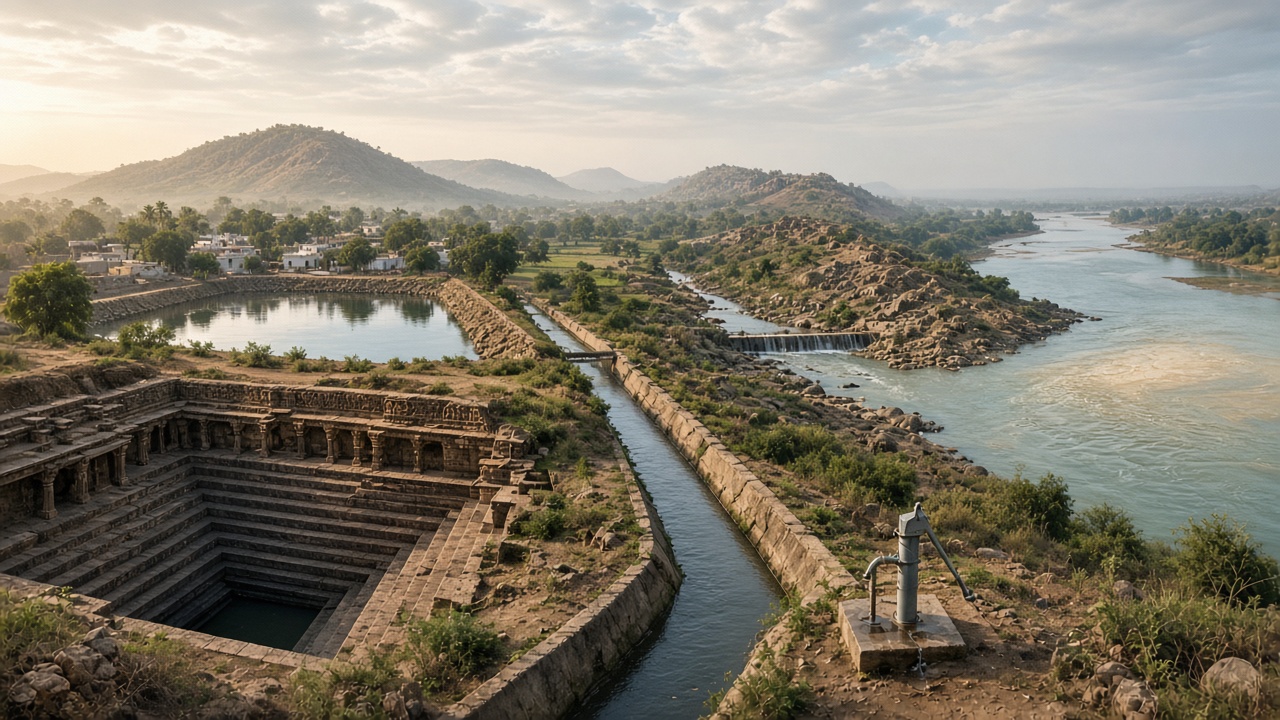
From carved stepwells and village tanks to canals, tube wells, watershed works, and the river-interlinking debate —
India has reinvented how it stores, moves, and shares water.
This timeline follows six turns: architectural wells, community reservoirs, canal empires, groundwater pumping,
ridge-to-valley watershed repair, and the contested idea of linking river basins.
Monsoon India must store water for dry months, move it to fields, and decide who gets it first.
Stepwells and tanks answered local need; canals and tube wells scaled irrigation nationally;
watershed work tries to recharge aquifers; river interlinking asks whether basins should be joined by mega-engineering.
From stepwells and tanks to canals, pumps, watersheds, and basin-transfer debates.
🪜 Architecture of WaterAncient – Medieval
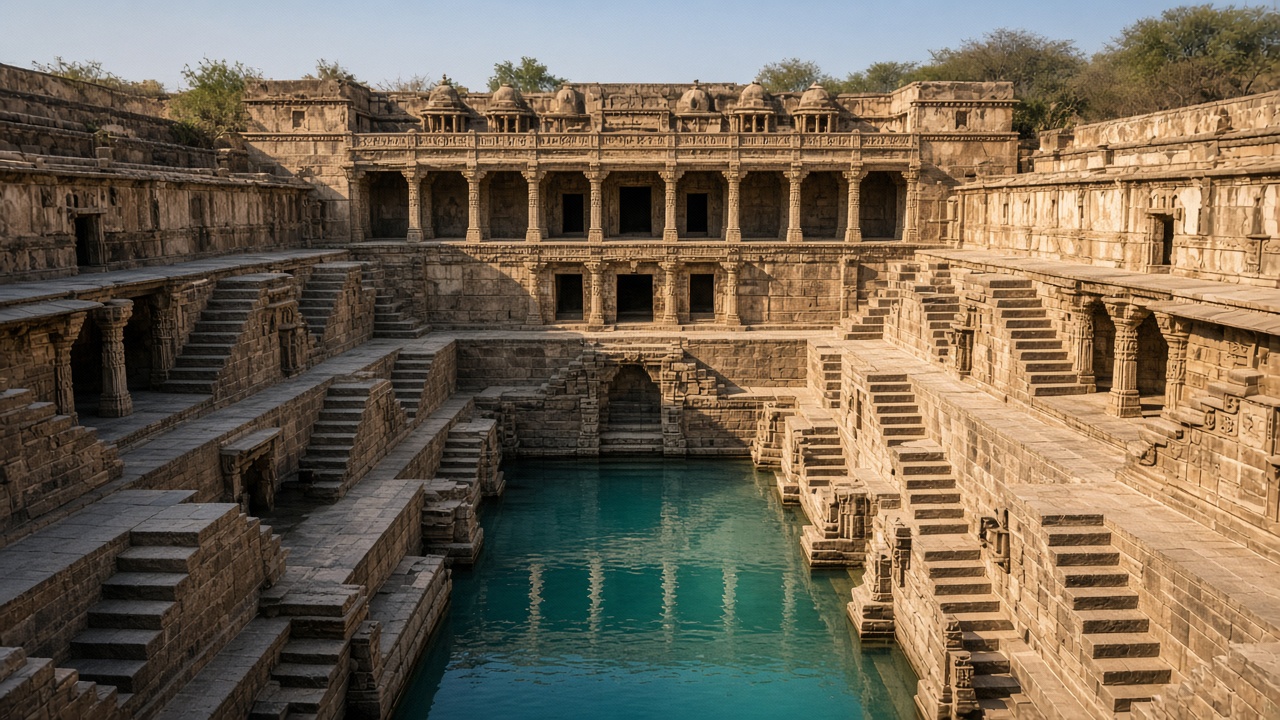
Stepwells
Baolis and vavs turned groundwater into public architecture. Stepped corridors let people reach falling water tables in dry seasons — and became cool civic and sacred spaces.
Stepwells: engineering beauty designed for a falling water line.
Baoli / vav / bawdi: Regional names for stepped wells across North and West India.
Rani ki Vav (Patan): 11th-century masterpiece; UNESCO World Heritage site.
Chand Baori (Abhaneri): Vast geometric steps showing scale and precision of community water works.
Daily life: Fetching water, resting in shade, and ritual use around the well.
Technology Used
Stone masonry: Load-bearing steps and pavilions around a deep shaft.
Filtration & shade: Depth and stone kept water cooler and cleaner than open ponds.
Features
No pumps: Gravity and footsteps did the work.
Civic landmark: Art, patronage, and public utility in one structure.
Decline: Piped supply and neglect left many stepwells dry or filled.
🏞️ Community ReservoirsAncient – Living
Tanks
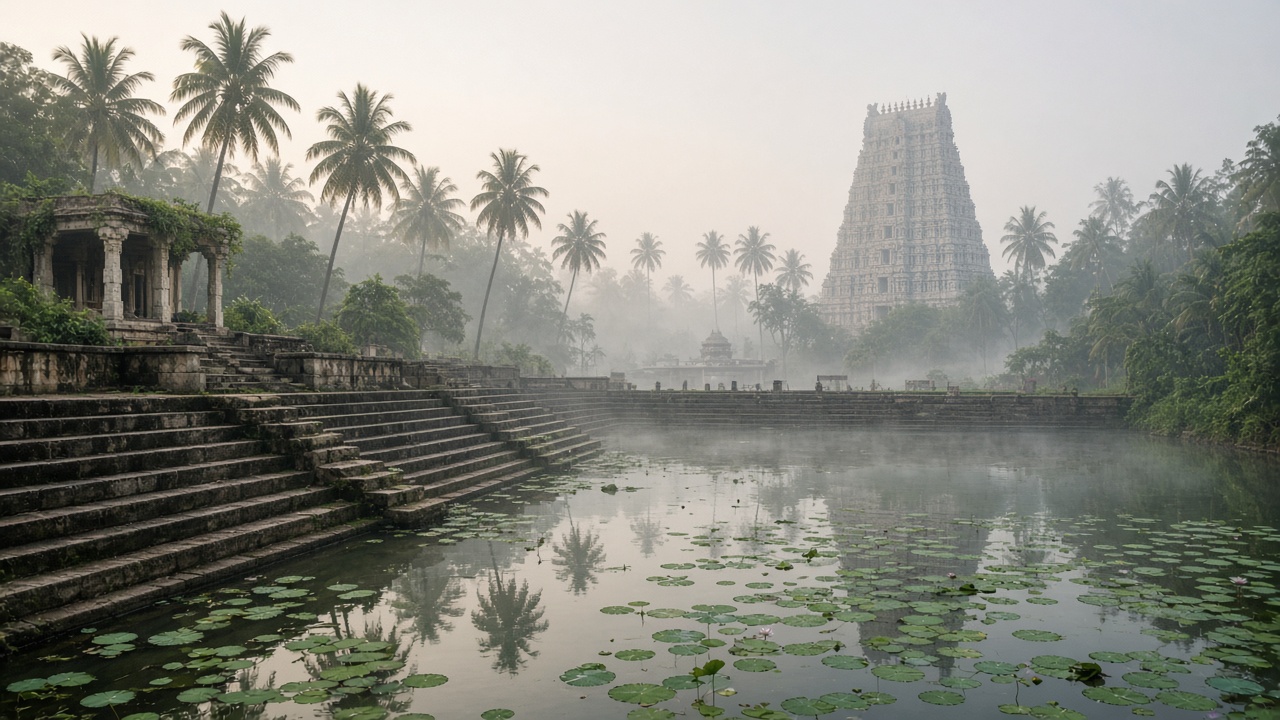
Temple tanks, eris, and village talabs stored monsoon runoff for farming, cattle, and towns. Cascades of tanks in South India linked catchments into living irrigation networks.
Tanks: monsoon banks that communities managed together.
Eri / kulam / talab / johad: Local names for earthen and stone reservoirs.
Tank cascades: Surplus from one tank feeds the next downslope.
Temple waters: Ritual purity and urban microclimates around sacred tanks.
Revival: Desilting and tank restoration return in many states as groundwater falls.
Technology Used
Earthen bunds: Embankments that hold monsoon flood.
Sluices & weirs: Controlled release to channels and fields.
Catchment care: Rules on grazing and silt to keep storage alive.
Needs upkeep: Silt and encroachment shrink capacity fast.
〰️ Divert & DeliverAncient – Modern
Canals
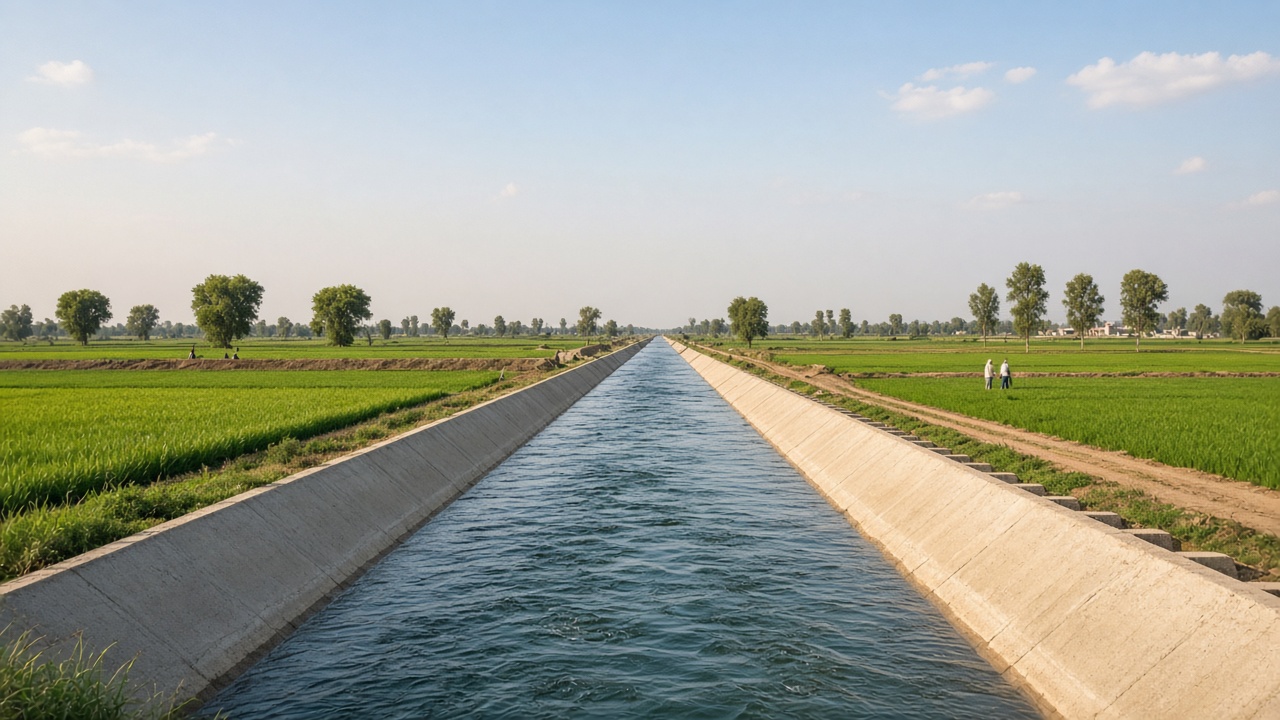
From Kaveri’s Grand Anicut to Mughal and British canal colonies, diversion channels moved river water across plains — creating irrigated frontiers and new politics of who controls the flow.
Canals: rivers redirected into farms and towns.
Grand Anicut (Kallanai): Ancient Kaveri weir still part of Tamil Nadu’s irrigation story.
Western Yamuna & others: Early modern and Mughal-era canal traditions.
Colonial canal colonies: Punjab and beyond — settlement, revenue, and cash crops.
Republic era: Multipurpose dams feed vast canal commands; salinity and waterlogging appear as trade-offs.
Technology Used
Weirs & barrages: Raise river levels to feed offtakes.
Lined / unlined channels: Trade conveyance efficiency against cost and seepage recharge.
Command area works: Distributaries, minors, and field channels.
Features
Scale: Irrigate huge contiguous plains.
Head vs tail: Upstream users often get more reliable water.
Ecology: Altered floods, fisheries, and delta health.
⚙️ Private Pumps20th c. – Present
Tube Wells
Electric and diesel pumps let farmers tap aquifers on demand. Tube wells powered the Green Revolution’s reliability — and drove groundwater depletion in many districts.
Tube wells: irrigation that follows the switch, not the canal roster.
Mid–late 1900s: Mechanised boring and pumps spread with rural electrification.
Green Revolution link: HYV seeds and fertilisers needed timely water — groundwater delivered it.
Power politics: Free or cheap farm power encourages over-pumping in some states.
Today: Millions of wells; dark zones and falling water tables in Punjab, Haryana, parts of Gujarat, Rajasthan, and elsewhere.
Technology Used
Bore / tube wells: Cased shafts into aquifers.
Centrifugal & submersible pumps: Lift water to channels or pipes.
Drip & sprinkler add-ons: Efficiency tools that still need policy and cost support.
Features
On-demand: Farmers irrigate when crops need it.
Private control: Less dependent on canal schedules.
Invisible crisis: Overuse shows up years later as dry wells.
⛰️ Ridge to Valley1970s – Present
Watershed Development
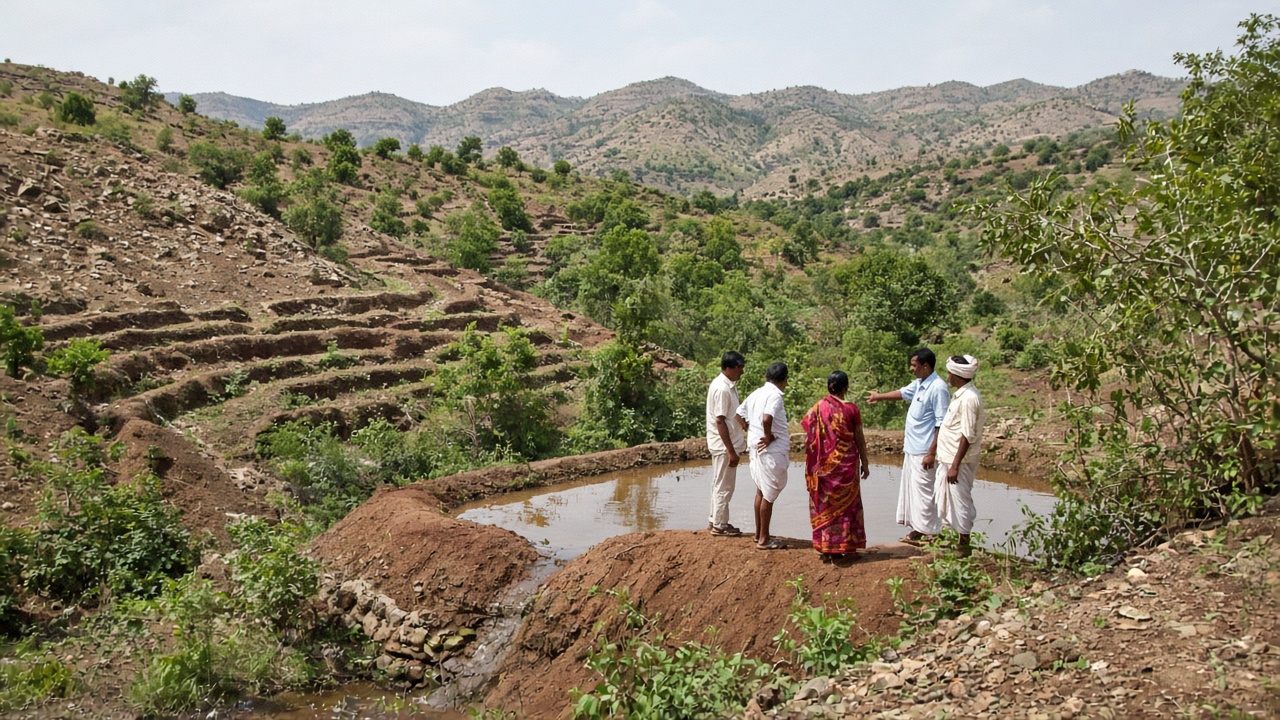
Instead of only diverting rivers, watershed programmes treat a catchment as one system — check dams, contour trenches, afforestation, and soil care to slow runoff and recharge aquifers.
Programmes: DPAP, IWDP, and later integrated watershed missions expand across drylands.
Success stories: Places like Ralegan Siddhi and Hiware Bazar become teaching cases (with local context).
PMKSY era: Irrigation efficiency and watershed components sit under broader “more crop per drop” goals.
Technology Used
Check dams & nala bunds: Slow streams and raise local water tables.
Contour trenches / bunds: Hold soil and moisture on slopes.
Vegetative cover: Trees and grasses reduce erosion and improve infiltration.
Features
Local scale: Village institutions matter as much as engineering.
Multiple benefits: Fodder, soil, wells, and microclimate improve together.
Maintenance: Structures fail without community ownership.
🔗 Basin Transfer Debate1980s – Present
River Interlinking Debate
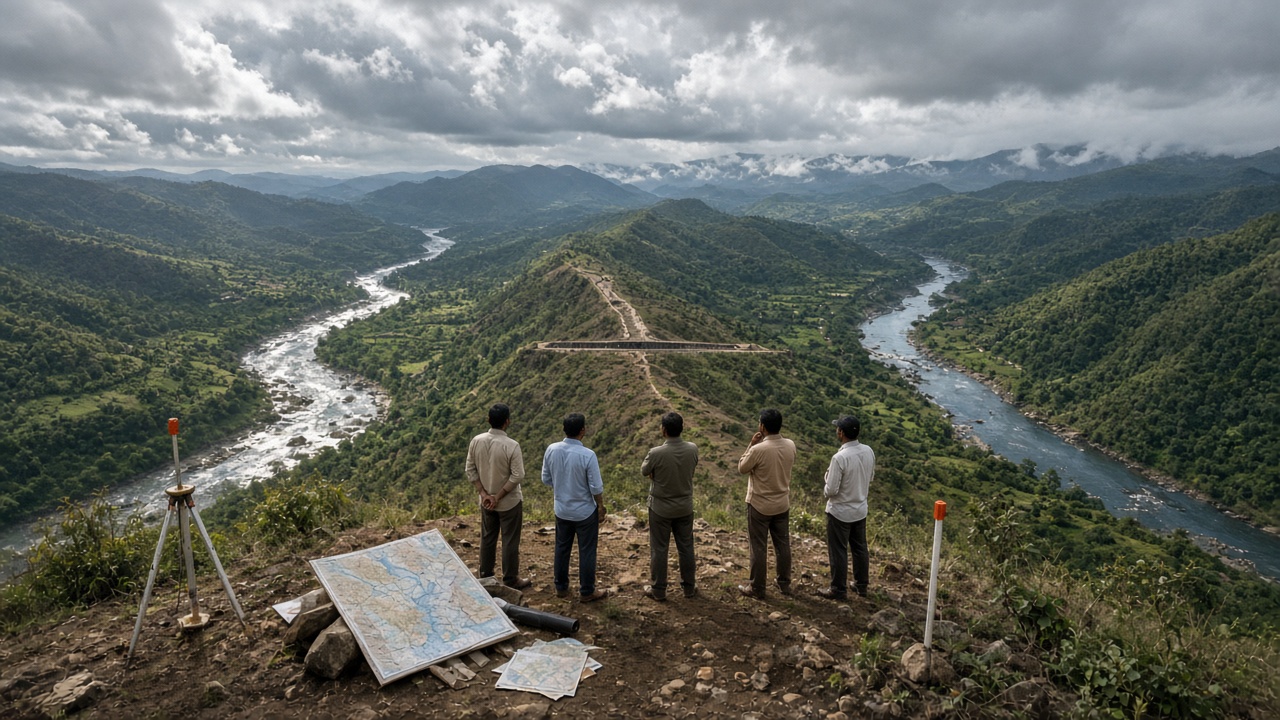
National plans propose canals and reservoirs to move “surplus” monsoon water to deficit basins. Supporters see flood and drought relief; critics warn of ecology, displacement, cost, and the meaning of “surplus” itself.
Interlinking: mega-engineering meets ecology, federal politics, and cost.
Idea lineage: Late-colonial and post-independence dreams of transferring Himalayan and peninsular waters.
NWDA studies: National Water Development Agency maps Himalayan and Peninsular components.
Ken–Betwa & others: Specific links advance as projects; many remain on paper.
Open questions: Climate change, interstate sharing, fisheries, forests, and whether demand management is cheaper.
Ideas & Tools
Link canals & lifts: Gravity and pumping across watersheds.
Storage dams: Hold monsoon peaks for transfer windows.
Hydrology models: Estimate surplus — contested under climate variability.
Features
Promise: Balance flood and drought across regions.
Risk: Irreversible landscape change and social costs.
Debate: Still unfinished — policy, courts, and science keep arguing.
Water Approaches Compared
Each system answers a different scarcity: depth, monsoon storage, river diversion, on-demand pumping, catchment repair, or basin transfer.
Approach
Main goal
Strength
Limitation
Stepwells
Access groundwater seasonally
Durable architecture, shade, civic use
Limited volume; needs clean aquifers
Tanks
Store local monsoon runoff
Decentralised, multi-use
Siltation and encroachment
Canals
Divert river water to commands
Large irrigated areas
Head–tail inequity; ecology shifts
Tube wells
On-demand field irrigation
Flexible timing for crops
Groundwater depletion risk
Watershed works
Recharge & soil conservation
Local resilience if maintained
Needs community ownership
River interlinking
Move water between basins
Potential flood/drought balance
Cost, ecology, federal disputes
India Spotlight: Water Milestones
From ancient weirs to watershed missions and interlinking studies.
Year / Era
Milestone
Significance
Ancient
Grand Anicut (Kallanai) tradition
Long-lived diversion irrigation on the Kaveri.
11th c.
Rani ki Vav and stepwell culture
Groundwater architecture as public art.
Medieval–early modern
Tank cascades & canal traditions
Community and state water systems expand.
19th–20th c.
Colonial canal colonies
Irrigated settlement and revenue landscapes.
1960s–80s
Tube-well + Green Revolution boom
Food security with groundwater stress.
1970s–2000s
Watershed programmes
Catchment repair as national policy tool.
1980s–present
River interlinking studies & pilots
Ongoing mega-transfer debate.
2015+
PMKSY / efficiency focus
“More crop per drop” alongside storage.
Water Management Timeline Summary
Year / Era
Milestone
Ancient–medieval
Stepwells and temple/village tanks
Ancient–modern
Weirs and canals (Kallanai to canal colonies)
19th–20th c.
Large colonial and republican canal systems
1960s+
Tube wells power intensive irrigation
1970s+
Watershed development programmes
1980s+
National river interlinking proposals
2000s–2020s
Efficiency schemes, tank revival, contested links
Test Your Knowledge
10 quick questions from the water management timeline. Click each question to reveal the answer.
Answer: A deep well with stone steps so people can reach water as levels fall.
Answer: Rani ki Vav (Patan) or Chand Baori (Abhaneri).
Answer: A traditional tank / community reservoir, especially in South India.
Answer: An ancient Kaveri diversion weir still linked to irrigation.
Answer: Green Revolution crops needed timely water; pumps + power made groundwater easy to lift.
Click any panel to expand and explore the visual mood.
Water systems in pictures — stepwells, tanks, canals, tube wells, watersheds, and interlinking debates.
Stepwells
Architecture of water
Tanks
Community reservoirs
Canals
Divert and deliver
Tube Wells
On-demand pumps
Watershed
Ridge to valley
Interlinking
Basin transfer debate
Through Time
Well to watershed
Explore all environment timelines
Jump to any other environment timeline on WorldTimelineHub.
Disclaimer: This content is AI-generated for educational purposes and may contain errors or outdated details. For correct and authoritative information, please refer to official and reliable sources such as government publications, manufacturers, museums, and academic references.