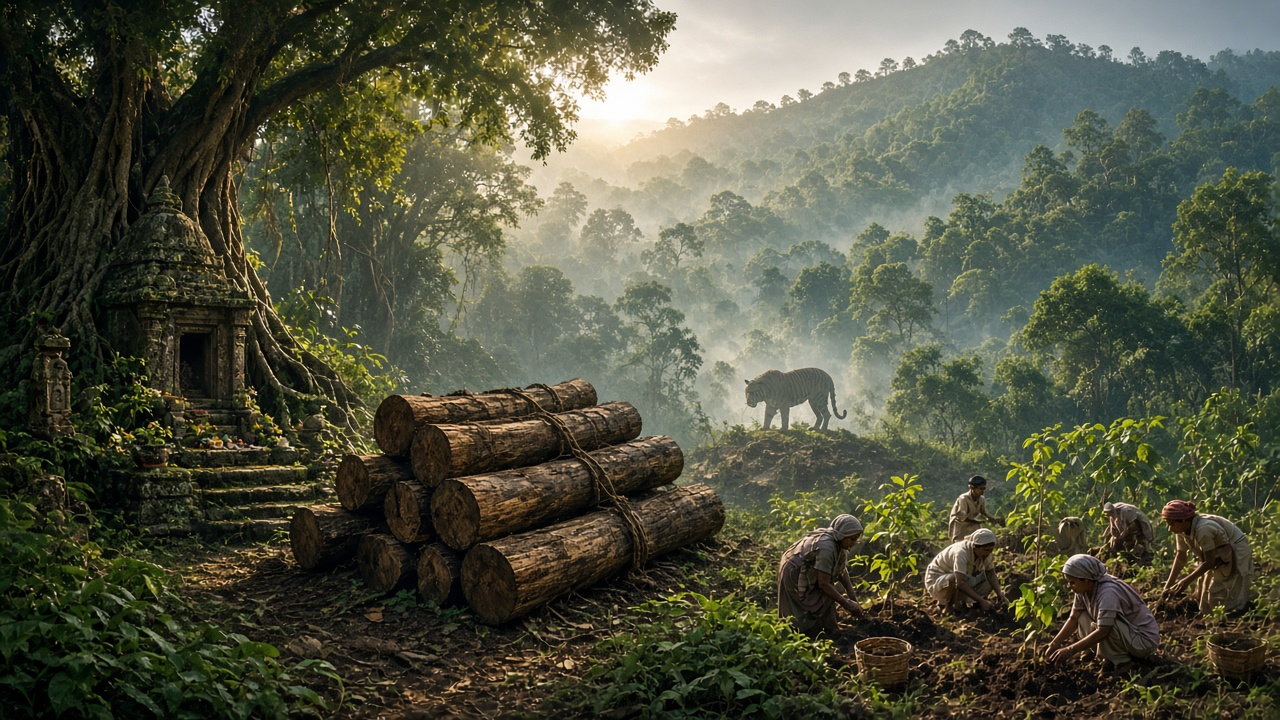
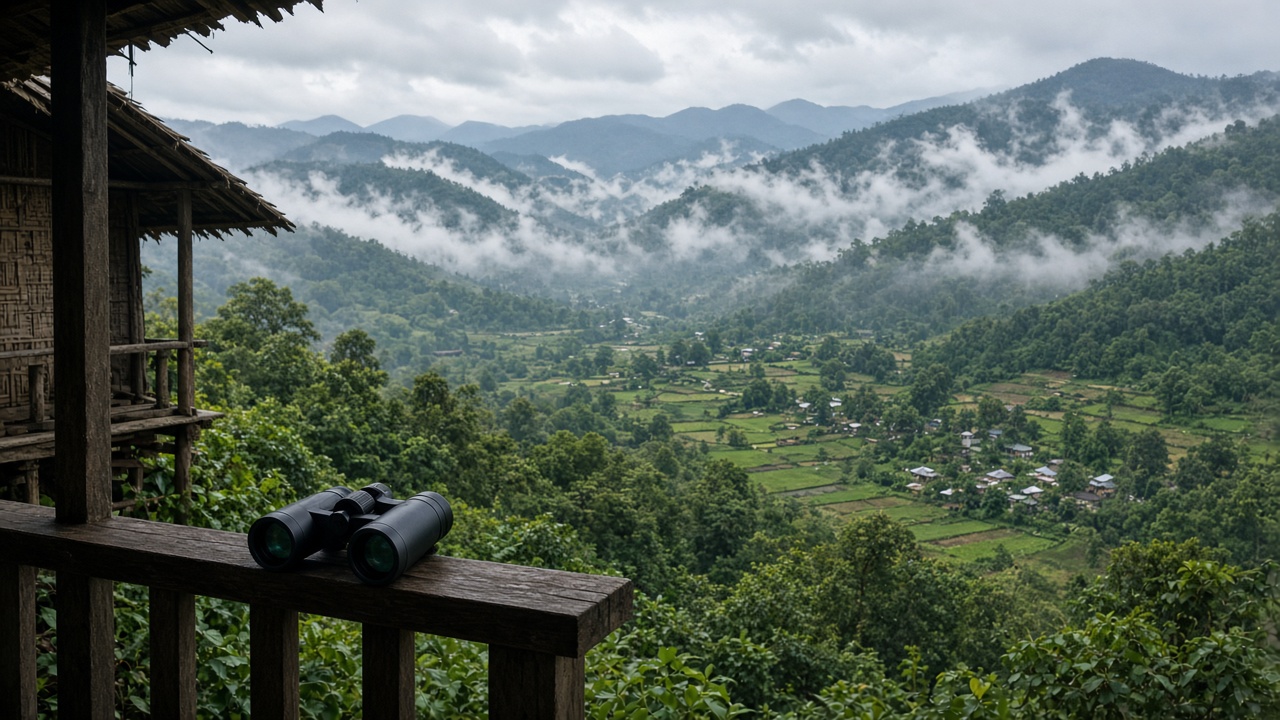
From sacred groves guarded by custom to colonial timber science, Project Tiger, UNESCO biosphere reserves,
and village-led regeneration — India’s forests tell a story of power, culture, and care.
This timeline follows five big turns: community sacred landscapes, British-era forestry laws and plantations,
species-focused tiger reserves, landscape-scale biospheres, and community conservation after Chipko and the Forest Rights Act.
Forests are timber and fuel — and also water towers, carbon stores, wildlife homes, and cultural landscapes.
India’s story moves from community taboos that spared groves, through state forestry that prioritised revenue timber,
to national parks, tiger reserves, biospheres, and renewed recognition of forest dwellers’ rights.
From sacred groves and timber empires to tiger reserves, biospheres, and community forests.
🌳 Living TraditionAncient – Living
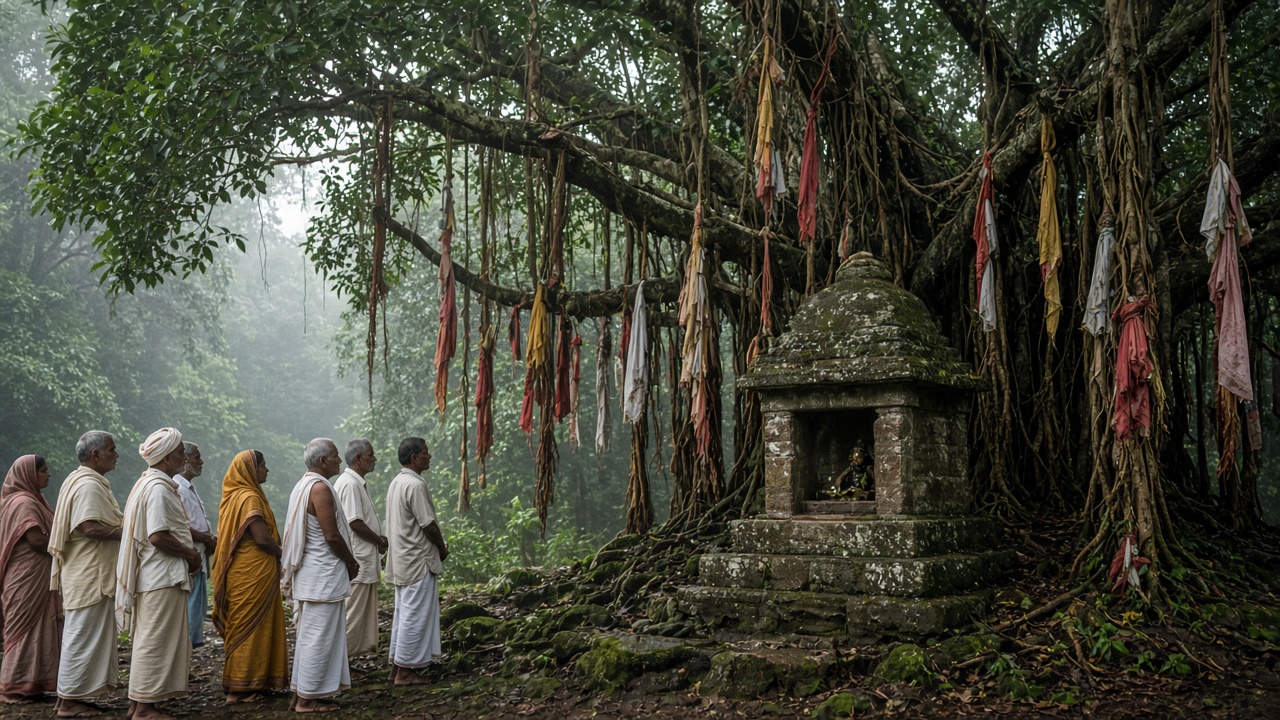
Sacred Groves
Across India, communities protected forest patches as homes of deities and ancestors. Taboos against cutting, hunting, or grazing kept biodiversity islands alive long before modern parks.
Sacred groves: faith, fear, and custom as conservation tools.
Kavu, devara kadu, orans, sarna: Regional names for sacred forests from Kerala and Karnataka to Rajasthan and Jharkhand.
Rules without fences: Ritual bans often worked better than walls — until markets and roads pressed in.
Biodiversity refuges: Many groves shelter rare plants, medicinal herbs, and nesting birds near farms.
Living today: Thousands of groves still exist, though many face encroachment and thinning.
Ideas & Practices
Customary law: Community councils and priests enforce respect for the grove.
Selective use: Fallen wood or festival gathering may be allowed; clear-felling is not.
Oral ecology: Stories encode which trees and animals are protected.
Features
Low cost: Protection without a large bureaucracy.
Cultural meaning: Nature and worship are not separate.
Fragile under pressure: Needs land rights and local support to survive modern development.
🪓 Timber State1800 – 1947
Colonial Forestry
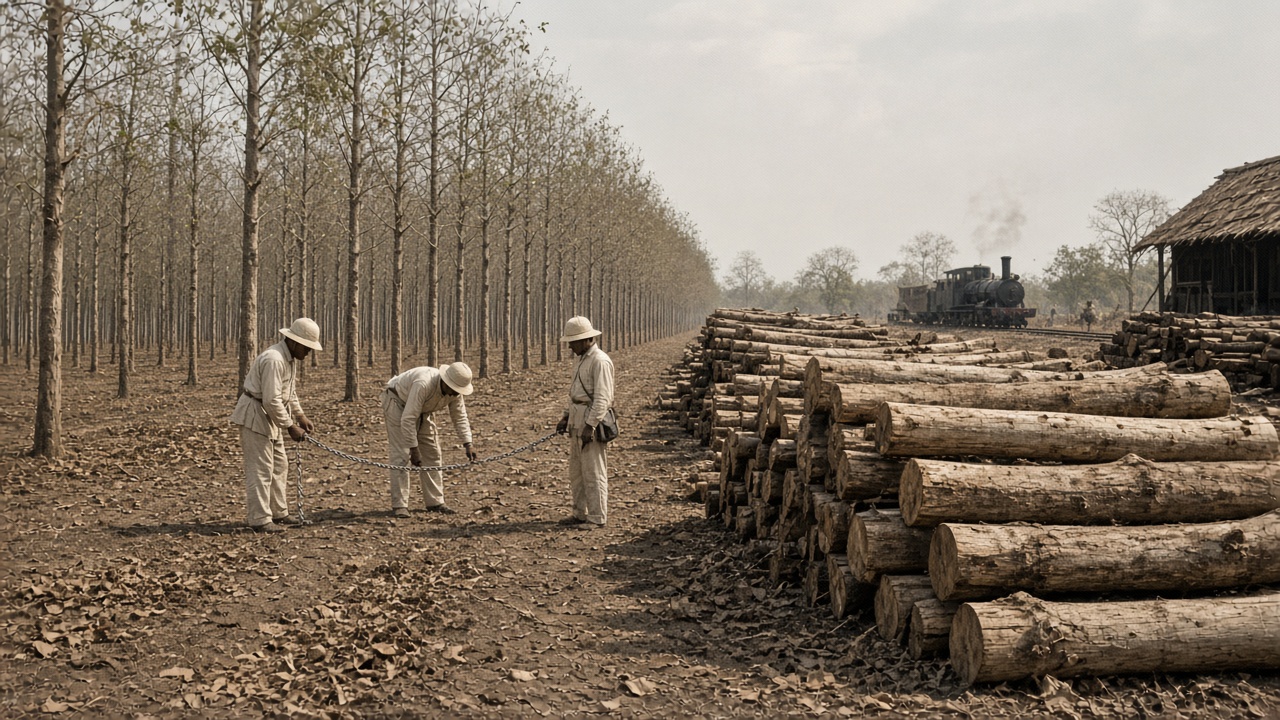
The British remade Indian forests as a revenue and railway resource. Scientific forestry, reserved forests, and teak plantations expanded state control — often at the cost of village rights.
Surveys, plantations, and timber depots — forests as imperial infrastructure.
1864: Dietrich Brandis becomes first Inspector General of Forests; organised forest service grows.
1865 / 1878 / 1927: Forest Acts classify reserved, protected, and village forests and tighten state claims.
Railways & ships: Sleepers, charcoal, and naval timber drive felling and monoculture plantations.
Resistance: Forest satyagrahas and local revolts challenge grazing bans and timber monopolies.
Technology Used
Working plans: Rotational felling schedules based on European forestry science.
Survey & maps: Boundaries drawn for reserved forests and revenue.
Plantations: Teak, sal, and other commercial species preferred over mixed native stands.
Features
Centralised control: Forest department becomes a powerful institution.
Revenue focus: Timber and resin often outweigh local livelihoods.
Long afterlife: Post-independence India inherits both the laws and the conflicts.
🐅 Flagship Species1973 – Present
Project Tiger
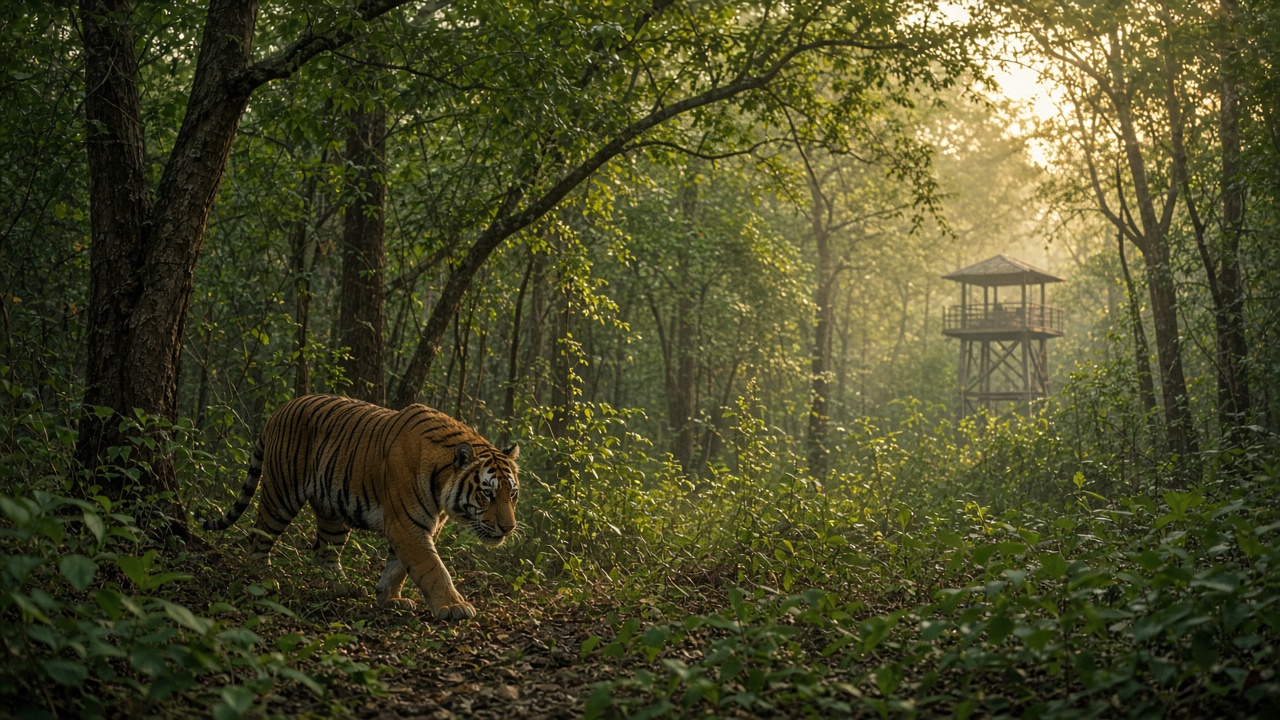
After sharp tiger declines, India launched Project Tiger in 1973 — dedicated reserves, anti-poaching forces, and later camera traps and scientific monitoring. The tiger became a flagship for whole ecosystems.
Protect the tiger, protect the forest that feeds rivers and villages beyond.
1972: Wildlife (Protection) Act strengthens legal tools for parks and species.
1973: Project Tiger begins with a first set of tiger reserves (later expanded nationwide).
2006: National Tiger Conservation Authority (NTCA) created after tiger crisis reviews.
2000s–2020s: Camera traps, corridor planning, and rising estimated tiger numbers — with ongoing human–wildlife conflict debates.
Technology Used
Camera traps & genetics: Count and track individuals scientifically.
Core–buffer zoning: Strict protection cores with regulated surrounds.
Patrol networks: Forest guards, intelligence, and anti-poaching camps.
Features
Umbrella effect: Tiger habitat shelters many other species.
Tourism & jobs: Safari economies grow — with equity questions.
Relocation debates: Village resettlement from cores remains contested.
🌐 Landscape Scale1980s – Present
Biosphere Reserves
Biosphere reserves aim bigger than a single park: a protected core, a buffer for research and limited use, and a transition zone where people live and farm. India joins the UNESCO Man and the Biosphere idea with sites from the Nilgiris to the Sundarbans.
Core, buffer, transition — conservation designed as a living landscape.
UNESCO MAB: Global programme for research, education, and sustainable development around protected cores.
India’s network: Nilgiri (first, 1986), Nanda Devi, Sundarbans, Gulf of Mannar, Great Nicobar, and more.
Science + people: Monitoring biodiversity while recognising surrounding livelihoods.
Climate link: Large forest landscapes matter for carbon, water, and disaster resilience.
Technology Used
Zoning maps: Legal and management boundaries for three concentric functions.
Field stations: Ecology research, climate monitoring, and education centres.
Remote sensing: Track canopy cover, fire, and land-use change.
Features
Scale: Protects ecological processes, not only one species.
Flexibility: Allows regulated human activity outside the core.
Coordination hard: Needs many departments and communities to align.
🤝 People & Forests1990s – Present
Community Conservation
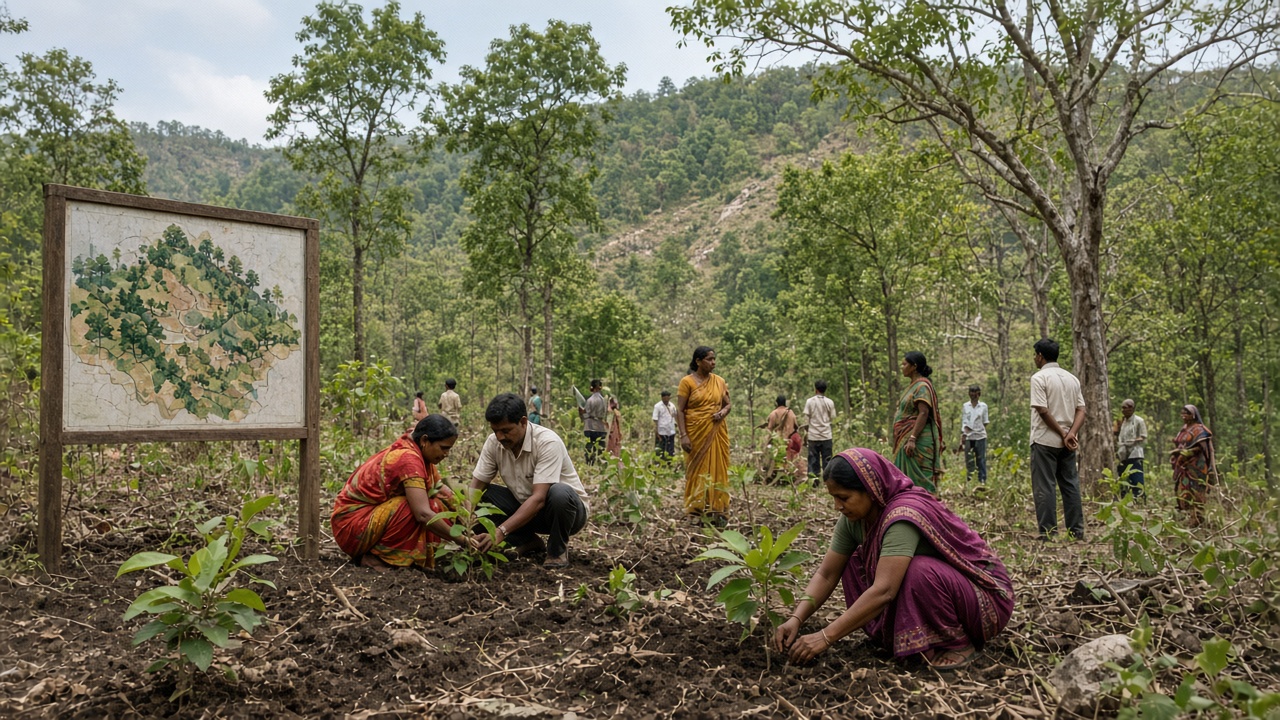
From Chipko’s tree-hugging to Joint Forest Management and the Forest Rights Act 2006, India relearns that lasting forest protection needs the people who live with the trees — women, Adivasi communities, and village institutions.
Planting, guarding, and sharing benefits — conservation as a village project.
1973 Chipko: Himalayan villagers resist commercial felling; women become the movement’s public face.
1990s JFM: Joint Forest Management pairs forest departments with village committees for protection and produce share.
2006 FRA: Scheduled Tribes and Other Traditional Forest Dwellers (Recognition of Forest Rights) Act recognises individual and community forest rights.
Today: Community forest resource titles, sacred grove revival, and payment-for-ecosystem debates continue.
Ideas & Practices
Village forest committees: Local rules for grazing, fuelwood, and patrols.
Rights mapping: Claims, gram sabha consent, and community forest resource titles.
Restoration: Native planting, fire lines, and water harvesting in degraded commons.
Features
Legitimacy: People protect what they have a stake in.
Livelihoods: NTFP, fodder, and water security matter as much as wildlife.
Implementation gap: Rights on paper still need fair, timely recognition on the ground.
Forest Approaches Compared
Each era answered a different question: who decides, what is valued, and how people and wildlife share the land.
Approach
Main goal
Strength
Limitation
Sacred groves
Cultural & ritual protection
Low cost, deep local legitimacy
Vulnerable to roads, markets, land pressure
Colonial forestry
Timber, revenue, state control
Organised service & maps
Curtailed village rights; monocultures
Project Tiger
Save a flagship species & habitat
Focus, funding, science tools
Conflict over relocation & access
Biosphere reserves
Conserve landscapes with people zones
Scale & research networks
Complex multi-agency coordination
Community conservation
Rights, regeneration, shared benefits
Stewardship & livelihoods
Uneven implementation of rights
India Spotlight: Forest Milestones
Laws, movements, and local care reshape India’s forest map.
Year / Era
Milestone
Significance
Ancient–living
Sacred groves across regions
Community conservation before parks.
1864
Inspector General of Forests
Scientific forestry service begins.
1878 / 1927
Forest Acts
State classification of forests.
1972
Wildlife (Protection) Act
Legal backbone for parks & species.
1973
Project Tiger & Chipko wave
Species project + people’s movement.
1986
Nilgiri Biosphere Reserve
India’s first biosphere reserve.
1990s
Joint Forest Management
Shared protection experiments.
2006
Forest Rights Act
Legal recognition of forest dwellers.
Forests Timeline Summary
Year / Era
Milestone
Ancient–living
Sacred groves protected by custom
1864
Organised colonial forest service
1878–1927
Forest Acts expand state control
1972
Wildlife (Protection) Act
1973
Project Tiger launched
1973+
Chipko and people’s forest movements
1986+
Biosphere reserves network grows
1990s
Joint Forest Management
2006
Forest Rights Act
2010s–2020s
Tiger recovery, corridors, community titles
Test Your Knowledge
10 quick questions from the forests timeline. Click each question to reveal the answer.
Answer: A forest patch protected by community religious or cultural rules.
Answer: Dietrich Brandis.
Answer: Demand for railway sleepers, ship timber, and forest revenue.
Answer: 1973.
Answer: The Wildlife (Protection) Act.
Answer: Core, buffer, and transition.
Answer: Nilgiri Biosphere Reserve.
Answer: Hugged trees to stop commercial felling in the Himalaya.
Answer: Shared forest protection and benefits between the department and villages.
Answer: Forest dwellers’ rights to land and community forest resources.
Classroom activity
Students Tasks
Use these prompts for discussion or projects on forests and conservation in India.
Timeline understandingRights & ecologyLocal forestsFuture care
Find whether your district has a sacred grove, reserve forest, or national park — and who manages it.
Make a five-panel poster: sacred grove → colonial forestry → Project Tiger → biosphere → community.
Compare Project Tiger and sacred groves: who decides, and what is protected?
Interview an elder about trees that used to grow near your village or town.
Explain core, buffer, and transition zones of a biosphere reserve with a simple sketch.
Debate: “Tiger reserves should never relocate villages.”
List three ways the Forest Rights Act can help conservation — and three challenges.
Design a community forest plan: planting species, grazing rules, and benefit sharing.
Write a short story from the point of view of a sal tree that has seen all five eras.
Predict one forest policy India will need by 2040 for climate and wildlife.
Continue exploring
Forests connect to climate tech, energy, traditional knowledge, and how India grows food. Explore those timelines next.
Click any panel to expand and explore the visual mood.
Forests in pictures — sacred groves, colonial timber, Project Tiger, biospheres, and community care.
Sacred Groves
Custom as conservation
Colonial Forestry
Timber and the state
Project Tiger
Flagship species
Biosphere Reserves
Landscape zones
Community Care
Rights and regeneration
Through Time
Grove to community
Explore all environment timelines
Jump to any other environment timeline on WorldTimelineHub.
Disclaimer: This content is AI-generated for educational purposes and may contain errors or outdated details. For correct and authoritative information, please refer to official and reliable sources such as government publications, manufacturers, museums, and academic references.