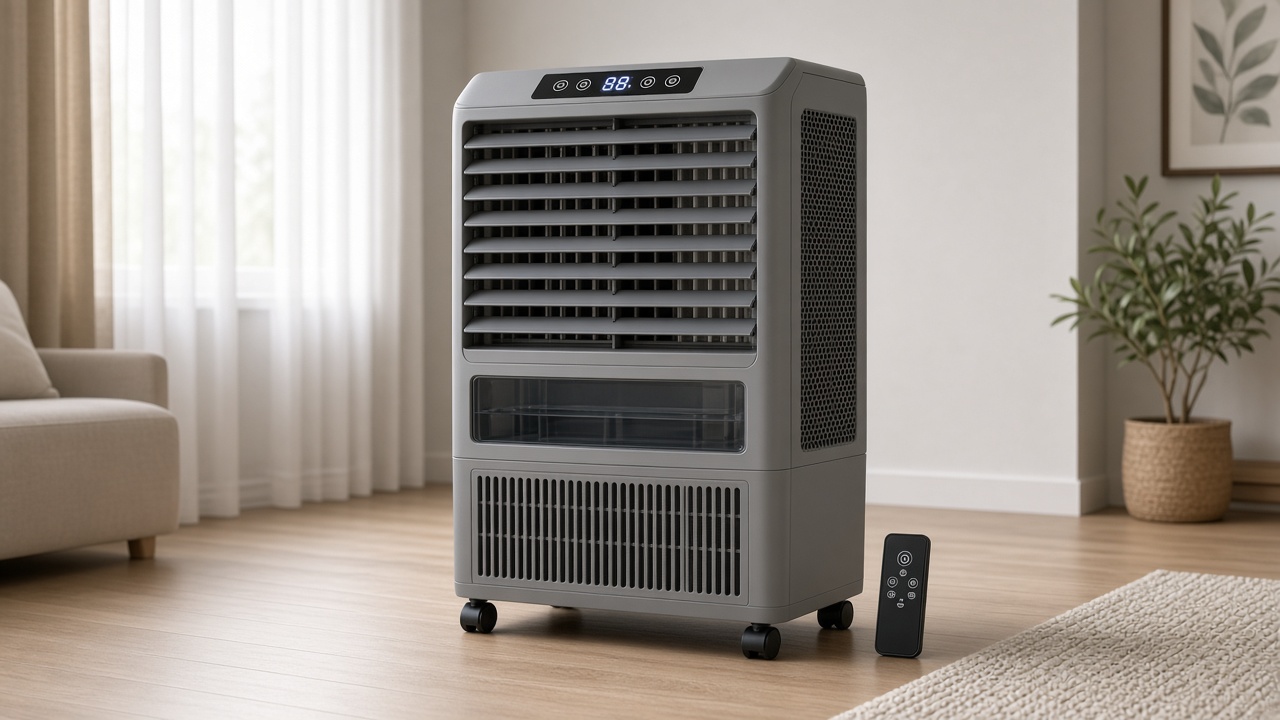
From wet cloths and matkas to iceboxes, desert coolers, slim towers, and efficient remotes—how water and air teamed up against dry heat.
Matka -> PadsDesert Coolersvs AC
Why Coolers Matter
Evaporative coolers turn dry heat into bearable air with water and a fan—cheaper and thriftier than refrigerating a whole room. In India’s inland summers they became a mass comfort appliance between the ceiling fan and the air conditioner.
This timeline follows traditional wet cooling, iceboxes, early swamp coolers, India’s desert-cooler boom, tower models beside rising AC use, and today’s efficient remotes.
Big picture
Cooler evolution in one view
Evaporation is ancient physics: wet surfaces cool dry air. Motors, tanks, and honeycomb pads scaled that idea into plug-in boxes that still define summer in many Indian homes.
From wet clay to plastic tanks—evaporation as a household appliance.
Wet SurfacesAntiquity - 1900s
Traditional Evaporative Cooling
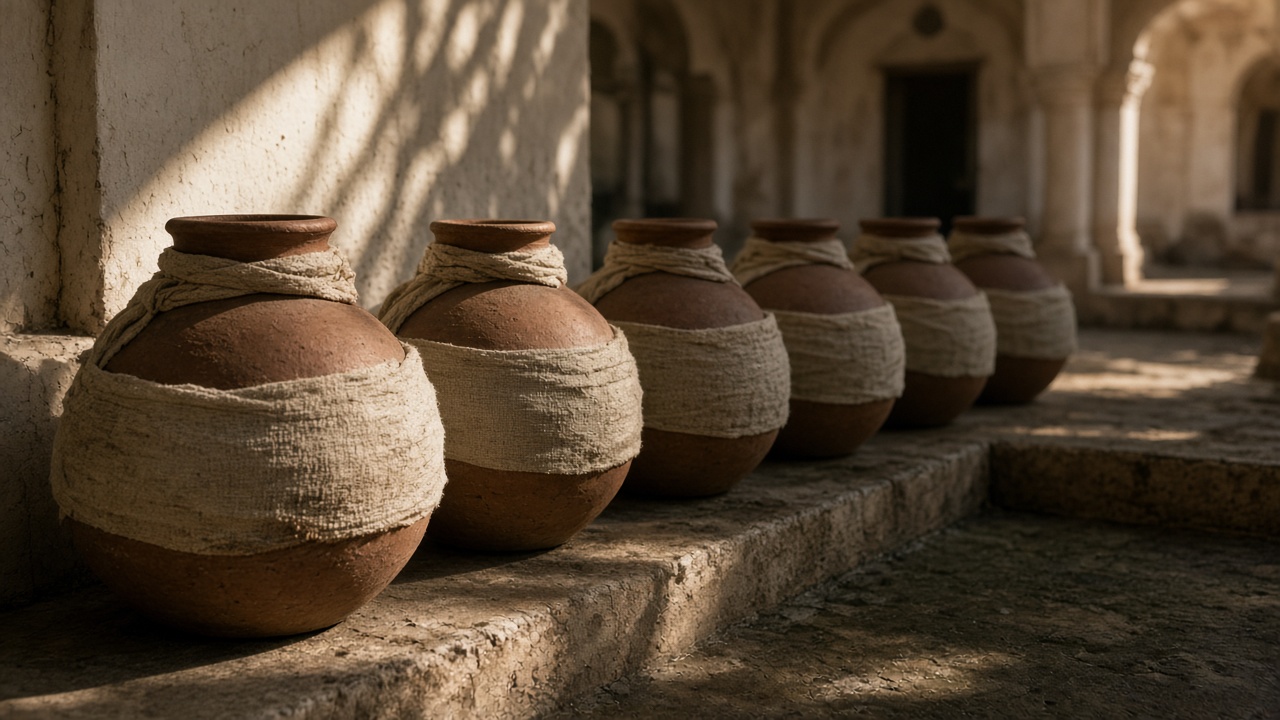
Matkas, wet khas-khas (khus) screens, shaded courtyards, and damp cloths cooled drinking water and rooms without motors. People already practised the same physics modern coolers automate: evaporation steals heat from air.
Traditional era: clay, water, and shade before plug-in coolers.
Earthenware cools water by surface evaporation.
Khus curtains and wet screens chill doorways in dry heat.
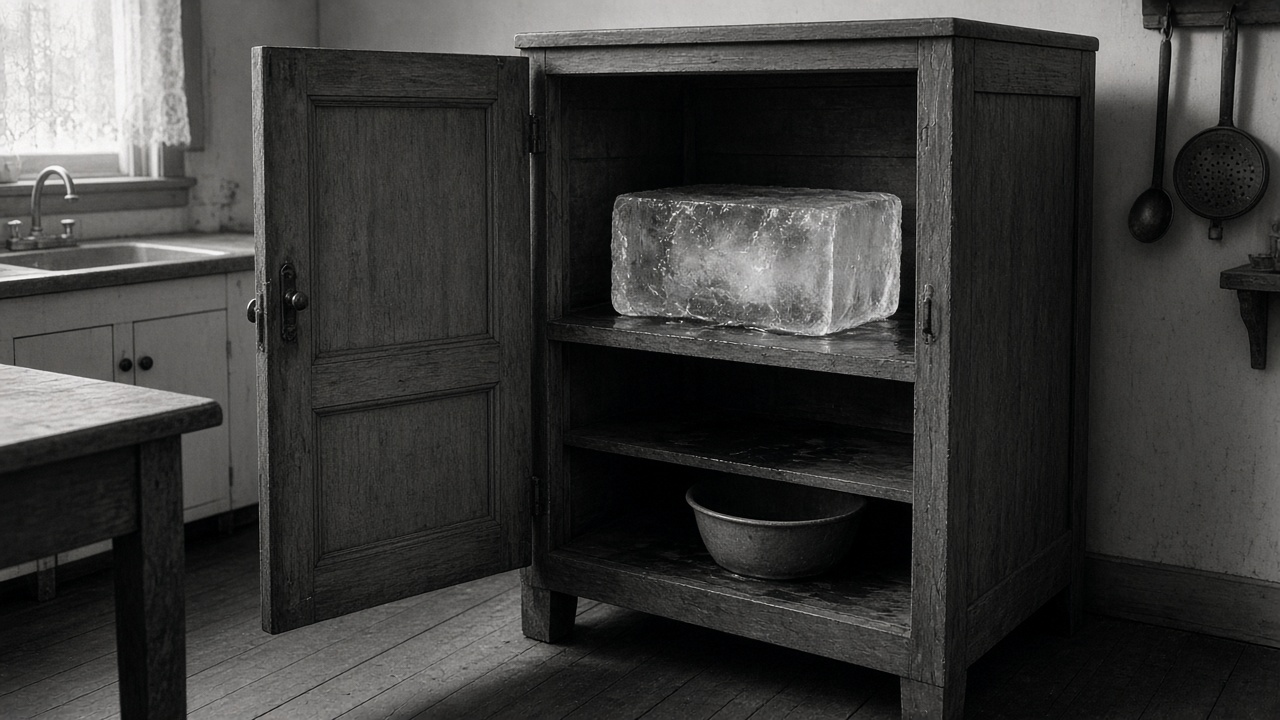
Before electric fridges, ice harvested or manufactured was delivered to insulated iceboxes. That cooled food more than whole rooms, but it normalised “bought cold” and prepared households for powered cooling appliances.
Icebox era: insulation + ice blocks before vapour-compression fridges.
Ice trade and factories expand in the 19th–20th centuries.
Iceboxes keep milk, meat, and drinks colder at home.
Electric refrigerators later displace daily ice delivery.
Technology Used
Insulated cabinets: Wood, cork, later metal liners.
Ice blocks: Melt drains managed carefully.
Delivery networks: Ice vendors as urban infrastructure.
Features
Food-first cold: Not whole-room air conditioning.
Recurring cost: Ice must be replenished.
Bridge to appliances: Habit of domestic cold storage.
Wet Pads + Fan1900s - 1960s
Early Evaporative Coolers
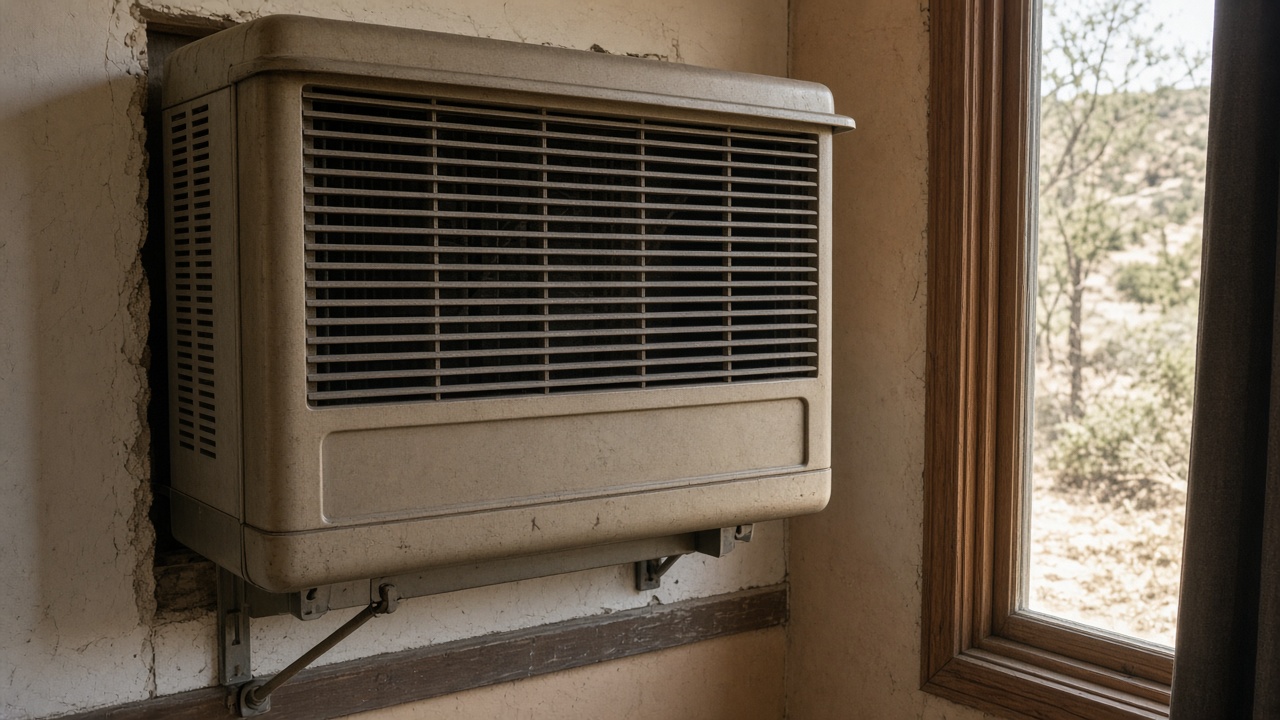
Swamp coolers and window evaporative units combined a pump, wet media, and a blower. In dry climates they offered room cooling without the cost of early air conditioners—setting the template for India’s later desert coolers.
Early cooler era: motors automate the wet-screen idea.
Window and ducted evaporative units spread in dry regions.
Wood-wool and fibre pads become standard media.
Open-window airflow remains a design requirement.
Technology Used
Water pump + sump: Keeps pads wet.
Blower / fan: Forces air through media.
Pad materials: Early wood wool and aspen pads.
Features
Lower power than AC: Attractive where grids are limited.
Adds humidity: Comfortable in deserts; sticky elsewhere.
Maintenance: Scale, algae, and pad replacement.
Mass Market1970s - 2000s
Desert Cooler Boom
Boxy plastic and metal desert coolers with large water tanks became summer essentials across North and Central India. Local manufacturers, service networks, and honeycomb pads turned evaporative cooling into a middle-class appliance category.
Desert boom: tanks, pads, and blowers in millions of Indian homes.
Desert coolers dominate dry-zone summers for decades.
Honeycomb pads improve cooling vs older wood wool.
Exhaust/open-window practice becomes household knowledge.
Blower motors: High airflow for halls and bedrooms.
Features
Affordable cooling: Far cheaper to run than AC.
Bulky footprint: Needs floor space and water top-ups.
Local repair: Pumps and pads easily serviced.
Apartment Age2000s - 2010s
Tower Coolers and AC Competition
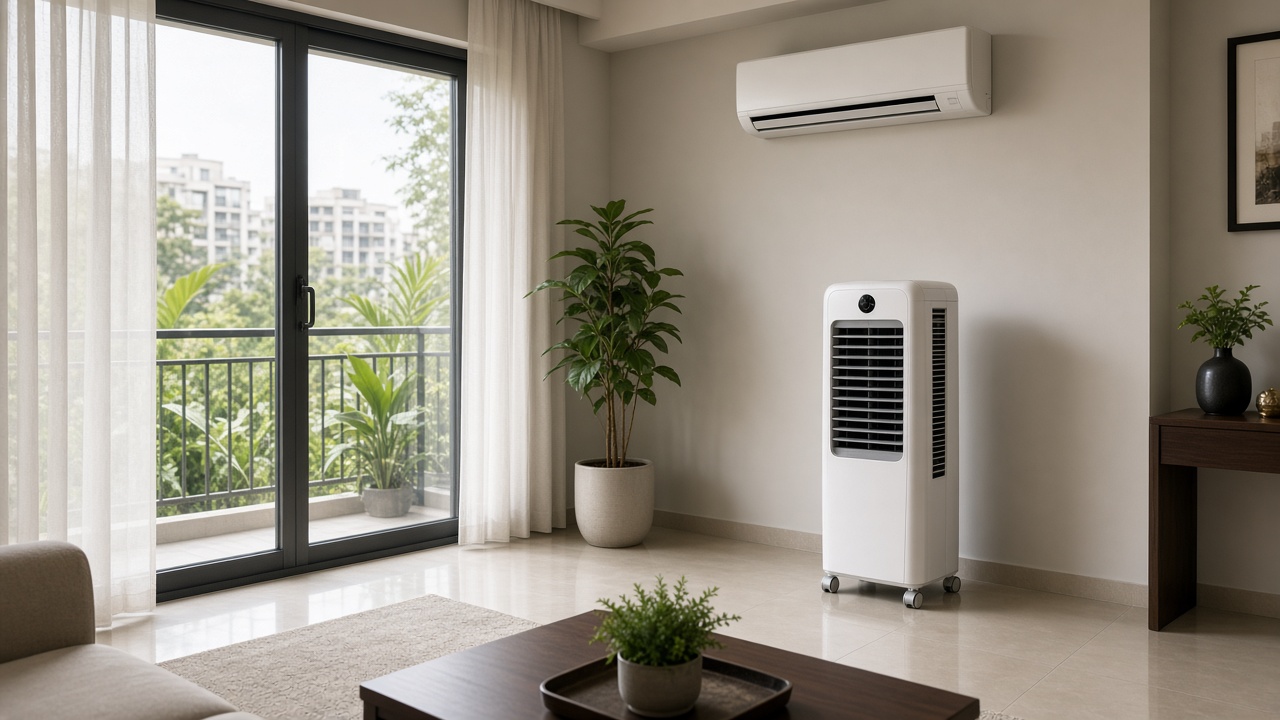
Slim tower and personal coolers fit flats with less space, while window and split ACs surged in cities. Coolers stayed strong for dry heat and power bills; AC won where humidity, sealed rooms, and status mattered most.
Tower era: coolers and AC share the summer appliance shelf.
Tower coolers target compact urban homes.
Split AC ownership rises with income and heatwaves.
Many homes run both: cooler for mild days, AC for peaks.
Inverter AC growth: Raises efficiency competition.
Features
Coolers: Low running cost; need dry air + venting.
AC: Strong cooling in humidity; higher bills.
Choice by climate: Inland dry vs coastal humid strategies.
Smarter Water2010s - Present
Efficient and Smart Coolers
Better pads, quieter motors, remotes, timers, and denser honeycomb media refresh the category. Coolers remain a climate-smart option where water is available and summers are dry—especially as electricity prices and peak loads climb.
Efficient era: remotes, quieter blowers, and better pad design.
Remotes, digital displays, and auto modes become common.
Hygiene focus: easier tank cleaning and anti-bacterial claims.
Water scarcity debates push careful use and maintenance tips.
Still climate-specific: Dry heat wins; humid coasts struggle.
Lower carbon than AC: When used appropriately.
Water trade-off: Cooling needs litres as well as watts.
Coolers Timeline Summary
Year / Era
Milestone
Why it matters
Antiquity
Matka / wet screens
Evaporation cools without motors.
1800s–50s
Iceboxes
Bought cold enters the home.
1900s–60s
Swamp / early coolers
Fan + wet pads become appliances.
1970s–2000s
Desert cooler boom
Mass cooling for dry Indian summers.
2000s–
Tower coolers + AC
Compact homes; competing technologies.
2010s–
Efficient / remote coolers
Quieter, smarter evaporative units.
Key Historical Events
Event
Year
Significance
Traditional wet cooling practices
Ancient–
Foundation of evaporative comfort.
Commercial ice & iceboxes
19th–early 20th c.
Domestic cold without electricity.
Evaporative / swamp coolers
early–mid 20th c.
Motorised wet-pad cooling.
Indian desert cooler mass market
late 20th c.
Affordable room cooling at scale.
Honeycomb pad adoption
late 20th–21st c.
Better efficiency vs wood wool.
Tower / personal coolers
2000s–
Fit apartment living.
Urban AC boom
2000s–
Coolers compete and coexist.
Remote & efficient models
2010s–
Category refreshes against inverter AC.
Cooling Options at a Glance
Option
Best for
Strength
Matka / wet screen
Passive / traditional
No electricity
Icebox
Food storage (historical)
Cold without a fridge compressor
Desert cooler
Dry heat, large rooms
Low running cost, high airflow
Tower / personal cooler
Flats, spot cooling
Smaller footprint
Fan only
Mild heat / outages
Cheapest airflow
Air conditioner
Humid / sealed rooms
Strong cooling & dehumidifying
Then vs Now
Same evaporation idea—now with tanks, motors, and remotes.
Metric
Then (traditional / early)
Now (desert / tower)
Method
Wet cloth, clay, ice
Pump + honeycomb + blower
Control
Manual wetting
Speeds, remotes, timers
Scale
Water pot or doorway
Whole room / hall
Competition
Fans & shade
Inverter AC & coolers together
Constraint
Labour / ice delivery
Humidity, water, venting
Future Predictions
2025–2030: Coolers keep a strong share in dry inland markets despite AC growth.
Late 2020s: More hybrid advice—cooler for most days, AC for heatwave peaks.
2030s: Water-efficient pads and smarter tank management under scarcity pressure.
Ongoing: Climate and humidity decide whether coolers or AC win locally.
India spotlight
Coolers in India
Desert coolers are a distinctly familiar Indian summer appliance in Rajasthan, Delhi-NCR, UP, MP, and other dry belts. Matkas and khus came first; then box coolers filled middle-class homes; now tower models and ACs compete while evaporative cooling still wins on bills where humidity stays low.
India spotlight: matka wisdom to mass-market desert coolers.
Tradition
Matka & khus
Earthen cooling and wet screens shape summer habits long before motors.
Ice age
Ice vendors & boxes
Urban ice delivery cools food; electric fridges later take over.
Late 20th c.
Desert cooler factories
Local brands and repair shops make coolers a summer staple inland.
2000s
Flats & AC rise
Tower coolers adapt to apartments; splits grow in metros.
2010s–
Efficient remotes
Better pads and controls keep coolers competitive on running cost.
Jump to any other electronics timeline on WorldTimelineHub.
Disclaimer: This content is AI-generated for educational purposes and may contain errors or outdated details. For correct and authoritative information, please refer to official and reliable sources such as government publications, manufacturers, museums, and academic references.