From Volta’s pile and lead-acid starters, to lithium-ion in every pocket, solid-state promises, and sodium-ion as India’s strategic storage push.
Pile -> PackLi-ion ageNa-ion India
Why Batteries Matter
Batteries store electricity for later—turning intermittent generation and portable gadgets into everyday life. Chemistry choices shape cost, weight, safety, and which countries control the supply chain.
This timeline follows the voltaic pile, lead-acid, lithium-ion, solid-state, and sodium-ion (with India’s push) as linked turning points.
Big picture
Batteries in one view
Stacked metal discs, car starters and UPS rooms, pocket Li-ion packs, solid electrolytes in labs, and sodium cells for a lithium-scarce India.
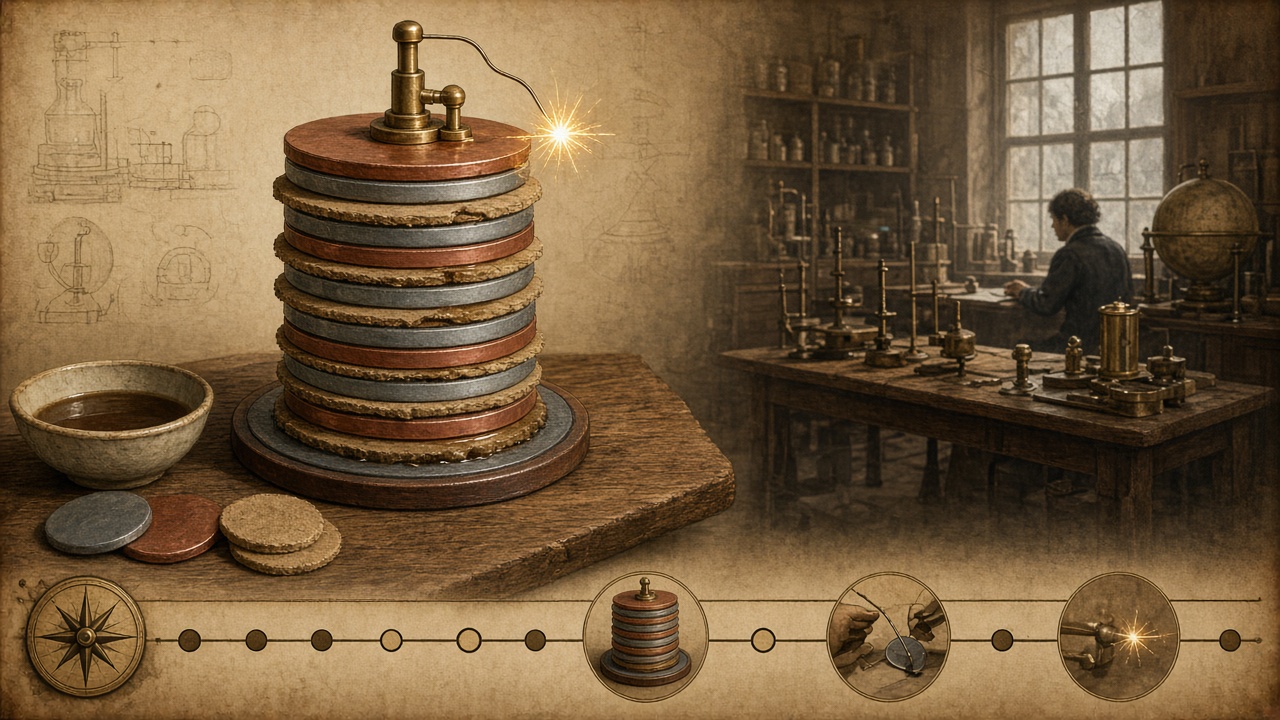
Alessandro Volta stacked copper and zinc with moist separators to make a steady electric current—not a spark, but a usable flow. The voltaic pile launched electrochemistry, powered early experiments, and defined what a “battery” could mean.
Voltaic era: electricity on demand from chemistry.
Proves chemical reactions can sustain electric current.
Enables electrolysis and early electrical science.
Ancestor of all later primary and secondary cells.
Rechargeable Workhorse1859–
Lead-Acid
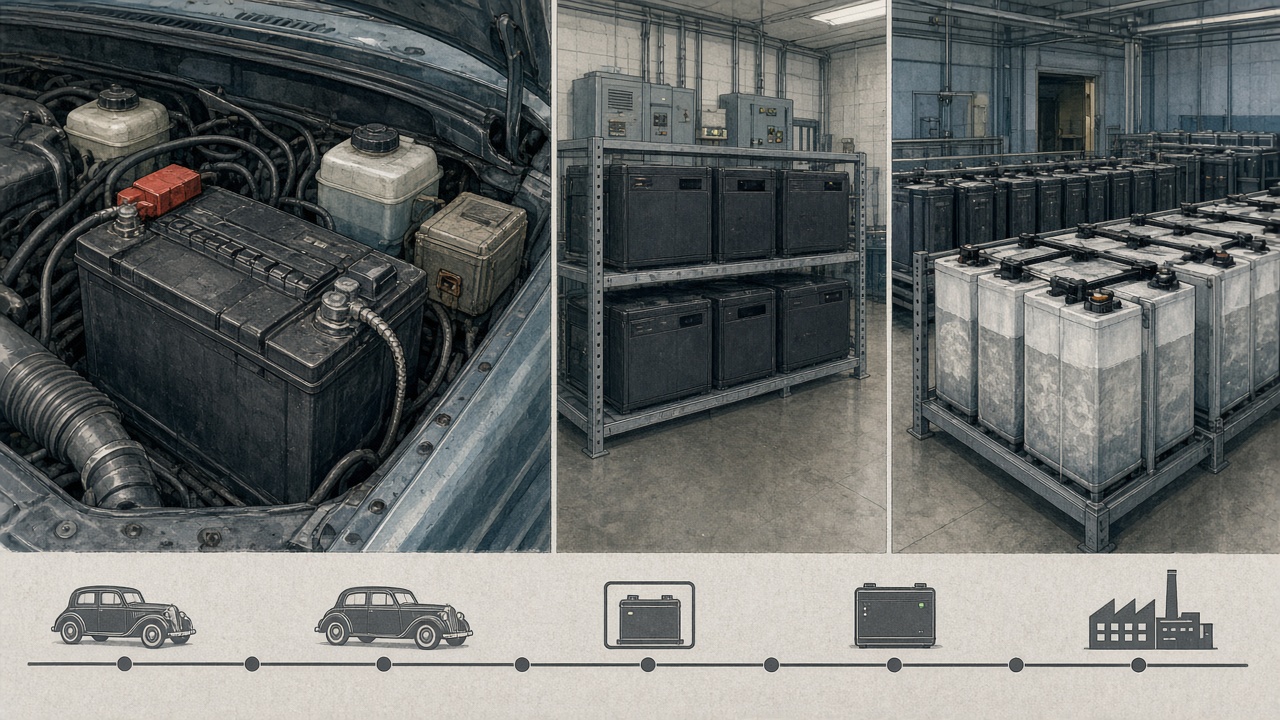
Gaston Planté’s lead-acid cell (1859) became the first widely practical rechargeable battery. Heavy but robust and recyclable, it still starts cars, backs up UPS systems, and powers many Indian inverters—even as lithium takes mobiles and many EVs.
Lead-acid era: starter motors and home backup.
High surge current suits engine cranking.
Mature recycling loops recover lead at scale.
Weight and cycle life limit EV traction use.
Portable Power Age1991–
Lithium-Ion
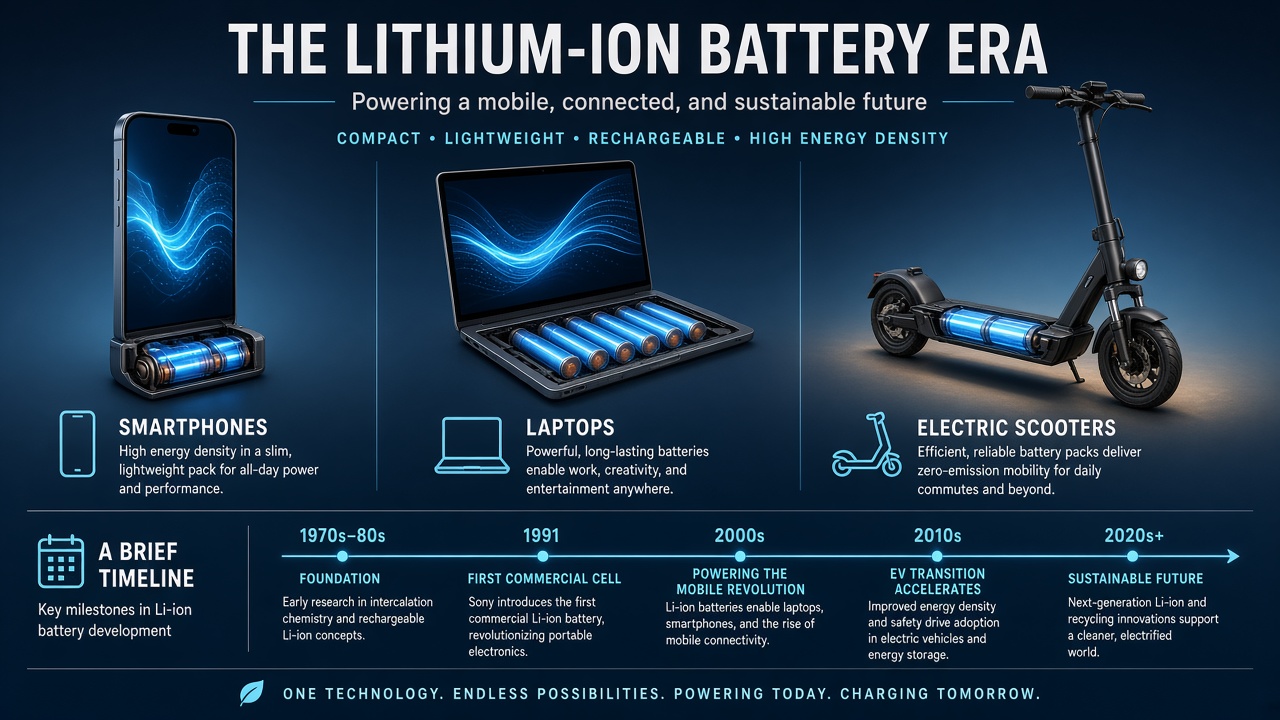
Commercial Li-ion (Sony, ~1991) packed more energy into lighter cells. Phones, laptops, power tools, e-scooters, and EVs followed. Nobel-recognised science met manufacturing scale—and mineral geopolitics around lithium, nickel, and cobalt.
Li-ion era: mobility without the cord.
High energy density enables modern consumer electronics.
Battery management systems (BMS) are critical for safety.
Recycling and second-life packs grow as fleets expand.
Next ChemistryEmerging
Solid-State
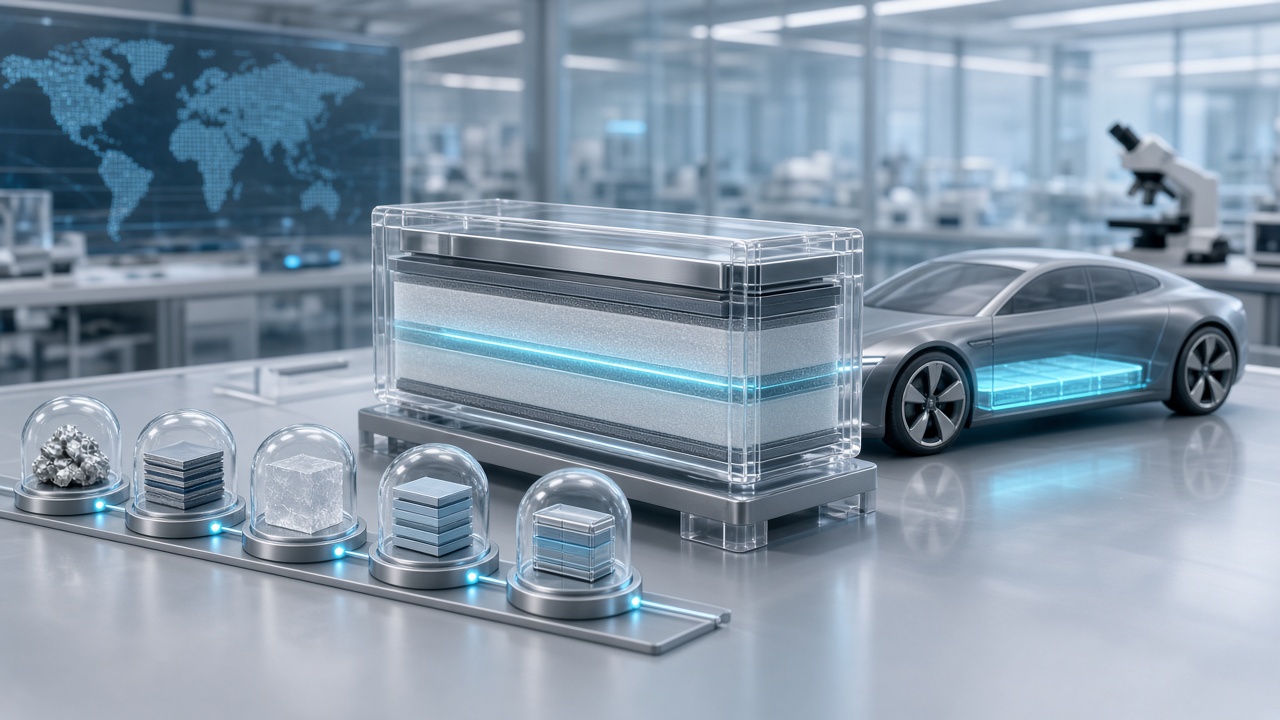
Solid-state designs replace flammable liquid electrolyte with a solid. Promises include better safety and higher energy density for EVs—if factories can make thin, durable interfaces cheaply at scale. Pilots and partnerships are racing; mass market timing remains open.
Interface stability and yield are hard engineering problems.
May coexist with advanced liquid Li-ion for years.
India’s Push2020s
Sodium-Ion
Sodium-ion batteries swap scarce lithium for abundant sodium. Energy density is typically lower than top Li-ion, but cost and supply security attract stationary storage, two-wheelers, and entry EVs. India—short on lithium, rich in manufacturing ambition—is investing in Na-ion R&D, cells, and domestic battery ecosystems.
Sodium-ion era: chemistry as energy strategy.
Fits grid backup, telecom towers, and cost-sensitive mobility.
Complements (not fully replaces) Li-ion for high-performance EVs.
Aligns with India’s PLI / local cell manufacturing goals.
Key Milestones
Milestone
When
Why it matters
Voltaic pile
1800
First practical continuous battery.
Lead-acid cell
1859
Rechargeable industrial & automotive staple.
Commercial Li-ion
1991
Portable electronics & later EV boom.
EV & grid Li-ion scale
2010s–
Batteries as climate infrastructure.
Solid-state pilots
2010s–
Race for safer, denser packs.
Na-ion & India push
2020s
Supply-secure alternative chemistries.
Chemistry at a Glance
Type
Strength
Typical use
Voltaic / early cells
Proof of concept
Lab / history
Lead-acid
Cheap surge + recycle
Cars, UPS, inverters
Lithium-ion
High energy density
Phones, EVs, storage
Solid-state
Safety / density goal
Emerging EV packs
Sodium-ion
Abundant materials
Cost-sensitive & stationary
Then vs Now
From wet piles to managed battery packs.
Metric
Then
Now
Form
Lab stacks / jars
Engineered packs + BMS
Use
Experiments / niche
Mobility + grid storage
Weight
Heavy per watt-hour
Li-ion leaps; Na-ion trades density for cost
Supply
Local metals
Global critical minerals
Policy
Little attention
Strategic industry (India PLI, etc.)
Future Predictions
Mix, not monopoly: Li-ion, Na-ion, and lead-acid coexist by use-case.
Solid-state: Gradual entry in premium EVs if yields improve.
India: Local cells + Na-ion for storage and affordable mobility.
Circular: Recycling and second-life packs become mainstream.
India spotlight
Batteries & India
India runs on inverter lead-acid at home, Li-ion in phones and e-mobility, and a policy push for domestic cells—plus sodium-ion as a lithium-light path for storage and mass transport.
India spotlight: from UPS rooms to gigafactory ambitions.
Homes
Inverter culture
Lead-acid UPS systems bridge power cuts across cities and towns.
Mobiles
Li-ion pocket boom
Smartphones and power banks normalise daily charging rituals.
EVs
Two- & four-wheelers
E-scooters and cars drive demand for packs and charging.
Policy
Local manufacturing
Incentives aim to build cell and pack capacity in India.
Na-ion
Strategic alternative
Research and startups target sodium-ion for cost and security.
Strength: Huge domestic demand and manufacturing scale-up.
Need: Minerals strategy, recycling, and skilled workforce.
Debate: Import packs now vs build full cell value chains.
Test Your Knowledge
20 questions on Volta through sodium-ion. Click to reveal answers.
Answer: Alessandro Volta (1800).
Answer: Copper and zinc (with electrolyte separators).
Answer: 1859 (Planté).
Answer: Car starter, UPS, home inverter, etc.
Answer: 1991.
Answer: Higher energy density / lighter packs.
Answer: Battery Management System.
Answer: Liquid electrolyte with a solid one.
Answer: Safety and/or higher energy density.
Answer: Sodium (Na+).
Answer: Abundant sodium vs limited domestic lithium.
Answer: Often lower energy density than top Li-ion.
Jump to any other electronics timeline on WorldTimelineHub.
Disclaimer: This content is AI-generated for educational purposes and may contain errors or outdated details. For correct and authoritative information, please refer to official and reliable sources such as government publications, manufacturers, museums, and academic references.