Electricity reached India as a wonder in 1879, when a few lamps lit up a Calcutta street. At independence the country had only about 1,362 MW of power and most
villages lived in darkness. Today India runs one of the world’s largest synchronised power grids, every village is electrified, and solar and wind power are growing fast.
This timeline covers the first electric lamps, early hydroelectric stations, the Electricity Acts, multipurpose dams, state electricity boards, nuclear power, NTPC,
NHPC, POWERGRID, the national grid, rural electrification schemes, LED bulbs, smart meters, solar parks, rooftop solar, and India’s clean energy targets.
1879 → PresentStreet Lamp → National Grid → Solar RooftopHydro · Thermal · Nuclear · Renewables
Why the Power Grid Matters
Electricity lights homes, runs water pumps on farms, powers factories, hospitals, schools, trains, and mobile towers, and now charges electric vehicles.
The power grid is the network of power stations, high-voltage transmission lines, substations, and local distribution wires that carries electricity from where
it is made to where it is used. Building it has been a central task of the government through the Ministry of Power, the Central Electricity Authority,
public sector companies, and state electricity utilities.
Big picture
India’s power journey in one view
Electricity moved from a few city lamps and small hydro plants, to giant dams and state electricity boards after independence, to huge thermal stations and
regional grids, to a single national grid linking every region, and finally to power in every village and a fast shift towards solar and wind energy. Related timelines:
Digital India,
railways,
cars and EVs.
1 grid
One nation, one frequency (2013)
100%
Villages electrified (2018)
450 GW+
Installed capacity
250 GW
Peak demand met (2024)
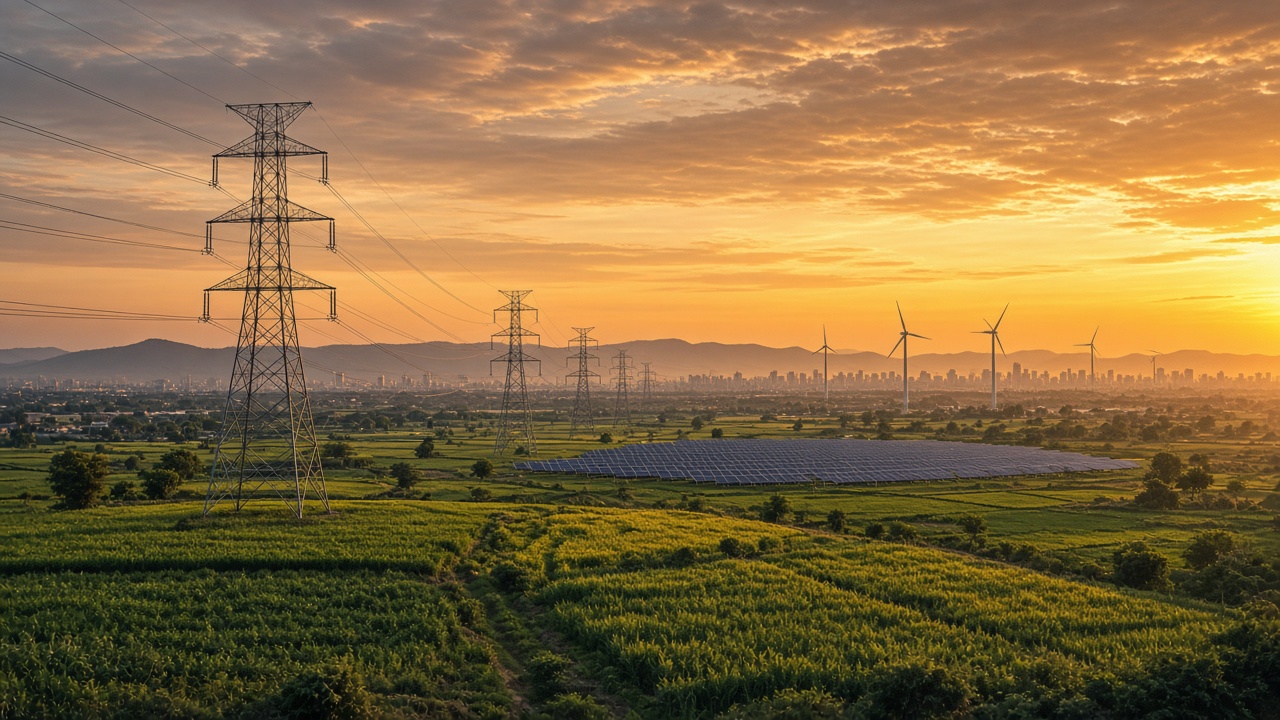
High-voltage lines carry power from coal, hydro, solar, and wind plants across India (artistic illustration).
💡 First Lights1879 – 1946
First Lights & Early Hydro Plants
Electric lamps first glowed in Calcutta, and small hydroelectric plants soon powered hill towns, gold mines, and mills. Cities got electric street lights and trams, but by independence electricity was still limited mainly to big towns.
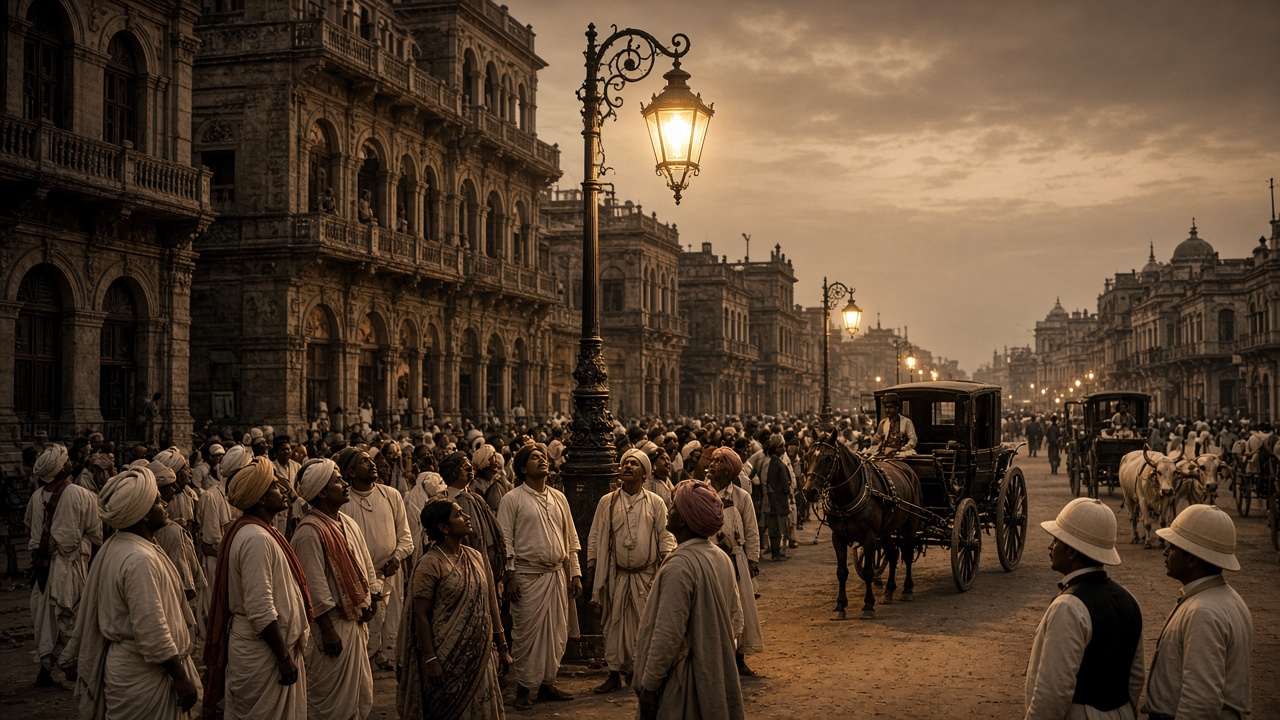
Crowds gathered to watch the first electric street lamps light up (artistic illustration).
1879: Electric light is demonstrated for the first time in Calcutta.
1897–1899: The Sidrapong hydel station near Darjeeling starts (1897); commercial power supply begins in Calcutta (1899).
1902–1905: The Shivanasamudra hydroelectric station in Karnataka supplies the Kolar Gold Fields (1902); Bangalore becomes one of the first cities in Asia with electric street lights (1905).
1910–1946: The Indian Electricity Act (1910) regulates supply; the Tata hydro plant at Khopoli powers Bombay’s mills (1915); by 1947 India has only about 1,362 MW of capacity.
Technology
Small hydro plants: Water turbines in hills and rivers.
Steam and diesel sets: Local power for cities.
Local networks: Separate systems for each town.
Features
City luxury: Lights and fans for a few homes.
Industrial use: Mines, mills, and trams.
Villages in the dark: Kerosene lamps remained common.
🌊 Big Dams1947 – 1974
Dams, State Boards & Nuclear Power
Independent India planned electricity through Five-Year Plans. State electricity boards were set up, great multipurpose dams produced power and irrigation, the first nuclear station opened, and a corporation was formed to take power to villages.
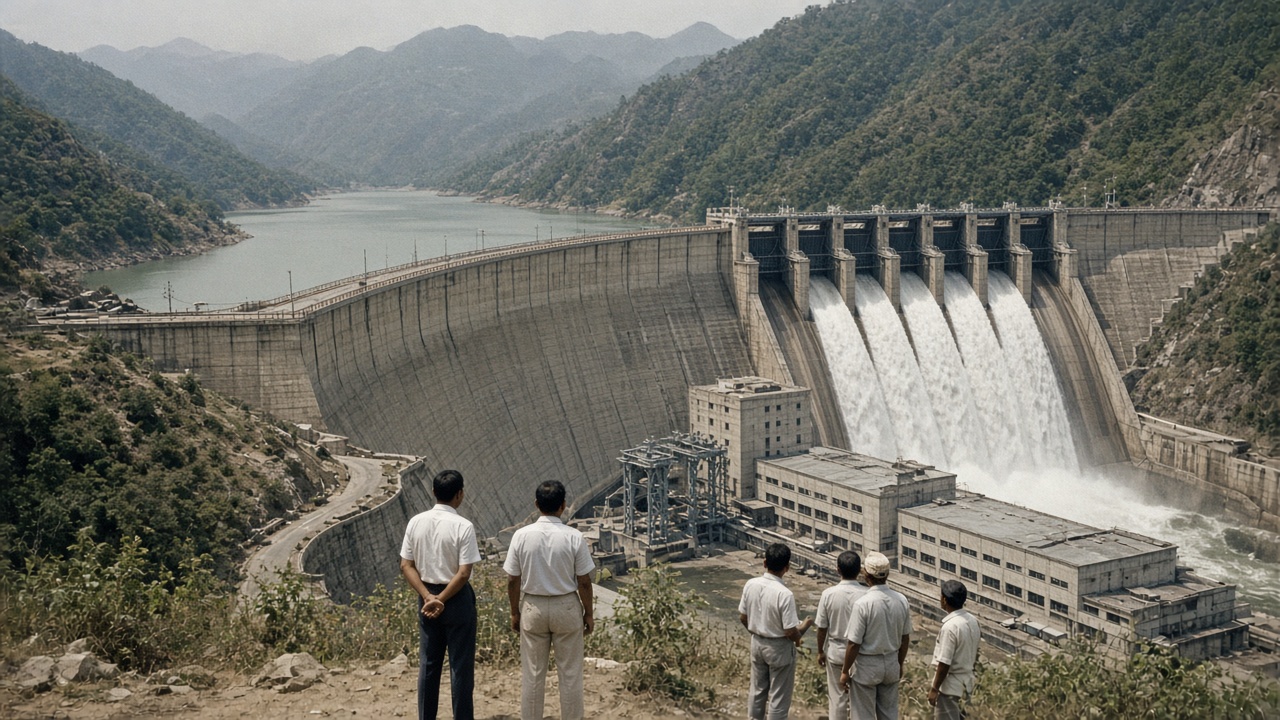
Big dams produced hydroelectric power and water for irrigation (artistic illustration).
1948–1951: The Electricity (Supply) Act, 1948 creates state electricity boards; the Damodar Valley Corporation is formed (1948); the Central Electricity Authority is set up (1951).
1957–1963: The Hirakud dam is inaugurated (1957); the Bhakra dam is dedicated to the nation (1963) — Nehru called such projects the “temples of modern India”.
1964: Regional electricity boards are set up, and the country is planned as five regional grids.
1969: The Tarapur Atomic Power Station, India’s first nuclear power station, begins operation; the Rural Electrification Corporation (REC) is set up.
Technology
Large hydro: High dams with big turbines.
Nuclear reactors: Power from uranium fission.
220 kV lines: Longer transmission within states.
Features
Planned growth: Power targets in Five-Year Plans.
Irrigation pumps: Electricity for the Green Revolution.
State control: Boards ran supply in each state.
🏭 Super Thermal1975 – 1990
NTPC, NHPC & Regional Grids
Central power companies were created to build very large coal and hydro stations near coal mines and rivers. High-voltage lines linked states into regional grids, the first wind farms appeared, and a national transmission company was formed.
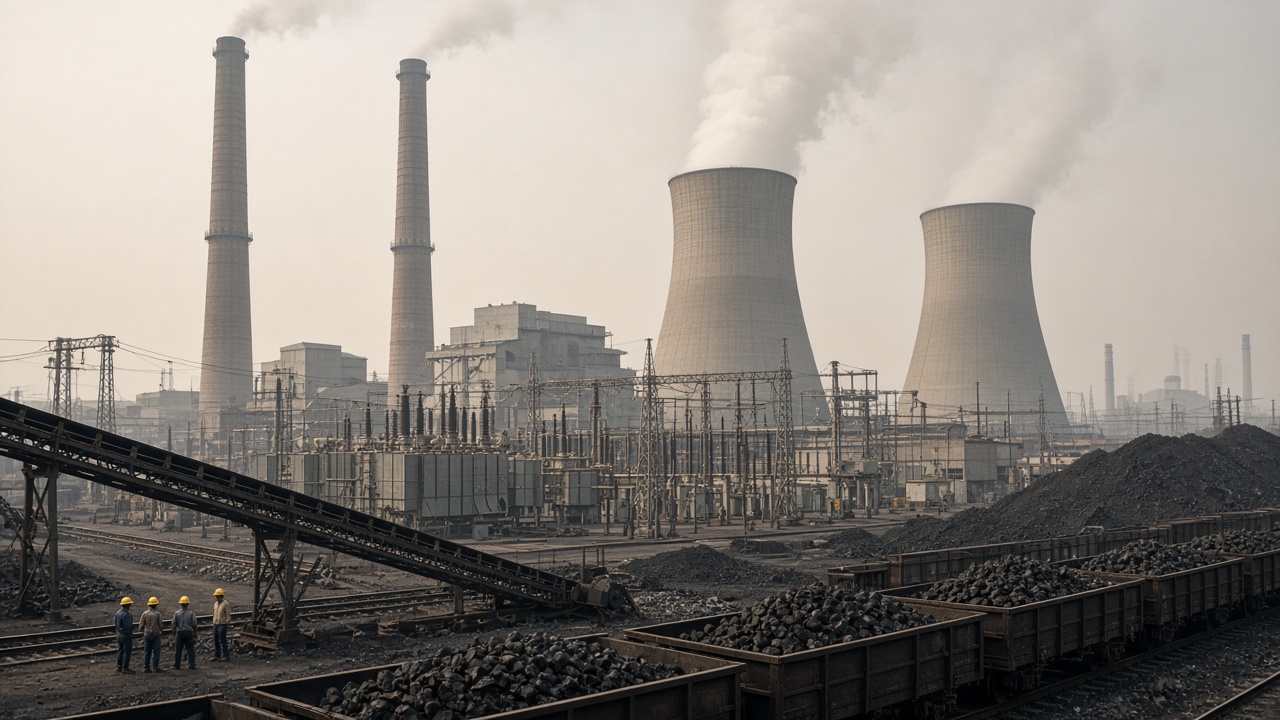
Super thermal power stations near coal fields became the backbone of India’s electricity supply (artistic illustration).
1975: The National Thermal Power Corporation (NTPC) and the National Hydroelectric Power Corporation (NHPC) are set up.
1977–1982: 400 kV transmission lines are introduced; NTPC’s first unit at Singrauli is commissioned (1982).
1986–1987: Demonstration wind farms are set up on the coasts of Gujarat, Tamil Nadu, and Maharashtra; the Nuclear Power Corporation of India is formed (1987).
1989: Power Grid Corporation of India (POWERGRID) is incorporated to build a national transmission network.
Technology
Super thermal stations: Units of 200–500 MW.
400 kV lines: Bulk power over long distances.
Load despatch centres: Balance supply and demand.
Features
Pit-head plants: Built close to coal mines.
Regional sharing: States trade surplus power.
Frequent power cuts: Demand still exceeded supply.
⚖️ Power Reforms1991 – 2012
Reforms, Electricity Act & Grid Links
Private companies were allowed to build power plants, independent regulators were set up, and the Electricity Act, 2003 reshaped the sector. Regional grids were joined step by step, rural electrification sped up, and the National Solar Mission began.
Grid control rooms balance electricity supply and demand across the country every second (artistic illustration).
1991–1998: Private power generation is opened up (1991); the eastern and north-eastern grids are synchronised; the Electricity Regulatory Commissions Act creates the CERC (1998).
2003: The Electricity Act, 2003 replaces older laws, allows open access, and separates generation, transmission, and distribution; the western grid joins the eastern and north-eastern grids.
2005–2010: Rajiv Gandhi Grameen Vidyutikaran Yojana speeds up village electrification (2005); the northern grid joins to form the “NEW” grid (2006); the National Solar Mission begins (2010).
30–31 July 2012: A major grid failure causes one of the world’s largest blackouts, affecting over 60 crore people and leading to stronger grid safety rules.
Technology
HVDC links: Direct-current lines between regions.
765 kV lines: Extra-high-voltage transmission.
Real-time monitoring: SCADA systems in control centres.
Features
Private investment: New companies build power plants.
Regulators: Independent commissions set tariffs.
Power trading: Electricity bought and sold on exchanges.
🔗 One Nation One Grid2013 – 2018
One Nation One Grid & Power for All
The southern grid joined the rest of the country, creating one national grid at one frequency. Village and household electrification schemes reached the last corners of India, and LED bulbs cut electricity use in homes and streets.
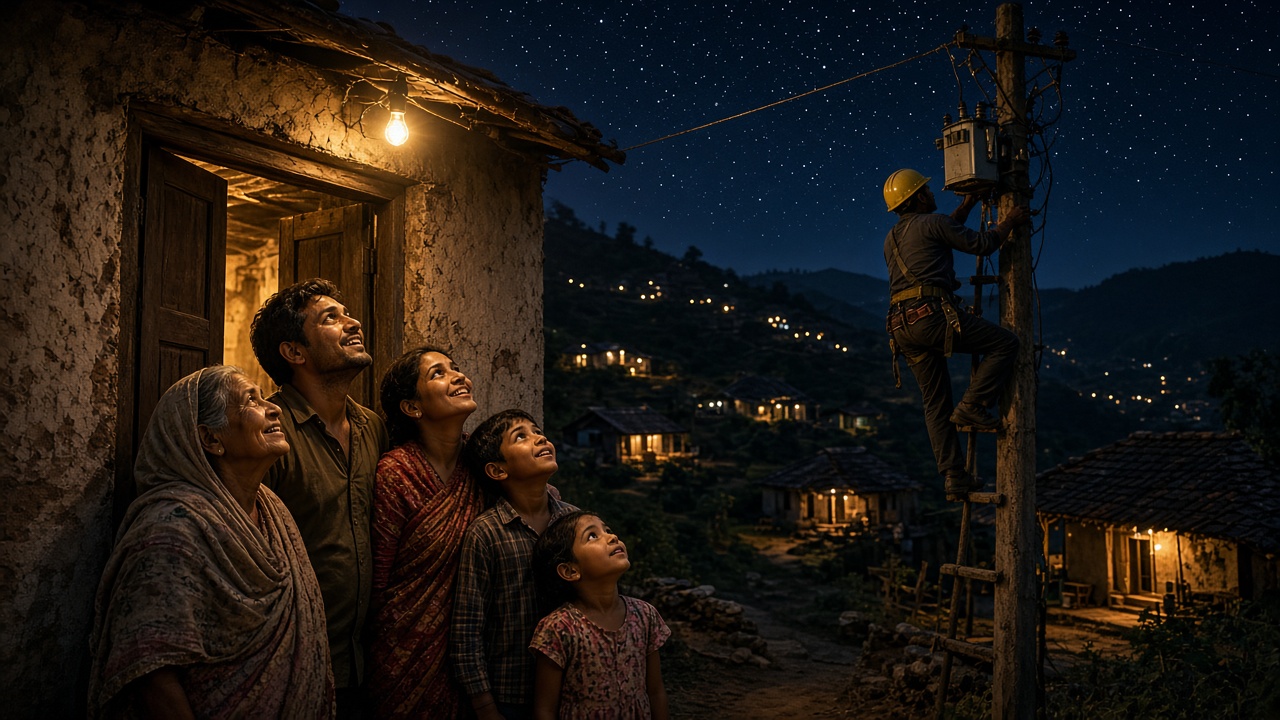
Rural electrification brought the first electric light to crores of homes (artistic illustration).
31 December 2013: The southern grid is synchronised with the national grid — “One Nation, One Grid, One Frequency”.
2014–2015: Deendayal Upadhyaya Gram Jyoti Yojana strengthens rural supply (2014); UJALA distributes crores of LED bulbs (2015); a target of 175 GW of renewable energy by 2022 is set; the International Solar Alliance is launched with France (2015).
2017: The Saubhagya scheme is launched to connect every remaining household.
28 April 2018: Leisang village in Manipur is connected, completing the electrification of all inhabited villages.
Technology
±800 kV HVDC: Very long-distance bulk transfer.
LED lighting: Much lower power use than old bulbs.
Off-grid solar: Solar kits for remote homes.
Features
Seamless flow: Power moves freely between regions.
Every village lit: Grid reaches remote hills and forests.
Lower bills: Energy-saving bulbs and fans.
☀️ Green Energy2019 – Present
Green Energy, Smart Meters & Rooftop Solar
India turned towards clean energy at record speed. Giant solar parks, wind farms, green energy corridors, and battery storage grew, farmers got solar pumps, homes got rooftop solar and smart meters, and electric vehicles began to charge from the grid.
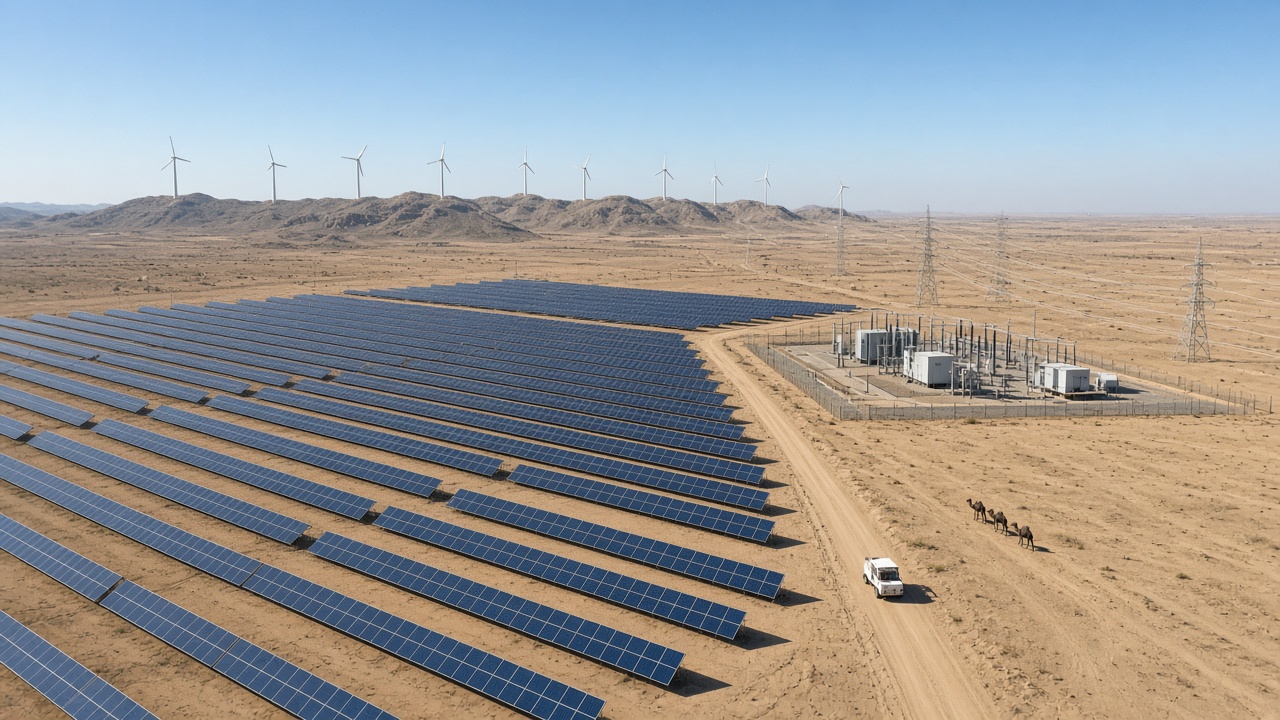
Large solar parks in sunny deserts now feed clean power into the national grid (artistic illustration).
2019–2021: PM-KUSUM gives farmers solar pumps (2019); the Revamped Distribution Sector Scheme promotes smart prepaid meters (2021); India sets a goal of 500 GW of non-fossil capacity by 2030 (2021).
2022–2023: The grid operator is renamed Grid Controller of India (2022); the National Green Hydrogen Mission is approved (2023); work speeds up on the huge Khavda renewable energy park in Gujarat.
2024: PM Surya Ghar Muft Bijli Yojana aims to put rooftop solar on one crore homes; the grid meets a record peak demand of about 250 GW.
2025–present: Non-fossil sources pass half of India’s installed power capacity; battery storage and new green energy corridors are added to the grid.
Technology
Utility solar and wind: Gigawatt-scale parks.
Battery storage: Saves solar power for the evening.
Smart meters: Real-time use and prepaid billing.
Features
Clean energy shift: Less dependence on coal.
Prosumers: Homes both use and sell power.
EV charging: Grid powers electric transport.
How India Makes Electricity
Source
Early landmark
Role today
Coal (thermal)
Early city power houses; super thermal stations from the 1980s
Still the largest source of electricity generated
Hydro
Sidrapong (1897), Shivanasamudra (1902)
Flexible power for peak hours; pumped storage
Nuclear
Tarapur (1969)
Steady, low-carbon base power
Wind
Coastal demonstration farms (1986)
Major source in Tamil Nadu, Gujarat, and Karnataka
Solar
National Solar Mission (2010)
Fastest-growing source; parks and rooftops
Gas
Combined-cycle plants from the 1980s–90s
Backup and peak power
Biomass & small hydro
Sugar mill and hill stream plants
Local power in rural areas
Key Power Organisations
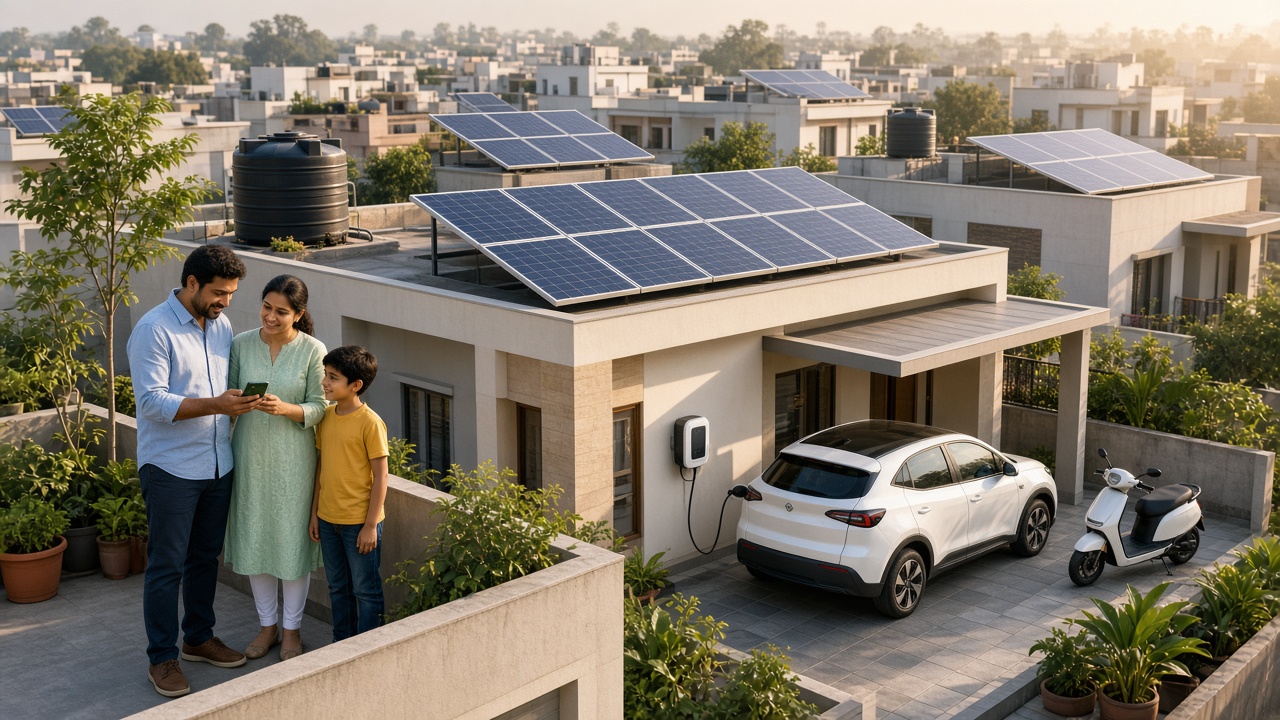
Rooftop solar, smart meters, and home EV chargers make households part of the power grid (artistic illustration).
Organisation
Set up
Role
Central Electricity Authority (CEA)
1951
Technical planning and standards for the power sector
Rural Electrification Corporation (REC)
1969
Finances rural electrification and power projects
NTPC
1975
India’s largest power generation company
NHPC
1975
Builds and runs hydroelectric projects
Nuclear Power Corporation of India (NPCIL)
1987
Operates nuclear power stations
POWERGRID
1989
Inter-state high-voltage transmission network
Central Electricity Regulatory Commission (CERC)
1998
Regulates inter-state tariffs and trading
Grid Controller of India (Grid-India)
2009 (as POSOCO)
Operates the national and regional grids in real time
Electricity: Then and Now
Aspect
Then
Now
Home lighting
Kerosene lamps and incandescent bulbs
LED bulbs and tube lights
Grid
Separate town and state systems
One national grid at one frequency
Main source
Small hydro and city steam plants
Coal plus fast-growing solar and wind
Villages
Most had no electricity
All inhabited villages electrified
Meter reading
Monthly visit by a meter reader
Smart meters and online bills
Consumers
Only buy power
Can make and sell power with rooftop solar
Power Grid Timeline Summary
Year
Milestone
1879
First electric light demonstrated in Calcutta
1897
Sidrapong hydel station, Darjeeling
1902
Shivanasamudra hydroelectric station
1910
Indian Electricity Act
1948
Electricity (Supply) Act; Damodar Valley Corporation
1963
Bhakra dam dedicated to the nation
1969
Tarapur nuclear station; REC set up
1975
NTPC and NHPC set up
1989
POWERGRID incorporated
1998
Central Electricity Regulatory Commission
2003
Electricity Act, 2003
2005
Rajiv Gandhi Grameen Vidyutikaran Yojana
2010
National Solar Mission
2012
Major northern and eastern grid blackout
2013
One Nation, One Grid, One Frequency
2015
UJALA LED scheme; International Solar Alliance
2017
Saubhagya household electrification scheme
2018
All inhabited villages electrified
2019
PM-KUSUM solar pumps for farmers
2023
National Green Hydrogen Mission
2024
PM Surya Ghar rooftop solar scheme; 250 GW peak demand
Test Your Knowledge
20 quick questions from the power grid and electrification timeline. Click each question to reveal the answer.
Answer: Calcutta (Kolkata), 1879.
Answer: The Sidrapong hydel station.
Answer: Shivanasamudra, in Karnataka.
Answer: Bangalore (Bengaluru).
Answer: About 1,362 MW.
Answer: The Electricity (Supply) Act, 1948.
Answer: The Sutlej.
Answer: Tarapur Atomic Power Station, Maharashtra (1969).
Answer: 1975.
Answer: Singrauli (1982).
Answer: Power Grid Corporation of India (POWERGRID), set up in 1989.
Answer: The Electricity Act, 2003.
Answer: The combined Northern, Eastern, Western, and North-Eastern regional grids, formed by 2006.
Answer: 30–31 July 2012.
Answer: 31 December 2013, when the southern grid was synchronised.
Answer: UJALA.
Answer: Leisang, in Manipur.
Answer: Solar pumps and support for solar power on farms.
Answer: 500 GW.
Answer: PM Surya Ghar Muft Bijli Yojana.
Classroom activity
Students Tasks
Use these prompts for discussion or projects on electricity and the power grid in India.
Click any panel to expand and explore the visual mood.
India’s power story in pictures — the first street lamps, great dams, thermal stations, grid control rooms, village electrification, transmission lines, solar parks, and rooftop solar.
First Lights
From 1879
Big Dams
Bhakra 1963
Thermal Power
NTPC from 1975
Grid Control
Real-time balance
Power for All
Every village 2018
One Grid
One frequency 2013
Solar Parks
Gigawatt scale
Rooftop Solar
Surya Ghar 2024
Explore all government timelines
Jump to any other government timeline on WorldTimelineHub.
Disclaimer: This content is AI-generated for educational purposes and may contain errors or outdated details. For correct and authoritative information, please refer to official and reliable sources such as government publications, manufacturers, museums, and academic references.