From hand fans and rope-pulled punkahs to humming ceiling fans, desert coolers, and quiet BLDC remotes—how moving air became everyday comfort.
Punkah -> MotorCeiling & TableBLDC Smart
Why Fans Matter
Moving air makes heat bearable. Before refrigeration of rooms, people waved fans, swung punkahs, and later hung motors from ceilings. In India, the ceiling fan became a household essential—cheaper and thriftier than air conditioning for most families.
This timeline follows hand fans, punkahs, early electric motors, mass-market ceiling and table fans, evaporative coolers beside rising AC use, and today’s BLDC and smart fans.
Big picture
Fan evolution in one view
Muscle and rope gave way to electric induction motors, then to efficient electronics. Comfort scaled from one person’s palm leaf to every room in the house.
From palm leaves to motors on the ceiling—airflow as appliance.
Portable BreezeAntiquity - Present
Hand Fans
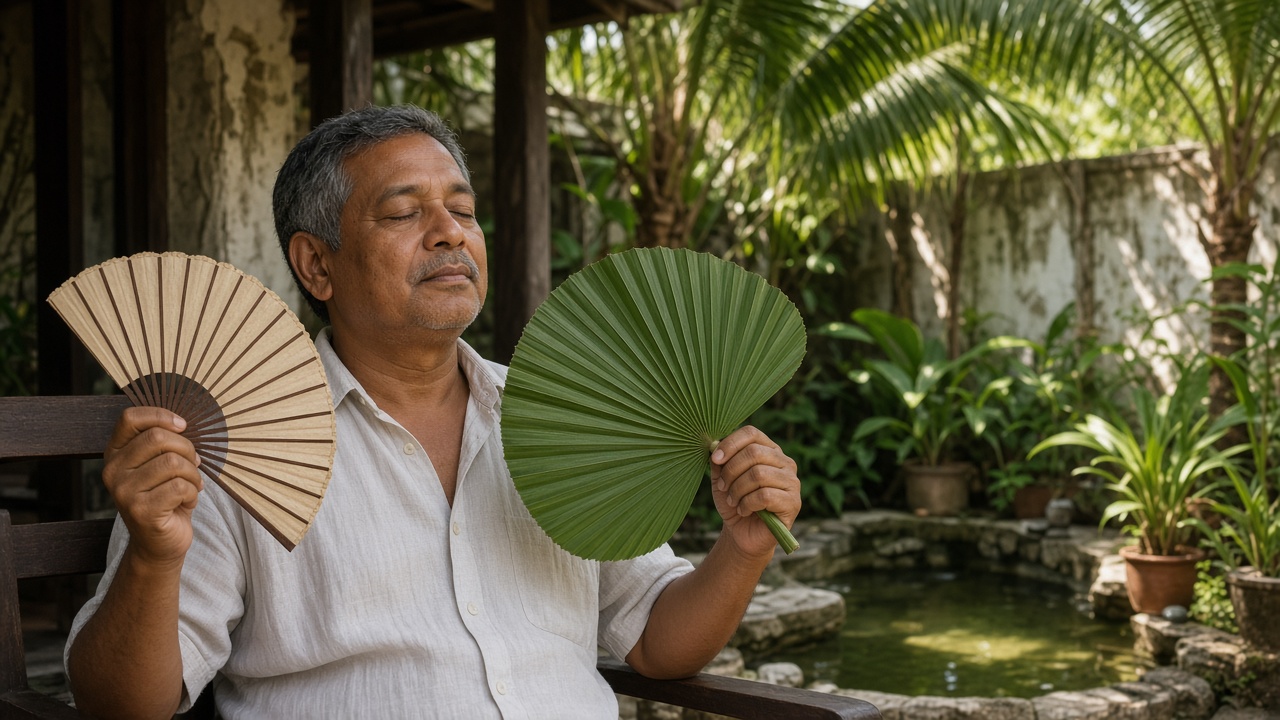
Palm-leaf, bamboo, feather, and folding fans cooled faces and ceremonies for millennia. They needed no grid—only a wrist—and remain cultural objects as well as practical tools in heat waves and power cuts.
Hand-fan era: personal airflow before motors existed.
Palm-leaf and cane fans common across tropical Asia and Africa.
Folding fans become fashion and etiquette in many cultures.
Still used in temples, weddings, and summer travel.
Limited reach: Cannot circulate a whole hall alone.
Rope & Cloth1700s - Early 1900s
Punkah and Mechanical Cooling
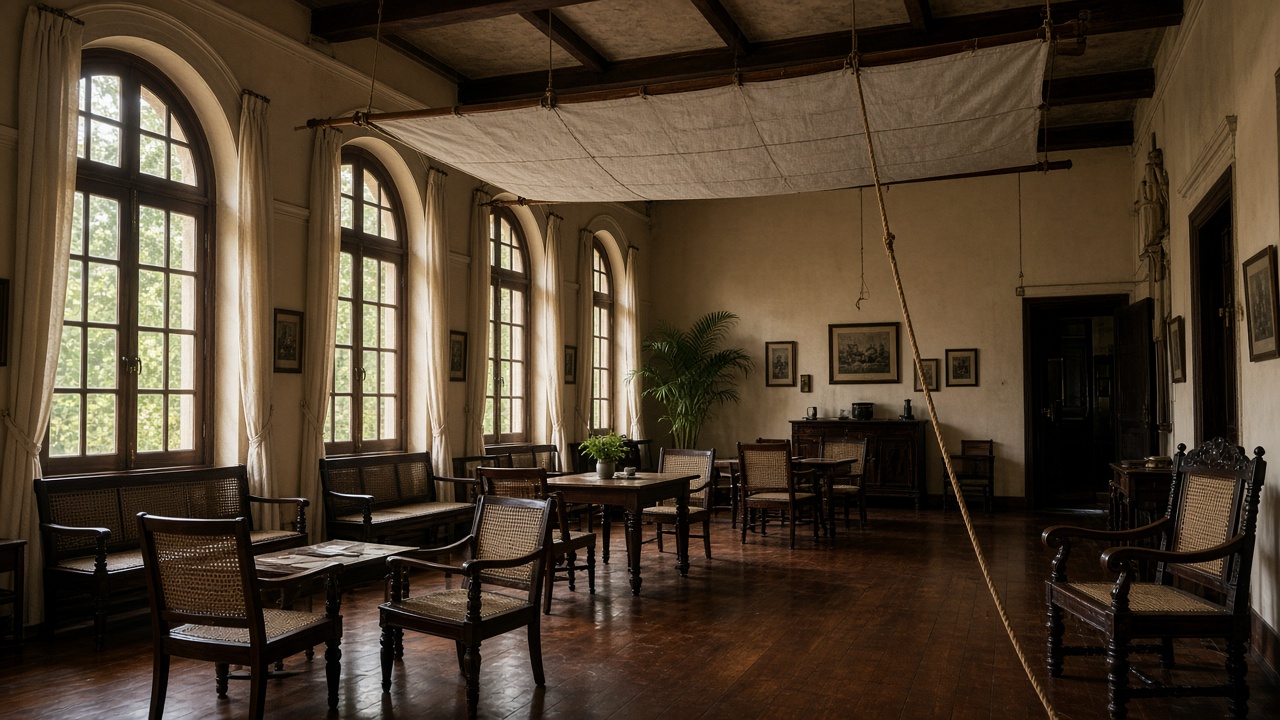
Large cloth or cane screens hung from ceilings and swung by rope—often by a punkah-wallah outside the room—cooled courts, offices, and bungalows across South Asia. Some buildings later used pulley and belt systems before electric motors arrived.
Punkah era: room-scale airflow before household electricity.
Punkahs standard in courts, churches, and colonial offices.
Labour-intensive: continuous pulling for comfort.
Bridge to mechanised and then electric ceiling fans.
Technology Used
Cloth / cane blade: Large surface to push air.
Rope & pulley: Transfer motion from outside the room.
Later belts: Shared mechanical drive in some buildings.
Features
Whole-room effect: Better than a hand fan for gatherings.
Silent of motors: No buzz—but dependent on labour.
Social history: Symbol of colonial comfort hierarchies.
Motor Age1880s - 1950s
Early Electric Fans
Electric motors turned blades on desks and ceilings. Early designs were luxury appliances for wired buildings; as grids grew, fans became the first mass electrical comfort device in many hot countries.
Electric era begins: motors replace rope and muscle.
1880s onward: commercial electric fans spread with city power.
Ceiling mounts free floor space in offices and homes.
Regulators and multi-speed switches appear.
Technology Used
Induction / early motors: Convert electricity to torque.
Metal blades & cages: Safety and durability.
Wall regulators: Resistive speed control (classic Indian setup).
Features
Always-on comfort: No continuous human labour.
Grid dependent: Useless in long outages without backup.
Noise & heat: Early motors could be loud and warm.
Every Room1950s - 1990s
Household Fan Boom
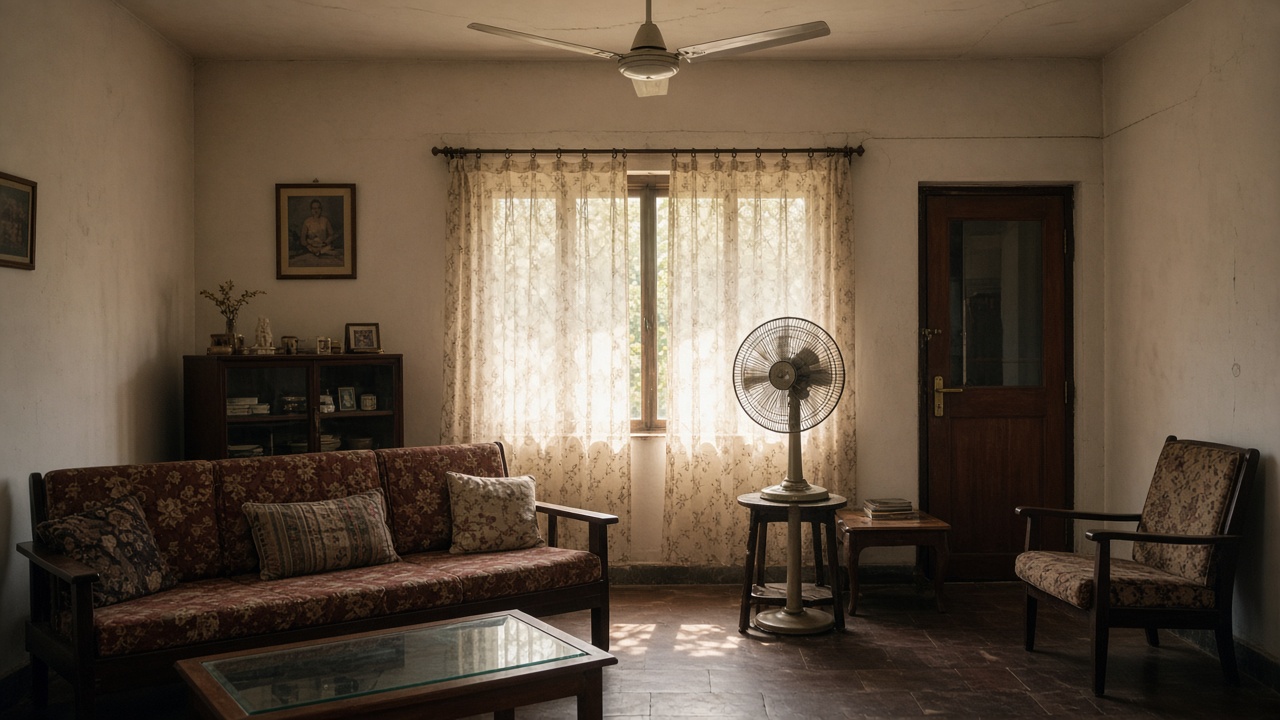
Ceiling fans became default in Indian homes, shops, and schools. Table and pedestal fans added portable airflow. Domestic brands and local manufacturing made fans a middle-class staple long before AC was affordable.
Household era: one fan per room becomes normal.
Ceiling fans standard in new urban housing.
Pedestal and table fans for rentals and shared spaces.
Service networks and spare motors become common trades.
Wall regulators: Stepped speeds in most Indian homes.
Features
Low cost / high impact: Comfort for the masses.
Repairable: Local technicians rewind motors for decades.
Power draw: Older models use more watts than modern BLDC.
Hotter Summers1980s - 2010s
Coolers and Air Conditioning
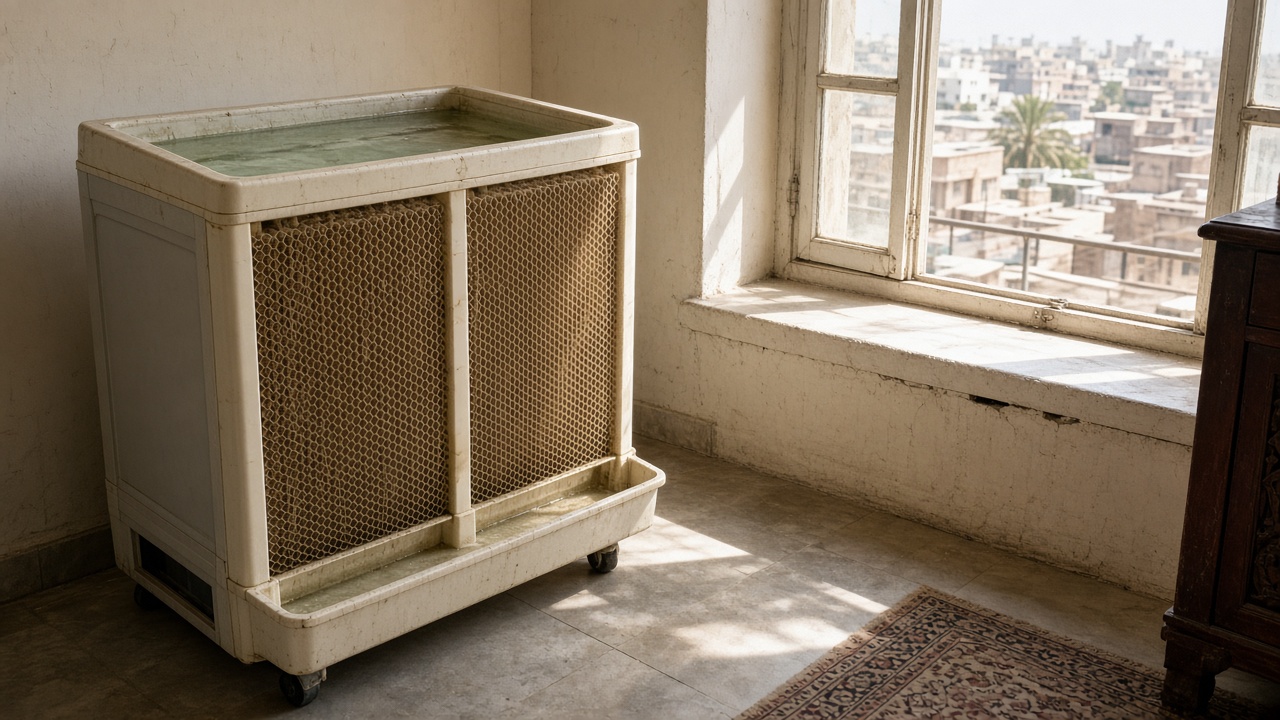
Desert (evaporative) coolers offered cheaper “AC-like” relief in dry inland climates. Window and split air conditioners then surged in cities—yet fans stayed essential for corridors, mild days, and cutting AC bills when used together.
Cooler era: evaporation and AC join—but do not erase—the fan.
Desert coolers popular in North and Central India summers.
AC ownership rises with income and hotter heatwaves.
Fans remain default in most rooms and for night sleep.
Technology Used
Evaporative pads + pump: Cool dry air with water.
Vapour-compression AC: Refrigerates and dehumidifies.
Fan + AC synergy: Higher thermostat + fan saves power.
Features
Coolers: Cheap to run in dry heat; less effective in humidity.
AC: Strong cooling; higher cost and power demand.
Fans: Still the first switch people flip.
Efficient Spin2010s - Present
BLDC and Smart Fans
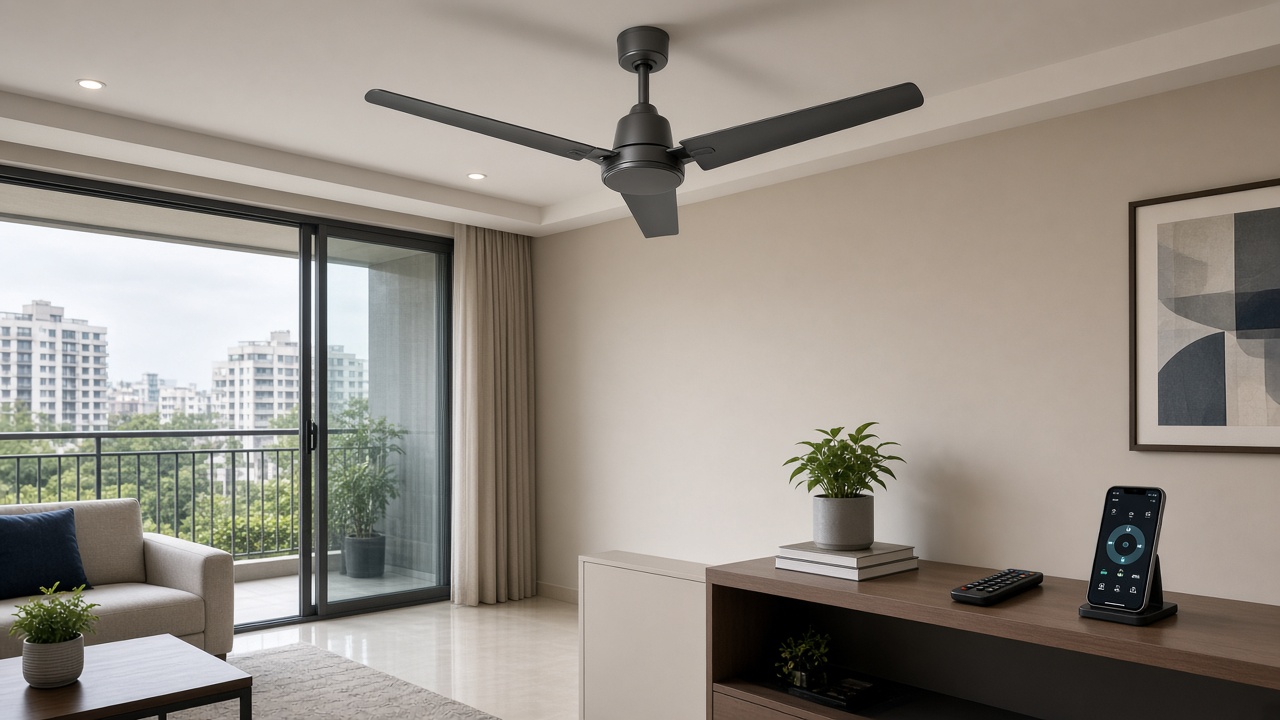
Brushless DC motors cut watts dramatically while remotes, apps, and sensors add convenience. Energy labels and summer peak-load concerns push households toward high-efficiency ceiling fans that still feel like the familiar whir overhead.
BLDC motors + electronics: Precise speed, high efficiency.
IR / RF remotes: No wall regulator required.
Wi-Fi / Zigbee options: App and voice control.
Features
Lower power: Often a fraction of older fans’ draw.
Quieter sleep: Less motor hum at night.
Electronics repair: Drivers can be harder than rewind motors.
Fans Timeline Summary
Year / Era
Milestone
Why it matters
Antiquity
Hand & leaf fans
Personal cooling without power.
1700s–1900s
Punkahs
Room-scale airflow before motors.
1880s–
Electric fans
Motors replace human labour.
1950s–90s
Household boom
Ceiling fans in every Indian home.
1980s–
Coolers & AC
Stronger cooling options compete.
2010s–
BLDC / smart
Efficiency and remotes remake the category.
Key Historical Events
Event
Year
Significance
Hand fans in daily & ritual use
Ancient–
Portable personal cooling.
Punkah culture in South Asia
colonial era
Mechanical room airflow.
Commercial electric fans
1880s
Electric comfort appliance arrives.
Mass ceiling-fan housing
mid–late 20th c.
Fans become default home kit.
Desert cooler popularity
late 20th c.
Budget evaporative cooling spreads.
AC boom in cities
2000s–
Fans share space with refrigeration.
BLDC & star-labelled fans
2010s–
Efficiency becomes a purchase filter.
Smart / app fans
2010s–20s
Fans join home automation.
Fan Types at a Glance
Type
Typical use
Strength
Hand / leaf fan
Personal, ritual
No power needed
Punkah
Halls (historical)
Room airflow pre-electric
Ceiling fan
Homes, offices
Whole-room circulation
Table / pedestal
Portable rooms
Directional, movable
Desert cooler
Dry climates
Lower-cost cooling
BLDC / smart fan
Modern homes
Efficiency + control
Then vs Now
Wrist muscle to electronic drivers—same need for moving air.
Metric
Then (hand / early electric)
Now (BLDC / smart)
Power source
Muscle or basic AC motor
Efficient electronics + BLDC
Control
Wrist / wall regulator
Remote, app, sensors
Energy use
Higher watts (old induction)
Often much lower for same airflow
Noise
Variable / often louder
Generally quieter at speed
Repair
Local rewind common
More electronic modules
Future Predictions
2025–2030: BLDC becomes the default new ceiling fan in urban India.
Late 2020s: More fans with occupancy and temperature automation.
2030s: Tighter efficiency norms as heatwaves raise peak demand.
Ongoing: Fans + efficient AC used together as the practical comfort stack.
India spotlight
Fans in India
India’s climate made the ceiling fan a national appliance. Punkahs once cooled courts; then induction ceiling fans filled flats and government offices. Today star-labelled BLDC models and remotes compete while desert coolers still rule many dry-zone summers.
India spotlight: from punkah halls to BLDC remotes.
Pre-electric
Hand fans & punkahs
Palm fans and rope-pulled screens cool homes, courts, and offices.
Grid growth
Electric ceiling fans
Fans become the first comfort appliance as towns electrify.
Post-independence
Mass manufacturing
Domestic brands and local service make fans ubiquitous.
1980s–
Coolers & AC rise
Evaporative coolers and later splits expand; fans stay essential.
2010s–
BLDC & star labels
Efficiency and remotes redefine the next generation of ceiling fans.
Jump to any other electronics timeline on WorldTimelineHub.
Disclaimer: This content is AI-generated for educational purposes and may contain errors or outdated details. For correct and authoritative information, please refer to official and reliable sources such as government publications, manufacturers, museums, and academic references.