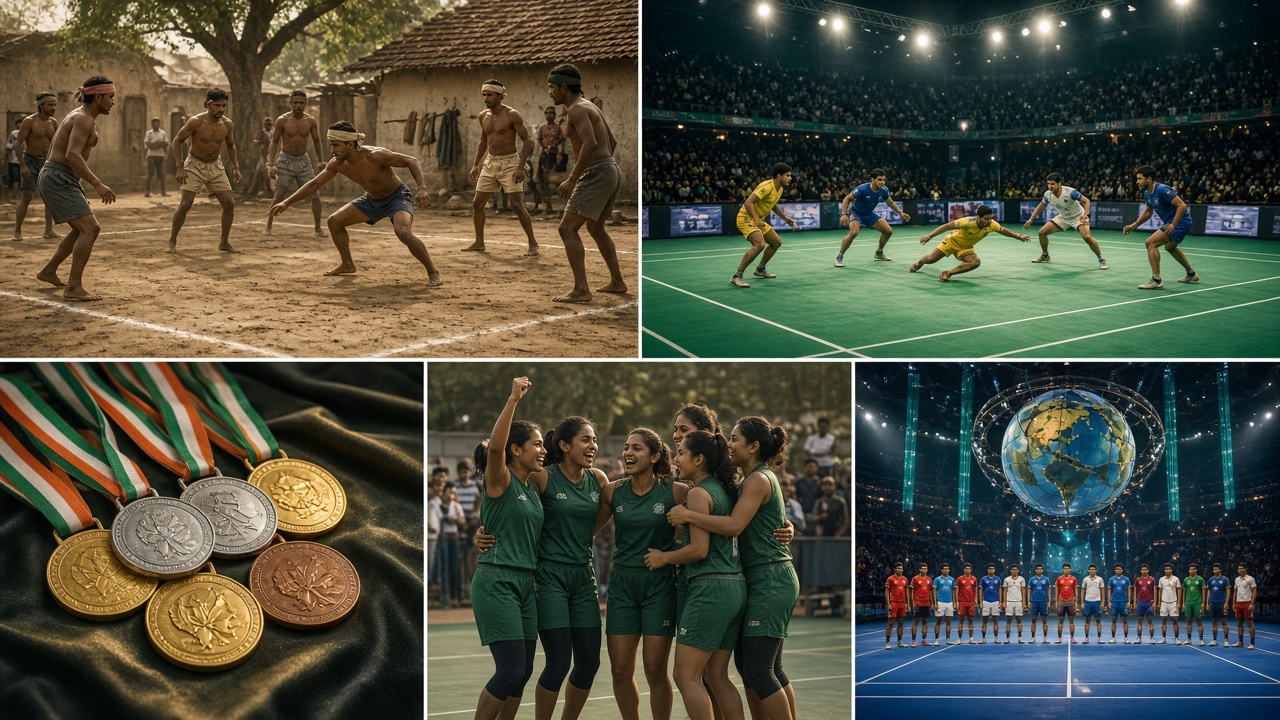
From dusty village akharas to Pro Kabaddi lights, Asian Games golds, women’s teams, and global leagues —
kabaddi is India’s contact-sport story that went from mud court to mainstream TV.
This timeline follows five turns: rural roots, the franchise boom, continental medals, women’s kabaddi,
and the push to grow leagues beyond India’s borders.
Akhara → ArenaPKL · Asian GamesMen · Women · World
Why Kabaddi Matters in India
Kabaddi is breath, tackle, and tactic on a small court. Villages trained the body; Pro Kabaddi sold the spectacle;
Asian Games proved continental class; women claimed the same raid; global leagues ask whether an Indian-rooted
sport can travel like cricket’s T20 idea — without losing its grit.
From village akhara to PKL nights, Asian Games, women’s kabaddi, and global leagues.
🌾 Mud CourtDeep Roots
Village Akhara
Before mats and microphones, kabaddi lived in village akharas — mud courts, festival contests, and endless breath-held raids. Local rules varied; courage and stamina did not. This grassroots culture still feeds India’s talent pipeline.
Village akhara: where breath and tackle begin.
Rural training: Akharas build strength, agility, and local rivalries.
Festival sport: Melas and village meets keep kabaddi social.
Rule flexibility: Local versions coexist with later standard rules.
Talent base: Many pro raiders and defenders start here.
Ideas & Practices
Mud surfaces: Grip, fall, and toughness differ from mats.
Breath craft: Continuous chant while raiding.
Guru-shishya feel: Seniors coach juniors on the same court.
Features
Access: Little equipment needed beyond space and will.
Identity: Sport tied to village and region pride.
Continuity: Still thrives beside televised leagues.
📺 Franchise Boom2014 – Present
Pro Kabaddi
The Pro Kabaddi League (2014) remade kabaddi as arena entertainment: city franchises, auctions, star raiders, slow-mo tackles, and prime-time TV. Suddenly a rural contact sport filled living rooms — and paid athletes like celebrities.
Pro Kabaddi: mud-court craft as TV spectacle.
2014 launch: Franchise league format brings sponsors and cameras.
Star economy: Raiders and defenders become household names.
Rule presentation: Mat kabaddi packaged for new audiences.
Broadcast packages: Live windows and commentary craft.
Player auctions: Price discovery for talent.
Features
Visibility leap: Kabaddi enters national leisure time.
Professional pay: Careers become financially viable.
Debate: Entertainment vs long-term grassroots balance.
🥇 Continental Gold1990 – Present
Asian Games
Kabaddi became an Asian Games medal sport in 1990. India emerged as a dominant power — turning a traditional game into a reliable medal factory and a symbol of sporting soft power across Asia.
Asian Games: kabaddi as India’s continental strength.
1990 milestone: Men’s kabaddi enters the Asian Games medal programme.
Indian dominance: Repeated golds build a championship identity.
Women’s events: Women’s kabaddi later expands the medal map.
National pride: Kabaddi medals join hockey and individual sports in public memory.
Systems
Standard rules: International competition format.
National camps: Selection and high-performance prep.
Scouting: State and PKL form feed national squads.
Features
Medal reliability: A sport India expects to win.
Continental stage: Rivalries with other Asian sides.
Pathway proof: Shows kabaddi thrives beyond entertainment leagues.
🌟 Equal RaidGrowing
Women’s Kabaddi
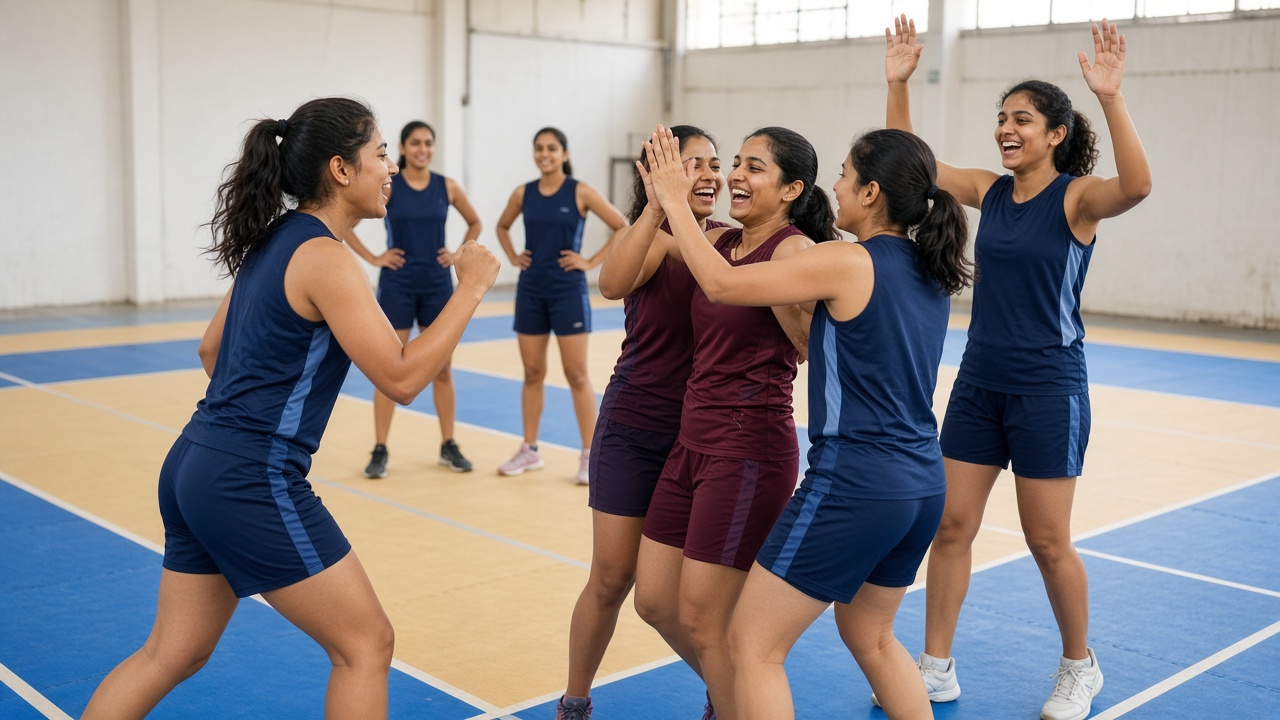
Women’s kabaddi grew through schools, state meets, national championships, and Asian Games competition. The skill was always there; visibility, pay, and professional calendars are still catching up to the men’s PKL-era boom.
Women’s kabaddi: same raid — unequal spotlight, still closing.
Competitive rise: National teams and championships raise standards.
Asian stage: Women’s events expand medal opportunities.
Pathway gaps: Fewer stable pro structures than for men.
Role models: Visible athletes draw more girls to academies.
Systems & Support
Age-group camps: State and national youth pipelines.
Media windows: Coverage still thinner than men’s PKL nights.
Safe facilities: Coaching and travel support that include women.
Features
Equity unfinished: Pay and calendars remain uneven.
Community strength: Strong roots in several Indian states.
Next test: Sustainable professional platforms.
🌍 Export the RaidExpanding
Global Leagues
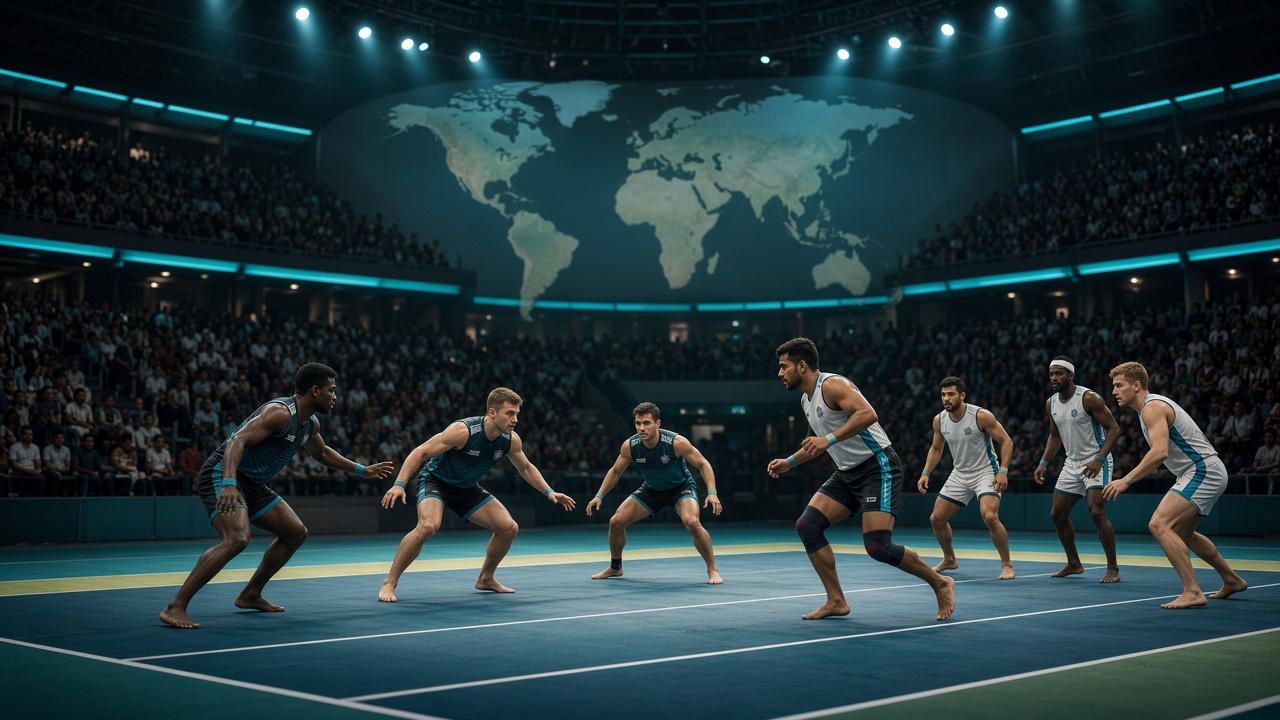
Kabaddi’s next bet is the world: diaspora leagues, international tournaments, and efforts to plant franchise models abroad. The question is whether breath-held raids can find fans in new countries the way Pro Kabaddi found them in Indian living rooms.
Global leagues: can kabaddi travel beyond South Asia?
International events: World Cups and multi-nation meets grow the map.
Diaspora hubs: Communities abroad keep and spread the game.
League experiments: Franchise and invitational formats test new markets.
Rule branding: Clear, TV-friendly rules help first-time viewers.
Expansion Tools
Federations abroad: Local associations and coaching clinics.
Streaming: Digital audiences without local TV deals.
Player exchange: Overseas talent and Indian stars on shared courts.
Features
Soft power: An Indian-origin sport seeking global status.
Risk: Leagues rise and fade without deep grassroots.
Opportunity: Pair global shows with school and club growth.
Kabaddi Eras Compared
Each era answers a different need: rural skill, TV entertainment, continental medals, gender equity, and global reach.
Era
Main idea
Strength
Limitation
Village akhara
Grassroots craft
Talent & cultural roots
Uneven facilities & rules
Pro Kabaddi
Franchise spectacle
Pay, TV, city fandom
Entertainment vs development tension
Asian Games
Continental excellence
Medal dominance & pride
Less everyday visibility than PKL
Women’s kabaddi
Equal opportunity
Rising teams & role models
Pay and pro platforms lag
Global leagues
Export the sport
New markets & soft power
Sustainability abroad uncertain
India Spotlight: Kabaddi Milestones
From akharas to Asian Games golds and Pro Kabaddi nights.
Year / Era
Milestone
Significance
Deep roots
Village akhara culture
Grassroots skill and pride.
1990+
Asian Games medal sport
Continental stage and Indian dominance.
2014
Pro Kabaddi League launches
Franchise entertainment era.
Growing
Women’s kabaddi pathways
Visibility and teams expand.
Expanding
Global leagues & events
Sport seeks audiences abroad.
Kabaddi Timeline Summary
Year / Era
Milestone
Deep roots
Village akhara kabaddi
2014+
Pro Kabaddi League
1990+
Asian Games kabaddi medals
Growing
Women’s kabaddi
Expanding
Global leagues and international events
Test Your Knowledge
10 quick questions from the kabaddi timeline. Click each question to reveal the answer.
Answer: A traditional training/contest ground — often a rural court for kabaddi and related practices.
Answer: 2014.
Answer: It turned kabaddi into televised franchise entertainment with professional pay.
Answer: 1990.
Answer: India has been a dominant medal-winning force.
Answer: Pay gaps, fewer pro leagues, or less media coverage (any one).
Answer: Grow the sport’s audience and competitions beyond traditional strongholds.
Answer: Chant / hold a continuous breath call (the “kabaddi” raid breath).
Answer: A standardised mat court.
Answer: Amateur Kabaddi Federation of India.
Classroom activity
Students Tasks
Use these prompts for discussion or projects on kabaddi.
RootsLeaguesMedalsGender & global
Make a five-panel poster from village akhara to global leagues.
Explain three skills a kabaddi raider needs.
Compare mud-court akhara play with mat Pro Kabaddi in a table.
Research one Asian Games kabaddi gold year for India and present three facts.
Design a fair school kabaddi match that includes girls’ and boys’ teams.
Debate: “Pro Kabaddi saved the sport” vs “Pro Kabaddi only sold the sport.”
Interview someone who played village kabaddi and list five local rules they used.
Propose one idea to grow women’s kabaddi professionally in your state.
Map where kabaddi is popular in India on a blank outline map.
Write a short pitch for introducing kabaddi to a new country.
Click any panel to expand and explore the visual mood.
Kabaddi in pictures — akharas, PKL nights, Asian Games, women’s play, and global arenas.
Village Akhara
Mud court roots
Pro Kabaddi
Franchise nights
Asian Games
Continental gold
Women’s Game
Equal raid
Global Leagues
Export the raid
Through Time
Akhara to world
Explore all sports timelines
Jump to any other sports timeline on WorldTimelineHub.
Disclaimer: This content is AI-generated for educational purposes and may contain errors or outdated details. For correct and authoritative information, please refer to official and reliable sources such as government publications, manufacturers, museums, and academic references.