From hearth fires and wood, to coal’s industrial heat, oil’s liquid mobility, nuclear’s dense atoms, renewables’ falling costs, and hydrogen’s emerging role in hard-to-abate sectors.
Fuels -> SystemsCoal & oil ageClean power & H2
Why Energy Transitions Matter
How societies get heat, light, and motion shapes cities, wars, climate, and daily life. Energy transitions rarely erase old fuels overnight—they layer new denser or cleaner sources onto existing systems until the mix tips.
This timeline follows fire and wood, coal, oil, nuclear, renewables, and hydrogen as linked turning points.
Big picture
Energy in one view
Hearth biomass, industrial coal, petroleum mobility, atomic electricity, wind and solar at scale, and hydrogen for the sectors wires alone struggle to reach.
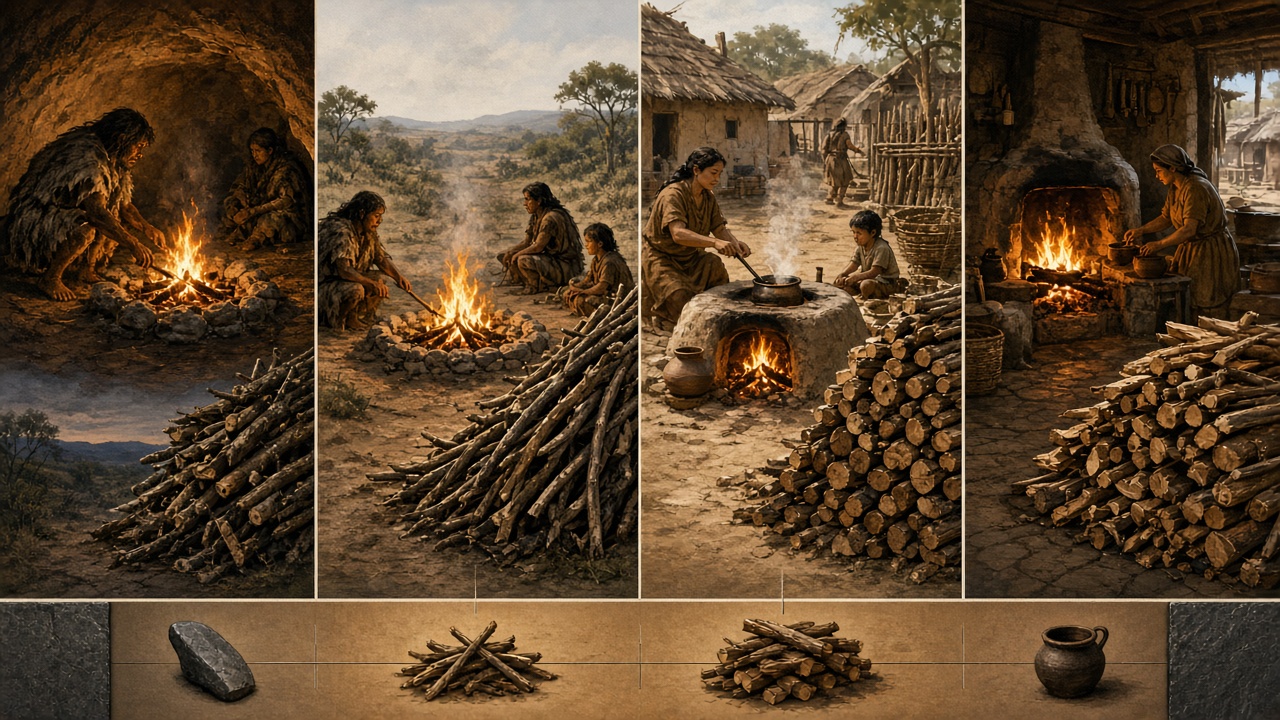
Controlling fire was humanity’s first energy technology: cooking food, heating shelters, hardening tools, and lighting nights. Wood, dung, and charcoal remained primary fuels for millennia—and biomass still heats and cooks for large populations today.
Fire/wood era: energy as flame and forest.
Fire expands diet, settlement, and craft (pottery, metals).
Fuelwood scarcity repeatedly drives local ecological stress.
Traditional biomass remains part of today’s energy mix in many regions.
Industrial Heat1700s–1900s
Coal
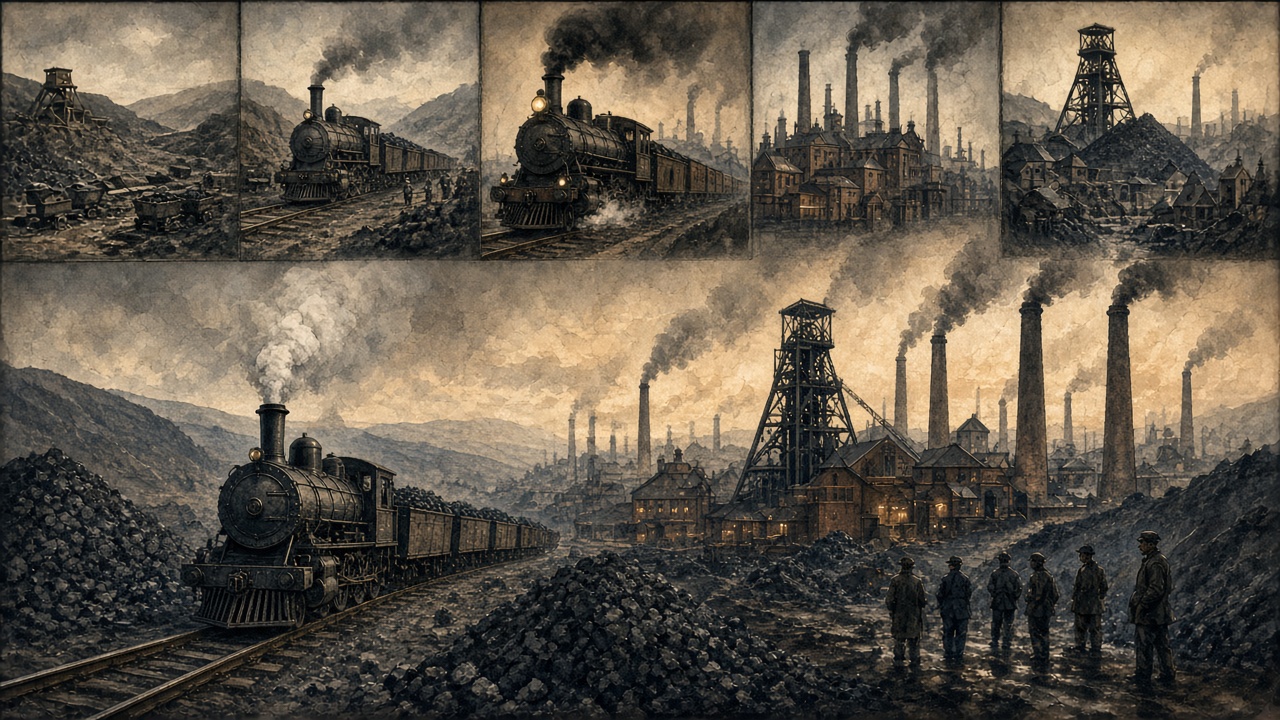
Coal unlocked denser, mined energy for steam engines, factories, railways, and early electric grids. Britain’s coal boom became a template; industrial cities grew around pits and chimneys. Coal still generates a large share of world electricity—and a large share of CO2.
Coal era: steam, steel, and smoke.
Steam power multiplies mechanical work beyond muscle and waterwheels.
Rail and shipping networks run on coal bunkers.
Air pollution and climate impacts make coal the transition’s hardest exit.
Liquid Mobility1900s–
Oil
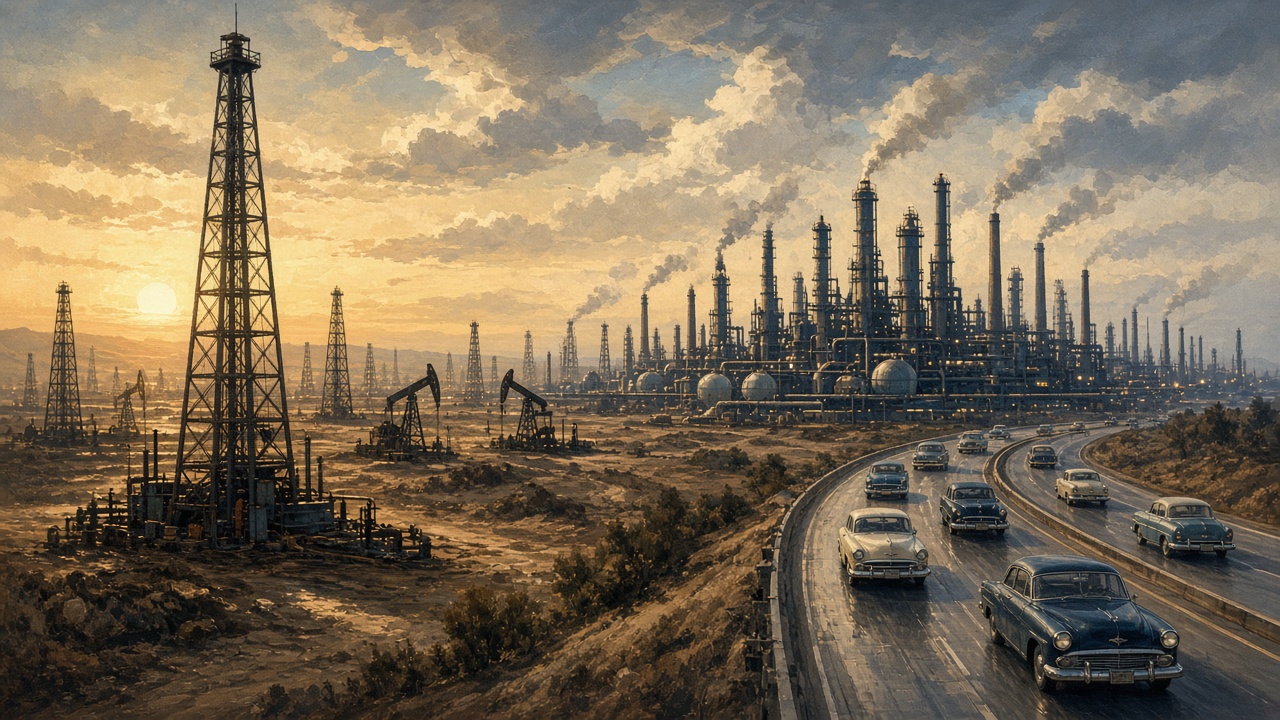
Petroleum’s liquid fuels suited internal-combustion engines: cars, trucks, aircraft, and navies. Oil also fed plastics and petrochemicals. The 20th century’s geopolitics—from Middle East fields to oil shocks—were written in barrels as much as borders.
Oil era: mobility, plastics, and power politics.
Mass automobility and aviation depend on refined fuels.
Oil shocks (1970s) push efficiency and alternative energy interest.
Transport remains the toughest oil-dependence sector to quit.
Atomic Power1950s–
Nuclear
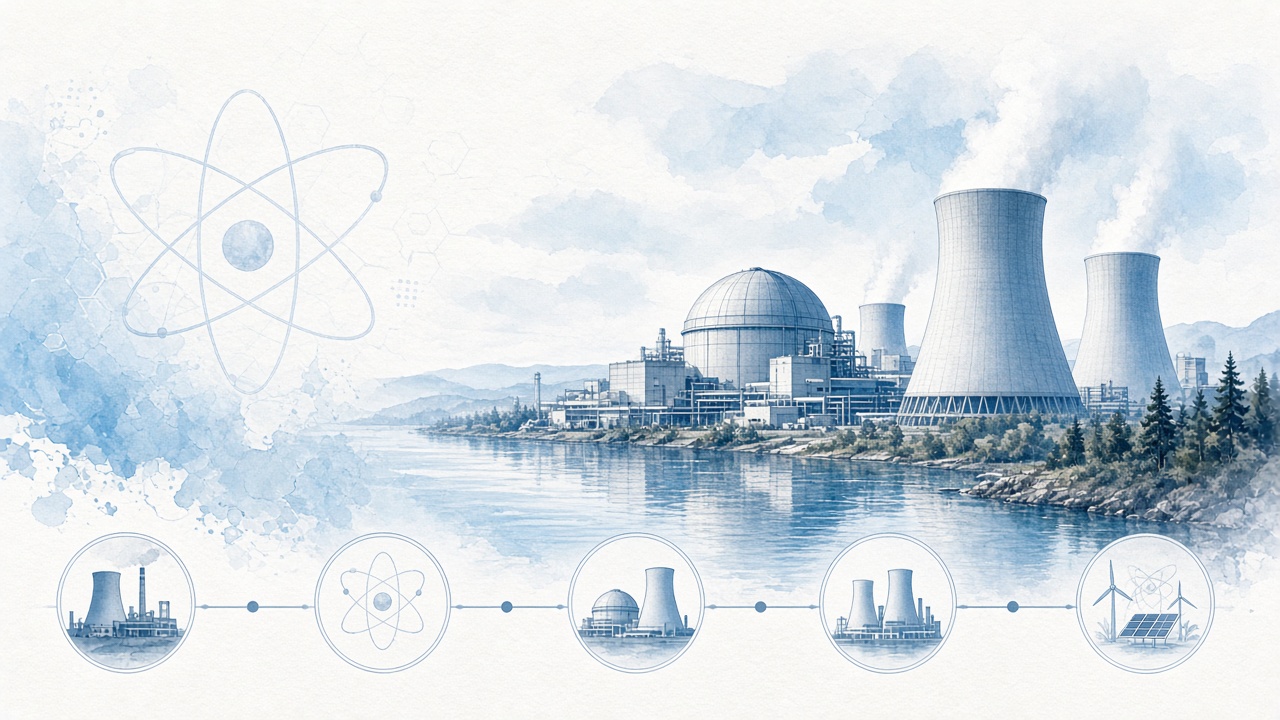
After wartime fission science, civilian nuclear plants promised abundant electricity from tiny fuel mass. Nuclear became a major low-carbon baseload in some countries—while accidents, waste, cost overruns, and weapons links shaped public trust and policy swings.
Nuclear era: dense power, contested trust.
High energy density and low operational CO2.
Safety culture, waste storage, and capital cost dominate debates.
New designs (SMRs) aim to revive deployment in the climate era.
Clean ElectricityLate 1900s–
Renewables
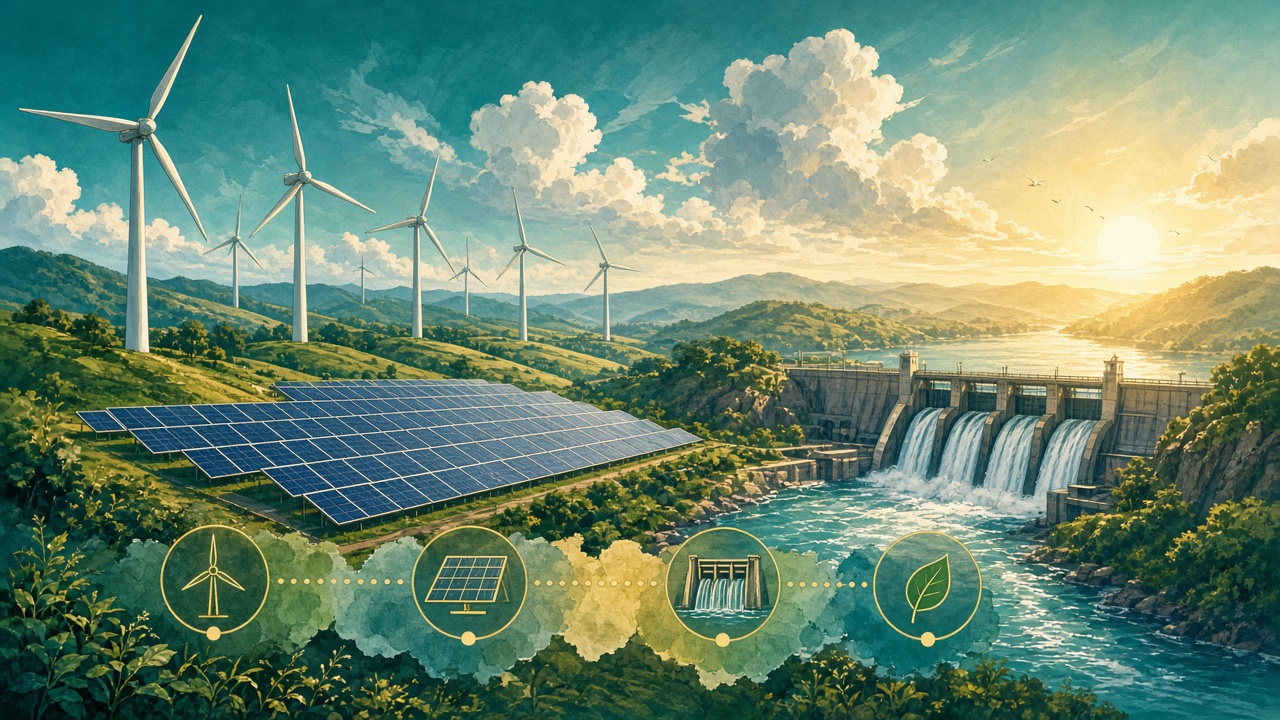
Hydro was early; solar PV and wind then plunged in cost. Renewables now add the bulk of new power capacity in many markets. The challenge shifts from “can we build panels?” to grids, storage, minerals, land use, and integrating variable supply.
Renewables era: electrons from sun, wind, and water.
Solar and wind become cheapest new power in many regions.
Batteries and flexible demand help balance the grid.
Policy, auctions, and manufacturing scale drive the boom.
Molecules AheadEmerging
Hydrogen
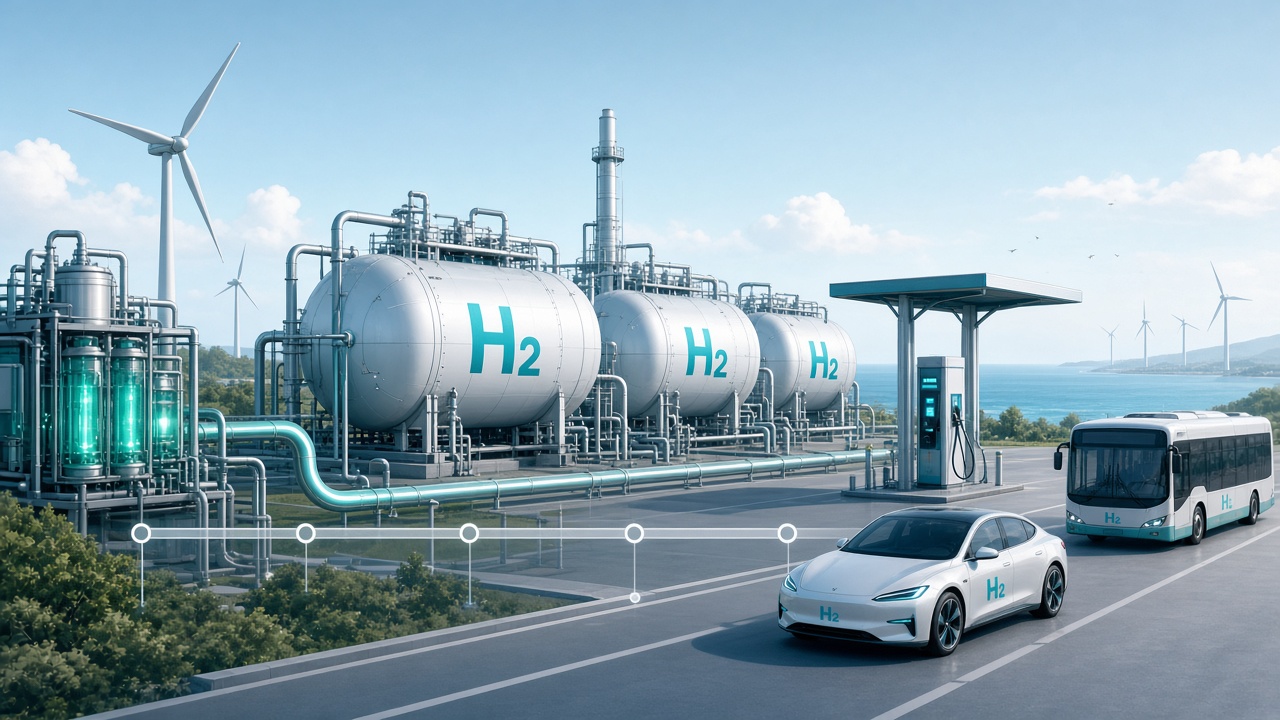
Hydrogen can store renewable energy and fuel processes that are hard to electrify—steel, ammonia, shipping, and some heavy transport. “Green” hydrogen from electrolysers is the climate prize; cost, pipelines, safety, and leakage remain hurdles. It is a bet on molecules where wires fall short.
Hydrogen era: clean molecules for hard sectors.
Colour labels (grey/blue/green) mark production carbon intensity.
Industry and shipping are prime early use cases.
Infrastructure and cheap renewables decide commercial success.
Key Milestones
Milestone
When
Why it matters
Controlled fire / wood fuels
Prehistory
Cooking, heat, metallurgy foundations.
Steam & coal industrialisation
1700s–1800s
Factories, rail, urban energy surge.
Oil & mass motor transport
1900s
Liquid fuels reshape mobility & geopolitics.
Civilian nuclear power
1950s–
Dense low-carbon electricity option.
Solar/wind cost collapse
2010s–
Renewables become mainstream new capacity.
Green hydrogen strategies
2020s
Policy bets on molecules for hard-to-abate uses.
Era Focus at a Glance
Era
Main use
Key constraint
Fire / wood
Heat & cooking
Forest / biomass supply
Coal
Industry & power
Pollution & CO2
Oil
Transport & chemicals
Import security & emissions
Nuclear
Baseload electricity
Cost, waste, public trust
Renewables
Clean power
Variability, grids, minerals
Hydrogen
Hard-to-electrify fuels
Cost & infrastructure
Then vs Now
From woodpiles to wind farms.
Metric
Then
Now
Primary fuel
Biomass / coal
Mix: fossils + rising RE
Power system
Local / steam
Interconnected grids
Transport
Muscle / coal rail
Oil + growing EVs
Climate lens
Largely absent
Central to policy
Innovation focus
More heat & work
Decarbonise & secure
Future Predictions
Electricity first: Grids, storage, and EVs keep leading the transition.
Coal exit uneven: Some regions retire coal faster than others.
Hydrogen selective: Wins where electrification is hardest, not everywhere.
Minerals & skills: Supply chains for batteries, copper, and tech talent decide pace.
India spotlight
Energy Transitions & India
India still bridges biomass kitchens and gigawatt solar parks. Coal remains a power pillar; oil imports drive mobility; nuclear expands carefully; renewables and green hydrogen are national priorities.
India spotlight: coal legacy, solar surge, H2 bets.
Traditional
Biomass kitchens
Wood and dung fuels persist alongside LPG and electrification drives.
Coal
Power backbone
Thermal plants and domestic coal support rapid demand growth.
Oil
Import dependence
Transport fuels and refining link India to global oil markets.
Nuclear / RE
Diversify & decarbonise
NPCIL plants plus record solar/wind additions reshape the mix.
H2
National green hydrogen
Mission-mode push for electrolysers, exports, and industry uses.
Strength: Scale of RE deployment and manufacturing ambition.
Need: Grids, storage, and just transition for coal regions.
Debate: Growth vs emissions pathways and energy security.
Test Your Knowledge
20 questions on fire through hydrogen. Click to reveal answers.
Answer: Controlled fire (wood/biomass).
Answer: Many people still cook/heat with biomass.
Answer: The Industrial Revolution (steam & factories).
Jump to any other world history timeline on WorldTimelineHub.
Disclaimer: This content is AI-generated for educational purposes and may contain errors or outdated details. For correct and authoritative information, please refer to official and reliable sources such as government publications, manufacturers, museums, and academic references.