Electric cars were once common city rides, then nearly vanished in the petrol age. Lithium batteries, hybrids, and policy—especially India’s FAME push for EV bikes, autos, cars, and buses—brought them roaring back.
Early EVs -> RevivalBikes + carsIndia FAME
Why Electric Vehicles Matter
EVs cut tailpipe emissions in cities, lower running costs for many riders, and shift energy use from oil pumps to the power grid. In India—where two-wheelers rule the roads—electric scooters and three-wheelers can change daily mobility faster than cars alone, especially with FAME incentives and growing charging access.
Big picture
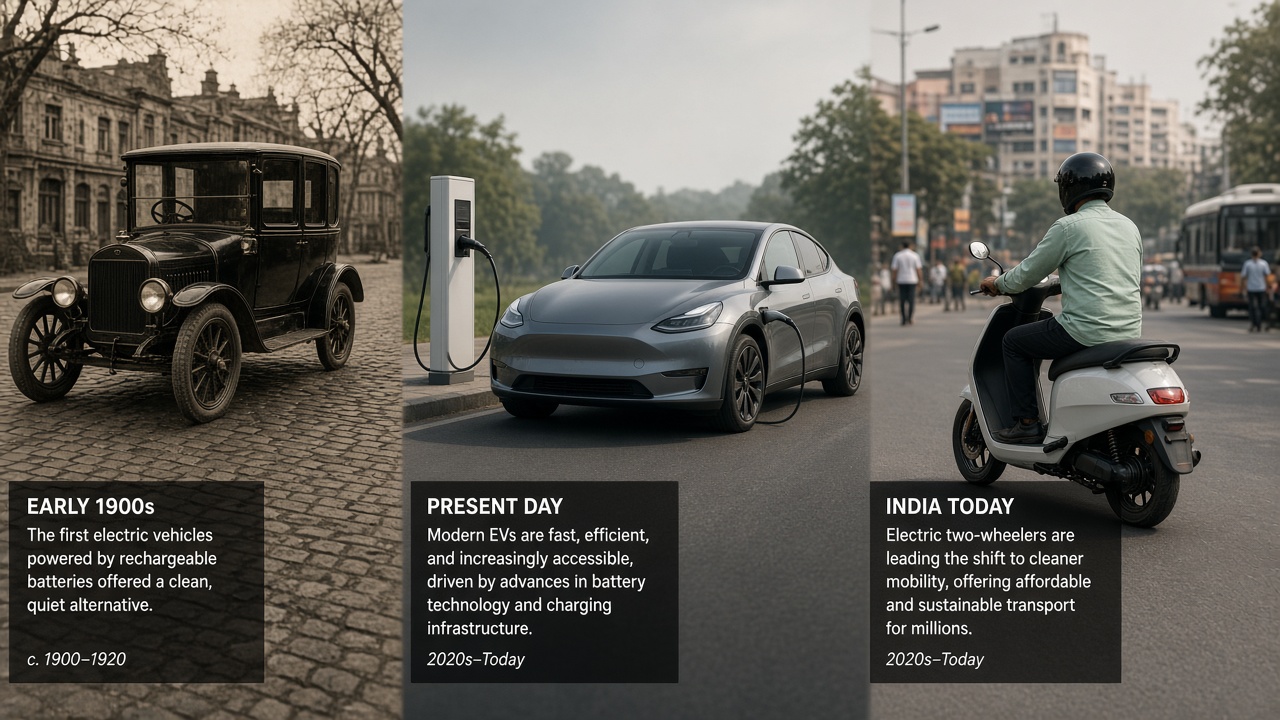
EV evolution in one view
Quiet early electric cars lost to cheap petrol, then returned via hybrids and lithium-ion packs. India’s story leans on scooters, e-rickshaws, buses, and FAME-backed manufacturing and demand.
From brass-era electrics to plug-in cars and India’s scooter-led EV wave.
Quiet Streets1890s - 1920s
Early Electric Cars
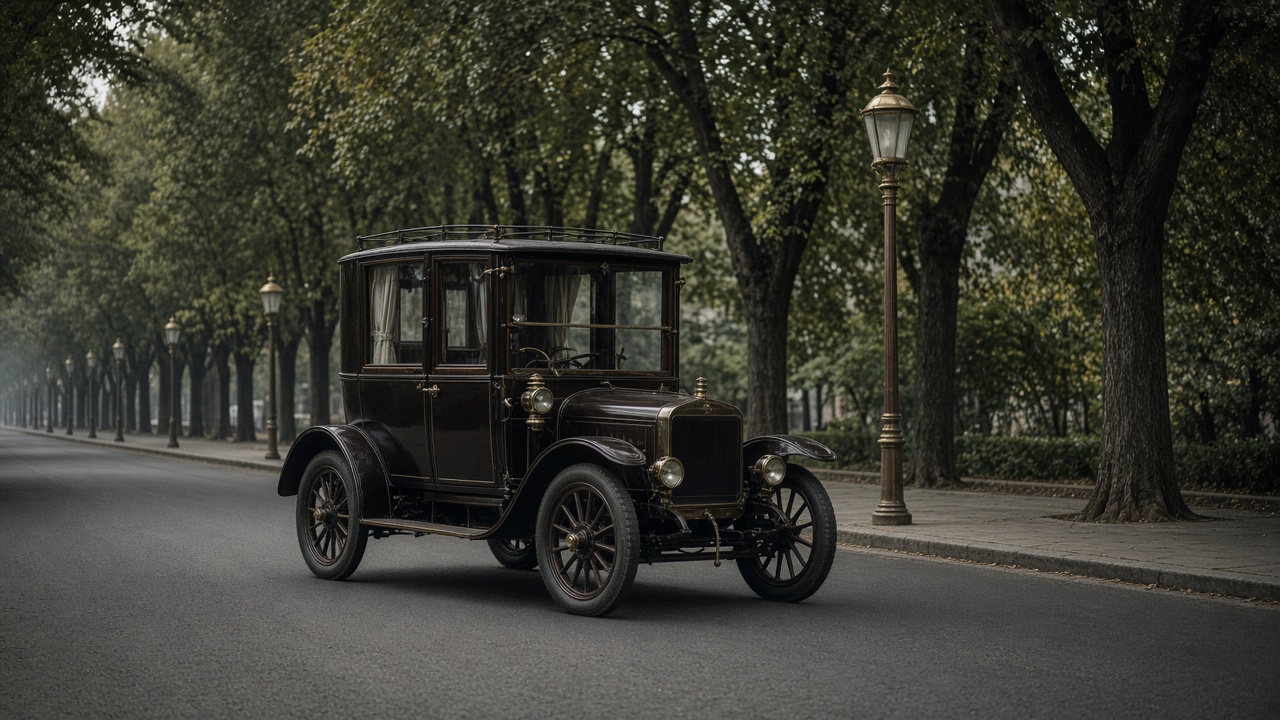
Around 1900, electric automobiles were popular for urban use—easy to start, quiet, and free of hand-cranks and gear grinding. Steam and petrol competed; electrics thrived where ranges were short and roads were city-scale.
Early era: electrics as refined city cars before mass petrol motoring.
Lead-acid packs power short urban trips.
Women drivers and doctors often preferred electrics’ ease.
Limited range and slow charging constrain longer travel.
Technology Used
Lead-acid batteries: Heavy but available.
Electric motors: Smooth torque, simple controls.
Home charging: Overnight top-ups where electricity existed.
Features
No crank start: Easier than early petrol cars.
Low noise: Attractive in dense neighbourhoods.
Niche fit: Best for short, predictable routes.
Oil Wins1920s - 1990s
Petrol Age Eclipse
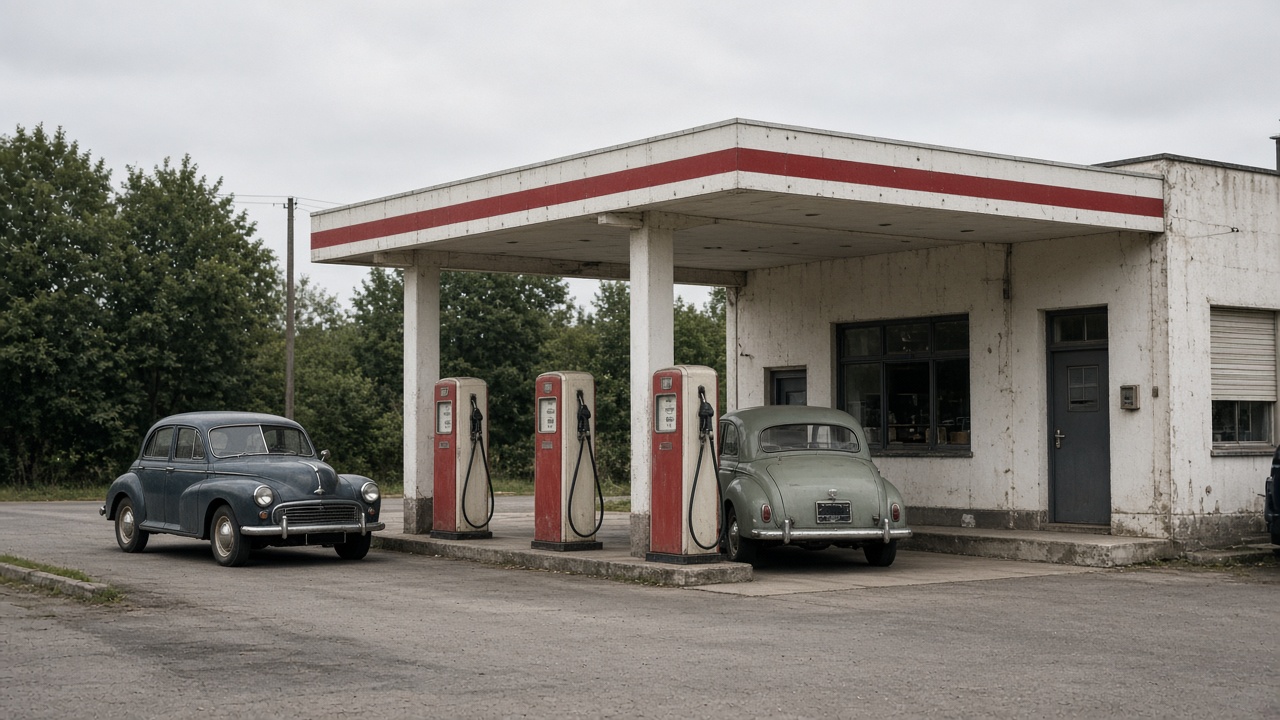
Mass-produced petrol cars, better roads, and filling stations made liquid fuel the default. Electric cars nearly disappeared from consumer markets for decades, surviving mainly in niches like milk floats, forklifts, and golf carts.
Petrol age: quick refuelling and long range sideline early electrics.
Assembly-line petrol cars drop prices dramatically.
Global oil infrastructure expands with highways.
Air pollution and oil shocks later reopen the EV question.
Why ICE Dominated
Energy density of petrol: More range per kilogram.
Fast refill: Minutes, not hours.
Mass manufacturing: Economies of scale.
Features
Personal mobility boom: Cars reshape cities and suburbs.
Hidden costs: Smog, noise, and import bills grow.
EV pause: Battery tech waits for a later leap.
Bridge Tech1997 - 2015
Hybrids and EV Revival
Mass-market hybrids proved electrified drivetrains could sell. Meanwhile, lithium-ion batteries—fresh from consumer electronics—made practical pure EVs possible again. Early twenty-first-century models rebuilt public belief in electric driving.
Revival era: plug-in cars return to driveways as packs improve.
Hybrids popularise electric assist without range anxiety.
Li-ion packs raise Wh/kg versus old lead-acid cars.
Policy and oil prices push makers to invest in BEVs.
Technology Used
Hybrid systems: Engine + motor + battery management.
Li-ion cells: Higher energy density for cars.
Regenerative braking: Recover energy when slowing.
Features
Lower fuel use: Especially in city stop-go traffic.
Learning curve: Makers master power electronics.
Still niche BEVs: Price and charging limit early sales.
Mainstream2015 - Present
Modern EV Cars
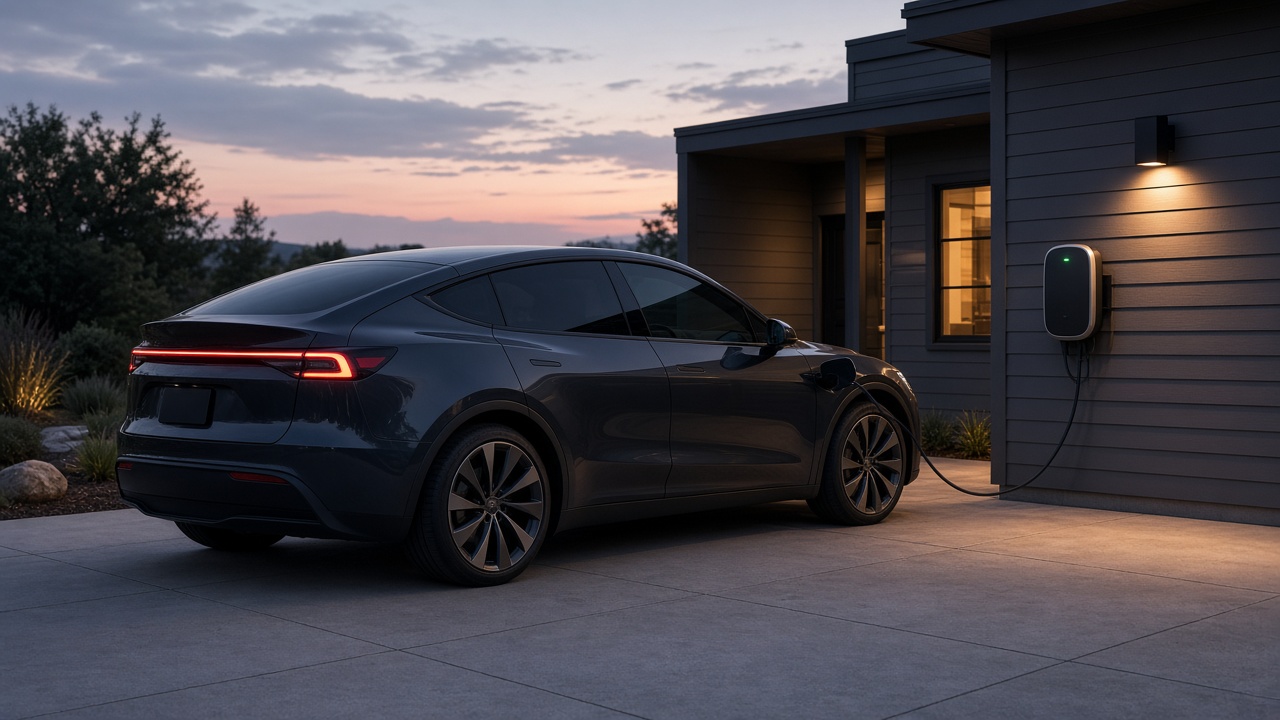
Longer-range battery cars, falling pack costs, and public chargers turned EVs from experiments into showroom options. Software updates, heat pumps, and denser batteries keep improving real-world usability.
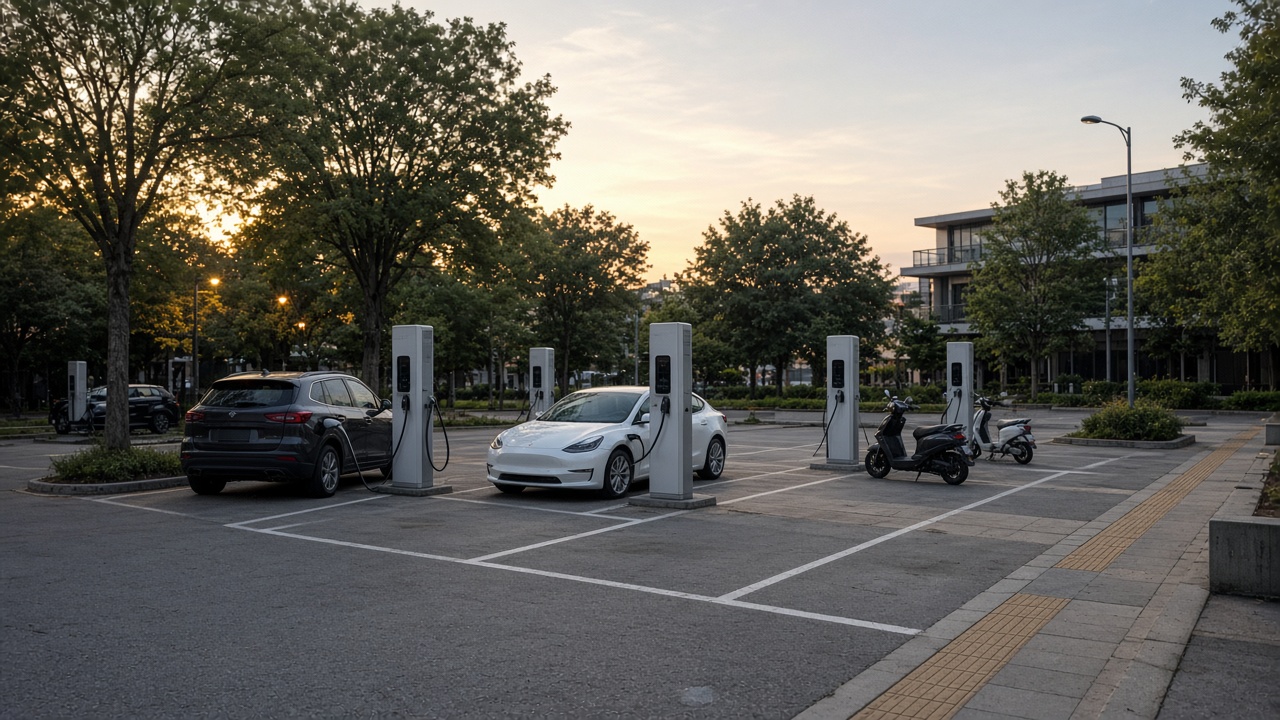
Mainstream era: cars share plazas with scooters at public chargers.
Range and model variety expand across price segments.
Fast DC charging shortens highway stops.
India adds domestic and imported EV car options gradually.
Technology Used
Battery packs + BMS: Safety and longevity management.
AC / DC charging: Home wallboxes and public fast chargers.
Connected cars: Apps for charge status and navigation.
Features
Low running cost: Electricity often cheaper per km than petrol.
Instant torque: Quick acceleration feel.
Upfront price: Still a barrier without incentives.
India’s Sweet Spot2010s - Present
EV Bikes and Three-Wheelers
Electric scooters, motorcycles, and e-rickshaws fit Indian trip lengths and budgets. Swappable batteries, home charging, and dense urban use cases make two- and three-wheelers the volume leaders of India’s EV transition.
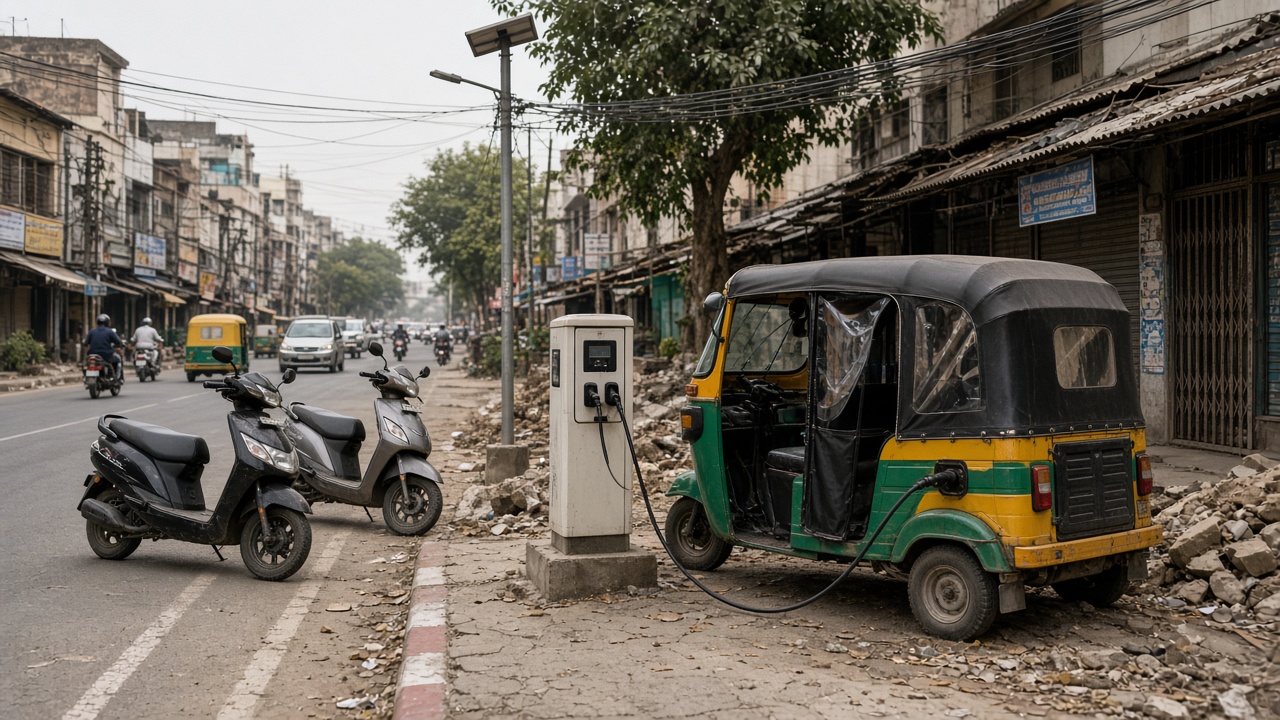
Two-/three-wheeler era: India electrifies the vehicles people use most.
E-scooters become common in many cities.
E-rickshaws transform last-mile and short-haul passenger trips.
Startups and established makers compete on range and service.
Technology Used
Hub / mid-drive motors: Compact electric propulsion.
Removable packs: Charge at home without a parking charger.
Battery swap pilots: Faster turnaround for commercial fleets.
Features
Daily commute fit: Matches typical Indian trip distances.
Lower fuel spend: Attractive for delivery and office riders.
Service networks: Still catching up with ICE two-wheelers.
Policy + Plugs2015 - Present
India FAME and Charging
FAME (Faster Adoption and Manufacturing of Hybrid and Electric Vehicles) lowered buyer costs and nudged manufacturing. States added their own incentives. Public chargers, e-buses, and localisation goals aim to cut oil imports and urban air pollution together.
FAME era: incentives, local manufacturing, and cleaner city fleets.
FAME I and FAME II support demand and ecosystem building.
E-buses expand in city fleets; charging corridors grow.
PLI and localisation policies push cell and vehicle production.
Ecosystem
Demand incentives: Lower sticker prices for eligible EVs.
Charging standards: Public AC/DC points and apps.
Grid link: More EVs mean smarter load planning.
Features
Two-wheeler first: Volume growth leads cars in many years.
City air quality: Local exhaust drops where EVs replace ICE.
Work ahead: Highways, apartments, and battery recycling still scale.
EV Timeline Summary
Era
Milestone
Why it matters
1890s–1920s
Early electric cars
EVs compete in cities before mass petrol.
1920s–90s
Petrol dominance
ICE wins on range, price, and refill speed.
1997–2015
Hybrids + Li-ion
Electrified drivetrains return to market.
2015–
Modern EV cars
Longer range and public charging.
2010s–
EV 2W / 3W India
Volume path for Indian electrification.
2015–
FAME & charging
Policy accelerates adoption and industry.
Key Historical Events
Event
Year
Significance
Early electric automobiles popular in cities
~1900
Shows EVs can work for short trips.
Mass petrol car production
1910s–20s
ICE becomes the default.
Modern hybrid mass market
late 1990s
Electrification re-enters showrooms.
Li-ion enables practical BEVs
2000s–10s
Battery density unlocks car range.
FAME scheme launched in India
2015
National EV adoption push begins.
FAME II / stronger EV focus
2019+
Demand support + ecosystem goals.
EV two-wheeler sales surge
2020s
India’s highest-volume EV segment.
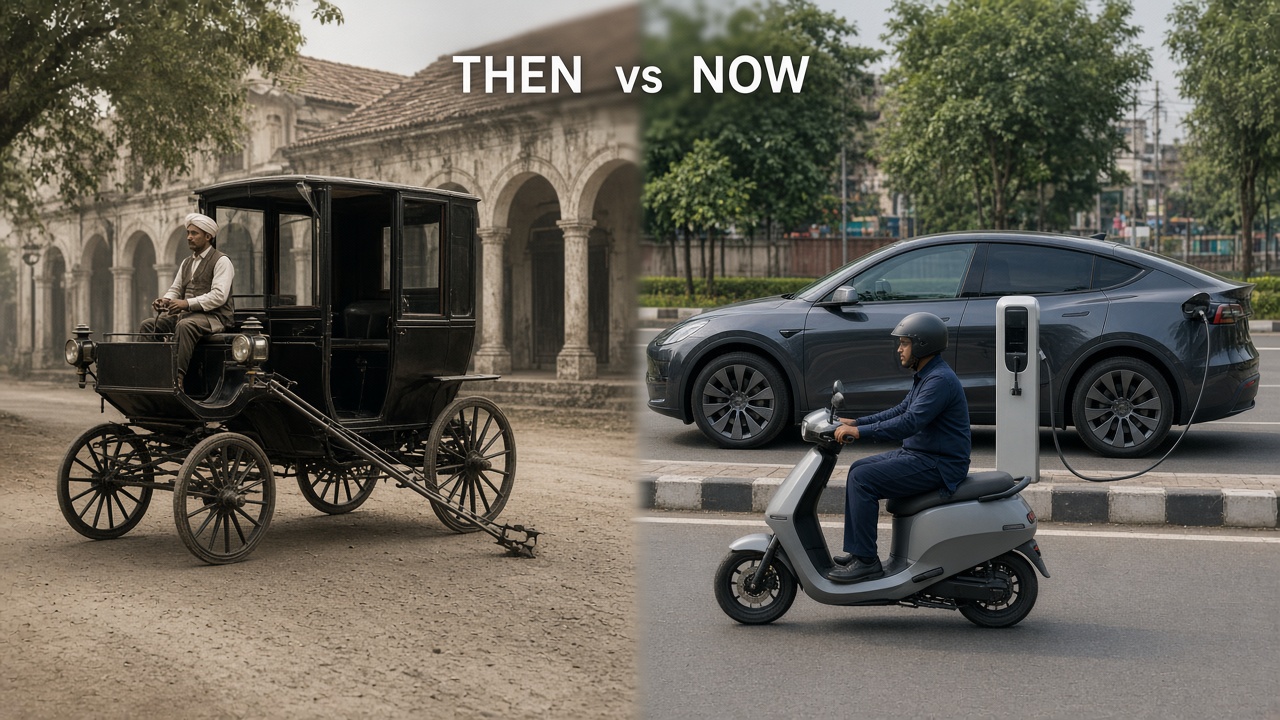
Then vs Now
Same idea—electric drive—transformed by batteries, charging, and policy.
Metric
Then (~1900 / mid-century)
Now (2020s India)
Battery
Lead-acid, heavy
Li-ion packs, higher Wh/kg
Main vehicles
Niche city cars
Cars + scooters + e-rickshaws + buses
Refuel
Slow home charge / rare
Home + public AC/DC + swap pilots
Policy
Little EV support
FAME, state incentives, localisation
Driver worry
Range & cost
Still range/price—but improving fast
Future Predictions
2025–2030: Cheaper LFP packs and denser charging in Indian cities and highways.
Two-wheelers: Remain India’s volume EV engine; more swaps for delivery fleets.
Cars: Broader mid-price EV hatchbacks and SUVs for families.
Circular economy: Battery recycling and second-life storage scale up.
India spotlight
FAME and Everyday Electrification
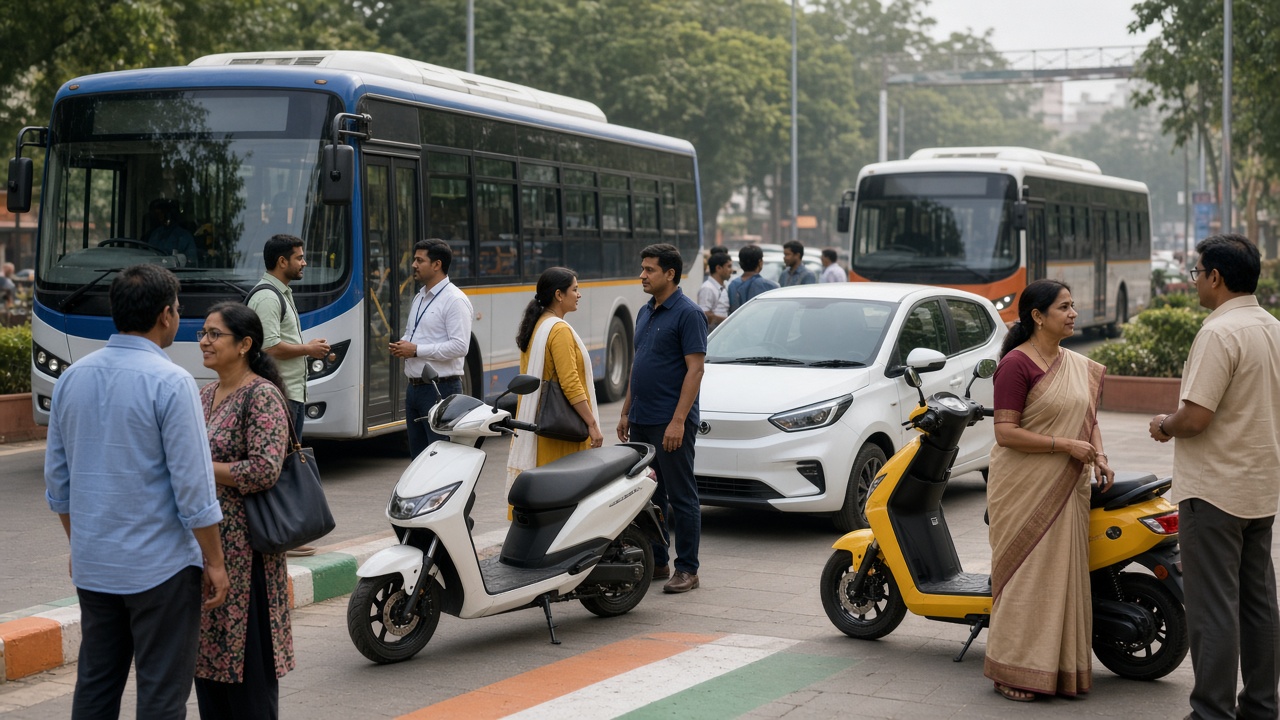
India’s EV story is less about luxury cars alone and more about scooters in traffic, e-rickshaws at junctions, city e-buses, and incentives that make the switch affordable—backed by charging and manufacturing plans.
India spotlight: policy plus products for the vehicles Indians already use.
Pre-2015
Niche EVs
Limited models; e-rickshaws grow in some cities informally then formally.
2015
FAME begins
National scheme to speed hybrid/EV adoption and manufacturing.
2019+
FAME II era
Stronger focus on demand incentives and charging ecosystem.
2020s
2W / 3W surge
Electric scooters and three-wheelers lead unit sales growth.
Ongoing
Localise & charge
Cells, components, and public charging remain strategic priorities.
Buyer tip: Check real-world range, service centres, and charger access near home.
City tip: E-buses + scooters cut more urban exhaust than cars alone.
Link: Batteries timeline explains the packs; power grid timeline covers the electricity.
Test Your Knowledge
20 questions on early EVs, hybrids, scooters, charging, and FAME. Click to reveal answers.
Answer: Yes—especially for short city trips.
Answer: Longer range, cheaper mass production, and fast refuelling.
Answer: Lead-acid.
Answer: A vehicle combining an engine with electric motor/battery assist.
Answer: Battery electric vehicle—runs only on battery electricity.
Answer: Lithium-ion.
Answer: Recovering energy when slowing to recharge the battery.
Answer: Faster Adoption and Manufacturing of Hybrid and Electric Vehicles (India).
Answer: 2015.
Answer: Often two- and three-wheelers.
Answer: Short trips, lower running cost, dense city use.
Answer: Worry that the battery will run out before reaching a charger.
Answer: High-power DC charging that adds range quickly.
Answer: EVs run on electricity; cleaner, reliable power improves benefits.
Answer: No tailpipe exhaust (local air quality) / quieter operation.
Answer: Exchanging a depleted pack for a charged one instead of waiting to plug in.
Answer: No—manufacturing and electricity generation still matter.
Answer: Battery management system.
Answer: Move many passengers with less local exhaust than diesel buses.
Answer: From early city electrics to petrol eclipse to Li-ion revival—and India’s FAME-backed 2W/3W/car push.
Classroom activity
Students Tasks
Ten prompts on EV history, scooters, charging, and FAME in India.
HistoryBatteriesIndiaPolicy
Explain why early EVs lost to petrol cars in one paragraph.
Compare a hybrid and a BEV in a three-row table.
Why might an electric scooter suit an Indian commute better than an EV car?
List three barriers to EV adoption and one solution for each.
Research what FAME stands for and one benefit it offers buyers.
Map charging options near your school or home (sketch is fine).
Debate: battery swap vs plug-in charging for delivery fleets.
Link EVs to the power grid: when is charging greener?
Design a poster: “Charge smart, ride electric.”
Interview a family member about fuel costs vs interest in EVs.
Continue exploring
EVs connect cars, two-wheelers, batteries, and the power grid. Explore these linked stories next.
Jump to any other transport timeline on WorldTimelineHub.
Disclaimer: This content is AI-generated for educational purposes and may contain errors or outdated details. For correct and authoritative information, please refer to official and reliable sources such as government publications, manufacturers, museums, and academic references.