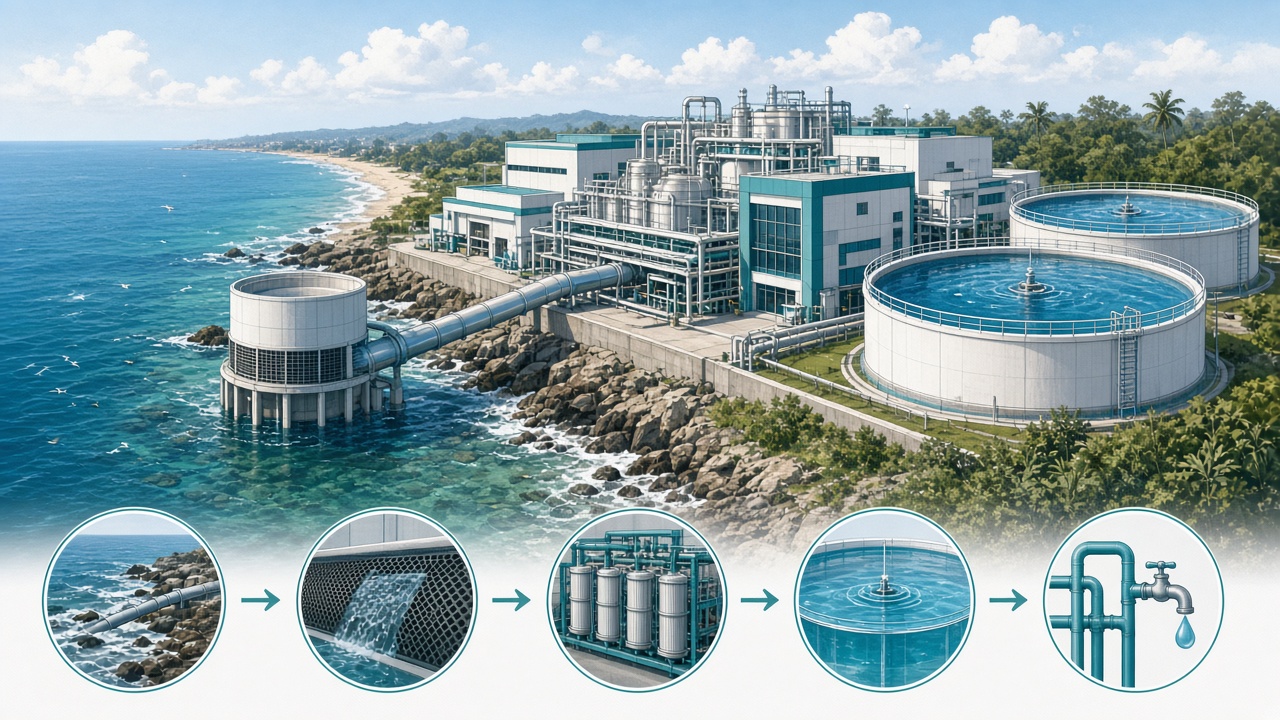
From the Grand Anicut’s stone weir and colonial canals, to Bhakra Nangal’s concrete ambition, the dams debate, drip irrigation, and coastal desalination.
Weirs -> Mega damsDebate & dripDesalination
Why Dams & Water Works Matter
Controlling rivers feeds farms, cities, and power plants—and reshapes people and ecosystems. India’s water story runs from ancient weirs to mega dams, then toward efficiency and new coastal sources.
This timeline follows Grand Anicut, colonial canals, Bhakra Nangal, the dams debate, drip irrigation, and desalination as linked turning points.
Big picture
Water works in one view
Stone diversion on the Kaveri, colonial canal empires, Bhakra’s concrete temple, protest and rethink, precision drip lines, and seawater turned drinkable.
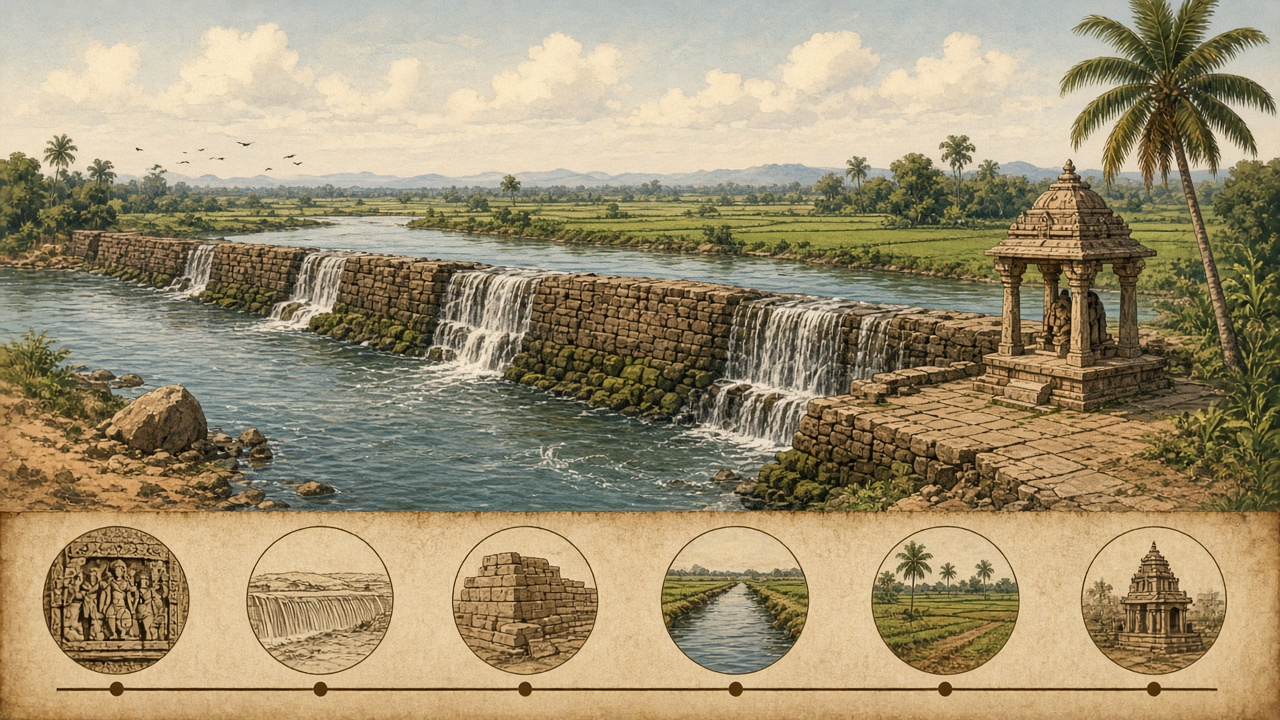
On the Kaveri in Tamil Nadu, the Grand Anicut (Kallanai) is among the world’s oldest functioning water-regulation works. Built as a stone weir to divert flood flows into irrigation canals, it shows that large-scale river management in India long predates modern concrete dams.
Grand Anicut era: divert, don’t just store.
Often credited to Chola engineering on the Kaveri delta.
Raises and splits river flow for canal commands.
Later colonial and modern engineers studied and modified it.
Canal Empire1800s
Colonial Canals
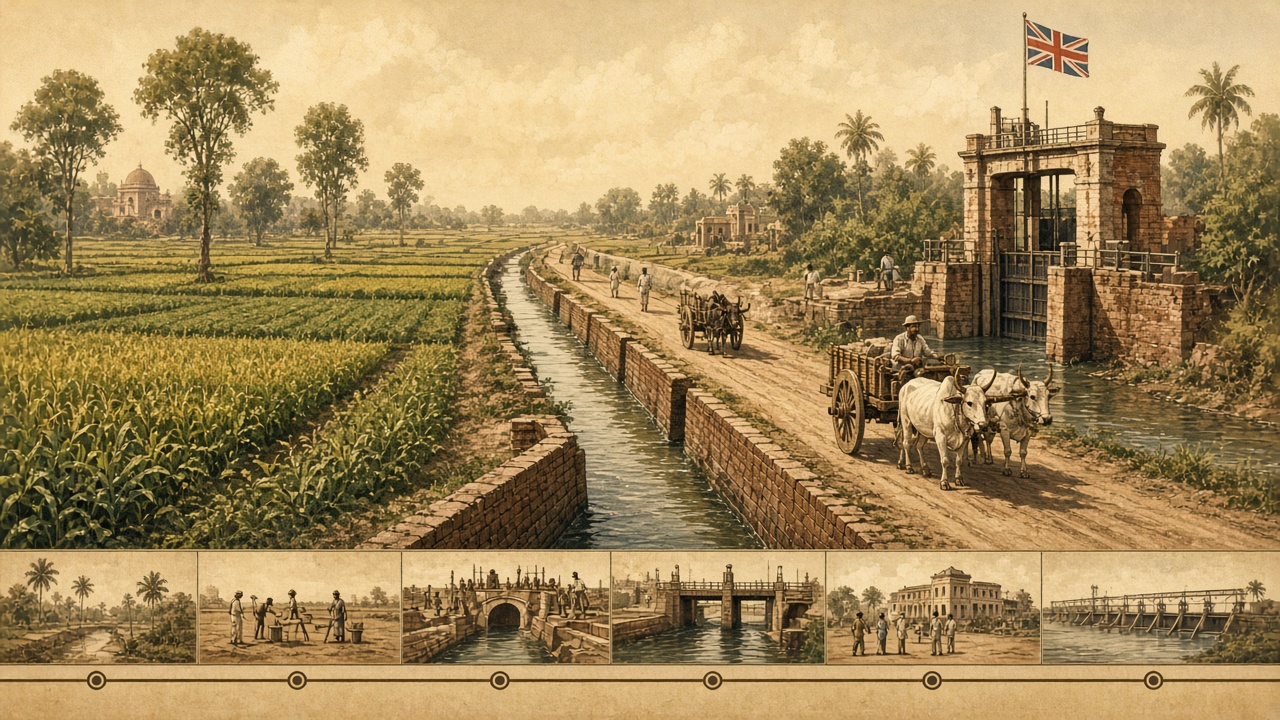
Under British rule, irrigation canals expanded across the Indo-Gangetic plain and beyond—Ganges Canal, Punjab systems, and others. They boosted cropped area and revenue, remade landscapes, and tied water to colonial state power, while creating new inequalities and ecological trade-offs.
Canal era: command areas and cash crops.
Headworks, distributaries, and warabandi scheduling spread.
Famine policy and revenue motives drive many projects.
Sets the template Independent India later scales with dams.
Temple of Modern India1950s–
Bhakra Nangal
Bhakra Dam on the Sutlej—paired with Nangal works—became the emblem of post-Independence multipurpose river projects: irrigation for the Green Revolution heartland, hydropower, and flood moderation. Nehru’s “temples of modern India” phrase captured the faith placed in big concrete.
Bhakra era: storage, power, and national ambition.
Gravity dam creates large multi-year storage.
Supports Punjab–Haryana irrigation and grid power.
Inspires dozens of other multipurpose projects.
Costs & Voices1980s–
Dams Debate
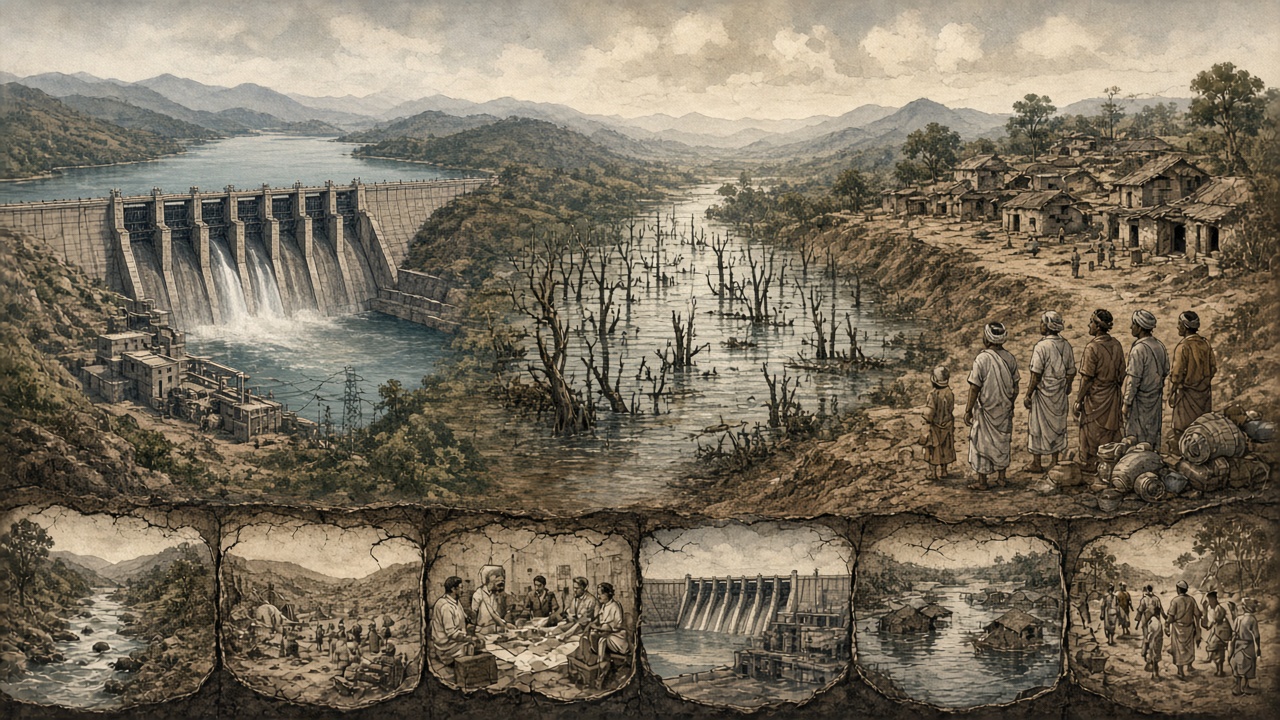
As reservoirs filled, critics asked who paid the price: displaced villages, submerged forests, silted storages, seismic worries, and uneven benefits. Movements such as Narmada Bachao Andolan forced rehabilitation, environment, and alternatives into national conversation—without ending big projects altogether.
Debate era: progress measured with justice and ecology.
Displacement and rehabilitation become core policy tests.
Environmental clearances and public hearings expand.
Search grows for smaller storages and demand-side fixes.
More Crop per DropModern
Drip Irrigation
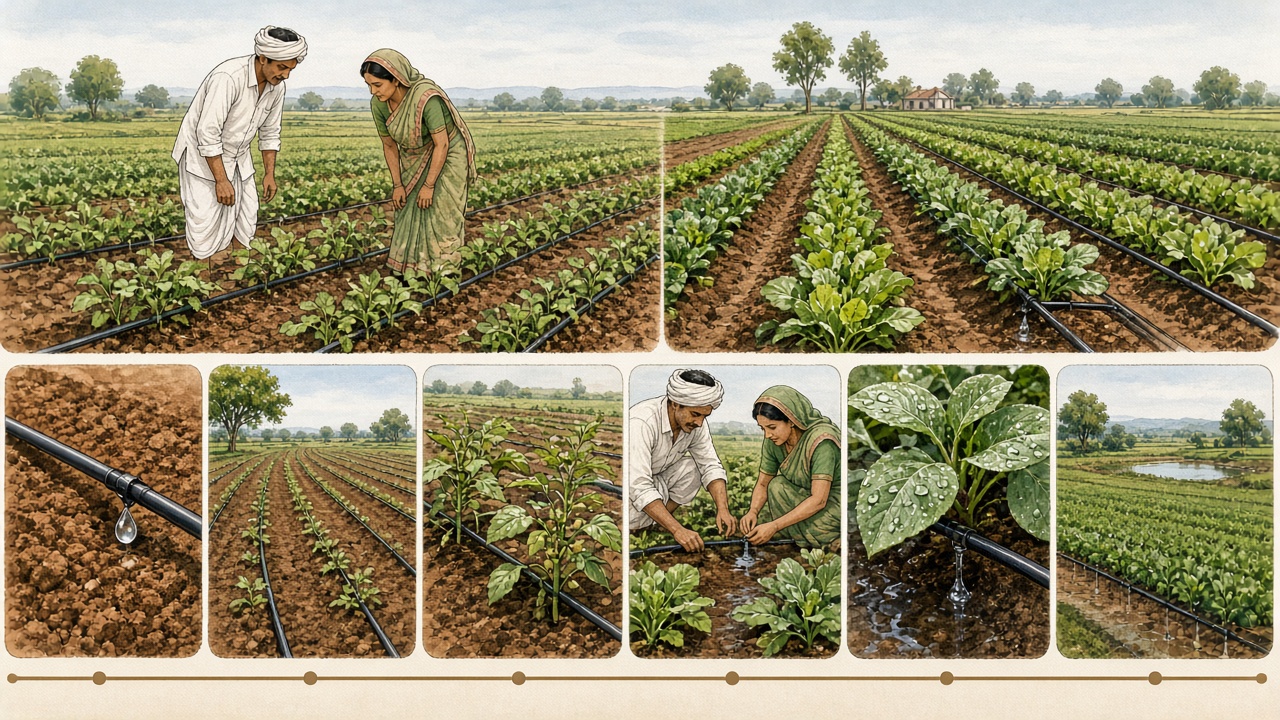
Instead of flooding fields, drip systems pipe water to root zones. Subsidies and horticulture growth helped spread micro-irrigation across dry Indian states. It does not replace reservoirs, but it can stretch every stored litre further—if energy, clogging, and farmer training are managed.
Drip era: efficiency as infrastructure.
Cuts evaporation and runoff versus flood irrigation.
Suits vegetables, fruits, and water-stressed regions.
Pairs with canals, tanks, and groundwater carefully.
Ocean IntakeCoastal
Desalination
When rivers and aquifers strain, coastal cities turn seawater into freshwater with reverse osmosis and related plants. Desalination adds supply independent of monsoon—but costs energy, needs careful brine disposal, and works best as one tool beside conservation and reuse.
Desalination era: new water from the sea.
Indian coastal metros and industries adopt plants.
Energy mix decides cost and carbon intensity.
Complements—not replaces—watershed and dam strategies.
Key Milestones
Milestone
When
Why it matters
Grand Anicut (Kallanai)
Ancient / Chola
Durable river diversion for delta irrigation.
Colonial canal systems
1800s
Large command areas under state engineering.
Bhakra Nangal
1950s–60s
Multipurpose mega dam as national symbol.
Large-dam movements
1980s–
Displacement & ecology enter policy centre stage.
Micro-irrigation push
1990s–
Drip/sprinkler scale for water productivity.
Coastal desal plants
2000s–
Seawater as urban/industrial source.
Approaches at a Glance
Approach
Core idea
Main trade-off
Weir / Anicut
Divert river flow
Limited multi-year storage
Canals
Distribute surface water
Seepage, equity, waterlogging
Large dams
Store + generate power
Displacement, silt, ecology
Drip
Deliver water to roots
Cost, energy, maintenance
Desalination
Make freshwater from sea
Energy & brine management
Then vs Now
From one weir to a mix of storage, efficiency, and new sources.
Metric
Then
Now
Main tool
Weirs & canals
Dams + drip + desal + reuse
Goal
Expand irrigated acres
Secure supply + efficiency
Politics
Revenue / food security
Also rights & ecology
Energy link
Mostly gravity
Hydro + pumps + RO power
Risk lens
Flood & famine
Climate extremes & aquifers
Future Predictions
Portfolio: Fewer sole bets on mega dams; more mixed water strategies.
Efficiency: Drip, reuse, and leakage control grow in cities and farms.
Coast: Desal expands where power is clean and brine is managed.
Justice: Rehabilitation and river health stay non-negotiable tests.
India spotlight
Water Infrastructure & India
India’s water map joins ancient delta engineering, colonial canals, post-Independence mega dams, social movements, micro-irrigation missions, and coastal desal plants serving thirsty metros.
India spotlight: from Kallanai to coastal RO plants.
Ancient
Anicuts & tanks
Grand Anicut and tank systems manage monsoon rivers.
Colonial
Canal commands
State canals expand irrigated plains agriculture.
1950s+
Multipurpose dams
Bhakra and peers drive power and Green Revolution water.
Debate
People & rivers
Movements reshape how projects are judged.
Today
Efficiency + new sources
Drip missions and desal join the toolkit.
Strength: Deep engineering tradition and diverse climate zones.
Need: Groundwater balance and climate-resilient planning.
Debate: Storage vs demand management vs desal priorities.
Test Your Knowledge
20 questions on Grand Anicut through desalination. Click to reveal answers.
Answer: Kallanai.
Answer: The Kaveri (Cauvery).
Answer: Raises/diverts flow (not always deep multi-year storage).
Answer: Irrigation (and revenue/state control).
Answer: The Sutlej.
Answer: Nehru’s praise of big dams/projects like Bhakra.
Answer: Displacement, ecology, siltation, seismic risk, etc.
Answer: Narmada Bachao Andolan (among others).
Answer: Near plant roots via emitters/pipes.
Answer: Higher water productivity / less waste than flooding.
Answer: Seawater or brackish water.
Answer: Reverse osmosis (RO).
Answer: Energy use.
Answer: Serves irrigation, power, flood control, etc.
Answer: No—it can make stored water go further.
Answer: Coastal cities/industries short of freshwater.
Answer: Concentrated salty waste from desalination.
Answer: Stored canal water helped intensive irrigated farming.
Answer: Groundwater decline, climate extremes, river disputes, etc.
Answer: From diversion weirs to mega dams, then efficiency and new sources.
Classroom activity
Students Tasks
Ten prompts from Grand Anicut to desalination for projects and debate.
Jump to any other transport timeline on WorldTimelineHub.
Disclaimer: This content is AI-generated for educational purposes and may contain errors or outdated details. For correct and authoritative information, please refer to official and reliable sources such as government publications, manufacturers, museums, and academic references.