India’s rain comes mostly in a few monsoon months, so farmers have always needed ways to store water and carry it to their fields. Over 5,000 years they dug wells,
built reservoirs and stone weirs, made thousands of village tanks and stepwells, cut canals from great rivers, raised giant dams, sank millions of tube wells, and
now drip water straight onto plant roots.
This timeline covers Harappan wells and Dholavira’s reservoirs, the Mauryan Sudarshana lake, the Chola Grand Anicut, tanks, lakes and stepwells, Tughlaq and Mughal
canals, Vijayanagara channels, colonial canals and anicuts, Bhakra and Hirakud, the tube well boom, and modern drip irrigation, groundwater, and water conservation missions.
c. 3000 BCE → PresentWell → Canal → Dam → DripStore · Carry · Lift · Save
Why Irrigation Matters
Irrigation means giving crops water from sources other than direct rain. In India, most rain falls between June and September, and some years the monsoon fails.
Irrigation lets farmers grow a second or even third crop, protects them from drought, and made the Green Revolution possible. Today irrigation uses most of India’s
fresh water, so saving water on farms is one of the country’s biggest challenges.
Big picture
India’s irrigation in one view
Irrigation in India moved from community-built wells, tanks, and weirs, to royal canals, to vast colonial canal networks, to multipurpose dams after independence,
and then to farmer-owned tube wells. Now the focus is on saving water through drip and sprinkler systems, solar pumps, and recharging groundwater. Related timelines:
farming tools,
power grid and dams,
village roads.
c. 2nd century CE
Grand Anicut, still in use
~55%
Of net sown area irrigated
60%+
Of irrigation from groundwater
50,000+
Amrit Sarovar ponds built
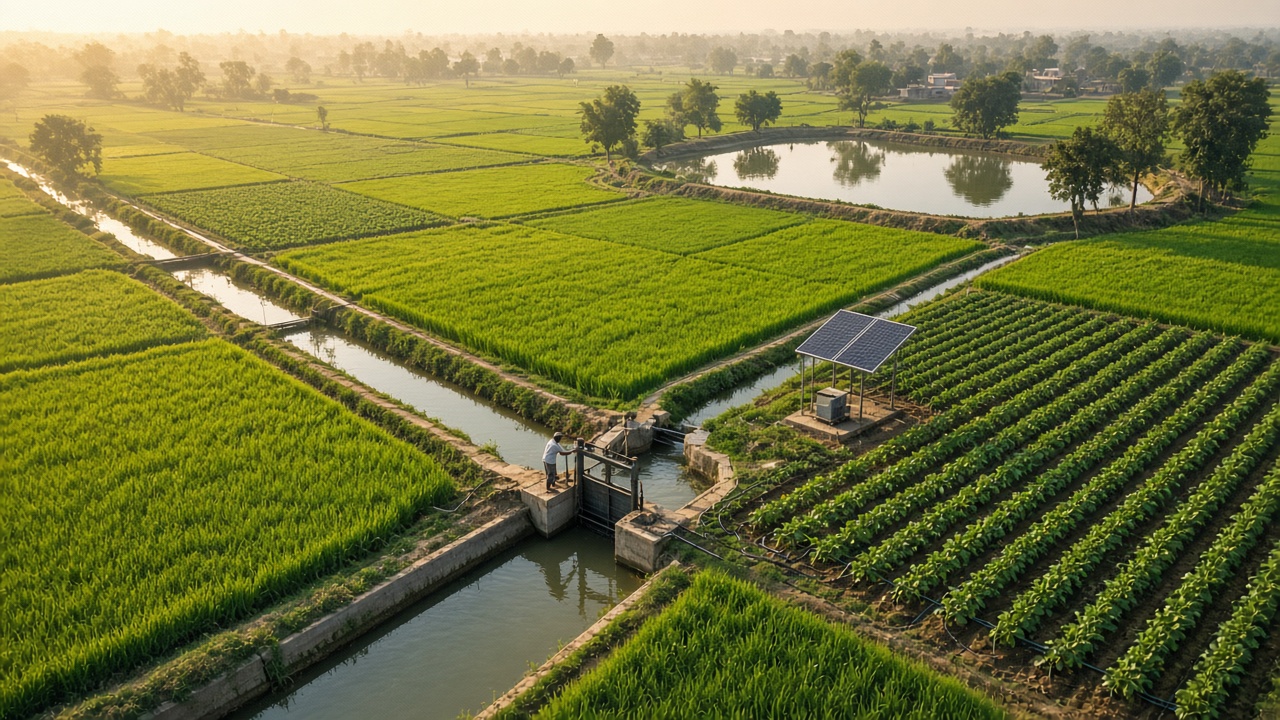
Canals, village tanks, solar pumps, and drip lines now water the same landscape (artistic illustration).
🏺 Ancient Waterc. 3000 BCE – 300 CE
Harappan Wells, Reservoirs & the Grand Anicut
Harappan cities were masters of water management, with hundreds of wells and huge reservoirs. Later kingdoms built lakes and tanks, and the Chola king Karikala raised a stone weir across the Kaveri that still diverts water today.
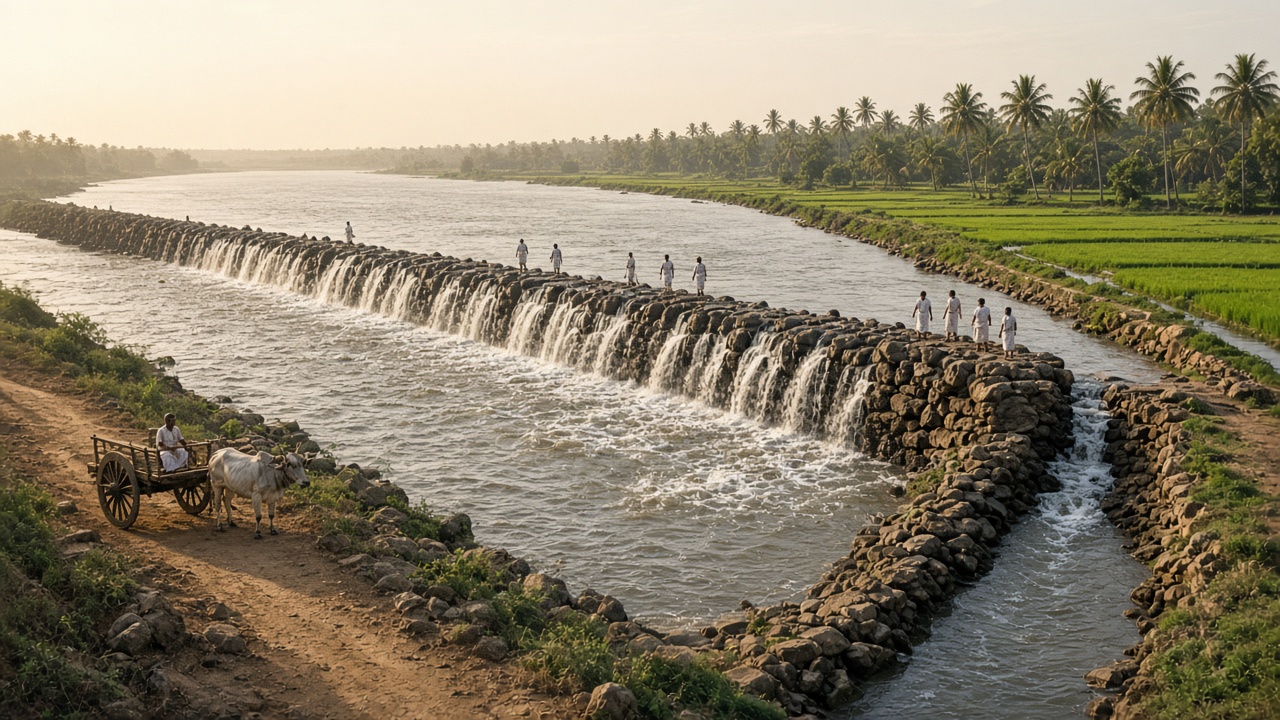
The Grand Anicut (Kallanai) diverted Kaveri water into channels for paddy fields (artistic illustration).
c. 2600–1900 BCE: Mohenjo-daro has an estimated 700 brick-lined wells; Dholavira in Gujarat builds large stone reservoirs and check dams to store rainwater.
c. 320 BCE: The Sudarshana lake near Girnar is built under Chandragupta Maurya; Rudradaman’s Junagadh inscription (c. 150 CE) records its repair.
c. 1st century BCE: A large hydraulic tank system at Sringaverapura near Prayagraj stores and filters Ganga floodwater.
c. 2nd century CE: Karikala Chola builds the Grand Anicut (Kallanai) on the Kaveri — one of the oldest water-diversion structures still working.
Methods
Wells: Brick-lined shafts reaching groundwater.
Reservoirs: Stored monsoon rain for dry months.
Anicut (weir): Raised river level to feed channels.
Features
Community work: Built and cleaned by villages.
Royal support: Kings funded lakes and weirs.
Water tax: The Arthashastra mentions irrigation dues.
🪷 Tanks & Stepwells300 – 1200
Village Tanks, Lakes & Stepwells
South Indian kingdoms built chains of tanks (eris and keres) that stored monsoon rain for rice fields. In dry western India, deep stepwells reached groundwater, and kings created great lakes that still exist today.
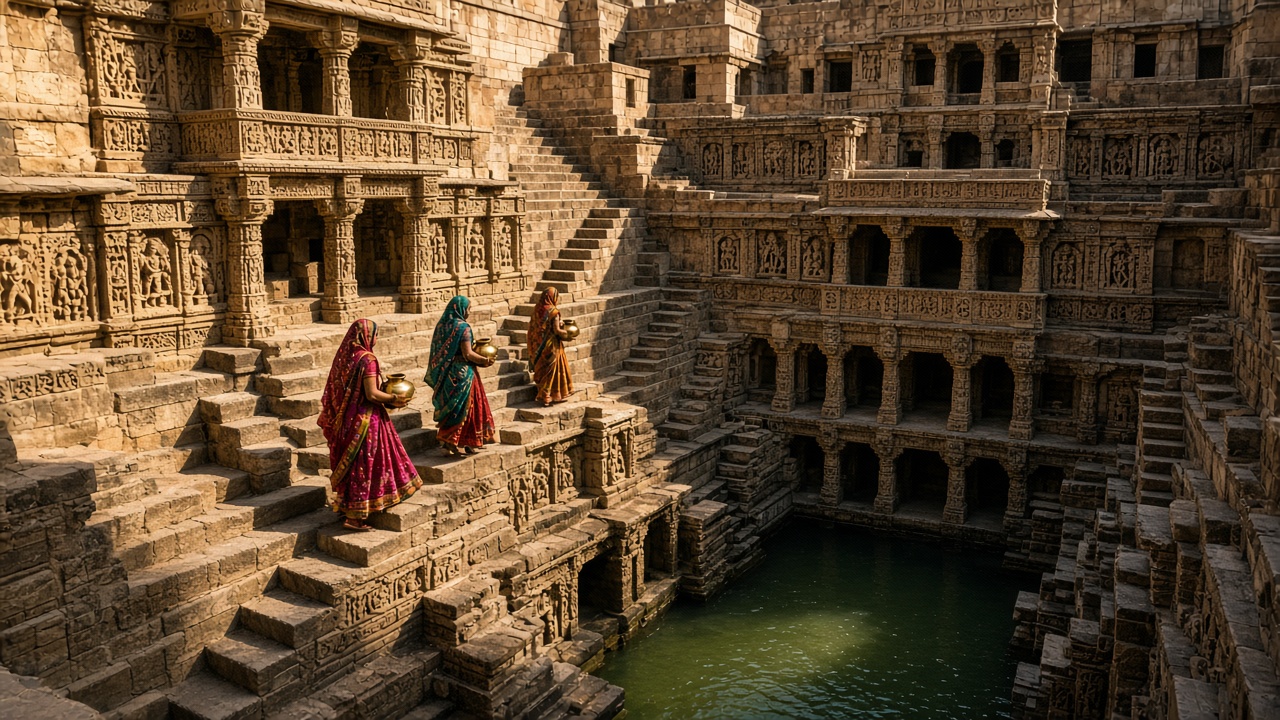
Stepwells let people reach groundwater through flights of carved steps (artistic illustration).
6th–9th centuries: Pallava kings build large tanks in Tamil Nadu; inscriptions record village committees that maintain tanks and share water.
10th century: The Chola king Parantaka I builds the Veeranam lake, which still supplies water to farms and to Chennai.
11th century: Raja Bhoj creates the Bhojtal (Upper Lake) in Bhopal; Queen Udayamati builds Rani ki Vav in Patan, now a UNESCO World Heritage Site.
9th–13th centuries: Chandela rulers build chains of tanks in Bundelkhand; Kakatiya kings build Pakhal and Ramappa lakes in Telangana (13th century).
Methods
Tank (eri / kere): Earthen bund with stone sluices.
Tank cascades: Overflow from one tank fills the next.
Stepwell (vav / baoli): Steps down to groundwater.
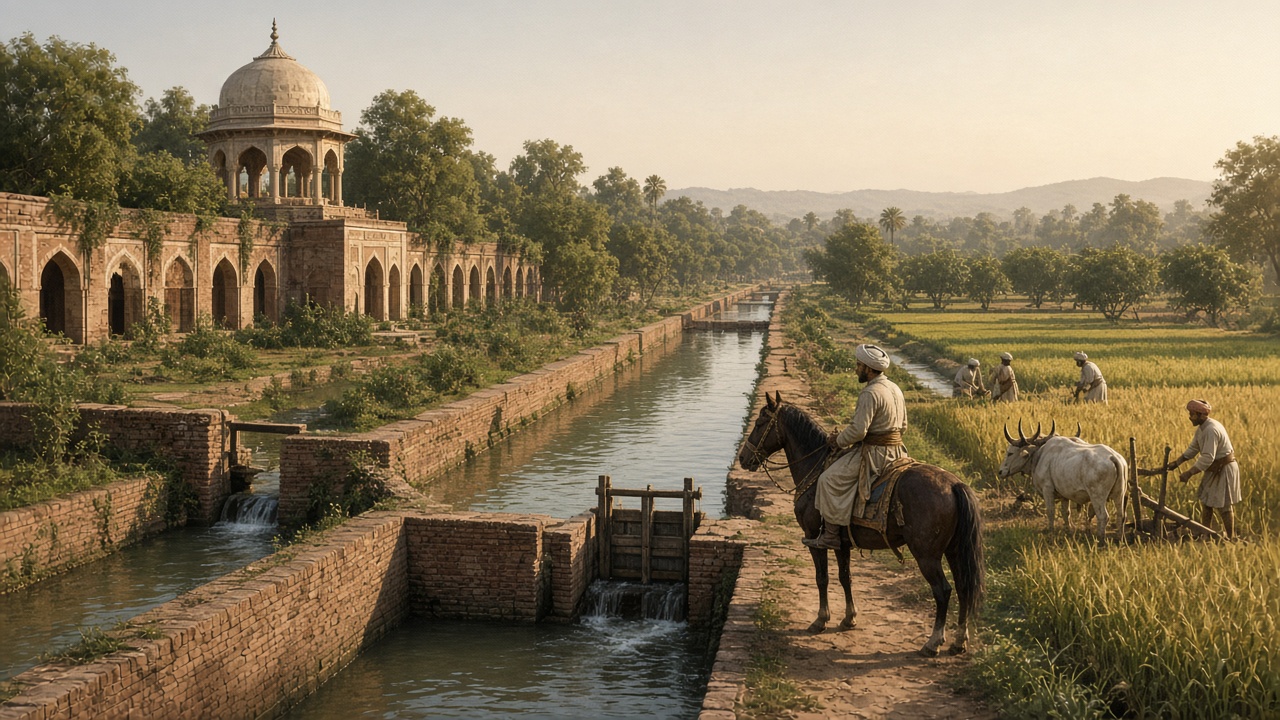
Rulers began cutting long canals from rivers. Firuz Shah Tughlaq dug canals from the Yamuna, Vijayanagara kings built anicuts and channels on the Tungabhadra, and the Mughals restored canals to water gardens, cities, and farms.
Mughal canals carried river water to cities, gardens, and farmland (artistic illustration).
c. 1350s: Firuz Shah Tughlaq builds canals from the Yamuna and Sutlej, including the first Western Yamuna Canal, and collects an irrigation tax.
14th–16th centuries: Vijayanagara kings build anicuts and channels on the Tungabhadra and tanks such as the Kamalapura tank near Hampi.
1499–1615: The Adalaj stepwell is completed in Gujarat (1499); Burhanpur’s Kundi Bhandara underground water channels are built (1615).
1640s: Under Shah Jahan, Ali Mardan Khan restores the Western Yamuna Canal to bring water to Delhi and nearby fields.
Methods
Inundation canals: Fill when rivers rise in the monsoon.
Underground channels: Carry water through tunnels.
Wells with water lifts: Used on most farms.
Features
State projects: Canals built by rulers.
Gardens and cities: Water for forts and palaces too.
Desert systems: Khadins and kunds in Rajasthan.
🏗️ Canal Age1800 – 1946
Colonial Canals, Anicuts & Early Dams
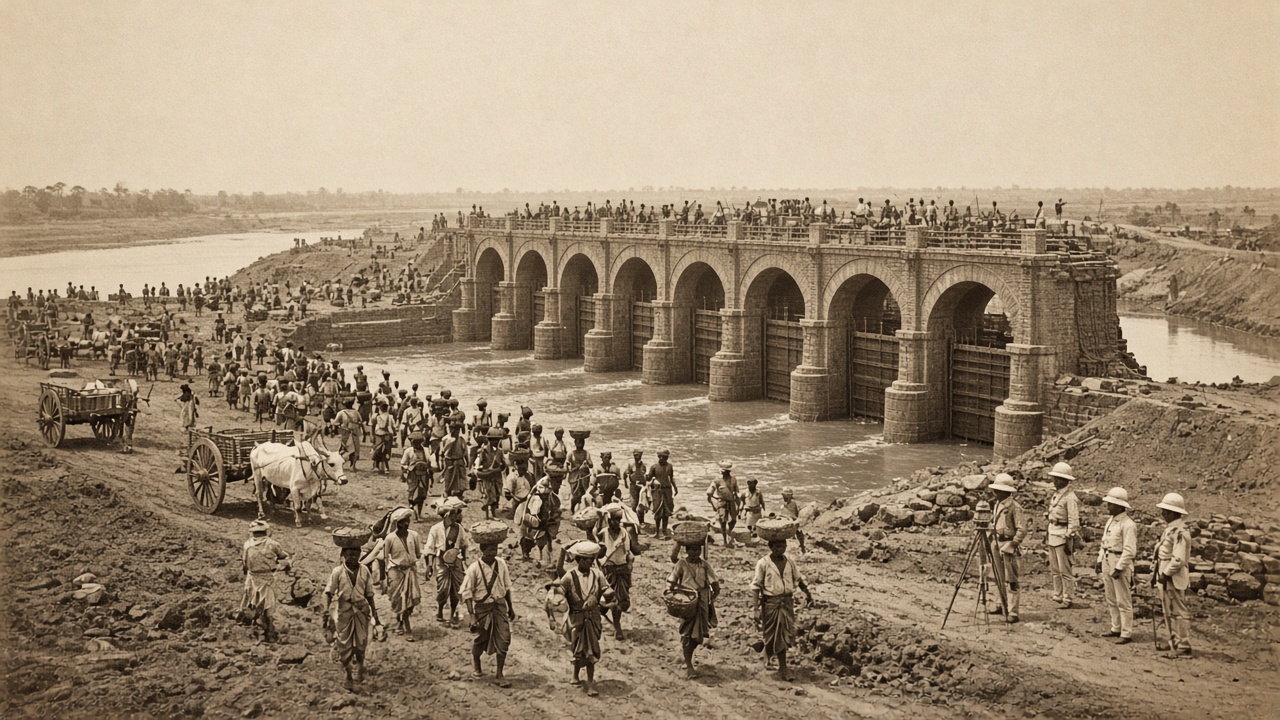
British engineers, working with huge numbers of Indian labourers, restored old canals and built new perennial canals, river anicuts, and masonry dams. Canals turned Punjab and the Godavari and Krishna deltas into granaries, though they also caused waterlogging in places.
Thousands of labourers built the great canal headworks of the 1800s (artistic illustration).
1817–1830: The British restore the Western Yamuna Canal and open the Eastern Yamuna Canal (1830).
1852–1855: Arthur Cotton completes the Dowleswaram anicut on the Godavari (1852); Proby Cautley’s Upper Ganga Canal opens at Haridwar (1854); the Krishna anicut at Vijayawada follows (1855).
1880s–1900s: The Sirhind Canal opens (1882) and Punjab canal colonies are settled; the Mullaperiyar dam is completed (1895); the Irrigation Commission reports (1903).
1903–1934: M. Visvesvaraya installs automatic sluice gates at Khadakwasla (1903); Krishnaraja Sagar dam (1932) and Mettur dam (1934) store Kaveri water.
Methods
Perennial canals: Weirs give water all year.
Delta anicuts: Spread river water across deltas.
Masonry dams: Store water in large reservoirs.
Features
Famine protection: Canals reduce crop failures.
Cash crops: Wheat, cotton, and sugarcane for export.
Neglected tanks: Many village tanks decay.
🌊 Big Dams1947 – 1990
Big Dams, Canals & the Tube Well Boom
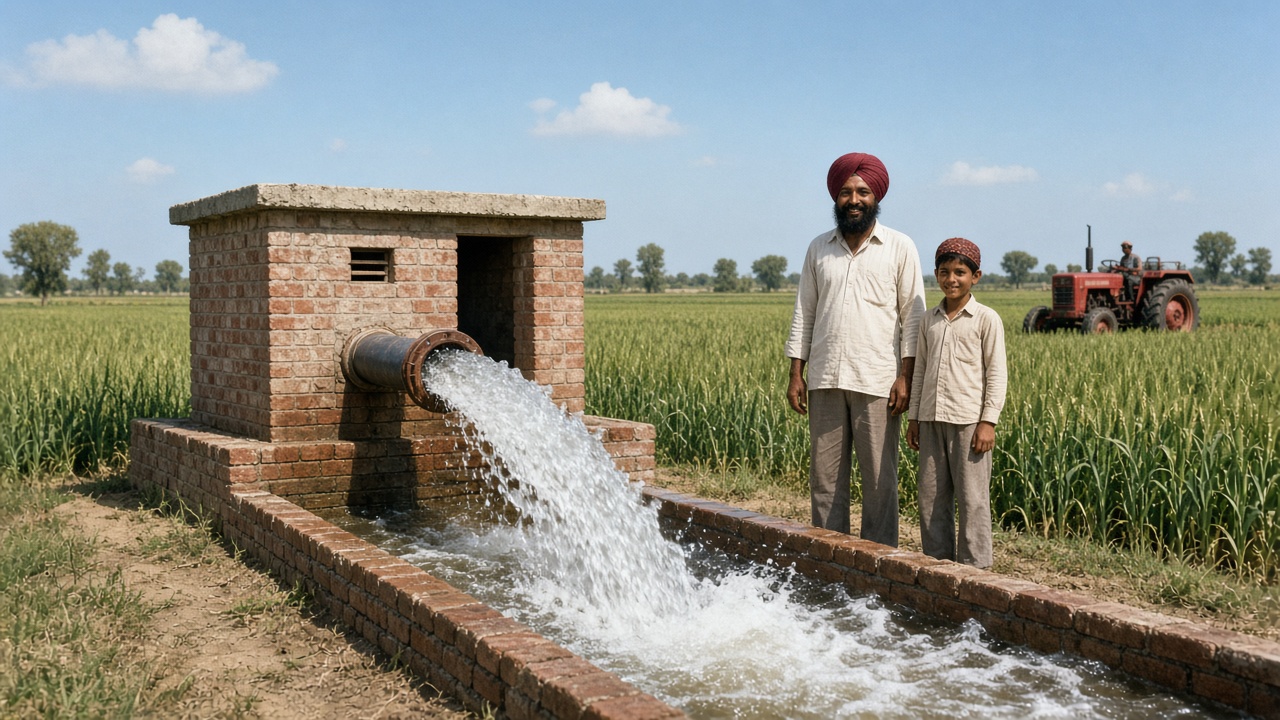
Independent India built multipurpose dams for irrigation, power, and flood control. Then, from the Green Revolution onward, millions of farmers dug their own tube wells with diesel and electric pumps, and groundwater became India’s main source of irrigation.
Tube wells with electric and diesel pumps powered the Green Revolution (artistic illustration).
1948–1957: The Damodar Valley Corporation is set up (1948); the Tungabhadra dam is completed (1953); Hirakud dam on the Mahanadi is inaugurated (1957).
1958–1967: Work begins on the Rajasthan (later Indira Gandhi) Canal (1958); Bhakra Nangal is dedicated (1963); Nagarjuna Sagar is completed (1967).
Late 1960s–1970s: Tube wells spread rapidly with the Green Revolution; the Command Area Development Programme starts (1974) to use canal water better.
1980s: Groundwater overtakes canals as the main irrigation source; the first National Water Policy is adopted (1987).
Methods
Multipurpose dams: Irrigation, power, and flood control.
Tube wells: Pumps lift deep groundwater.
Lift irrigation: Pumps raise river water to higher fields.
Features
Food self-sufficiency: Irrigated wheat and rice.
Farmer-owned water: Tube wells on private land.
New problems: Displacement, waterlogging, falling water tables.
💧 Save Water1991 – Present
Micro-Irrigation, Groundwater & Water Missions
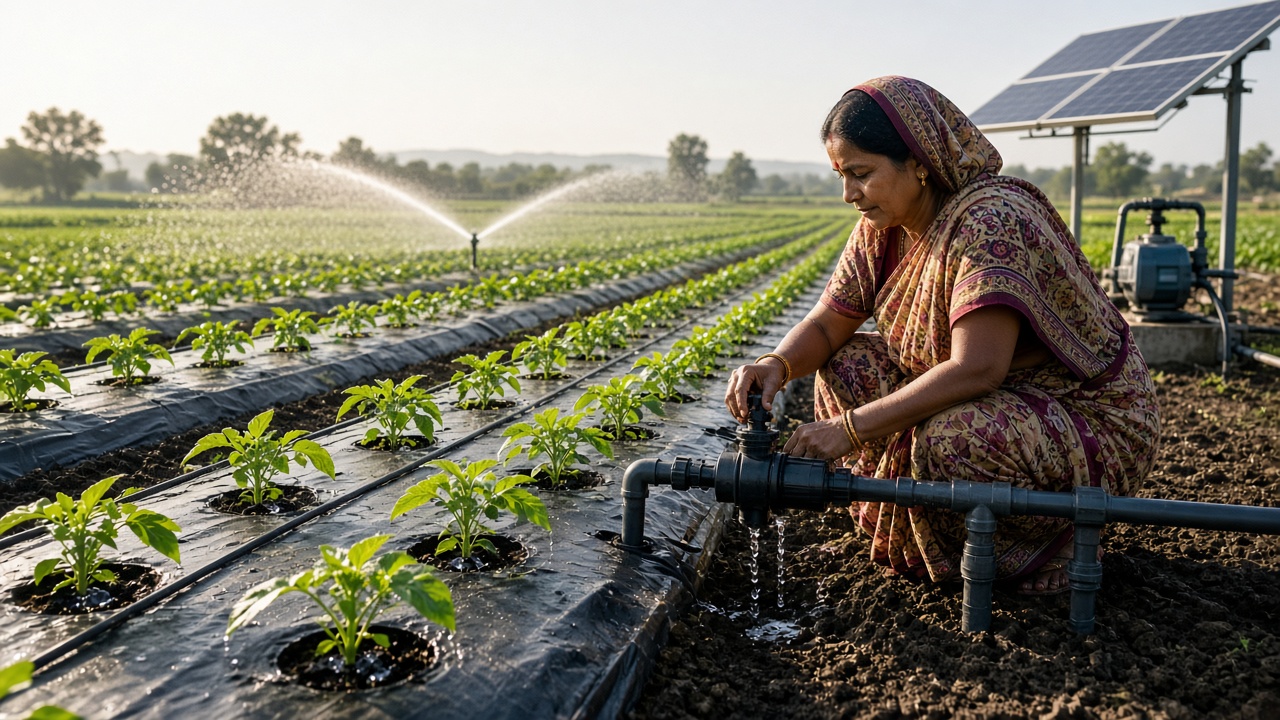
With water tables falling, India now focuses on using every drop well. Drip and sprinkler systems, finishing old canal projects, restoring tanks, recharging groundwater, and giant lift schemes all run side by side.
Drip lines deliver water straight to the roots and can greatly reduce water use (artistic illustration).
1996–2006: The Accelerated Irrigation Benefits Programme funds unfinished projects (1996); National Water Policy 2002; a national micro-irrigation scheme begins (2006).
2012–2017: National Water Policy 2012; PM Krishi Sinchayee Yojana (“Har Khet Ko Pani”, “Per Drop More Crop”) and Telangana’s Mission Kakatiya tank restoration begin (2015); Sardar Sarovar dam is dedicated (2017).
2019–2021: The Ministry of Jal Shakti is formed; Kaleshwaram lift irrigation is opened; Atal Bhujal Yojana for groundwater and PM-KUSUM solar pumps begin; Jal Shakti Abhiyan “Catch the Rain” starts (2021).
2022–present: Mission Amrit Sarovar builds and revives ponds in every district (2022); the foundation stone of the Ken–Betwa river link project is laid (2024).
Click any panel to expand and explore the visual mood.
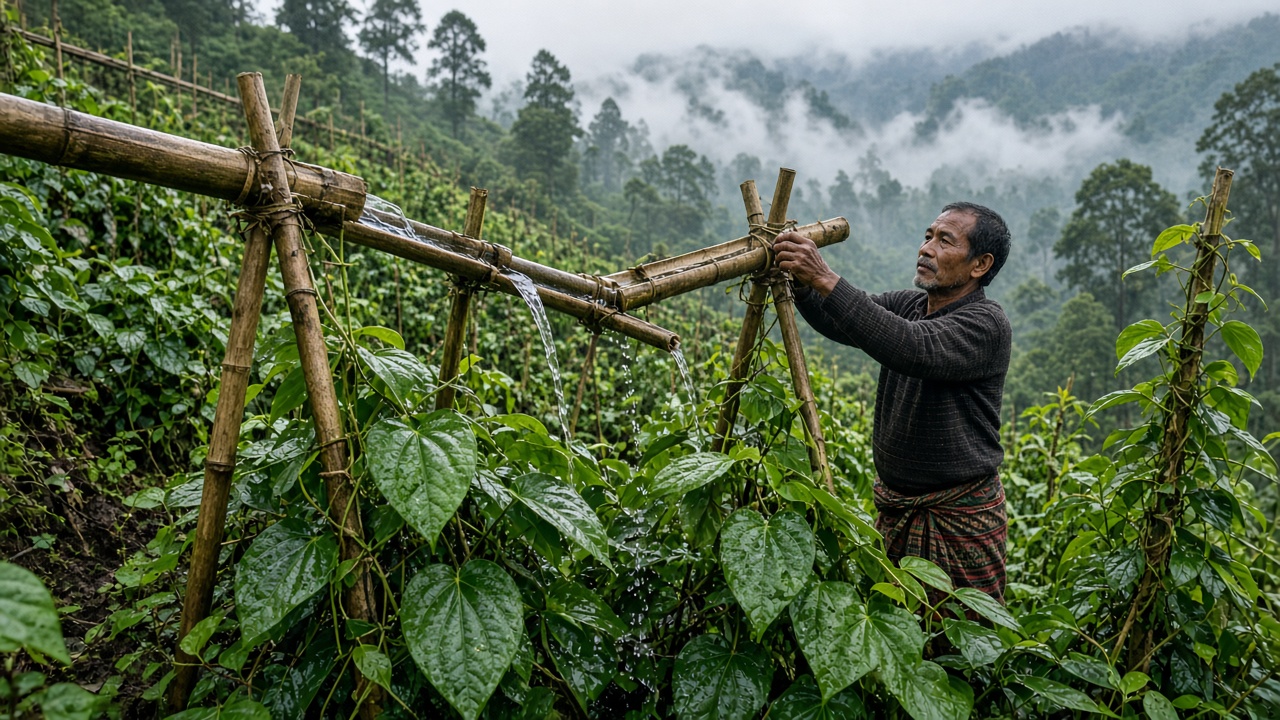
India’s irrigation in pictures — the Grand Anicut, stepwells, Mughal and colonial canals, tube wells, bamboo drip systems, and modern drip farms.
Grand Anicut
c. 2nd century CE
Stepwells
11th century
Royal Canals
1350s–1640s
Canal Age
Ganga Canal 1854
Tube Wells
Green Revolution
Bamboo Drip
Meghalaya
Drip Irrigation
Per Drop More Crop
Water Landscape
Canal, tank & drip
Explore all agriculture timelines
Jump to any other agriculture timeline on WorldTimelineHub.
Disclaimer: This content is AI-generated for educational purposes and may contain errors or outdated details. For correct and authoritative information, please refer to official and reliable sources such as government publications, manufacturers, museums, and academic references.