India’s digital journey began with a handful of room-sized computers in research institutes. Today crores of Indians pay a street vendor by scanning a QR code,
download certificates from DigiLocker, and consult doctors by video call — making India one of the world’s largest digital societies.
This timeline covers India’s first computers, the electronics industry, C-DOT and STD booths, software parks, the internet and mobile phones, the IT Act, e-governance,
Aadhaar, the Digital India mission launched in 2015, UPI and DigiLocker, BharatNet fibre, CoWIN, 5G, ONDC, the digital rupee, and data protection.
Digital India is the Government of India’s flagship programme, launched on 1 July 2015, to turn India into a digitally empowered society and knowledge economy.
It builds on decades of earlier work — research computers, the telecom revolution, software exports, and e-governance projects — and focuses on three vision areas:
digital infrastructure for every citizen, government services on demand, and digital empowerment through literacy and access.
Big picture
India’s digital journey in one view
India moved from a few research computers, to home-grown telephone exchanges and roadside STD booths, to cyber cafes and mobile phones, to online government
services and a digital identity for every resident, and finally to instant payments, digital documents, and 5G networks used by hundreds of millions. Related timelines:
internet,
mobile phones,
banking.
1 July 2015
Digital India launched
130 crore+
Aadhaar numbers issued
10 billion+
UPI payments every month
90 crore+
Internet users
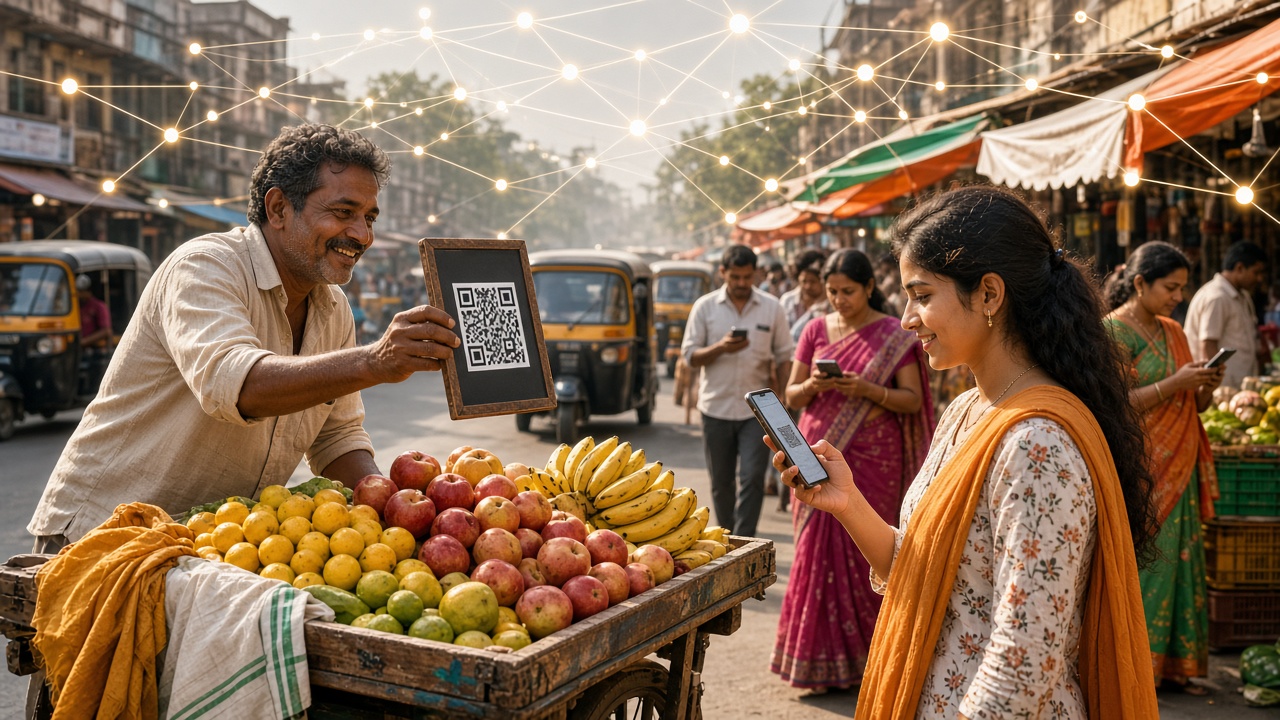
Scan-and-pay QR codes brought instant digital payments to street vendors across India (artistic illustration).
🖥️ First Computers1955 – 1983
Early Computers & Electronics
India’s first computers arrived in research institutes in the 1950s, and Indian scientists soon built their own. The government set up electronics companies, a Department of Electronics, and the National Informatics Centre to bring computers into planning and administration.
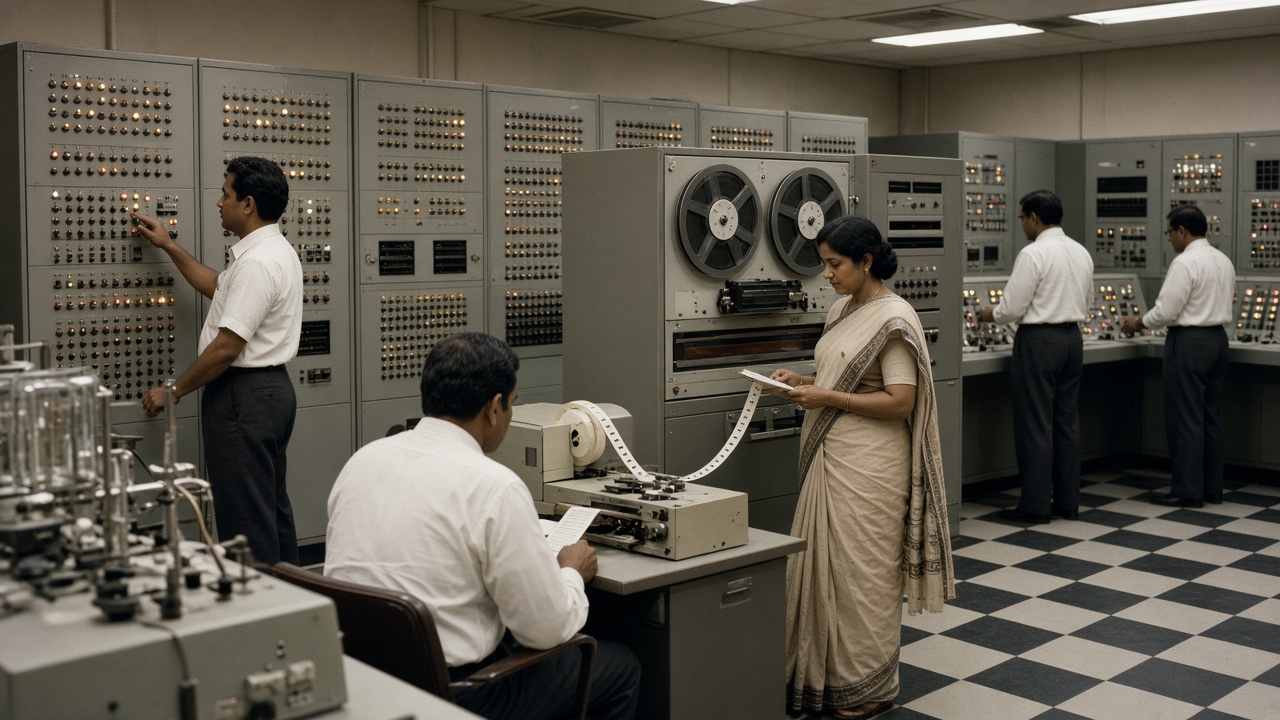
Early computers filled whole rooms and read programs from punched paper tape (artistic illustration).
1956: The HEC-2M is installed at the Indian Statistical Institute, Kolkata — regarded as India’s first computer.
1960: TIFRAC, one of the first computers designed and built in India, is commissioned at the Tata Institute of Fundamental Research, Mumbai.
1967–1970: Electronics Corporation of India Limited (ECIL) is set up in Hyderabad (1967); the Department of Electronics is created (1970).
1975–1976: CMC Limited is formed to maintain computers; the National Informatics Centre (NIC) is set up (1976) to computerise government work.
Technology
Mainframes: Room-sized machines with vacuum tubes and transistors.
Punched tape and cards: Used to feed programs and data.
Magnetic tape: Reels to store large data sets.
Features
Research first: Used for science, statistics, and planning.
Self-reliance: Indian-built computers and electronics.
Very few users: Only experts could operate them.
☎️ Telecom Revolution1984 – 1994
Telecom Revolution & STD Booths
C-DOT designed telephone exchanges suited to Indian villages, and yellow STD/ISD booths appeared on street corners across the country. Railway reservations were computerised, India built its own supercomputer, and software technology parks helped start the IT export boom.
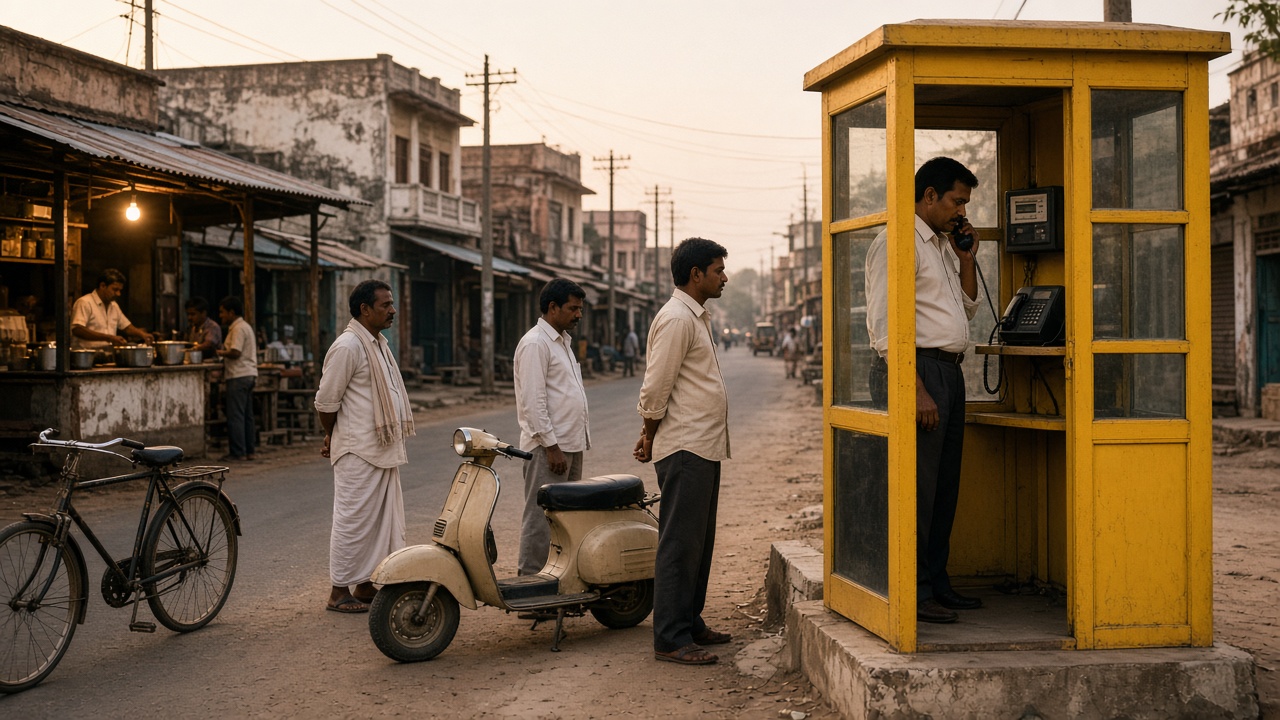
Roadside STD/ISD booths let millions make long-distance calls for the first time (artistic illustration).
1984: The Centre for Development of Telematics (C-DOT) is founded to design Indian digital telephone exchanges.
1986: MTNL and VSNL are formed; computerised railway passenger reservation begins in New Delhi.
Late 1980s: Public call offices (STD/ISD PCOs) spread across towns and villages; C-DAC is set up (1988) and NASSCOM is founded (1988).
1991: C-DAC unveils the PARAM 8000 supercomputer; Software Technology Parks of India (STPI) is set up; economic reforms open the market.
Technology
Digital exchanges: C-DOT switches for rural areas.
STD/ISD dialling: Direct long-distance calls.
Supercomputing: Parallel computers built in India.
Features
Phones for all: Shared booths instead of private lines.
Local jobs: PCOs run by small entrepreneurs.
IT exports begin: Software for global clients.
🌐 Internet Arrives1995 – 2005
Internet, Mobile Phones & the IT Act
India made its first mobile phone call and opened public internet access in 1995. Cyber cafes spread in towns, the IT Act gave legal status to electronic records, and early e-governance projects put land records and railway tickets online.
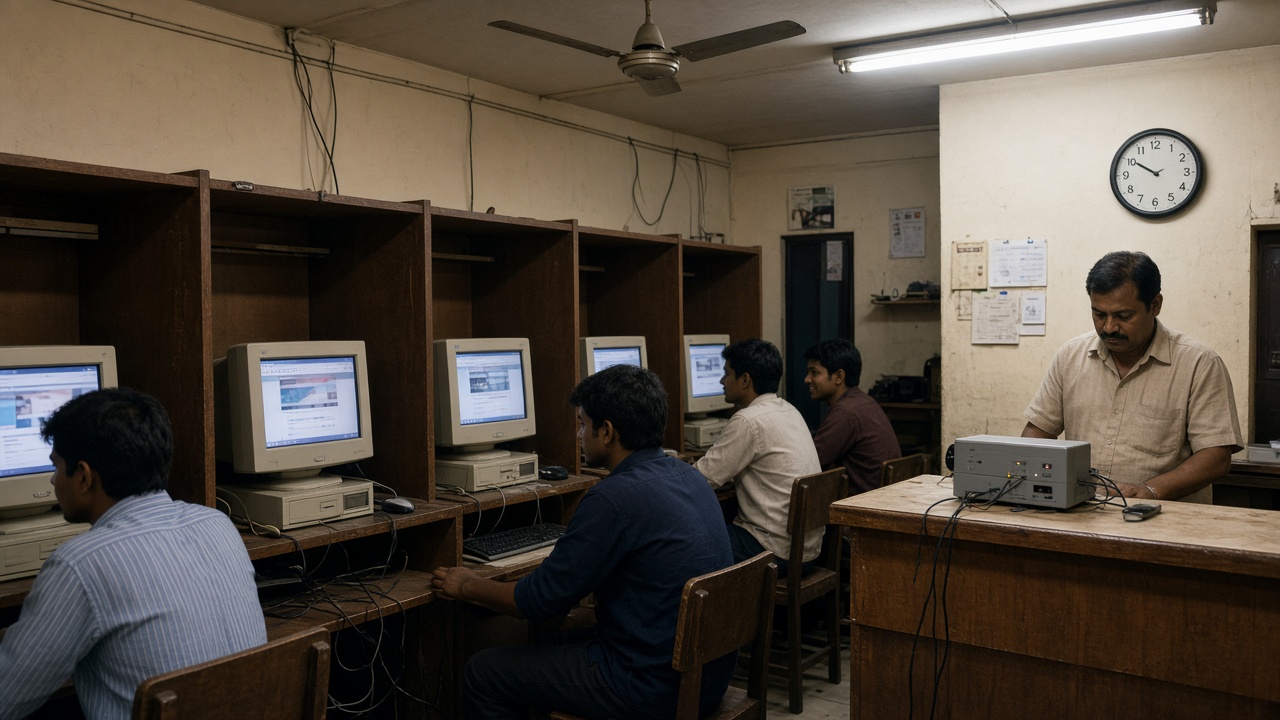
Cyber cafes were where many Indians first used email and the web (artistic illustration).
31 July 1995: India’s first mobile phone call is made between Kolkata and New Delhi.
15 August 1995: VSNL launches public internet access using dial-up connections.
17 October 2000: The Information Technology Act, 2000 comes into force, recognising electronic records and digital signatures.
2000–2005: Karnataka’s Bhoomi project puts land records online; IRCTC starts online railway ticket booking (2002); the Right to Information Act is passed (2005).
Technology
Dial-up internet: Slow connections over phone lines.
GSM mobiles: Calls and SMS on the move.
Digital signatures: Legally valid e-documents.
Features
Cyber cafes: Shared internet access by the hour.
Email and web: New ways to learn and communicate.
First e-services: Online tickets and records.
🆔 e-Governance2006 – 2014
e-Governance, Aadhaar & 3G
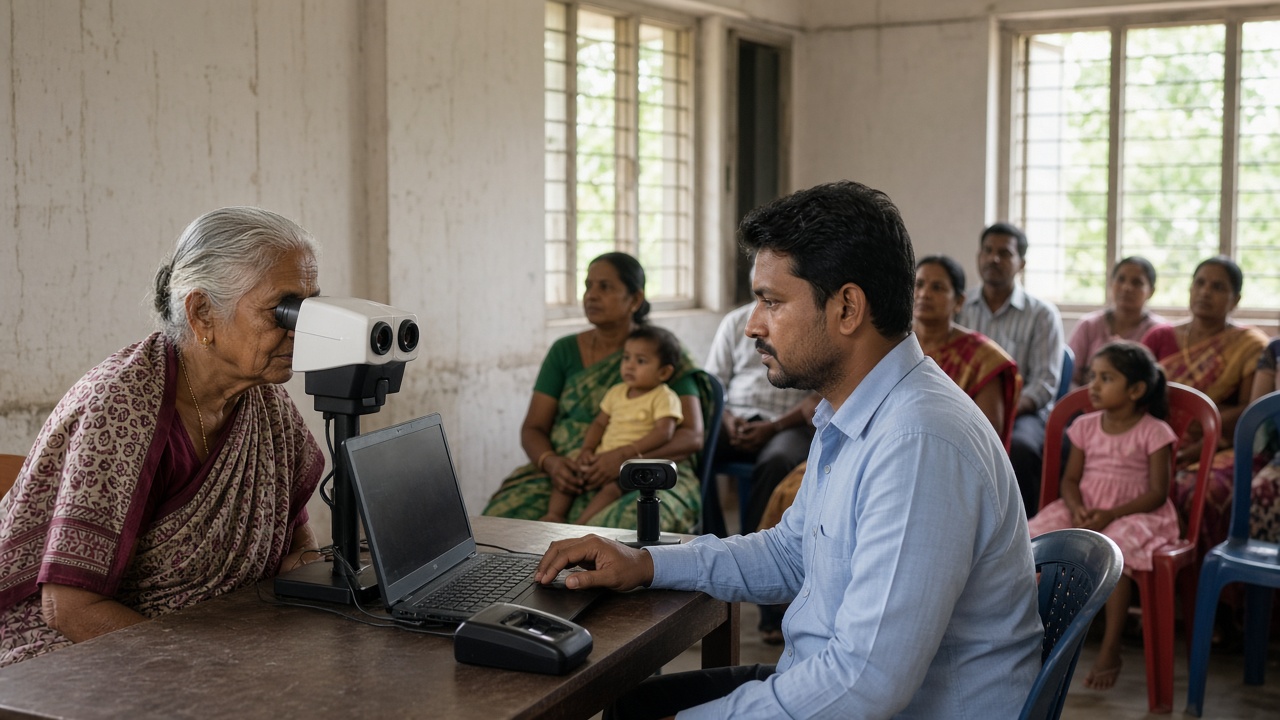
The National e-Governance Plan set up mission mode projects and village service centres. Aadhaar gave every resident a biometric digital identity, mobile phones spread to villages, and the National Optical Fibre Network planned broadband for every gram panchayat.
Aadhaar enrolment captured fingerprints, iris scans, and a photograph for each resident (artistic illustration).
2006: The National e-Governance Plan (NeGP) is approved with mission mode projects; the Common Services Centres scheme begins.
2009–2010: The Unique Identification Authority of India is set up (2009); the first Aadhaar numbers are issued on 29 September 2010; 3G mobile services start.
2011–2012: The National Optical Fibre Network (later BharatNet) is approved (2011); the National Policy on Information Technology is released (2012).
2014: The MyGov citizen platform launches (26 July); Pradhan Mantri Jan Dhan Yojana opens bank accounts for crores of people (28 August).
Technology
Biometrics: Fingerprint and iris identity.
3G data: Faster mobile internet.
State data centres: Servers for online services.
Features
Digital identity: One number for many services.
Village kiosks: Services without travelling to offices.
Financial inclusion: Bank accounts for the unbanked.
🇮🇳 Digital India2015 – 2019
Digital India Mission & UPI
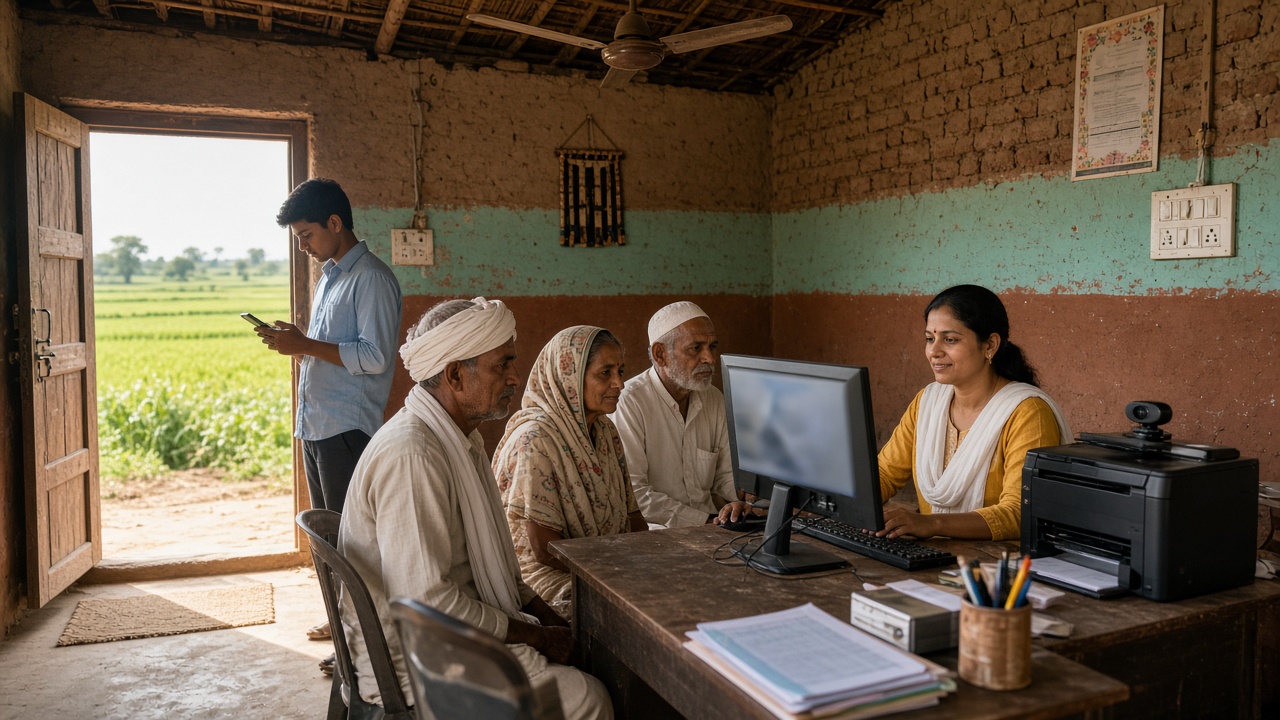
The Digital India programme was launched on 1 July 2015. DigiLocker, UPI, BHIM, and UMANG put documents, payments, and government services on the mobile phone, while cheap mobile data brought hundreds of millions of new users online.
Common Services Centres help villagers use online government services close to home (artistic illustration).
2015: DigiLocker launches; the Digital India programme is launched on 1 July with nine pillars; eSign and the National Scholarship Portal follow.
2016: NPCI launches UPI (April); cheap 4G data plans cause a surge in mobile internet use; the BHIM payments app launches (30 December).
2017: GST is rolled out on a nationwide digital network (1 July); the UMANG app brings many government services into one app; PMGDISHA begins training rural citizens in digital literacy.
2018–2019: Ayushman Bharat uses digital health cards; Direct Benefit Transfer sends subsidies straight to bank accounts; UPI crosses one billion monthly transactions (2019).
Technology
UPI: Instant bank-to-bank payments by phone.
4G networks: Affordable high-speed data.
Cloud documents: Verified digital certificates.
Features
Scan and pay: QR codes at shops and stalls.
Paperless services: Apply online from anywhere.
Digital literacy: Training for rural families.
📶 5G & DPI2020 – Present
Digital Public Infrastructure & 5G
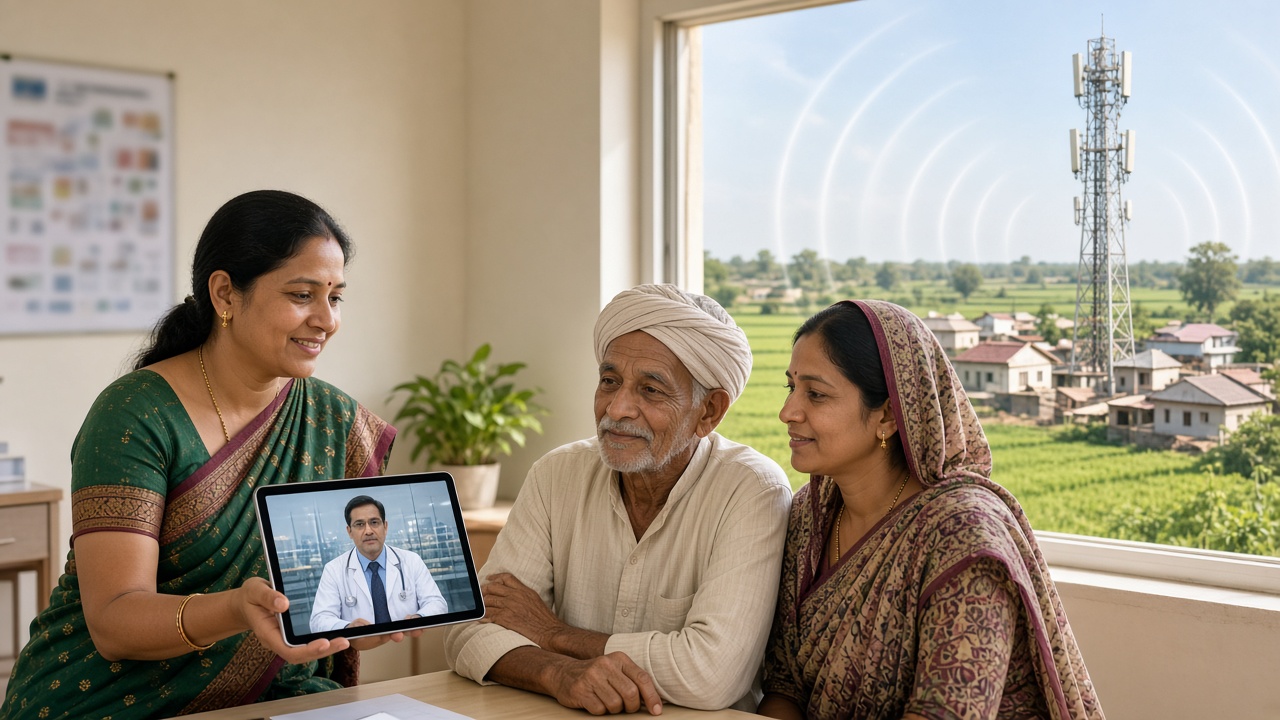
During the COVID-19 pandemic, digital platforms supported contact tracing, online classes, and one of the world’s largest vaccination drives. India launched 5G, open commerce and health networks, a digital rupee, and a data protection law, and shared its digital public infrastructure model with the world.
Fast mobile networks let village patients consult doctors in distant cities by video (artistic illustration).
2020–2021: The Aarogya Setu app launches (April 2020); CoWIN manages COVID-19 vaccination (2021); the Ayushman Bharat Digital Mission and e-RUPI vouchers launch (2021).
2022: The ONDC open commerce network begins pilots; Bhashini offers AI translation in Indian languages; 5G launches on 1 October; the RBI starts digital rupee (e₹) pilots.
2023: UPI crosses 10 billion monthly transactions; the Digital Personal Data Protection Act is passed; the G20 summit in New Delhi highlights digital public infrastructure; the Telecommunications Act is passed.
2024–present: The IndiaAI Mission is approved (2024); UPI links with payment systems in other countries; BharatNet is upgraded to reach more villages.
Technology
5G networks: Very fast, low-delay mobile data.
Open networks: ONDC and health data exchange.
AI for languages: Speech and translation tools.
Features
Digital health: Vaccination records and telemedicine.
Data rights: Rules on how personal data is used.
Global model: India’s DPI shared with other countries.
Nine Pillars of Digital India
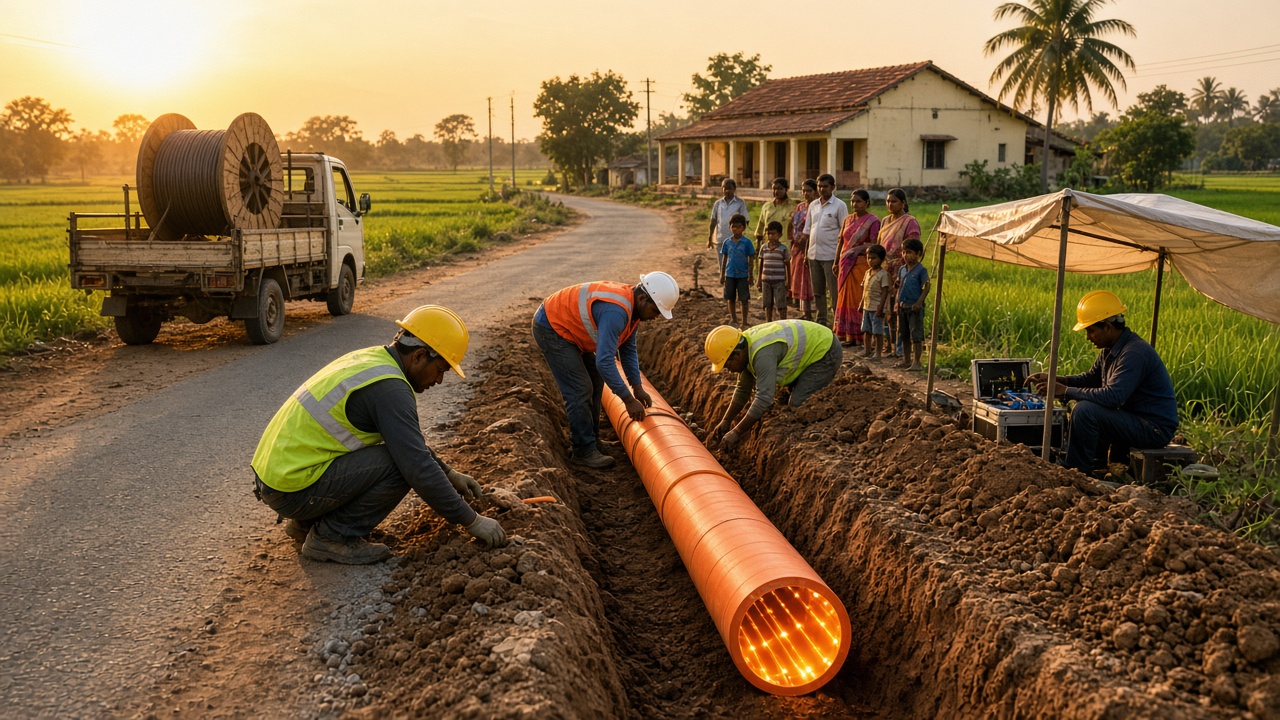
BharatNet lays optical fibre to connect gram panchayats with broadband (artistic illustration).
Pillar
What it aims to do
1. Broadband highways
High-speed broadband for cities, villages, and gram panchayats
2. Universal access to mobile connectivity
Mobile coverage for villages without a network
3. Public Internet Access Programme
Common Services Centres and post offices as service points
4. e-Governance
Simpler, faster government processes using technology
5. e-Kranti
Electronic delivery of services such as health, education, and farming
6. Information for all
Open government data and citizen engagement online
7. Electronics manufacturing
Make more electronics in India and reduce imports
8. IT for jobs
Train young people for IT and IT-enabled jobs
9. Early harvest programmes
Quick projects such as Wi-Fi in universities and biometric attendance
Key Digital Platforms
Platform
Launched
What it does
Aadhaar
2010
12-digit biometric digital identity for residents
MyGov
2014
Citizens share ideas and take part in governance
DigiLocker
2015
Store and share official documents digitally
UPI
2016
Instant mobile payments between bank accounts
UMANG
2017
Many central and state services in one app
CoWIN
2021
COVID-19 vaccine booking and certificates
ONDC
2022
Open network for online buying and selling
Bhashini
2022
AI translation and speech tools in Indian languages
Everyday Life: Then and Now
Task
Then
Now
Long-distance call
Queue at an STD booth and pay by the minute
Free voice and video calls on a smartphone
Train ticket
Stand in a queue at the reservation counter
Book online or on an app in minutes
Paying a shopkeeper
Cash and change
Scan a QR code with UPI
Certificates
Paper copies and attested photocopies
Verified documents in DigiLocker
Government schemes
Visit offices and fill paper forms
Apply online; benefits sent to bank accounts
Seeing a doctor
Travel to a city hospital
Telemedicine from a village health centre
Digital India Timeline Summary
Year
Milestone
1956
HEC-2M, India’s first computer, at ISI Kolkata
1960
TIFRAC commissioned at TIFR
1970
Department of Electronics created
1976
National Informatics Centre set up
1984
C-DOT founded
1986
MTNL and VSNL formed; computerised railway reservation
1991
PARAM 8000 supercomputer; STPI set up
1995
First mobile call; public internet launched
2000
IT Act comes into force
2002
Online railway ticket booking
2006
National e-Governance Plan; Common Services Centres
2010
First Aadhaar numbers issued
2011
National Optical Fibre Network (BharatNet) approved
2014
MyGov; Jan Dhan Yojana
2015
Digital India launched; DigiLocker
2016
UPI and BHIM launched
2017
GST network; UMANG app
2021
CoWIN; Ayushman Bharat Digital Mission
2022
5G launch; ONDC; digital rupee pilot
2023
Digital Personal Data Protection Act
2024
IndiaAI Mission approved
Test Your Knowledge
20 quick questions from the Digital India timeline. Click each question to reveal the answer.
Answer: At the Indian Statistical Institute, Kolkata (1956).
Answer: One of the first computers designed and built in India, commissioned at TIFR, Mumbai, in 1960.
Answer: The National Informatics Centre (NIC).
Answer: Centre for Development of Telematics.
Answer: Public call offices where people paid to make long-distance and international phone calls.
Answer: PARAM 8000.
Answer: 31 July 1995.
Answer: VSNL (Videsh Sanchar Nigam Limited).
Answer: The Information Technology Act, 2000.
Answer: Bhoomi.
Answer: 2006.
Answer: 12 digits.
Answer: To connect all gram panchayats with high-speed optical fibre broadband.
Answer: 1 July 2015.
Answer: Nine.
Answer: The National Payments Corporation of India (NPCI).
Answer: Official documents such as mark sheets, driving licences, and Aadhaar.
Answer: CoWIN.
Answer: 1 October 2022.
Answer: The Digital Personal Data Protection Act, 2023.
Classroom activity
Students Tasks
Use these prompts for discussion or projects on India’s digital journey.
Click any panel to expand and explore the visual mood.
India’s digital journey in pictures — early computers, STD booths, cyber cafes, Aadhaar enrolment, village service centres, UPI payments, fibre broadband, and telemedicine.
First Computers
1956–1960
STD Booths
Late 1980s
Cyber Cafes
Internet from 1995
Aadhaar
From 2010
Service Centres
Village e-services
UPI Payments
From 2016
BharatNet
Fibre to villages
5G & Telemedicine
5G from 2022
Explore all government timelines
Jump to any other government timeline on WorldTimelineHub.
Disclaimer: This content is AI-generated for educational purposes and may contain errors or outdated details. For correct and authoritative information, please refer to official and reliable sources such as government publications, manufacturers, museums, and academic references.