From naked-eye sky watching to telescopes and heliocentrism, then space telescopes and gravitational waves—the tools that rewrote how we know the cosmos.
Eyes -> glassSun-centred cosmosOrbit & spacetime
Why Sky Observation Matters
Humans have always looked up—for seasons, navigation, wonder, and meaning. Over time, better instruments separated omen traditions from measurable astronomy and opened entirely new windows on the universe.
This timeline follows naked-eye observation, telescopes, heliocentrism, space telescopes, and gravitational waves as linked leaps in how we observe the sky.
Big picture
Sky science in one view
Eyes map the night; lenses reveal moons and phases; a Sun-centred model remakes cosmology; orbiting observatories pierce the atmosphere; detectors feel spacetime ripple.
Before lenses, the human eye was the observatory. Cultures worldwide tracked rising stars, lunar phases, eclipses, and wandering planets for calendars, farming, navigation, and sky stories. In India and elsewhere, careful naked-eye records fed both ritual timing and early mathematical astronomy.
Naked-eye era: the sky as calendar and map.
Constellations and planetary paths mapped by eye.
Calendars, festivals, and voyages depend on sky cycles.
Shared roots of astrology lore and early astronomy.
Glass Changes Everything1600s
Telescopes
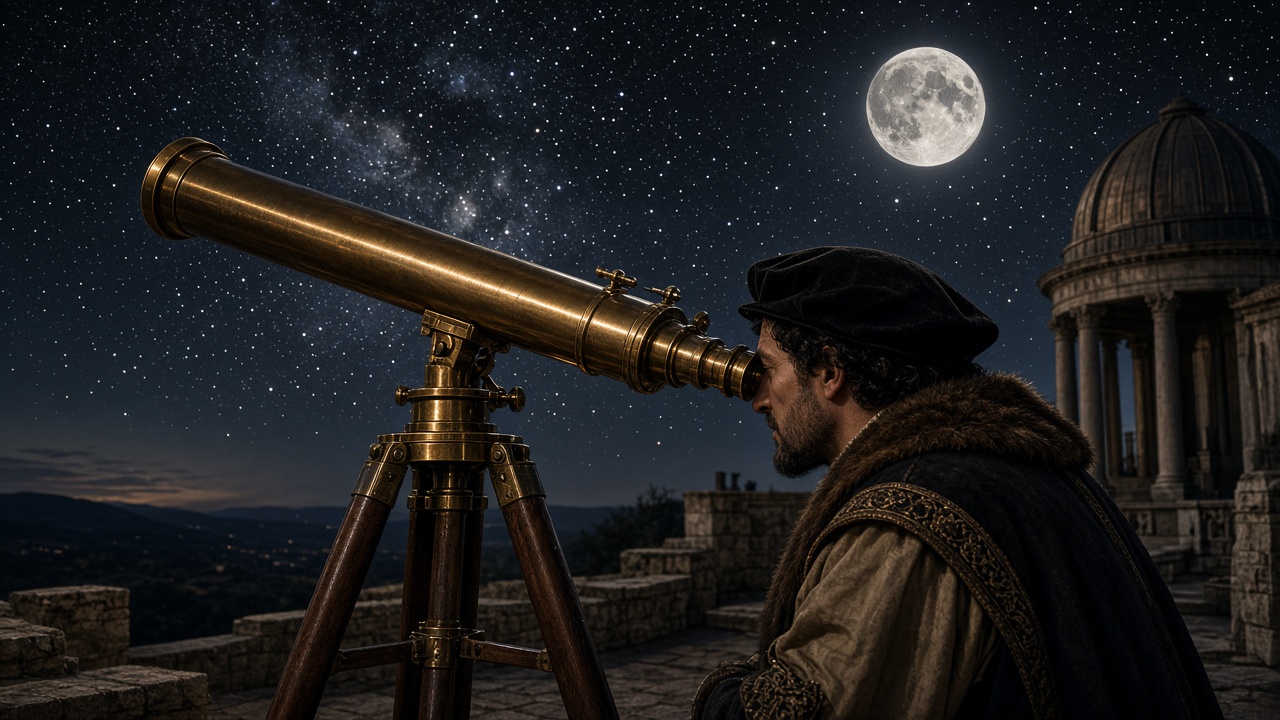
Early 17th-century telescopes magnified what eyes alone could not. Galileo’s Moon mountains, Jupiter’s moons, and Venus phases showed a cosmos richer—and less Earth-centred—than tradition allowed. Opticians steadily improved lenses and mirrors into the modern observatory age.
Telescope era: magnification meets discovery.
New moons, craters, and phases become visible evidence.
Observatories professionalise sky measurement.
Instrument craft becomes as important as theory.
Sun at the Centre1500s–1600s
Heliocentrism
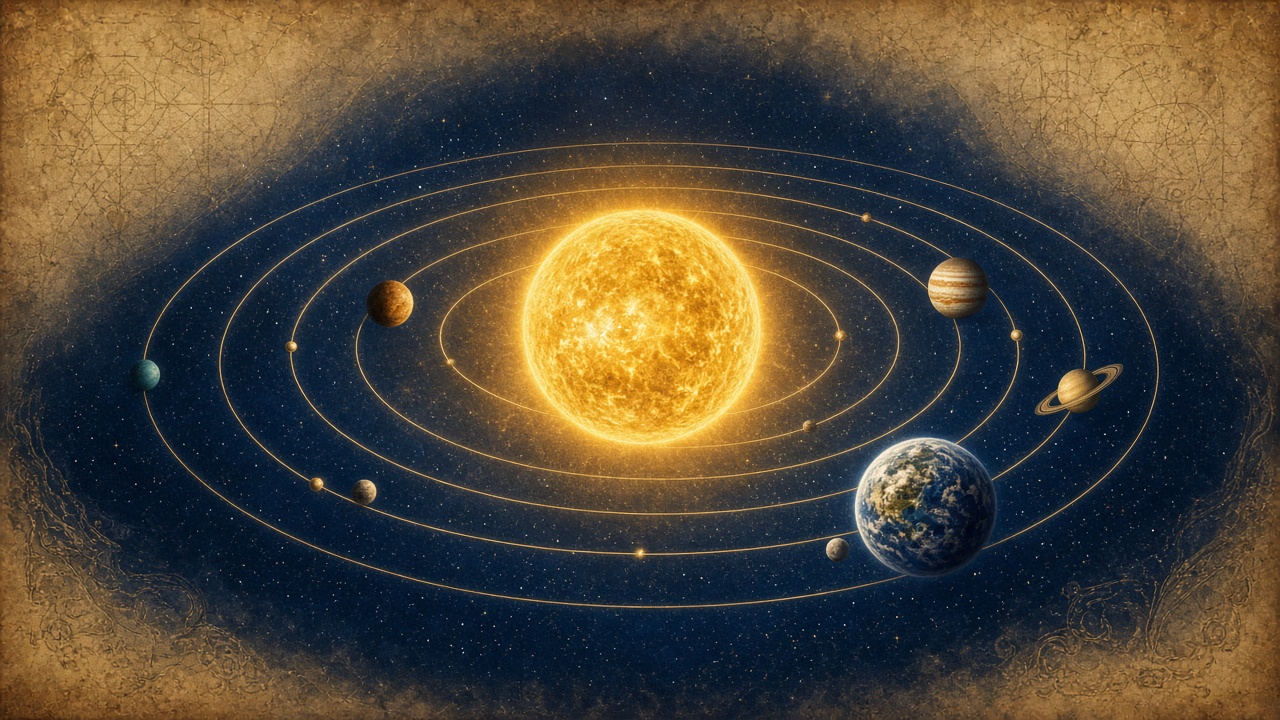
Copernicus placed the Sun at the centre of the planetary system; Kepler described elliptical orbits; Galileo’s observations challenged geocentric dogma; Newton’s gravity explained the motions. Heliocentrism remade cosmology from philosophy into testable science.
Heliocentric era: evidence over Earth-centred tradition.
Copernican model + Kepler’s laws reshape orbits.
Telescopic data undermines pure geocentrism.
Newtonian gravity unifies celestial and earthly motion.
Eyes Above the Air1990s+
Space Telescopes
Orbiting observatories escape atmospheric blur and absorption. Hubble transformed public and scientific views of deep space; later missions like Chandra, Kepler, and JWST opened X-ray, exoplanet, and infrared frontiers—turning space itself into a telescope platform.
Space-telescope era: clear views beyond the atmosphere.
Sharper images across more wavelengths.
Exoplanets, deep fields, and early-universe light.
Public awe meets precision astrophysics.
Hearing Spacetime2015+
Gravitational Waves
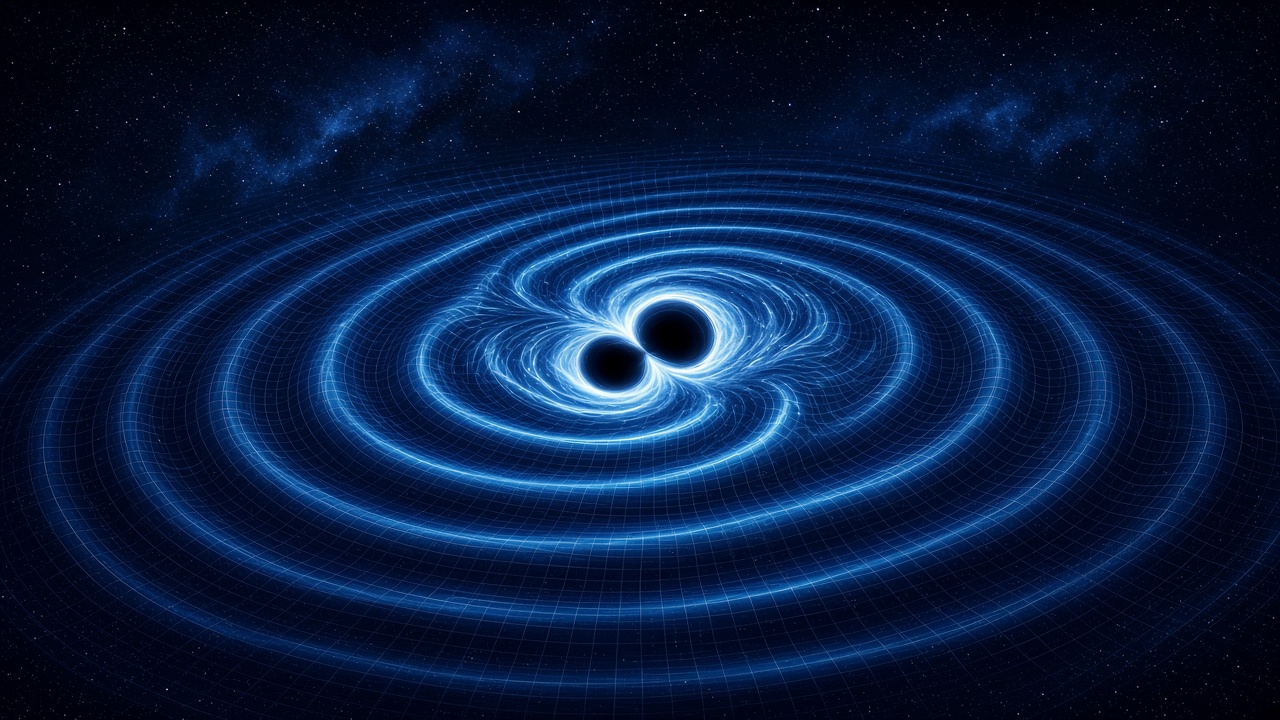
Einstein predicted spacetime ripples; LIGO’s 2015 detection of merging black holes opened multimessenger astronomy. Detectors now “listen” to cosmic collisions that emit little or no light—a new sense for the universe beyond telescopes of glass and mirrors.
GW era: the cosmos felt as spacetime rings.
LIGO/Virgo confirm Einstein’s prediction.
Black-hole and neutron-star mergers become detectable events.
Astronomy gains a non-light messenger channel.
Key Milestones
Milestone
When
Why it matters
Naked-eye sky lore & calendars
Ancient
First systematic sky watching.
Practical telescopes
c. 1608–1610
Magnified moons, phases, craters.
Copernican heliocentrism
1543+
Sun-centred planetary model.
Kepler / Newton
1600s–1687
Laws of orbits and gravity.
Hubble Space Telescope
1990
Orbiting optical/UV/near-IR eye.
LIGO GW150914
2015
First direct gravitational waves.
Ways of Seeing at a Glance
Method
Core question
Modern echo
Naked eye
What moves in the night?
Meteor showers, planet apps
Telescope
What details hide above?
Amateur & research scopes
Heliocentrism
What orbits what?
Solar-system science
Space telescope
What does space reveal?
Hubble, JWST imagery
Gravitational waves
What shakes spacetime?
LIGO / Virgo / KAGRA
Then vs Now
From hilltop star-gazing to laser interferometers.
Metric
Then
Now
Instrument
Human eye
Mirrors, orbiters, lasers
Model of cosmos
Often Earth-centred lore
Sun-centred + expanding universe
Data
Sketches & tables
Digital surveys & spectra
Messengers
Visible light only
Light + neutrinos + GWs
Access
Local night sky
Open archives & public images
Future Predictions
Next-gen space scopes: Deeper infrared and exoplanet characterisation missions.
GW network: More detectors refine sky localisation of mergers.
Multimessenger: Routine pairing of light, neutrinos, and waves.
India: Growing roles in space science, LIGO-India, and public astronomy outreach.
India spotlight
Sky Science & India
India’s sky story runs from Vedanga Jyotisha and classical siddhantas through colonial observatories to ISRO missions, giant telescopes, and planned LIGO-India—linking ancient sky math to modern astrophysics.
India spotlight: from jyotisha to space science.
Ancient
Jyotisha & naked eye
Calendar astronomy and planetary models from observation.
Colonial
Observatories
Madras, Kodaikanal and others institutionalise telescopes.
ISRO era
Space missions
Chandrayaan, Mangalyaan, and astronomy payloads expand reach.
Today
Global network
Ground telescopes, AstroSat, and LIGO-India plans join world science.
Strength: Deep sky heritage plus growing space research.
Need: Dark-sky protection and school astronomy access.
Debate: Traditional astrology vs evidence-based astronomy education.
Test Your Knowledge
20 questions from naked-eye skies to gravitational waves. Click to reveal answers.
Jump to any other science timeline on WorldTimelineHub.
Disclaimer: This content is AI-generated for educational purposes and may contain errors or outdated details. For correct and authoritative information, please refer to official and reliable sources such as government publications, manufacturers, museums, and academic references.