From the Asiatic Society and IISc to CSIR, ISRO, DRDO, the IITs, and the National Research Foundation—how India built the organisations behind modern science.
Labs & campusesSpace & defence R&DFunding the future
Why Institutions Matter
Science scales through organisations—learned societies, universities, lab networks, mission agencies, and funders. India’s modern research capacity grew as these institutions trained talent, built labs, and delivered national missions from industry to space.
This timeline follows the Asiatic Society, IISc, CSIR, ISRO, DRDO, the IITs, and the National Research Foundation as linked pillars of Indian science.
Big picture
Institutions in one view
A learned society seeds scholarship; IISc builds research university culture; CSIR networks industrial labs; ISRO and DRDO drive missions; IITs expand engineering talent; NRF aims to fund research across the system.
From learned societies to national research funding.
Learned Society1784
Asiatic Society
Founded in Calcutta by Sir William Jones, the Asiatic Society institutionalised research on Asian languages, history, and sciences. Journals, libraries, and scholarly networks helped create a culture of organised inquiry that later Indian scientific institutions would expand in new directions.
Asiatic Society era: organised scholarship takes root.
1784 founding in colonial Calcutta.
Publications and collections advance Asian studies.
Model for later learned societies and academies.
Research University1909
IISc
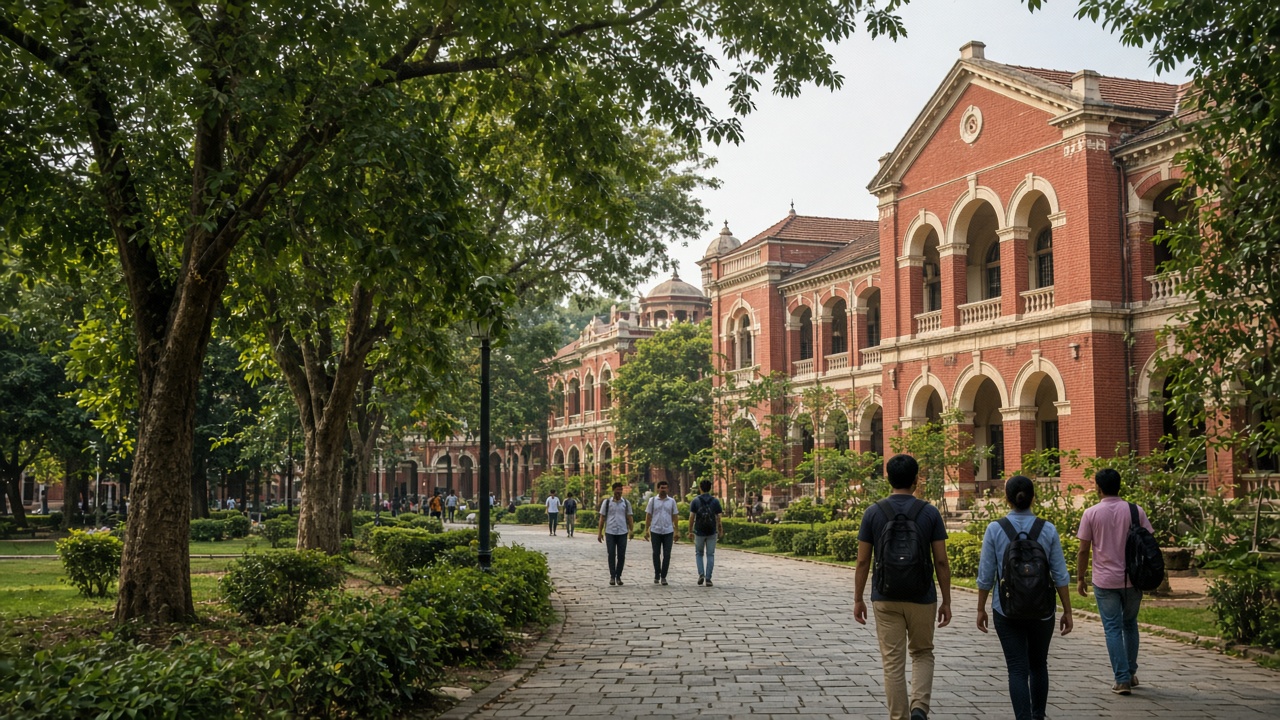
The Indian Institute of Science, Bengaluru—shaped by Jamsetji Tata’s vision and early 20th-century patronage—became India’s premier research university for science and engineering. IISc set a template for advanced laboratories, doctoral training, and industry-linked research.
IISc era: a home for advanced science education.
Research-first campus culture in Bengaluru.
Strong science & engineering graduate programmes.
Benchmark for later research universities.
National Lab Network1942
CSIR
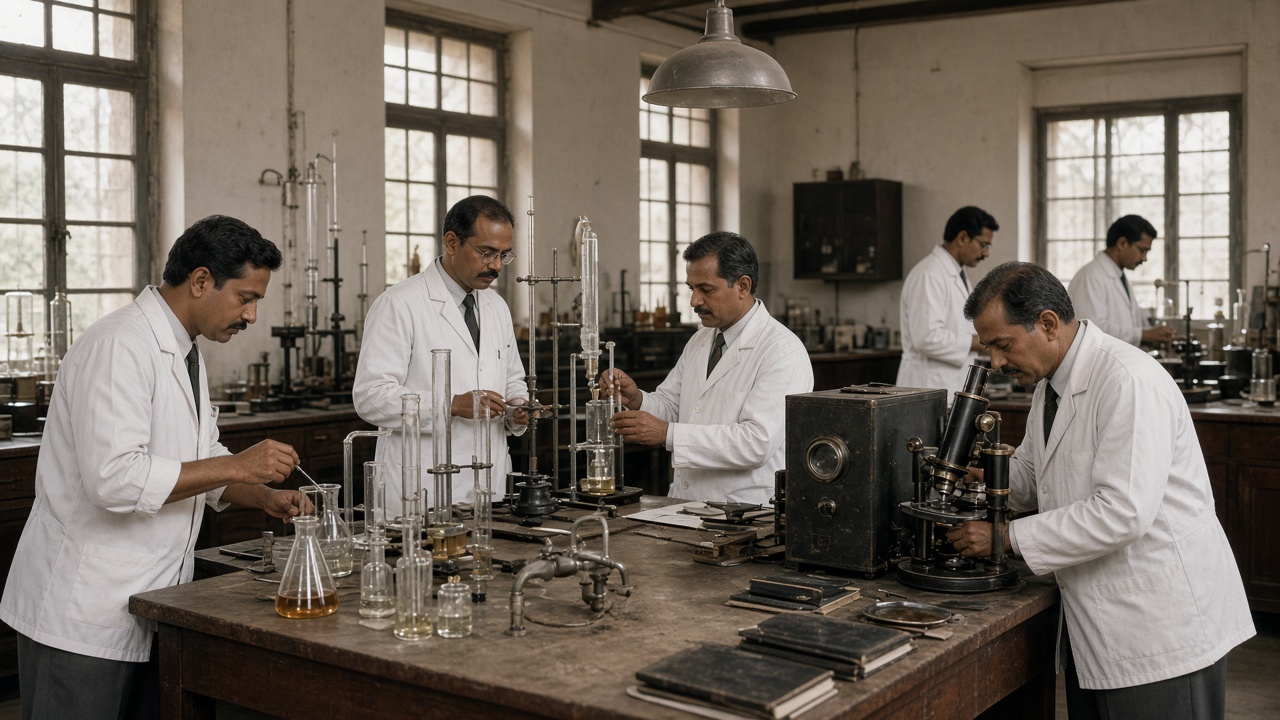
The Council of Scientific and Industrial Research created a chain of national laboratories for industrial and applied science. CSIR labs have supported chemicals, materials, pharmaceuticals, and technology development—linking research to India’s industrial base.
CSIR era: public labs for industrial science.
Network of national laboratories across India.
Focus on applied and industrial R&D.
Major employer of publicly funded researchers.
Space Mission Agency1969
ISRO
The Indian Space Research Organisation turned space science into a national capability—satellites for communication and earth observation, launch vehicles, and missions to the Moon and Mars. ISRO shows how a mission agency can deliver technology with societal and scientific impact.
ISRO era: space as national scientific ambition.
Launchers, satellites, and planetary missions.
Applications in weather, navigation, and communication.
Global recognition for cost-effective spaceflight.
Defence R&D1958
DRDO
The Defence Research and Development Organisation builds technologies for national security—missiles, electronics, aeronautics, materials, and more. DRDO laboratories link defence needs to indigenous design and testing capacity across India.
DRDO era: science for defence self-reliance.
Network of defence laboratories and programmes.
Indigenous systems across multiple domains.
Partnerships with industry and academia.
Engineering Talent Engine1950s+
IITs
The Indian Institutes of Technology began as a small set of elite engineering campuses and grew into a national network. IITs became symbols of rigorous technical education, research, and a talent pipeline for industry, academia, and entrepreneurship worldwide.
Competitive admissions and strong alumni networks.
Research and start-ups alongside teaching.
Research Funding Body2020s
National Research Foundation
The National Research Foundation (Anusandhan National Research Foundation / ANRF) is designed to fund and coordinate research across universities and disciplines—aiming to strengthen India’s research culture beyond a few elite institutes and mission agencies.
NRF era: fund research across the national system.
Competitive grants across fields and institutions.
Push to broaden research capacity in universities.
Policy link between NEP goals and science funding.
Key Milestones
Milestone
When
Why it matters
Asiatic Society founded
1784
Organised scholarly research culture.
IISc established
1909
Flagship research university.
CSIR founded
1942
National industrial lab network.
DRDO formed
1958
Defence R&D organisation.
IIT system begins / expands
1950s+
Engineering talent at scale.
ISRO formed
1969
Civilian space agency.
National Research Foundation
2020s
System-wide research funding push.
Institution Types at a Glance
Institution
Role
Modern echo
Asiatic Society
Learned society
Academies & libraries
IISc
Research university
Doctoral science hubs
CSIR
Lab council
Industrial R&D labs
ISRO
Space agency
Satellites & launches
DRDO
Defence R&D
Indigenous systems
IITs
Tech institutes
Engineers & start-ups
NRF / ANRF
Research funder
Grants across campuses
Then vs Now
From colonial learned societies to national funding agencies.
Metric
Then
Now
Scale
Few societies & colleges
Lab networks + many campuses
Missions
Scholarship & industry seeds
Space, defence, digital tech
Talent
Small elite cohorts
Large IIT / university pipeline
Funding
Patronage & colonial budgets
CSIR/ISRO/DRDO + NRF grants
Global role
Limited international science voice
Major space & STEM presence
Future Predictions
NRF impact: More competitive grants reach state universities and interdisciplinary teams.
Mission science: ISRO and DRDO deepen industry partnerships and dual-use R&D.
Campus research: IITs and IISc expand deep-tech start-ups and doctoral capacity.
Access: Broader participation of women and underrepresented regions in research careers.
India spotlight
Building India’s Science System
India’s scientific institutions form a layered system: heritage scholarship, research universities, industrial labs, mission agencies, engineering campuses, and now a national foundation for research funding.
India spotlight: institutions that train, fund, and launch.
1784
Asiatic Society
Organised scholarship begins in Calcutta.
1909
IISc
Research university culture takes shape.
1942–69
CSIR · DRDO · ISRO
Lab networks and mission agencies rise.
1950s+
IITs expand
Engineering education becomes a national brand.
2020s
NRF / ANRF
System-wide research funding architecture.
Strength: Diverse institutions covering discovery, missions, and talent.
Need: Stronger research culture in more universities, not only elites.
Debate: Mission agencies vs university research; brain drain vs return.
Test Your Knowledge
20 questions on India’s scientific institutions. Click to reveal answers.
Answer: 1784.
Answer: Sir William Jones.
Answer: Bengaluru (Bangalore).
Answer: Jamsetji Tata.
Answer: Council of Scientific and Industrial Research.
Jump to any other science timeline on WorldTimelineHub.
Disclaimer: This content is AI-generated for educational purposes and may contain errors or outdated details. For correct and authoritative information, please refer to official and reliable sources such as government publications, manufacturers, museums, and academic references.