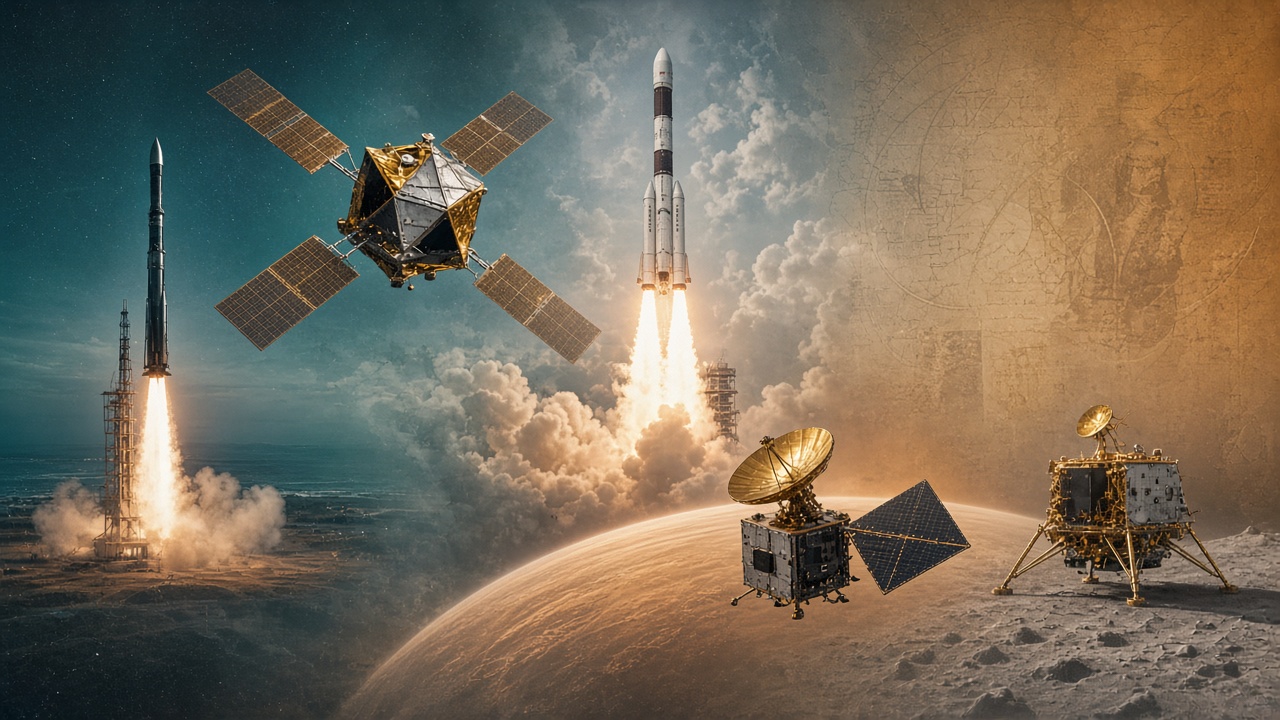
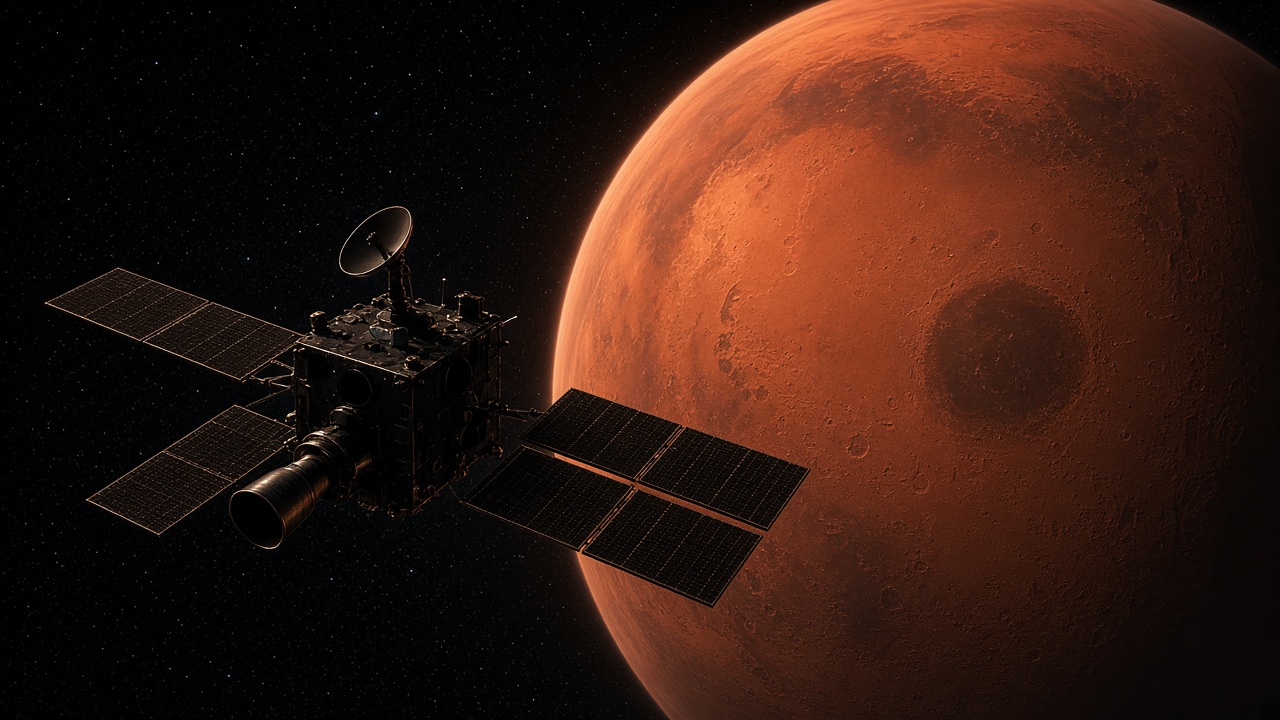
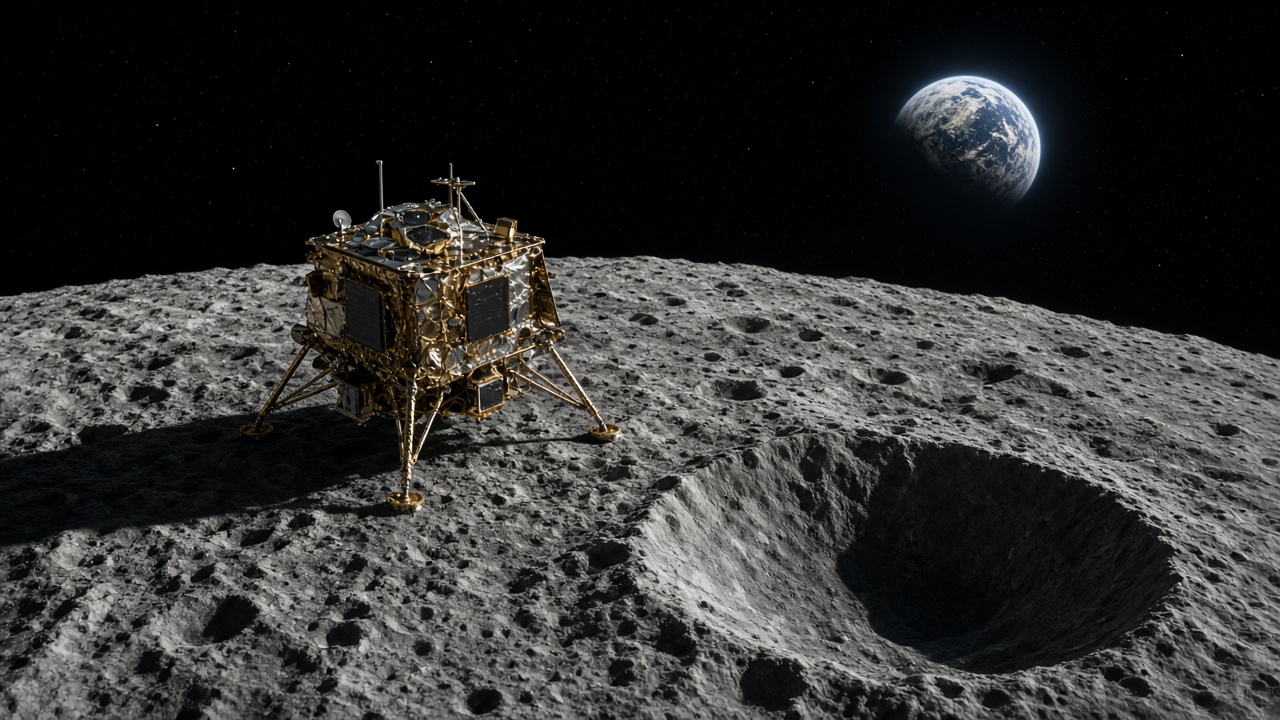
From Thumba’s sounding rockets to Aryabhata, the PSLV workhorse, Mangalyaan’s Mars arrival,
and the Chandrayaan / Gaganyaan era — India’s space story is science, engineering, and national ambition in orbit.
This timeline follows five turns: sounding rockets, Aryabhata, PSLV, Mangalyaan,
and Chandrayaan / Gaganyaan.
Space capability is science plus infrastructure. Sounding rockets taught measurement from above;
Aryabhata proved India could build satellites; PSLV made reliable access to orbit routine;
Mangalyaan and Chandrayaan showed interplanetary and lunar reach; Gaganyaan aims to put Indians in space on an Indian system.
From Thumba rockets to satellites, Mars, Moon, and crew ambitions.
Coastal Beginnings1960s –
Sounding Rockets
India’s space programme began with science from altitude, not with giant orbital rockets. At Thumba Equatorial Rocket Launching Station, sounding rockets carried instruments through the upper atmosphere for brief flights — training engineers, building ranges, and proving that a developing nation could do space research.
Sounding rockets: science on a short hop skyward.
Thumba range: Equatorial coastal site chosen for atmospheric research.
Early launches: Collaborative rockets and local fabrication skills grow together.
Institution building: Space science becomes organised national work.
Technology Used
Solid motors: Compact propulsion for suborbital hops.
Payload instruments: Sensors for ionosphere and upper-atmosphere data.
Range ops: Tracking, safety corridors, and telemetry basics.
Features
Learning curve: Cheaper than orbital flights for early teams.
Science first: Atmosphere data before prestige launches.
Foundation: People and methods that later scale to satellites.
First Satellite1975
Aryabhata
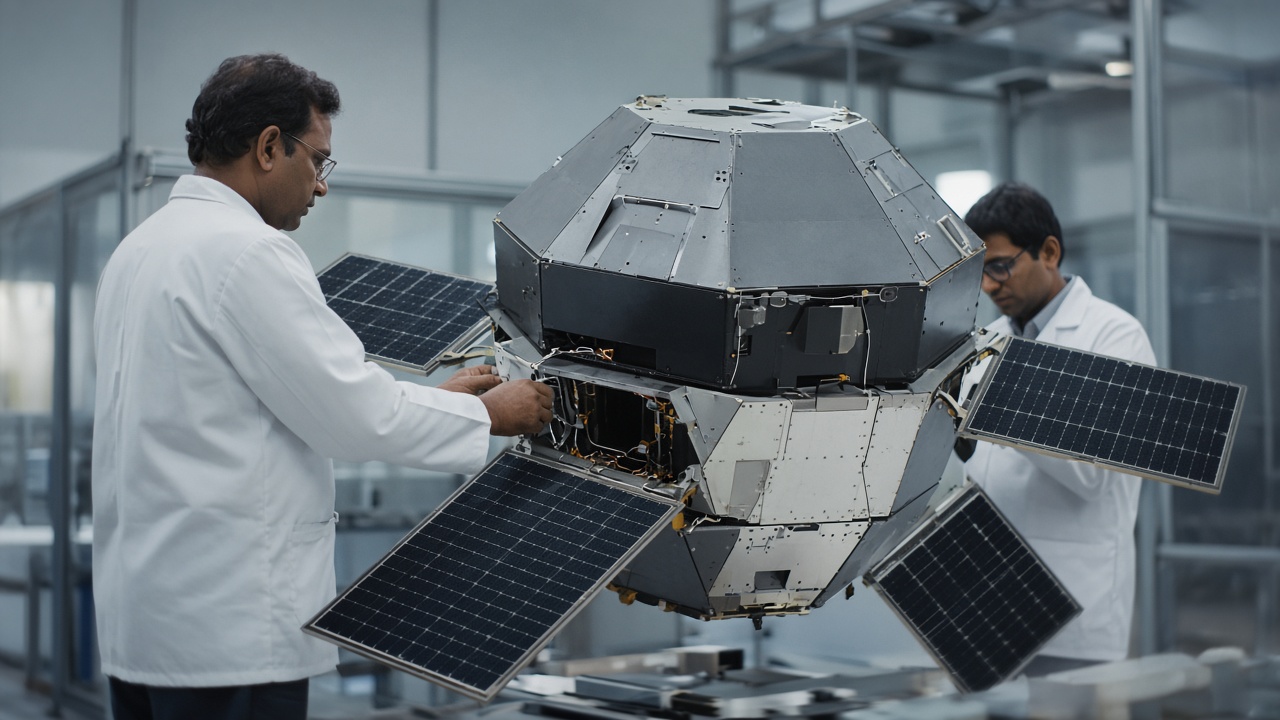
Named for the ancient mathematician-astronomer, Aryabhata was India’s first satellite. Built for scientific experiments and launched in 1975, it marked the leap from sounding rockets to spacecraft systems — power, thermal control, telemetry, and orbital operations — even though the launch vehicle was foreign.
Aryabhata: India enters the satellite age.
1975 launch: First Indian-built satellite reaches orbit.
Scientific payloads: Experiments in astrophysics and atmospheric science.
Systems school: Teams learn full spacecraft engineering under deadline.
Symbolic turn: Space becomes a visible national technology project.
Technology Used
Spacecraft bus: Structure, power, and communications for orbit.
Ground stations: Tracking and data reception networks.
International launch: Access to orbit before indigenous launchers mature.
Features
Capability proof: India can design and build satellites.
Name legacy: Links modern space to classical Indian science.
Next step: Demand grows for Indian launch vehicles.
Workhorse Launcher1990s – Present
PSLV
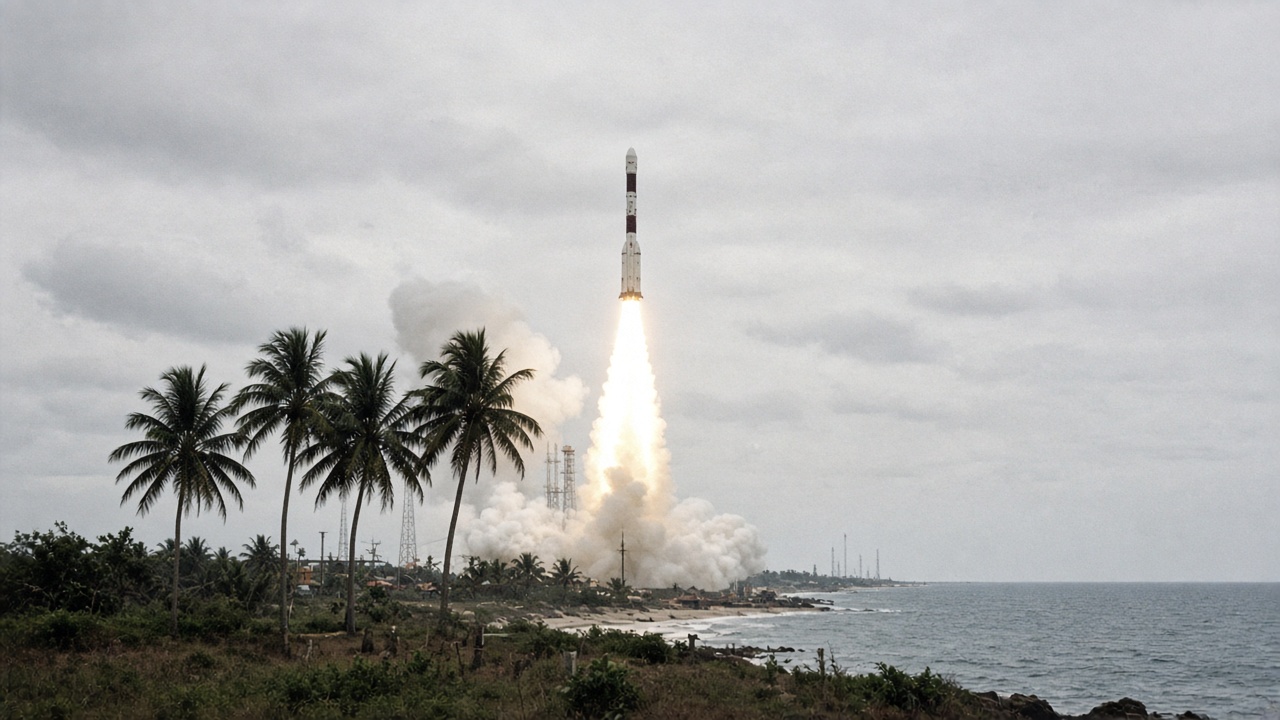
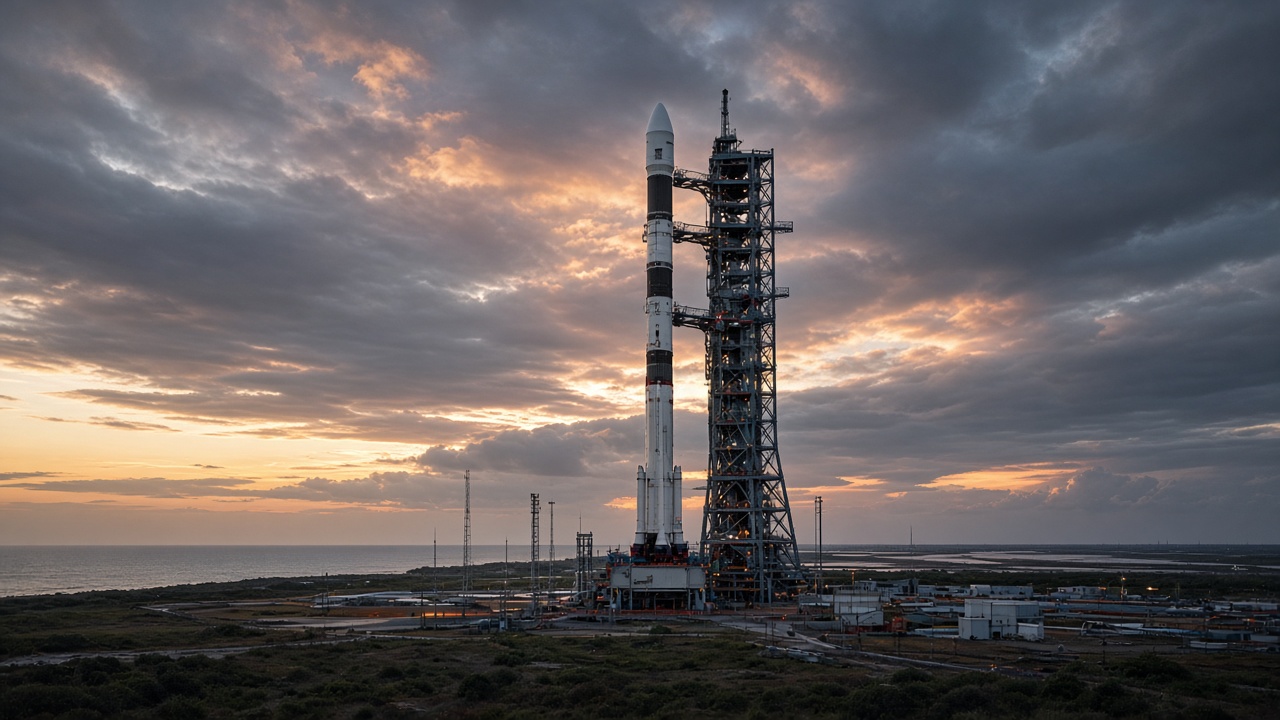
The Polar Satellite Launch Vehicle became ISRO’s reliable path to orbit. From Sriharikota, PSLV placed Earth-observation satellites, navigation payloads, and commercial customers into precise orbits — building the trust that later deep-space missions needed.
PSLV: dependable access to orbit from India.
Indigenous launcher: Multi-stage vehicle for polar and near-Earth orbits.
Multi-satellite rides: Shared launches for domestic and commercial payloads.
Enabler: Later planetary missions ride on this reliability culture.
Technology Used
Solid & liquid stages: Staged propulsion for precise orbital insertion.
Guidance & navigation: Control systems for trajectory accuracy.
Launch complex: Sriharikota pads, tracking, and range safety.
Features
Reliability reputation:“Workhorse” status in public and technical memory.
Cost effectiveness: Competitive access for many mission classes.
Ecosystem: Industry suppliers grow around launch campaigns.
Mars Arrival2013 – 2014
Mangalyaan
The Mars Orbiter Mission — popularly Mangalyaan — launched in 2013 and entered Mars orbit in 2014. On a tight budget and timeline, India became the first Asian nation to reach Mars orbit on a first attempt, proving deep-space navigation, propulsion, and operations.
Orbit insertion 2014: Capture at Mars after cruise and corrections.
Science return: Imaging and atmospheric observations from Martian orbit.
Public milestone: Space success enters everyday national conversation.
Technology Used
Deep-space tracking: Long-range communications and navigation.
Liquid propulsion: Trajectory corrections and Mars orbit insertion burns.
Autonomous ops: Managing long light-time delays to Mars.
Features
First-try success: Rare achievement among Mars missions globally.
Frugal engineering: High impact relative to mission cost narratives.
Bridge: Confidence for more ambitious lunar and human programmes.
Moon & Crew2008 – Present
Chandrayaan / Gaganyaan
Chandrayaan opened India’s lunar era — from Chandrayaan-1’s 2008 orbiter science, through Chandrayaan-2, to Chandrayaan-3’s 2023 soft landing near the lunar south pole. In parallel, Gaganyaan builds human spaceflight: crew module, life support, escape systems, and astronaut training for Indian crew in low Earth orbit.
Chandrayaan / Gaganyaan: Moon landings and human spaceflight.
Chandrayaan-1 (2008): Lunar orbiter and science instruments.
Chandrayaan-2 (2019): Orbiter success; lander attempt teaches hard lessons.
Chandrayaan-3 (2023): Soft landing and rover ops near the south polar region.
Gaganyaan: Crewed LEO mission architecture under development and testing.
Technology Used
Lander / rover systems: Guidance, hazard detection, and surface mobility.
Crew module tech: Life support, parachutes, and launch abort concepts.
Heavy-lift path: Launchers sized for human-rated and lunar payloads.
Features
South-pole focus: Science interest in shadowed lunar regions.
Human frontier: From robots to crew capability.
Continuity: Decades of ISRO learning compressed into public milestones.
ISRO Eras Compared
Each era answers a different need: atmospheric science, satellite know-how, reliable launch, interplanetary reach, and human spaceflight.
Era
Main idea
Strength
Limitation
Sounding rockets
Suborbital science
Fast learning & low cost
No long-duration orbit
Aryabhata
First satellite
Spacecraft systems school
Foreign launcher dependency then
PSLV
Reliable access to orbit
Operational cadence
Not a heavy human-rated vehicle alone
Mangalyaan
Mars orbit
Deep-space credibility
Orbiter, not lander/rover at Mars
Chandrayaan / Gaganyaan
Moon & crew
Landing + human flight path
Complex risk & long test cycles
India Spotlight: Space Milestones
From Thumba and Aryabhata to PSLV, Mars, Moon, and Gaganyaan.
Year / Era
Milestone
Significance
1960s+
Thumba sounding rockets
Space science begins in India.
1975
Aryabhata
First Indian satellite.
1990s+
PSLV operations
Reliable indigenous orbital access.
2013–14
Mangalyaan / MOM
Mars orbit on first attempt.
2008–23+
Chandrayaan series; Gaganyaan
Lunar landing & human spaceflight path.
Space Timeline Summary
Year / Era
Milestone
1960s+
Sounding rockets at Thumba
1975
Aryabhata satellite
1990s+
PSLV workhorse era
2013–14
Mangalyaan Mars orbit
2008–Present
Chandrayaan / Gaganyaan
Test Your Knowledge
10 quick questions from the ISRO space timeline. Click each question to reveal the answer.
Answer: Thumba (near Thiruvananthapuram).
Answer: Brief suborbital flights for upper-atmosphere / science measurements.
Answer: 1975.
Answer: The ancient Indian mathematician-astronomer Aryabhata.
Answer: Polar Satellite Launch Vehicle.
Answer: Sriharikota.
Answer: Mars.
Answer: 2014.
Answer: Chandrayaan-3 (2023).
Answer: India’s human spaceflight programme for crew in low Earth orbit.
Classroom activity
Students Tasks
Use these prompts for discussion or projects on India’s space programme.
RocketsSatellitesPlanetsCrew
Make a five-panel poster from sounding rockets to Gaganyaan.
Explain why Thumba’s location mattered for early rocket science.
Compare Aryabhata with a modern Earth-observation satellite.
List three jobs of the PSLV in India’s space ecosystem.
Map Mangalyaan’s journey from Earth launch to Mars orbit.
Debate: “Robotic missions first” vs “Human spaceflight sooner.”
Research Chandrayaan-3’s lander and rover names and roles.
Interview elders about what they remember of Mangalyaan or Chandrayaan-3.
Connect Vikram Sarabhai to one later ISRO milestone.
Predict one Indian space achievement you expect by 2040.
Jump to any other science timeline on WorldTimelineHub.
Disclaimer: This content is AI-generated for educational purposes and may contain errors or outdated details. For correct and authoritative information, please refer to official and reliable sources such as government publications, manufacturers, museums, and academic references.