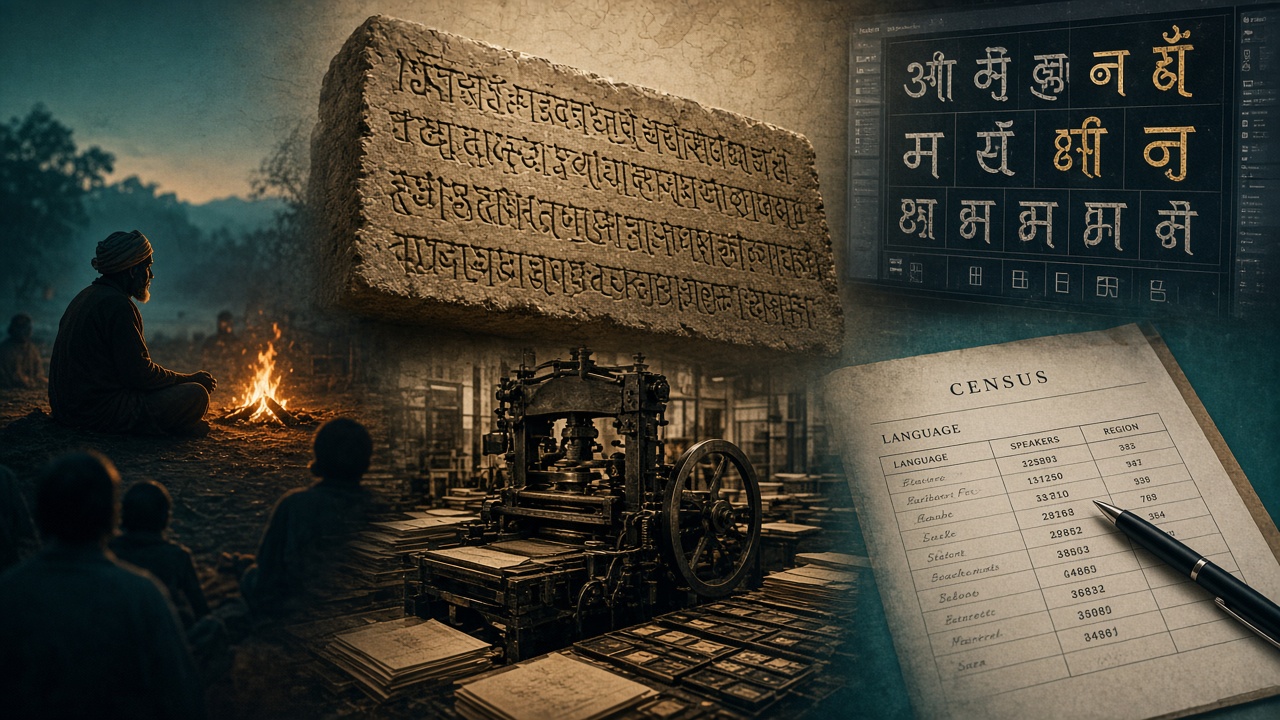
From spoken memory to carved letters, printed pages, counted mother tongues, and Unicode fonts —
Indian languages kept multiplying while media kept changing.
This timeline follows five turns: oral tradition, scripts, print culture, census linguistics,
and digital fonts / Indic IT.
Speech → ScriptPrint · Census · UnicodeIndia · Language · Tech
Why Language Media Matters
Languages survive by practice. Oral culture carried knowledge face to face; scripts fixed words in stone and leaf;
print scaled public debate; the census named and counted speech communities; Indic IT put complex scripts on every phone —
so multilingual India could type, search, and publish online.
From oral circles to scripts, print, census, and Indic IT.
Spoken MemoryDeep Roots
Oral
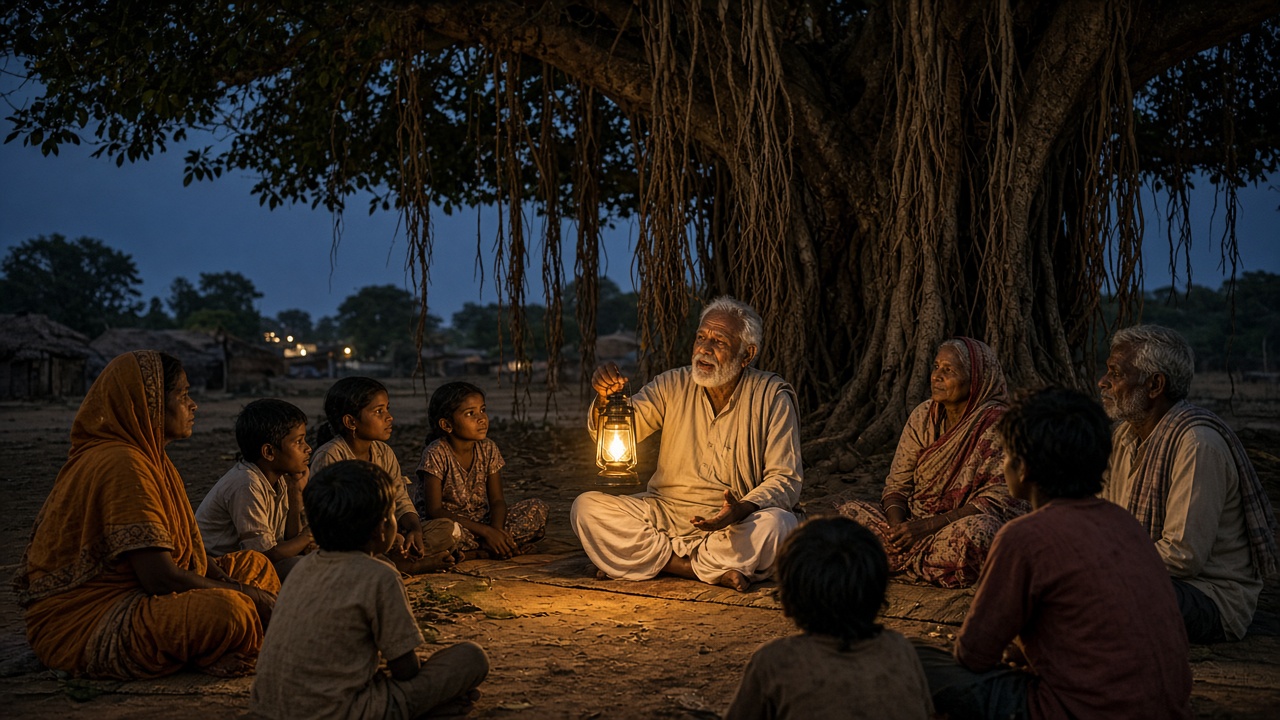
Long before most people wrote, language lived in breath and ear. Vedic chant, epics, folk tales, work songs, and village debate moved knowledge across generations. Multilingual contact was normal — speech communities overlapped at markets, pilgrimages, and courts.
Oral: language as living performance.
Memory arts: Chant, metre, and formula preserved texts without paper.
Folk continuity: Local languages thrived in song, ritual, and everyday talk.
Teaching: Guru–shishya and community learning before mass schooling.
Contact: Trade and migration kept India multilingual by default.
Ideas & Practices
Performance spaces: Homes, temples, open grounds, and courts.
Sound first: Pronunciation and rhythm as carriers of meaning.
Living dialects: Speech varies by region long before standard print forms.
Features
Resilience: Culture survives without literacy rates.
Local depth: Thousands of speech varieties across the land.
Foundation: Later scripts and media still rest on spoken life.
Letters FixedAncient – Medieval
Scripts
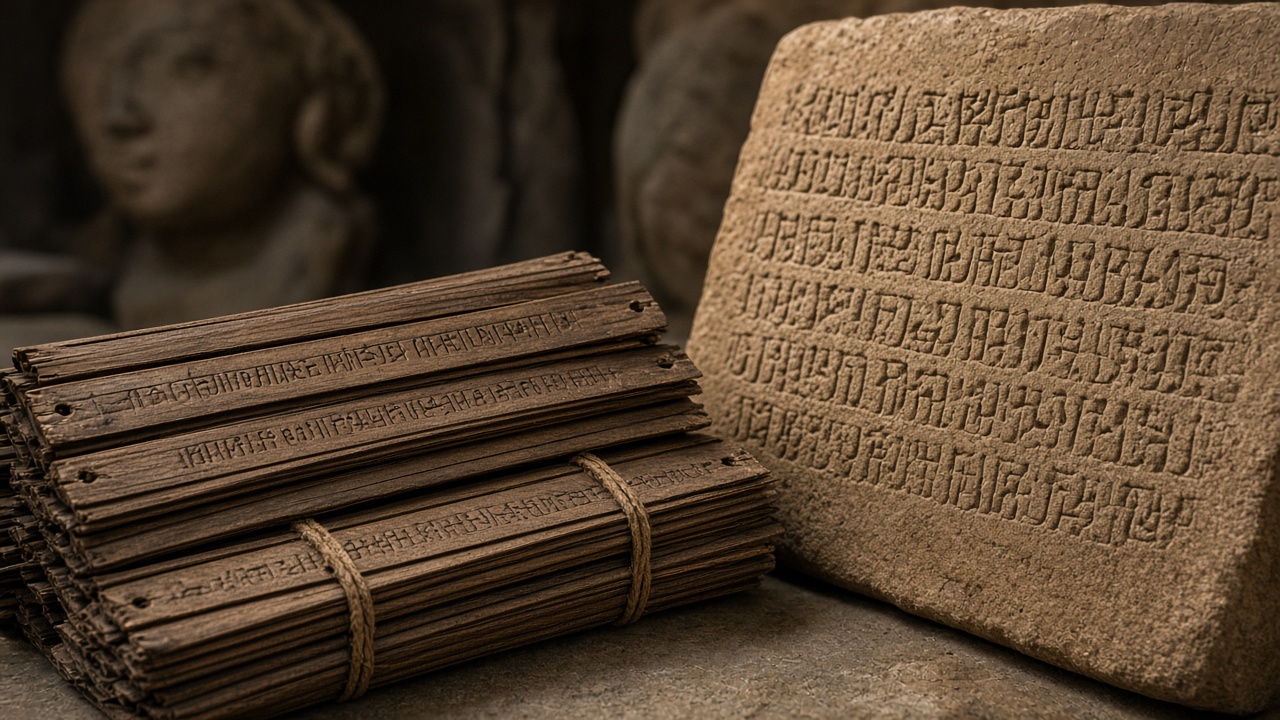
Writing made speech durable. Brahmi and related systems appear strongly in the Ashokan age; over centuries, regional scripts branched — from north Indian nagari-family forms to southern and eastern traditions. Palm leaf, copper plate, and stone carried law, devotion, poetry, and administration.
Scripts: words that can travel beyond the speaker.
Early systems: Brahmi and related inscriptions mark a public writing age.
Regional flowering: Distinct scripts for distinct literary worlds.
Manuscript culture: Copyists keep texts alive before print.
Admin & faith: Grants, edicts, and sacred books all need letters.
Technology Used
Media: Stone, metal, birch bark, palm leaf, ink and stylus.
Abugida logic: Consonant–vowel units shape how Indic scripts work.
Scribal skill: Handwriting schools and temple/court archives.
Features
Permanence: Records outlive a single voice.
Diversity: Many scripts, many literary canons.
Legacy: Modern fonts still follow these letter shapes.
Type & PressColonial – Modern
Print
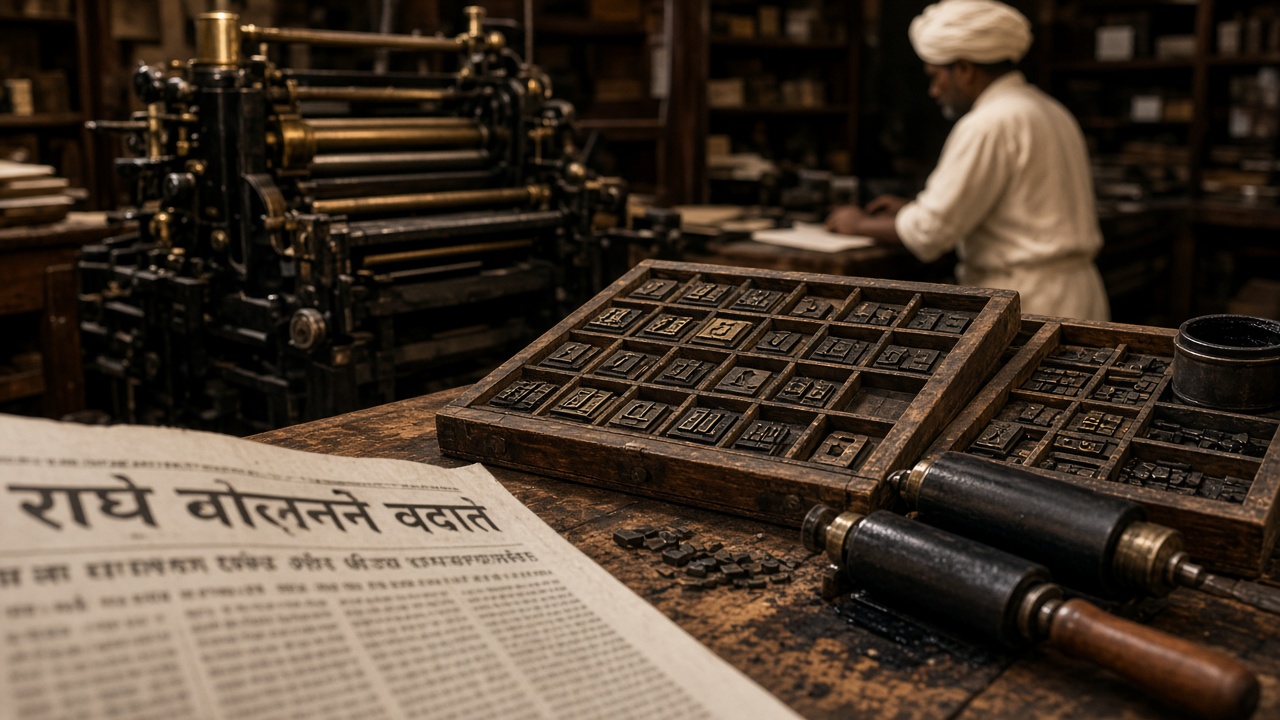
Printing presses turned vernacular languages into mass media. Mission presses, commercial printers, and nationalist newspapers cast metal type for Indian scripts, filled schoolrooms with textbooks, and built reading publics far beyond manuscript elites.
Print: standardised letters for a public sphere.
Vernacular press: Newspapers and pamphlets in many Indian languages.
Schoolbooks: Print shapes “standard” written forms taught in classrooms.
Typefounding: Cutting punches for complex Indic glyphs is hard craft.
Reform & debate: Orthography, dictionaries, and language politics intensify.
Technology Used
Letterpress & lithography: Mechanical reproduction of text and image.
Type cases: Large glyph sets for conjuncts and matras.
Distribution: Railways and postal networks move print widely.
Features
Scale: One edition reaches thousands of readers.
Standardisation: Print favours certain spellings and registers.
Politics: Language becomes a tool of reform, identity, and protest.
Counting TonguesLate 19th c. – Present
Census
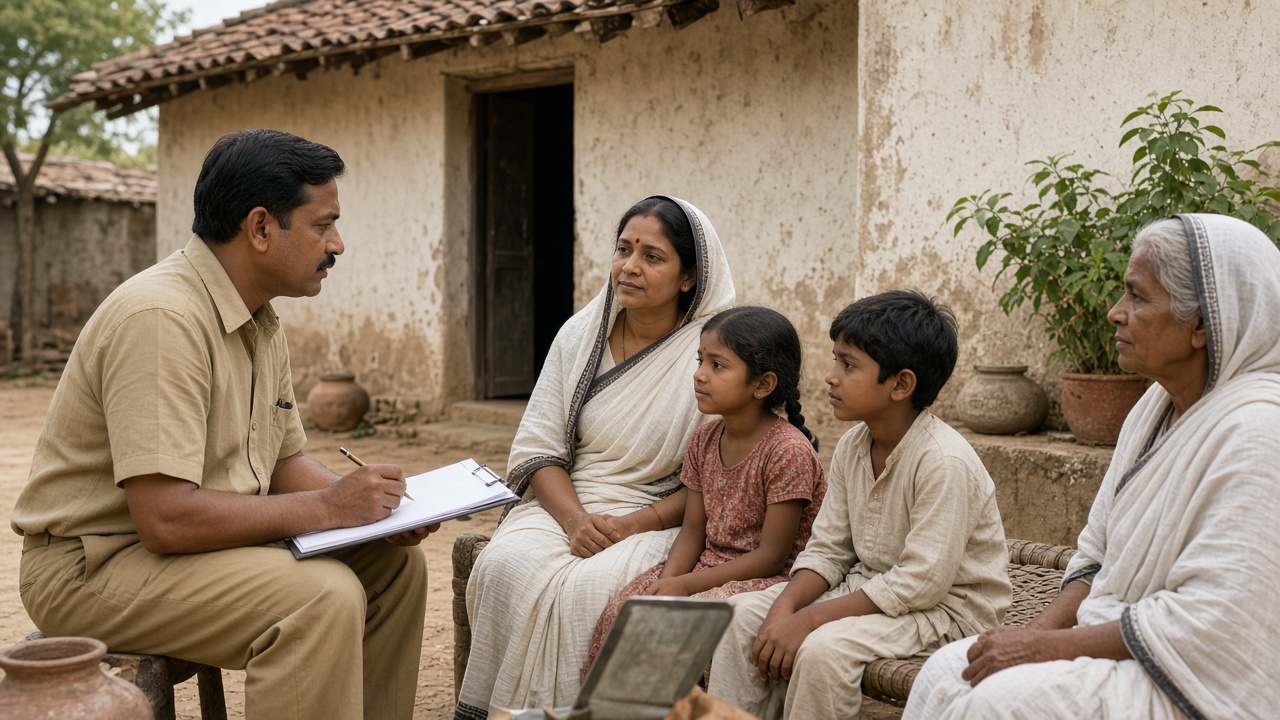
The modern state asked people what they spoke. Mother-tongue questions, linguistic surveys, and later constitutional schedules turned fluid speech into tabulated categories — useful for schooling and administration, and contested whenever identity and numbers meet.
Census: language as counted community.
Linguistic Survey of India: Grierson-era mapping of languages and dialects.
Mother tongue: Census returns become political and educational data.
Eighth Schedule: Constitutional recognition of listed languages expands over time.
Policy use: Medium of instruction, official language, and state reorganisation debates.
Tools & Methods
Enumerators & schedules: Door-to-door classification of speech.
Survey fieldwork: Word lists, grammars, and dialect notes.
Tables & maps: Statistical pictures of multilingual India.
Features
Visibility: Small languages can appear in national data — or disappear in aggregation.
Contestation: Labels never fully match lived bilingual reality.
Continuity: Language data still shapes planning today.
Fonts & Keyboards1990s – Present
Digital Fonts / Indic IT
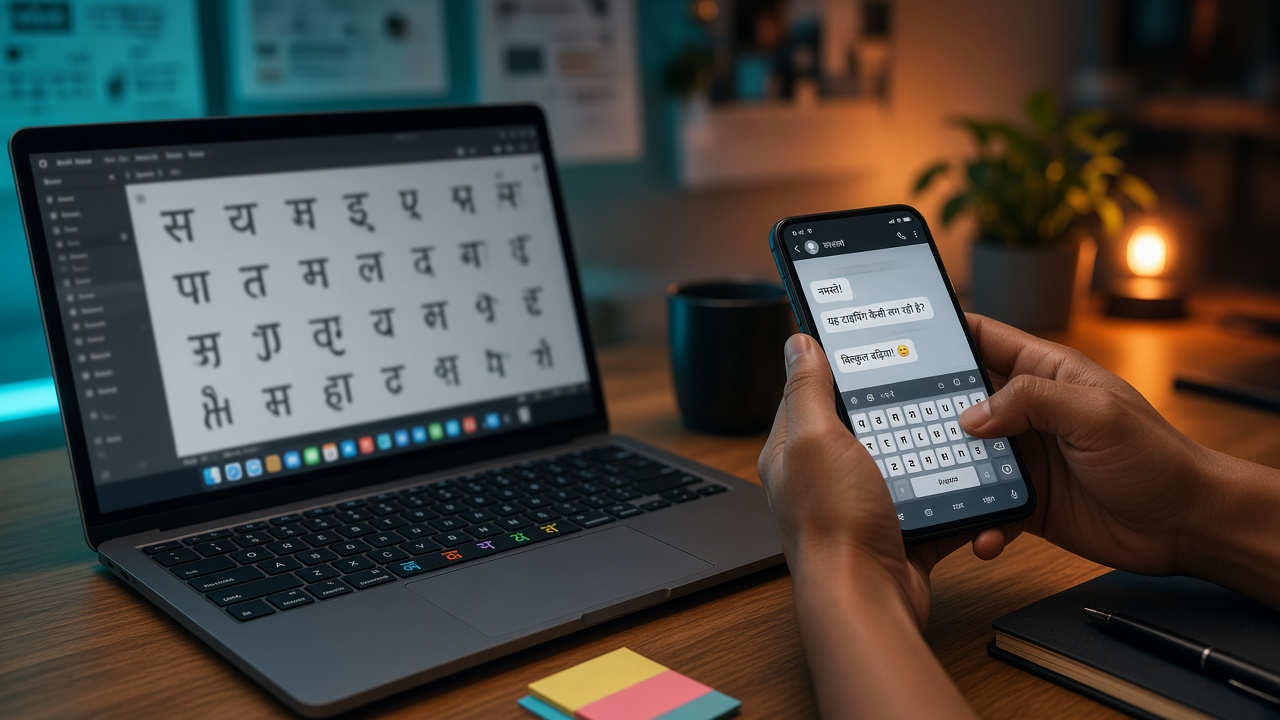
Computers finally had to draw Indian scripts correctly. ISCII and then Unicode, OpenType shaping, InScript and phonetic keyboards, TDIL research, and mobile localisation made typing Hindi, Tamil, Bengali, and dozens more languages everyday — not a specialist workaround.
Indic IT: complex scripts on everyday screens.
Encoding: From early ISCII standards toward Unicode as the global default.
Fonts & shaping: Conjuncts and matras need smart rendering, not plain Latin tricks.
Input methods: InScript layouts, transliteration, and on-screen keyboards.
Localisation: OS, apps, and government portals ship in Indian languages.
Technology Used
Unicode & OpenType: Code points plus glyph substitution/positioning.
TDIL & research labs: Public programmes for Indian language computing.
Mobile IMEs: Swipe, voice, and predictive text for Indic scripts.
Features
Access: Anyone with a phone can publish in their script.
Quality gap: Some languages still lack rich fonts and NLP tools.
Continuity: Digital life sits on centuries of oral and written tradition.
Language Eras Compared
Each era solves a different problem: memory, durability, mass reach, classification, and machine readability.
Era
Main idea
Strength
Limitation
Oral
Spoken transmission
Deep cultural continuity
Harder to archive at scale
Scripts
Durable writing
Records & literature
Literacy remains uneven
Print
Mass reproduction
Public spheres & schools
Favours standardised forms
Census
Counted languages
Policy visibility
Labels simplify bilingual life
Indic IT
Digital scripts
Everyday multilingual typing
Tooling uneven across languages
India Spotlight: Language Milestones
From oral memory and Brahmi-era writing to print, census, and Unicode.
Year / Era
Milestone
Significance
Deep roots
Oral literary & folk traditions
Language as living performance.
Ancient–medieval
Script diversity after Brahmi
Regional writing systems mature.
Colonial–modern
Vernacular print boom
Newspapers and textbooks scale literacy.
Late 19th c.+
Surveys & mother-tongue census
Languages enter state statistics.
1990s+
Unicode / Indic computing
Fonts and keyboards for everyday IT.
India Languages Timeline Summary
Year / Era
Milestone
Deep roots
Oral tradition and multilingual speech
Ancient–medieval
Scripts and manuscript culture
Colonial–modern
Print and vernacular public sphere
Late 19th c.+
Census and linguistic survey
1990s+
Digital fonts / Indic IT
Test Your Knowledge
10 quick questions from the India languages timeline. Click each question to reveal the answer.
Answer: Oral tradition — chant, storytelling, and apprenticeship.
Answer: Brahmi (or a related early script tradition).
Answer: Palm leaf, birch bark, paper, copper plates, stone, and similar media.
Answer: It scaled newspapers, textbooks, and standardised written forms.
Answer: Languages and dialects across British India (Grierson-era survey).
Answer: Mother tongue (and related language questions).
Answer: A constitutional list of recognised languages of India.
Answer: ISCII (later largely superseded by Unicode).
Answer: They need shaping for conjuncts, matras, and reordering — not one glyph per key only.
Answer: InScript / phonetic keyboards, Unicode fonts, or mobile input methods.
Classroom activity
Students Tasks
Use these prompts for discussion or projects on languages, scripts, and media in India.
OralScriptsPrintDigital
Make a five-panel poster from oral tradition to Indic IT.
Interview family members about languages spoken at home vs school.
Compare one manuscript tradition with a modern printed textbook.
Trace one Indian script from stone inscription to a phone font.
Explain three ways the census shapes language policy debates.
Debate: “Print standardised languages” vs “Print erased dialects.”
List technologies needed to type your mother tongue on a phone.
Map three languages of your state and their main scripts.
Research one vernacular newspaper and present three facts.
Predict one change in Indian language technology by 2040.
Click any panel to expand and explore the visual mood.
Languages in pictures — oral, scripts, print, census, and digital fonts.
Oral
Spoken memory
Scripts
Letters fixed
Print
Type & press
Census
Counting tongues
Indic IT
Fonts & Unicode
Through Time
Speech to screen
Explore all civilizations timelines
Jump to any other civilizations timeline on WorldTimelineHub.
Disclaimer: This content is AI-generated for educational purposes and may contain errors or outdated details. For correct and authoritative information, please refer to official and reliable sources such as government publications, manufacturers, museums, and academic references.