Research Timeline of India: Institutes, Funding, Norms, and Schemes from IISc to ANRF
A century ago Indian research meant a handful of scientists in a few institutes, often working with borrowed equipment. Today India is one of the world’s largest producers of research papers, with national labs,
space and atomic programmes, thousands of PhD scholars on fellowships, clear rules on ethics and plagiarism, and a new national foundation to fund research across universities and industry.
This timeline covers ancient science, IACS, IISc, the Bose Institute, the Raman effect, CSIR and TIFR, the Science Policy Resolution, atomic energy and ISRO, DST and DBT, UGC-CSIR fellowships, ICMR ethics guidelines,
patent reforms, FIST and INSPIRE, UGC PhD and plagiarism rules, Shodhganga, IMPRINT, PMRF, UGC-CARE, the ANRF, national missions, and One Nation One Subscription.
Research is how a country creates new knowledge, medicines, technologies, and solutions to its own problems. Following how India built research institutes, funding agencies, fellowships, ethical rules, and national
schemes explains the country’s achievements in space, atomic energy, vaccines, and computing — and why raising research funding and quality remains a national priority.
Big picture
India’s research journey in one view
Pioneering institutes and the Raman effect put Indian science on the world map. After independence the nation built CSIR labs and atomic and space programmes, created science departments and fellowships in the
1970s and 1980s, reformed patents and research standards in the 1990s and 2000s, launched schemes and integrity rules in the 2010s, and set up the ANRF and national missions in the 2020s. Related timelines:
artificial intelligence,
agricultural education and research,
Digital India.
1909
Indian Institute of Science founded
1930
Nobel Prize for the Raman effect
Top 3
India among the largest publishers of research papers
₹50,000 cr
Planned ANRF outlay over five years
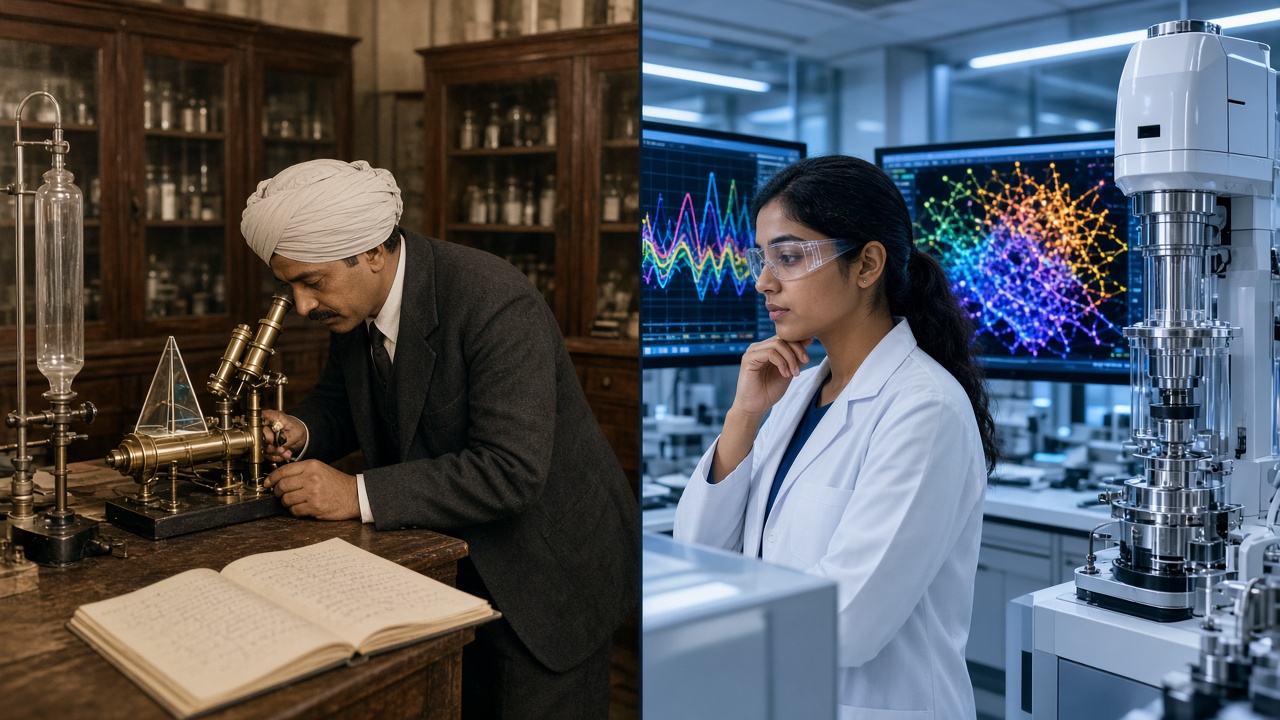
From brass spectroscopes to data-driven modern labs (artistic illustration).
Research in India Then vs Now at a Glance
Feature
Then
Now
Institutes
A few pioneering institutes
Hundreds of labs, IITs, IISERs, and universities
Funding
Philanthropists and princely states
Government agencies, ANRF, and industry
Researchers
A small group of scientists
Lakhs of PhD scholars and scientists
Fellowships
Rare scholarships
JRF, SRF, INSPIRE, PMRF, and more
Equipment
Imported or handmade
Shared national facilities and supercomputers
Publishing
A few foreign journals
Global journals and open-access repositories
Journal access
Printed copies in a few libraries
National subscriptions and online libraries
Ethics
Informal norms
Ethics committees and written guidelines
Plagiarism checks
Rare
Software checks and UGC penalty levels
Collaboration
Letters and visits
International networks and industry partnerships
🔭 PioneersAncient – 1946
Ancient Science to the First Research Institutes
India has a long tradition of scientific thought in astronomy, mathematics, and medicine. In the late 19th and early 20th centuries Indian reformers and philanthropists founded the first modern research institutes, and Indian scientists made world-famous discoveries with very limited resources.
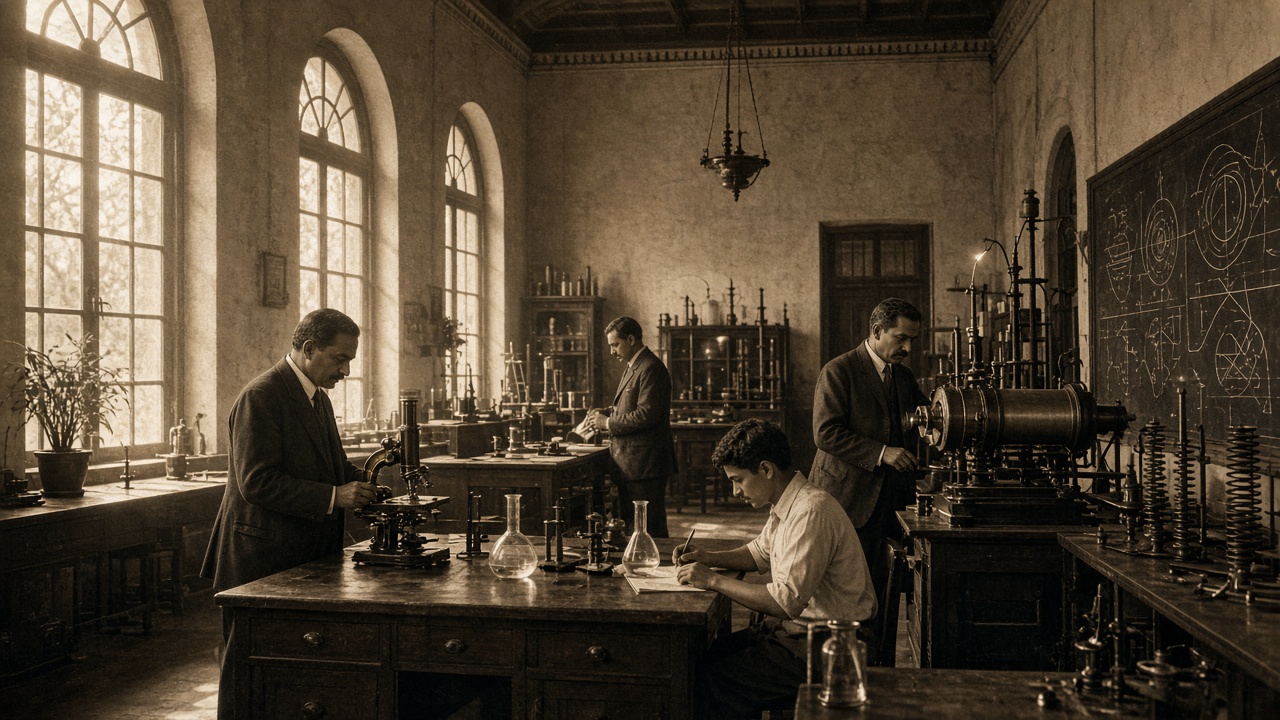
Scientists at work in an early Indian research laboratory (artistic illustration).
Ancient and medieval times: Aryabhata (499 CE) writes on astronomy and mathematics, Charaka and Sushruta describe medicine and surgery, and the Kerala school develops advanced mathematics.
1876–1917: The Indian Association for the Cultivation of Science opens in Calcutta (1876), followed by the Indian Institute of Science in Bangalore (1909) and the Bose Institute (1917).
1920–1930: Meghnad Saha’s ionisation equation (1920), S. N. Bose’s statistics (1924), and C. V. Raman’s discovery of the Raman effect (1928), which wins the 1930 Nobel Prize in Physics.
1942–1945: The Council of Scientific and Industrial Research (CSIR) is set up (1942), and the Tata Institute of Fundamental Research is founded in Bombay (1945).
Technology
Spectroscopes: Studying light.
Crescograph: Plant growth measured.
Handmade apparatus: Low-cost science.
Features
Philanthropy: Private funding.
Few institutes: Mostly in big cities.
World-class results: Nobel-level work.
🚀 Nation1947 – 1970
Nation-Building Labs & Big Science
Independent India saw science as the path to development. The government built a chain of national laboratories, started atomic energy and space programmes, created the UGC to fund universities, and Parliament adopted a Science Policy Resolution committing the country to scientific research.
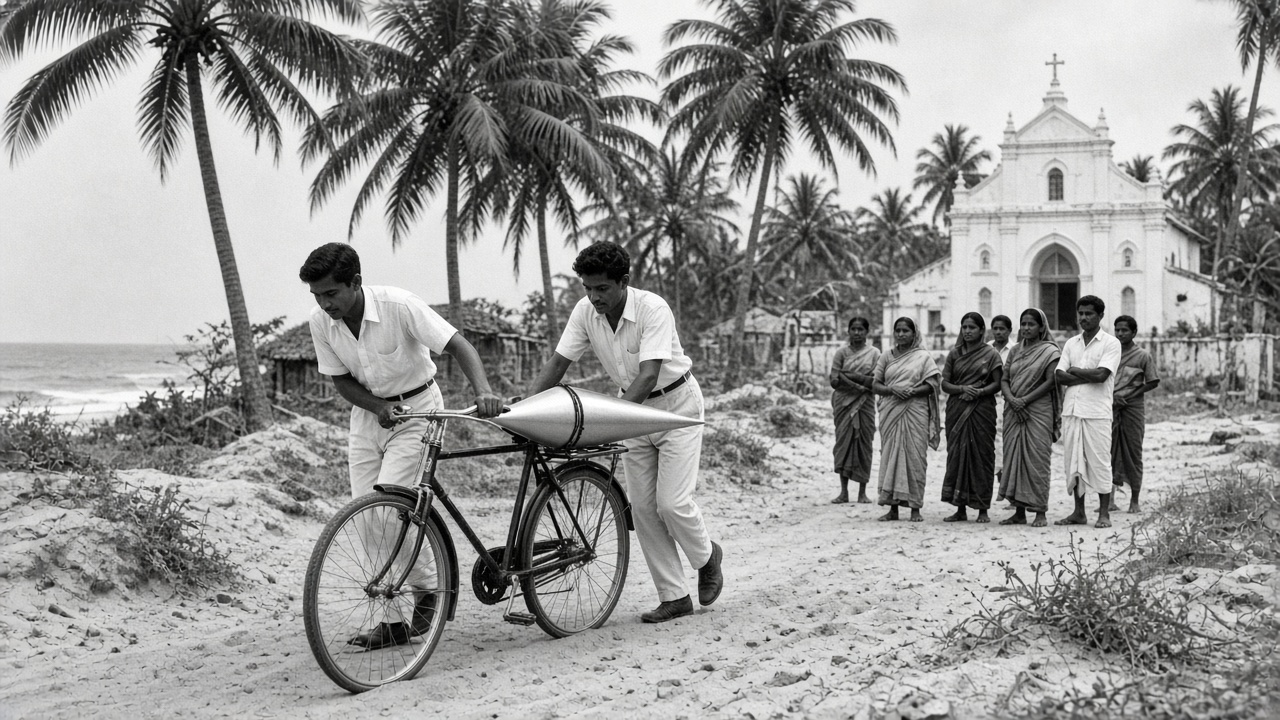
Rocket parts carried by bicycle near the Thumba launch site (artistic illustration).
1947–1950s: CSIR opens a chain of national laboratories, including the National Physical Laboratory and the National Chemical Laboratory, which begin work around 1950.
1948–1956: The Atomic Energy Commission (1948) and the Department of Atomic Energy (1954) are formed, and the University Grants Commission (1953) becomes a statutory body (1956).
1958: Parliament adopts the Science Policy Resolution, promising to support scientific research in all its aspects.
1962–1969: INCOSPAR is formed (1962), the first sounding rocket is launched from Thumba (21 November 1963), and ISRO is founded (15 August 1969).
Technology
Research reactors: Atomic science.
Sounding rockets: Upper-air studies.
National labs: Industrial research.
Features
State funding: Science for development.
Big science: Space and atomic energy.
UGC grants: University research.
🧪 Departments1971 – 1990
Science Departments, Fellowships & Research Ethics
New government departments began funding research projects in universities and labs, a national exam opened research fellowships to students across the country, and the first formal ethics statement for medical research was issued. India launched its first satellite and built its own supercomputer.
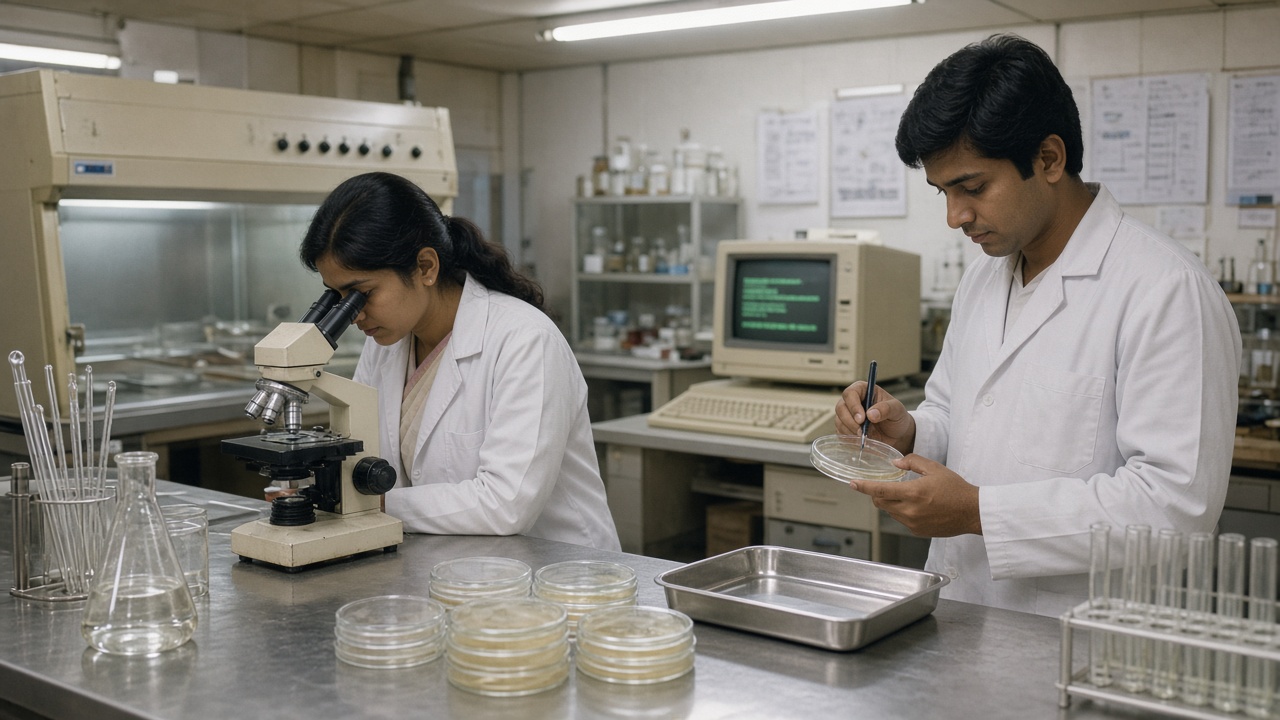
Young researchers at work in a 1980s biotechnology lab (artistic illustration).
1971–1972: The Department of Science and Technology is created (1971) to coordinate and fund research, and the Patents Act, 1970 comes into force (1972).
1975–1983: The Aryabhata satellite is launched (1975), ICMR issues its Policy Statement on Ethical Considerations in Medical Research (1980), and a Technology Policy Statement follows (1983).
1984–1986: The national UGC-CSIR eligibility test for Junior Research Fellowships begins (1984), and the Department of Biotechnology is set up (1986).
1987–1991: National Science Day is first celebrated on 28 February (1987), and C-DAC (1988) builds the PARAM 8000 supercomputer (1991).
Technology
Satellites: Indian-built.
Biotechnology: Genes and vaccines.
Supercomputing: PARAM series.
Features
Project grants: Competitive funding.
JRF and SRF: Paid PhD research.
Ethics statement: Protecting patients.
📜 Standards1991 – 2009
Liberalisation, Patents & Research Standards
After economic reforms, India linked university libraries by computer, funded lab infrastructure, updated its patent law for global trade rules, and wrote detailed ethics guidelines for biomedical research. New schemes drew young students into science, and UGC set minimum standards for PhD degrees.
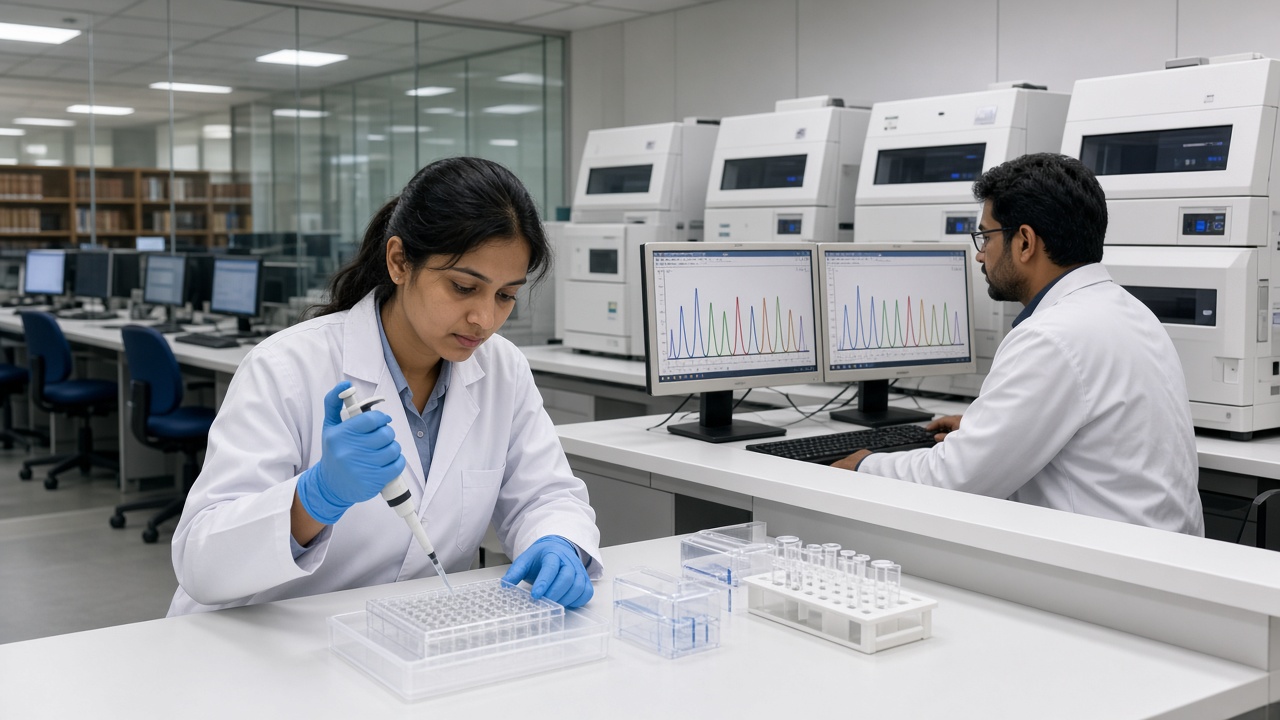
DNA sequencers and data screens in a 2000s genomics lab (artistic illustration).
1991–2000: INFLIBNET (1991) begins linking university libraries, DST’s FIST scheme (2000) funds lab infrastructure, and ICMR issues Ethical Guidelines for Biomedical Research (2000, revised 2006).
2003–2005: A Science and Technology Policy (2003) is adopted, and the Patents Act is amended (2005) to allow product patents under WTO rules.
2008: The INSPIRE scheme starts attracting young talent to science, the Science and Engineering Research Board Act is passed, and Chandrayaan-1 is launched, later helping detect water on the Moon.
2009: UGC regulations set minimum standards for MPhil and PhD degrees, including coursework, entrance tests, and deposit of theses.
Technology
Genome sequencing: New biology.
Library networks: Online journals.
Patent databases: Protecting inventions.
Features
Ethics committees: Required for trials.
INSPIRE: Young talent.
PhD standards: Coursework added.
💡 Schemes2010 – 2019
Schemes, Innovation & Plagiarism Rules
The 2010s brought a wave of research and innovation schemes — for engineering challenges, supercomputing, school tinkering labs, startups, top PhD students, and international collaboration. At the same time UGC tightened research integrity with plagiarism penalties and a list of trusted journals.
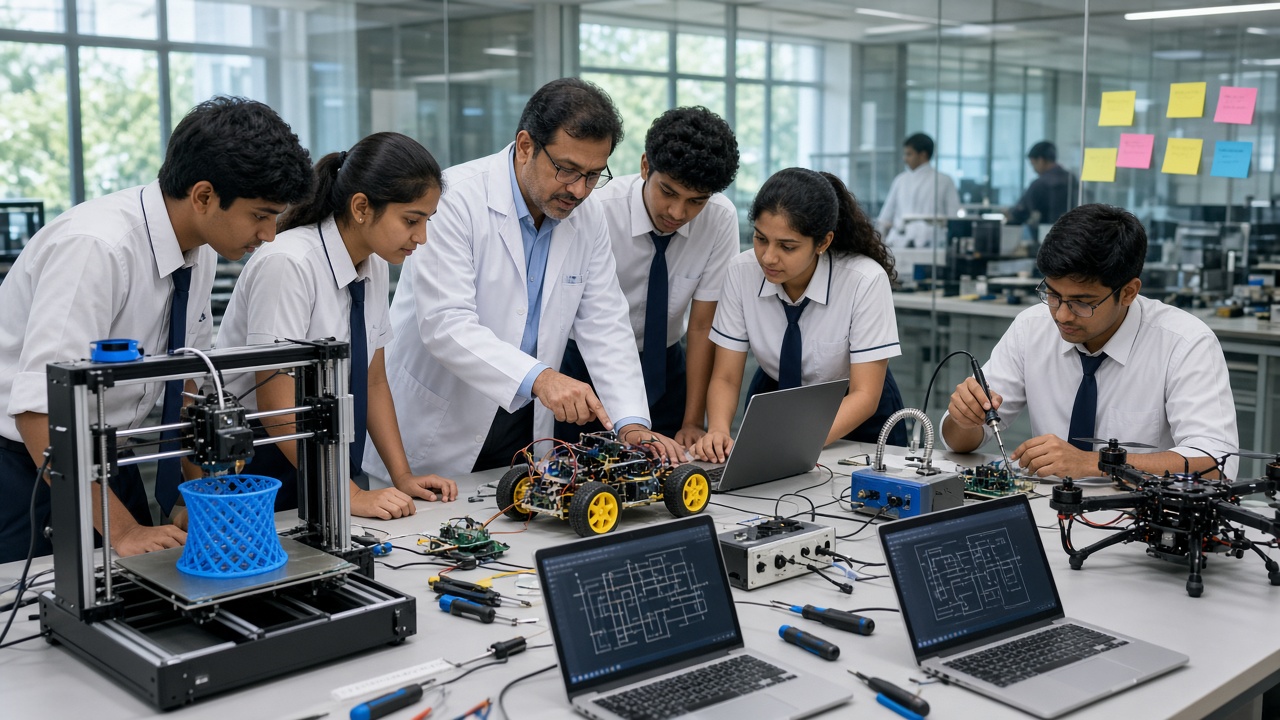
Students build robots and drones in an innovation lab (artistic illustration).
2011–2014: The Shodhganga repository for PhD theses launches (2011), a Science, Technology and Innovation Policy is adopted (2013), and the Mars Orbiter Mission reaches Mars (2014).
2015–2016: IMPRINT (2015) funds engineering research on national challenges, the National Supercomputing Mission begins (2015), and the Atal Innovation Mission starts tinkering labs in schools (2016).
2018: The Prime Minister’s Research Fellowship and SPARC for global collaboration launch, and UGC’s plagiarism regulations set penalty levels for copied work.
2019: UGC-CARE lists trusted journals to fight predatory publishing, and the STARS scheme funds science research in institutions.
Technology
Plagiarism software: Similarity checks.
Supercomputers: National grid.
Tinkering labs: 3D printers and robots.
Features
Open theses: Shodhganga.
Trusted journals: UGC-CARE.
Startups: Research to market.
⚛️ Missions2020s – Future
ANRF, National Missions & Open Access
The pandemic showed the value of home-grown research as Indian scientists developed vaccines and tracked virus variants. NEP 2020 led to a new national research foundation, national missions targeted quantum technology and AI, and a single national subscription opened thousands of journals to researchers across India.
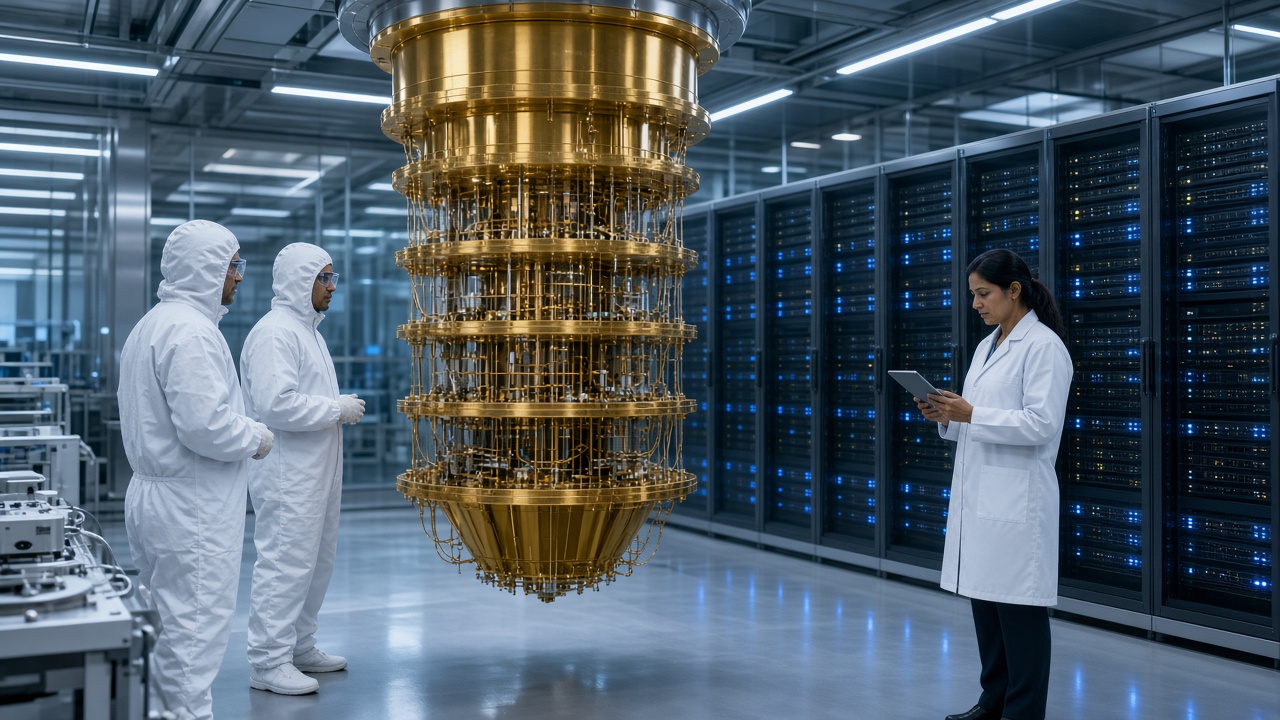
A quantum computer and supercomputer racks in a modern research facility (artistic illustration).
2020–2021: NEP 2020 proposes a National Research Foundation, INSACOG begins tracking virus variants (2020), and Indian-developed COVID-19 vaccines are approved (January 2021).
2022–2023: New UGC PhD regulations (2022) allow four-year graduates to join PhDs, the National Quantum Mission is approved (2023), and Parliament passes the Anusandhan National Research Foundation Act (August 2023).
2024–2025: The ANRF begins work (2024), the IndiaAI Mission and Vigyan Dhara scheme launch (2024), One Nation One Subscription opens journals nationwide (1 January 2025), and a ₹1 lakh crore Research, Development and Innovation scheme is approved (2025).
Future: Raising R&D spending from about 0.6–0.7% of GDP, more private-sector research, deep-tech startups, AI-driven science, and stronger research integrity.
Click any panel to expand and explore the visual mood.
India’s research journey in pictures — the early laboratory, the rocket on a bicycle, the biotech lab, the genomics lab, the innovation lab, the quantum lab, mission control, and then versus now.
Early Laboratory
Pioneers at work
Rocket on a Bicycle
Humble beginnings
Biotech Lab
Fellowship era
Genomics Lab
Reading DNA
Innovation Lab
Tinkering and startups
Quantum Lab
National missions
Mission Control
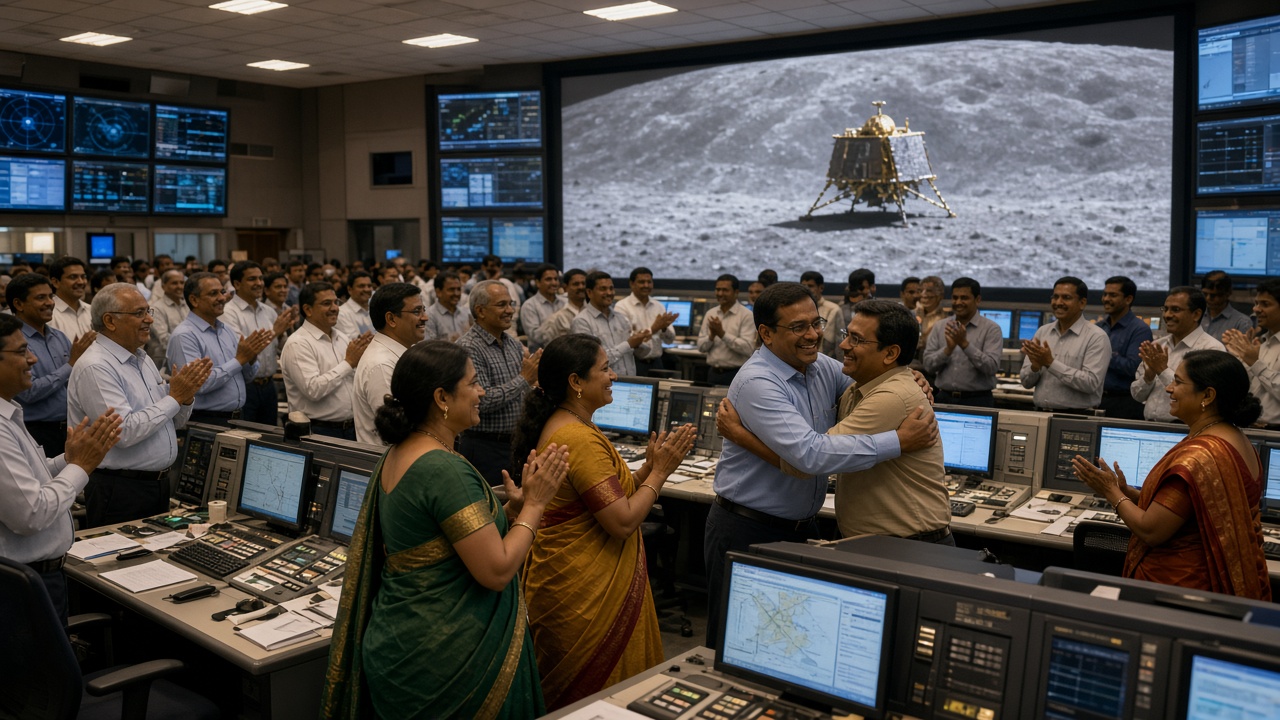
Moon landing joy
Then vs Now
Spectroscope to data lab
Explore all education timelines
Jump to any other education timeline on WorldTimelineHub.
Disclaimer: This content is AI-generated for educational purposes and may contain errors or outdated details. For correct and authoritative information, please refer to official and reliable sources such as government publications, manufacturers, museums, and academic references.