From early petrol cars to India’s Ambassador taxis, Maruti hatchbacks, highway expressways, two-wheelers, trucks, and electric mobility —
automobiles reshaped how families, goods, and cities move every day.
This timeline focuses on automobile systems in India — passenger cars, commercial vehicles, two-wheelers, auto-rickshaws,
national highways, shared mobility apps, and the EV transition.
The modern automobile emerged in the late 19th century with petrol engines, then spread worldwide through mass production.
In India, cars began as rare imports for elites and officials, later becoming national symbols (Ambassador), family hatchbacks (Maruti),
and today a mix of cars, scooters, trucks, autos, and EVs on expanding highways.
Big picture
Auto evolution in one view
Automobiles moved from hand-built curiosities to mass personal mobility. India’s story runs through classic cars, the Maruti revolution,
two-wheeler dominance, commercial trucks, expressways, ride-hailing, and electric vehicles. Related timelines:
railway,
bus,
air.
1880s
Modern car begins
1950s
Ambassador icon
1983
Maruti era
Now
EV transition
India’s auto story: from rare cars to everyday hatchbacks, highways, and electric mobility.
🚗 Engines Arrive1880s – 1947
Early Automobiles
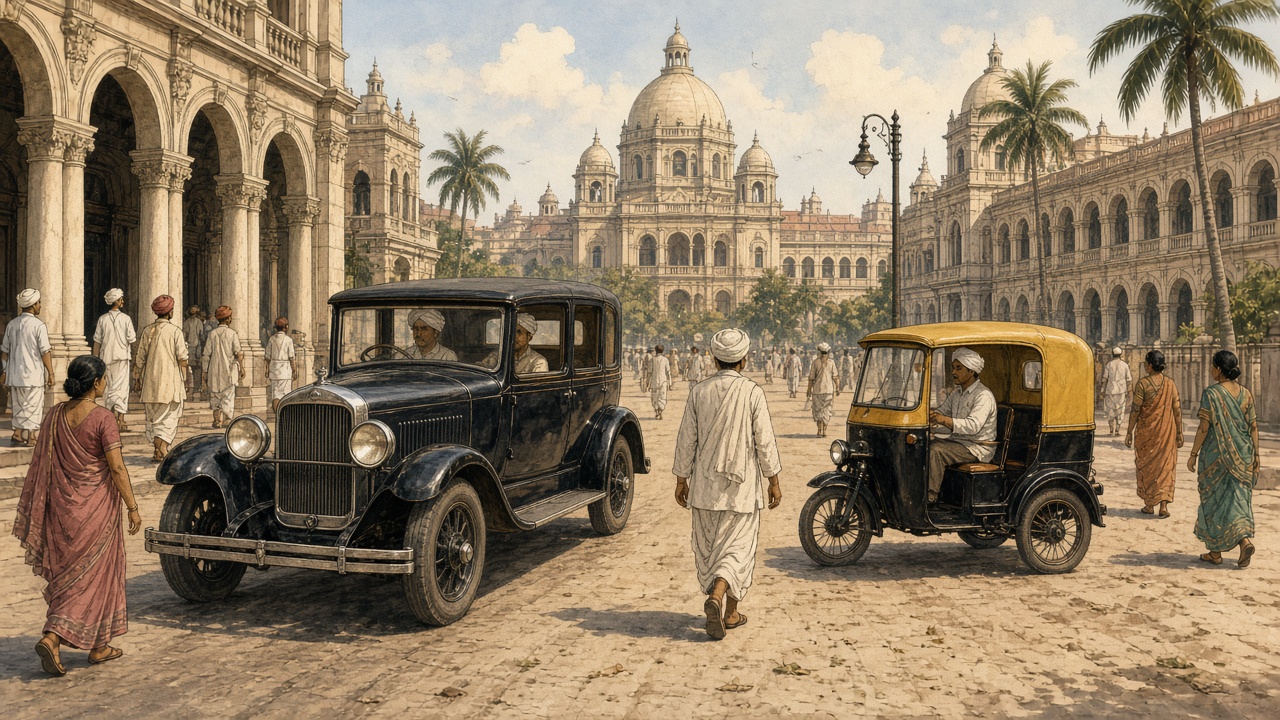
Petrol cars replace horse carriages for elites and officials. In India, imported automobiles appear in major cities while roads and workshops slowly adapt.
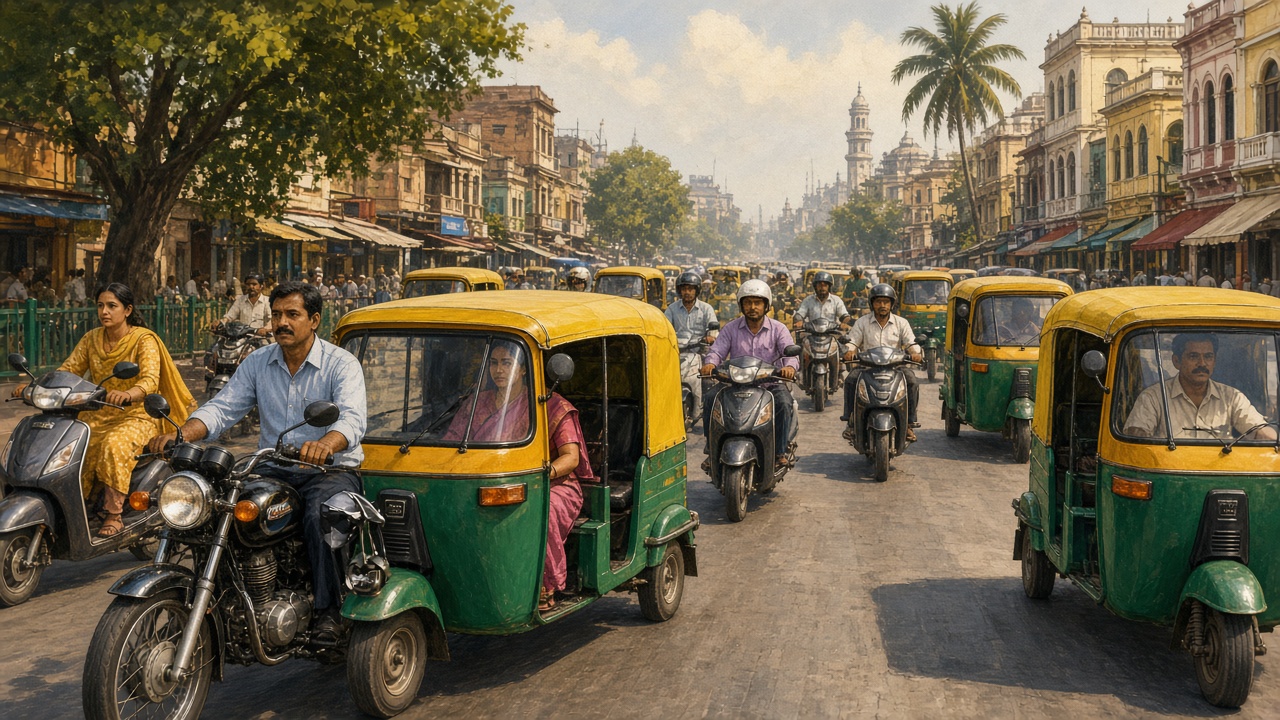
Early auto era in India: imported cars enter city streets beside older forms of mobility.
1880s: Karl Benz and contemporaries launch practical petrol cars.
Mass production abroad (Ford Model T era) makes cars cheaper globally.
Automobiles reach Indian cities as status and official transport.
Garages, petrol pumps, and traffic rules begin to form.
Technology Used
Internal combustion engines: Petrol power replaces animal traction.
Pneumatic tires: Better ride on uneven roads.
Manual gearboxes: Drivers control speed and torque.
Limited access: Cars remain expensive for most Indians.
Road dependency: Growth needs better pavements and fuel supply.
🇮🇳 National Icons1947 – 1983
Indian Classics Era
Post-independence India builds domestic car manufacturing. Ambassador and Fiat/Premier models dominate for decades, while two-wheelers and trucks expand everyday mobility.
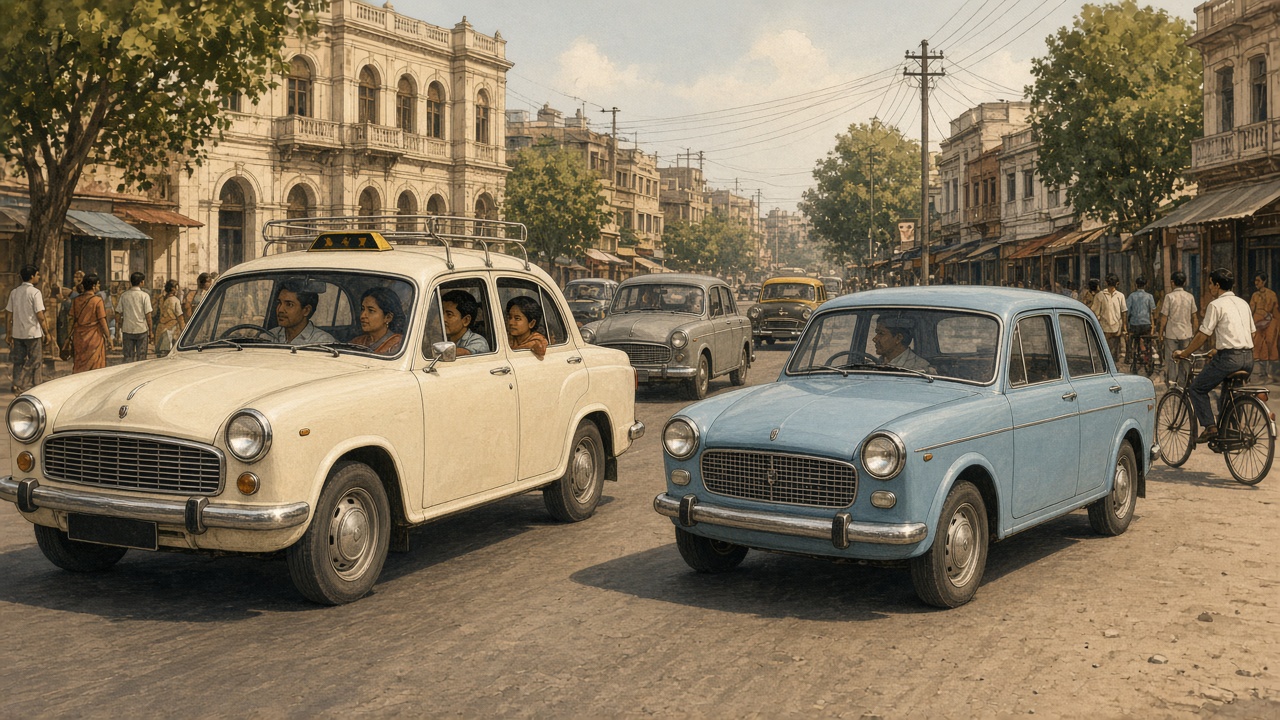
Classic era: Ambassador and Premier cars define Indian roads and taxis for generations.
Hindustan Ambassador becomes a national icon and taxi staple.
Premier Padmini / Fiat lineage shapes urban ownership.
Scooters like Bajaj enter middle-class households.
Commercial vehicles from Tata and Ashok Leyland move freight nationwide.
Technology Used
Rugged body-on-frame cars: Built for Indian road conditions.
Carbureted petrol engines: Simple to service in local workshops.
Two-stroke / early four-stroke bikes: Affordable personal transport.
Features
Long waiting lists: Limited models and controlled supply.
Strong workshops: Local mechanics keep classics running for decades.
Low variety: Few choices compared with later markets.
🐣 Cars for Families1983 – 2000
Maruti and Mass Mobility
Maruti Suzuki transforms car ownership with smaller, more efficient hatchbacks. Liberalization later opens the market to global brands and wider model choice.
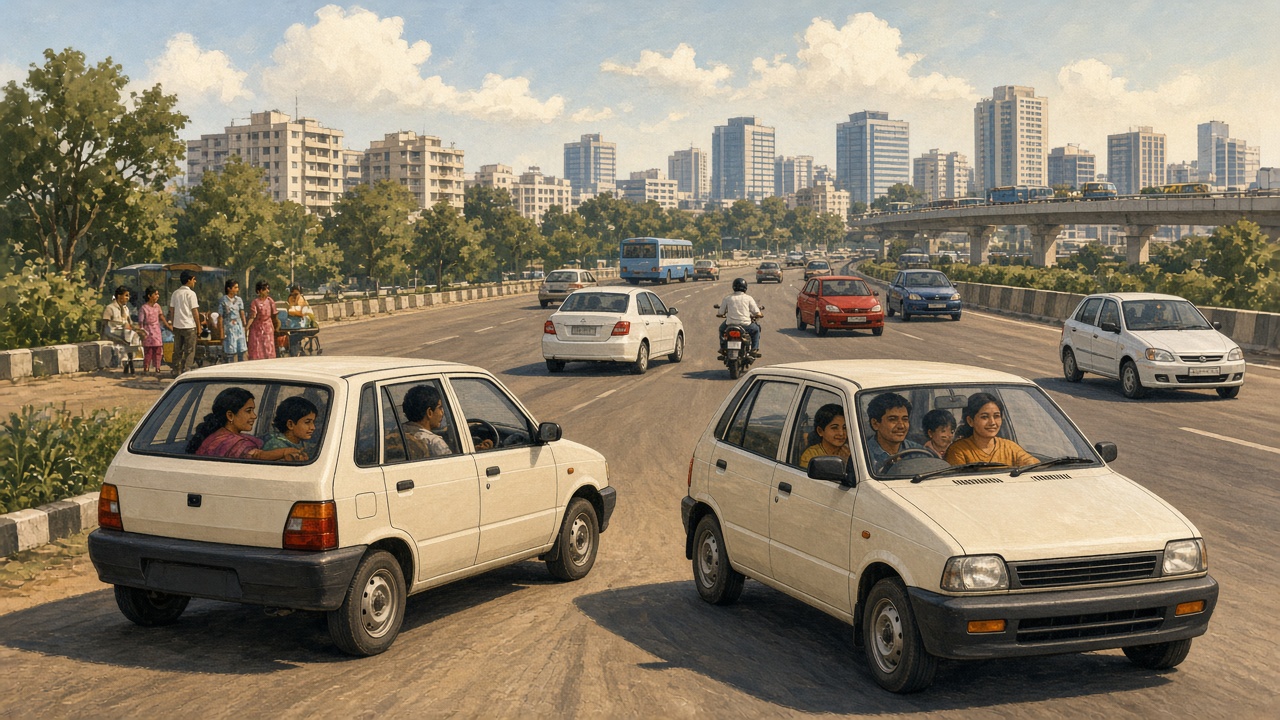
Maruti era: compact hatchbacks make car ownership reachable for many Indian families.
1983: Maruti 800 era launches mass passenger-car mobility.
Fuel efficiency and smaller size suit Indian cities and budgets.
1990s liberalization brings new competitors and dealership networks.
Car finance and used-car markets expand ownership.
Technology Used
Lightweight hatchbacks: Better mileage and easier city driving.
Modern assembly lines: Higher quality and volume production.
Improved safety basics: Gradual upgrades in brakes and structures.
Features
Family mobility: Weekend trips and city commuting grow.
Service networks: Spare parts become widely available.
Rising congestion: More cars pressure urban roads.
🛣️ Roads Get Faster2000 – 2015
Highways and SUV Boom
National highway expansion, Golden Quadrilateral, and better expressways unlock long-distance driving. SUVs, multi-utility vehicles, and logistics trucks reshape the Indian auto mix.
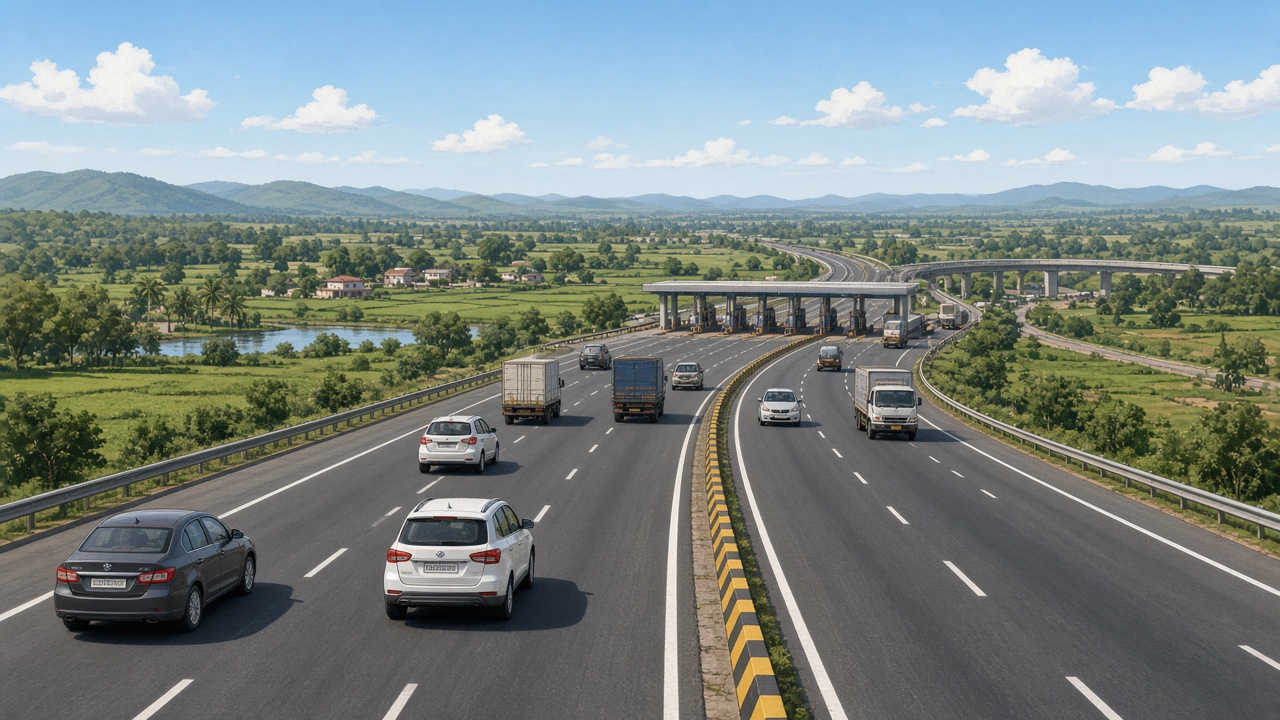
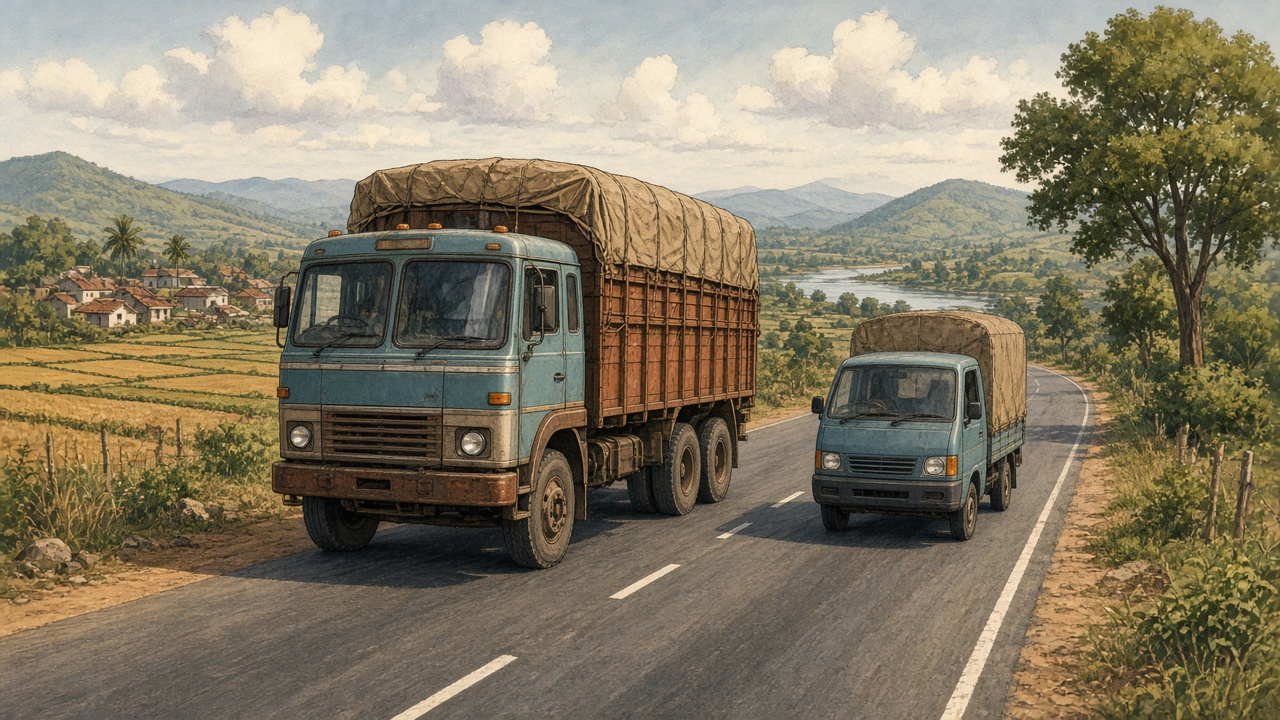
Highway era: expressways and freight corridors accelerate car and truck travel across India.
NHAI projects expand multi-lane national highways.
SUV and MUV demand rises for family and rough-road use.
Commercial vehicle fleets grow with manufacturing and retail logistics.
Driver livelihoods: Platforms create new work patterns.
⚡ Cleaner Drives2020 – Present
Electric and Smart Autos
Electric two-wheelers, cars, and buses accelerate under policy support. Charging networks, connected cars, and safer vehicle standards define the next decade of Indian auto transport.
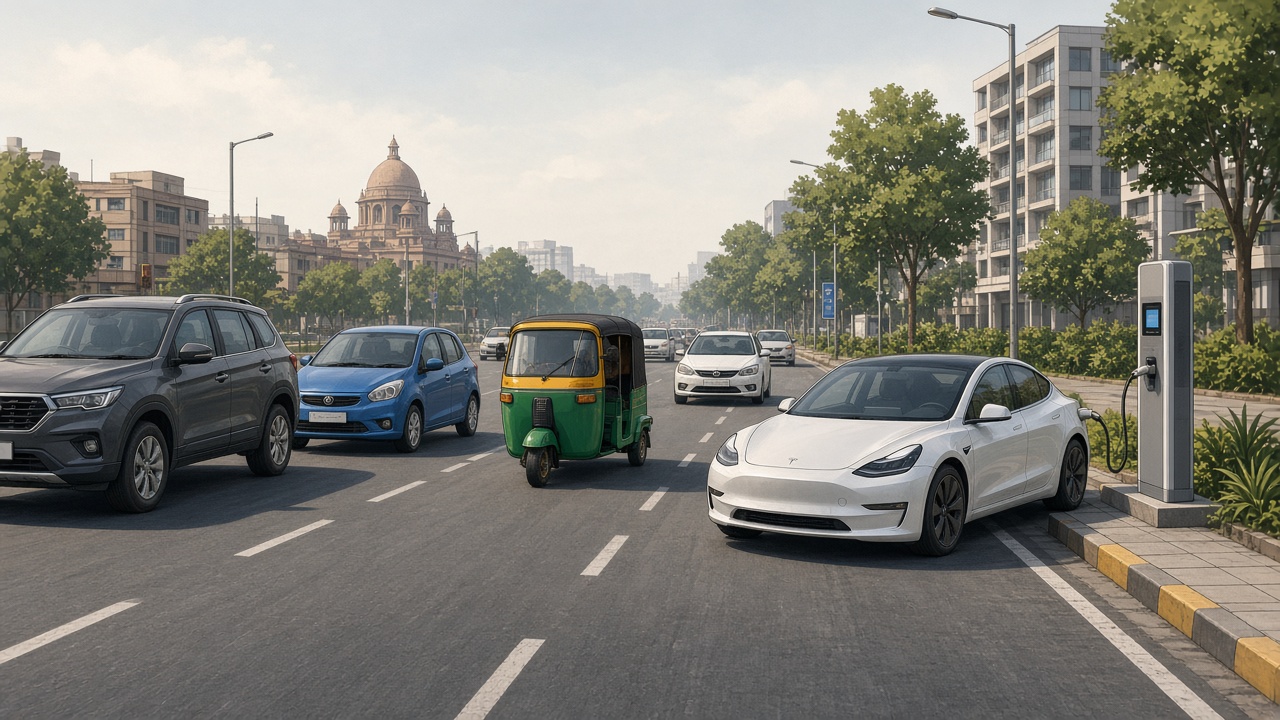
EV era: electric cars and cleaner urban vehicles join India’s mixed traffic future.
FAME and state EV policies support adoption.
Electric scooters lead early mass EV uptake.
Public charging and home charging ecosystems expand.
ADAS and connected features enter premium segments.
Technology Used
Battery packs & motors: Electric drivetrains for cars and two-wheelers.
Charging infrastructure: AC/DC chargers at homes, offices, and highways.
Connected vehicles: Apps for navigation, diagnostics, and OTA updates.
Features
Lower local emissions: Cleaner air in dense cities.
Lower running cost: Electricity often cheaper than petrol/diesel per km.
Range planning: Charging access shapes long-trip confidence.
Auto Transport Systems in India
India’s automobile ecosystem includes passenger cars, two-wheelers, three-wheelers, commercial vehicles, highways, fuel/charging networks, and digital mobility platforms.
Commercial vehicles move India’s goods — from farm produce to factory freight and e-commerce parcels.
System type
What it covers
India notes
Passenger cars
Hatchbacks, sedans, SUVs, MUVs
Maruti, Hyundai, Tata, Mahindra and global brands
Two-wheelers
Scooters and motorcycles
Largest personal mobility category for many households
Three-wheelers
Auto-rickshaws, e-rickshaws
Critical last-mile and short urban trips
Commercial vehicles
Trucks, LCVs, buses chassis
Tata, Ashok Leyland and peers move freight
Taxi / shared mobility
City taxis, app cabs, rentals
CNG fleets + ride-hailing platforms
Highways & roads
NH, expressways, state highways
NHAI and state PWDs expand capacity
Fuel & energy
Petrol, diesel, CNG, EV charging
Energy transition shapes vehicle choice
Regulation & safety
Registration, emission norms, safety standards
MoRTH, ARAI testing, Bharat Stage norms
India Spotlight: Auto Milestones
Year / Era
Milestone
Significance
Pre-1947
Imported cars in major cities
Automobiles enter as elite/official transport.
1950s–70s
Ambassador & Fiat/Premier era
Domestic icons define Indian roads and taxis.
1983
Maruti mass-car era begins
Small cars become reachable for many families.
1991+
Liberalization of auto sector
Global brands and model variety expand.
2000s
Highway & SUV expansion
Long-distance driving and premium segments grow.
2010s
CNG + ride-hailing boom
Cleaner city fleets and app-based mobility rise.
2020s
EV push (especially two-wheelers)
Electric mobility enters mainstream policy and sales.
Auto Timeline Summary
Year / Era
Milestone
1880s
Practical petrol automobiles appear
1908+
Mass production spreads car ownership abroad
1950s–80s
Indian classic cars and domestic manufacturing
1983
Maruti launches mass hatchback mobility
1990s–2000s
Liberalization and multi-brand competition
2000s–2010s
Highways, SUVs, and logistics trucks expand
2010s
CNG fleets and app-based shared mobility
2020s
Electric vehicles and smart connected cars
Test Your Knowledge
20 quick questions from the auto transport timeline. Click each question to reveal the answer.
Answer: Karl Benz.
Answer: The Hindustan Ambassador.
Answer: 1983.
Answer: It made small, efficient cars widely accessible to Indian families.
Answer: Short urban trips / last-mile travel.
Answer: They are affordable personal mobility for millions of households.
Answer: National Highways Authority of India.
Answer: Tata Motors or Ashok Leyland.
Answer: Electric Vehicle.
Answer: CNG (Compressed Natural Gas).
Answer: More global brands and model choices entered the market.
Answer: App-based taxis and shared rides used without owning a private car for every trip.
Answer: Electric two-wheelers / scooters.
Answer: National highways / expressways (e.g., Golden Quadrilateral era expansion).
Answer: Vehicle emission standards in India.
Answer: Lower local emissions / lower running cost per km (when charged cleanly).
Answer: Charging access / range planning.
Answer: They move goods from factories, farms, and ports across the country.
Answer: Fiat / Premier (Padmini era).
Answer: From rare imports and classic cars to Maruti mass mobility, highways, shared rides, and electric vehicles.
Classroom activity
Students Tasks
Use these prompts for discussion or projects on automobile history and Indian road mobility.
Timeline understandingIndia auto systemsTechnology comparisonFuture prediction
Explain why early automobiles remained rare in India before independence.
Compare Ambassador-era cars with Maruti hatchbacks in cost, size, and availability.
Why are two-wheelers more common than cars for many Indian families?
List four auto transport systems in India and one real-life use for each.
How did national highways change long-distance travel and freight?
Discuss two benefits and two challenges of ride-hailing apps.
Why did CNG matter for city air quality?
Compare petrol/diesel cars with EVs on running cost and charging needs.
Design a safer school-zone street for mixed traffic (cars, bikes, autos, pedestrians).
Predict one auto technology India will use widely by 2035 and justify it.
Continue exploring
Autos, buses, trains, and planes together shape India’s mobility map. Explore the other transport timelines next.
Click any panel to expand and explore the visual mood.
Auto eras in pictures — early Indian cars, classics, Maruti mobility, highways, two-wheelers, and electric futures.
Early Autos
First cars on Indian streets
Indian Classics
Ambassador and Premier era
Maruti Era
Cars for Indian families
Highways
Expressways and long drives
Two-Wheelers & Autos
Everyday Indian street mobility
EV Future
Charging, shared EVs, smart streets
Explore all transport timelines
Jump to any other transport timeline on WorldTimelineHub.
Disclaimer: This content is AI-generated for educational purposes and may contain errors or outdated details. For correct and authoritative information, please refer to official and reliable sources such as government publications, manufacturers, museums, and academic references.