From horse-drawn omnibuses and early motor coaches to city fleets, intercity highways, BRT corridors, and electric buses —
the bus became the most flexible backbone of everyday public transport.
This timeline follows how buses shaped urban life and long-distance travel, with a spotlight on Indian city operators,
double-decker buses (including BEST Mumbai), state transport undertakings, CNG transitions, and the electric-bus push.
1820s → PresentDouble-deckers in IndiaBRT → Electric
Bus Invention
Public bus service began with horse-drawn omnibuses in European cities in the 1820s. Fixed routes, posted fares, and shared seats
created a new urban habit: paying for a ride without owning a private carriage. When reliable petrol engines arrived,
motor buses inherited that idea and scaled it across cities and countryside.
Big picture
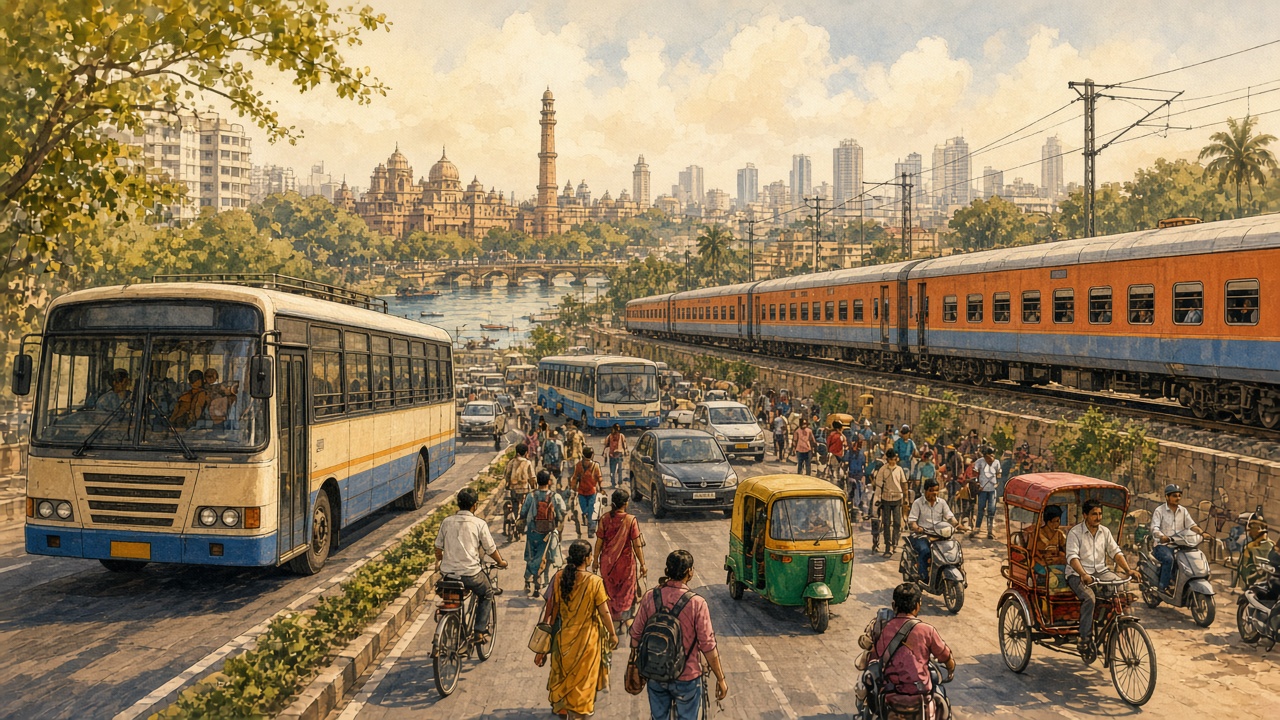
Bus evolution in one view
Buses began as shared horse-drawn carriages, became motorized city workhorses, then branched into intercity coaches,
double-deckers, articulated high-capacity vehicles, BRT corridors, and now electric and digitally tracked fleets.
Related timeline: railway timeline.
1820s
Omnibus services
1910s
Motor bus boom
2000s
BRT corridors
Now
Electric fleets
Buses sit at the center of flexible public mobility — linking neighborhoods, cities, and regions.
🐴 Shared Rides Begin1820s – 1910s
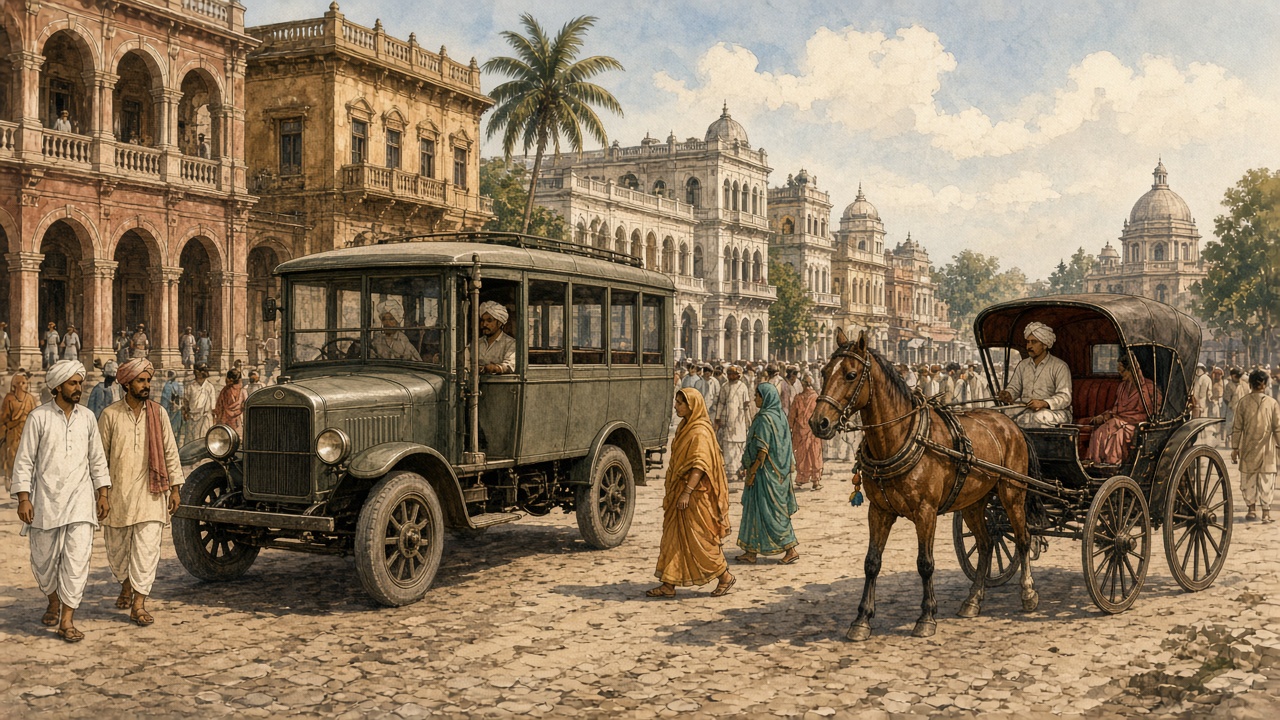
Omnibus Origins
Horse-drawn omnibuses introduced the idea of scheduled shared transport for ordinary riders.
They ran on city streets, charged fixed fares, and prepared the public for motorized bus networks.
Origins: omnibuses and early motor buses turned shared street travel into everyday city life.
1820s: Omnibus services appear in European cities such as Nantes and Paris.
Fixed routes and published fares create a public transport product.
Early motor buses begin replacing horses where roads and engines allow.
Technology Used
Horse traction: Teams pull enclosed multi-passenger carriages.
Wooden coaches: Bench seating and rear/side boarding doors.
Early petrol engines: First self-propelled chassis for bus bodies.
Features
Shared fares: Cheaper than private hire carriages.
Street flexibility: No rails required — routes can change.
Limited capacity: Speed and range constrained by horses and early engines.
🚌 Engines Take Over1910s – 1945
Motor Bus Rise
Reliable petrol and later diesel engines made motor buses practical. Municipal and private operators built route networks,
competing with and often replacing streetcars on lighter corridors.
Motor bus rise: engines freed transit from tracks and scaled city route coverage.
Double-deck buses become iconic in some cities for higher capacity.
Diesel engines improve range, torque, and operating economy.
World wars accelerate chassis production and road motorization.
Timetables, ticket systems, and depots professionalize operations.
Technology Used
Petrol/diesel chassis: Stronger frames for passenger bodies.
Pneumatic tires: Smoother rides on improving road surfaces.
Mechanical gearboxes: Drivers manage speed and hills manually.
Features
Route agility: Services follow demand without laying rails.
Lower capital cost: Cheaper to launch than tram or metro lines.
Growing congestion: Buses share streets with rising car traffic.
🏙️ City Networks Grow1945 – 1975
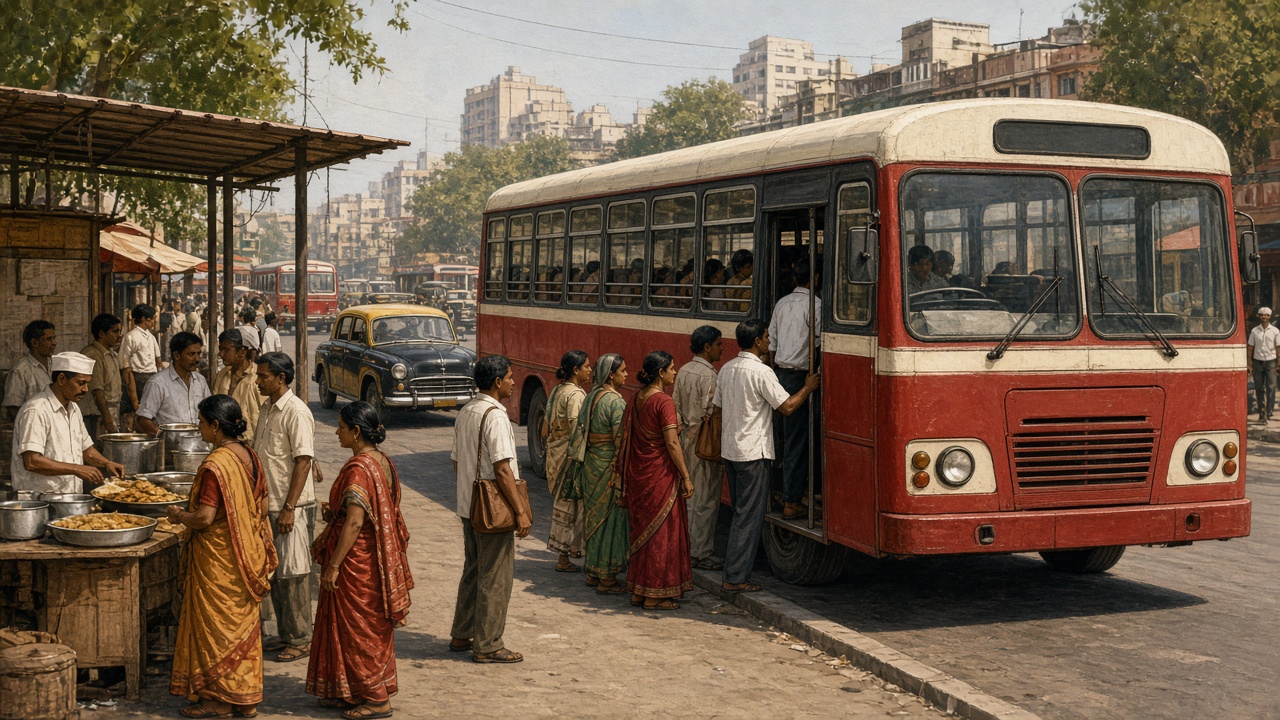
City Transit Expansion
Post-war cities rebuilt around larger diesel fleets. Bus stops, termini, and suburban feeders became daily infrastructure
for workers, students, and shoppers.
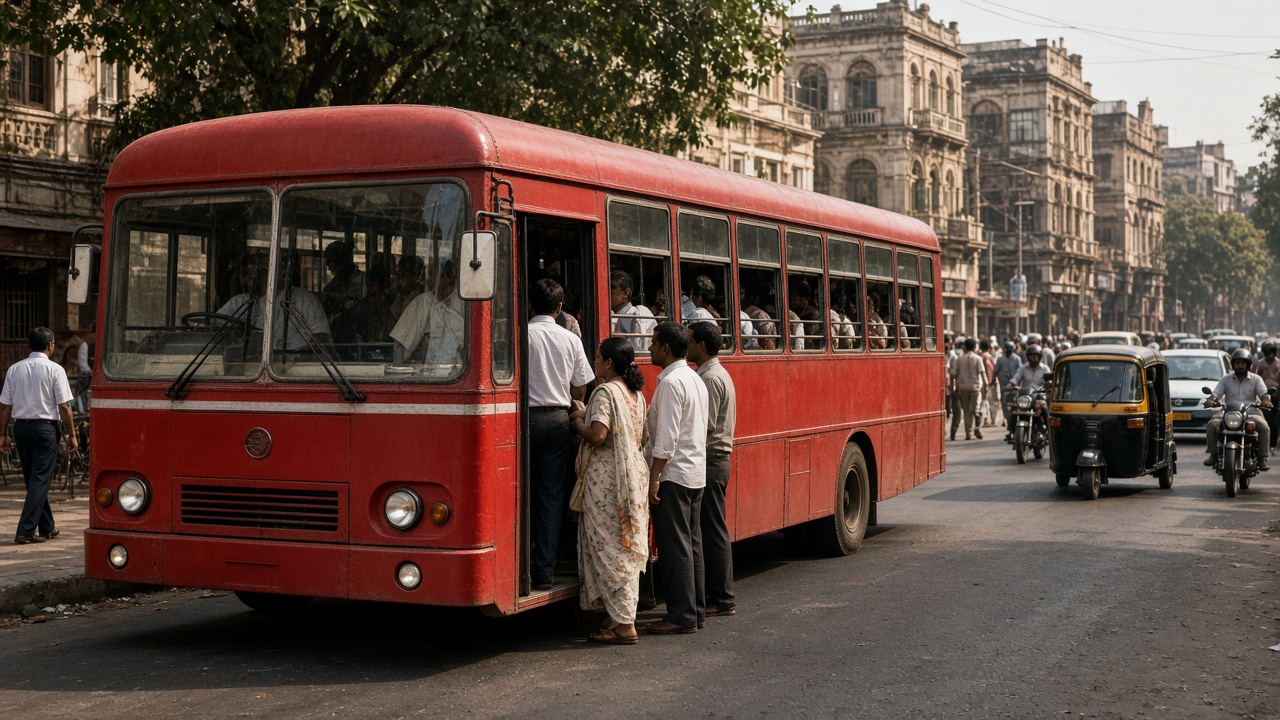
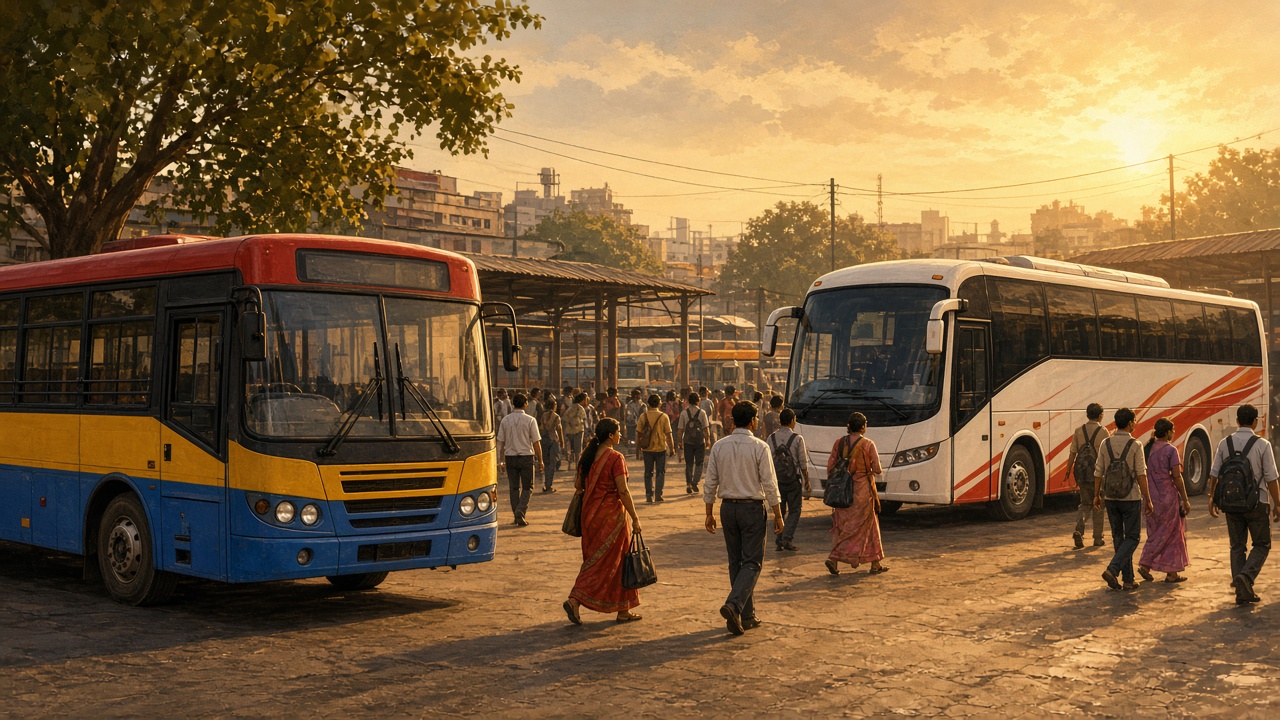
City transit era in India: municipal buses and crowded stops became everyday urban commuting.
Municipal and state operators scale fleets across growing metros.
Standardized bus models simplify maintenance and spare parts.
Fare boxes, conductors, and paper tickets organize mass ridership.
Suburban sprawl increases reliance on bus feeders to rail and city centers.
Technology Used
High-capacity diesel buses: Stronger engines for crowded routes.
Air brakes & better suspension: Safer, more comfortable city driving.
Peak crowding: Rush hours test capacity and schedule reliability.
Public identity: City colors and route numbers become local icons.
🛣️ Highways Connect Cities1975 – 2000
Intercity Coach Boom
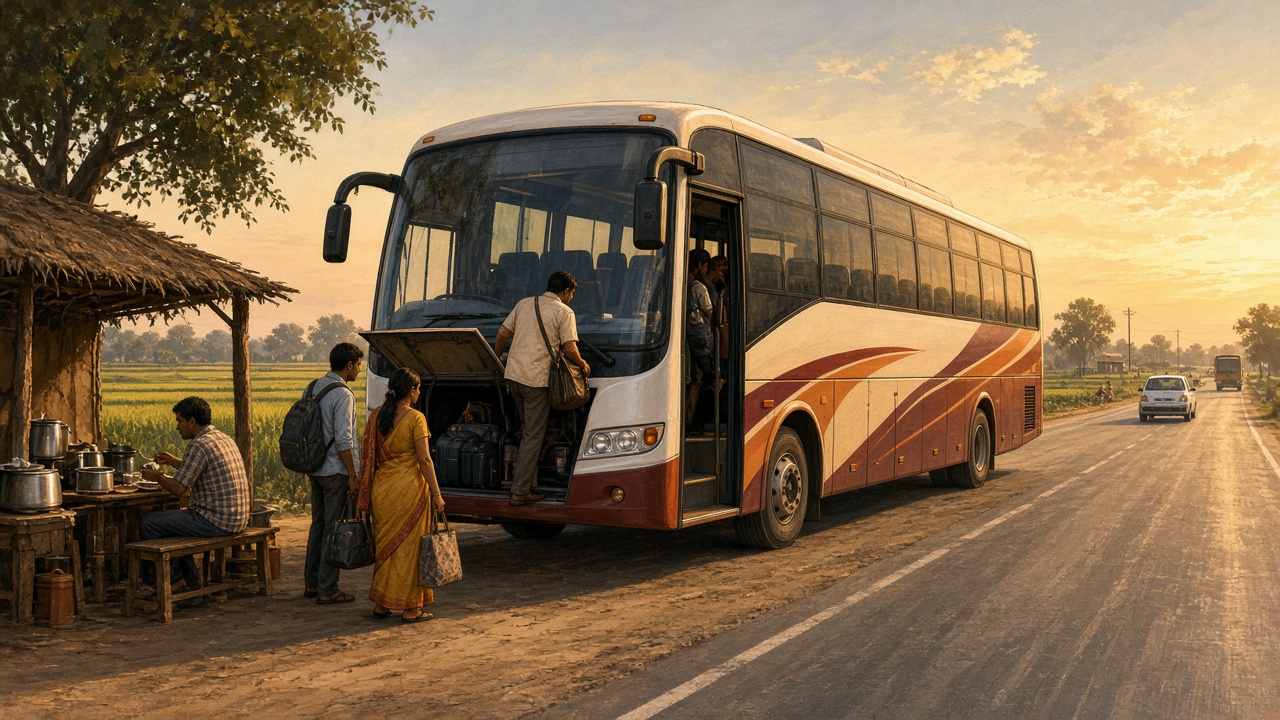
Better highways and comfortable coaches made long-distance bus travel a mass option alongside rail and early domestic flights.
Overnight services, sleeper coaches, and parcel links expanded regional mobility.
Intercity era: highway coaches linked towns and cities with affordable long-distance travel.
Luxury and sleeper coaches compete on overnight corridors.
Private operators and state roadways expand booking networks.
Express services reduce stops for faster city-to-city trips.
Tourism and migrant travel boost seasonal demand.
Technology Used
Coach chassis: High floors, large luggage bays, reclining seats.
Turbo diesel engines: Better highway performance and fuel economy.
Air conditioning: Comfort upgrades for long routes.
Features
Door-to-city reach: Serves places without rail stations.
Affordable fares: Competitive with trains on many corridors.
Road dependency: Delays rise with traffic and weather.
🚏 Priority for People2000 – 2015
BRT and Accessible Buses
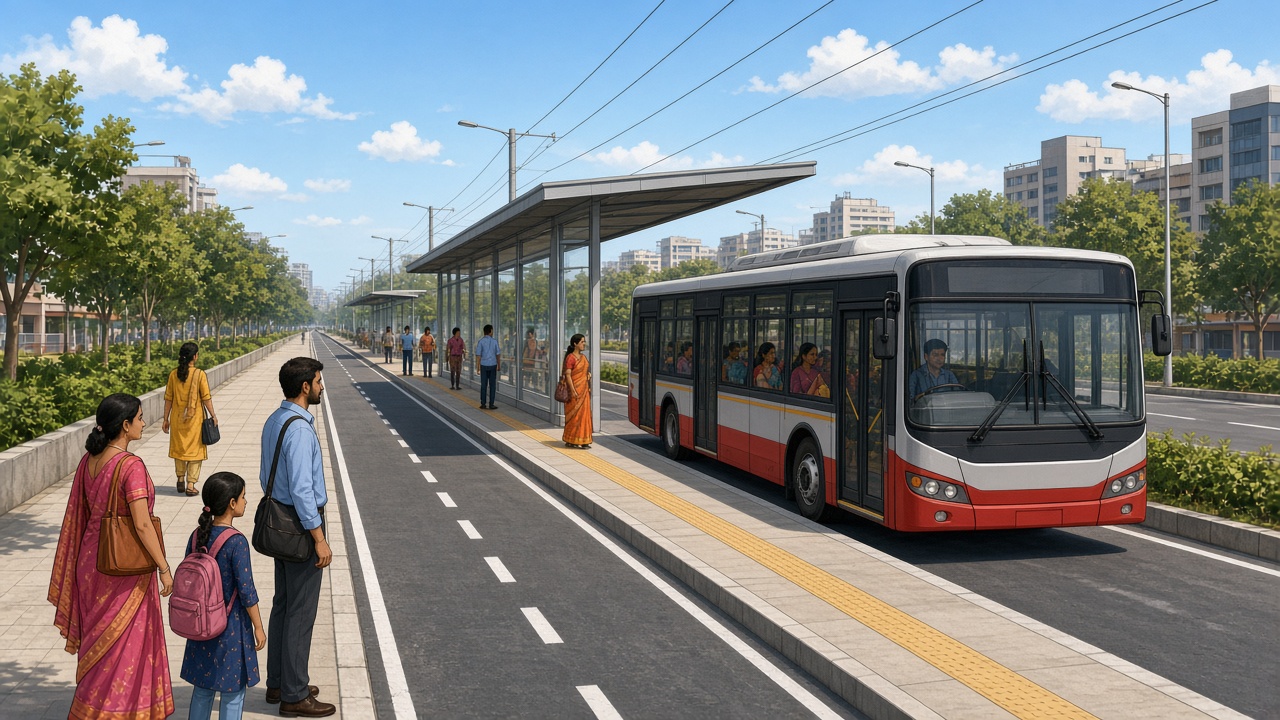
Bus Rapid Transit gave buses dedicated lanes, stations, and faster boarding — metro-like performance at lower cost.
Low-floor designs and better stops improved accessibility for seniors and wheelchair users.
BRT era: dedicated corridors and stations help buses move people like light metro systems.
BRT systems spread from Latin America to Asia and beyond.
Articulated buses raise capacity on trunk corridors.
Smart cards and electronic ticketing speed boarding.
Low-floor and ramp-equipped buses become accessibility standards.
Technology Used
Dedicated lanes: Separate buses from mixed traffic congestion.
Level boarding stations: Faster, safer entry and exit.
ITS / GPS: Real-time arrival info and fleet monitoring.
Features
Higher speed: Priority lanes cut travel times.
Inclusive design: Better access for people with mobility needs.
City politics: Lane space battles with private cars continue.
⚡ Cleaner Fleets2015 – Present
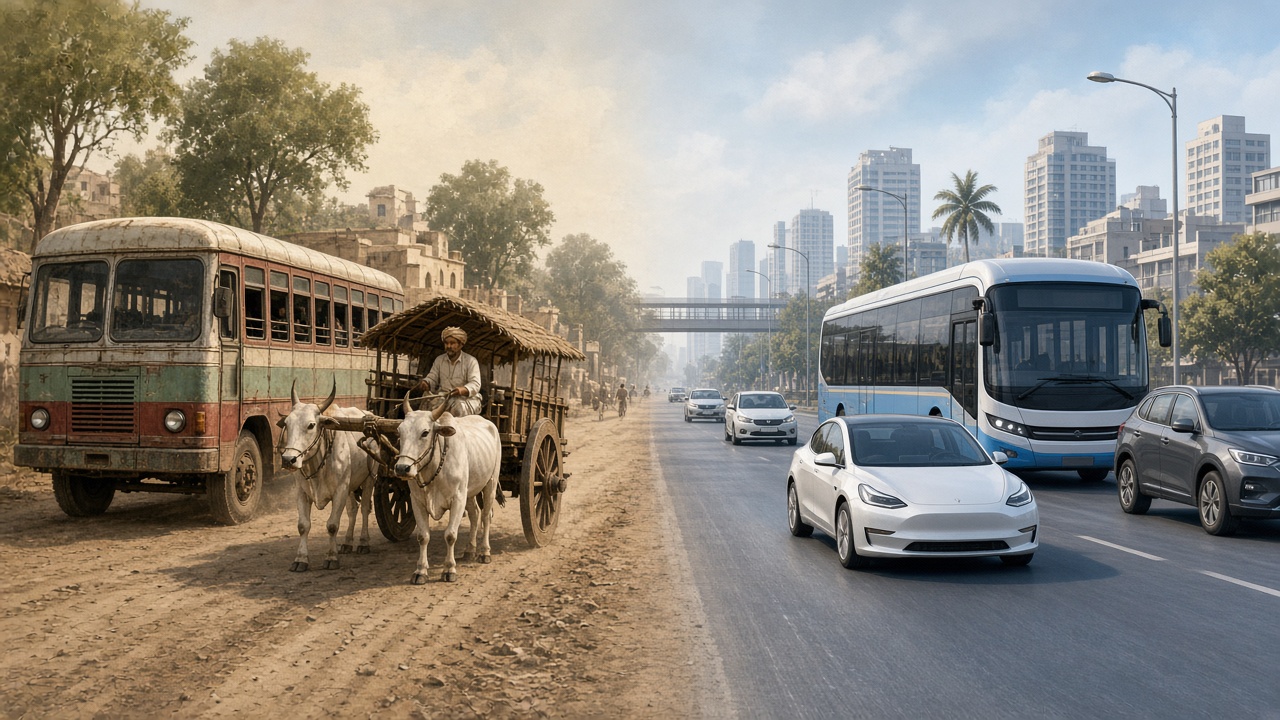
Electric and Smart Buses
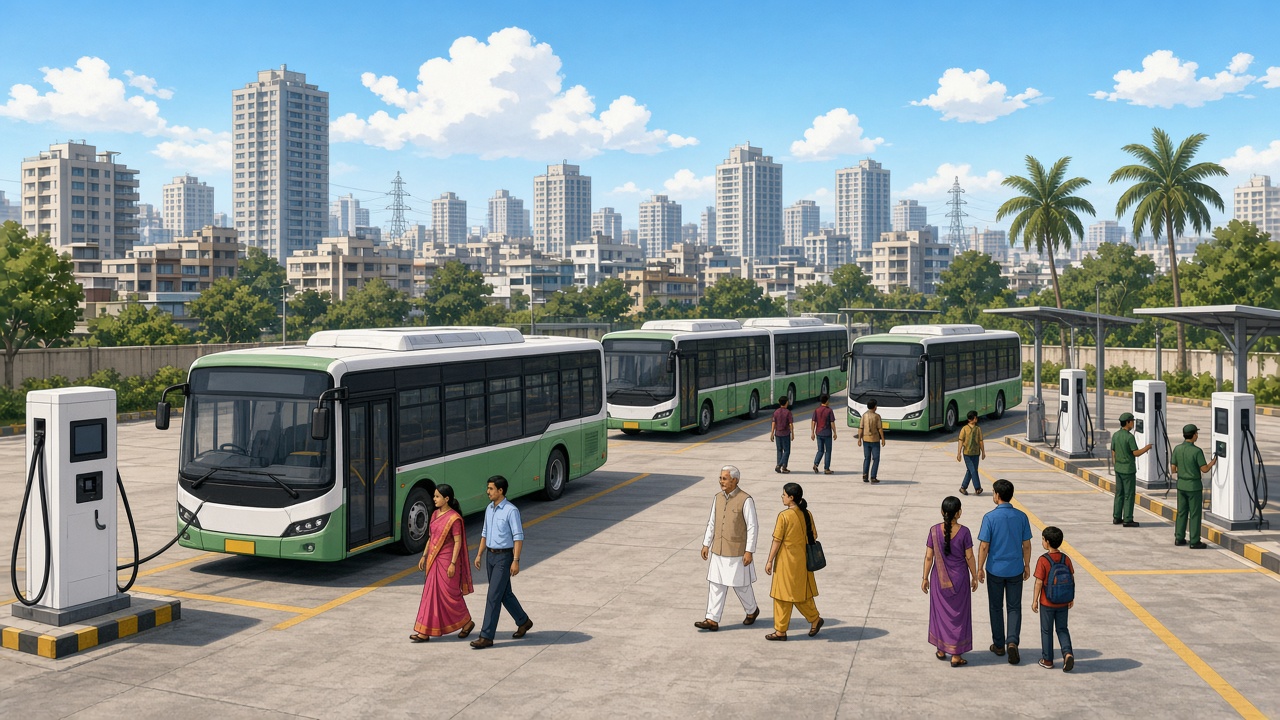
Battery-electric buses, depot charging, and digital passenger apps redefine city transit.
Operators chase quieter streets, lower emissions, and more reliable information for riders.
Electric era: low-emission buses and digital hubs reshape urban public transport.
Battery-electric and hybrid buses scale in major cities.
CNG and cleaner diesel remain transitional options in many fleets.
Apps show live ETAs, occupancy, and digital tickets.
Autonomous shuttle pilots test first-mile and campus services.
Technology Used
Battery packs & motors: Quiet electric propulsion for city duty cycles.
Depot / opportunity charging: Overnight or on-route power replenishment.
Telematics: Predictive maintenance and route performance analytics.
Features
Lower local pollution: Cleaner air near busy corridors.
Infrastructure needs: Charging depots and grid planning become critical.
🚌 Two Decks HighIndia focus
Double-Decker Buses in India
Double-decker buses stack two passenger decks to carry more people on a shorter road length.
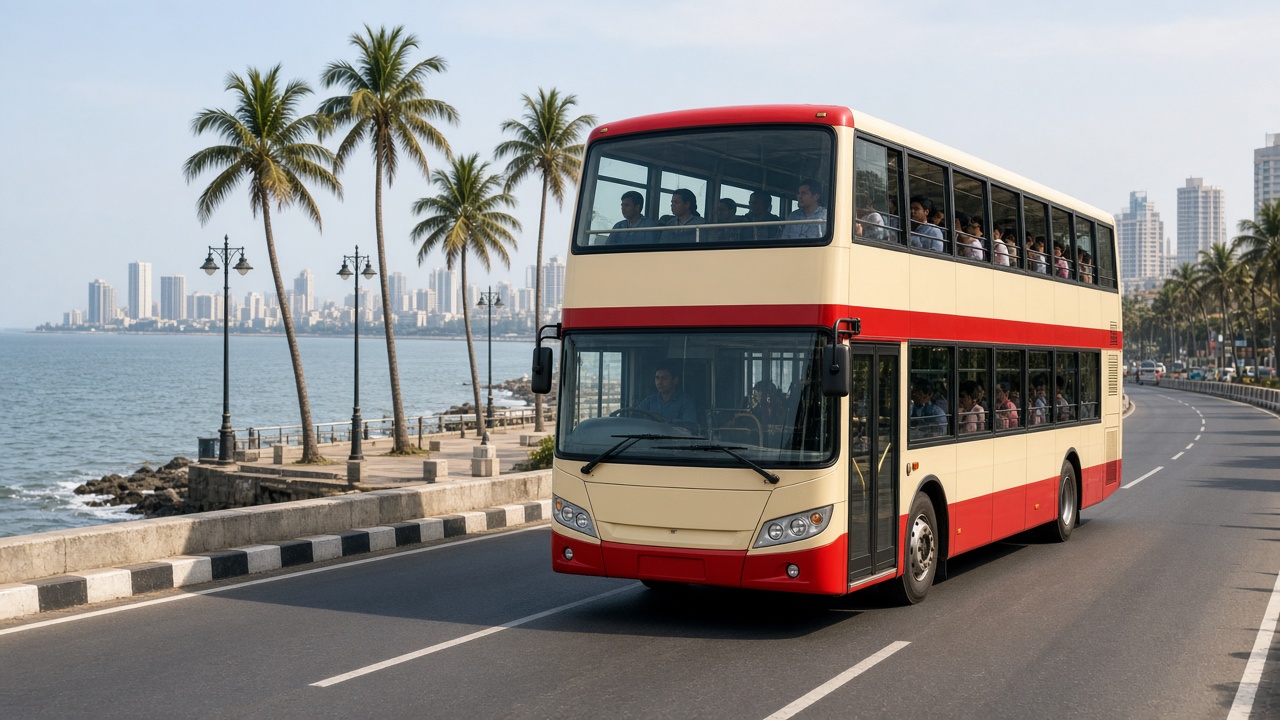
In India they became cultural icons — especially BEST’s red double-deckers in Mumbai — and still appear on city routes, heritage runs, and tourist circuits in selected cities.
Classic double-deckers: two decks mean higher capacity without a longer bus blocking the street.
Modern & tourist double-deckers: open or closed upper decks for sightseeing along Indian waterfronts and city landmarks.
BEST (Mumbai): Brihanmumbai Electric Supply and Transport made red double-deckers a city symbol for decades.
Upper and lower decks share one footprint — more seats where road space is scarce.
Used on busy urban corridors and later on heritage / tourist sightseeing routes.
Other Indian cities have run or trialled double-deckers for city and tourism services at different times.
Low bridges, flyovers, and tree canopies limit where tall buses can safely operate.
Conductors historically managed boarding on both decks; modern fleets use electronic ticketing.
Technology Used
Two-deck body structure: Stairway links lower and upper passenger levels.
Strong chassis & low centre of gravity design: Stability when fully loaded on city turns.
Diesel / CNG / newer clean engines: Power for stop-start urban duty (fleet-dependent).
Height clearance planning: Routes mapped to avoid low bridges and wires.
Features
High capacity: More passengers than a standard single-deck bus of similar length.
Iconic city image: Especially associated with Mumbai street life and tourism branding.
Upper-deck views: Popular for sightseeing; city riders may prefer the lower deck for quicker exit.
Operational limits: Slower boarding via stairs; route height restrictions apply.
India focus
Details
BEST Mumbai
Most famous Indian double-decker operator; red decks became a city identity marker.
City routes
Higher capacity on dense corridors without needing a much longer vehicle.
Tourist / heritage
Open-top or glass-roof styles used for sightseeing in select metros.
Route design
Must avoid low flyovers, bridges, and thick tree canopies.
Vs single-deck
More seats per road length; stairs slow boarding/alighting slightly.
Today
Mix of remaining city operations, nostalgia fleets, and tourist double-deckers.
India Spotlight: Buses Across the Nation
India’s bus story spans municipal giants, state roadways, private coaches, CNG conversions, and a growing electric-bus push
under national clean-mobility programs.
Indian buses: city fleets and long-distance coaches remain essential everyday mobility.
Era
Milestone
Significance
Early 20th c.
City motor bus services begin
Urban routes appear alongside trams and suburban rail.
Post-independence
State Transport Undertakings expand
STUs connect districts, towns, and rural markets by road.
Municipal giants
BEST, BMTC, DTC and peers grow
Large city fleets become identity markers of metros.
Mid–late 20th c.
Double-decker buses (esp. BEST Mumbai)
Two decks raise capacity; red double-deckers become a Mumbai icon.
2000s
CNG push in major cities
Cleaner fuels reduce urban pollution from diesel buses.
2000s–2010s
BRT experiments
Dedicated corridors try metro-like bus priority.
2010s–2020s
Electric bus adoption
Cities procure e-buses and build charging depots.
Today
App-based tracking & passes
Digital tickets and live ETAs improve rider experience.
Bus Timeline Summary
Major turning points from omnibuses to electric fleets.
Year / Era
Milestone
1820s
Horse-drawn omnibus services begin in Europe
1900s–1910s
Motor buses enter city service
1930s–50s
Diesel fleets and double-deckers expand
India (esp. Mumbai)
BEST double-deckers become city icons
1945–75
Post-war municipal networks scale up
1975–2000
Intercity coach and highway boom
2000s
BRT corridors and smart cards spread
2010s–20s
Electric buses and digital passenger apps
Bus Types at a Glance
Type
Best for
Notes
City / transit bus
Frequent urban stops
Low-floor designs aid accessibility.
Articulated bus
High-demand corridors
Extra capacity with a flexible joint.
Double-deck bus
Dense city routes & tourist sightseeing
Higher capacity on a shorter road footprint; BEST Mumbai is India’s best-known example.
Intercity coach
Highway travel
Luggage bays and reclining seats.
BRT bus
Dedicated corridors
Station boarding and priority lanes.
Electric bus
Clean city fleets
Needs charging infrastructure.
Test Your Knowledge
20 quick questions from the bus transport timeline. Click each question to reveal the answer.
Answer: A horse-drawn public carriage on a fixed route for paying passengers.
Answer: The 1820s.
Answer: Motor buses (petrol, then diesel).
Answer: Bus Rapid Transit.
Answer: A bus with a low entry floor for easier boarding, including wheelchair access.
Answer: A longer bus with a flexible joint connecting two sections.
Answer: Route flexibility without laying tracks (or lower capital cost).
Answer: Longer highway trips between cities.
Answer: Compressed Natural Gas.
Answer: BEST, BMTC, DTC, or similar STU/city fleets.
Answer: To keep buses moving faster and more reliably than mixed traffic.
Answer: Lower local air pollution / quieter operation / lower emissions when powered cleanly.
Answer: Charging depots or on-route chargers (and grid capacity).
Answer: They show live ETAs, routes, and often digital tickets.
Answer: State Transport Undertaking.
Answer: They provide affordable mobility across neighborhoods without requiring car ownership.
Answer: Level boarding at stations (often with off-board fare payment).
Answer: Congestion delays that hurt punctuality.
Answer: BEST (Brihanmumbai Electric Supply and Transport).
Answer: From omnibuses to motor fleets, double-deckers and coaches, then BRT/accessibility, and electric smart buses.
Classroom activity
Students Tasks
Use these prompts for discussion, projects, or classroom presentations on bus history and Indian public transport.
Click any panel to expand and explore the visual mood.
Bus eras in pictures — omnibus origins, city fleets, Indian double-deckers, intercity coaches, electric buses, and BRT corridors.
Omnibus Origins
Shared street travel begins
City Transit
Indian municipal buses and busy stops
Double-Deckers
BEST-style icons of Indian cities
Tourist Decks
Sightseeing on Indian seafronts
Electric Buses
Cleaner smart city fleets
BRT & Future
Priority corridors and next-gen shuttles
Explore all transport timelines
Jump to any other transport timeline on WorldTimelineHub.
Disclaimer: This content is AI-generated for educational purposes and may contain errors or outdated details. For correct and authoritative information, please refer to official and reliable sources such as government publications, manufacturers, museums, and academic references.