From early motorcycles to India’s classic geared scooters, Hero-era commuter bikes, automatic scooters, sports motorcycles,
delivery fleets, and electric two-wheelers — bikes and scooters power everyday mobility for millions.
This timeline focuses on motorcycles and scooters in India — classics, commuters, automatics, premium bikes,
commercial delivery use, and the EV shift.
1880s → PresentBikes · ScootersCommute · Delivery · EV
Bikes and Scooters
Motorcycles and scooters are powered two-wheelers. Bikes usually place the rider astride a tank with geared control;
scooters often use a step-through frame, flat floorboard, and automatic drive. In India they became the most common personal motor transport —
for school runs, office commutes, family errands, and last-mile delivery.
Big picture
Two-wheelers in one view
India’s two-wheeler story runs from early motorcycles and Bajaj/Vespa-era scooters to mass commuter bikes,
automatic scooters, sports machines, gig-economy delivery fleets, and electric scooters. Related timelines:
auto,
cycle,
bus,
railway.
Bikes
Motorcycles
Scooters
Step-through
Mass
Daily commute
EV
Electric rise
India’s two-wheeler story: bikes and scooters as everyday personal mobility.
🏍️ Engines on Two Wheels1880s – 1960
Early Motorcycles
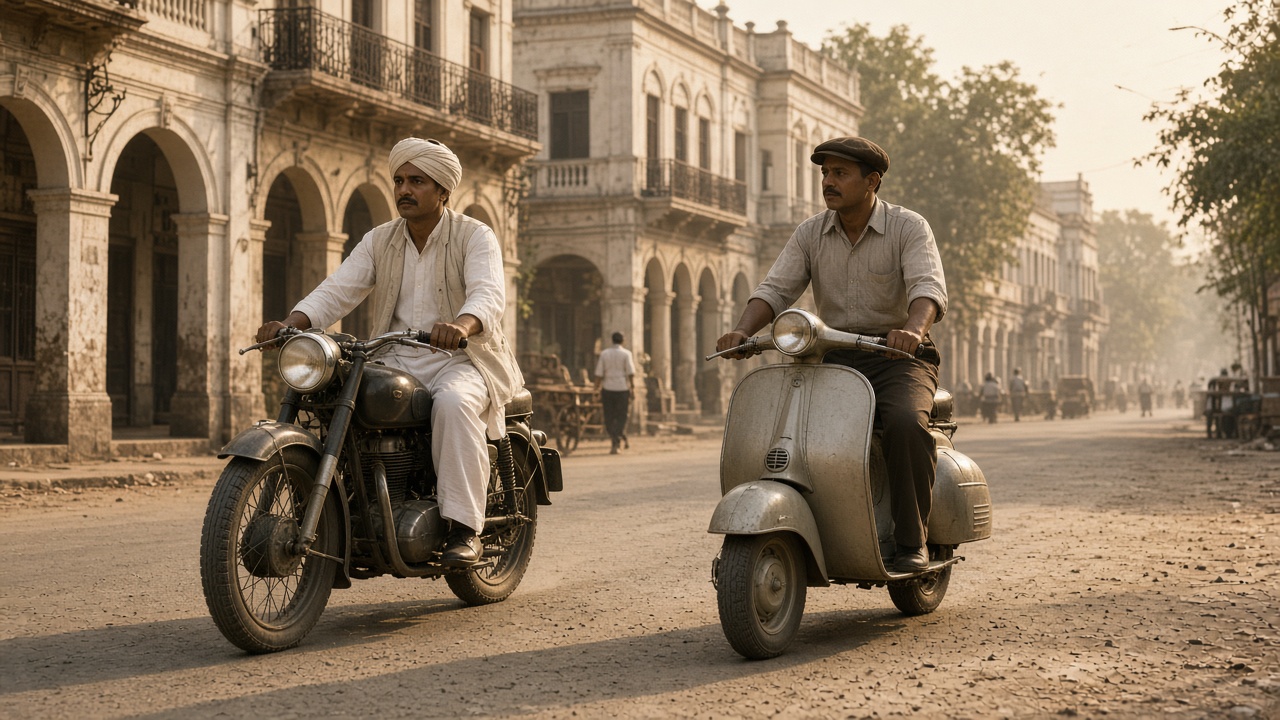
Motorcycles emerge worldwide as powered bicycles evolve into dedicated machines. In India, early bikes arrive as imports and limited local assembly for elites, officials, and enthusiasts.
Early bike era: motorcycles enter Indian towns before mass scooter ownership.
Late 1800s inventors add engines to cycle frames.
Geared motorcycles become a global personal transport category.
Indian roads see imported British and European bikes.
Workshops learn engine, clutch, and chain maintenance.
Technology Used
Petrol engines: Compact power for two wheels.
Manual gearboxes: Rider controls speed and torque.
Chain drive: Transfers power to the rear wheel.
Features
Personal motor mobility: Faster than cycles for longer trips.
Limited access: Early bikes remain costly for most families.
Skill demand: Clutch and gear mastery required.
🛵 Family Icons1950s – 1990
Classic Scooter Era
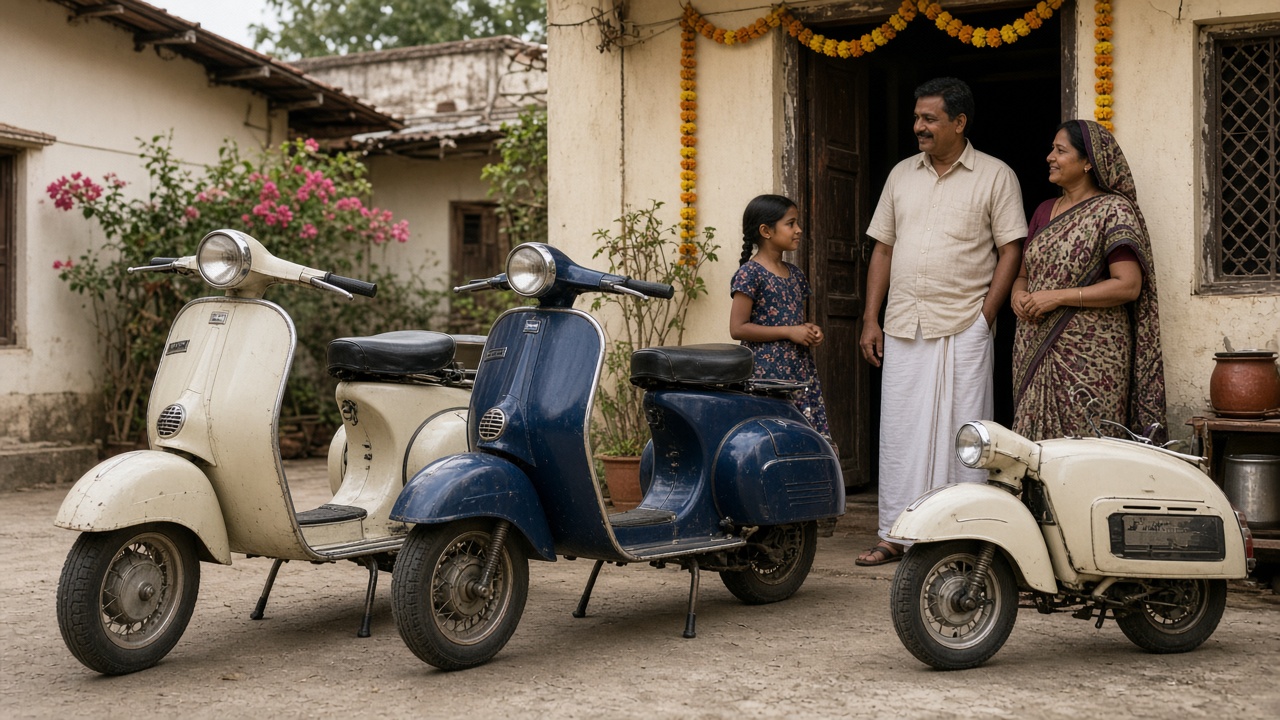
Geared scooters become India’s household two-wheeler. Step-through frames, front shields, and under-seat storage suit family use, women riders, and city errands for decades.
Classic scooter era: Bajaj and Vespa-style geared scooters define Indian family mobility.
Bajaj and Vespa-linked models become national icons.
Scooters carry groceries, school bags, and a pillion passenger easily.
Waiting lists and brand loyalty mark the pre-liberalization market.
Local mechanics keep classics running for decades.
Technology Used
Step-through frames: Easy mounting with traditional clothing.
Geared scooters: Manual shifts with enclosed body panels.
Two-stroke engines (era typical): Simple, punchy city power (later phased for emissions).
Features
Family utility: Storage and weather shielding for daily life.
Wider rider base: More approachable than many motorcycles.
Cultural symbol: Scooters appear in films, weddings, and middle-class stories.
🛠️ Mileage Machines1980 – 2005
Commuter Motorcycle Boom
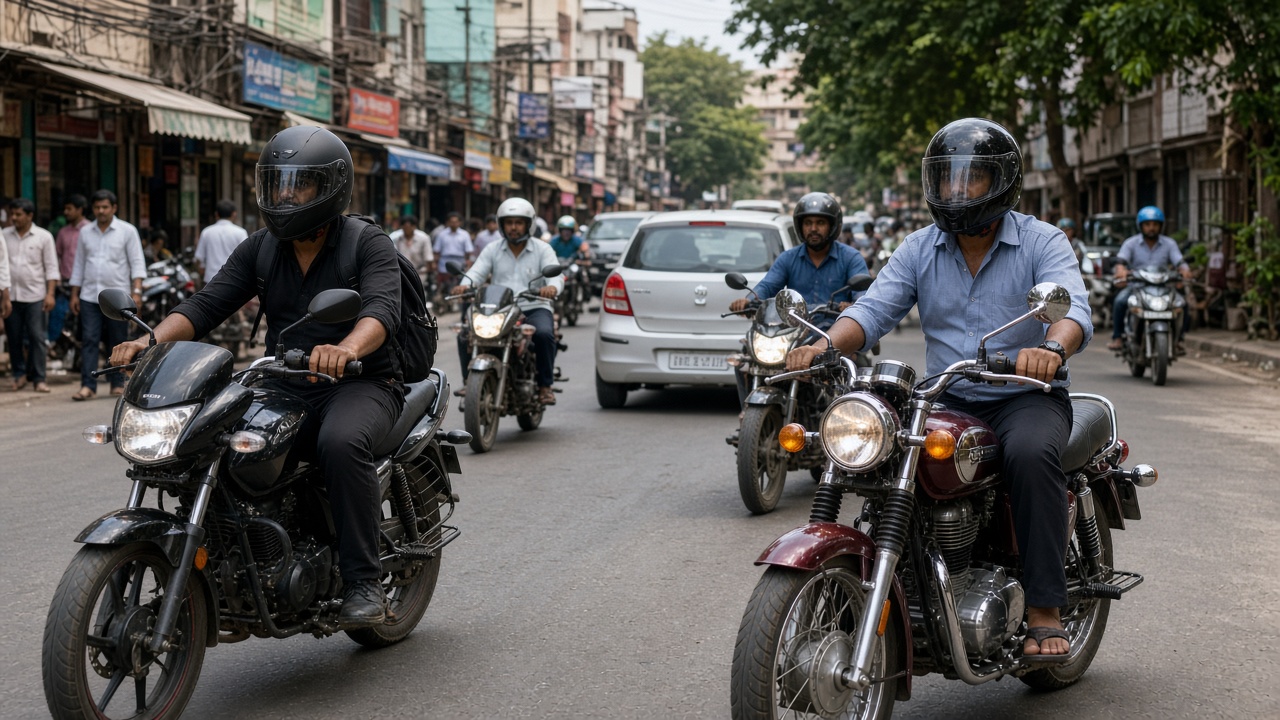
Fuel-efficient 100–150 cc motorcycles transform daily commuting. Brands such as Hero Honda, Bajaj, TVS, and Yamaha make bikes the default personal vehicle for millions of Indian households.
Commuter era: efficient motorcycles become India’s go-to daily transport.
Two-wheelers outnumber cars for personal motor trips.
Technology Used
Four-stroke engines: Better mileage and cleaner running than older two-strokes.
Telescopic forks & drum/disc brakes: Improving comfort and stopping.
Electric start options: Easier daily use over kick-only models.
Features
Low running cost: Ideal for students and working families.
Traffic agility: Filter through congested Indian roads.
Easy parking: Fits small city spaces.
🔑 Twist & Go2000 – 2015
Automatic Scooter Revolution
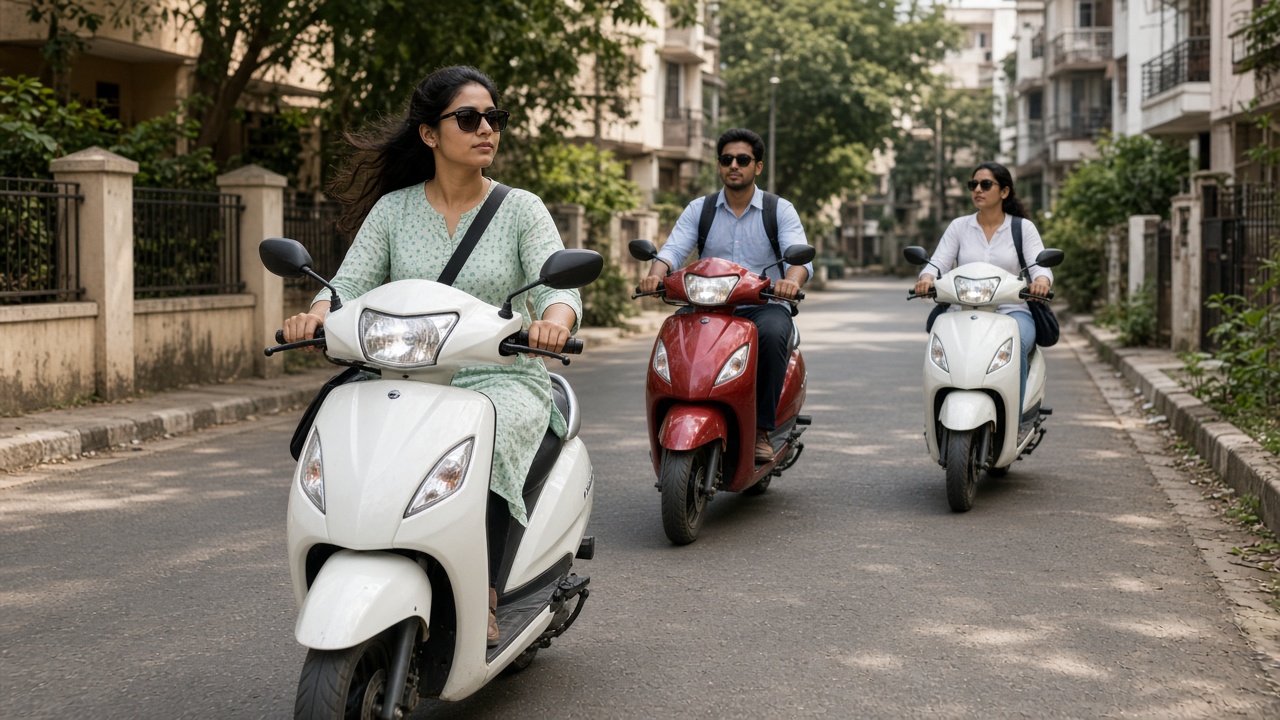
CVT automatic scooters (Activa-era and rivals) reboot scooter culture. No gear shifting, easy learning, and under-seat storage expand ridership across ages and genders.
Automatic era: twist-and-go scooters become India’s most accessible motor two-wheeler.
Honda Activa and competitors redefine the scooter market.
Women’s ridership and first-time buyers grow sharply.
Alloy wheels, better brakes, and styling become mainstream.
Scooters reclaim daily errands from geared classics.
Technology Used
CVT automatic transmission: No clutch lever for city ease.
Combined / better braking: Safer stops for new riders.
Features
Easy learning curve: Faster confidence for beginners.
Practical storage: Helmets and bags under the seat.
City comfort: Upright posture for short trips.
🏁 Style & Gig Economy2010 – Present
Sports, Premium and Delivery
Premium motorcycles, sports bikes, and cruisers grow as lifestyle machines. At the same time, scooters and bikes become the backbone of food and parcel delivery fleets.
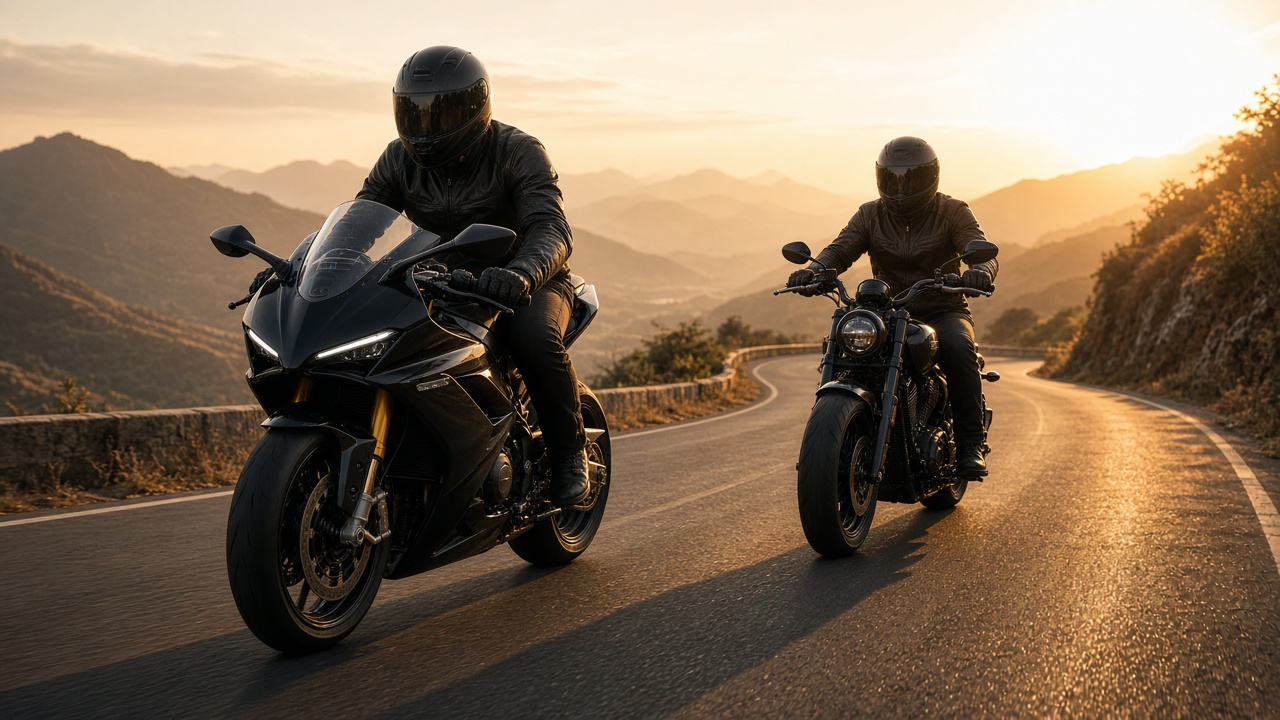
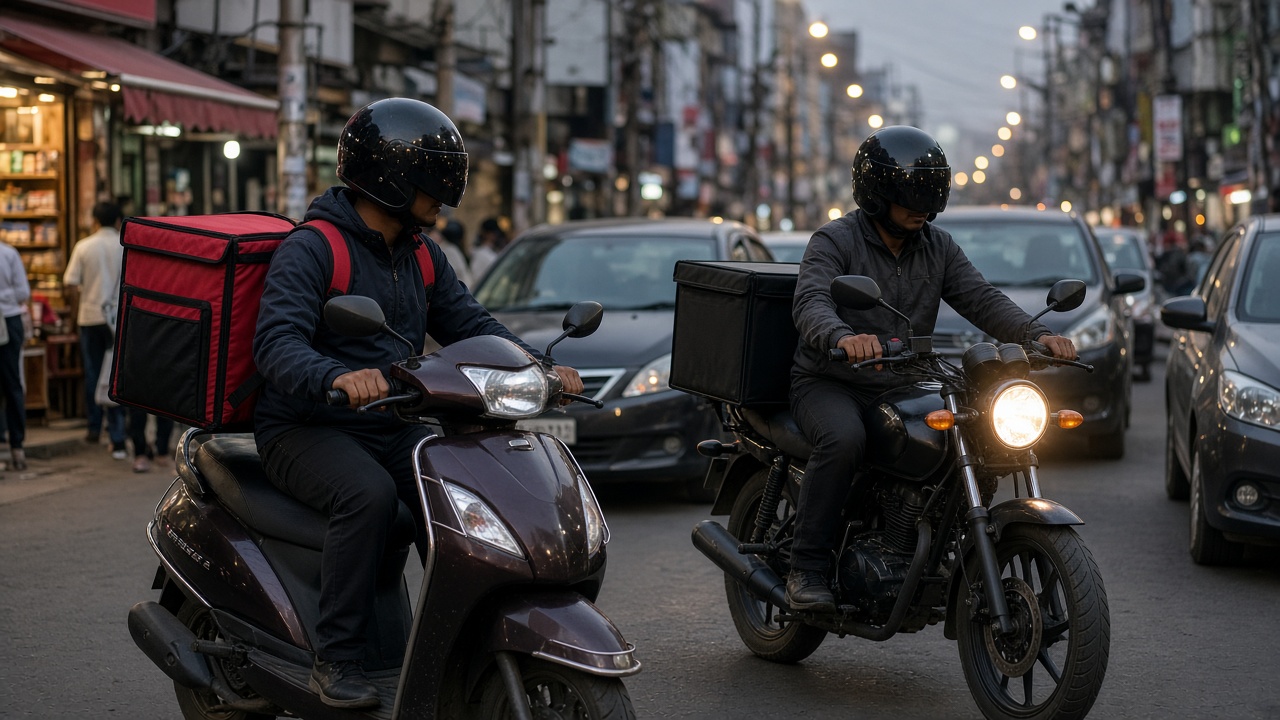
Sports & premium era: performance bikes and cruisers expand beyond pure commuting.Delivery era: scooters and bikes move meals and parcels through Indian cities every day.
Royal Enfield and sports/commuter-premium segments expand.
ABS, fuel injection, and digital consoles become common.
App-based delivery platforms hire vast two-wheeler fleets.
Safety campaigns push helmets and better rider training.
Technology Used
Fuel injection & ABS: Cleaner engines and safer braking.
Higher displacement engines: Performance and touring comfort.
Insulated delivery boxes: Commercial last-mile kits on scooters.
Features
Lifestyle riding: Weekends, touring, and enthusiast clubs.
Gig livelihoods: Two-wheelers earn income for delivery partners.
Mixed traffic pressure: Safety remains a major public issue.
⚡ Quiet Commutes2018 – Present
Electric Two-Wheelers
Electric scooters and motorcycles lead India’s early EV adoption. Lower running costs, home charging, and policy support reshape the next decade of bike and scooter transport.
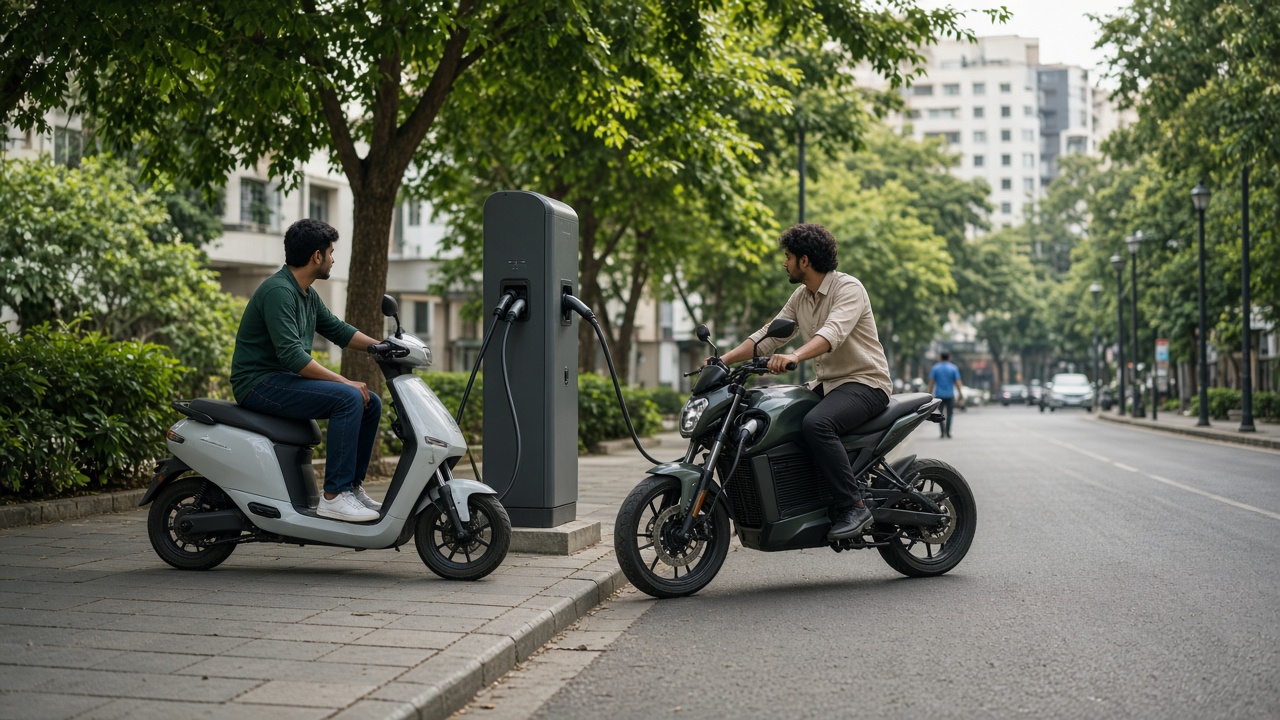
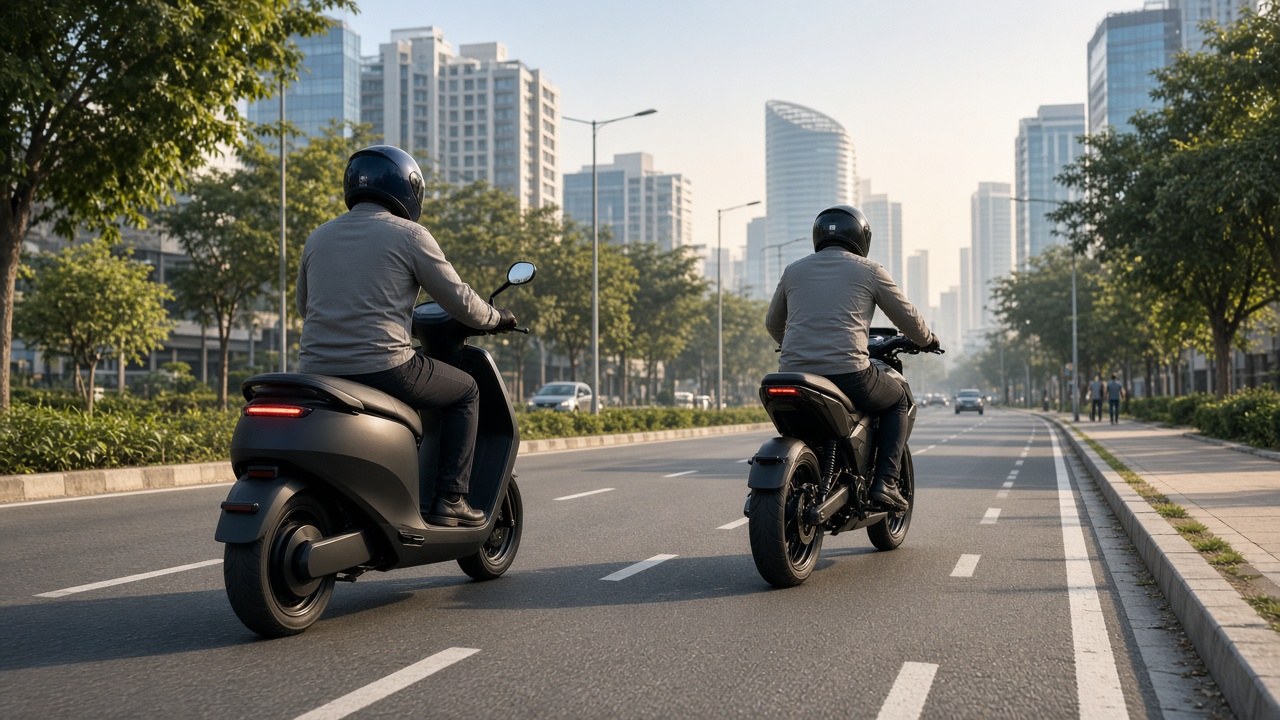
EV era: electric scooters lead cleaner personal mobility for many Indian riders.Future streets: connected EVs, safer lanes, and quieter daily two-wheeler travel.
Electric scooters lead mass EV sales in many Indian cities.
FAME and state incentives support adoption.
Swappable batteries and home charging reduce range anxiety.
Connected apps track charge, navigation, and service.
Technology Used
Hub / mid motors: Electric drive without petrol engines.
Lithium battery packs: Energy for daily commute ranges.
IoT dashboards: Range, maps, and remote diagnostics.
Features
Lower running cost: Electricity often cheaper per km than petrol.
Quiet & cleaner: Less local noise and tailpipe pollution.
Charging planning: Home, office, and public points matter.
Bikes vs Scooters
Both are two-wheelers, but design and use cases differ. Many Indian families own one of each for different trips.
Aspect
Motorcycle (bike)
Scooter
Frame
Straddle seat over fuel tank
Step-through with floorboard
Transmission
Often manual gears (some autos)
Usually CVT automatic
Best for
Longer rides, highway, sport
City errands, easy learning
Storage
Limited unless boxes added
Under-seat storage common
India icons
Splendor-era commuters, Enfield, sports bikes
Classic Bajaj/Vespa, Activa-era autos
Two-Wheeler Systems in India
System type
What it covers
India notes
Commuter motorcycles
100–160 cc daily bikes
Largest traditional bike segment
Automatic scooters
Twist-and-go city scooters
Top choice for many new riders
Classic / geared scooters
Older family scooters
Still seen; heritage models revived
Premium & sports bikes
Cruisers, sports, adventure
Lifestyle and touring growth
Delivery fleets
Food and parcel two-wheelers
Gig economy backbone in cities
Electric 2W
E-scooters and e-motorcycles
Leading early EV adoption
Service networks
Dealers, mechanics, spares
Keeps India’s huge fleet running
India Spotlight: Two-Wheeler Milestones
Year / Era
Milestone
Significance
Pre-1960
Imported / early motorcycles
Two-wheel motors enter Indian roads.
1950s–80s
Classic geared scooter culture
Family scooters become middle-class icons.
1980s–2000s
Commuter motorcycle boom
Mileage bikes become mass personal transport.
2000s–2010s
Automatic scooter wave
Twist-and-go models expand ridership.
2010s–present
Premium bikes + delivery fleets
Lifestyle riding and gig logistics grow together.
2018–present
Electric two-wheeler push
E-scooters lead India’s EV transition.
Two-Wheeler Timeline Summary
Year / Era
Milestone
1880s–1960
Early motorcycles appear and spread
1950s–1990
Classic geared scooters dominate Indian homes
1980–2005
Commuter motorcycle mass market
2000–2015
Automatic scooter revolution
2010–present
Sports/premium bikes and delivery fleets
2018–present
Electric scooters and motorcycles
Test Your Knowledge
20 quick questions on bikes and scooters. Click each question to reveal the answer.
Answer: A two-wheeled motor vehicle such as a motorcycle or scooter.
Answer: Scooters usually have a step-through frame and automatic drive; bikes often have a straddled seat and gears.
Answer: Affordable, fuel-efficient, easy to park, and good in traffic.
Answer: Bajaj / Vespa-style geared scooters.
Answer: CVT / twist-and-go — no manual gear shifting.
Answer: Hero, Honda, Bajaj, TVS, Yamaha, or Royal Enfield (any valid).
Answer: Efficient daily city and highway commuting.
Answer: Food and parcel fleets use them for last-mile delivery.
Answer: A scooter powered by a battery and electric motor.
Answer: It reduces head injury risk and is required by road rules.
Answer: Automatic gearless riding for easier city use.
Answer: Better mileage / cleaner running than older two-strokes.
Answer: ABS (and often fuel injection).
Answer: Step-through design and easier automatic controls.
Answer: Premium / lifestyle motorcycles.
Answer: Lower running cost / quieter / less local emissions.
Answer: Charging access / range planning (or battery cost).
Answer: Under the seat / in body compartments.
Answer: They are narrow and can move through congested lanes more easily.
Answer: From early bikes and classic scooters to mass commuters, automatic scooters, premium/delivery use, and electric two-wheelers.
Classroom activity
Students Tasks
Use these prompts for discussion or projects on motorcycles and scooters in India.
Bike vs scooterIndia mobilityTechnology comparisonFuture prediction
Compare a motorcycle and a scooter for a 5 km city school/office trip.
Why did classic geared scooters become family icons in India?
Explain how automatic scooters expanded ridership.
List four two-wheeler system types and one real-life use for each.
How do delivery apps depend on bikes and scooters?
Discuss two benefits and two risks of two-wheeler commuting.
Why are helmets essential even for short rides?
Compare a petrol scooter with an electric scooter on cost and charging.
Design a safer school-zone street for mixed bike/scooter traffic.
Predict one two-wheeler technology India will use widely by 2035 and justify it.
Continue exploring
Bikes and scooters sit beside cars, cycles, buses, trains, ships, and drones in India’s mobility mix.
Click any panel to expand and explore the visual mood.
Two-wheeler eras — early bikes, classic scooters, commuters, automatics, sports/delivery, and electric futures.
Early Bikes
First motorcycles on Indian streets
Classic Scooters
Family geared icons
Commuter Bikes
Mileage for everyday travel
Automatic Scooters
Twist-and-go city rides
Delivery Fleets
Food and parcels on two wheels
Electric 2W
Quiet, cleaner personal mobility
Explore all transport timelines
Jump to any other transport timeline on WorldTimelineHub.
Disclaimer: This content is AI-generated for educational purposes and may contain errors or outdated details. For correct and authoritative information, please refer to official and reliable sources such as government publications, manufacturers, museums, and academic references.