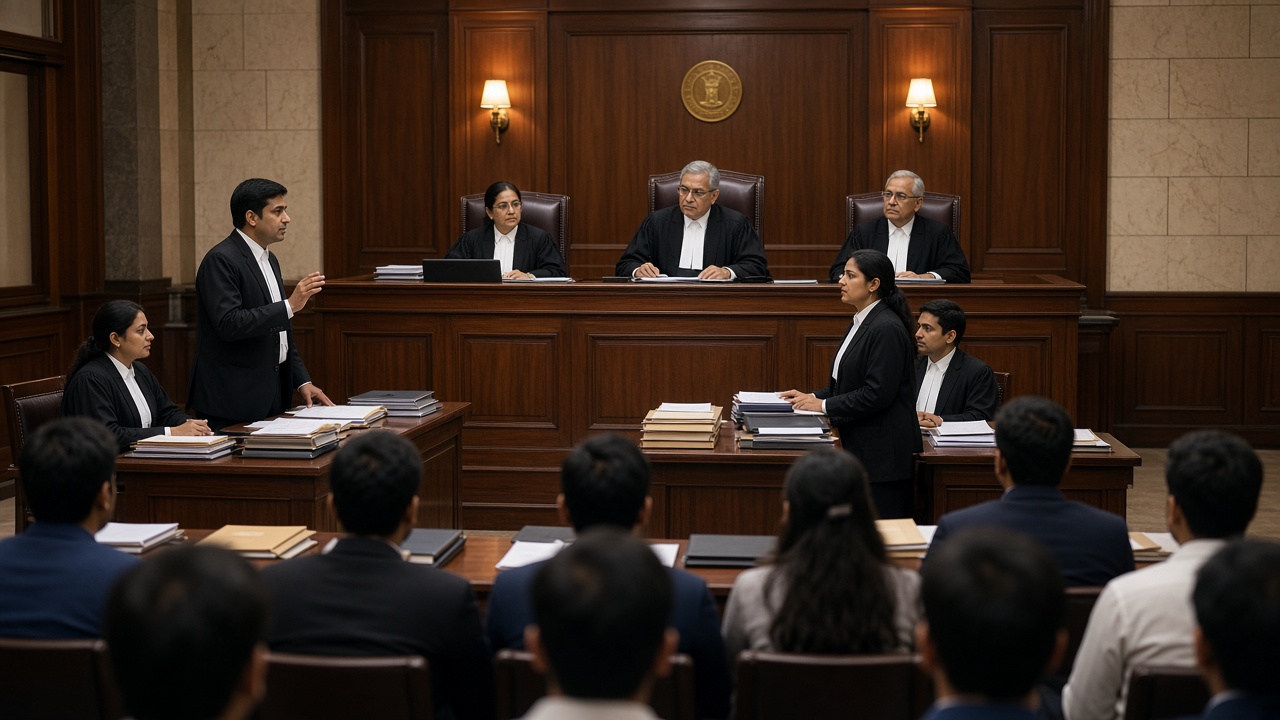
From a handwritten university entrance exam in 1857 to computer-based tests taken by lakhs of students on the same day — entrance examinations
decide who gets a seat in India’s engineering, medical, management, law, and postgraduate programmes.
This timeline follows IIT-JEE, CAT, GATE, EAMCET, AIPMT, AIEEE, CLAT, JEE Main and Advanced, NEET, and CUET — how each exam began, how the
exam hall moved from ink pens to OMR sheets to computers, and how counselling, coaching, and exam reforms changed along the way.
1835 → PresentInk → OMR → ComputerEngineering · Medicine · MBA · Law · PG
What Are Admission & Entrance Exams?
An entrance exam is a test used to select students for a limited number of seats in a college or course. In India, where lakhs of students
compete for seats in top institutes, entrance exams became the main gateway to engineering (JEE, EAPCET), medicine (NEET), management (CAT),
law (CLAT), postgraduate engineering (GATE), and central universities (CUET). After the exam, ranks are used in counselling to allot seats
according to merit, choice, and reservation rules.
Most national entrance exams, including JEE Main, CAT, GATE, and CUET, are now computer-based tests.
🖋️ Entrance by Matriculation1835 – 1950
University Entrance & Merit Admissions
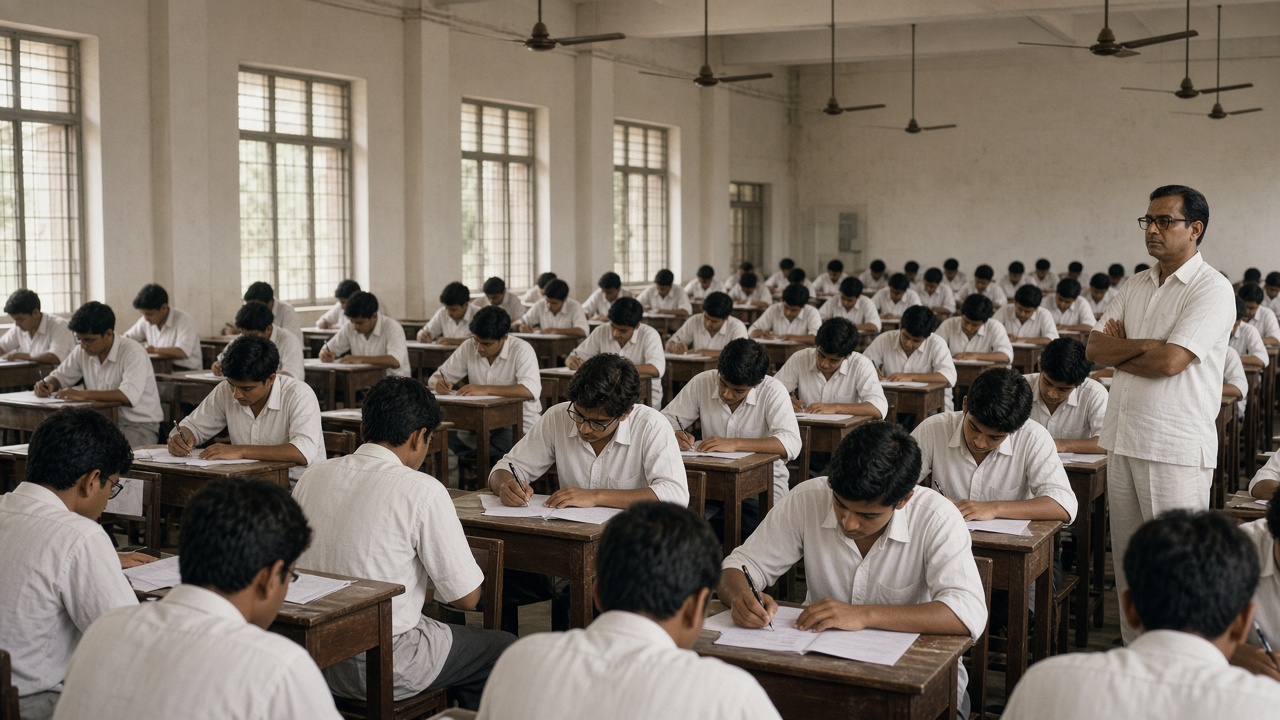
Colonial India’s first medical, engineering, and law colleges selected students through school results, selection tests, and interviews. The new universities of 1857 introduced a written “Entrance” (matriculation) examination that became the gateway to college education for nearly a century.
Candidates wrote the university Entrance examination with pen and ink in large halls (artistic illustration).
1835 / 1845: Medical College, Calcutta and Madras Medical School (1835) and Grant Medical College, Bombay (1845) begin admitting students to Western medical training.
1847 / 1855: Thomason College of Civil Engineering, Roorkee trains engineers (1847); Government Law School, Bombay begins formal legal education (1855).
1857: Universities of Calcutta, Bombay, and Madras are founded; Calcutta University holds its first Entrance Examination.
1909–1940s: IISc Bengaluru selects research students; most colleges admit on matriculation or intermediate marks and interviews.
Exam method
Written papers: Long answers with pen and ink.
Viva & interview: Oral questions by professors.
Merit lists: Results printed in gazettes and newspapers.
Features
Few colleges: Very limited seats in professional courses.
English medium: Exams mostly in English.
Unequal access: Mostly urban, male, and wealthier students.
🏛️ IITs & IIMs1951 – 1979
Institute Entrance Tests
Independent India’s new national institutes needed a fair way to choose the best students from every state. The IITs created a common Joint Entrance Examination, the IIMs designed the Common Admission Test, and states began pre-medical and engineering entrance tests.
Early IIT-JEE papers tested Physics, Chemistry, Mathematics, and English (artistic illustration).
1951 / 1955–1960: IIT Kharagpur admits its first students on academic results and interviews, later through a national examination.
1961: The IIT Joint Entrance Examination (IIT-JEE) begins with papers in Physics, Chemistry, Mathematics, and English, alongside the Institutes of Technology Act.
1960s–1970s: States hold Pre-Medical Tests (PMT) and engineering tests; the IIMs (from 1961) select students through aptitude tests, group discussions, and interviews.
2 January 1977: The first Common Admission Test (CAT) is held at 14 centres for IIM Ahmedabad, Bangalore, and Calcutta.
Aptitude tests: Verbal and quantitative reasoning for MBA.
GD & interview: Second stage for management admission.
Features
National merit: One exam for students from all states.
Prestige: IIT and IIM seats become highly sought after.
Small scale: Thousands, not lakhs, of candidates.
✏️ OMR & CETs1980 – 2001
Common Entrance Tests Spread
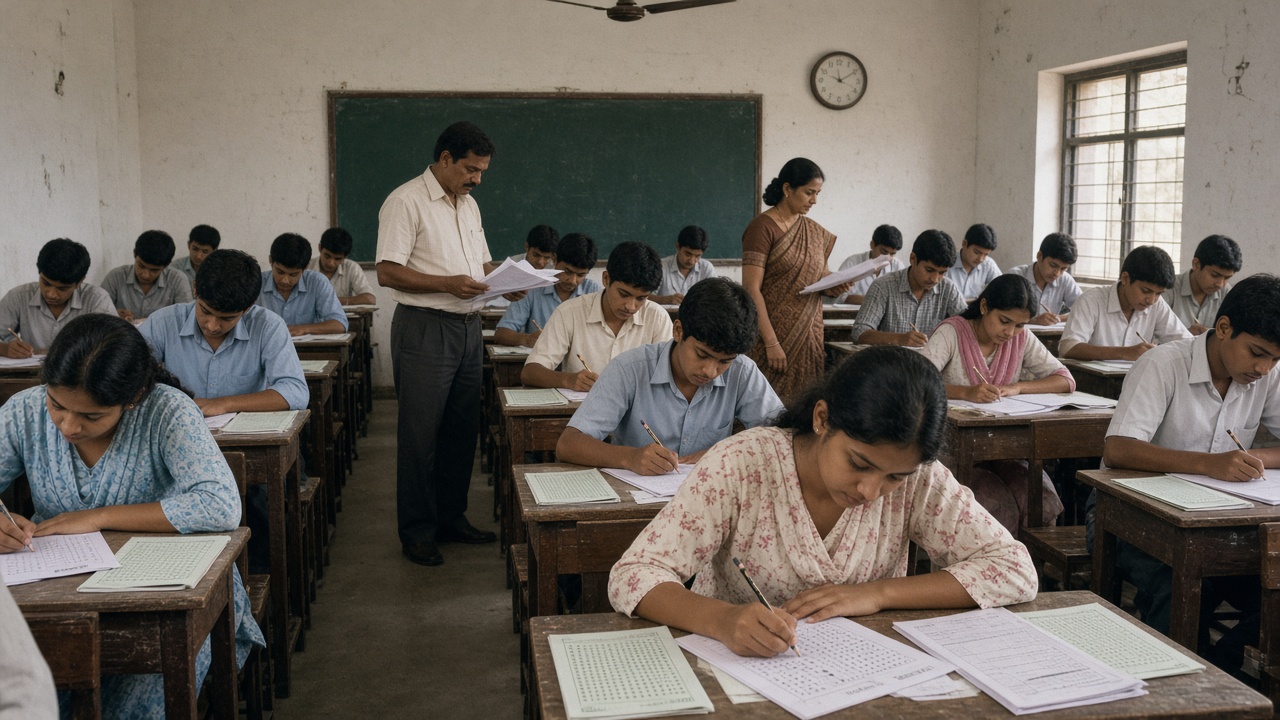
As private engineering and medical colleges multiplied, states introduced common entrance tests to stop capitation-fee admissions and select students on merit. National tests began for postgraduate engineering, medical all-India quota seats, and law, and OMR answer sheets made marking faster.
OMR sheets let machines mark lakhs of objective answer sheets quickly (artistic illustration).
1984: GATE begins for postgraduate engineering admissions; the Supreme Court’s Pradeep Jain judgment leads to an all-India quota in medical admissions.
1986–1988: Andhra Pradesh starts EAMCET (1986) for engineering, agriculture, and medical seats; CBSE begins AIPMT (1988) for all-India quota medical seats; AIMA launches MAT (1988).
1987–1988: National Law School of India University, Bengaluru — India’s first national law school — admits its first batch through its own entrance test.
1990s: The Supreme Court’s Unni Krishnan judgment (1993) regulates private professional college admissions; states such as Karnataka, Maharashtra, and Kerala run their own CETs.
Exam method
OMR sheets: Objective answers marked by optical scanners.
Negative marking: Penalties for wrong guesses.
Postal forms: Applications and demand drafts sent by post.
Features
Merit over money: CETs challenge capitation-fee admissions.
State counselling: Rank-wise seat allotment in person.
Many exams: Students write several tests every year.
📚 Coaching Era2002 – 2012
National Exams & Coaching Boom
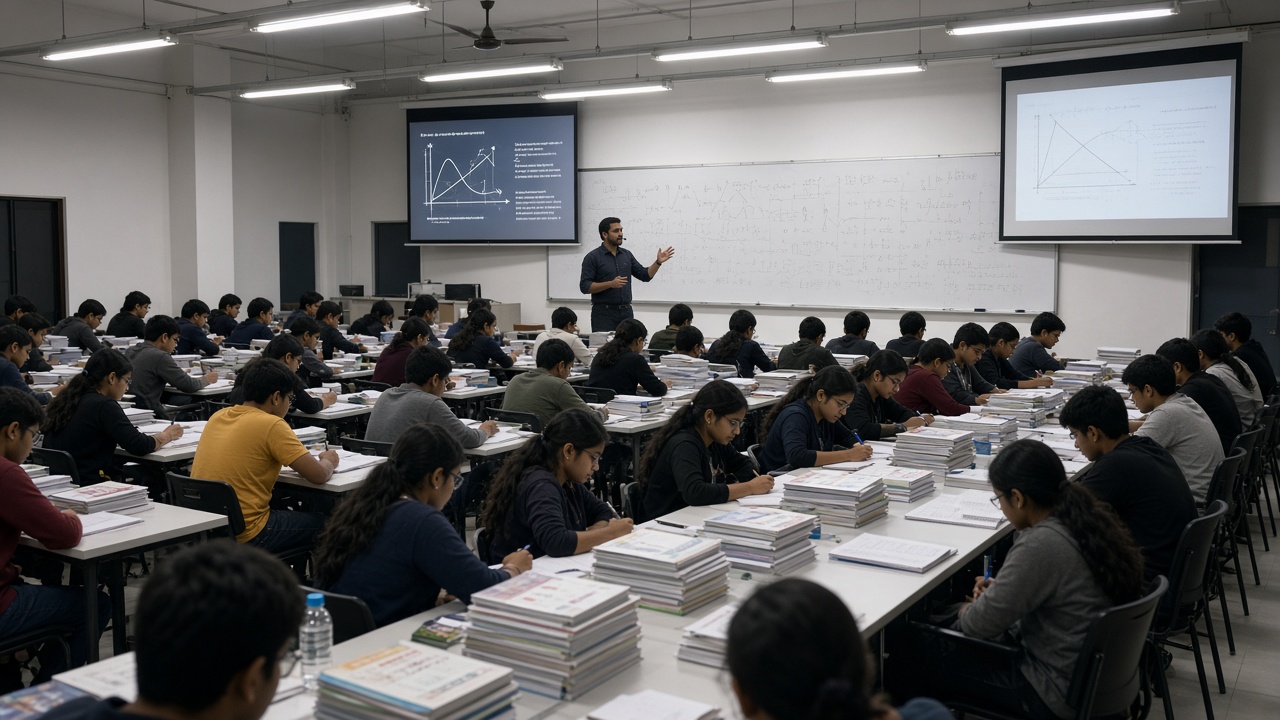
New national tests arrived for engineering, science, architecture, and law, and entrance exams began moving to computers. Coaching hubs such as Kota, Hyderabad, and Delhi grew rapidly as competition for top seats became intense.
Coaching institutes prepare lakhs of students for JEE, NEET, and state entrance tests (artistic illustration).
2002: AIEEE is introduced for NITs and other engineering colleges; the Supreme Court’s TMA Pai judgment reshapes private college admissions.
2004–2006: IIT JAM for M.Sc. admissions (2004); BITSAT (2005), one of India’s first large computer-based entrance tests; NATA for architecture (2006).
2007–2009: Tamil Nadu abolishes its professional entrance test and admits on Class 12 marks (2007); CLAT and AILET begin (2008); CAT becomes computer-based (2009).
2012: Public sector undertakings (PSUs) begin recruiting through GATE scores; the first NEET-PG is held for postgraduate medical seats.
Exam method
Computer-based tests: Answers clicked on screen.
Online applications: Forms, fees, and admit cards on websites.
Test series: All-India mock tests and rank predictors.
Features
Intense competition: Lakhs of candidates for limited seats.
Coaching costs: Expensive classes and city living.
Student stress: Mental health becomes a serious concern.
🔗 One Exam, Many Colleges2013 – 2018
Unified Tests & Online Counselling
India replaced many separate exams with a few national tests — JEE Main and Advanced for engineering and NEET for medicine. Online joint counselling allotted seats across institutes, and a dedicated National Testing Agency was created.
Since 2016, NEET-UG has been the single gateway to MBBS and BDS seats across India (artistic illustration).
2013: JEE Main and JEE Advanced replace AIEEE and IIT-JEE; the first NEET-UG is held, but the Supreme Court quashes it in July 2013.
2014–2015: GATE becomes fully computer-based (2014); JoSAA begins joint online seat allocation for IITs, NITs, and IIITs; Telangana and Andhra Pradesh hold separate EAMCETs; UCEED begins for design (2015).
2016: The Supreme Court restores NEET as the single national entrance test for MBBS and BDS admissions.
2017–2018: The National Testing Agency is set up (2017); JEE ranks stop using board-marks weightage (2017); IITs add supernumerary seats for women (2018).
Exam method
Two-stage JEE: Main as screening, Advanced for IITs.
Online counselling: Choice filling and seat allotment rounds.
Normalisation: Scores adjusted across multiple shifts.
Features
Fewer exams: One test for many colleges.
Transparency: Answer keys and challenges published online.
Debates: Concerns about state boards and regional languages.
🖥️ NTA Era2019 – Present
NTA, CUET & Exam Reforms
The National Testing Agency now conducts the biggest entrance exams in the country. Medical admissions merged fully into NEET, CUET brought common admission to central universities, and paper-leak controversies led to new laws and reforms to protect exam integrity.
CLAT, run by the Consortium of NLUs since 2019, is the gateway to national law universities (artistic illustration).
2019: NTA conducts JEE Main twice a year in computer-based mode and takes over NEET-UG; the Consortium of NLUs begins conducting CLAT.
2020: AIIMS and JIPMER MBBS admissions move to NEET; CLAT switches to comprehension-based questions; COVID-19 postpones exams across India.
2021–2022: Andhra Pradesh renames its exam AP EAPCET (2021); CUET-UG and CUET-PG begin for central university admissions (2022).
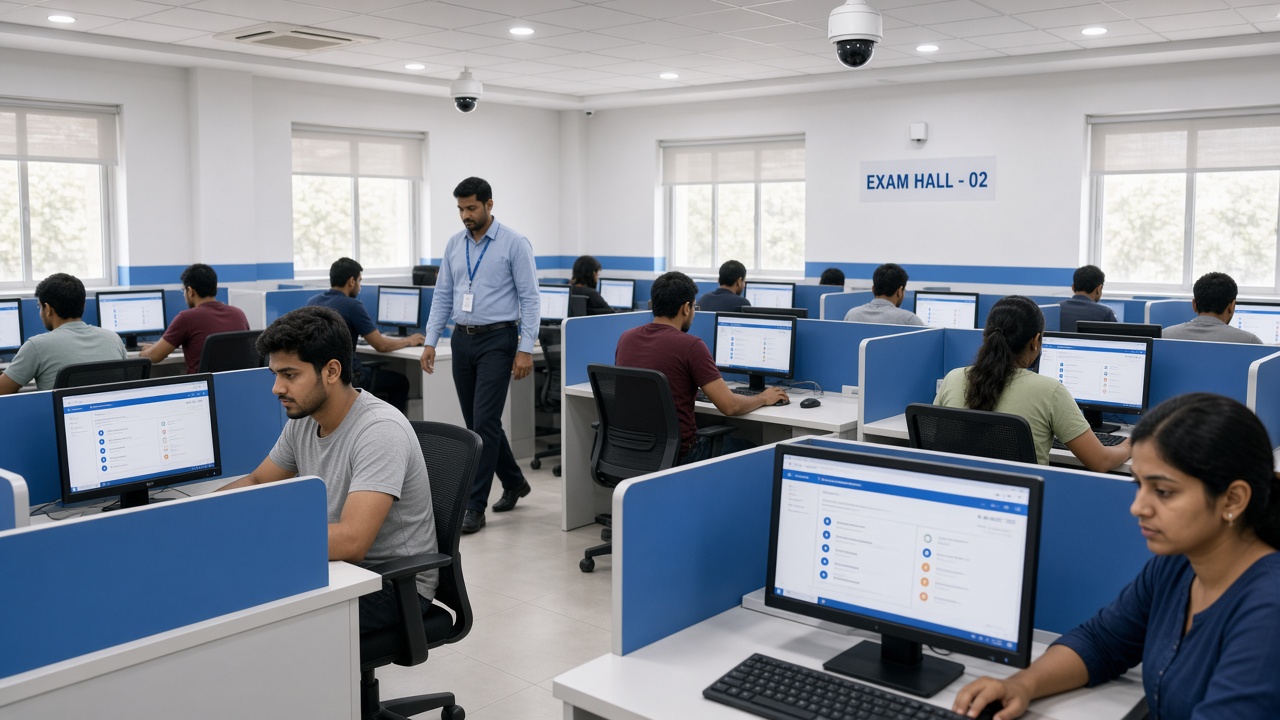
2024–present: NEET-UG 2024 paper-leak controversy; the Public Examinations (Prevention of Unfair Means) Act, 2024; an expert committee recommends reforms and NTA focuses only on entrance exams from 2025.
Exam method
Encrypted papers: Digital delivery to exam centres.
Biometrics & CCTV: Identity checks and live monitoring.
Percentile scores: Fair comparison across many shifts.
Features
Multiple attempts: JEE Main held twice a year.
Indian languages: JEE Main and NEET offered in many languages.
Integrity focus: Strict penalties for leaks and cheating.
Major Entrance Exams by Field
After CAT, management institutes shortlist candidates for group discussions, writing tests, and interviews (artistic illustration).
Field
Exam
Conducted by
Admission to
Engineering
JEE Main
NTA
NITs, IIITs, GFTIs; screening for JEE Advanced
Engineering
JEE Advanced
IITs (by rotation)
IITs
Engineering
BITSAT
BITS Pilani
BITS campuses
Engineering, agriculture, pharmacy
AP EAPCET / TG EAPCET
JNTU Kakinada / JNTU Hyderabad
Colleges in Andhra Pradesh and Telangana
Engineering (state)
MHT-CET, KCET, KEAM, WBJEE
State exam authorities
State engineering colleges
Medicine (UG)
NEET-UG
NTA
MBBS, BDS, AYUSH, including AIIMS and JIPMER
Medicine (PG)
NEET-PG
NBEMS
MD, MS, and PG diploma courses
Management
CAT
IIMs (by rotation)
IIMs and many other business schools
Management
XAT, MAT, CMAT
XLRI, AIMA, NTA
MBA / PGDM programmes
Management (after Class 12)
IPMAT
IIM Indore and others
Five-year integrated management programmes
Law
CLAT
Consortium of NLUs
National law universities (UG and PG)
Law
AILET
NLU Delhi
National Law University, Delhi
PG engineering
GATE
IISc and IITs
M.Tech, PhD, and PSU jobs
PG science
IIT JAM
IITs
M.Sc. at IITs, IISc, and NITs
Architecture
NATA / JEE Main Paper 2
Council of Architecture / NTA
B.Arch programmes
Design
UCEED / NID DAT
IIT Bombay / NID
B.Des programmes
Central universities
CUET-UG / CUET-PG
NTA
Central and participating universities
Hotel management
NCHM JEE
NTA
Institutes of hotel management
When Major Entrance Exams Began
Start years of India’s best-known admission tests.
Year
Exam
What happened
1857
University Entrance Exam
Calcutta University’s first Entrance (matriculation) examination
1961
IIT-JEE
Common entrance exam for the IITs
1977
CAT
Common Admission Test for the IIMs
1984
GATE
Postgraduate engineering admissions
1986
EAMCET
Andhra Pradesh’s common entrance test
1988
AIPMT / MAT
All-India medical quota test; AIMA’s management test
2002
AIEEE
National test for NITs and other colleges
2004
IIT JAM
M.Sc. admissions at IITs
2005
BITSAT
Early large computer-based entrance test
2006
NATA
National aptitude test in architecture
2008
CLAT / AILET
Law entrance for national law universities
2013
JEE Main & Advanced / NEET
Unified engineering tests; first NEET-UG
2015
UCEED / JoSAA
Design entrance; joint seat allocation
2021
AP EAPCET
EAMCET renamed in Andhra Pradesh
2022
CUET
Common entrance for central universities
Popular Exam Patterns at a Glance
A simple overview of how major entrance exams are conducted today. Patterns change often — always check the official information bulletin.
Exam
Mode
Subjects / sections
How often
JEE Main
Computer-based
Physics, Chemistry, Mathematics
Twice a year
JEE Advanced
Computer-based
Two papers of Physics, Chemistry, Mathematics
Once a year
NEET-UG
Pen and paper (OMR)
Physics, Chemistry, Biology
Once a year
AP / TG EAPCET
Computer-based
Mathematics or Biology, Physics, Chemistry
Once a year
CAT
Computer-based
Verbal ability, data interpretation & logical reasoning, quantitative ability
Once a year
GATE
Computer-based
Chosen subject paper plus general aptitude
Once a year
CLAT
Pen and paper
English, current affairs, legal reasoning, logical reasoning, quantitative techniques
Once a year
CUET-UG
Computer-based
Languages, domain subjects, general test
Once a year
Entrance Exams: Then vs Now
Aspect
Then
Now
Application
Printed forms and demand drafts sent by post
Online forms and digital payments
Number of exams
Separate test for each college
Common tests such as JEE, NEET, CUET, CLAT
Answering
Long written answers, later OMR bubbles
Clicking answers on a computer screen
Results
Roll numbers printed in newspapers
Online scorecards, answer keys, and percentiles
Counselling
In-person at one centre with original certificates
Online choice filling (JoSAA, MCC, state portals)
Preparation
Textbooks and guidebooks
Coaching, online test series, apps, and AI tools
Scale
Thousands of candidates
Lakhs of candidates on the same day
Security
Invigilators and sealed packets
Biometrics, CCTV, encryption, and jammers
Admission & Entrance Exams Timeline Summary
Year / Era
Milestone
1835–1855
First medical, engineering, and law colleges
1857
First university Entrance Examination, Calcutta
1951
IIT Kharagpur admits its first students
1961
IIT-JEE begins
1977
First CAT
1984
GATE begins; all-India medical quota
1986
EAMCET in Andhra Pradesh
1988
AIPMT by CBSE; MAT by AIMA
2002
AIEEE introduced
2005
BITSAT computer-based test
2008
CLAT and AILET begin
2009
CAT becomes computer-based
2013
JEE Main & Advanced; first NEET-UG
2015
JoSAA joint counselling; separate AP and Telangana EAMCETs
2016
NEET restored as single medical entrance
2017
National Testing Agency set up
2019
JEE Main twice a year; Consortium runs CLAT
2020
AIIMS and JIPMER admissions through NEET
2021
AP EAMCET renamed AP EAPCET
2022
CUET-UG and CUET-PG begin
2024
Public Examinations (Prevention of Unfair Means) Act
Test Your Knowledge
20 quick questions from the admission and entrance exams timeline. Click each question to reveal the answer.
Answer: The University of Calcutta.
Answer: IIT Kharagpur.
Answer: 1961.
Answer: English.
Answer: 2 January 1977.
Answer: GATE (Graduate Aptitude Test in Engineering).
Answer: Andhra Pradesh.
Answer: Engineering, Agricultural and Medical Common Entrance Test.
Answer: CBSE.
Answer: National Law School of India University (NLSIU), Bengaluru.
Answer: AIEEE.
Answer: 2008.
Answer: 2009.
Answer: JEE Main and JEE Advanced.
Answer: 2016.
Answer: Conducts joint online counselling and seat allocation for IITs, NITs, IIITs, and other institutes.
Answer: 2017.
Answer: 2020.
Answer: AP EAPCET (Engineering, Agriculture and Pharmacy Common Entrance Test).
Answer: CUET (Common University Entrance Test).
Classroom activity
Students Tasks
Use these prompts for discussion or career-guidance projects on entrance exams.
Make a chart of entrance exams for engineering, medicine, management, law, and design, with their conducting bodies.
Compare writing an exam with pen and ink in 1857, OMR sheets in the 1990s, and computers today.
Find out which entrance exam your state uses for engineering admissions and when it started.
Explain the difference between JEE Main and JEE Advanced in simple words.
Design a study timetable for a student preparing for an entrance exam while managing school and health.
Debate: “One national entrance exam is fairer than many state exams.”
Interview a senior student or relative about their entrance exam and counselling experience.
List five ways to handle exam stress and support friends who feel pressure.
Research how online counselling (JoSAA or state counselling) allots seats step by step.
Suggest three reforms that could make entrance exams more secure and less stressful.
Continue exploring
Entrance exams connect to competitive exams, higher education, the education system, and India’s great educators. Explore the other education timelines next.
Jump to any other education timeline on WorldTimelineHub.
Disclaimer: This content is AI-generated for educational purposes and may contain errors or outdated details. For correct and authoritative information, please refer to official and reliable sources such as government publications, manufacturers, museums, and academic references.