From gurukuls and the ancient universities of Nalanda and Takshashila to colonial English education, post-independence commissions,
the Right to Education, and the National Education Policy 2020 — this is how India’s education system was built and rebuilt.
Compare the old 10+2 schooling system with NEP 2020’s 5+3+3+4 structure, and follow the major commissions, policies, and reforms
that shaped schools, colleges, and universities across India.
India’s education system has been reshaped many times — by ancient traditions, colonial rulers, national commissions, and
constitutional rights. Each reform tried to answer the same questions: who gets to learn, what should they learn, and how?
NEP 2020 is the latest and most sweeping answer, replacing the 34-year-old NPE 1986.
Big picture
Old schooling vs NEP in one view
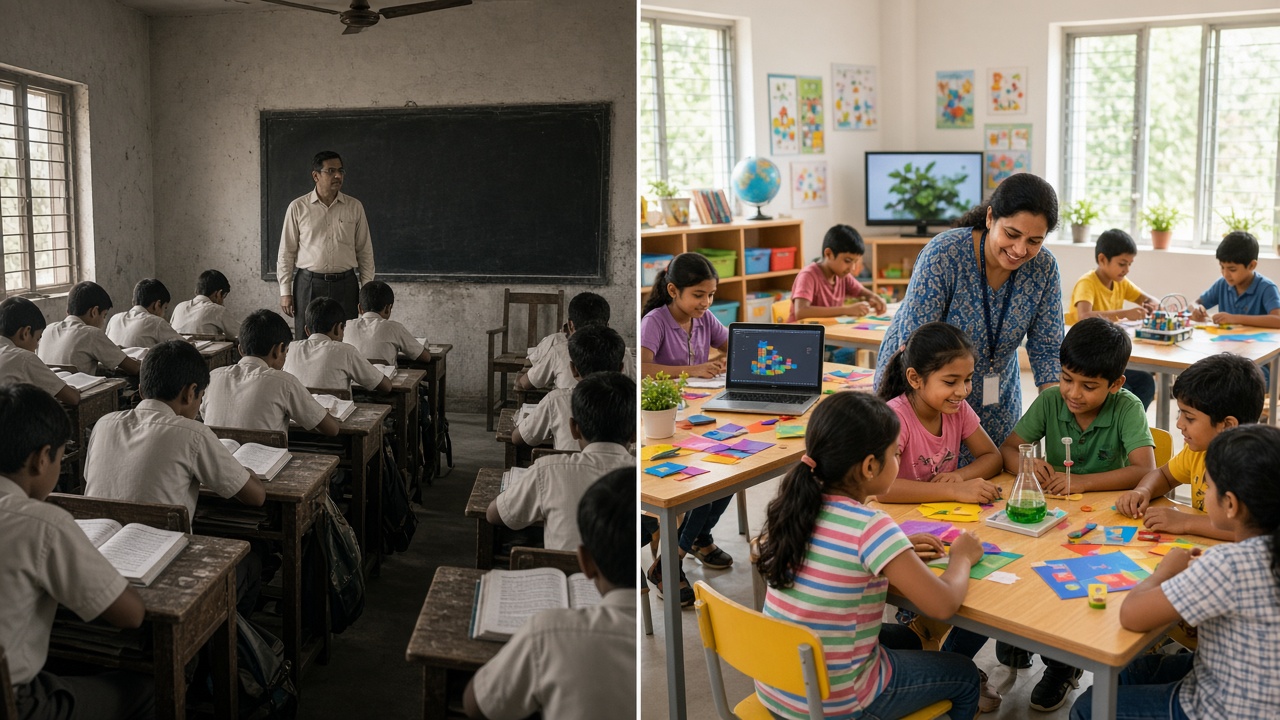
The old system focused on memorising textbooks for high-stakes board exams in rigid streams. NEP 2020 shifts towards early childhood
care, concept understanding, flexible subjects, skills, and multidisciplinary higher education. Related timelines:
printing & publishing,
education tools,
internet.
1835
Macaulay’s Minute
1968
First national policy
2009
Right to Education Act
2020
NEP 2020 approved
Old schooling (left) focused on rote memorisation; NEP 2020 (right) encourages activity-based, experiential learning.
🌳 Guru & ShishyaAncient – 1800
Gurukuls, Pathshalas & Ancient Universities
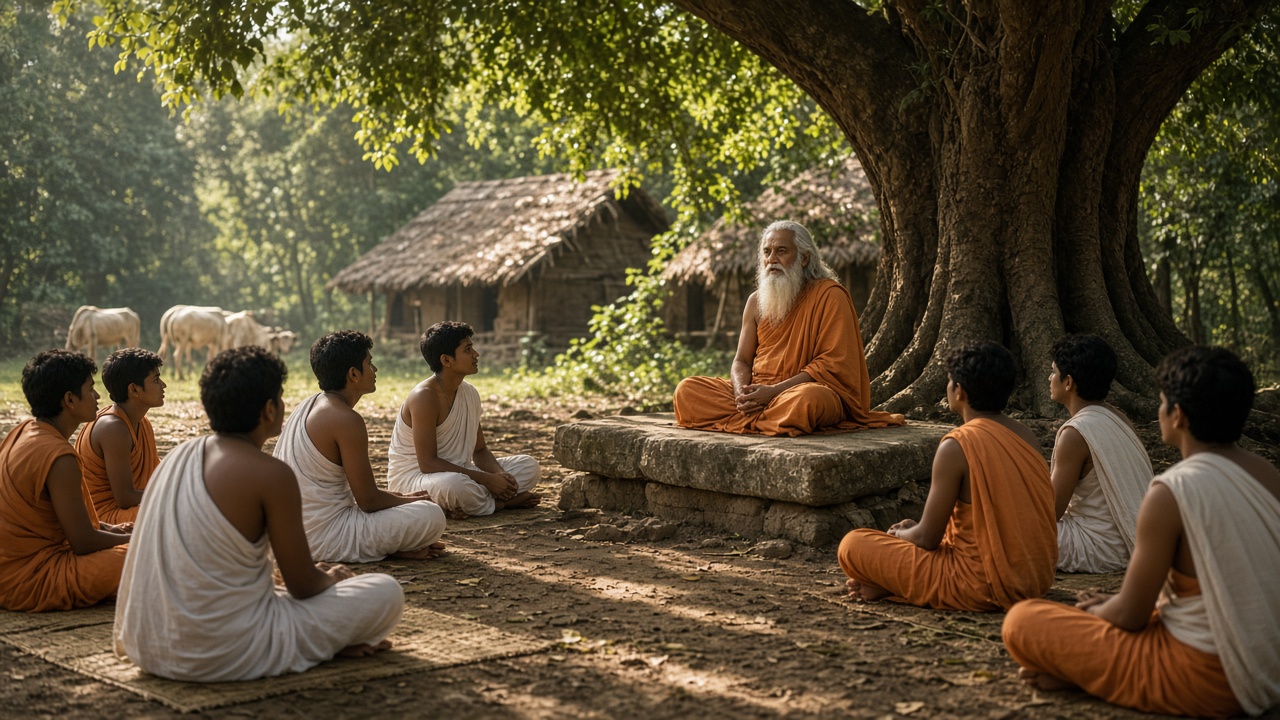
Students lived with their guru in gurukuls, learning through recitation, discussion, and daily service. Great centres such as Takshashila, Nalanda, and Vikramashila drew scholars from across Asia, while village pathshalas, maktabs, and madrasas taught local communities.
The gurukul: close mentorship, oral learning, and life skills in a residential setting.
c. 5th century BCE onward: Takshashila becomes a famous centre for medicine, law, and statecraft.
c. 5th century CE: Nalanda Mahavihara grows into a major residential university, active until the late 12th century.
8th–12th centuries: Vikramashila and other mahaviharas flourish in eastern India.
Medieval era: Pathshalas, tols, maktabs, and madrasas provide community-based schooling.
How Learning Worked
Oral tradition: Memorisation and recitation of texts.
Debate (shastrartha): Discussion and argument to test understanding.
Residential learning: Students lived and worked with the teacher.
Features
Holistic: Philosophy, arts, ethics, and practical skills together.
Mentorship: Personal guidance from the guru.
Limited access: Often restricted by caste, gender, and region.
🏛️ English Education1813 – 1947
Colonial Education
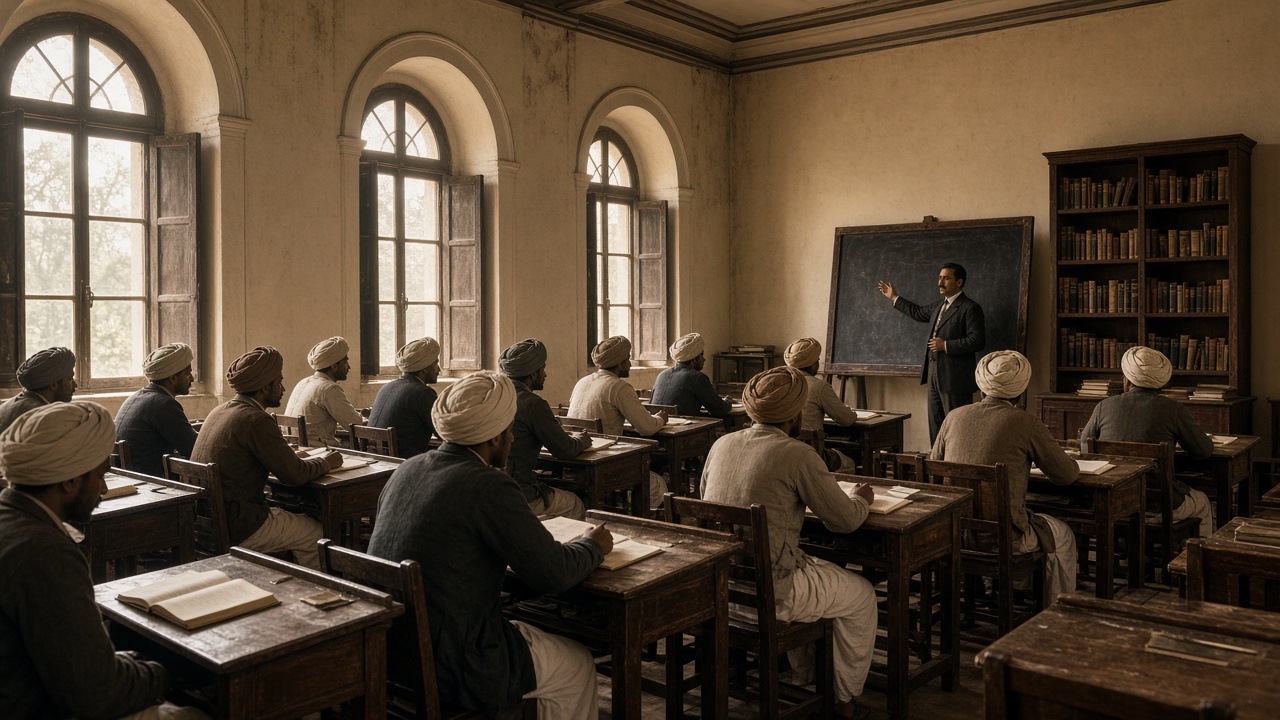
British rule introduced English-medium schools, examinations, and universities modelled on London. Indian reformers pushed back with girls’ schools, national education, and Gandhi’s Nai Talim.
Colonial colleges trained clerks, lawyers, and administrators through English-medium, exam-based education.
1813: Charter Act sets aside ₹1 lakh a year for education in India.
1835: Macaulay’s Minute leads to English-medium Western education; 1848: Savitribai and Jyotirao Phule open a girls’ school in Pune.
1854 / 1857: Wood’s Despatch; universities of Calcutta, Bombay, and Madras founded.
1882 / 1937 / 1944: Hunter Commission, Gandhi’s Wardha scheme (Nai Talim), and the Sargent Plan.
Key Ideas
English medium: English becomes the language of higher education and jobs.
Examination system: Matriculation and university exams define success.
Nai Talim: Gandhi’s idea of learning through productive craft work.
Features
Modern subjects: Science, history, and law enter the syllabus.
Rote learning: Exams reward memorisation over understanding.
Low literacy: Only about 12% of Indians were literate by 1947.
🇮🇳 Nation Building1947 – 1985
Post-Independence Foundations
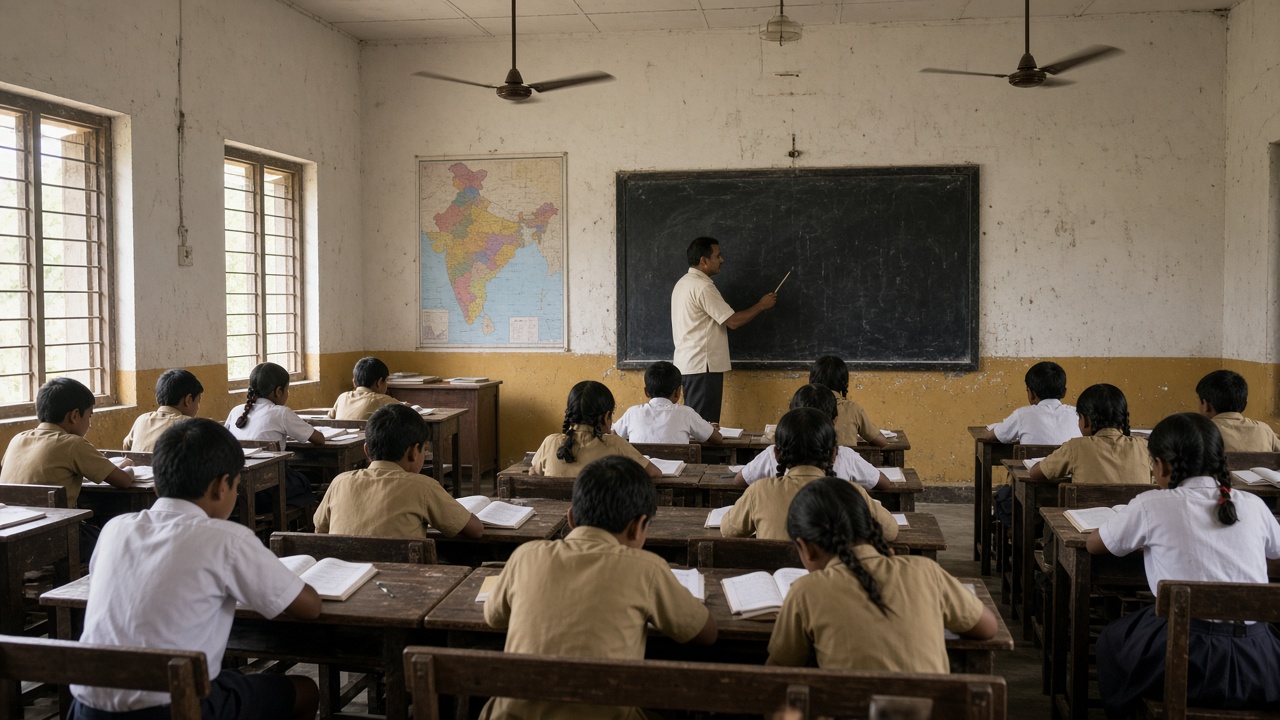
Independent India set up commissions, national institutions, and its first education policy. The Kothari Commission shaped the 10+2+3 structure that most Indians grew up with.
Government schools expand rapidly as India builds a national education system.
1948–49 / 1952–53: Radhakrishnan (University) and Mudaliar (Secondary) Education Commissions.
1951 / 1956: First IIT at Kharagpur; UGC becomes a statutory body.
1964–66 / 1968 / 1976: Kothari Commission; first National Policy on Education; education moved to the Concurrent List.
Key Ideas
10+2+3 pattern: Ten years of school, two of higher secondary, three for a degree.
Three-language formula: Mother tongue, Hindi, and English.
Common school system: Kothari’s vision of equal schools for all.
Features
National institutions: IITs, UGC, NCERT, and CBSE.
Rapid expansion: Thousands of new schools and colleges.
Board exam focus: Class 10 and 12 exams decide streams and careers.
📘 Education for All1986 – 2000
NPE 1986 & Mass Literacy
The National Policy on Education 1986 focused on equal access, especially for girls and disadvantaged groups. Literacy missions, school facilities, and mid-day meals brought millions more children and adults into learning.
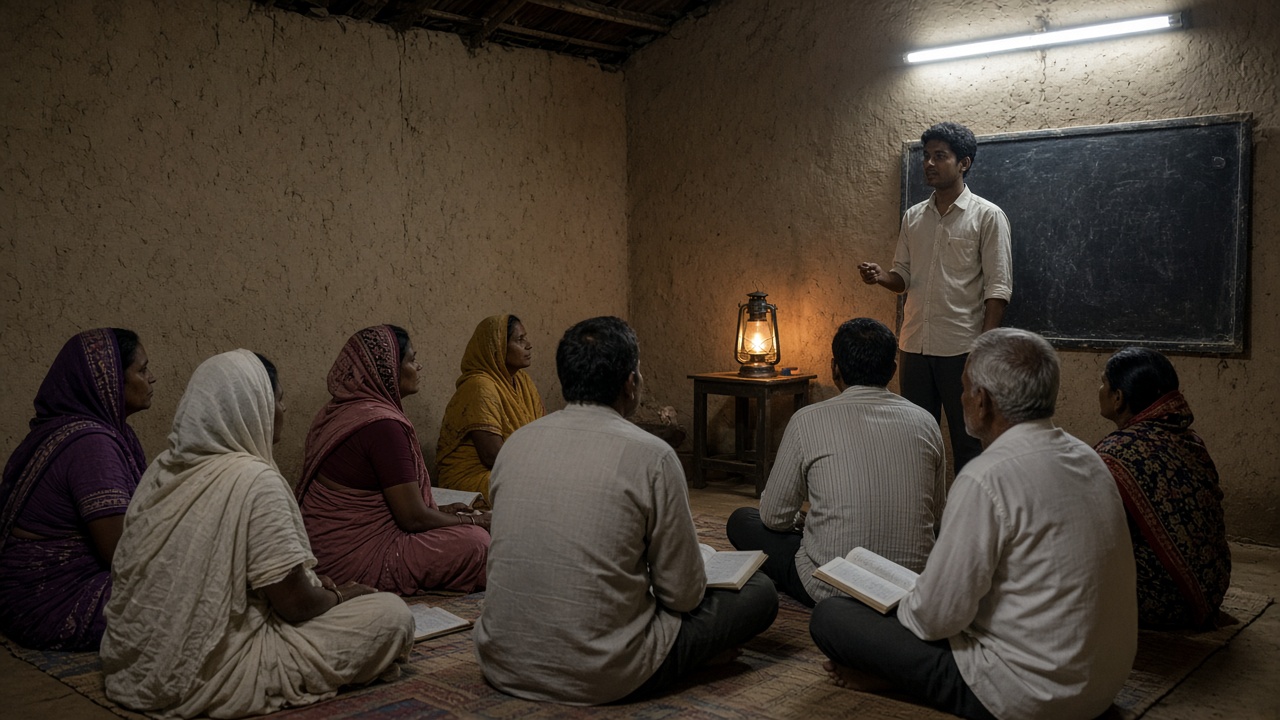
Adult literacy classes under the National Literacy Mission reached villages across India.
1985 / 1986: IGNOU founded for distance education; NPE 1986 adopted; Jawahar Navodaya Vidyalayas begin.
1987: Operation Blackboard improves basic facilities in primary schools.
1988: National Literacy Mission launches adult literacy campaigns.
1992 / 1994 / 1995: NPE revised with a Programme of Action; DPEP; national mid-day meal programme.
Key Ideas
Equity: Special focus on girls, SC/ST, and rural learners.
Open learning: Distance education through IGNOU and open schools.
“Learning without Burden” (1993): Yash Pal Committee on heavy school bags.
Features
Higher enrolment: More children join primary school.
Adult literacy: Campaigns reach millions of adults.
Quality gaps: Access improves faster than learning outcomes.
⚖️ Right to Learn2000 – 2019
SSA, RTE & Universal Access
Education became a fundamental right. Sarva Shiksha Abhiyan built schools and classrooms, and the Right to Education Act guaranteed free and compulsory schooling for every child aged 6 to 14.
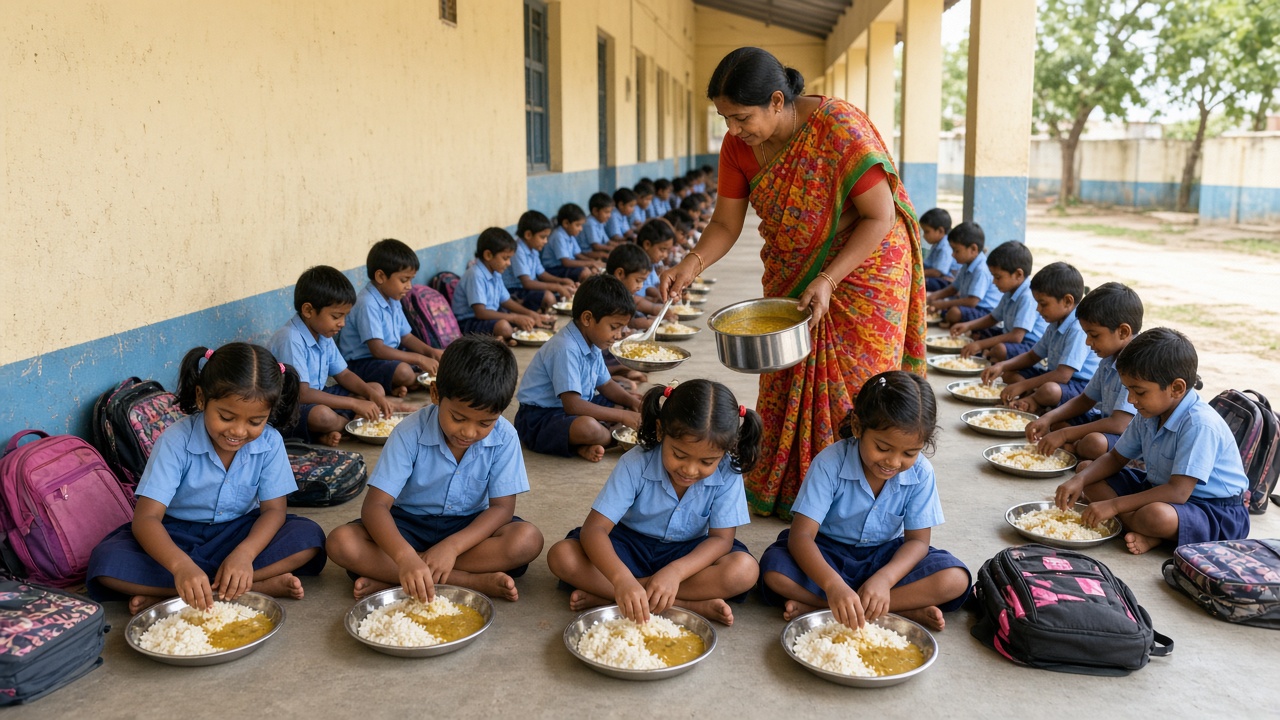
Free schooling and mid-day meals helped bring nearly every child into primary school.
2005: National Curriculum Framework stresses understanding over rote learning.
2009–2010: RTE Act passed and in force from 1 April 2010; RMSA for secondary schools; CCE introduced in CBSE schools.
2013 / 2018 / 2019: RUSA for higher education; Samagra Shiksha merges school schemes; RTE amended on the no-detention policy.
Key Ideas
Free & compulsory: Schooling for every child aged 6–14.
25% EWS seats: Private schools reserve seats for disadvantaged children.
Norms & standards: Pupil-teacher ratios, classrooms, toilets, and trained teachers.
Features
Near-universal enrolment: Most children now attend primary school.
Inclusion: More girls and first-generation learners in class.
Learning crisis: Surveys show many children still struggle with basic reading and maths.
🚀 New Policy2020 – Present
NEP 2020 & Beyond
The National Education Policy 2020 replaces NPE 1986 with a new 5+3+3+4 school structure, early childhood education, reduced rote learning, vocational skills, and flexible multidisciplinary higher education.
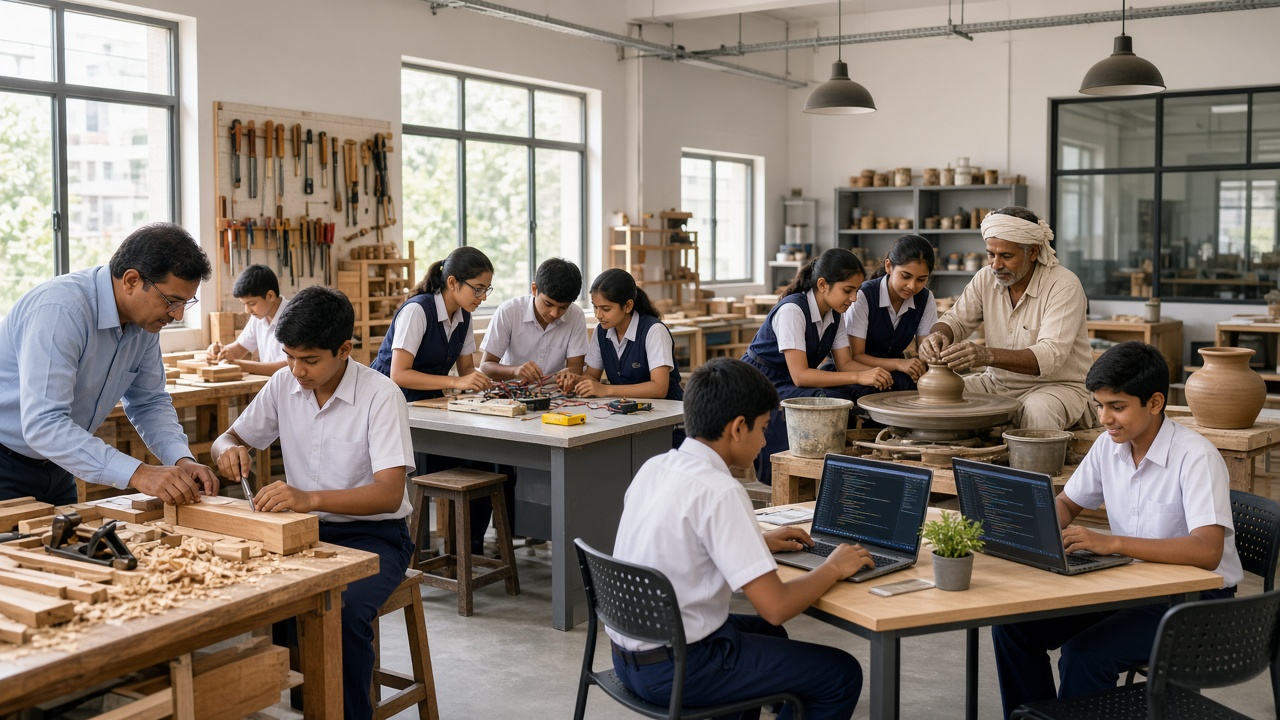
NEP 2020 brings vocational skills, coding, and hands-on projects into school from Grade 6.
29 July 2020: NEP 2020 approved; the MHRD is renamed the Ministry of Education.
2021: NIPUN Bharat mission for foundational literacy and numeracy; Academic Bank of Credits launched.
2022: NCF for Foundational Stage, CUET for university admissions, and PM SHRI model schools.
2023 onward: NCF for School Education, PARAKH assessment centre, and two board-exam opportunities being introduced.
Key Ideas
5+3+3+4 structure: Includes ages 3–6 in formal education.
Mother-tongue learning: Home or regional language at least until Grade 5 where possible.
Multiple entry & exit: Certificate, diploma, or degree based on years completed.
Features
No rigid streams: Mix science, arts, and commerce subjects.
Skills from Grade 6: Vocational education with internships.
Targets: 50% higher-education GER by 2035 and 6% of GDP on education.
Old Schooling System vs NEP 2020
A side-by-side view of how NEP 2020 changes the school and college experience compared with the old 10+2 system under NPE 1986.
Aspect
Old system (10+2, NPE 1986)
NEP 2020
School structure
10+2 (ages 6–18)
5+3+3+4 (ages 3–18)
Early childhood
Pre-school outside the formal system
Ages 3–6 part of the Foundational Stage
Learning style
Rote memorisation, textbook-heavy
Concept-based, experiential, play and activity-based
Subject choice
Rigid Science / Commerce / Arts streams
Flexible mix of subjects, no hard separation
Vocational education
Limited, often seen as second-class
From Grade 6, with internships
Medium of instruction
Varied; English preferred in many schools
Mother tongue / regional language until at least Grade 5 where possible
Board exams
High-stakes, once a year
Test core concepts; two opportunities being introduced
Report card
Marks-focused
360-degree holistic progress card
Undergraduate degree
Fixed 3-year degree, dropout means no credential
3 or 4-year degree with multiple entry and exit
Credits
Locked to one institution
Academic Bank of Credits, transferable
M.Phil
Offered
Discontinued
University entrance
Separate exams and high cut-offs
Common entrance (CUET) via NTA
NEP 2020’s 5+3+3+4 Structure Explained
NEP 2020 groups school education into four stages based on how children develop, starting from age 3.
Click any panel to expand and explore the visual mood.
India’s education system in pictures — gurukuls, colonial colleges, government schools, literacy classes, RTE, and NEP 2020.
Gurukul
Learning with the guru
Colonial Education
English-medium colleges
Nation Building
Schools for a new India
Literacy Mission
Adults learn to read
Right to Education
School for every child
Old vs NEP
Rote to experiential
Skills Under NEP
Vocational from Grade 6
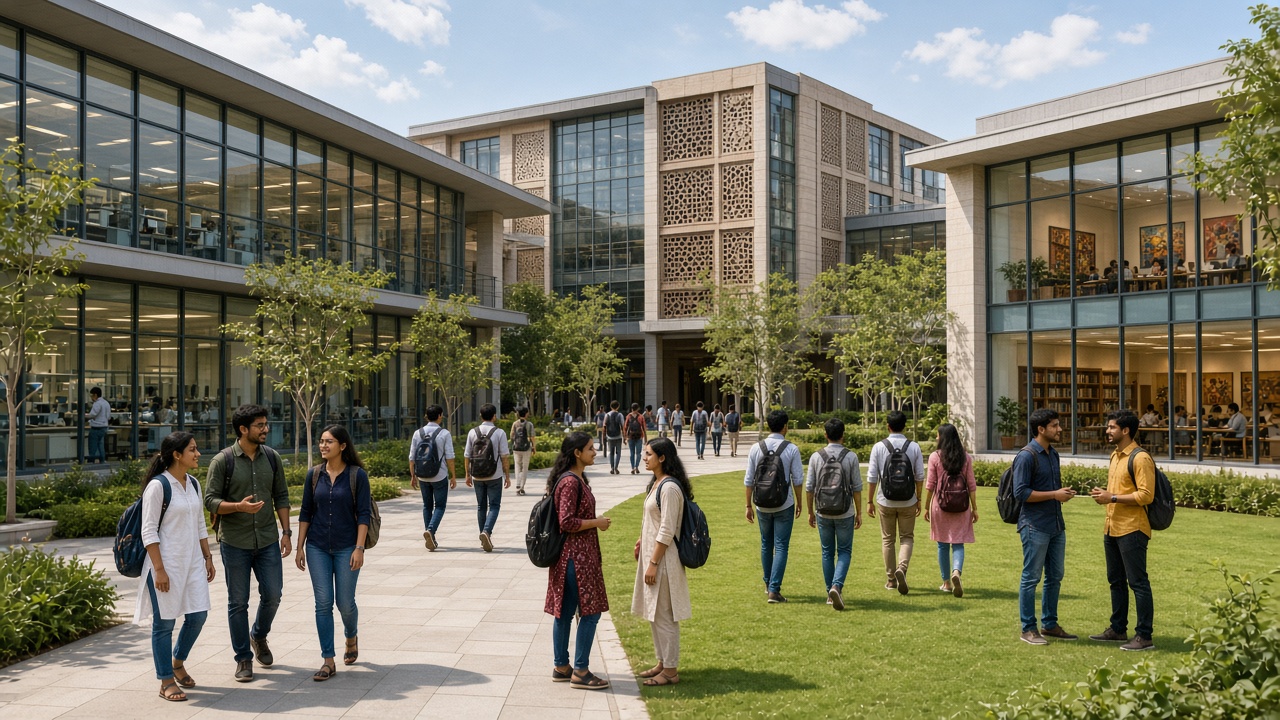
Future Universities
Multidisciplinary campuses
Explore all education timelines
Jump to any other education timeline on WorldTimelineHub.
Disclaimer: This content is AI-generated for educational purposes and may contain errors or outdated details. For correct and authoritative information, please refer to official and reliable sources such as government publications, manufacturers, museums, and academic references.