From China’s imperial examinations and the Indian Civil Service to UPSC, SSC, banking, JEE, NEET, GATE, and CAT —
competitive exams became the gateway to government jobs, top colleges, and professional careers for millions of Indians.
This timeline follows how exams moved from London halls to Indian cities, from pen-and-paper OMR sheets to computer-based tests,
and from scattered entrance tests to unified national exams run by NTA — along with the coaching culture and reforms around them.
Competitive exams select candidates on merit instead of family connections or patronage. In India they decide who becomes an IAS officer,
a bank PO, an engineer at an IIT, or a doctor at a medical college. Every year crores of candidates appear for these exams, making them
one of the biggest parts of the Indian education and career journey.
Big picture
Competitive exams in one view
Exams moved from patronage to open competition, from London to Indian cities, from separate tests to unified national exams,
and from pen-and-paper to computer-based testing. Related timelines:
education system & NEP,
education tools,
printing & publishing.
1855
First open ICS exam
1950
UPSC under Constitution
2017
NTA set up
2022
CUET begins
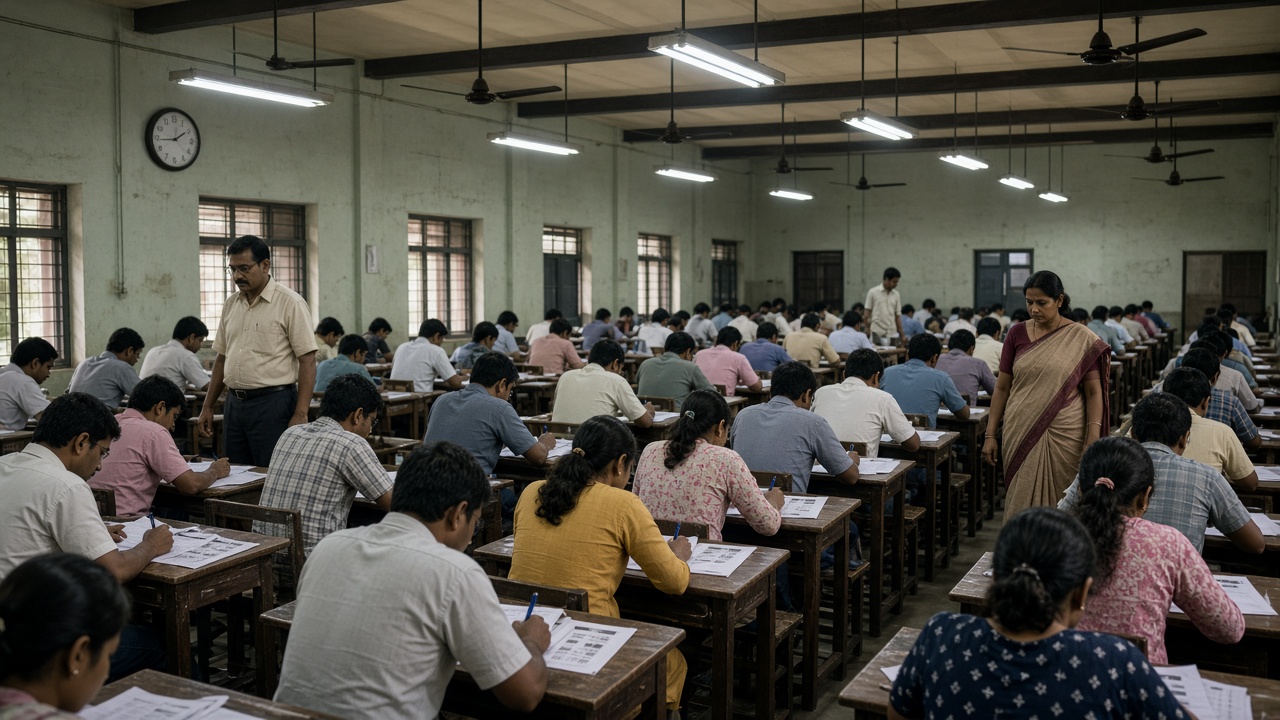
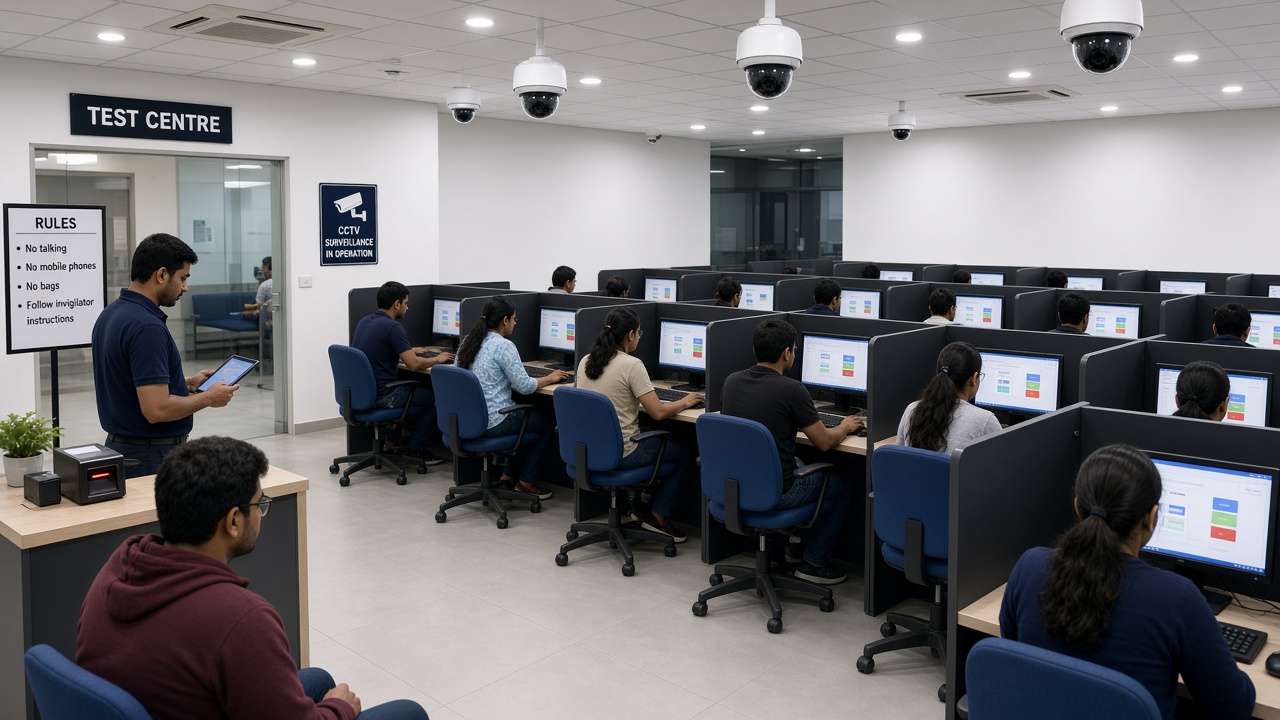
Exam halls like this one have shaped the careers of generations of Indian students and job seekers.
📜 Merit Begins605 CE – 1853
Imperial Exams & Patronage
China’s imperial examinations were the world’s first large-scale merit-based selection system. In British India, early Company officials were chosen by patronage and nomination until reformers demanded open competition.
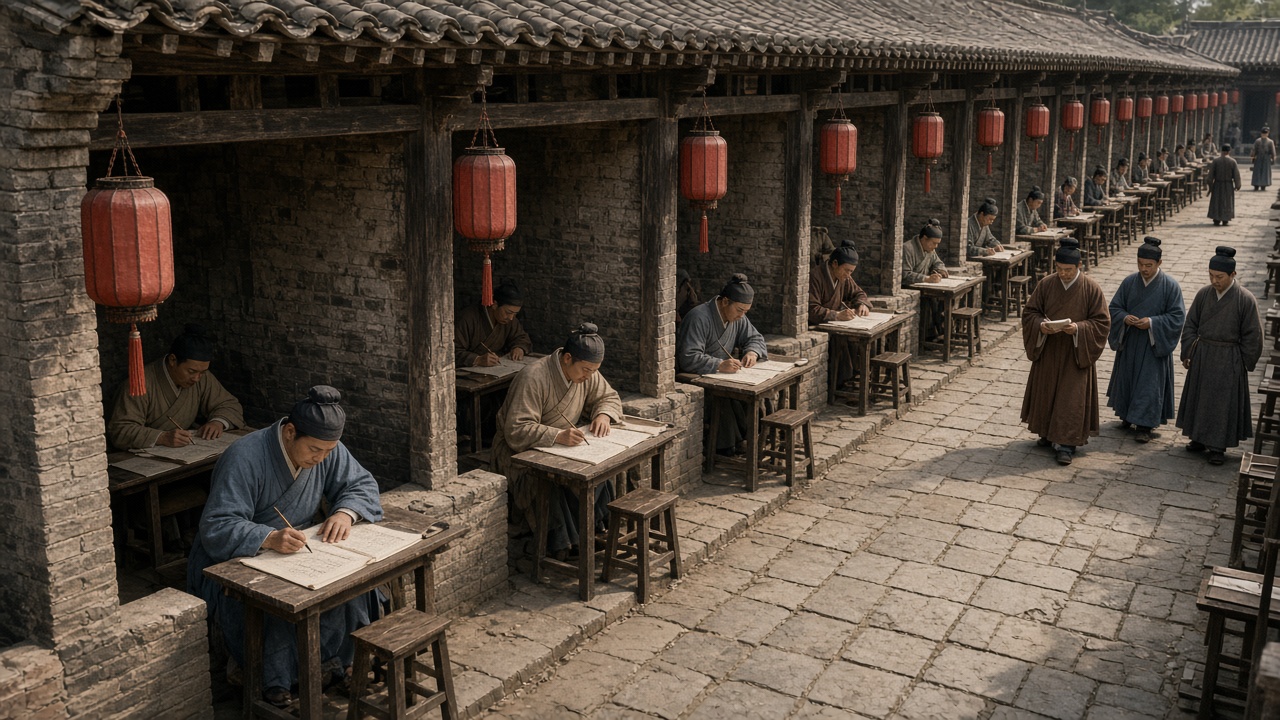
Imperial exam cells: candidates wrote for days to earn government posts on merit.
c. 605 CE: China’s Sui dynasty formalises the imperial examination (keju) to select officials.
605–1905: The system runs for about 1,300 years, inspiring later civil service exams worldwide.
1806: East India College (Haileybury) trains Company “writers” chosen by nomination.
1853: The Charter Act ends patronage and opens the civil service to competition.
How Selection Worked
Written essays: Candidates tested on classics, law, and administration.
Anonymous marking: Papers copied and numbered to reduce favouritism (China).
Patronage: Company directors nominated friends and relatives.
Features
Merit idea: Talent, not birth, should decide public office.
Long preparation: Years of study for a few posts.
Limited fairness: Patronage kept most Indians out of high office.
🏛️ The “Steel Frame”1853 – 1947
Indian Civil Service Exams
The ICS exam was held only in London for decades, making it very hard for Indians to compete. Nationalists demanded exams in India, which finally began in 1922, and a Public Service Commission was created in 1926.
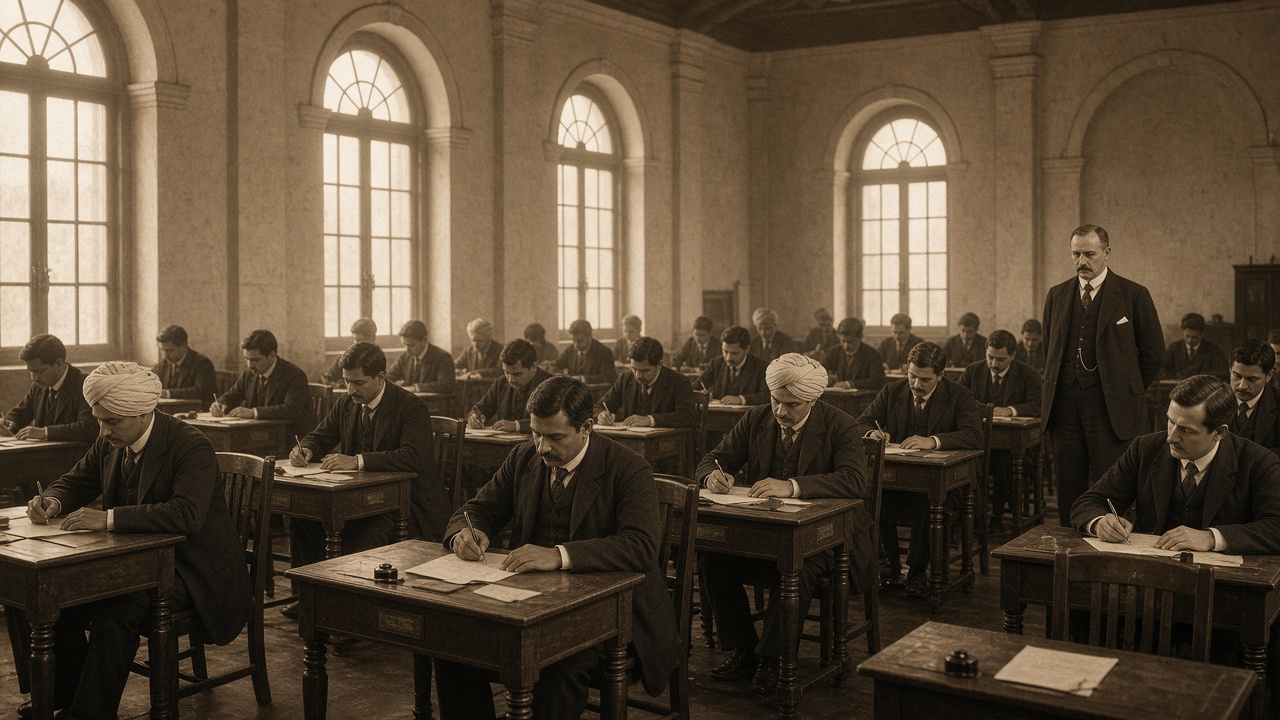
ICS examinations: a tough gateway into the “steel frame” of British Indian administration.
1855: First open competitive ICS examination held in London.
1863: Satyendranath Tagore becomes the first Indian to clear the ICS exam.
1876: Maximum age cut to 19, making it even harder for Indian candidates.
1922 / 1926 / 1937: ICS exam held in India for the first time; Public Service Commission set up; Federal Public Service Commission under the 1935 Act.
Exam Pattern
Written papers: English, classics, history, mathematics, and sciences.
Viva voce: Oral interview for personality and knowledge.
Probation: Training in law, Indian languages, and riding.
Features
Prestige: ICS officers ran districts and provinces.
Barriers: Travel to London and age limits excluded most Indians.
Nationalist demand: Simultaneous exams in India became a key political issue.
🇮🇳 National Exams1947 – 1990
UPSC & National Exams
Independent India replaced the ICS with the IAS and built national exam bodies — UPSC, SSC, banking boards, and entrance tests for IITs, medical colleges, and postgraduate studies. Most exams were pen-and-paper with OMR answer sheets.
Late-night libraries became the second home of civil services aspirants.
1947 / 1950: IAS and IPS replace ICS and IP; UPSC established under Article 315.
c. 1960: Common IIT entrance exam (IIT-JEE) begins; NDA exam selects future officers of the armed forces.
1975–77: Subordinate Services Commission set up and renamed Staff Selection Commission.
Results in newspapers: Roll numbers printed in dailies.
📚 Coaching Culture1990 – 2012
Coaching Boom & New Entrance Tests
Rising competition turned cities like Kota and Delhi into coaching hubs. New national tests for engineering, law, management, and banking appeared, and CAT became the first major exam to move online.
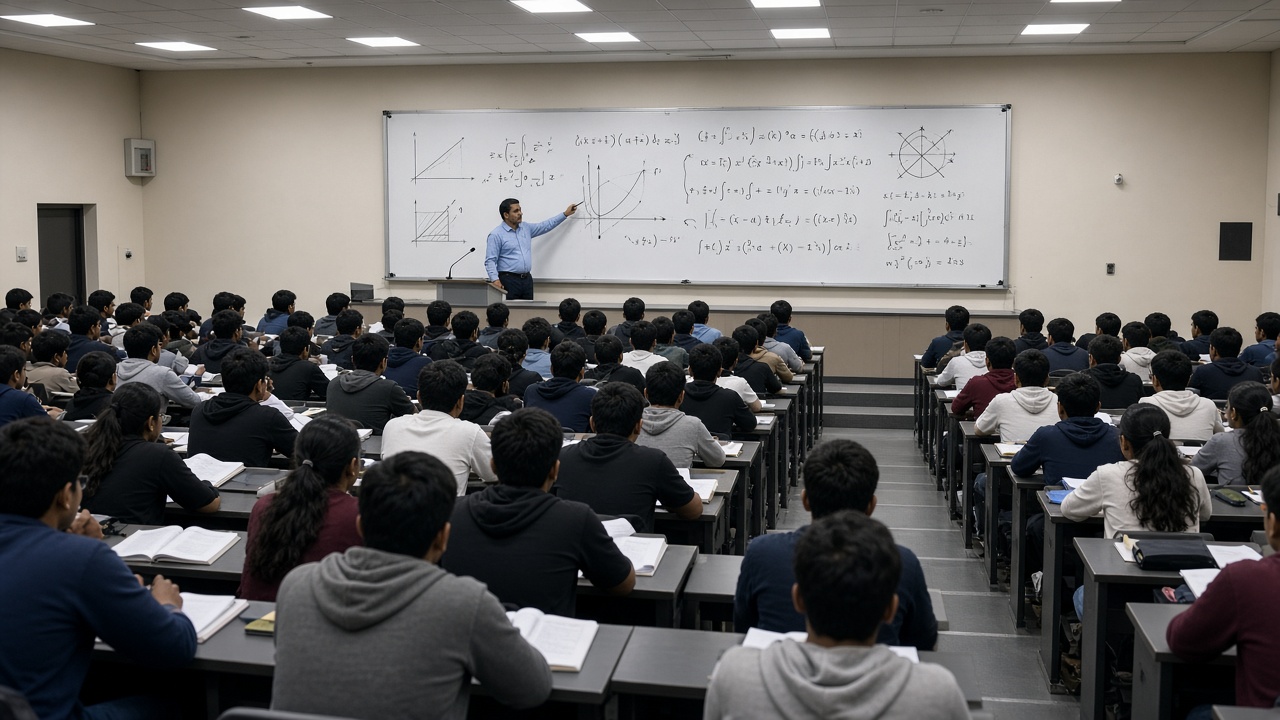
Coaching hubs such as Kota draw lakhs of students preparing for JEE and NEET.
1990s: Kota and Delhi’s Mukherjee Nagar and Rajinder Nagar grow as coaching centres.
2002: AIEEE introduced for admission to NITs and other engineering colleges.
2008 / 2009: CLAT begins for national law universities; CAT becomes computer-based.
2011: IBPS common written exam for bank jobs; CSAT added to UPSC prelims (qualifying from 2015).
Preparation Tools
Study material: Printed modules, guides, and previous-year papers.
Test series: Weekly mock tests with all-India rankings.
Online forms: Applications and admit cards move to websites.
Features
Huge competition: Lakhs of candidates for a few thousand seats.
Cost burden: Coaching fees and city living are expensive.
Student stress: Mental health becomes a serious concern.
💻 Online Testing2013 – 2019
Unified & Computer-Based Tests
Multiple entrance tests were merged into national exams such as JEE Main and NEET, and a dedicated National Testing Agency was created to run them. Computer-based testing, biometric checks, and online results became standard.
Computer-based test centres with CCTV and biometric verification replaced many pen-and-paper halls.
2013: JEE Main and JEE Advanced replace AIEEE and IIT-JEE; NEET first held.
2016: NEET restored as the single national medical entrance exam.
2017: National Testing Agency (NTA) set up; first exams from late 2018.
2019: JEE Main held twice a year in computer-based mode.
Exam Technology
Computer-based tests: Questions shown on screen, answers clicked.
Normalisation: Scores adjusted across multiple shifts.
Biometrics & CCTV: Identity checks and live monitoring.
Features
One exam, many colleges: Fewer separate entrance tests.
Faster results: Answer keys and scores published online.
CUET brought university admissions under one test, while paper-leak controversies led to a strict anti-cheating law and a review of NTA. Online preparation, AI study tools, and secure digital exams are shaping the next phase.
Results now arrive online in seconds — celebrated at home with family and sweets.
2020: National Recruitment Agency approved for a common eligibility test for central government jobs.
2022: CUET-UG begins for central university admissions.
2024: Coaching-centre guidelines; Public Examinations (Prevention of Unfair Means) Act; expert committee reviews NTA after paper-leak concerns.
2020s: Online courses, apps, and AI-based practice widen access to exam preparation.
Exam Technology
Secure question delivery: Encrypted digital papers to centres.
AI proctoring & analytics: Detect unusual patterns and malpractice.
Adaptive practice: AI tools personalise mock tests.
Features
Common tests: CUET and proposed CET reduce multiple exams.
Stricter integrity: Heavy penalties for leaks and cheating.
Wellbeing focus: Rules on coaching age, hours, and counselling.
Major Competitive Exams in India
A quick guide to the most widely known recruitment and entrance exams, who runs them, and what they are for.
Exam
Conducted by
Purpose
Began
Civil Services Exam
UPSC
IAS, IPS, IFS, and other central services
1950 (3-stage from 1979)
NDA & NA
UPSC
Officer entry to Army, Navy, and Air Force
1950s
SSC CGL / CHSL
Staff Selection Commission
Central government Group B and C posts
1975–77 (commission)
IBPS PO / Clerk
IBPS
Public sector bank jobs
2011 (common exam)
RRB NTPC / Group D
Railway Recruitment Boards
Indian Railways jobs
1985 (as RRBs)
JEE Main & Advanced
NTA / IITs
Engineering admissions (NITs, IITs)
2013 (IIT-JEE c. 1960)
NEET-UG
NTA
MBBS, BDS, and other medical admissions
2013 / 2016
GATE
IISc & IITs
M.Tech admissions and PSU recruitment
1984
CAT
IIMs
MBA admissions
Computer-based from 2009
CLAT
Consortium of NLUs
Law admissions
2008
UGC-NET
NTA
Assistant professor eligibility and JRF
1989
CUET-UG
NTA
Central university undergraduate admissions
2022
UPSC Civil Services Exam: Three Stages
India’s most famous competitive exam follows a three-stage pattern introduced in 1979 on the recommendation of the Kothari Committee (1976).
Stage
Format
Purpose
1. Preliminary
Two objective papers: General Studies and CSAT (qualifying)
Screening test for the Main exam
2. Main
Nine descriptive papers: essay, four GS papers, two optional papers, and two qualifying language papers
Tests depth of knowledge and writing
3. Personality Test
Interview before a UPSC board
Assesses personality, judgement, and suitability
Exam Experience: Then vs Now
The future may bring AI-personalised preparation and highly secure digital exam booths.
Aspect
Earlier
Now
Application
Paper forms, demand drafts, and post
Online forms and digital payment
Admit card
Posted to home address
Downloaded from the website
Exam mode
Pen-and-paper with OMR sheets
Mostly computer-based tests
Preparation
Guides, libraries, and local coaching
Online courses, apps, videos, and AI practice
Attempts
Usually once a year
Some exams twice a year
Answer key
Rarely published
Provisional keys with online challenges
Results
Newspapers and notice boards
Online scorecards within weeks
Security
Sealed paper packets and invigilators
Encryption, biometrics, CCTV, and strict laws
Competitive Exams Timeline Summary
Year / Era
Milestone
c. 605 CE
China’s imperial examination system formalised
1853
Charter Act opens ICS to competition
1855
First open ICS exam in London
1863
Satyendranath Tagore — first Indian in the ICS
1922
ICS exam held in India for the first time
1926
Public Service Commission established
1950
Union Public Service Commission under the Constitution
1977
Staff Selection Commission named
1979
Three-stage Civil Services Exam
2009
CAT becomes computer-based
2013
JEE Main and Advanced; NEET first held
2017
National Testing Agency set up
2022
CUET-UG begins
2024
Anti-paper-leak law and NTA review
Test Your Knowledge
20 quick questions from the competitive exams timeline. Click each question to reveal the answer.
Answer: China (imperial examinations, c. 605 CE).
Answer: The Charter Act of 1853.
Answer: Only in London.
Answer: Satyendranath Tagore (1863).
Answer: 1 October 1926.
Answer: Article 315.
Answer: Prelims, Mains, and Personality Test (interview).
Answer: The Kothari Committee (1976).
Answer: Staff Selection Commission.
Answer: GATE.
Answer: Kota (Rajasthan).
Answer: AIEEE.
Answer: CAT.
Answer: Admission to national law universities.
Answer: JEE Main and JEE Advanced.
Answer: NEET-UG.
Answer: National Testing Agency.
Answer: Adjusting scores so candidates in different shifts are compared fairly.
Answer: CUET-UG.
Answer: The Public Examinations (Prevention of Unfair Means) Act, 2024.
Classroom activity
Students Tasks
Use these prompts for discussion or projects on competitive exams and careers.
Click any panel to expand and explore the visual mood.
Competitive exams in pictures — imperial exam cells, ICS halls, OMR sheets, coaching hubs, test centres, and results day.
Imperial Exams
Merit-based selection begins
ICS Exams
The steel frame
OMR Era
Pen-and-paper exams
Aspirant Life
Late-night libraries
Coaching Boom
Kota and beyond
Computer-Based Tests
Secure online exams
Results Day
Online scorecards
Future Exams
AI prep and secure booths
Explore all education timelines
Jump to any other education timeline on WorldTimelineHub.
Disclaimer: This content is AI-generated for educational purposes and may contain errors or outdated details. For correct and authoritative information, please refer to official and reliable sources such as government publications, manufacturers, museums, and academic references.