From palm-leaf manuscripts and India’s first printing press in Goa to mass-printed textbooks, education magazines, desktop publishing,
e-books, and online learning platforms — this is how knowledge moved from a scribe’s stylus to every student’s screen.
This timeline explains how books are published step by step, the story of education magazines and periodicals in India,
and the rise of online education through SWAYAM, DIKSHA, NPTEL, and blended classrooms.
Before printing, every book was copied by hand, so knowledge stayed with a few scholars, temples, and royal libraries.
Printing made identical copies cheap and fast — enabling textbooks, newspapers, magazines, and mass schooling.
Today, digital publishing and online platforms carry the same idea further: one lesson, available to millions of learners at once.
Big picture
Printing & publishing in one view
Knowledge moved from hand-copied manuscripts to printed books, then to textbooks and magazines for mass education, and finally to
e-books and online courses. Related timelines:
printers,
computers,
internet,
AI.
868 CE
Oldest dated printed book
1556
First press in India (Goa)
1961
NCERT founded
2017
SWAYAM & DIKSHA
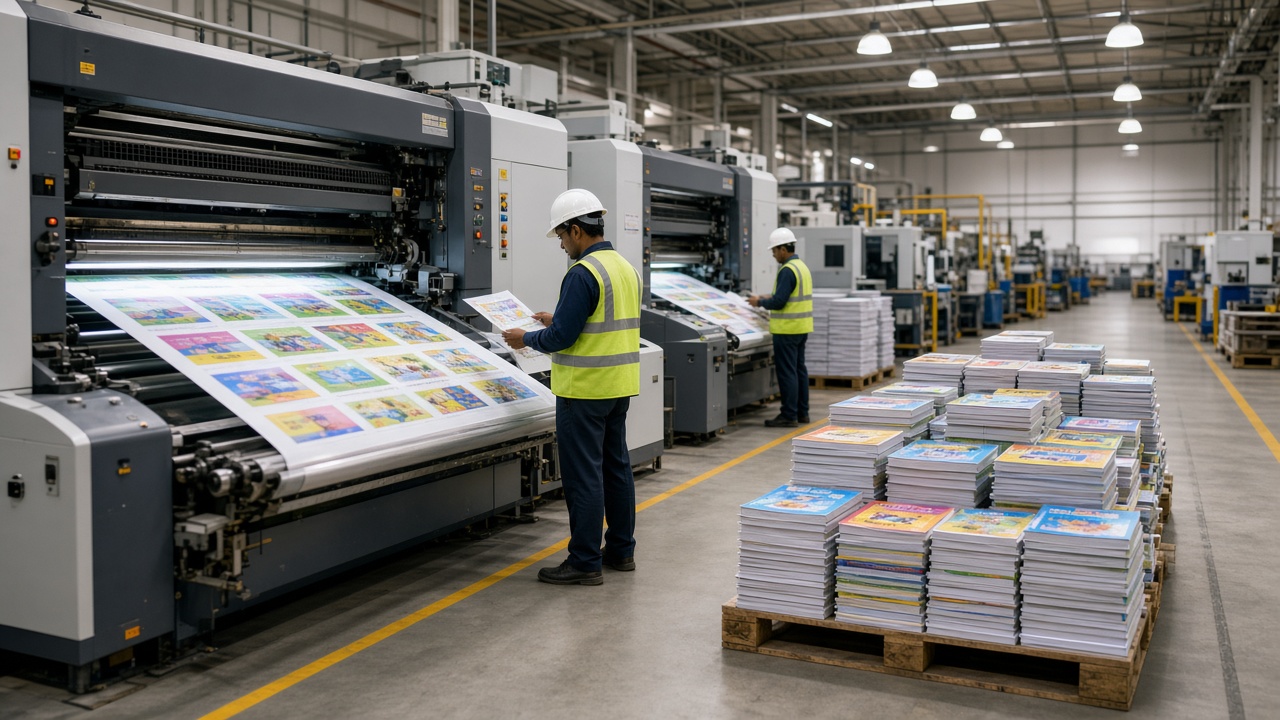
From manuscripts to mass-printed textbooks and online classrooms — printing shaped how India learns.
📜 Hand-Copied KnowledgeBefore 1450
Manuscripts & Oral Learning
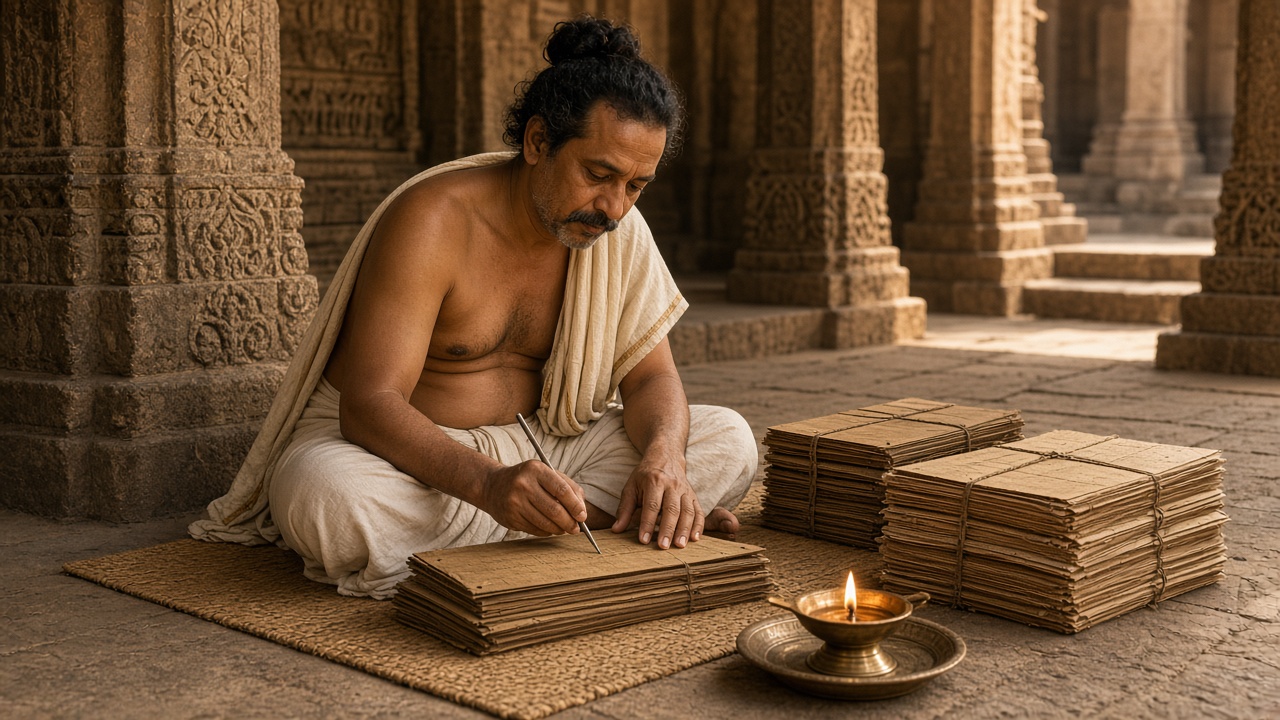
In India, learning passed through oral recitation in gurukuls and hand-written palm-leaf and birch-bark manuscripts. Great centres such as Nalanda and Takshashila kept libraries of copied texts, while woodblock printing developed in China and East Asia.
Palm-leaf manuscripts: every copy written by hand, preserved in temples, maths, and university libraries.
Oral tradition: Vedic texts and lessons memorised and recited across generations.
Palm-leaf & birch-bark: Scribes wrote texts on dried leaves, tied into bundles.
868 CE: The Diamond Sutra, printed with woodblocks in China, is the oldest dated printed book.
c. 1040s: Bi Sheng experiments with movable clay type in China.
Technology Used
Stylus & ink: Letters incised on palm leaves and blackened with soot.
Woodblock printing: A whole page carved into a single wooden block.
Copying houses: Teams of scribes duplicated important texts.
Features
Rare and costly: Each book took weeks or months to copy.
Limited access: Knowledge stayed with scholars, temples, and courts.
Copying errors: Mistakes could multiply as texts were re-copied.
🖨️ Movable Type1450 – 1800
Printing Press Revolution
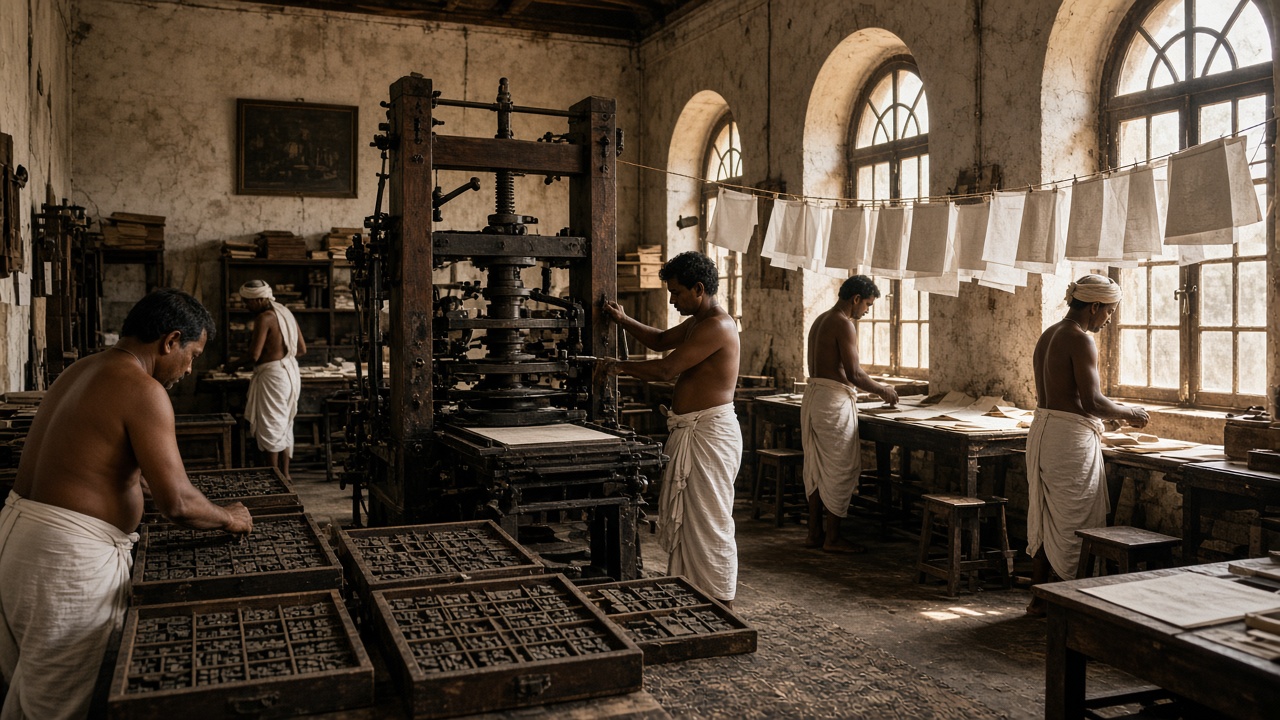
Gutenberg’s metal movable-type press made books faster and cheaper to produce. Printing reached India in 1556 in Goa, followed by the first books in Indian languages and, later, India’s first newspaper.
Hand-press era: metal type, ink, and paper bring printed books to Indian cities.
c. 1440–1455: Johannes Gutenberg develops the movable-type press; the Gutenberg Bible follows.
1556: First printing press in India set up at St. Paul’s College, Goa.
1578:Thambiran Vanakkam, among the first books printed in an Indian language (Tamil).
1712: Tranquebar press prints Tamil texts; 1780:Hicky’s Bengal Gazette, India’s first newspaper.
Technology Used
Metal movable type: Reusable letters arranged into pages.
Screw press: Even pressure transferred ink to paper.
Indian scripts in type: Punch-cutters created Tamil, Bengali, and Devanagari fonts.
Features
Identical copies: Hundreds of matching pages from one setting.
Lower cost: Books became affordable to more readers.
Spread of ideas: Religion, science, and news reached wider audiences.
📚 Books for Schools1800 – 1960
Textbooks & Mass Publishing
Mission presses, school-book societies, and new universities created demand for printed textbooks in English and Indian languages. After independence, national institutions began publishing affordable books for every learner.
Publishing grows into a profession — authors, editors, designers, printers, and distributors.
1800: Serampore Mission Press begins printing books in dozens of Indian languages.
1817: Calcutta School-Book Society publishes low-cost school books.
1854–1857: Wood’s Despatch and the universities of Calcutta, Bombay, and Madras expand formal education.
1867 / 1914 / 1957: Press and Registration of Books Act, Indian Copyright Act, and the new Copyright Act; 1957: National Book Trust founded.
Technology Used
Steam & rotary presses: Much faster printing for large runs.
Linotype / Monotype: Machines cast lines of type automatically.
Lithography: Cheap printing of maps, diagrams, and illustrations.
Features
Standard syllabus: Same textbook for every student in a class.
Regional-language books: Learning in mother tongues expands.
Copyright: Authors and publishers gain legal protection.
📰 Periodicals Boom1960 – 1985
Education Magazines & Periodicals
NCERT textbooks, science magazines, children’s monthlies, and competitive-exam periodicals turned reading into a habit beyond the classroom. Offset printing made colourful, affordable magazines possible for millions of homes and school libraries.
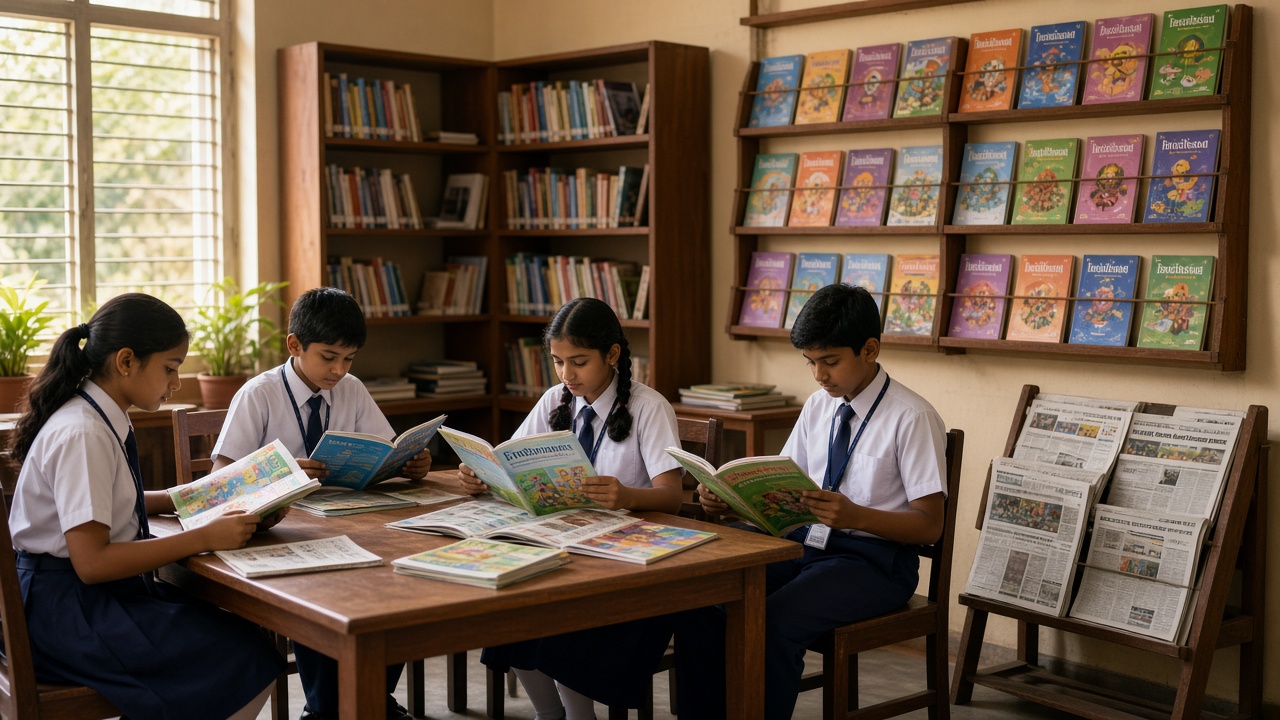
School libraries fill with science, children’s, and general-knowledge magazines.
1961: NCERT established to develop national model textbooks.
1964:Science Reporter (CSIR) and Competition Success Review launched.
1968 / 1980:Champak and Tinkle join Chandamama (1947) as children’s favourites.
1972: First World Book Fair in New Delhi; 1976:Employment News begins.
Technology Used
Offset lithography: High-quality colour printing at scale.
Phototypesetting: Type set photographically instead of in metal.
ISBN (1970): A global numbering system for books.
Features
Learning beyond class: Puzzles, stories, science, and current affairs.
Exam preparation: Periodicals guide students for competitive exams.
Subscriptions: Monthly issues delivered by post to homes and schools.
💻 Screens Arrive1985 – 2015
Desktop Publishing & Digital Books
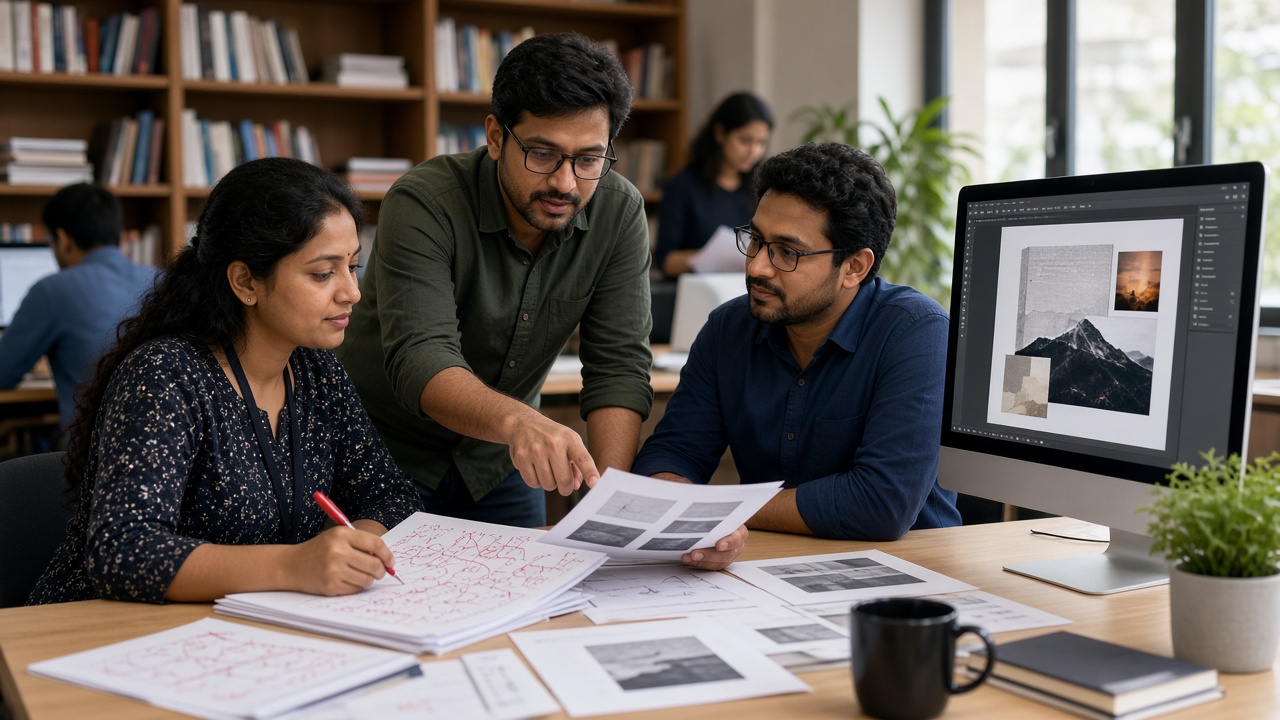
Personal computers and layout software replaced manual typesetting. Unicode made Indian scripts digital, CD-ROMs and websites carried lessons, and e-books and e-readers began to sit beside printed textbooks.
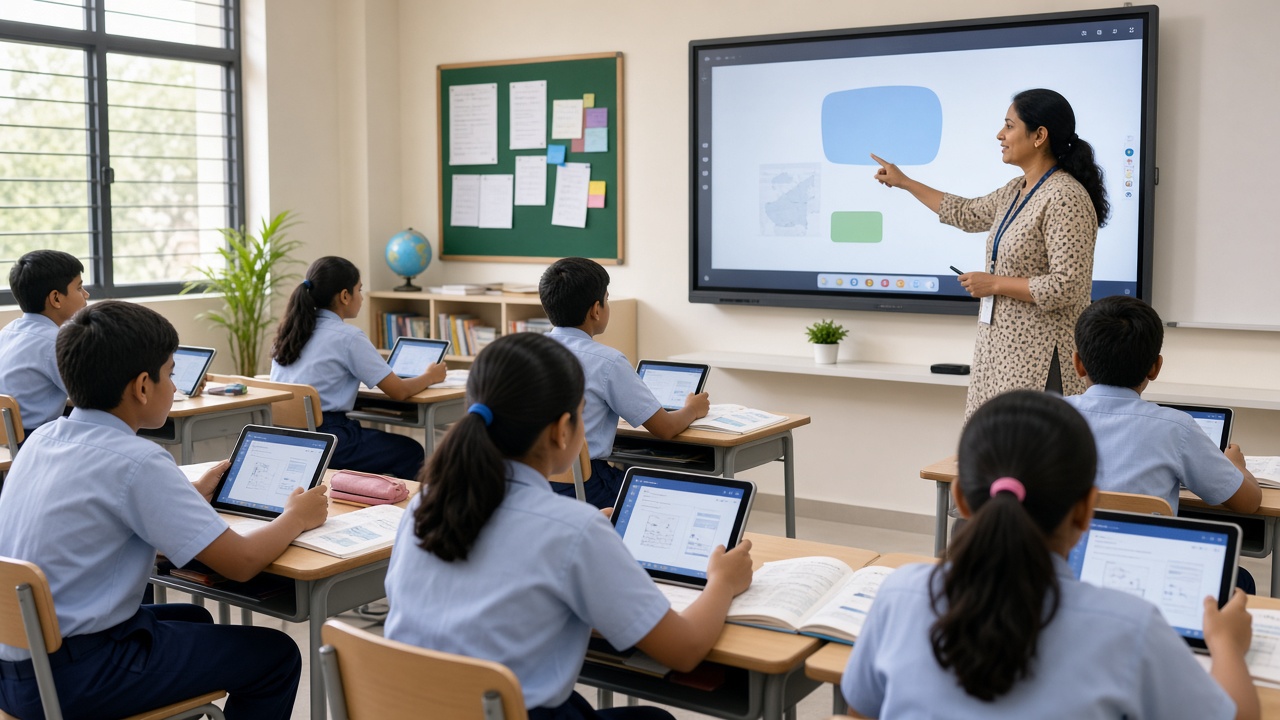
Smart boards and tablets join printed textbooks — the start of blended learning.
1985: Desktop publishing software (PageMaker) launches; India’s national ISBN agency is set up.
1991: Unicode includes Devanagari and other Indian scripts.
2003: NPTEL starts free engineering video lectures from IITs and IISc.
DTP software: Page layout, fonts, and images on a PC.
Computer-to-plate (CTP): Files sent straight to printing plates.
PDF & EPUB: Standard formats for digital books.
Features
Faster editions: Corrections and updates in hours, not weeks.
Small publishers: Low-cost tools open publishing to more people.
Free e-textbooks: Students can download books instantly.
🌐 Learn Anywhere2015 – Present
Online Education & AI Learning
Government platforms, MOOCs, video lessons, and QR-coded textbooks bring education online. The 2020 school closures made online classes part of everyday life, and AI tutors and print-on-demand are shaping what comes next.
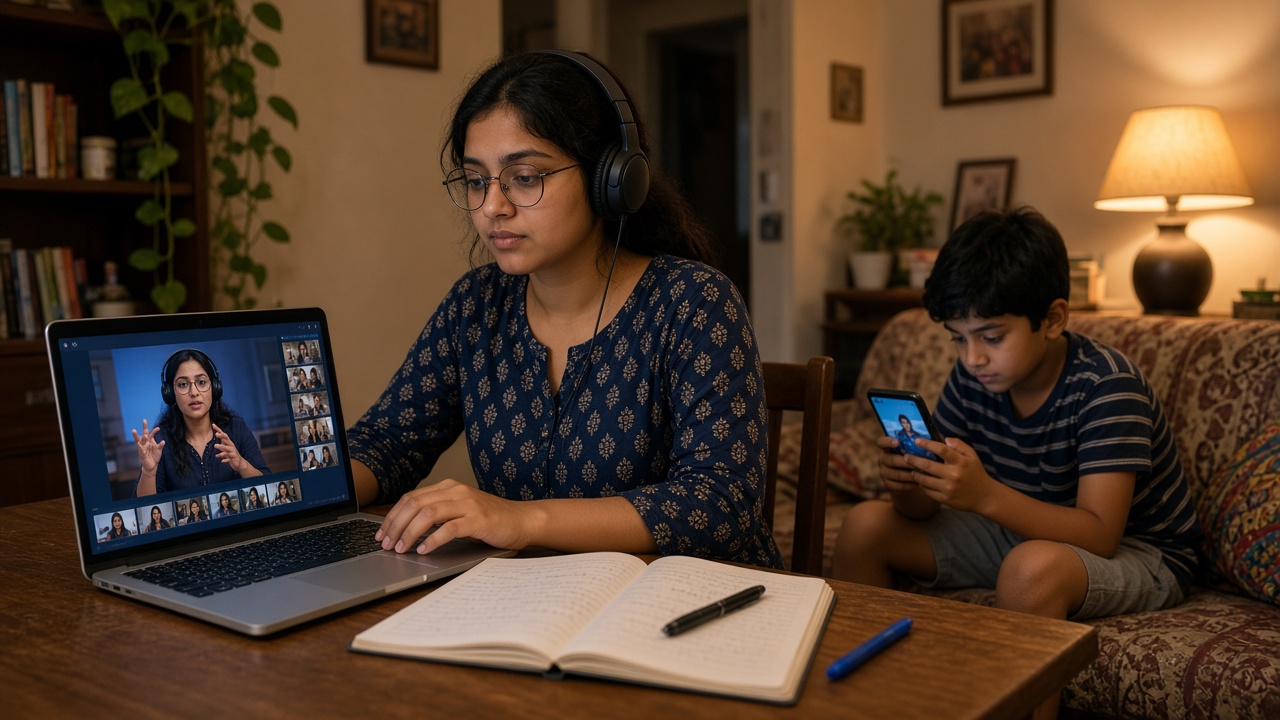
Online classes on laptops and phones make learning possible from home.
2017: SWAYAM MOOCs, SWAYAM Prabha TV channels, and DIKSHA with QR-coded textbooks launch.
2018: National Digital Library of India opens a vast free e-library.
2020: Pandemic online classes; PM eVidya and NEP 2020 push digital and blended learning.
2020s: AI study assistants, self-publishing, audiobooks, and print-on-demand grow.
Technology Used
Learning platforms: Video, quizzes, and certificates in one place.
QR codes in books: Link printed pages to videos and practice.
AI tools: Personalised practice, translation, and doubt-solving.
Features
Free courses: Top-institution lectures available to anyone.
Multilingual content: Lessons in many Indian languages.
Digital divide: Devices and internet access remain key challenges.
How a Book Is Published: Step by Step
Whether it is a school textbook, a novel, or a magazine special issue, most printed books pass through the same stages from idea to reader. Self-published and print-on-demand books follow a shorter version of this path.
Step
What happens
Who does it
1. Manuscript
The author writes and revises the full text
Author
2. Acquisition
A publisher reviews the proposal and signs a contract
Commissioning editor, publisher
3. Editing
Structure, language, facts, and style are checked
Developmental editor, copy editor
4. Design & typesetting
Cover, page layout, fonts, and illustrations are created
Designer, typesetter, illustrator
5. Proofreading
Final proofs are checked for errors before printing
Proofreader, author
6. ISBN & copyright
Unique ISBN assigned; copyright and legal details added
Publisher
7. Printing & binding
Pages printed, folded, bound, and trimmed
Printing press, binder
8. Distribution
Books reach bookshops, schools, libraries, and online stores
Distributors, retailers
9. Marketing
Launches, reviews, book fairs, and social media promotion
Marketing team, author
10. Digital editions
E-book, audiobook, and reprints keep the book available
Publisher, digital team
Education Magazines & Periodicals in India
Magazines built reading habits, science curiosity, and exam readiness for generations of Indian students. Many now publish digital editions alongside print.
Magazine
Started
Focus
Main readers
Chandamama
1947
Stories, folk tales, and moral lessons
Children
Vigyan Pragati
1952
Popular science in Hindi (CSIR)
Students, general readers
Yojana
1957
Development, economy, and government schemes
Civil-service aspirants
Science Reporter
1964
Popular science in English (CSIR)
Students, teachers
Competition Success Review
1964
Competitive-exam preparation and GK
Exam aspirants
Champak
1968
Illustrated stories and activities
Children
Employment News
1976
Government job notices and career guidance
Job seekers
Tinkle
1980
Comics, puzzles, and learning features
Children
Education Online: Key Platforms in India
India’s public digital-learning platforms extend printed textbooks with free videos, courses, e-books, and certificates for school and higher education.
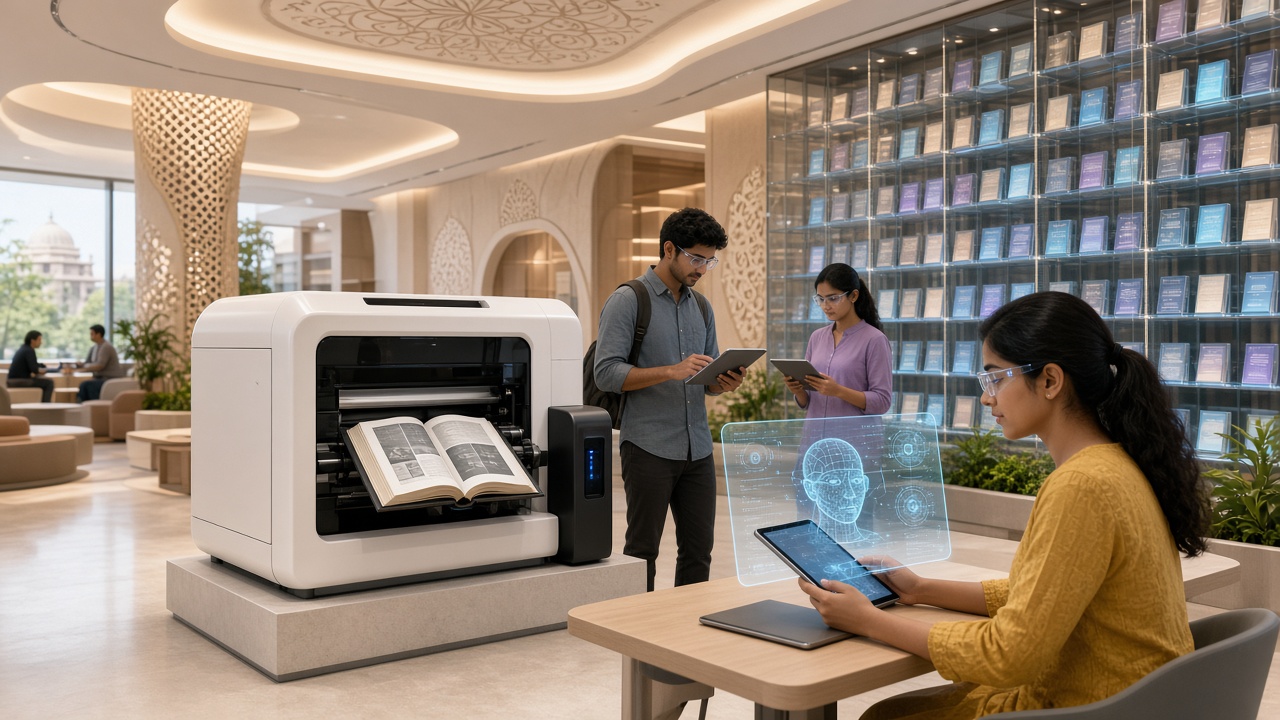
Future learning hubs may combine print-on-demand books, digital libraries, and AI-powered study tools.
Platform
Launched
What it offers
NPTEL
2003
Engineering and science video courses from IITs and IISc
e-Pathshala
2015
NCERT e-textbooks, audio, and video resources
SWAYAM
2017
Free MOOCs from school to postgraduate level, with credits
SWAYAM Prabha
2017
Educational TV channels via DTH for learners without internet
DIKSHA
2017
School e-content linked to QR codes printed in textbooks
National Digital Library of India
2018
Millions of free e-books, papers, and learning resources
PM eVidya
2020
Unified access to digital, TV, and radio education
Print vs Digital vs Online Learning
Aspect
Printed books & magazines
E-books
Online courses
Access
Needs a physical copy
Needs a device
Needs a device and internet
Cost
Printing and delivery cost
Low or free
Often free on public platforms
Updates
New edition required
Quick file updates
Lessons updated anytime
Interaction
Read and write notes
Search and highlight
Videos, quizzes, forums
Best for
Focused reading, low-connectivity areas
Carrying many books
Self-paced and remote learning
Printing & Publishing Timeline Summary
Year / Era
Milestone
Before 1450
Oral learning, palm-leaf manuscripts, and woodblock printing
868 CE
Diamond Sutra — oldest dated printed book
c. 1440–1455
Gutenberg’s movable-type press
1556
First printing press in India (Goa)
1780
Hicky’s Bengal Gazette — India’s first newspaper
1800
Serampore Mission Press prints in Indian languages
1957
Copyright Act and National Book Trust
1961
NCERT founded for national school textbooks
1960s–1980s
Education, science, and children’s magazines flourish
1985
Desktop publishing era begins
2003
NPTEL online engineering courses
2017
SWAYAM and DIKSHA launch
2020
Online classes, PM eVidya, and NEP 2020
Test Your Knowledge
20 quick questions from the printing and publishing timeline. Click each question to reveal the answer.
Answer: Palm leaves and birch bark.
Answer: The Diamond Sutra (868 CE), printed with woodblocks in China.
Answer: Johannes Gutenberg.
Answer: Goa, in 1556.
Answer: Hicky’s Bengal Gazette (1780).
Answer: The Serampore Mission Press.
Answer: Writing the manuscript.
Answer: International Standard Book Number.
Answer: To check final proofs for errors before printing.
Answer: NCERT.
Answer: Any two of Chandamama, Champak, Tinkle.
Answer: Science Reporter.
Answer: Offset lithography (offset printing).
Answer: Designing pages for print using a personal computer and layout software.
Answer: NPTEL.
Answer: India’s government MOOC platform for free online courses (2017).
Answer: Through QR codes printed in the textbooks.
Answer: Printing a book only when someone orders it.
Answer: The digital divide — limited devices or internet access.
Answer: From hand-copied manuscripts to printed books and magazines, then digital publishing and online learning.
Classroom activity
Students Tasks
Use these prompts for discussion or projects on printing, publishing, and online education.
Click any panel to expand and explore the visual mood.
Printing and publishing in pictures — manuscripts, presses, textbooks, magazines, digital classrooms, and online learning.
Manuscripts
Hand-copied knowledge
Printing Press
Movable type arrives
Publishing
Edit, design, proof
Textbooks
Printed for millions
Magazines
Reading beyond class
Digital Books
Tablets and smart boards
Online Learning
Classes from home
Future Learning
Print-on-demand and AI
Explore all education timelines
Jump to any other education timeline on WorldTimelineHub.
Disclaimer: This content is AI-generated for educational purposes and may contain errors or outdated details. For correct and authoritative information, please refer to official and reliable sources such as government publications, manufacturers, museums, and academic references.