From gurus teaching grammar at Takshashila to a village teacher winning the Global Teacher Prize — India’s story of learning has been shaped by
remarkable teachers, scholars, and reformers who believed education could change lives and build a nation.
This timeline follows ancient gurus and scholars, medieval saint-teachers, 19th-century social reformers, freedom-era educators, the leaders who built
independent India’s education system, and the modern teachers and innovators taking learning to every child.
In Indian tradition the teacher, or guru, is honoured as the one who removes darkness. Over 2,500 years, great educators wrote the first grammars and
mathematics texts, opened schools for girls and oppressed communities when society opposed them, founded universities during the freedom struggle,
and designed the policies of independent India. Their ideas — learning in the mother tongue, learning by doing, education for all, and respect for
teachers — still guide Indian classrooms and the National Education Policy 2020.
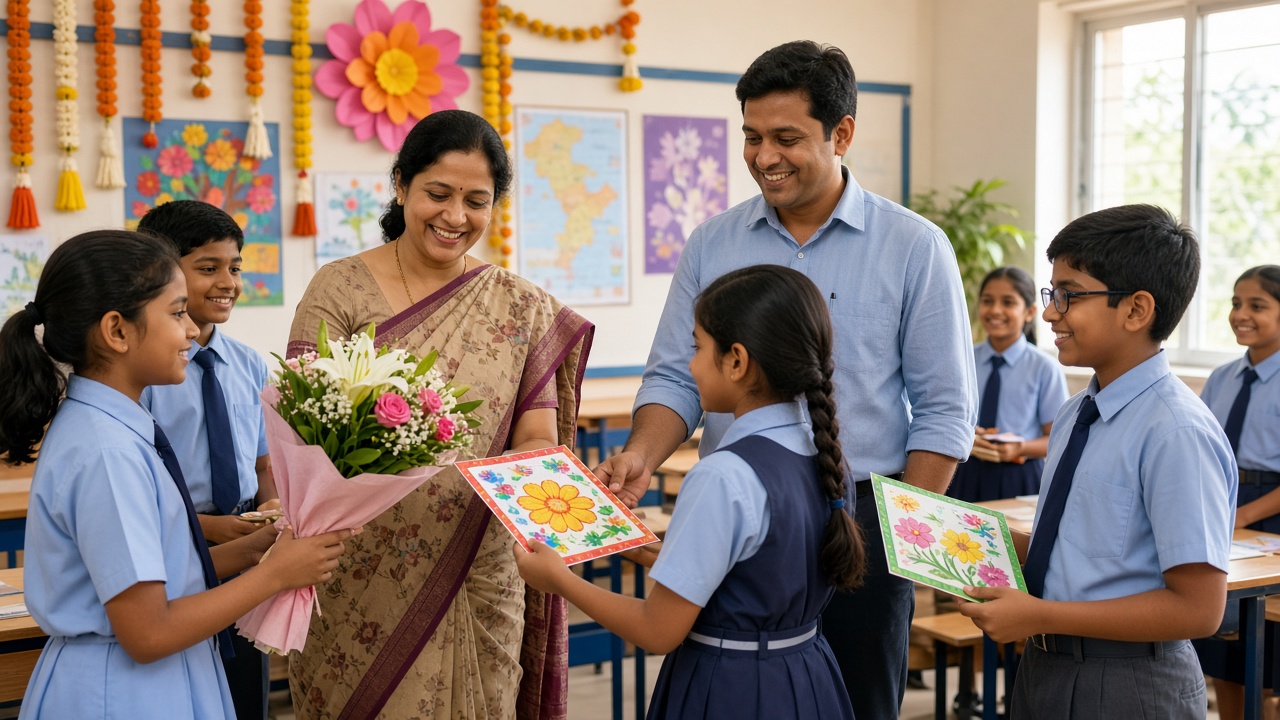
Every 5 September, students across India thank their teachers on Teachers’ Day, honouring Dr S. Radhakrishnan.
📜 Gurus & Scholarsc. 500 BCE – 700 CE
Ancient Gurus & Scholars
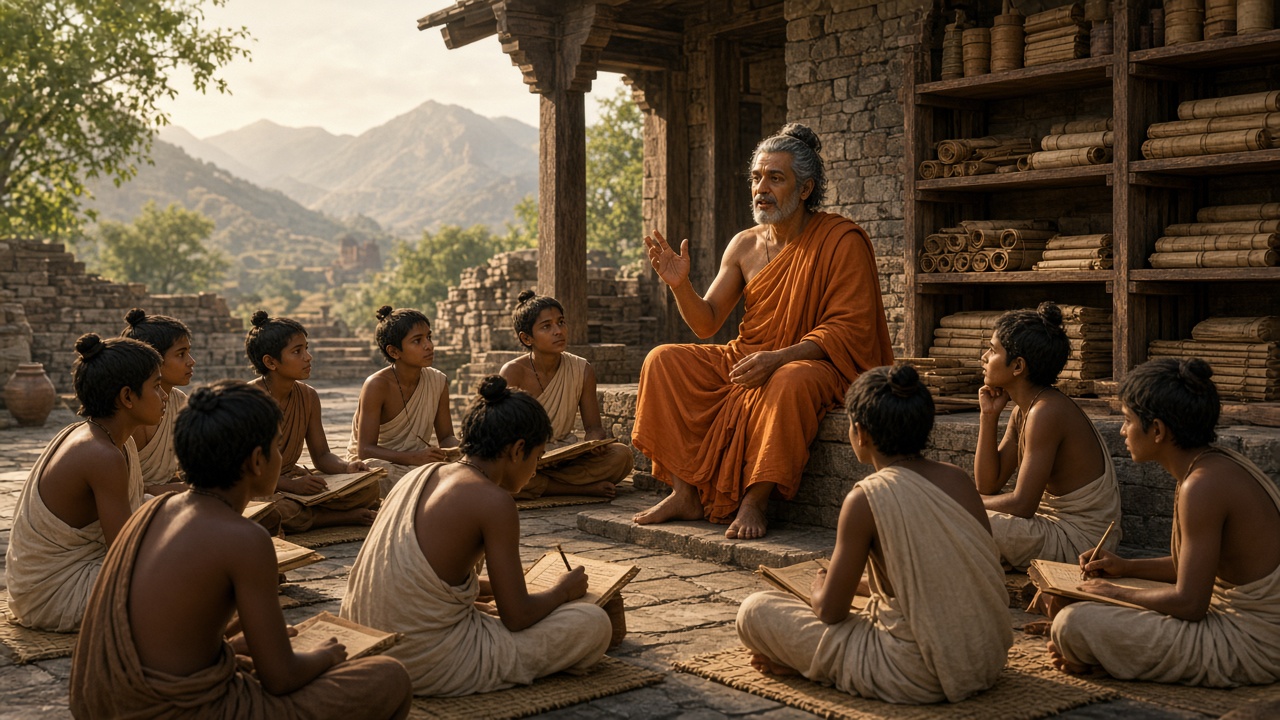
In gurukuls and great centres of learning such as Takshashila and Nalanda, teachers passed on grammar, mathematics, medicine, philosophy, and statecraft. Knowledge was memorised, debated, and later written on palm leaves — and some of these teachers’ works are still studied today.
Teachers at ancient centres like Takshashila taught grammar, mathematics, medicine, and statecraft (artistic illustration).
c. 5th–4th century BCE: Panini composes the Ashtadhyayi, a remarkably precise grammar of Sanskrit still admired by linguists.
c. 4th century BCE: Chanakya (Kautilya), a teacher associated with Takshashila, mentors Chandragupta Maurya; the Arthashastra is credited to him.
Early centuries CE: The Charaka and Sushruta medical traditions describe how teachers should select and train students; Thiruvalluvar’s Thirukkural praises learning in its chapter on education.
499 CE / 7th century: Aryabhata writes the Aryabhatiya; Brahmagupta explains rules for zero; Nalanda teachers such as Shilabhadra teach the traveller Xuanzang.
Methods
Oral learning: Recitation, memory, and repetition.
Sutras & commentaries: Short rules explained by teachers.
Debate (shastrartha): Students defended ideas in discussion.
Features
Guru–shishya bond: Close teacher–student relationship.
Limited access: Formal learning was mostly for a privileged few.
🕌 Scholars & Saintsc. 700 – 1800
Medieval Scholars & Saint-Teachers
Philosophers founded monasteries of learning, mathematicians wrote textbooks, madrasas and pathshalas taught in towns and villages, and Bhakti and Sufi saint-teachers spread ideas in the everyday languages of the people. Rulers built libraries and observatories for scholars.
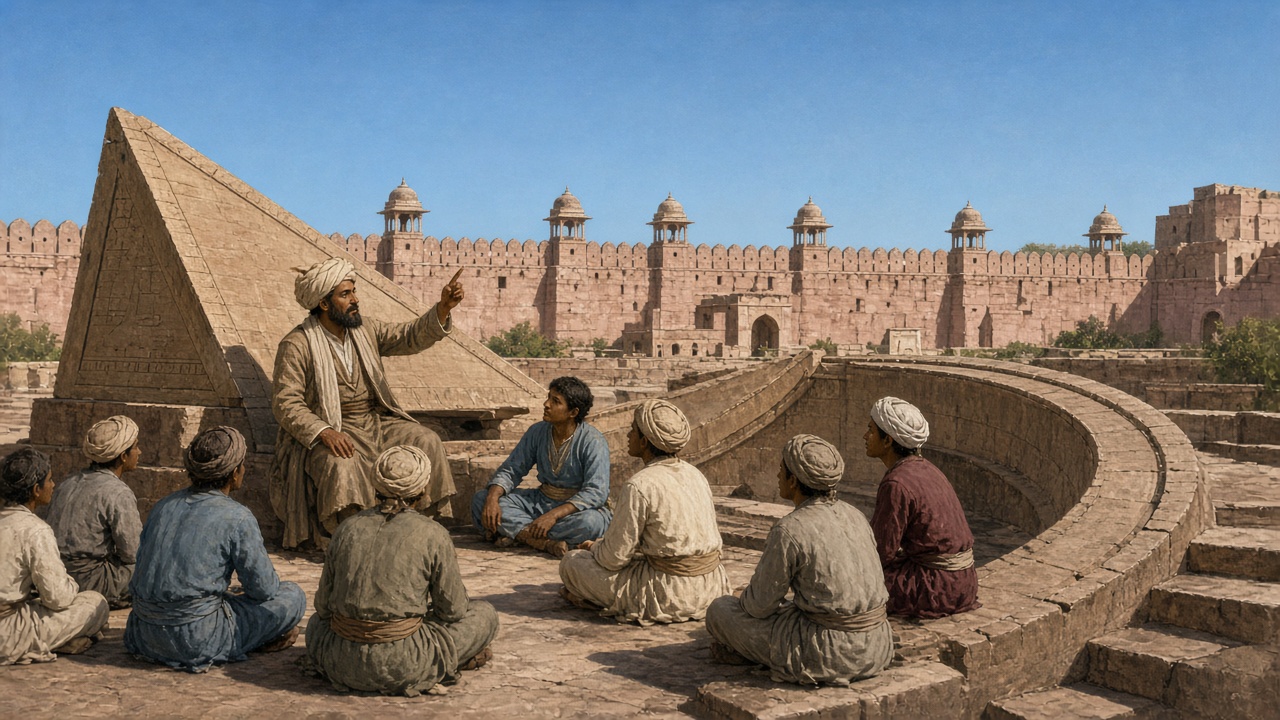
Stone observatories of the 1720s–1730s became outdoor classrooms for astronomy (artistic illustration).
8th century: Adi Shankaracharya travels across India, writes commentaries, and establishes mathas that become centres of learning.
12th century: Bhaskaracharya (Bhaskara II) writes Lilavati (c. 1150), a mathematics textbook full of problems; Basavanna’s Anubhava Mantapa encourages open discussion.
15th–16th centuries: Kabir, Guru Nanak, and other saint-teachers teach through simple verses in local languages; Mahmud Gawan builds a great madrasa at Bidar (1472).
18th century: Mulla Nizamuddin shapes the Dars-i-Nizami curriculum at Farangi Mahal, Lucknow; Sawai Jai Singh II builds Jantar Mantar observatories (1720s–1730s).
Verse & song: Dohas, vachanas, and hymns taught ideas simply.
Observation: Instruments used to teach astronomy.
Features
Local languages: Ideas reached ordinary people.
Many institutions: Mathas, madrasas, pathshalas, and maktabs.
Unequal reach: Girls and lower castes were often excluded.
🕯️ Reformers1800 – 1890
Social Reformers & Pioneers
Reformers saw education as the key to ending superstition, caste discrimination, and the oppression of women. Facing insults and even violence, they opened schools for girls and for excluded communities, wrote simple primers, and founded colleges that mixed modern science with Indian languages.
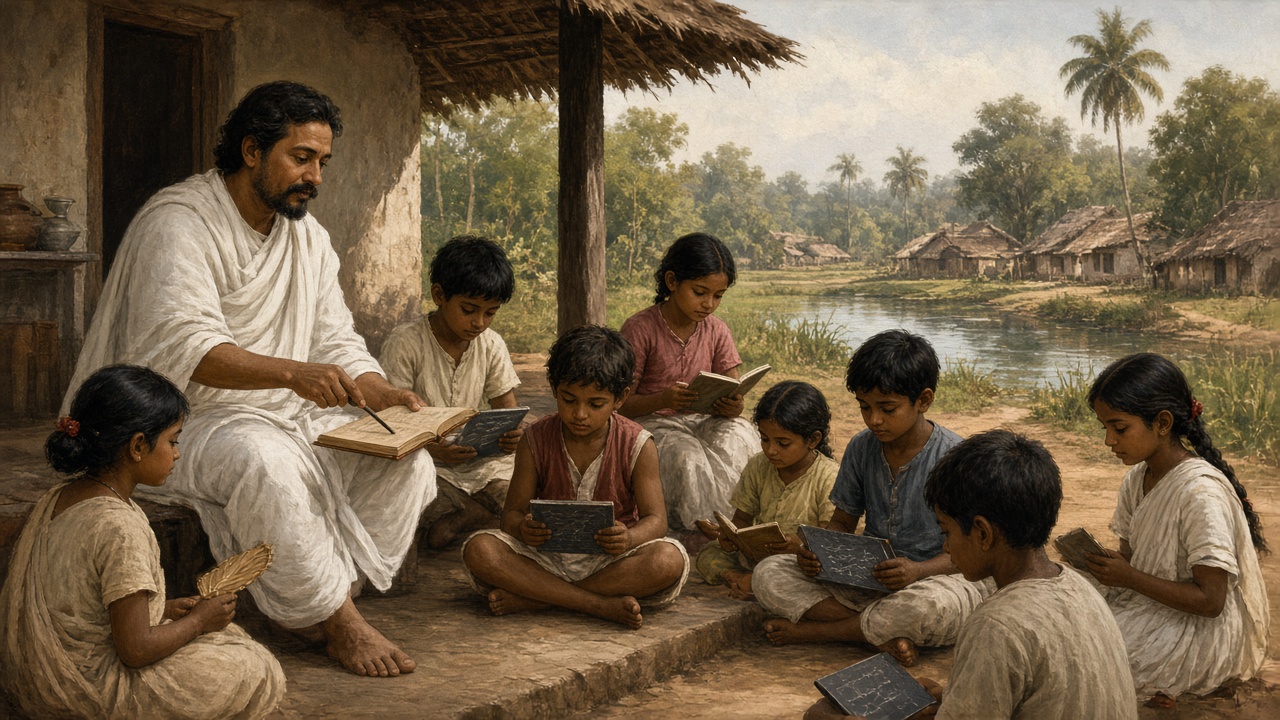
Reformers wrote simple primers and opened village schools for boys and girls (artistic illustration).
1817–1831: Raja Ram Mohan Roy supports the founding of Hindu College, Calcutta (1817) and opens the Anglo-Hindu School (1822); teacher Henry Derozio inspires the “Young Bengal” free-thinkers.
1848: Jyotirao and Savitribai Phule open a girls’ school at Bhide Wada, Pune; with Fatima Sheikh, Savitribai becomes one of India’s first women teachers.
1851–1856: Ishwar Chandra Vidyasagar heads Sanskrit College, opens it to more students, writes the primer Barnaparichay (1855), and sets up girls’ schools in Bengal.
1875–1889: Sir Syed Ahmad Khan founds the MAO College, Aligarh (1875); Jyotirao Phule urges the Hunter Commission (1882) to make primary education free; Pandita Ramabai opens Sharada Sadan (1889).
Methods
Printed primers: Cheap alphabet books in Indian languages.
New schools & colleges: Modern subjects alongside tradition.
Public campaigns: Petitions, newspapers, and speeches.
Features
Education for girls: A radical idea at the time.
Against caste barriers: Schools for oppressed communities.
Strong opposition: Pioneers faced social boycott and abuse.
🇮🇳 Freedom-Era Educators1890 – 1947
Nationalist Educators
During the freedom struggle, educators argued that India needed its own kind of education — one that built character, creativity, self-reliance, and pride in Indian languages and culture. They founded universities, open-air schools, women’s colleges, and child-centred pre-schools.
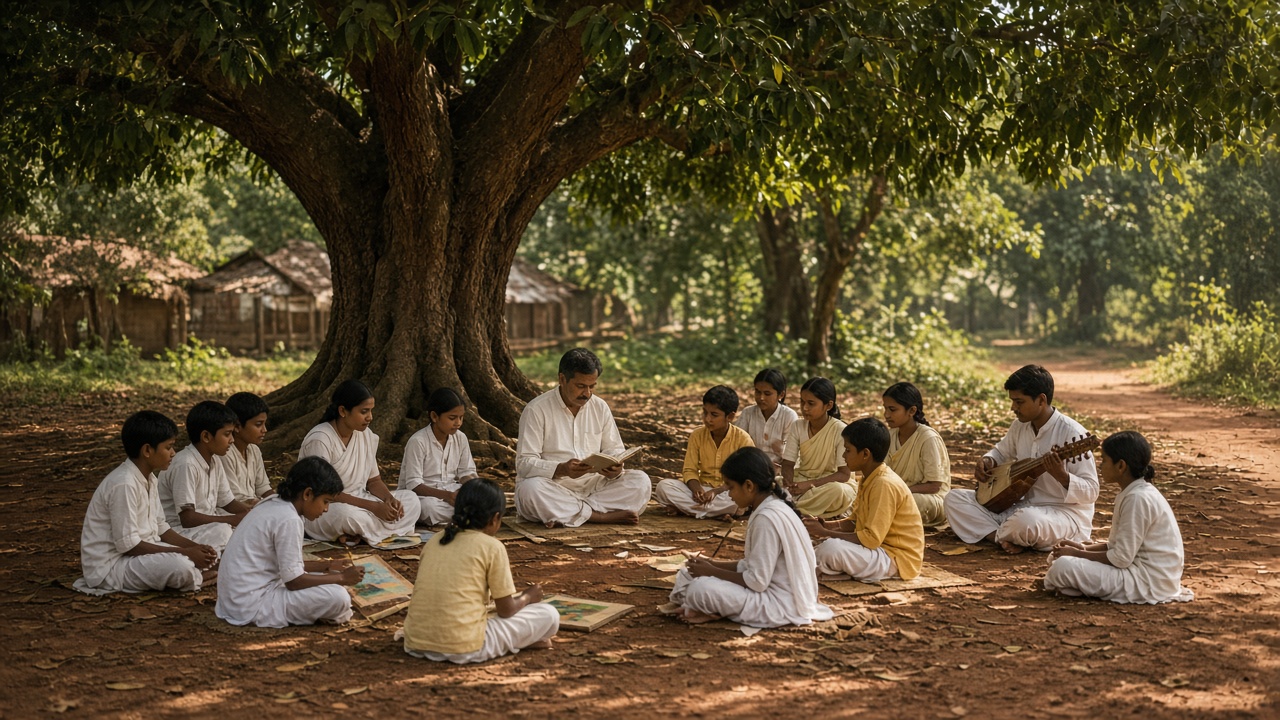
Tagore’s Santiniketan held classes under the trees, blending nature, arts, and learning (artistic illustration).
1897–1901: Swami Vivekananda founds the Ramakrishna Mission (1897) and calls for “man-making” education; Rabindranath Tagore starts a school at Santiniketan (1901).
1906–1916: Sri Aurobindo becomes principal of the Bengal National College (1906); Madan Mohan Malaviya founds Banaras Hindu University and D. K. Karve starts India’s first women’s university (1916).
1920–1921: Jamia Millia Islamia is founded (1920), later shaped by Dr Zakir Husain; Gijubhai Badheka opens a Bal Mandir pre-school in Bhavnagar (1920); Tagore founds Visva-Bharati (1921).
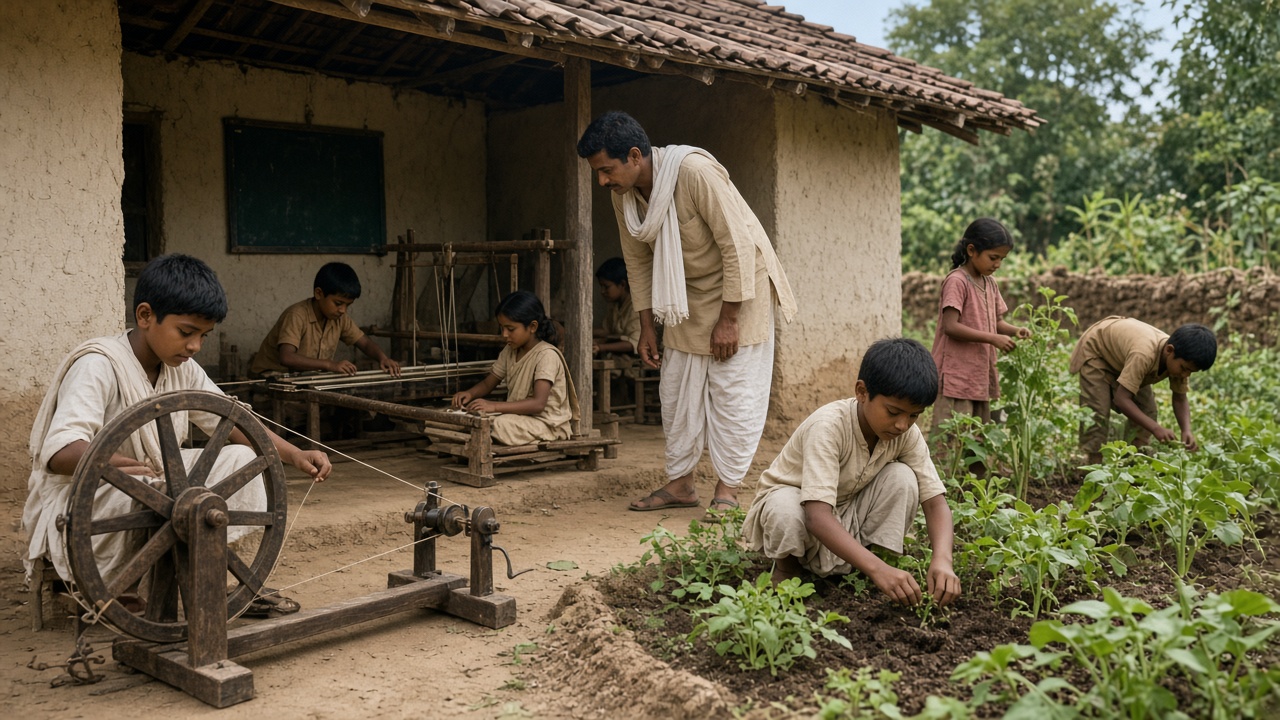
1937: Mahatma Gandhi proposes Nai Talim (Basic Education) — learning through crafts in the mother tongue — and the Zakir Husain Committee drafts the Wardha scheme.
Methods
Learning by doing: Spinning, gardening, and crafts.
Nature & arts: Music, painting, and outdoor classes.
National institutions: Universities built with Indian funds.
Mother tongue: Learning in Indian languages.
Character building: Education for freedom and service.
🏛️ Nation Builders1947 – 1990
Nation-Building Educators
After independence, educators and scientists designed the institutions of a new nation — commissions, universities, IITs, research institutes, and national policies. They argued that education was the main tool for equality, democracy, science, and development.
Basic (Nai Talim) schools combining crafts, gardening, and study spread in the early years of independence (artistic illustration).
1945–1946: Dr B. R. Ambedkar founds the People’s Education Society and Siddharth College, Mumbai, with the call “Educate, Agitate, Organise”; Homi Bhabha founds TIFR (1945).
1947–1958: Maulana Abul Kalam Azad, first Education Minister, builds the UGC, IIT Kharagpur, and national academies; Dr S. Radhakrishnan chairs the University Education Commission (1948–49).
1961–1962: Vikram Sarabhai helps found IIM Ahmedabad (1961); 5 September, Radhakrishnan’s birthday, is first celebrated as Teachers’ Day (1962).
1964–1986: D. S. Kothari chairs the Education Commission (1964–66) that shapes the 1968 policy; J. P. Naik guides reforms; the Hoshangabad Science Teaching Programme (1972) pioneers learning by experiment.
Methods
Commissions & policies: Nationwide plans for education.
Science institutions: IITs, IISc, TIFR, and research labs.
Activity-based science: Experiments instead of rote learning.
Features
Education for equality: Reservations and scholarships.
Scientific temper: Science and technology for development.
Honouring teachers: Teachers’ Day and national awards.
💡 Innovators1990 – Present
Modern Educators & Innovators
Modern Indian educators focus on real learning for every child — through NGOs, low-cost experiments, free coaching, technology, and creative teaching in government schools. Some became global names, proving that one committed teacher can transform a community.
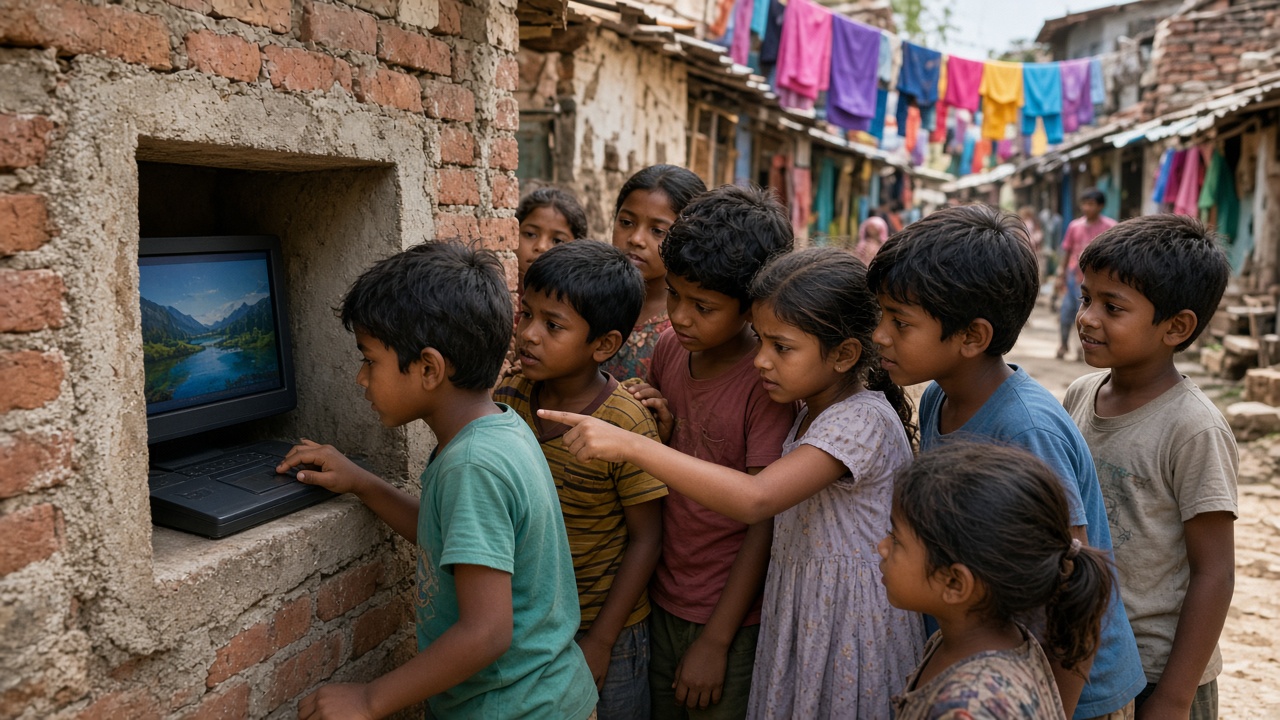
The 1999 “Hole in the Wall” experiment showed children could teach themselves on a public computer (artistic illustration).
1993–1995: Prof. Yash Pal’s report Learning Without Burden (1993) warns against heavy syllabi; Madhav Chavan and Farida Lambay found Pratham (1995) to help children read.
1999–2002: Sugata Mitra’s “Hole in the Wall” experiment in Delhi (1999); Anand Kumar starts Super 30 in Patna (2002); Dr A. P. J. Abdul Kalam becomes the “People’s President” and inspires millions of students.
2005–2018: ASER survey (2005) measures real learning; NCF 2005 under Yash Pal promotes joyful learning; Sonam Wangchuk of SECMOL wins the Ramon Magsaysay Award (2018).
2020–present: Ranjitsinh Disale wins the Global Teacher Prize (2020) for QR-coded textbooks; NEP 2020, drafted by a committee led by Dr K. Kasturirangan, puts teachers at the centre of reform.
Methods
Teaching at the right level: Group children by learning level.
Technology: QR codes, videos, and self-learning computers.
Mentoring & coaching: Free guidance for talented poor students.
Features
Focus on outcomes: Measuring whether children actually learn.
Grassroots innovation: Teachers solve local problems creatively.
Global recognition: Indian teachers win international awards.
Great Educators of India at a Glance
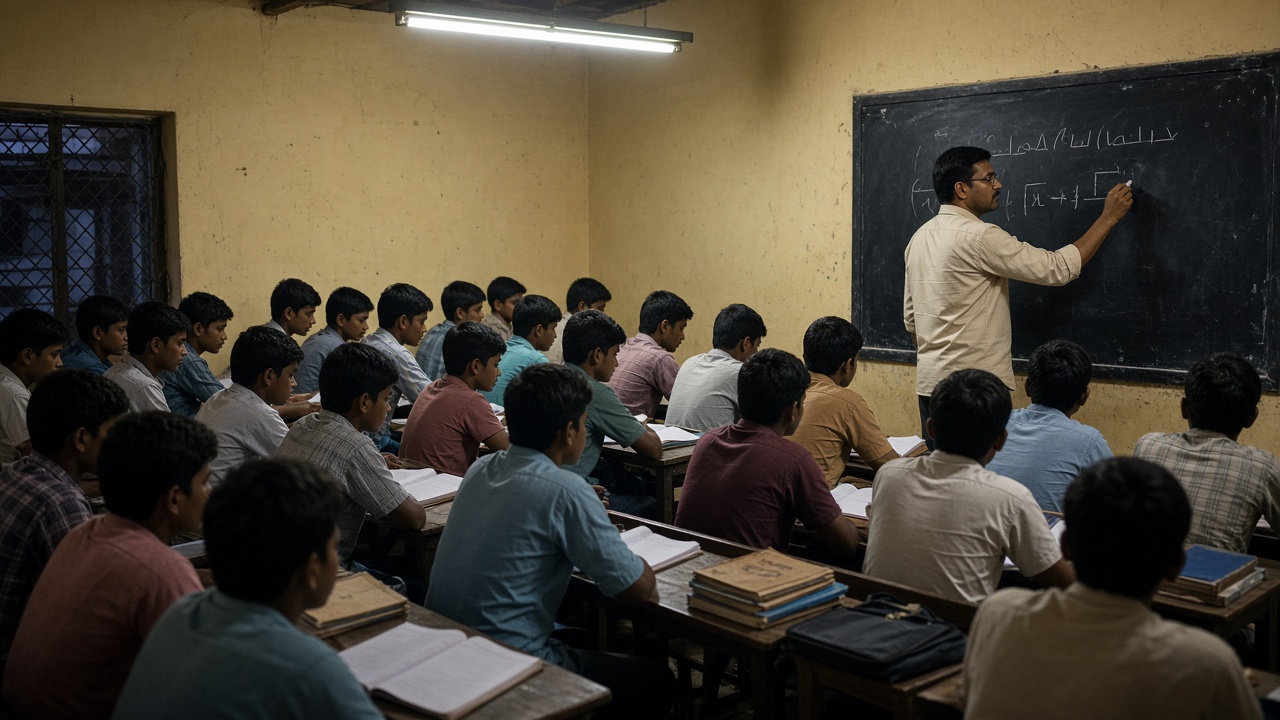
Free coaching programmes like Super 30 help talented students from poor families reach top institutions (artistic illustration).
Educator
Period
Key contribution
Panini
c. 5th–4th century BCE
Ashtadhyayi, the classic Sanskrit grammar
Chanakya (Kautilya)
c. 4th century BCE
Teacher at Takshashila; Arthashastra
Aryabhata
476–c. 550 CE
Aryabhatiya on mathematics and astronomy
Bhaskaracharya
12th century
Lilavati mathematics textbook
Raja Ram Mohan Roy
1772–1833
Modern schools and colleges in Bengal
Ishwar Chandra Vidyasagar
1820–1891
Barnaparichay primer; girls’ schools
Jyotirao & Savitribai Phule
1827–1890 / 1831–1897
Schools for girls and oppressed castes (1848)
Fatima Sheikh
19th century
Taught with Savitribai Phule in Pune
Sir Syed Ahmad Khan
1817–1898
MAO College, Aligarh (later AMU)
Swami Vivekananda
1863–1902
“Man-making” education; Ramakrishna Mission
Rabindranath Tagore
1861–1941
Santiniketan and Visva-Bharati
Madan Mohan Malaviya
1861–1946
Founded Banaras Hindu University
Mahatma Gandhi
1869–1948
Nai Talim — learning through crafts
Gijubhai Badheka
1885–1939
Child-centred pre-school education
Maulana Abul Kalam Azad
1888–1958
First Education Minister; UGC and IITs
Dr S. Radhakrishnan
1888–1975
Philosopher-teacher; Teachers’ Day
Dr B. R. Ambedkar
1891–1956
Education for equality; Siddharth College
Dr Zakir Husain
1897–1969
Jamia Millia Islamia; Wardha scheme
Dr A. P. J. Abdul Kalam
1931–2015
Inspired students as scientist, teacher, and President
Anand Kumar
Born 1973
Super 30 free IIT coaching
Ranjitsinh Disale
Born 1988
Global Teacher Prize 2020
Institutions Founded by Educators
Many of India’s best-known schools, colleges, and organisations began as one educator’s dream.
Year
Institution
Founder(s)
1817
Hindu College, Calcutta (later Presidency)
Supported by Raja Ram Mohan Roy, David Hare and others
1848
Girls’ school at Bhide Wada, Pune
Jyotirao & Savitribai Phule
1875
MAO College, Aligarh (AMU from 1920)
Sir Syed Ahmad Khan
1889
Sharada Sadan
Pandita Ramabai
1897
Ramakrishna Mission
Swami Vivekananda
1901 / 1921
Santiniketan school / Visva-Bharati
Rabindranath Tagore
1916
Banaras Hindu University
Madan Mohan Malaviya
1916
Indian Women’s University (now SNDT)
D. K. Karve
1920
Jamia Millia Islamia
Nationalist leaders; later led by Zakir Husain
1920
Dakshinamurti Bal Mandir, Bhavnagar
Gijubhai Badheka
1945
Tata Institute of Fundamental Research
Homi J. Bhabha
1946
Siddharth College, Mumbai
Dr B. R. Ambedkar
1961
IIM Ahmedabad
Vikram Sarabhai and others
1988
SECMOL, Ladakh
Sonam Wangchuk and Ladakhi students
1995
Pratham
Madhav Chavan & Farida Lambay
2002
Super 30, Patna
Anand Kumar
Days That Honour Educators & Learning
India remembers its great teachers and thinkers through special days celebrated in schools and colleges.
Date
Day
Honours
3 January
Savitribai Phule Jayanti
Savitribai Phule; celebrated in Maharashtra as Balika Din (girls’ day)
12 January
National Youth Day
Swami Vivekananda’s birth anniversary
28 February
National Science Day
C. V. Raman’s discovery of the Raman effect (1928)
5 September
Teachers’ Day
Dr S. Radhakrishnan (since 1962); National Teachers’ Awards presented
8 September
International Literacy Day
UNESCO day promoting literacy for all
5 October
World Teachers’ Day
UNESCO day honouring teachers worldwide (since 1994)
Choose one educator from this timeline and write a one-page biography with a timeline of their life.
Imagine you are a student in Savitribai Phule’s school in 1848. Write a diary entry about your first day.
Compare Tagore’s Santiniketan with your own school — what would you like to borrow from it?
Make a poster explaining Gandhi’s Nai Talim and how “learning by doing” works.
Plan a Teachers’ Day special assembly that tells the story of Dr S. Radhakrishnan.
Interview a teacher in your school or family about why they chose teaching.
Create a map of India marking institutions founded by the educators in this timeline.
Debate: “One great teacher can change a whole community.”
Find out about an inspiring teacher in your own district or state and share their story with the class.
Write a short speech on what kind of educator you would like to be and why.
Continue exploring
India’s great educators connect to the history of schooling, women’s education, universities, and the modern education system. Explore the other education timelines next.
Click any panel to expand and explore the visual mood.
India’s great educators in pictures — ancient gurus, observatory classrooms, reformers’ village schools, open-air learning, basic schools, free coaching, self-learning computers, and Teachers’ Day.
Ancient Gurus
Takshashila & Nalanda
Medieval Scholars
Observatory classrooms
Social Reformers
Primers & village schools
Open-Air School
Learning under the trees
Nai Talim
Learning by doing
Free Coaching
Dreams for poor students
Hole in the Wall
Children teach themselves
Teachers’ Day
5 September
Explore all education timelines
Jump to any other education timeline on WorldTimelineHub.
Disclaimer: This content is AI-generated for educational purposes and may contain errors or outdated details. For correct and authoritative information, please refer to official and reliable sources such as government publications, manufacturers, museums, and academic references.