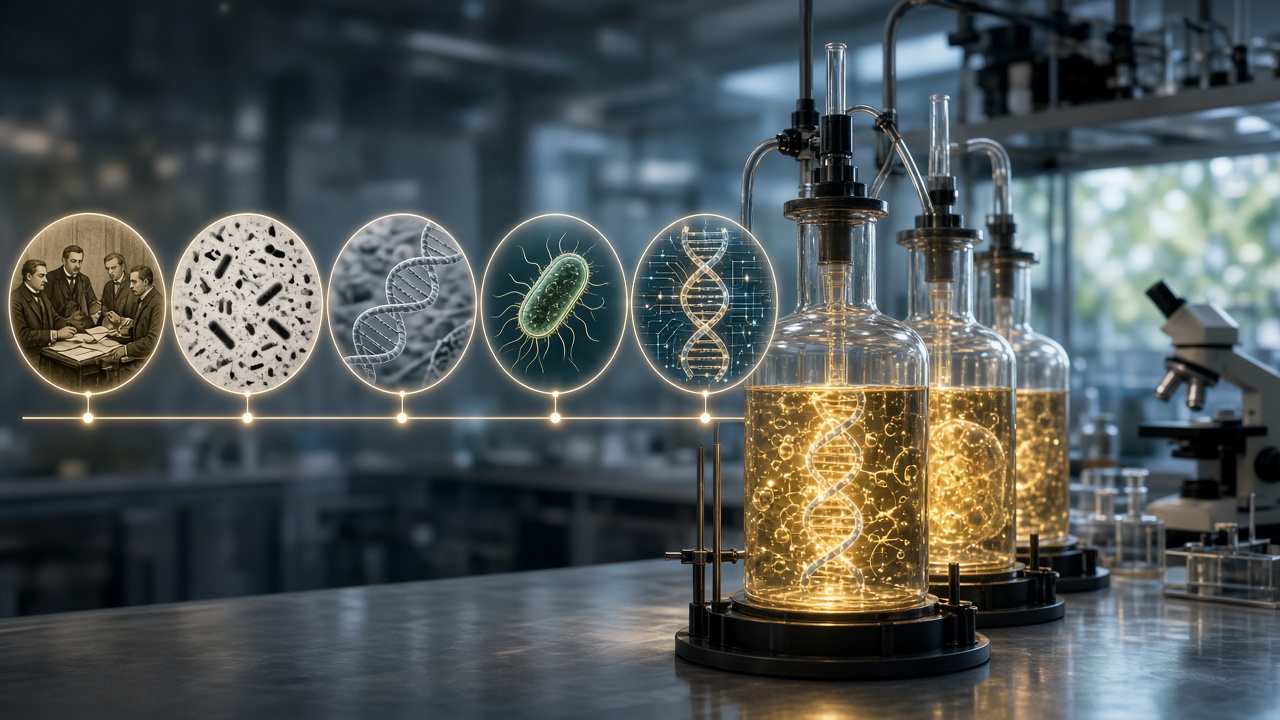
From the double helix to reading genomes, editing genes, tailoring treatments, and building living systems—how biotechnology remakes medicine and industry.
DNA -> SequenceCRISPR & precisionSynbio
Why Biotech Matters
Biotechnology turns the chemistry of life into tools for health, food, and industry. Understanding DNA, then reading it, then editing and designing it, explains vaccines, cancer drugs, diagnostics, and the ethics debates that follow.
This timeline follows DNA discovery, sequencing, gene editing, personalized medicine, and synthetic biology as one arc.
Big picture
Biotech in one view
See the helix, read the letters, cut and rewrite them, match drugs to genomes, then build living systems like engineered devices—each step expands what medicine can do and what society must regulate.
From helix models to editing and designing genomes.
Structure Found1950s
DNA Discovery
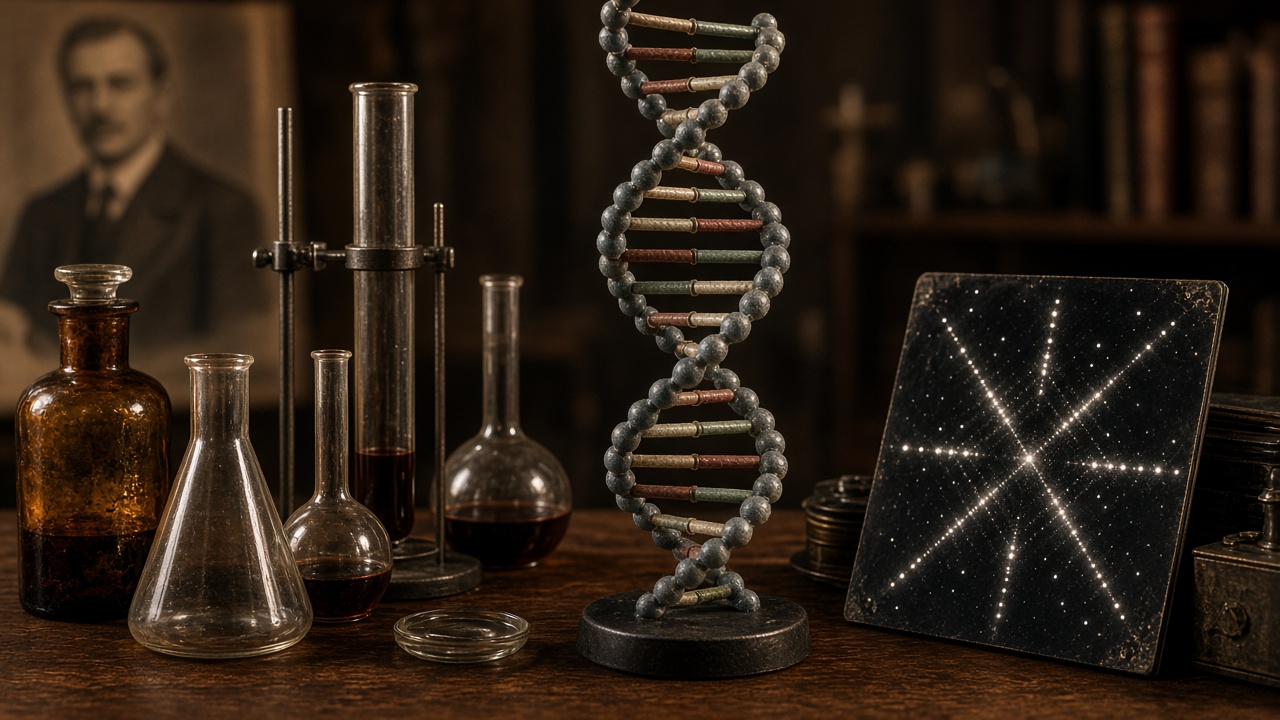
Scientists already knew DNA carried genes; in 1953 the double-helix model explained how base pairs copy information. That structure unlocked molecular biology—and made biotechnology thinkable.
DNA era: the helix that explained heredity’s chemistry.
X-ray fiber diffraction and Chargaff’s rules constrain models.
Watson and Crick publish the double helix (1953).
Central dogma frames DNA → RNA → protein research.
Technology Used
X-ray crystallography: Structure clues from diffraction.
Model building: Physical / chemical model fitting.
Shared credit debates: Franklin and Wilkins’ roles matter historically.
Foundation: All later biotech rests on this map of DNA.
Reading the Code1970s - Present
Sequencing
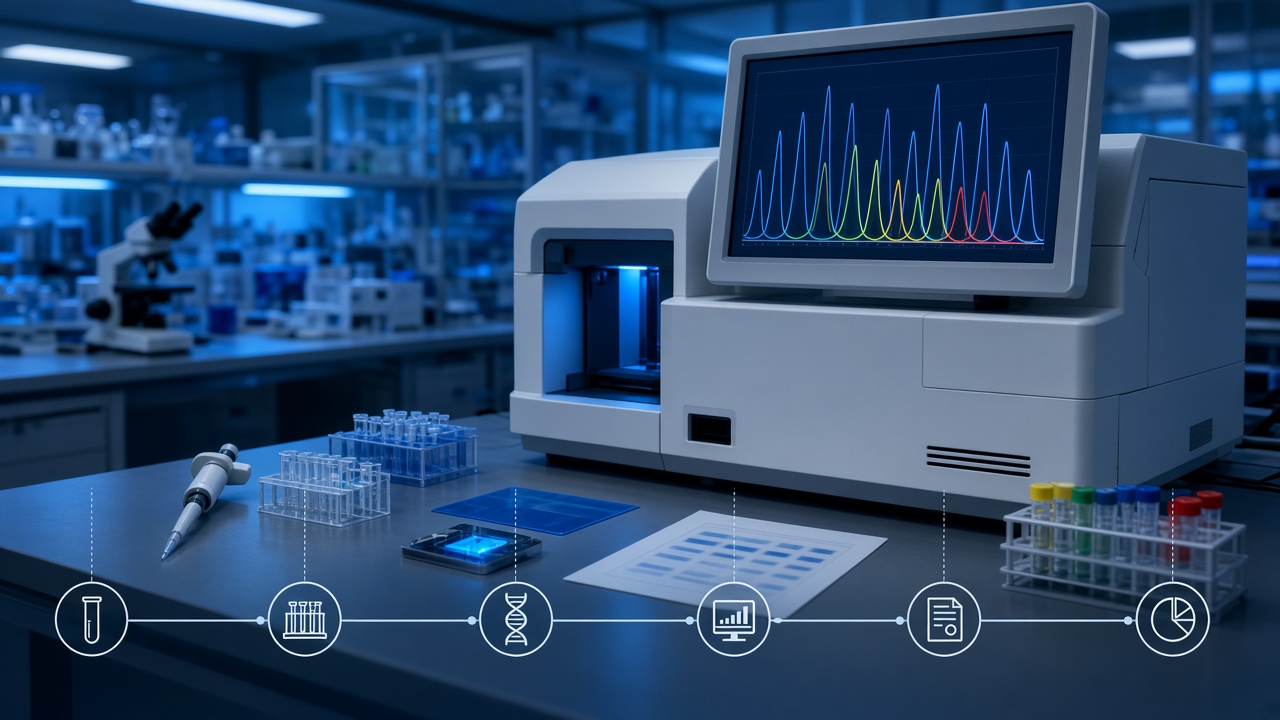
Sanger sequencing made it possible to read DNA letter by letter. The Human Genome Project and then next-generation sequencers crashed the cost of genomes—turning sequencing into a clinical and research utility.
Sequencing era: machines that read A, T, C, G at scale.
Sanger method enables early gene and pathogen sequences.
Human Genome Project delivers a reference genome (~2000s).
NGS makes cancer panels and population genomics routine.
Cost crash: From billions to roughly hundreds of dollars per genome (order of magnitude).
Diagnostics: Inherited disease and tumour profiling.
Data load: Privacy and storage become health issues.
Rewrite Tools2010s - Present
Gene Editing
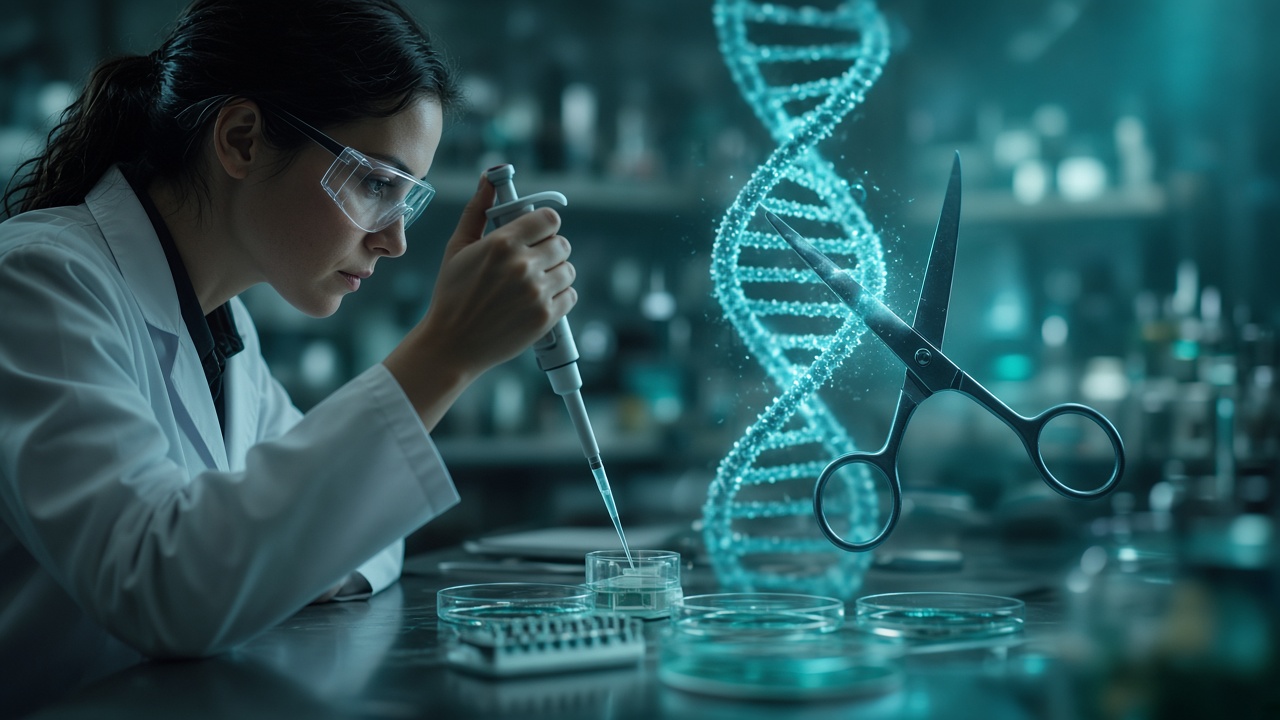
Earlier tools (zinc fingers, TALENs) edited DNA with effort; CRISPR-Cas systems made targeted cuts far easier. Research exploded—along with therapy hope and hard lines against unsafe germline editing.
Editing era: precision cuts that rewrite disease risk.
CRISPR papers and kits democratise lab editing.
Clinical trials target blood disorders and other diseases.
Ethics and law constrain heritable human genome edits.
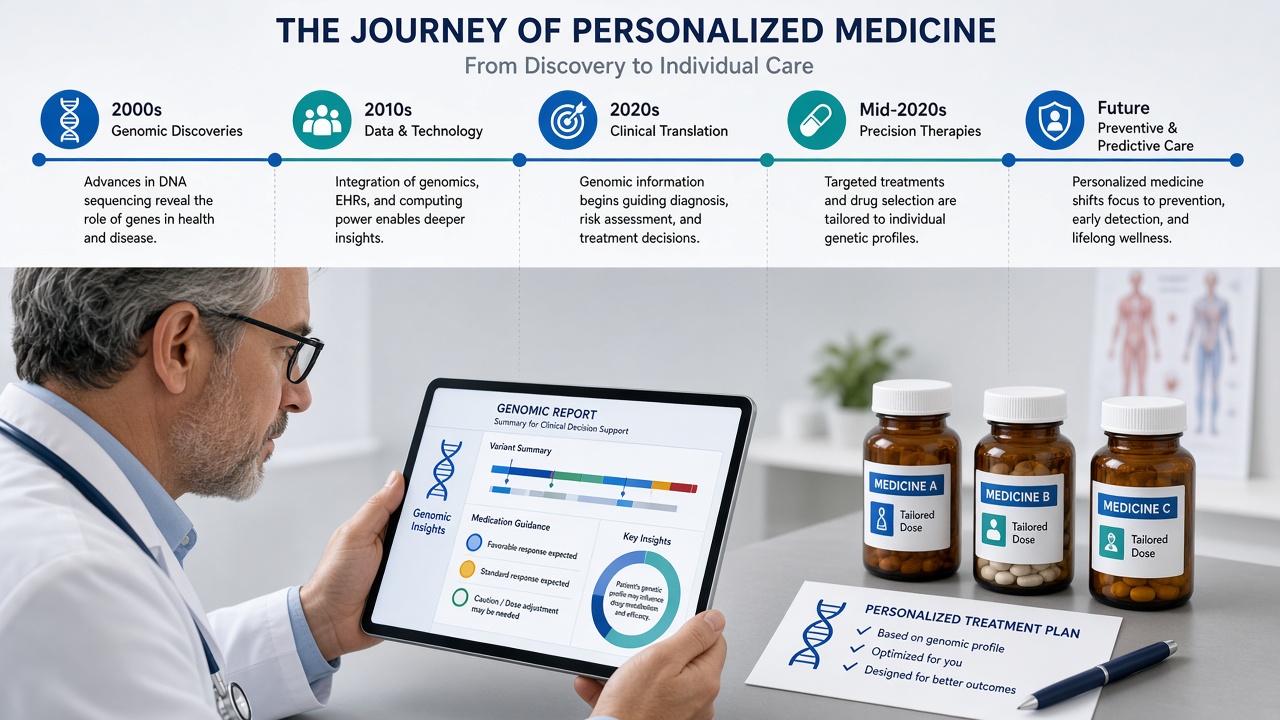
Cheap sequencing and biomarkers let clinicians match therapies to a patient’s genes and tumour profile. Pharmacogenomics, targeted cancer drugs, and companion diagnostics move care from one-size-fits-all toward precision.
Precision era: treatments guided by individual biology.
Companion diagnostics pair with targeted therapies.
Pharmacogenomic labels warn about drug–gene interactions.
Access and cost still limit who gets full genomic care.
Equity gap: Reference data still underrepresents many populations.
Design Biology2000s - Future
Synthetic Biology
Synthetic biology treats cells like programmable factories—genetic circuits, engineered microbes, and synthetic DNA for drugs, materials, and diagnostics. It blends engineering standards with living systems, and raises dual-use and biosafety questions.
Synbio era: building with biology as the material.
Standard parts and DNA synthesis speed design–build–test loops.
Engineered microbes produce drugs, enzymes, and specialty chemicals.
Biosafety, IP, and ethics shape what can leave the lab.
Technology Used
DNA synthesis & assembly: Write custom genes.
Genetic circuits: Sensors, switches, logic in cells.
Bioreactors: Scale living production.
Features
Programmability: Biology as an engineering stack.
Dual use: Same tools need careful oversight.
Industry pull: Pharma, agriculture, and climate tech.
Biotech Summary
Year / Era
Milestone
Why it matters
1953
DNA double helix
Structure of heredity explained.
1970s–
Sequencing
Genomes become readable data.
2010s–
Gene editing
Targeted DNA rewrites possible.
2000s–
Personalized medicine
Treatments match biology.
2000s–future
Synthetic biology
Living systems as engineered tools.
Key Historical Events
Event
Year
Significance
Double helix published
1953
Foundational DNA structure.
Sanger sequencing
1970s
Practical DNA reading begins.
Recombinant DNA / biotech firms
1970s–80s
Industry of engineered biology.
Human Genome Project drafts
~2000–2003
Reference human genome.
NGS cost collapse
2000s–10s
Clinical genomics scales.
CRISPR gene editing boom
2012–
Easy targeted editing.
Precision oncology expands
2010s–
Tumour profiling guides drugs.
Synbio & DNA synthesis
ongoing
Design–build living systems.
Biotech Layers at a Glance
Layer
Example
Main use
Structure
Double helix
Understand heredity
Read
NGS
Diagnose & research
Write / edit
CRISPR
Therapies & models
Match
Pharmacogenomics
Personalize drugs
Build
Synbio circuits
Manufacture & sense
Then vs Now
From helix models to genome-guided prescriptions.
Metric
Then
Now
DNA knowledge
Structure unknown / new
Whole genomes routine
Reading cost
Huge projects
Clinical panels affordable
Editing
Rare / hard
CRISPR in labs & trials
Treatment
One-size drugs
+ biomarker-matched care
Build
Natural microbes
Designed genetic systems
Future Predictions
Near term: More approved gene therapies for rare and blood diseases.
Clinics: Broader pharmacogenomic testing in hospitals.
Synbio: Engineered microbes for drugs and sustainable chemicals.
Ethics: Stronger global norms against heritable human genome editing misuse.
India spotlight
Biotech in India
India is a vaccine and generic-biopharma powerhouse with growing genomics and DBT-backed research. Sequencing labs, biotech parks, and startups sit beside debates on GM crops, gene therapy access, and biosafety rules.
India spotlight: vaccines, genomics, and biotech parks.
CSIR / DBT
Public biotech base
National labs and programmes build molecular biology capacity.
Vaccines
Biomanufacturing scale
Serum Institute and peers supply global vaccine volumes.
Genomics
Sequencing & startups
Clinical and consumer genetics grow carefully under regulation.
Policy
Biosafety & GM debates
Crop and therapy rules balance innovation and caution.
Next
Precision & synbio
Access to gene therapies and local synbio manufacturing.
Strength: Manufacturing and skilled scientific workforce.
Gap: Affordable access to cutting-edge gene therapies.
Need: Diverse Indian genomic reference data.
Test Your Knowledge
20 questions on DNA, sequencing, editing, personalized medicine, and synbio. Click to reveal answers.
Answer: 1953.
Answer: James Watson (with Francis Crick).
Answer: Key X-ray diffraction data (including Photo 51).
Answer: Reading the order of DNA bases.
Answer: Sanger sequencing.
Answer: Effort to map/sequence a human reference genome.
Answer: Cut DNA at guided sites for gene editing.
Answer: Changes can be inherited by future generations.
Answer: Matching care to a person’s genes/biomarkers.
Answer: How genes affect drug response.
Answer: Designing/building biological systems and parts.
Answer: Next-generation sequencing.
Answer: A, T, C, G (adenine, thymine, cytosine, guanine).
Answer: A test that helps decide if a targeted drug fits.
Jump to any other health timeline on WorldTimelineHub.
Disclaimer: This content is AI-generated for educational purposes and may contain errors or outdated details. For correct and authoritative information, please refer to official and reliable sources such as government publications, manufacturers, museums, and academic references.