Medical Education Timeline of India: Sushruta → Colonial Colleges → Bhore Committee → AIIMS → Centres of Excellence → New AIIMS & NMC
India has taught medicine since the days of Sushruta, but at independence it had only a few medical colleges for its huge population. The Bhore Committee of 1946 called for a national centre of excellence, the foundation
stone was laid in New Delhi in 1952, and in 1956 Parliament created the All India Institute of Medical Sciences. PGIMER, JIPMER, NIMHANS, health universities, new AIIMS, NEET, and the National Medical Commission followed.
This timeline covers the Sushruta Samhita, Takshashila, the Medical College Bengal, the first dissection by an Indian, early women doctors, CMC Vellore, Lady Hardinge Medical College, the Medical Council of India, the Bhore
and Mudaliar committees, AIIMS, PGIMER, JIPMER, NIMHANS, the National Board of Examinations, health universities, India’s first heart transplant, PMSSY and new AIIMS, NEET, competency-based MBBS, and the NMC.
1835 Calcutta College → 1946 Bhore Committee1952 Foundation Stone → 1956 AIIMS Act2012 New AIIMS → 2020 NMC
Why the Story of Medical Education Matters
Every hospital, health centre, and vaccination campaign depends on well-trained doctors. After independence India had too few doctors, most of them in cities, and almost no place to train specialists or do advanced
research. Building AIIMS and other centres of excellence, and then spreading medical colleges across the country, is the story of how India tried to train enough good doctors for every part of the nation.
Big picture
Indian medical education in one view
Ancient teachers trained surgeons on gourds and melons. Colonial medical colleges opened from 1835, the Bhore Committee in 1946 proposed a national medical centre, AIIMS was created by an Act of Parliament in 1956, PGIMER,
JIPMER, and NIMHANS followed, new AIIMS spread to other states from 2012, and NEET and the National Medical Commission reshaped admissions and regulation. Related timelines:
higher education,
admission and entrance exams,
women’s education.
1946
Bhore Committee report
1956
AIIMS created by Act of Parliament
700+
Medical colleges by the mid-2020s
1 lakh+
MBBS seats a year
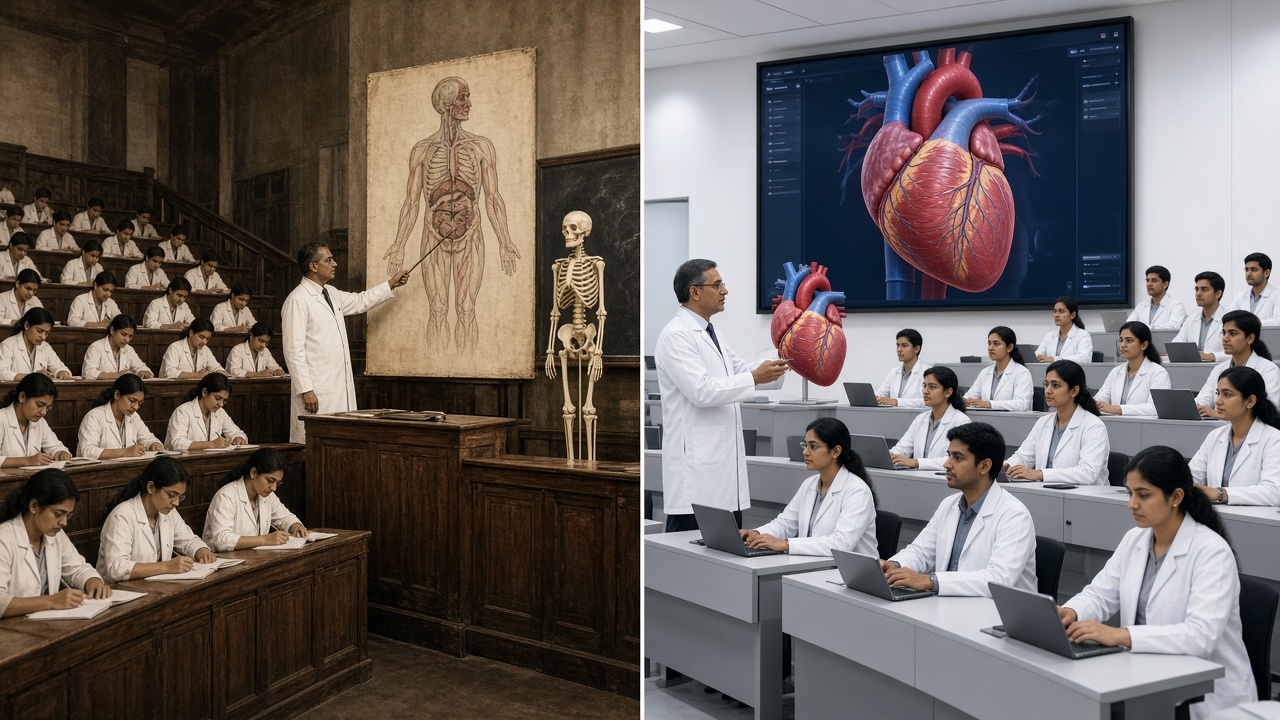
From wall charts and a skeleton to 3D models on digital screens (artistic illustration).
Medical Education Then vs Now at a Glance
Feature
Around 1947
Now
Medical colleges
About two dozen
More than 700
MBBS seats
A few thousand
More than one lakh a year
Postgraduate training
Mostly abroad
MD, MS, DNB, DM, and MCh in India
National institutes
None for advanced medicine
AIIMS, PGIMER, JIPMER, NIMHANS, and more
Where colleges were
A few big cities
Every state, many district hospitals
Admission
Separate college and state tests
One national test: NEET
Regulator
Medical Council of India
National Medical Commission
Teaching
Lectures and wall charts
Competency-based, skills labs, and simulation
Women students
A small minority
About half of MBBS students in many colleges
Research
Very limited
Institutes publishing and doing clinical trials
🏛️ CollegesBefore 1900
Ancient Roots & the First Medical Colleges
Indian medicine was taught for centuries by teachers to small groups of students. In the 19th century the colonial government opened medical colleges in Calcutta, Madras, and Bombay to train Indian doctors in Western medicine, and brave students broke social taboos around dissection and the education of women.
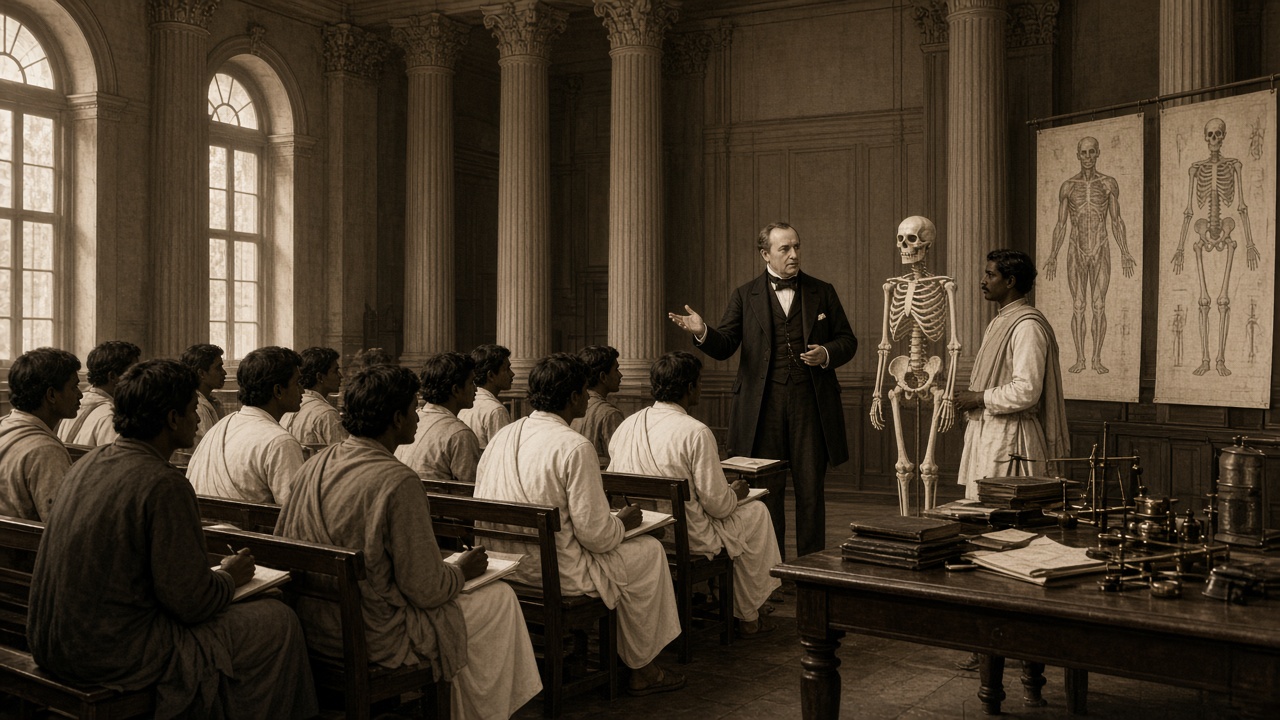
Students learn anatomy at one of India’s first Western-style medical colleges (artistic illustration).
Ancient India: The Charaka and Sushruta Samhitas set out medical and surgical training, and Takshashila is remembered as a great centre where the physician Jivaka studied.
1822–1836: The Native Medical Institution opens in Calcutta (1822), the Medical College Bengal is founded on 28 January 1835, and in 1836 Madhusudan Gupta performs one of the first human dissections by an Indian.
1835–1845: A medical school opens in Madras (1835), later becoming Madras Medical College, and Grant Medical College is founded in Bombay (1845).
1875–1886: Madras Medical College admits women (1875), and in 1886 Kadambini Ganguly and Anandibai Joshi become among the first Indian women to qualify as doctors.
Technology
Anatomy halls: Dissection and skeletons.
Printed textbooks: English medical books.
Microscopes: New in the classroom.
Features
Few colleges: Only in big cities.
Taboos broken: Dissection accepted.
First women doctors: 1880s.
👩⚕️ Council1900 – 1942
Women Doctors, Mission Hospitals & the Medical Council
In the early 20th century new colleges trained women doctors to care for women who would not see male doctors, mission hospitals grew into teaching institutions, and a national council began to set common standards for medical degrees. Public health training and cancer care also found their first specialised homes.
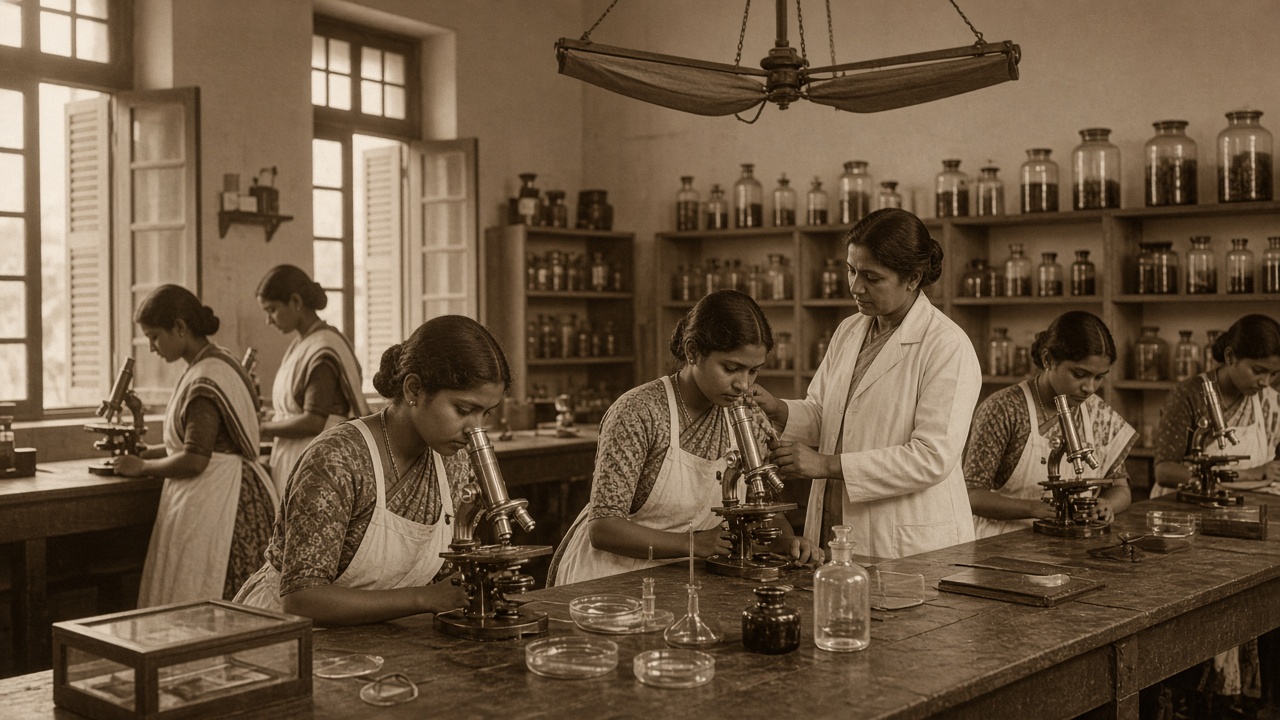
Women students study with microscopes at an early women’s medical college (artistic illustration).
1900–1918: Ida Scudder opens a small clinic in Vellore (1900), which grows into Christian Medical College, starting a medical school for women in 1918.
1916: Lady Hardinge Medical College, a medical college for women, opens in Delhi.
1932: The All India Institute of Hygiene and Public Health is set up in Calcutta to train public health specialists.
1933–1941: The Indian Medical Council Act (1933) creates the Medical Council of India (1934) to set standards, and Tata Memorial Hospital for cancer opens in Bombay (1941).
Technology
X-rays: New imaging in hospitals.
Laboratories: Pathology and bacteriology.
Radium therapy: Early cancer care.
Features
Women’s colleges: Doctors for women.
Common standards: Medical Council.
Public health: Specialised training.
🏥 AIIMS1943 – 1956
Bhore Committee & the Birth of AIIMS
On the eve of independence a landmark committee surveyed India’s health system and called for a national medical centre that would set the standard for teaching, research, and patient care. Newly independent India turned that idea into AIIMS, laying its foundation stone in 1952 and creating it by an Act of Parliament in 1956.
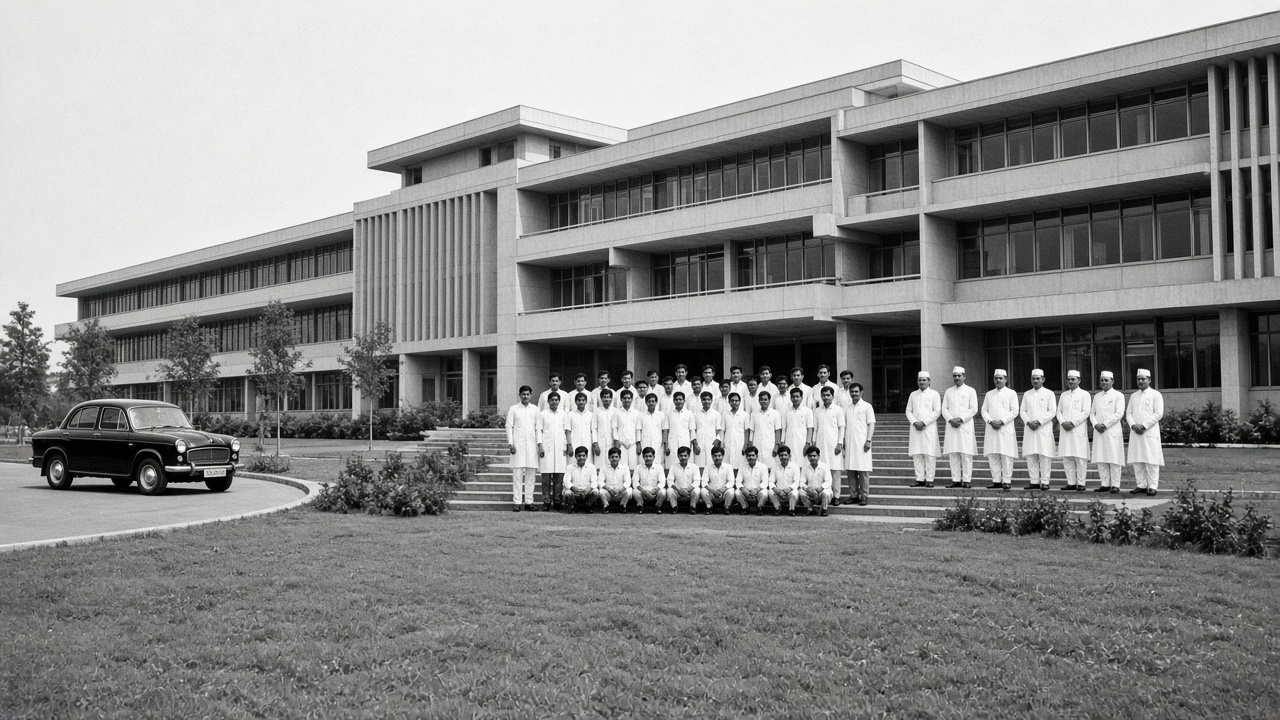
A first batch of students poses outside a new national medical institute (artistic illustration).
1943–1946: The Health Survey and Development Committee under Sir Joseph Bhore reports in 1946, recommending primary health centres, better medical colleges, and a national medical centre for postgraduate teaching and research.
1947–1948: Independent India starts with about two dozen medical colleges and very few specialists, and the Armed Forces Medical College opens in Pune (1948).
1952: The foundation stone of the All India Institute of Medical Sciences is laid in New Delhi, with a grant from New Zealand under the Colombo Plan, championed by Health Minister Rajkumari Amrit Kaur.
1956: Parliament passes the AIIMS Act, creating AIIMS as an autonomous institution of national importance, the first MBBS batch joins, and a new Indian Medical Council Act replaces the 1933 law.
Technology
Teaching hospital: Wards beside classrooms.
Research labs: Built into the campus.
Modern equipment: Donated and imported.
Features
Act of Parliament: Autonomy for AIIMS.
National importance: Own degrees.
Model institute: A standard for others.
🎓 Excellence1957 – 1985
Centres of Excellence Spread
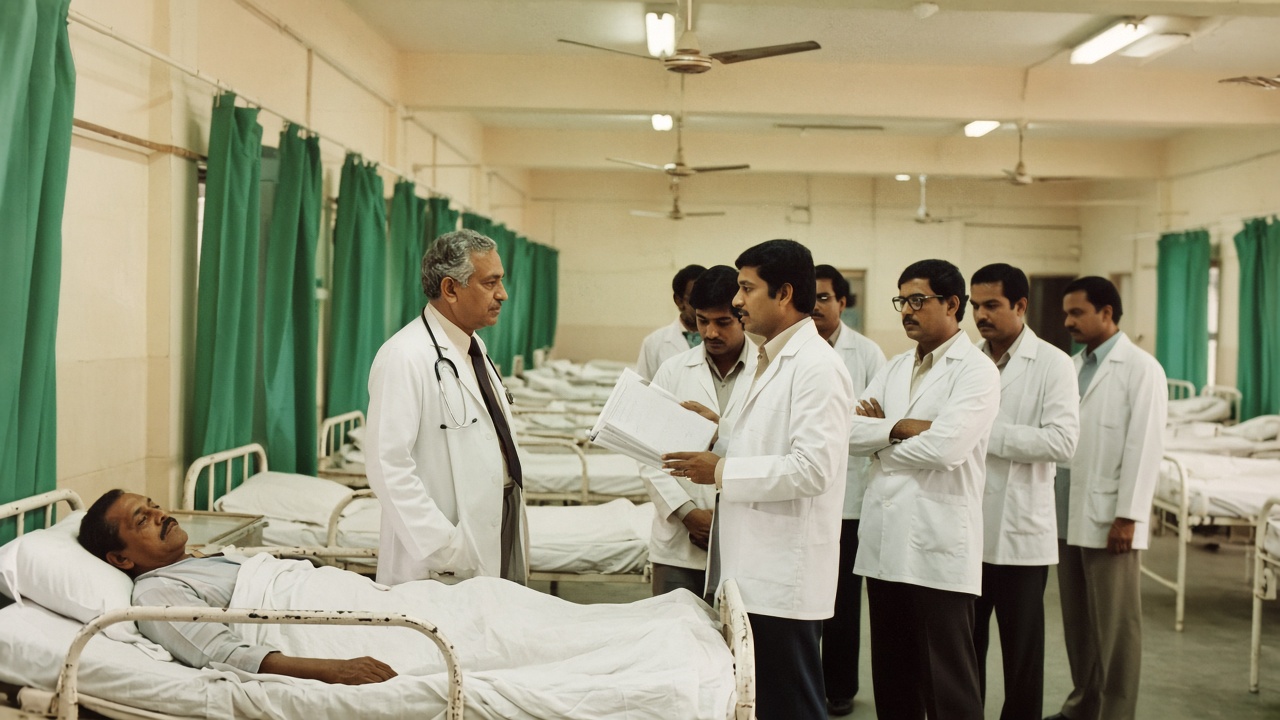
Following AIIMS, India built more postgraduate institutes for advanced treatment, specialist training, and research in Chandigarh, Puducherry, Bengaluru, Thiruvananthapuram, and Lucknow. A national board began awarding specialist qualifications through training in large hospitals, and medical colleges opened in many more states.
Resident doctors present cases to a professor on a ward round (artistic illustration).
1959–1961: The Mudaliar Committee reviews progress since the Bhore report and recommends expanding medical colleges and strengthening district hospitals.
1962–1967: The Postgraduate Institute of Medical Education and Research (PGIMER) opens in Chandigarh (1962) and becomes an institute of national importance by Act (1967), and JIPMER is established in Puducherry (1964).
1974–1976: NIMHANS is formed in Bengaluru (1974), the National Board of Examinations is set up to award DNB qualifications (1975), and Sree Chitra Tirunal Institute begins in Thiruvananthapuram (1976).
1983: The Sanjay Gandhi Postgraduate Institute of Medical Sciences is established in Lucknow, and the first National Health Policy stresses training doctors for primary care.
Technology
Super-specialities: Cardiology, neurology.
ICUs: Intensive care units.
CT scanners: From the late 1970s.
Features
Residency: Training on the wards.
DNB: Specialists from big hospitals.
Regional centres: Beyond Delhi.
🏗️ New AIIMS1986 – 2012
Health Universities, Private Colleges & New AIIMS
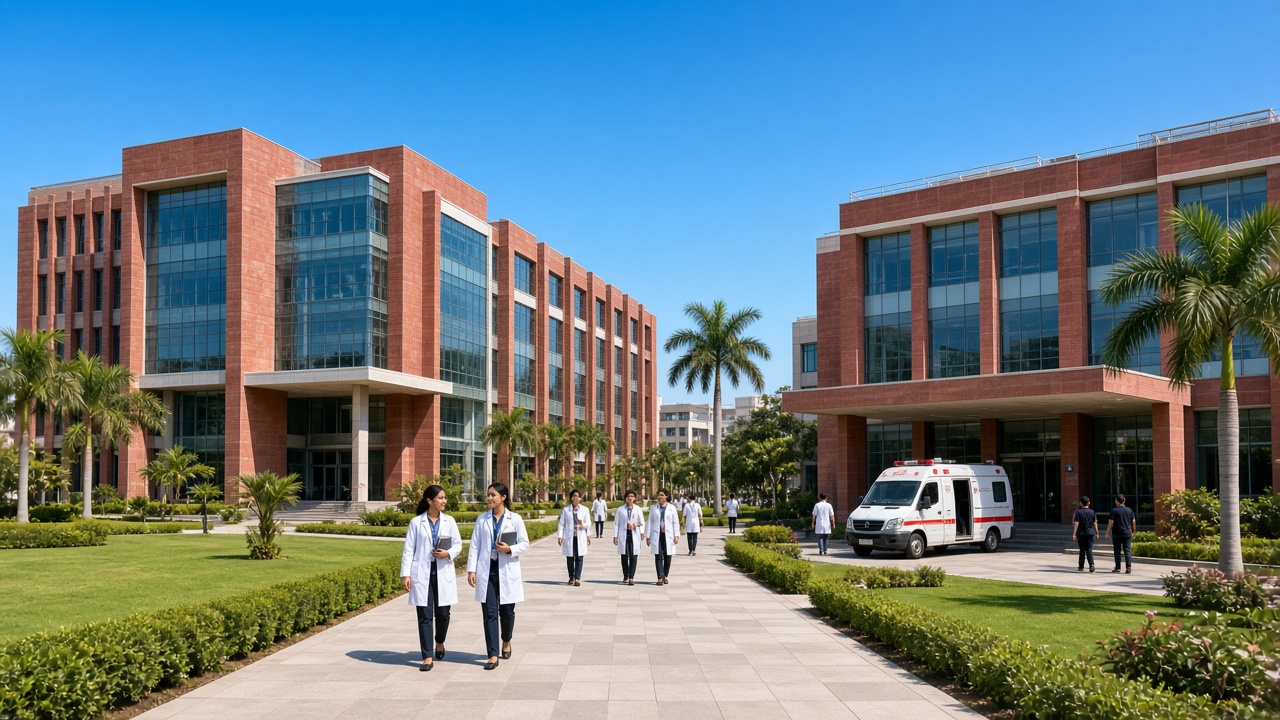
States set up universities devoted to health sciences, private medical colleges multiplied, and courts stepped in over capitation fees. Indian doctors achieved new firsts, and the government decided to build AIIMS-like institutes in other states so that patients and students would not all have to travel to Delhi.
Students walk across the campus of a new AIIMS-style institute (artistic illustration).
1986: The NTR University of Health Sciences in Andhra Pradesh becomes India’s first university devoted to health sciences, and other states follow.
1990s: Private medical colleges multiply, and Supreme Court judgments in 1992 and 1993 tackle capitation fees and admissions.
1994: Surgeons at AIIMS perform India’s first successful heart transplant (3 August 1994).
2003–2012: The Pradhan Mantri Swasthya Suraksha Yojana (2003) plans new AIIMS, JIPMER becomes an institute of national importance (2008), and six new AIIMS open in 2012.
Technology
Transplant surgery: Heart, liver, kidney.
Telemedicine: Linking hospitals.
MRI and cath labs: Advanced diagnosis.
Features
Health universities: One per state.
Private colleges: Rapid growth.
New AIIMS: Six in 2012.
🩺 Reform2013 – Future
NEET, NMC & a New MBBS
One national entrance test replaced dozens of separate exams, a new regulator replaced the Medical Council of India, and the MBBS course was redesigned around clear skills. Medical colleges were attached to district hospitals, seats more than doubled in a decade, and more AIIMS opened across the country.
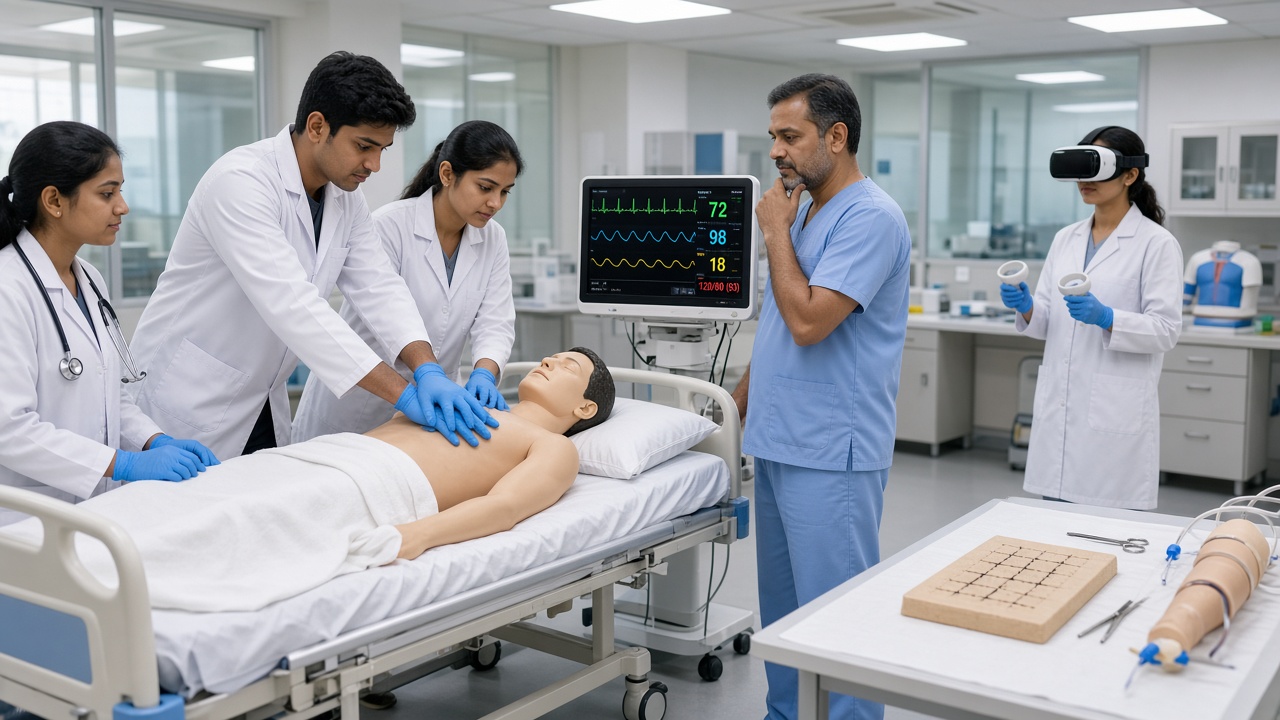
Students practise CPR and use virtual reality in a skills lab (artistic illustration).
2013–2016: NEET is first held in 2013, set aside by the Supreme Court the same year, and restored from 2016 as the single entrance test for MBBS and BDS.
2019: The competency-based MBBS curriculum begins with the 2019 batch, and Parliament passes the National Medical Commission Act.
2020–2023: The National Medical Commission starts work in September 2020, NEET also covers AIIMS and JIPMER from 2020, and the NMC wins World Federation for Medical Education recognition (2023).
2024–Future: India has more than 700 medical colleges and over one lakh MBBS seats, with plans for many more seats, more AIIMS, and a common national exit test for new doctors.
Technology
Simulation: Manikins and skills labs.
Virtual reality: Anatomy and surgery.
Online learning: Lectures anywhere.
Features
One entrance test: NEET.
New regulator: NMC.
District colleges: Doctors closer to home.
Ancient Roots of Medical Learning in India
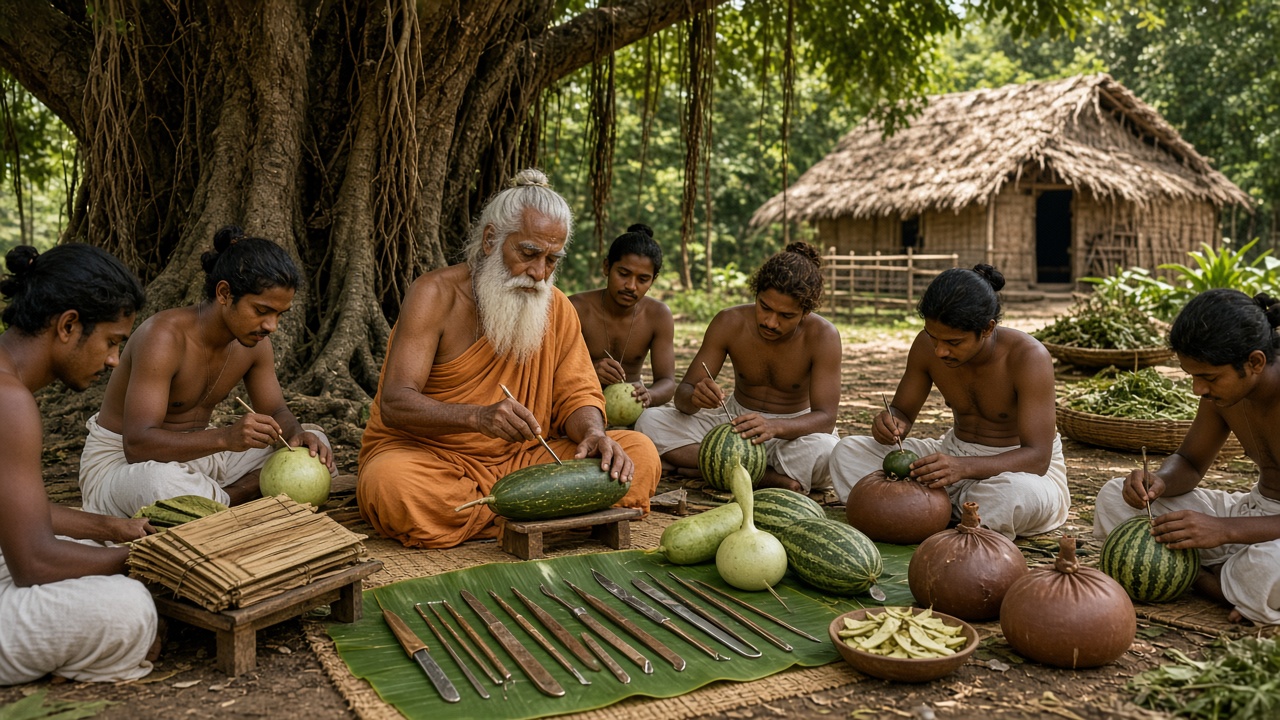
Students practise surgical cuts on gourds and melons, as the Sushruta Samhita describes (artistic illustration).
Source or centre
Known for
Charaka Samhita
Internal medicine, diet, and the qualities of a good physician
Sushruta Samhita
Surgery, surgical instruments, and practice on models
Takshashila
Ancient centre of learning linked with medical studies
Jivaka
Famous physician said to have trained at Takshashila
Nalanda
Great monastery-university that also taught medicine
Make a timeline poster: 1835 Calcutta college, 1946 Bhore Committee, 1952 foundation stone, 1956 AIIMS Act, 2012 new AIIMS, and 2020 NMC.
Find the nearest medical college or AIIMS to your home and learn when it was founded.
Interview a doctor about how they trained, from entrance exam to specialisation.
Read about Kadambini Ganguly or Anandibai Joshi and present the challenges they faced.
Explain in your own words what an “institute of national importance” is.
List three recommendations of the Bhore Committee and discuss whether they have been achieved.
Draw a flow chart of the path from Class 12 to becoming a heart specialist.
Compare learning anatomy from a skeleton and wall charts with learning from 3D models and virtual reality.
Mark National Doctors’ Day (1 July) by writing a thank-you note to a local doctor or nurse.
Debate: “Every district in India should have its own medical college.”
Continue exploring
Medical education is part of India’s wider story of higher education, entrance exams, women’s education, and research. Explore these connected timelines next.
Click any panel to expand and explore the visual mood.
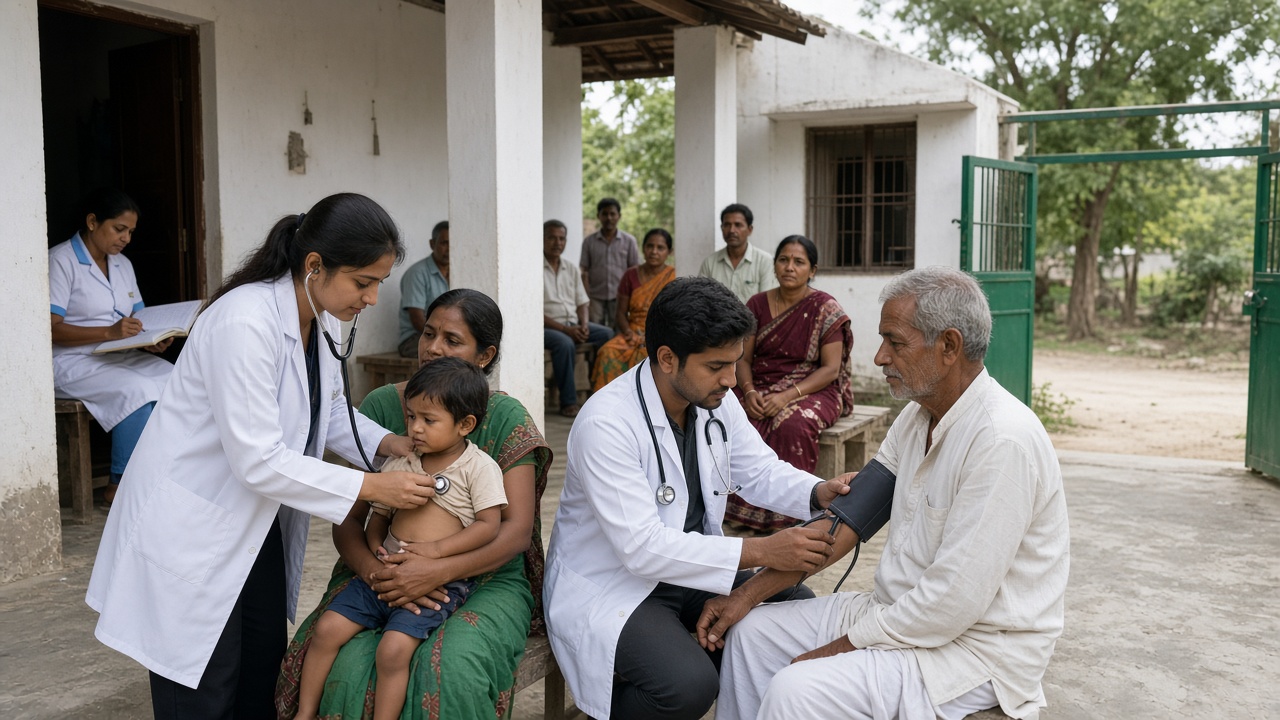
Indian medical education in pictures — ancient surgical practice, the first colonial college, women medical students, a new national institute, the ward round, a new AIIMS campus, the skills lab, a rural internship, and then versus now.
Ancient Roots
Practice on gourds
First College
Calcutta, 1835
Women Doctors
Early 1900s
AIIMS
Act of 1956
Ward Round
Postgraduate training
New AIIMS
Beyond Delhi
Skills Lab
Simulation training
Rural Internship
Community care
Then vs Now
Charts to 3D
Explore all health timelines
Jump to any other health timeline on WorldTimelineHub.
Disclaimer: This content is AI-generated for educational purposes and may contain errors or outdated details. For correct and authoritative information, please refer to official and reliable sources such as government publications, manufacturers, museums, and academic references.