Healthcare at Home Timeline of India: Home Remedies → Family Doctor → Hospitals → Telemedicine → Health Apps
In the 1950s the first treatment for a cough or fever in most Indian homes came from the kitchen — haldi doodh, ginger-tulsi kadha, and grandmother’s advice — with the vaid, hakim, or a distant dispensary
as the next step. The trusted family doctor ruled the 1970s, hospitals and diagnostic labs grew in the 1990s, doctor apps arrived in the 2010s, and in the 2020s telemedicine and health apps bring the doctor to the phone.
This timeline covers Ayurveda, Unani, and Siddha, vaids, hakims, and dais, dadi ke nuskhe, primary health centres, AIIMS, family doctors and compounders, smallpox and polio eradication, corporate hospitals,
ASHA workers and 108 ambulances, online doctor booking and e-pharmacies, Ayushman Bharat, telemedicine, eSanjeevani, Aarogya Setu, CoWIN, and ABHA digital health IDs.
1950s Home Remedies → 1970s Family Doctor1990s Hospitals → 2010s Doctor Apps2020s Telemedicine
Why the Home Healthcare Story Matters
Where a family turns first when someone falls ill says a lot about a country. India’s journey from kitchen remedies and village healers to family doctors, hospitals, community health workers, and phone
consultations reflects changes in science, public health programmes, cities, incomes, insurance, and digital technology — and explains why life expectancy has risen so sharply since independence.
Big picture
India’s home healthcare journey in one view
For centuries Indians were treated by vaids, hakims, and dais using herbs and home remedies. After independence primary health centres and mass vaccination began, the family doctor became the trusted
first stop in the 1970s, hospitals and diagnostics grew in the 1990s, doctor apps and Ayushman Bharat came in the 2010s, and telemedicine and health IDs arrived in the 2020s. Related timelines:
Digital India,
mobile phones,
artificial intelligence.
1952
First primary health centres
2014
India certified polio-free
2018
Ayushman Bharat PM-JAY launched
2020
Telemedicine guidelines issued
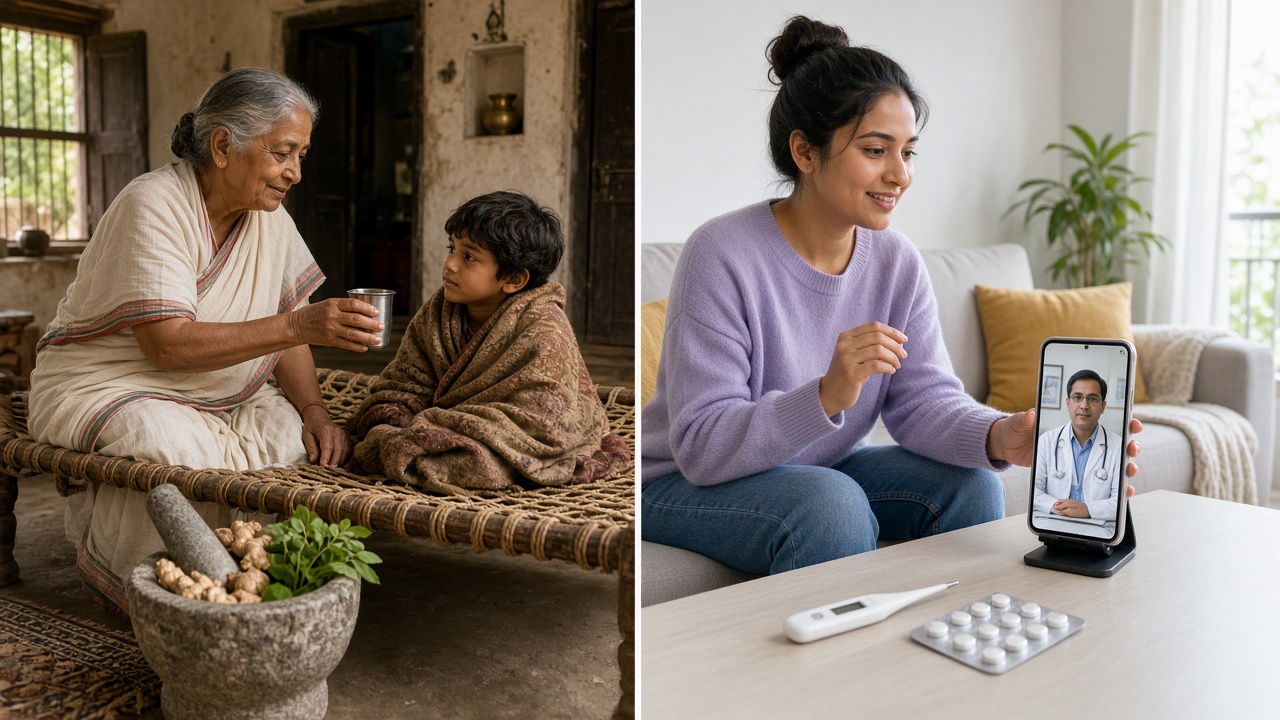
From dadi’s haldi doodh to a doctor on a video call (artistic illustration).
Home Healthcare Then vs Now at a Glance
Feature
Then
Now
First response
Kitchen remedies and elders’ advice
Search, app, or teleconsultation
Healer
Vaid, hakim, dai, or family doctor
GP, specialist, or online doctor
Diagnosis
Pulse, tongue, and stethoscope
Lab tests, scans, and AI tools
Medicines
Herbs and compounder’s mixtures
Strips, generics, and e-pharmacy delivery
Childbirth
Mostly at home with a dai
Mostly in hospitals
Village care
Distant dispensary
ASHA, sub-centre, PHC, and eSanjeevani
Emergencies
Bullock cart or bus to town
108 ambulance and nearby hospital
Payment
Cash, grain, or goodwill
Insurance, PM-JAY, and UPI
Records
Doctor’s memory and paper slips
ABHA ID and digital health records
Home monitoring
Hand on the forehead
Thermometers, oximeters, BP monitors, and wearables
🌿 AyurvedaAncient – 1946
Ayurveda, Vaids & Hakims
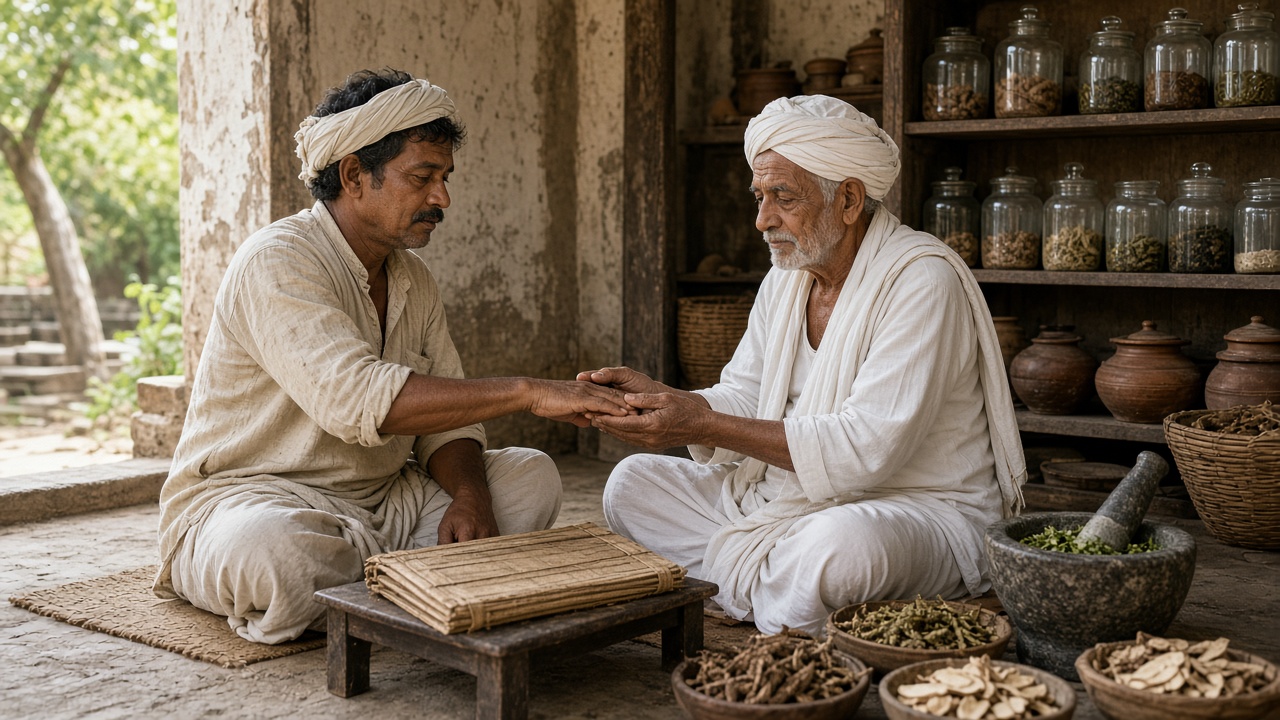
For thousands of years most Indians were treated by vaids practising Ayurveda, hakims practising Unani medicine, and Siddha healers in the South, who diagnosed by feeling the pulse and treated with herbs, diet, and lifestyle. Dais delivered babies at home. Western medicine arrived through colonial medical colleges and hospitals, mostly in cities.
A village vaid reads the pulse (nadi pariksha) among jars of herbs (artistic illustration).
Ancient times: The Charaka Samhita and Sushruta Samhita lay the foundations of Ayurveda, with Sushruta describing surgery including reconstruction of the nose.
Medieval era: Unani medicine spreads with hakims, Siddha medicine continues in Tamil Nadu, and dais attend most births at home.
1835: The Medical College in Calcutta opens as one of the first colleges of Western medicine in Asia.
1896–1946: Plague strikes Bombay (1896) and Waldemar Haffkine develops a plague vaccine (1897), and the Bhore Committee (1946) recommends a network of primary health centres.
Technology
Nadi pariksha: Pulse diagnosis.
Herbal medicine: Roots, leaves, and oils.
Vaccines: Early colonial labs.
Features
Local healers: In every village.
Home births: With the dai.
Diet and routine: Prevention first.
🍵 Remedies1947 – 1969
Home Remedies, Dais & the First PHCs
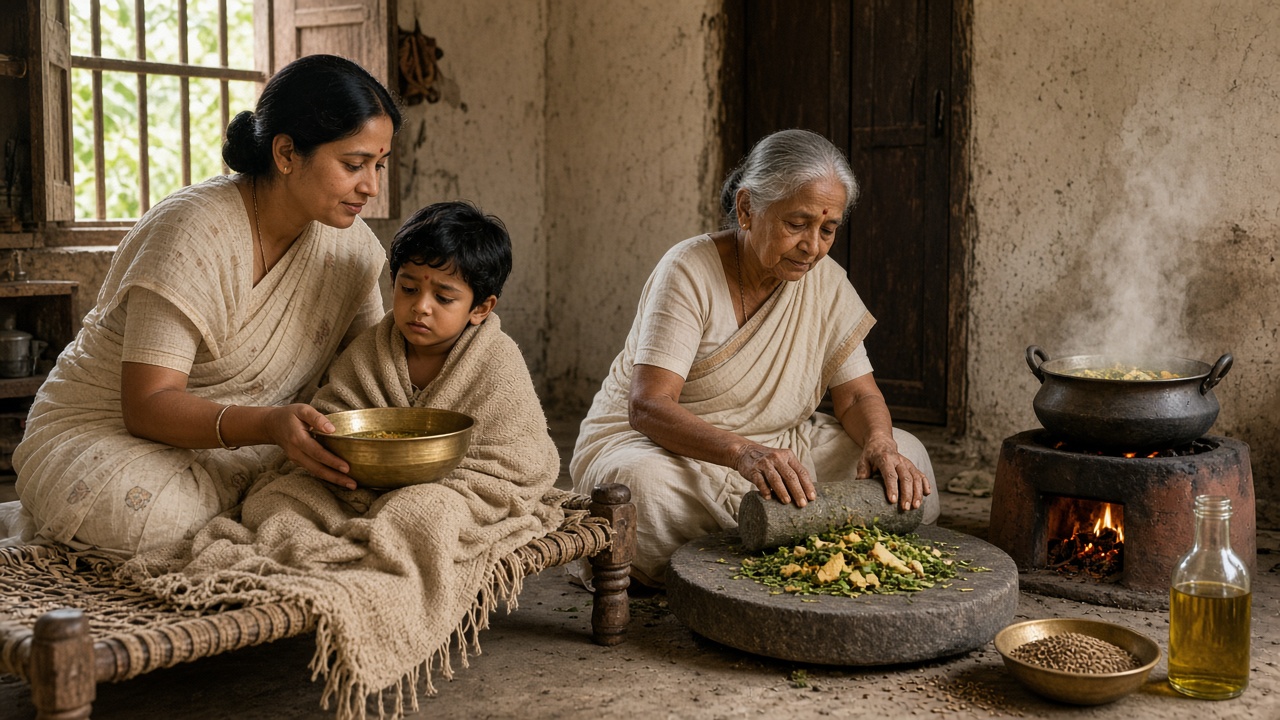
In the 1950s a cold or fever was first treated at home with dadi ke nuskhe — haldi doodh, ginger-tulsi kadha, ajwain, and steam — and doctors were few and far away. The new government began primary health centres, mass vaccination, and campaigns against malaria, tuberculosis, and smallpox, and founded AIIMS in New Delhi.
Kadha on the stove and herbs on the grinding stone for a child’s cold (artistic illustration).
1950s: Most minor illnesses are treated at home with haldi doodh, kadha, ajwain, honey and ginger, and steam, and most babies are born at home with a dai.
1951–1953: A mass BCG vaccination campaign against tuberculosis begins (1951), the first primary health centres open (1952), and the National Malaria Control Programme starts (1953).
1952–1956: India launches one of the world’s first national family planning programmes (1952), and the All India Institute of Medical Sciences is set up in New Delhi (1956).
1962: The National Smallpox Eradication Programme begins, while vaids, hakims, and local practitioners remain the main healers in villages.
Technology
Kitchen remedies: Haldi and kadha.
BCG vaccine: Against tuberculosis.
DDT spraying: Malaria control.
Features
Elders’ wisdom: First treatment.
PHCs: Rural health centres.
Mass campaigns: Vaccines for all.
🩺 Doctor1970 – 1989
Family Doctors & Compounders
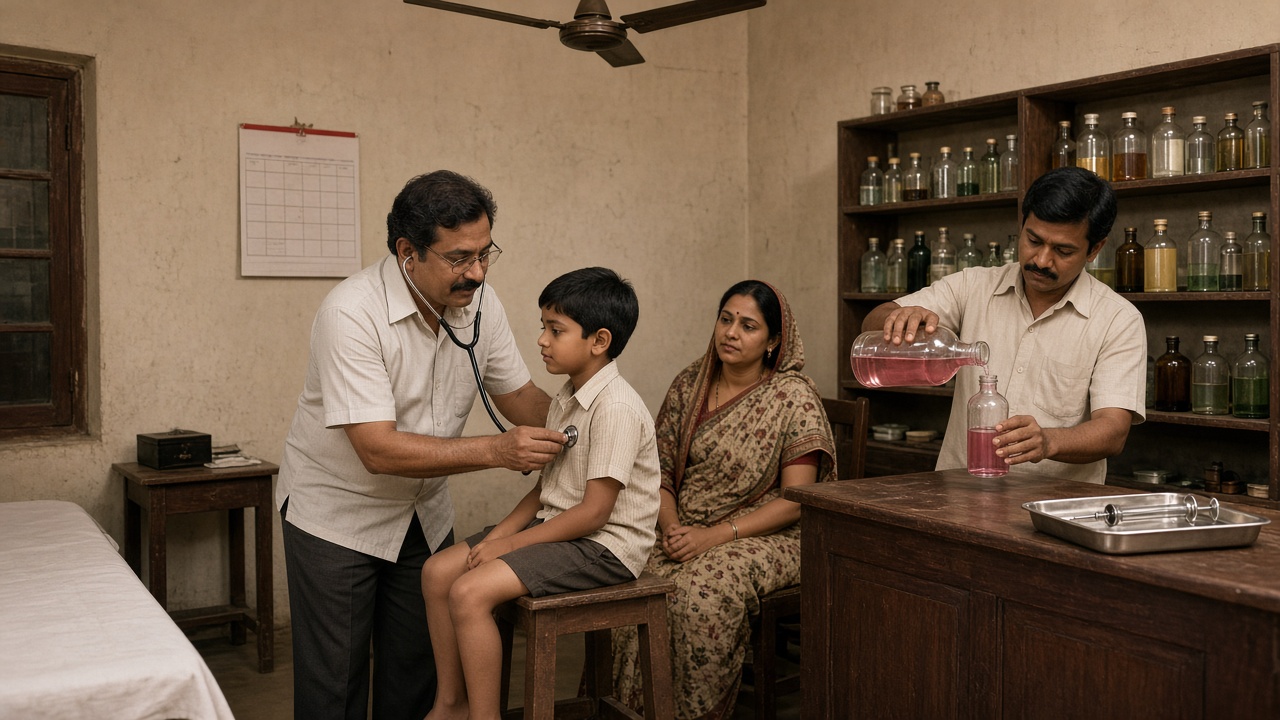
In towns and cities the neighbourhood family doctor became the trusted first stop for every illness. He knew the whole family’s history, made house visits, and his compounder mixed pink and brown medicines into small glass bottles. Anganwadis, the defeat of smallpox, and universal immunisation brought big public health gains.
The family doctor’s stethoscope and the compounder’s pink mixture (artistic illustration).
1970s: Family doctors and general practitioners run small clinics, make house visits, and dispense medicines through a compounder, and glass syringes are boiled for reuse.
1975–1977: The Integrated Child Development Services scheme starts anganwadis (1975), India records its last smallpox case (1975), and it is declared smallpox-free (1977).
1983: India adopts its first National Health Policy, and Apollo Hospitals opens in Chennai as the country’s first corporate hospital.
1985: The Universal Immunisation Programme begins, and oral rehydration solution (ORS) is promoted to save children from diarrhoea.
Technology
Stethoscope: Chest and heart checks.
Liquid mixtures: Mixed in the clinic.
ORS packets: Life-saving salts.
Features
House visits: Doctor at the door.
Family history: Known by heart.
Anganwadis: Child care in villages.
🏥 Hospitals1990 – 2009
Hospitals, Diagnostics & ASHA Workers
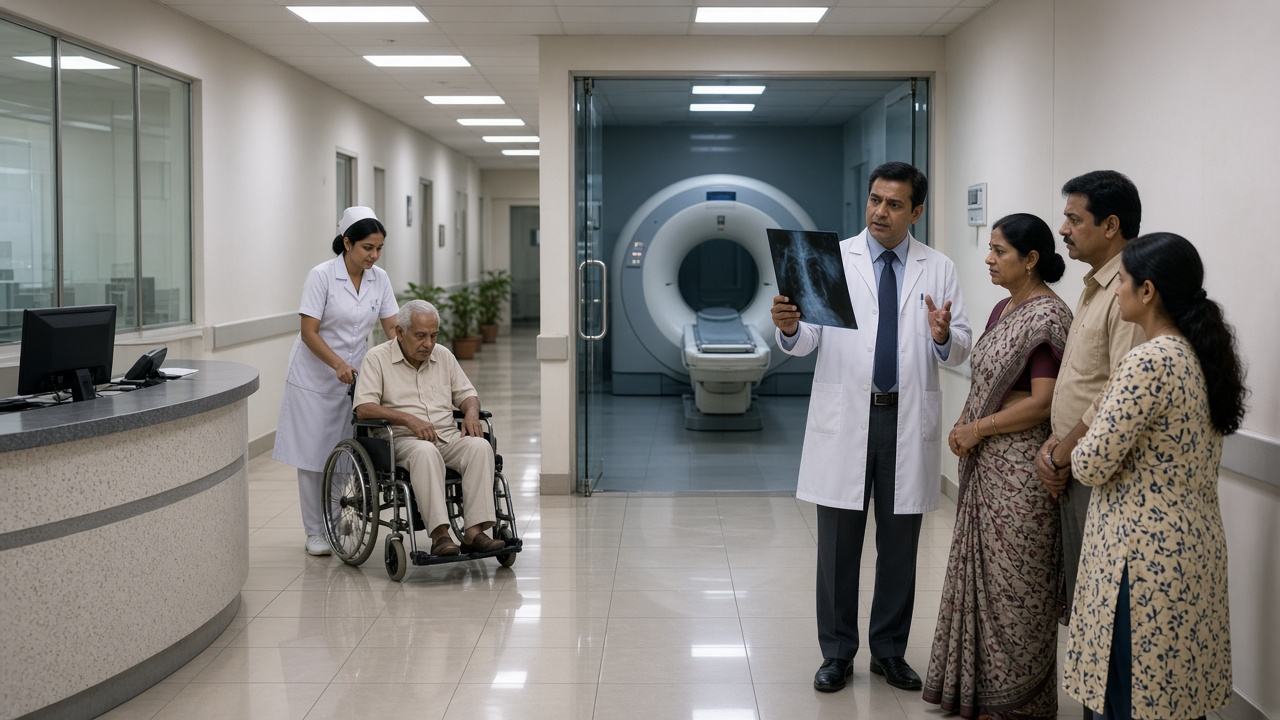
After liberalisation, private hospitals, specialist clinics, pathology labs, and CT and MRI scans spread in cities, and families began going straight to specialists. Health insurance and cashless treatment grew, while Pulse Polio, ASHA workers, and 108 ambulances brought care closer to villages.
A doctor explains an X-ray in a private hospital with a CT scanner (artistic illustration).
1990s: Private hospital chains, specialist clinics, pathology labs, and CT and MRI scans spread in cities, and specialists replace the family doctor for many families.
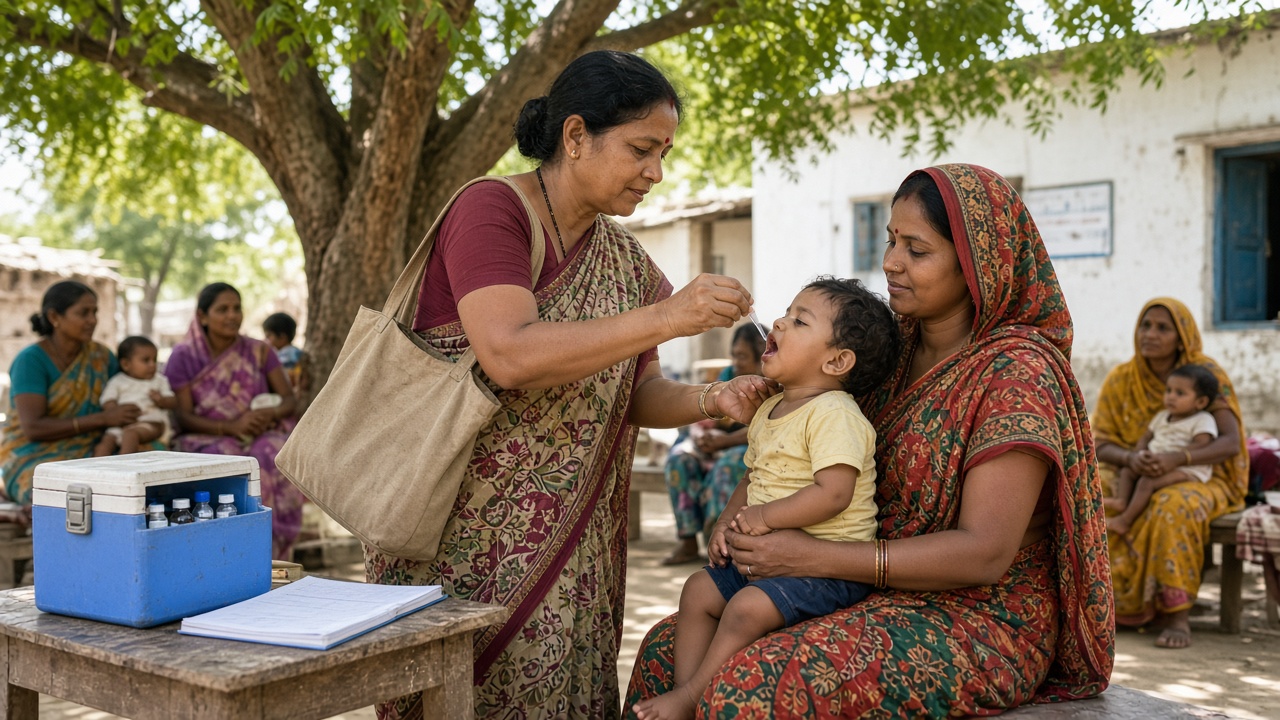
1995: The Pulse Polio campaign begins, with volunteers giving oral polio drops to millions of children on national immunisation days.
1999–2000s: The insurance sector opens to private companies (1999), and Mediclaim policies and cashless hospital treatment grow among the middle class.
2005–2008: The National Rural Health Mission introduces ASHA workers (2005), the 108 emergency ambulance service starts in Andhra Pradesh (2005), and Jan Aushadhi generic medicine stores open (2008).
Technology
CT and MRI: Detailed scans.
Pathology labs: Blood tests.
Disposable syringes: Safer injections.
Features
Specialists: Care by organ and disease.
ASHA workers: Village health link.
108 ambulance: Free emergency help.
📱 Apps2010 – 2019
Online Doctors, E-Pharmacies & Ayushman Bharat
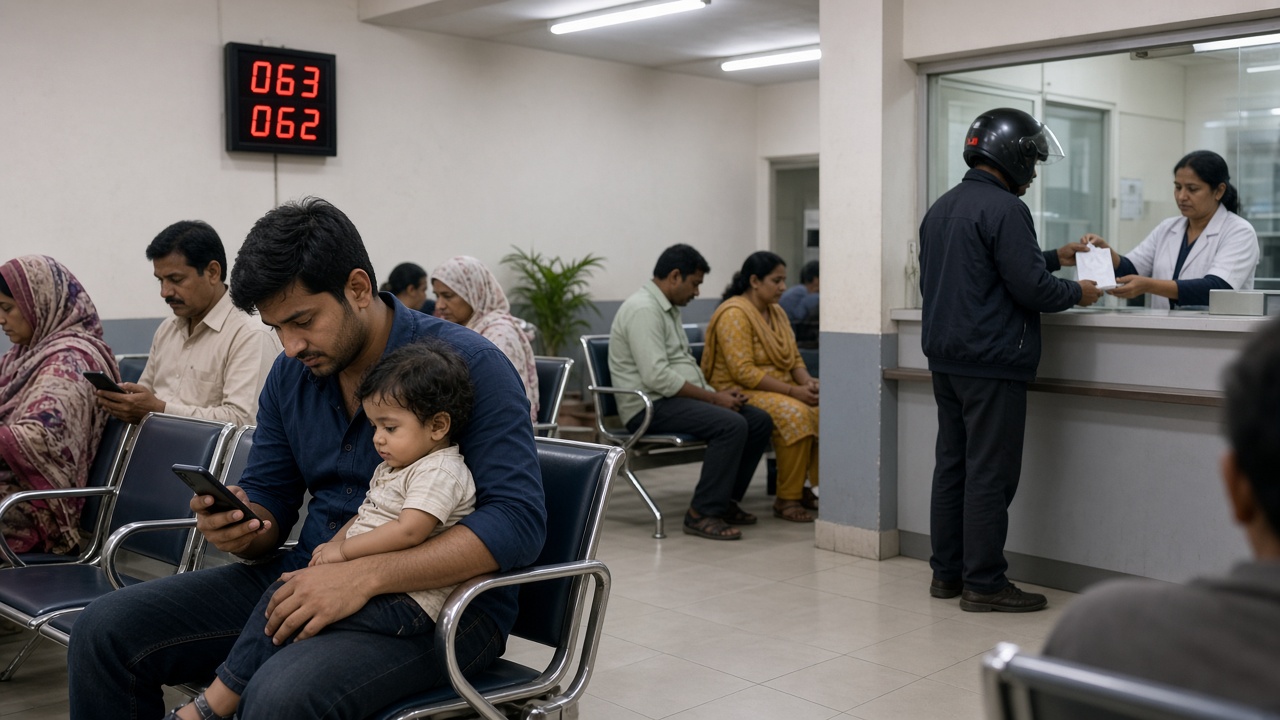
Smartphones let families search for doctors, read reviews, and book appointments online, clinics used token screens, and e-pharmacies and home sample collection for lab tests spread. India defeated polio, and Ayushman Bharat brought wellness centres and hospital insurance to hundreds of millions of people.
An app-booked appointment, a token screen, and a medicine delivery rider (artistic illustration).
2010s: Doctor-discovery and booking apps such as Practo (founded 2008) grow, and clinics adopt digital token systems and online appointments.
2011–2014: India’s last wild polio case is reported in January 2011, and the WHO certifies India polio-free in March 2014.
2010s: Online pharmacies deliver medicines, labs collect blood samples from homes, and reports arrive by email and app.
2018: Ayushman Bharat launches Health and Wellness Centres and, on 23 September, PM-JAY hospital insurance of up to ₹5 lakh per family per year.
Technology
Booking apps: Find and book doctors.
E-pharmacies: Medicines delivered.
Digital reports: Results on the phone.
Features
Doctor reviews: Choose online.
Home sample collection: No queues.
PM-JAY: Free hospital care.
💻 Telemedicine2020s – Future
Telemedicine, Health Apps & Digital Health IDs
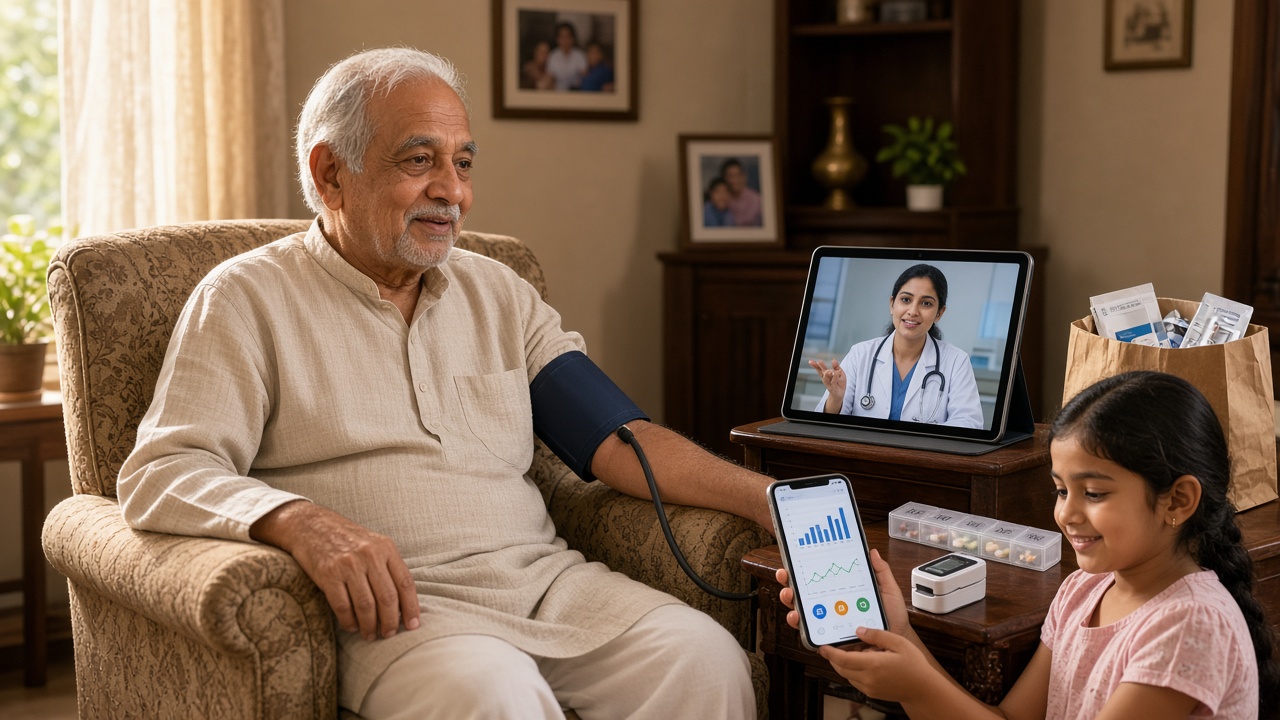
The COVID-19 pandemic made the video consultation normal almost overnight. Telemedicine guidelines, the free eSanjeevani service, Aarogya Setu, and CoWIN put healthcare on the phone, pulse oximeters and BP monitors became household items, and ABHA health IDs began linking records across hospitals and apps.
A video consultation with home BP and oxygen readings on a health app (artistic illustration).
2020: Telemedicine Practice Guidelines (March) allow consultations by video, phone, and chat, and the government’s free eSanjeevani service expands rapidly.
2020–2021: The Aarogya Setu app launches (April 2020), CoWIN manages the COVID-19 vaccination drive from 16 January 2021, and pulse oximeters appear in millions of homes.
2021–2022: The Ayushman Bharat Digital Mission (September 2021) creates ABHA health IDs and digital records, and the Tele-MANAS mental health helpline starts (2022).
Future: AI-assisted diagnosis, remote monitoring through wearables, hospital-at-home care, drone delivery of medicines, and personalised medicine.
Technology
Video consults: Doctor on screen.
Health apps: Records and reminders.
Home devices: Oximeters and BP monitors.
Features
eSanjeevani: Free teleconsultation.
ABHA ID: Linked health records.
E-prescriptions: Medicines to the door.
Dadi ke Nuskhe: Common Indian Home Remedies
These traditional remedies are still widely used for minor complaints. They are not a substitute for medical advice — see a doctor if symptoms are severe, last more than a few days, or affect a baby, an elderly person, or someone who is pregnant.
Remedy
Traditionally used for
How it is taken
Haldi doodh (turmeric milk)
Colds, body aches, and good sleep
Warm milk with a pinch of turmeric
Ginger-tulsi kadha
Cough and cold
Herbs and spices boiled in water
Honey with ginger juice
Sore throat and cough
A spoonful, not for babies under one
Salt-water gargle
Sore throat
Warm water with salt, gargled
Steam inhalation
Blocked nose
Breathing steam from hot water, carefully
Ajwain (carom seeds)
Indigestion and gas
Chewed or boiled in water
Clove
Toothache
Held near the painful tooth
Home-made ORS
Dehydration from diarrhoea
Clean water with sugar and salt
Neem leaves
Skin care and keeping insects away
Paste, bath water, or dried leaves
Who Indian Families Turned To for Care
Caregiver
Main era
Role
Dai
Traditional–1990s
Delivered babies at home
Vaid and hakim
Ancient times–now
Ayurvedic and Unani treatment
Compounder
1950s–1980s
Mixed and dispensed medicines at clinics
Family doctor (GP)
1950s–1990s peak
First contact for the whole family
ANM and anganwadi worker
1970s–now
Mother and child care in villages
ASHA worker
2005–now
Links families to health services
Specialist and hospital
1990s–now
Scans, surgery, and advanced care
Online doctor
2010s–now
Consultations by video, phone, or chat
Health app and AI tools
2020s
Records, reminders, and symptom checks
Public Health Milestones That Reached Every Home
A community health worker gives oral polio drops on immunisation day (artistic illustration).
Milestone
Year
What it did
Primary health centres
1952
Basic care for groups of villages
National Malaria Control Programme
1953
Spraying and treatment against malaria
AIIMS New Delhi
1956
Top medical teaching and care
Smallpox-free India
1977
End of a deadly disease
Universal Immunisation Programme
1985
Free vaccines for children and mothers
Pulse Polio
1995
Oral polio drops for every child
NRHM and ASHA workers
2005
Community health workers in villages
Polio-free certification
2014
End of wild polio in India
Ayushman Bharat PM-JAY
2018
Hospital insurance for poor families
Ayushman Bharat Digital Mission
2021
ABHA IDs and digital health records
Healthcare at Home Timeline Summary
Year / Era
Milestone
Ancient times
Charaka and Sushruta Samhitas; Ayurveda
Medieval era
Unani hakims and Siddha healers
1835
Medical College, Calcutta
1897
Haffkine’s plague vaccine
1946
Bhore Committee report
1950s
Home remedies and home births
1951
Mass BCG vaccination campaign
1952
First PHCs; family planning programme
1956
AIIMS New Delhi
1970s
Family doctors and compounders
1975
ICDS anganwadis
1977
India declared smallpox-free
1983
First National Health Policy; first corporate hospital
1985
Universal Immunisation Programme
1995
Pulse Polio campaign
2005
NRHM, ASHA workers, and 108 ambulances
2008
Jan Aushadhi generic medicine stores
2014
Polio-free certification
2018
Ayushman Bharat PM-JAY
2020
Telemedicine guidelines; Aarogya Setu
2021
CoWIN vaccination drive; ABDM
Future
AI diagnosis and hospital-at-home care
Test Your Knowledge
20 quick questions from the healthcare at home timeline. Click each question to reveal the answer.
Answer: The Charaka Samhita and the Sushruta Samhita.
Answer: Unani medicine.
Answer: Diagnosis by feeling the pulse.
Answer: A traditional birth attendant who delivered babies at home.
Answer: Waldemar Haffkine.
Answer: The Bhore Committee.
Answer: Grandmother’s home remedies.
Answer: BCG.
Answer: 1956.
Answer: Mixed and dispensed medicines at the doctor’s clinic.
Answer: 1977.
Answer: Oral rehydration solution.
Answer: Pulse Polio.
Answer: Accredited Social Health Activist.
Answer: 108.
Answer: Low-cost generic medicines.
Answer: 2014.
Answer: Up to ₹5 lakh.
Answer: The government’s free national telemedicine service.
Answer: Link a person’s digital health records across hospitals, clinics, and apps.
Classroom activity
Students Tasks
Use these prompts for discussion or projects on how Indian families have looked after their health over time.
Click any panel to expand and explore the visual mood.
India’s home healthcare journey in pictures — the village vaid, dadi’s kadha, the family doctor and compounder, the private hospital, the doctor app, telemedicine at home, polio drops, and then versus now.
Village Vaid
Pulse and herbs
Home Remedies
Dadi’s kadha
Family Doctor
And the compounder
Hospital
Scans and specialists
Doctor App
Book and deliver
Telemedicine
Doctor on the screen
Polio Drops
Two drops of life
Then vs Now
Haldi doodh to video call
Explore all health timelines
Jump to any other health timeline on WorldTimelineHub.
Disclaimer: This content is AI-generated for educational purposes and may contain errors or outdated details. For correct and authoritative information, please refer to official and reliable sources such as government publications, manufacturers, museums, and academic references.