Footwear Timeline of India: Kolhapuri Chappals → Bata Shoes → Sneakers → Branded → Athleisure
In the 1950s many Indians walked in handmade leather chappals, and many villagers still went barefoot. By the 1970s the Bata shop and the rubber hawai chappal were everywhere,
chunky sneakers became a teenage dream in the 1990s, branded shoes and online shopping took over the 2000s, and in the 2020s comfortable athleisure sneakers are worn from office to gym.
This timeline covers wooden padukas, Mughal juttis and mojaris, Kolhapuri chappals, the arrival of Bata (1931), school shoes and hawai chappals, canvas PT shoes, 1990s sneakers,
global brands, malls and e-commerce, the Kolhapuri GI tag (2019), BIS footwear standards, Indian sneaker brands, and athleisure and sustainable footwear in the 2020s.
Footwear protects feet from heat, thorns, injuries, and infections, so owning a pair of shoes has long been a sign of health and progress. India’s footwear story also tells of
skilled leather artisans, huge factories, school uniforms, cricket and sport, the rise of brands and online shopping, and today’s mix of comfort, style, and craft.
Big picture
India’s footwear journey in one view
Local artisans made padukas, juttis, and Kolhapuris for centuries. Bata’s arrival in 1931 brought factory-made shoes, and by the 1970s Bata shops, school shoes, and rubber hawai
chappals reached almost every town. Sneakers and global brands came with the 1990s, malls and e-commerce spread branded footwear in the 2000s, and the 2020s belong to
comfortable athleisure — while Kolhapuris and juttis enjoy a stylish revival. Related timelines:
television,
Digital India,
mobile phones.
1931
Bata begins in India
2nd
India’s rank among world footwear producers
2019
GI tag for Kolhapuri chappals
~44 lakh
Leather and footwear workers (estimate)
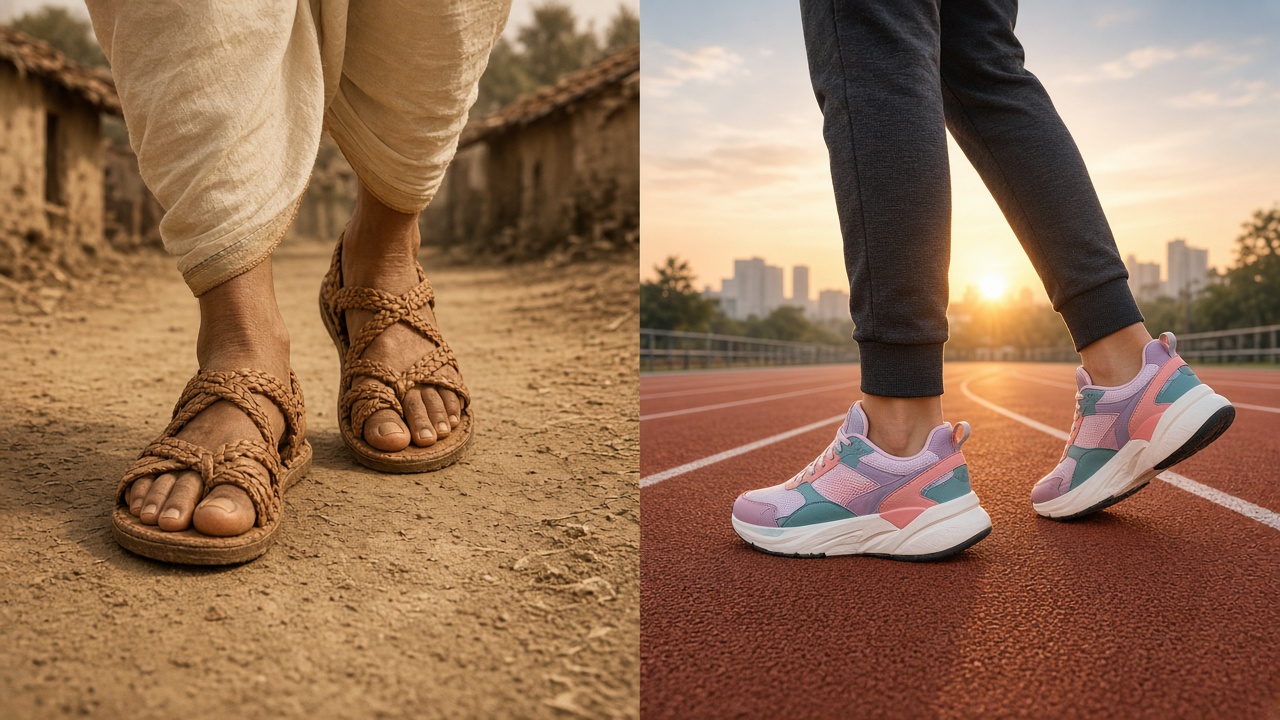
From handmade Kolhapuris on village paths to athleisure sneakers on city tracks (artistic illustration).
Footwear Then vs Now at a Glance
Feature
Then
Now
Everyday footwear
Leather chappals, padukas, or bare feet
Sneakers, sandals, sliders, and hawai chappals
Materials
Leather, wood, straw, cloth
Rubber, EVA foam, synthetics, knit fabric, recycled plastic
Who made it
Local cobblers and artisan families
Factories, global brands, and Indian D2C labels
Where bought
Village cobbler or weekly market
Brand stores, malls, and online shops
Pairs owned
One pair, repaired many times
Several pairs for work, sport, and occasions
School
Barefoot or chappals
Black school shoes and sports shoes
Sport
Barefoot or canvas shoes
Specialised running, cricket, and football shoes
Style influence
Region, caste, and community customs
Cricket stars, films, Instagram, and brands
Repair
Roadside cobblers mend everything
Often replaced rather than repaired
Quality rules
None
BIS standards for many footwear types
🥿 TraditionalAncient – 1930
Padukas, Juttis & Kolhapuris
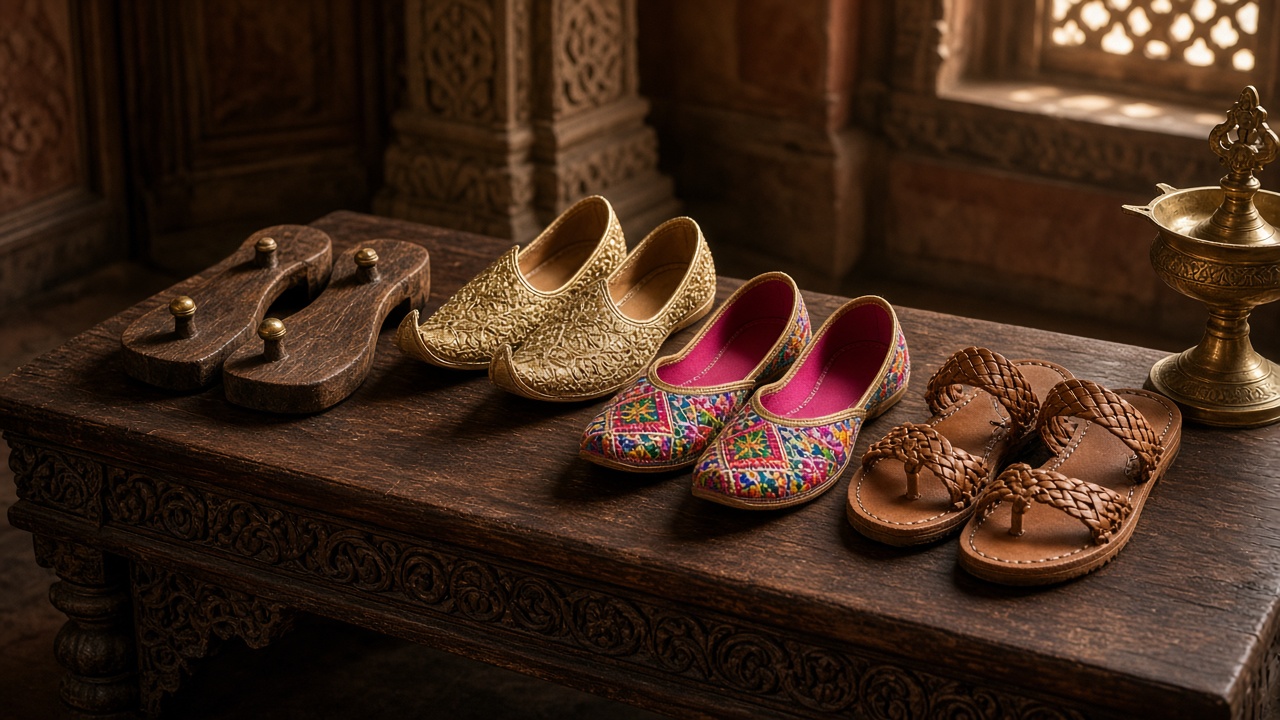
For centuries most Indians walked barefoot or wore simple footwear made by local artisans. Wooden padukas, embroidered juttis and mojaris, and hand-stitched Kolhapuri chappals were made from local wood, leather, cloth, and straw, each suited to its region and climate.
Ancient times: Wooden padukas with a toe knob are worn by sages and royalty; in the Ramayana, Bharata places Rama’s padukas on the throne while Rama is in exile.
Around 12th–13th century: Handmade leather sandals from the Kolhapur region — later called Kolhapuri chappals — are traced back to this period.
Mughal era: Embroidered juttis and mojaris with curled toes, made of leather, velvet, and zari, become fashionable in North India.
Late 1800s–1920s: Kanpur and Agra grow as leather centres, making army boots and shoes; British-style leather shoes are worn by officials and city elites, while villagers mostly go barefoot.
Technology
Wood carving: Padukas.
Vegetable tanning: Bark-tanned leather.
Hand embroidery: Juttis and mojaris.
Features
Barefoot common: In villages.
Artisan-made: By local cobblers.
Regional styles: Suited to climate.
🩴 Chappals1931 – 1959
Bata Arrives & the Chappal Era
In 1931 the Czech company Bata began making shoes in India, and factory-made footwear slowly became affordable. Still, in the 1950s the everyday footwear of most Indians was the handmade leather chappal — above all the sturdy Kolhapuri — while many rural people walked barefoot.
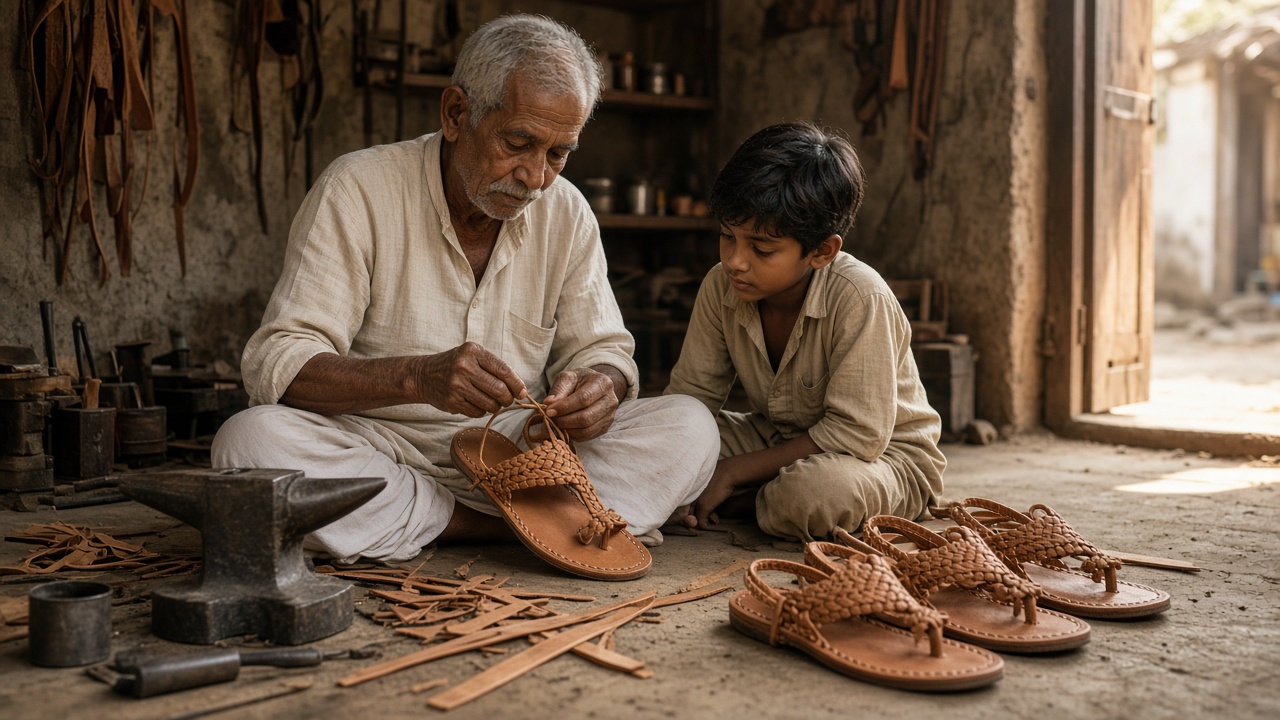
An artisan braids a Kolhapuri chappal as an apprentice learns the craft (artistic illustration).
1931–1934: Bata begins operations at Konnagar near Calcutta (1931) and builds the factory town of Batanagar (1934), making affordable factory shoes.
1948: The Central Leather Research Institute (CLRI) is set up in Madras to improve leather and tanning technology.
1950s: Leather chappals and Kolhapuris are everyday footwear for men and women; cobblers in every town make and repair them, and many villagers still go barefoot.
1954: Liberty begins in Karnal, Haryana, one of several Indian shoe companies to grow after Independence.
Technology
Factory lines: Mass-made shoes.
Rubber soles: Longer-lasting.
Hand-stitched leather: No nails in Kolhapuris.
Features
Affordable shoes: For city workers.
Kolhapuris: Everyday favourite.
Barefoot villages: Still common.
👞 Bata1960 – 1979
Bata Shoes & Hawai Chappals
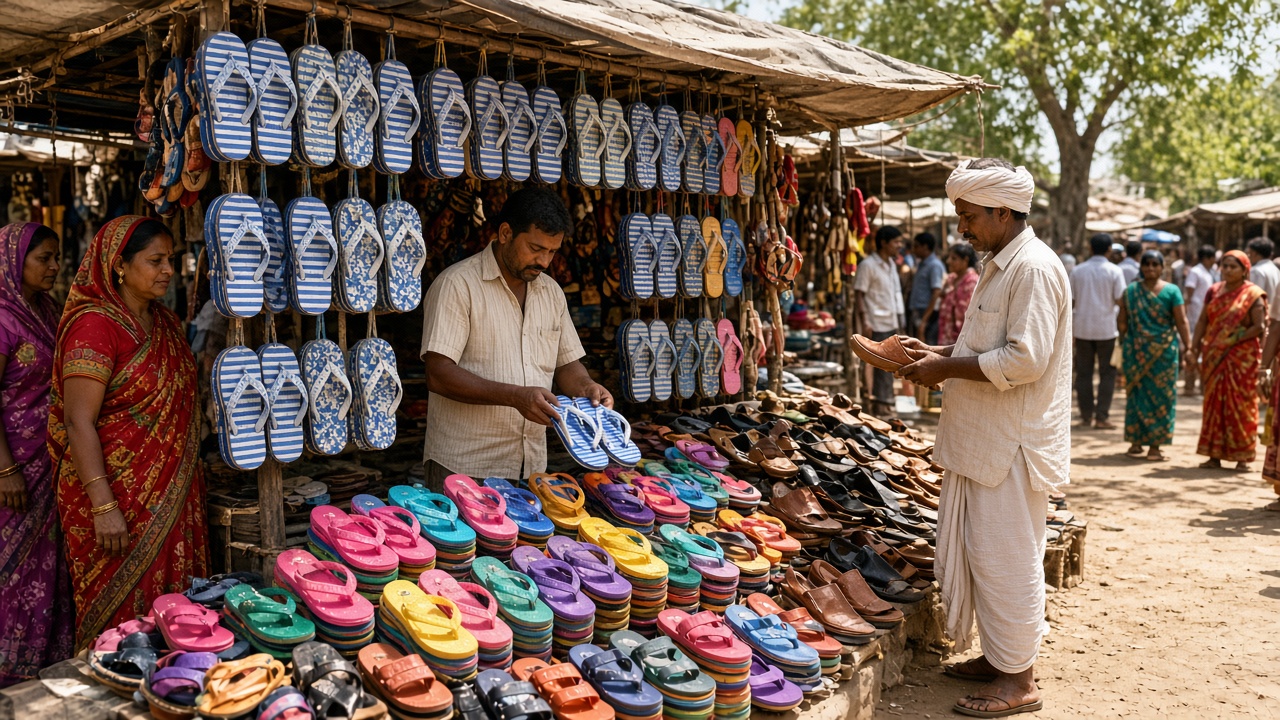
By the 1970s the Bata shop was a fixture in almost every town, with its famous prices ending in 9. Black leather school shoes and white canvas PT shoes became part of school life, and cheap, waterproof rubber hawai chappals put footwear on the feet of millions.
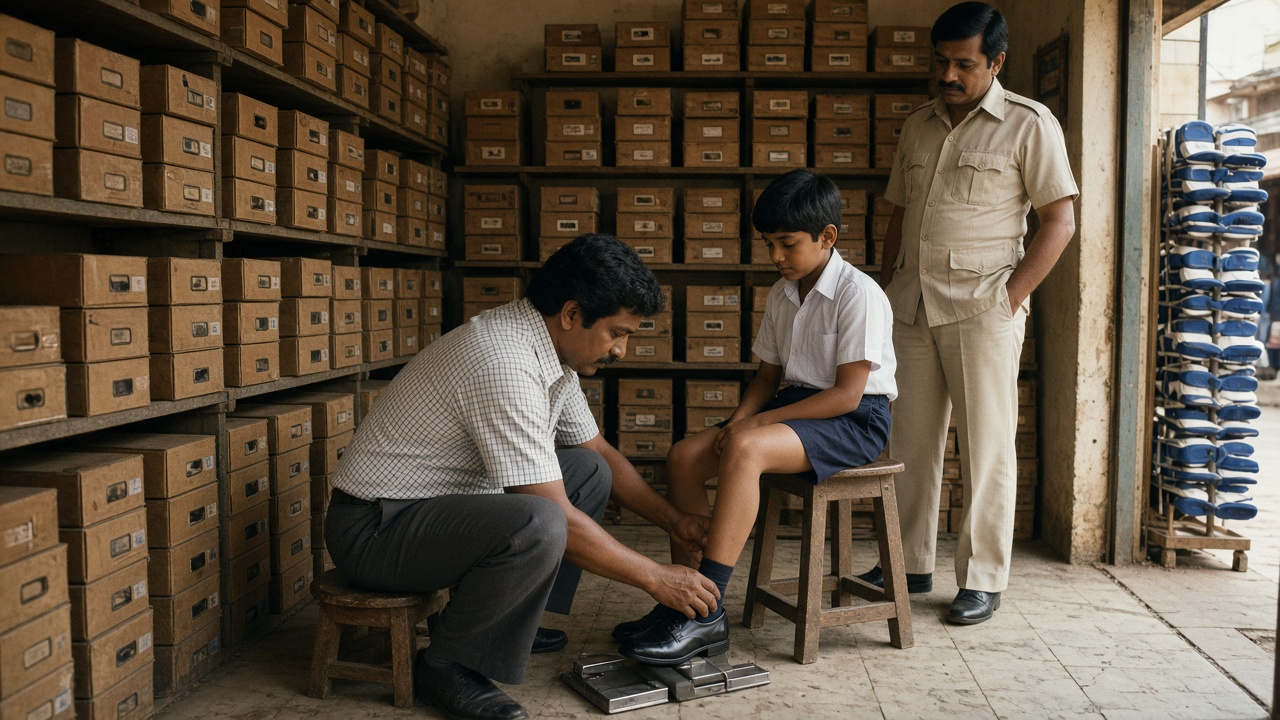
Buying black school shoes, with hawai chappals by the door (artistic illustration).
1960s: Rubber hawai chappals, often with blue straps and white soles, become everyday footwear across India because they are cheap, light, and waterproof.
1960s–1970s: Bata shops spread to small towns; black leather school shoes and white canvas PT shoes become part of school uniforms.
1973: The company becomes Bata India Limited, by then India’s best-known shoe brand, famous for prices such as ₹19.95 or ₹49.95.
1975–1976: Paragon (1975, Kerala) and Relaxo (1976, Delhi) begin making affordable rubber slippers that later sell in crores of pairs.
Technology
Moulded rubber: Hawai chappals.
PVC: Cheap sandals.
Leather uppers: School shoes.
Features
School shoes: Polished daily.
Hawai for all: Cheap and waterproof.
Prices ending in 9: Bata style.
👟 Sneakers1980 – 1999
Canvas Shoes & Sneakers
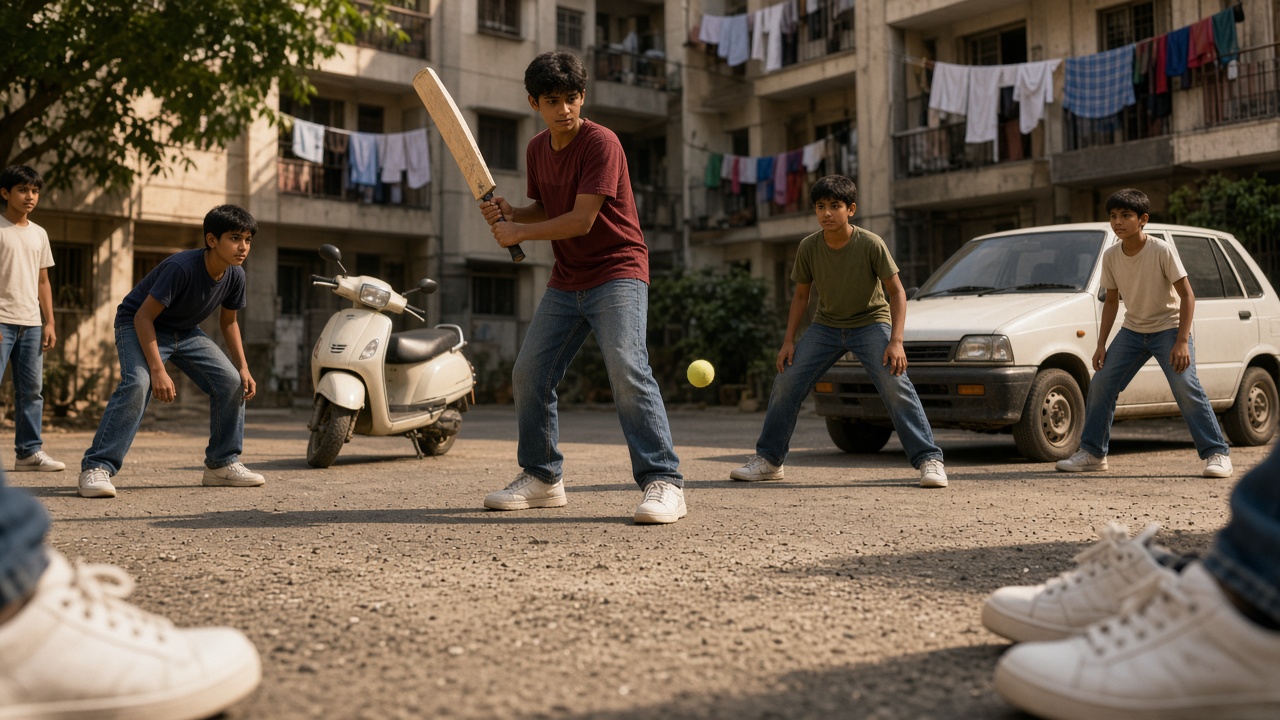
India’s 1983 Cricket World Cup win and colour TV fuelled a love of sport, and white canvas shoes were everywhere. After the 1991 reforms global sports brands arrived, and chunky white sneakers became the must-have status symbol for teenagers playing gully cricket.
Gully cricket in white sneakers — a 1990s neighbourhood scene (artistic illustration).
1980s: White canvas shoes and simple sports shoes spread with school sports and cricket; India’s 1983 World Cup win and colour TV boost sports culture.
1986: The Footwear Design and Development Institute (FDDI) is set up to train designers and technicians for the footwear industry.
1990s: After 1991 liberalisation, global sports brands such as Adidas, Reebok, and Nike arrive; TV ads with cricket stars make branded sneakers a dream.
1992: Woodland launches rugged outdoor shoes; Indian sports-shoe brands such as Action and Lakhani grow with affordable sneakers.
Technology
Vulcanised canvas: PT shoes.
EVA foam: Light, cushioned soles.
Synthetic uppers: Cheaper sneakers.
Features
Status symbol: Branded sneakers.
TV ads: Cricket stars.
Sport for all: Gully cricket.
🛍️ Branded2000 – 2019
Branded Footwear & Online Shopping
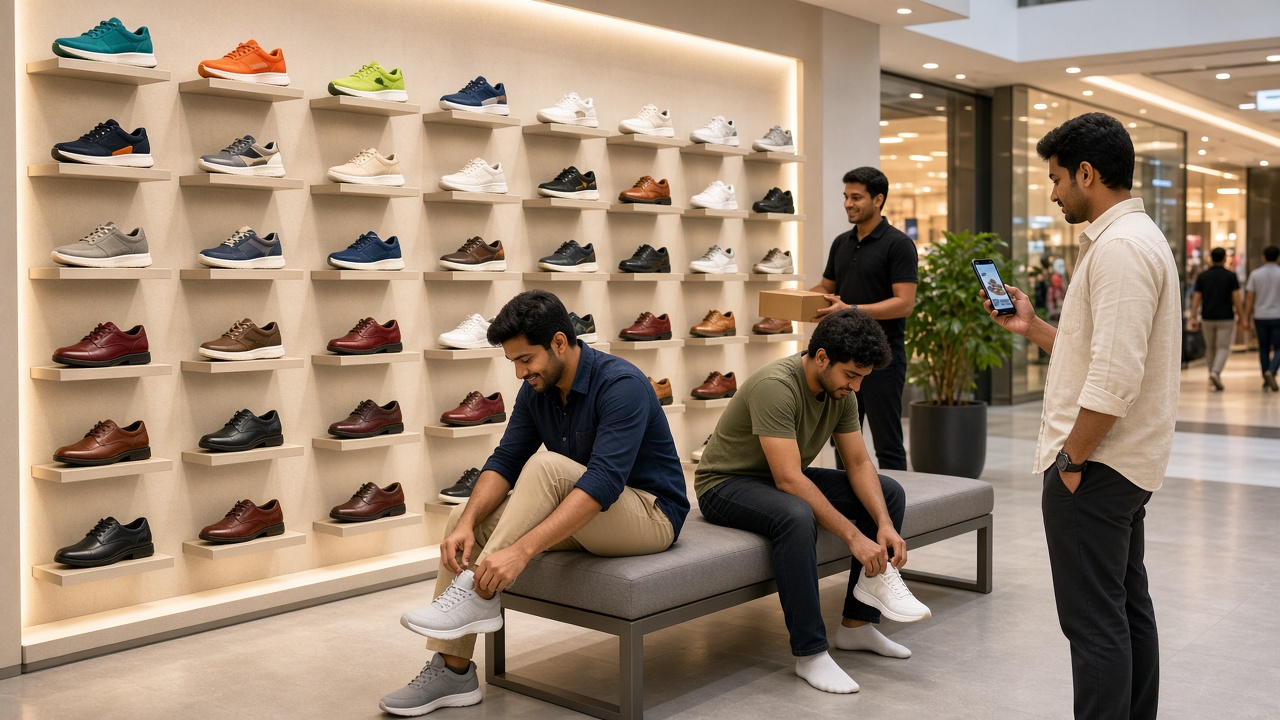
Malls and brand stores made footwear a fashion statement in the 2000s, and e-commerce took branded shoes to small towns with cash on delivery and easy returns. India became the world’s second-largest footwear producer, and Kolhapuri chappals won a GI tag.
Brand stores in malls made footwear a fashion statement (artistic illustration).
2000s: Malls and brand stores spread; people buy separate shoes for office, sport, parties, and weddings, and flip-flops and clogs become casual favourites.
2006–2020: Nike is the kit sponsor of the Indian cricket team, and cricket stars endorse sports shoes on TV and billboards.
2007–2013: E-commerce grows — Myntra (2007), Flipkart, and Amazon India (2013) sell shoes online with cash on delivery and free returns.
2019: Kolhapuri chappals receive a GI tag covering districts in Maharashtra and Karnataka; India is the world’s second-largest footwear producer after China.
Technology
Online size charts: Buy without trying.
Memory foam: Soft insoles.
Mass manufacturing: Agra, Chennai, Ambur.
Features
Brand conscious: Logos matter.
Online shopping: Small towns too.
Exports: Shoes for the world.
🏃 Athleisure2020s – Future
Athleisure & Comfort Footwear
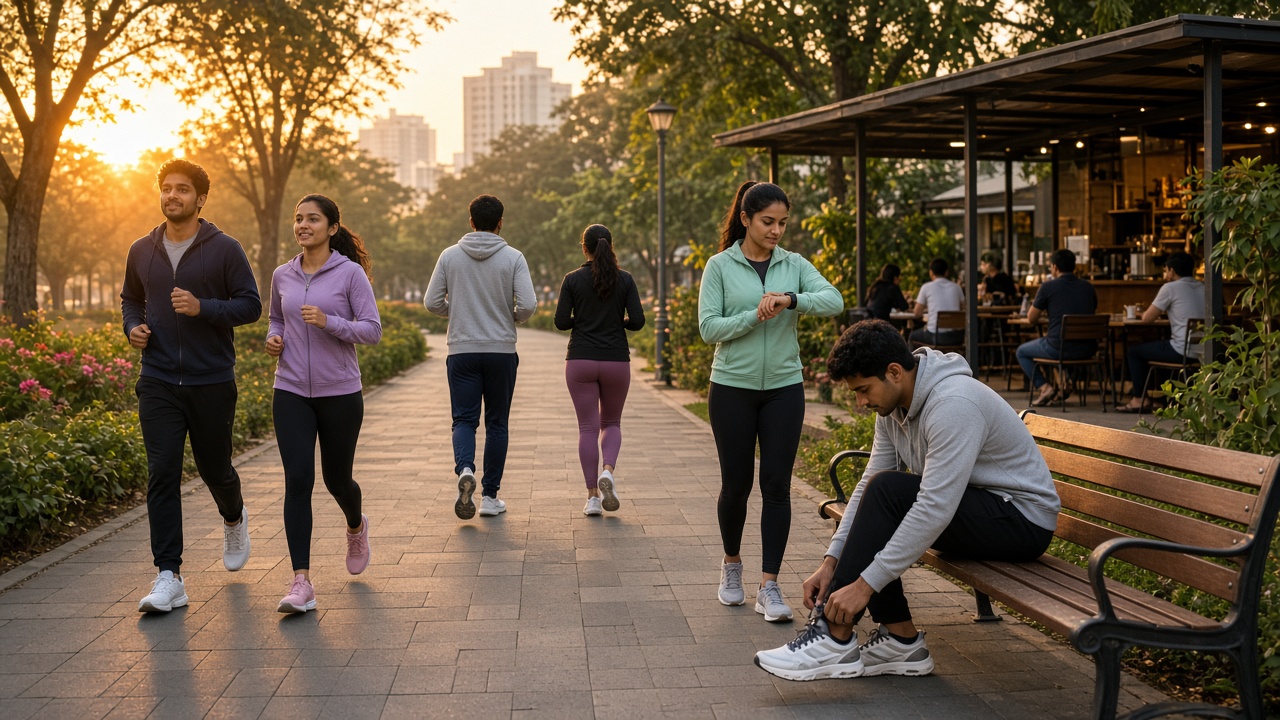
Lockdowns, work-from-home, and a boom in walking and running made comfort king in the 2020s. Cushioned sneakers, sliders, and slip-ons are worn everywhere, Indian sneaker brands have grown fast, and Kolhapuris and juttis are styled with jeans and dresses.
Athleisure outfits and cushioned sneakers from morning run to café (artistic illustration).
2020–2021: Lockdowns and work-from-home push comfortable sneakers, sliders, and slip-ons; fitness walking, running, and marathons grow in cities.
2020s: Indian brands such as Campus (listed on the stock market in 2022) and new direct-to-consumer labels sell sneakers online; sneaker collecting and resale grow.
From July 2023: BIS quality control orders make standards mandatory for many types of footwear, starting with large and medium manufacturers.
Craft and future: A global luxury brand’s Kolhapuri-style sandals (2025) spark debate about crediting Indian artisans; recycled materials, vegan leather, 3D-printed soles, and smart shoes point ahead.
Click any panel to expand and explore the visual mood.
India’s footwear journey in pictures — padukas and juttis, a Kolhapuri workshop, 1970s school shoes, hawai chappals at a village market, 1990s sneakers, branded stores, athleisure, and then versus now.
Padukas & Juttis
Royal and sacred
Kolhapuri Chappals
Hand-made craft
1970s Bata
School shoes
Hawai Chappals
Footwear for all
1990s Sneakers
Gully cricket style
Branded Stores
Mall and online
Athleisure
Comfort first
Then vs Now
Kolhapuri to sneaker
Explore all daily life timelines
Jump to any other daily life timeline on WorldTimelineHub.
Disclaimer: This content is AI-generated for educational purposes and may contain errors or outdated details. For correct and authoritative information, please refer to official and reliable sources such as government publications, manufacturers, museums, and academic references.