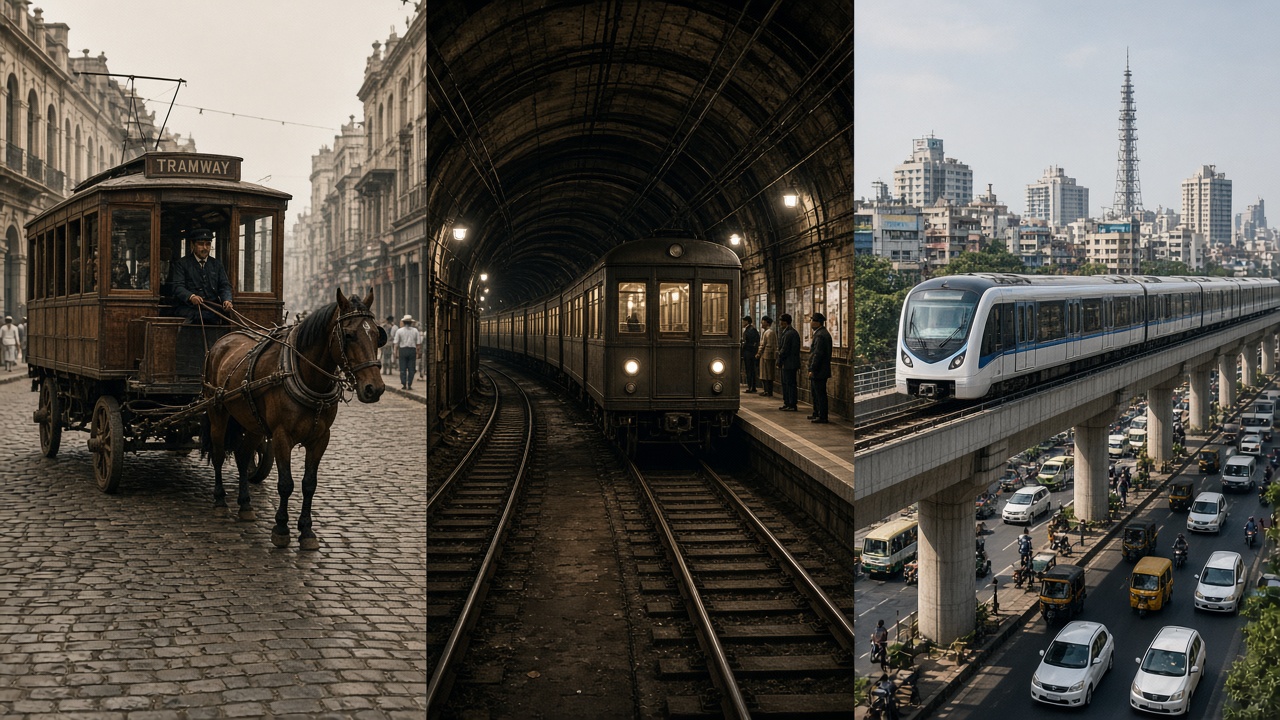
From horse-drawn trams on cobbled streets to electric streetcars, the first underground railways, Kolkata’s lasting trams, and India’s twenty-first-century metro boom reshaping daily city life.
Horse tram -> Metro1863 undergroundIndia metro boom
Why Urban Transit Matters
Cities grow denser than roads alone can handle. Horse trams, electric streetcars, and metros moved millions without clogging every lane. In India, the shift from a few tram and early metro lines to dozens of modern metro networks is one of the biggest everyday infrastructure stories of the last two decades.
Big picture
Urban transit in one view
Street rails powered by horses became electric webs; then tunnels and elevated lines created true rapid transit. India kept Kolkata’s trams alive and then built metros city after city.
Street rails, tunnels, and elevated lines—the long road to rapid urban transit.
Animal Power1830s - 1880s
Horse Trams
Rails in the street let horses pull heavier passenger cars more smoothly than coaches on rough roads. Horse tramways spread through industrial cities, setting the pattern of fixed urban routes and shared stops.
Horse-tram era: steel rails make animal power more efficient in crowded streets.
Street rails reduce rolling resistance versus road coaches.
Fixed routes teach cities to plan corridors for mass transit.
Stables, manure, and animal welfare limit how far systems can scale.
Technology Used
Grooved rails: Flush with the roadway for carts and trams.
Horse teams: Often swapped on hills and long lines.
Simple cars: Open or closed wooden passenger bodies.
Features
Affordable rides: Cheaper than private carriages for many workers.
Shared street: Trams mix with carts, pedestrians, and later cars.
Ready for electrification: Tracks wait for a better power source.
Wires Overhead1880s - 1930s
Electric Streetcars
Overhead trolley wires and electric motors replaced horses. Streetcars (trams) ran faster and cleaner, weaving dense networks across cities—until cars and buses competed for the same road space.
Electric-tram era: motors and overhead wires transform urban mobility.
Electric traction spreads from the 1880s–90s.
City tram webs peak before mid-century car culture.
Many networks later shrink or vanish under traffic pressure.
Technology Used
Trolley poles / pantographs: Collect power from wires.
Electric motors: Stronger starts than horses.
Depots & substations: Feed local networks.
Features
Higher capacity: Longer cars, more frequent service.
Still street-bound: Stuck in traffic unless given priority.
Heritage survivors: A few cities keep classic tram cultures.
Go Underground1863 - 1940s
Birth of the Metro
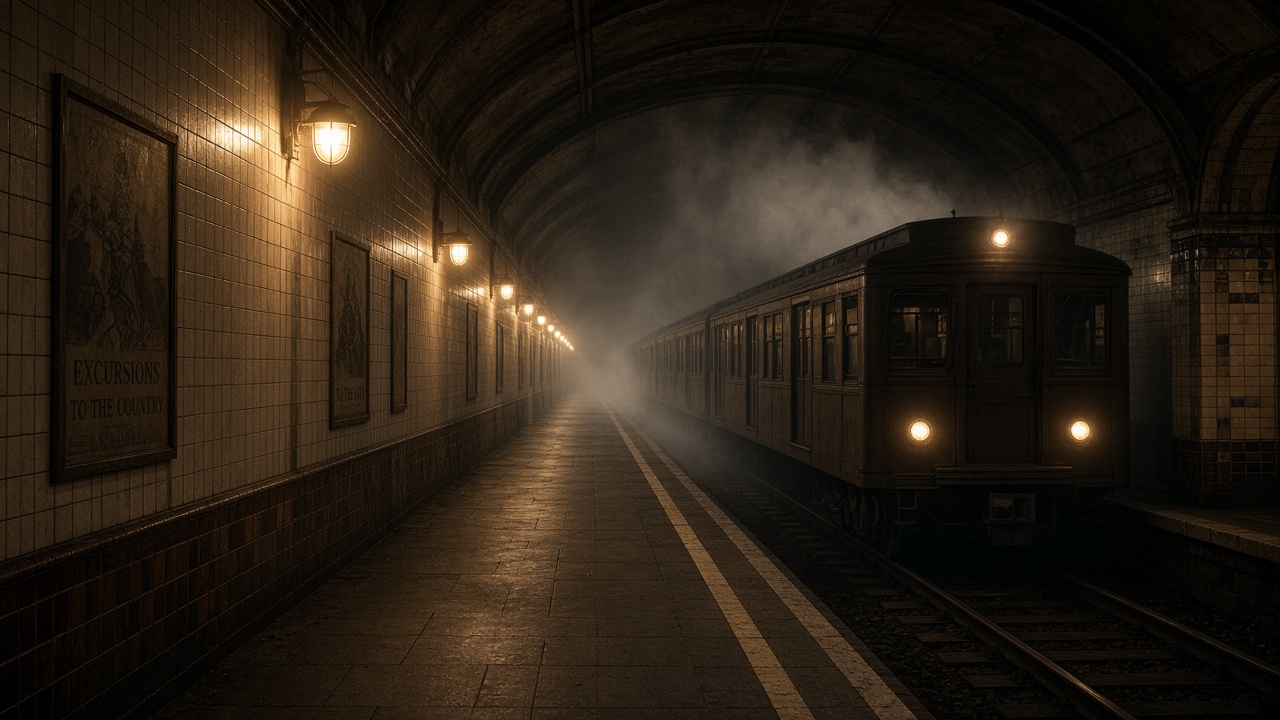
London’s Metropolitan Railway (1863) proved cities could move people under the streets. Steam, then electric underground and elevated lines, created grade-separated rapid transit—the ancestor of today’s metros.
Metro birth: tunnels free trains from street congestion.
1863: London underground urban railway opens.
Other cities add subways and elevated “els.”
Electrification clears smoke from tunnels.
Technology Used
Cut-and-cover / tunnels: Build below streets.
Signalling: Keep frequent trains safe.
Stations: Stairs, tickets, platforms as city gateways.
Features
Grade separation: No level crossings with cars.
High frequency: Turn up-and-go urban travel.
Capital intensive: Costly to dig, lasting for generations.
Mass Rapid Transit1950s - 1990s
Global Metro Age
Post-war cities expanded metros with modern rolling stock, automatic signalling, and integrated fares. Automobiles still dominated many streets, but metros became the backbone for dense cores and commuting corridors worldwide.
Global era: metros as daily infrastructure for mega-cities.
New systems open across Asia, Europe, and the Americas.
Air-conditioned cars and better stations raise expectations.
Planning links metros with buses and suburban rail.
Technology Used
EMU trains: Electric multiple units for quick acceleration.
ATP / modern signalling: Safer closer headways.
Fare systems: Tokens, then magnetic/smart cards.
Features
Network effect: More lines mean more useful trips.
Urban form: Stations shape property and density.
Public identity: Metro maps become city icons.
India Roots1873 - 2002
Trams and First Metros in India
Colonial cities ran horse and later electric trams; Kolkata’s network became legendary. Kolkata Metro opened India’s first metro section in 1984. Delhi’s modern metro (from 2002) then set a new national template.
India roots: street trams endure in Kolkata while the first metro tunnels open.
Trams in cities such as Kolkata, Mumbai, Chennai, Delhi (most later closed).
1984: Kolkata Metro begins revenue service.
2002: Delhi Metro Phase-1 operations begin a new chapter.
Local Stack
Street tramways: Shared with dense mixed traffic.
Kolkata Metro: Underground pioneering project.
Suburban rail: Complements metros in Mumbai and elsewhere.
Features
Heritage continuity: Kolkata trams as living history.
Learning curve: First metro projects prove the model.
Delhi Metro’s success sparked systems in Bengaluru, Mumbai, Hyderabad, Chennai, Kochi, Lucknow, Ahmedabad, Pune, and more. Elevated corridors, driverless stretches, last-mile links, and smart cards remade how millions commute.
Boom era: elevated and underground metros become everyday Indian city infrastructure.
Dozens of Indian cities plan or operate metro lines.
Interchanges with buses, suburban rail, and airports grow.
Women-only coaches, accessibility, and station retail become common features.
Modern Stack
Elevated viaducts: Faster builds over busy corridors.
CBTC / automation: Higher frequency, some driverless lines.
Time savings: Skip road congestion for many trips.
Urban redesign: TOD (transit-oriented development) debates rise.
Still unfinished: Last-mile gaps and funding remain challenges.
Metro Timeline Summary
Era
Milestone
Why it matters
1830s–80s
Horse trams
Fixed street rails for city riders.
1880s–30s
Electric streetcars
Motors replace animals; networks peak.
1863+
Underground metros
Grade-separated rapid transit begins.
1950s–90s
Global metro age
Modern systems in many mega-cities.
1873–2002
India trams & first metro
Kolkata heritage; 1984 metro start.
2002–
India metro boom
City after city builds metro networks.
Key Historical Events
Event
Year
Significance
Horse tramways spread
mid-1800s
Urban rail on shared streets.
Electric streetcars boom
1880s–90s
Cleaner, faster city networks.
London Metropolitan Railway
1863
First underground urban railway.
Kolkata trams established
1870s+
Enduring Indian street-rail culture.
Kolkata Metro opens
1984
India’s first metro service.
Delhi Metro operations
2002
Catalyst for national metro boom.
Multi-city Indian metros
2010s–20s
Networks expand across the country.
Then vs Now
From horse teams on cobbles to air-conditioned trains under and above Indian cities.
Metric
Then
Now
Power
Horses / early electrics
Electric metro / tram systems
Right of way
Shared streets
Often tunnels & elevated viaducts
Speed & reliability
Stuck in traffic
Higher frequency, grade-separated
India footprint
Trams in a few cities
Metros in many cities
Passenger experience
Open cars, paper tickets
AC coaches, smart cards, apps
Future Predictions
2025–2035: More Indian cities open Phase-2/3 metro lines and airport links.
Integration: Stronger bus + metro + suburban rail transfers and common payments.
Automation: Wider use of driverless or highly automated corridors.
Last mile: Feeder e-buses, cycling, and walkable station areas decide ridership.
India spotlight
Metros Remaking Indian Cities
From Kolkata’s pioneering tunnels to Delhi’s network effect and new systems nationwide, metros cut commute times, reshape property around stations, and give millions a reliable alternative to congested roads.
India spotlight: elevated corridors and underground lines as new city arteries.
1870s+
Tram cities
Street trams serve colonial urban cores; Kolkata’s system endures longest.
1984
Kolkata Metro
India’s first metro service opens underground.
2002
Delhi Metro begins
A modern, expanding network becomes a national reference.
2010s
Multi-city wave
Bengaluru, Mumbai, Hyderabad, Chennai, and others launch lines.
2020s
Network densification
New corridors, airport links, and automation deepen systems.
Daily life: School, office, and market trips shift onto rails.
Gender & safety: Women-only coaches and station design matter.
Climate angle: Shared electric transit can cut per-passenger emissions vs cars.
Test Your Knowledge
20 questions on horse trams, metros, and India’s urban rail boom. Click to reveal answers.
Answer: High-capacity urban rail, usually grade-separated from street traffic.
Answer: Horses (horse trams).
Answer: Electric streetcars / trams with overhead wires.
Answer: 1863.
Answer: To avoid street congestion and keep trains moving freely.
Answer: A line built on viaducts above streets.
Answer: Kolkata.
Answer: 1984.
Answer: 2002.
Answer: It proved modern metros could scale in India and inspired other cities.
Answer: Examples: Bengaluru, Mumbai, Hyderabad, Chennai, Kochi, Pune, etc.
Answer: Metros are usually separated from road traffic; trams share streets.
Answer: How people reach the station from home/work (walk, bus, auto, cycle).
Answer: Transit-oriented development—denser, walkable growth around stations.
Answer: Competition from cars/buses and street congestion.
Answer: Electricity.
Answer: Move many people with lower per-passenger emissions than private cars (when well used).
Answer: Tracks that do not cross road traffic at the same level.
Answer: Examples: women-only coaches, smart cards, AC coaches, station retail.
Answer: From horse trams on streets to electric metros under/above cities—especially India’s recent boom.
Classroom activity
Students Tasks
Ten prompts on trams, metros, and how Indian cities move people today.
TramsMetrosIndiaCities
Draw a simple timeline from horse tram to electric tram to metro.
Why is grade separation important for rapid transit?
Compare Kolkata trams with a modern elevated metro in a table.
Map (sketch) how you would travel from home to school using a metro + last mile.
Debate: elevated vs underground metro for a crowded Indian corridor.
Research one Indian metro city’s opening year and first line.
Explain three ways metros can reduce traffic congestion.
Design a poster promoting safe metro travel etiquette.
Interview someone who remembers city life before a local metro opened.
Propose two last-mile ideas for a new metro station in your area.
Continue exploring
Urban transit connects railways, buses, roads, and maps. Explore these linked stories next.
Jump to any other transport timeline on WorldTimelineHub.
Disclaimer: This content is AI-generated for educational purposes and may contain errors or outdated details. For correct and authoritative information, please refer to official and reliable sources such as government publications, manufacturers, museums, and academic references.