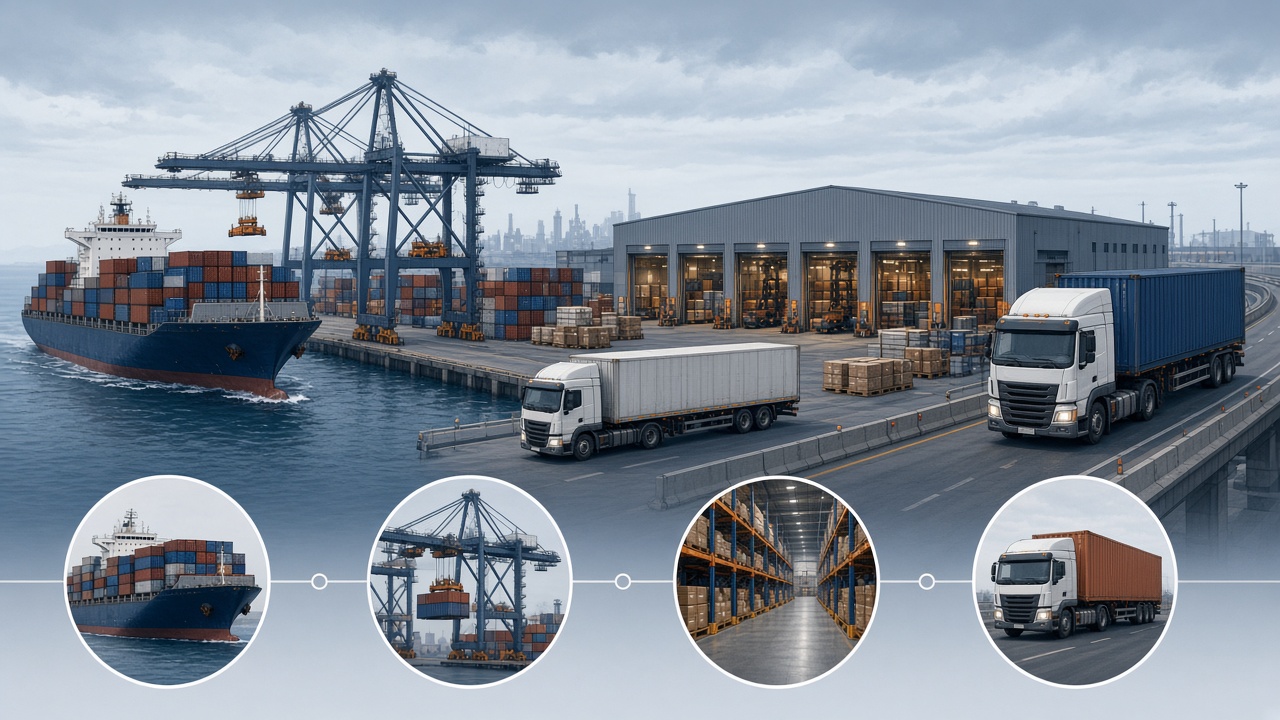
From Silk Road caravans and spice fleets, to Company empires, Bretton Woods money rules, the WTO, hyper-globalization, and the supply chains that stock shelves—and snap under stress.
Trade moves more than goods—it moves money, power, taste, technology, and risk. Routes become empires; rules become institutions; containers become just-in-time factories spanning continents.
This timeline follows the Silk Road, spice routes, East India Companies, Bretton Woods, the WTO, globalization, and modern supply chains as linked turning points.
Big picture
Trade in one view
Caravans and monsoon fleets, chartered companies, postwar money rules, multilateral trade law, hyper-connected markets, and logistics webs that deliver—or fail—together.
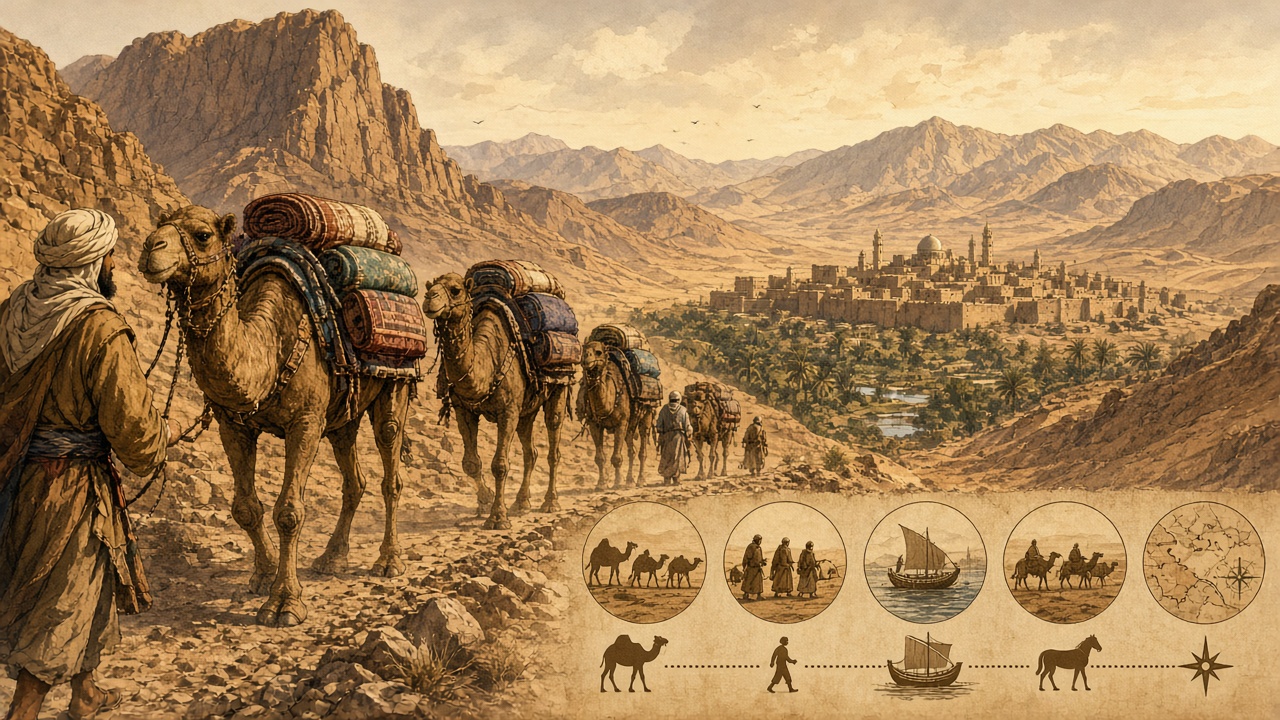
The Silk Road was never a single highway—it was a web of caravan paths, oasis towns, and linked sea legs. Silk, horses, glass, paper ideas, and faiths moved between China, Central Asia, Persia, India, and the Mediterranean. Empires taxed and protected segments; bandits and deserts taxed the rest.
Silk Road era: distance as both barrier and profit.
Luxury and strategic goods justify high transport costs.
Cultural exchange travels with merchants and monks.
Route power shifts with empires (Han, Tang, Mongol, Ottoman eras).
Monsoon CommerceMedieval–1500s
Spice Route
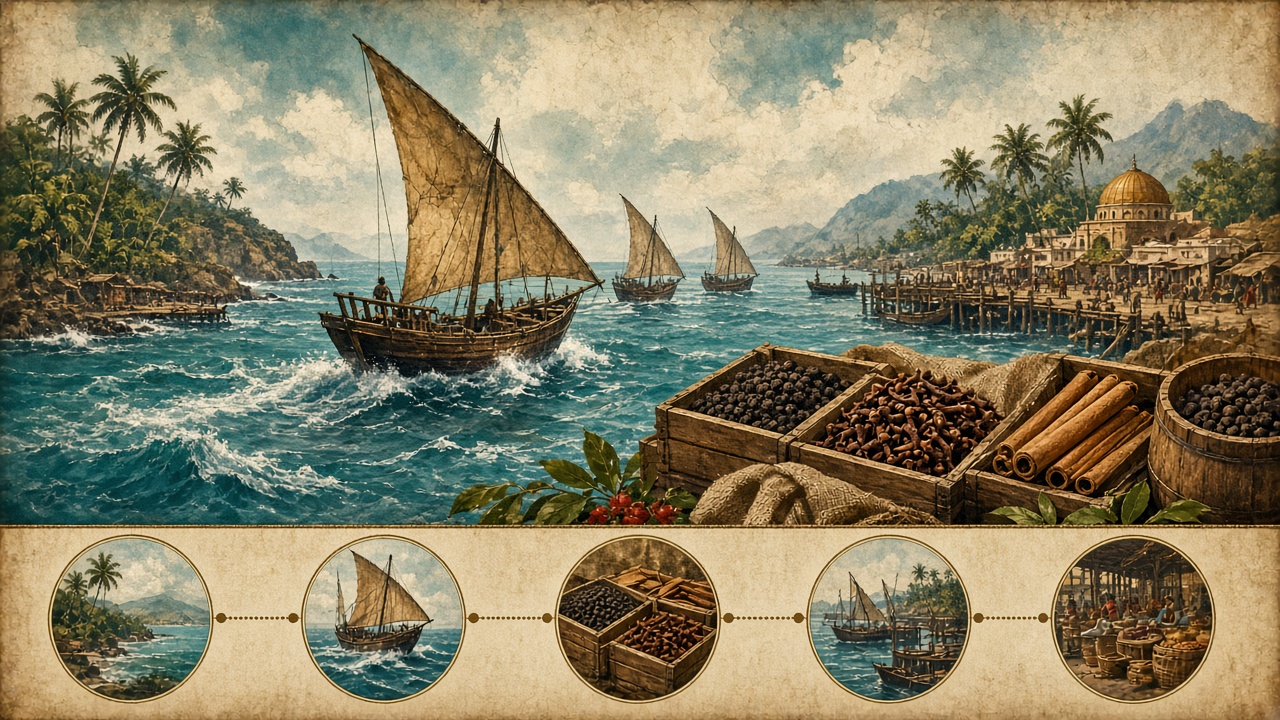
Pepper, cloves, nutmeg, and cinnamon linked the Indian Ocean world long before Europeans arrived. Arab, Indian, Malay, Chinese, and African traders rode monsoon winds. When Iberian fleets sought direct sea paths to Asia, they crashed into—and tried to capture—this already rich spice economy.
Spice route era: flavour as geopolitics.
Indian Ocean monsoon calendar structures sailing seasons.
Spices command huge markups in Europe and West Asia.
Portuguese and later Dutch/English entry remaps Asian trade force.
Company Empires1600s–1800s
East India Companies
Chartered companies—especially the Dutch VOC and the English/British East India Company—merged share capital, armed ships, forts, and monopoly privileges. Trade in spices, textiles, tea, and opium grew into territorial rule. Corporate commerce became colonial statecraft.
Company era: ledgers, cannons, and conquest.
Joint-stock finance funds long-distance risk.
Factories (trading posts) become political footholds.
India’s textile and revenue systems are reshaped under Company rule.
Money Rules1944
Bretton Woods
In 1944, Allied negotiators at Bretton Woods designed a postwar monetary order: the IMF and World Bank, and a dollar-centred exchange-rate system intended to avoid 1930s chaos. Stable money was treated as infrastructure for expanding trade and reconstruction.
Bretton Woods era: institutions for open commerce.
IMF / World Bank born as pillars of the system.
Fixed-but-adjustable rates support trade recovery.
Framework erodes by the early 1970s; institutions endure in new forms.
Trade Law1995
WTO
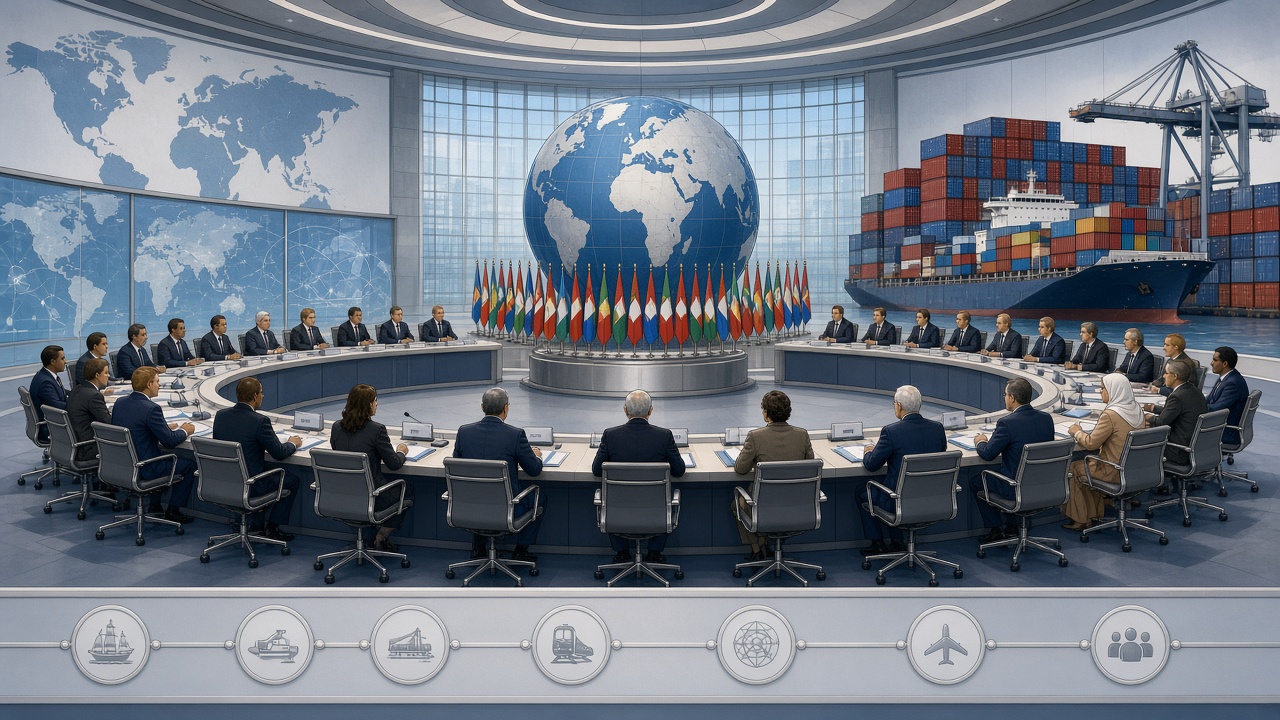
The World Trade Organization (1995) evolved from the GATT rounds into a standing body with broader rules and dispute settlement. Members negotiated tariffs, services, intellectual property, and non-discrimination principles—amid protests that the system favoured the powerful or constrained development policy.
WTO era: rules, rounds, and disputes.
Most-favoured-nation and national treatment as core norms.
Dispute panels turn trade fights into legal processes.
Doha Round stalls; plurilateral and regional deals proliferate.
Hyper-ConnectedLate 1900s–
Globalization
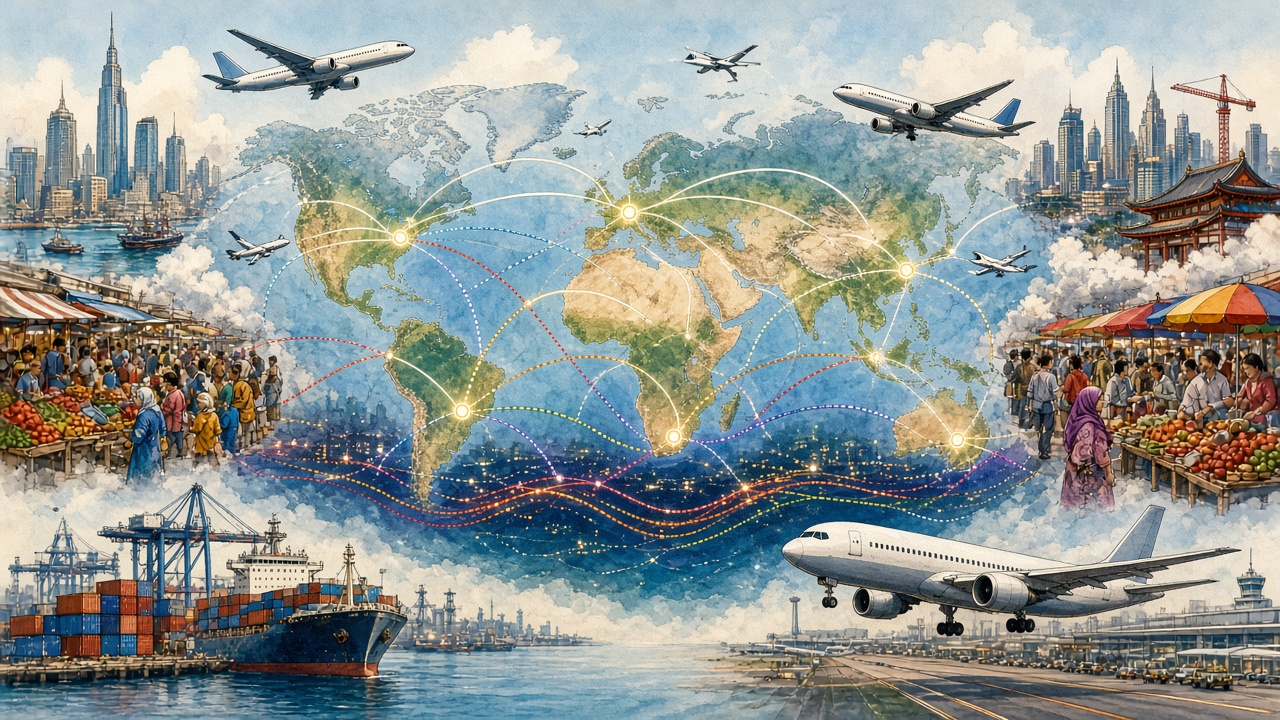
Lower tariffs, container shipping, air freight, fibre networks, and multinational investment knitted markets together. China’s reform and WTO entry, Europe’s single market, and India’s 1991 opening reshaped who makes what. Gains in growth and variety came with job disruption, inequality debates, and cultural pushback.
Globalization era: the world as one marketplace—unevenly.
Offshoring and FDI remake manufacturing maps.
Services and finance go cross-border with goods.
Political backlash fuels protectionism and “friend-shoring.”
Logistics Age2000s–Present
Supply Chains
Modern products are assemblies of parts from many countries. Just-in-time inventory maximises efficiency—and fragility. Pandemics, canal blockages, chip shortages, and geopolitics pushed “resilience,” nearshoring, and dual sourcing onto the agenda. Trade is now a design of networks, not only tariffs.
Supply-chain era: efficiency meets vulnerability.
Containers + ports + software coordinate global cargo.
Critical minerals, chips, and pharma become strategic.
Climate and carbon borders enter trade policy.
Key Milestones
Milestone
When
Why it matters
Silk Road networks flourish
Ancient–medieval
Long-distance Eurasian exchange of goods & ideas.
Indian Ocean spice commerce
Medieval–1500s
Monsoon trade core of Asian prosperity.
VOC / EIC chartered
1602 / 1600
Corporate-military trade empires rise.
Bretton Woods conference
1944
IMF, World Bank, postwar monetary order.
GATT → WTO
1948–1995
Multilateral trade rules institutionalised.
Container shipping scales
1960s–
Logistics cost collapse enables global factories.
Supply-chain shocks
2020s
Resilience becomes as vital as efficiency.
Era Focus at a Glance
Era
Core mechanism
Who holds power
Silk Road
Caravan & oasis networks
Empires & merchant diasporas
Spice route
Monsoon shipping
Port cities & ocean traders
East India Cos.
Chartered monopoly + force
Companies / colonial states
Bretton Woods
Monetary institutions
Allied architects / IMF-WB
WTO
Multilateral trade law
Member states + panels
Globalization
Open markets + MNCs
Capital + major economies
Supply chains
Logistics & production webs
Firms, ports, chip/energy hubs
Then vs Now
From spice markups to just-in-time chips.
Metric
Then
Now
Speed
Months by caravan/sail
Days by air / weeks by sea
Unit
Luxury cargos
Mass consumer + components
Rules
Custom & empire edicts
WTO, FTAs, standards
Money
Bullion & bills
Fiat, FX markets, SWIFT
Risk
Piracy & monsoon
Geopolitics, cyber, climate
Future Predictions
Resilience: More dual sourcing and regional hubs, less single-point fragility.
Green trade: Carbon borders and clean-tech supply races intensify.
Digital: E-commerce, digital services, and data rules reshape “goods.”
Geopolitics: Friend-shoring and export controls stay central to strategy.
India spotlight
Global Trade & India
India sat at the heart of spice and textile trades, endured Company and colonial reorganisation of commerce, liberalised after 1991, and now competes in services, pharma, electronics, and logistics corridors.
India spotlight: from spice ports to export hubs.
Ancient
Ocean & overland links
Indus, Roman, and Indian Ocean connections move textiles, spices, and gems.
Company
EIC & colonial ports
Calcutta, Bombay, Madras rise as nodes of Company and imperial trade.
1950s–
Planned openness
Import controls and later GATT membership shape a cautious trade stance.
1991
Liberalisation
Reforms and WTO membership deepen integration into global markets.
Today
Supply-chain bet
Electronics, pharma APIs, IT services, and logistics corridors aim for scale.
Strength: Services exports and diversified manufacturing ambition.
Need: Ports, logistics, and standards competitiveness.
Debate: Openness vs strategic self-reliance.
Test Your Knowledge
20 questions on Silk Road through supply chains. Click to reveal answers.
Answer: No—a network of routes.
Answer: Silk, horses, glass, spices, paper ideas, etc.
Answer: Monsoons in the Indian Ocean.
Answer: Pepper, cloves, cinnamon, nutmeg, etc.
Answer: Dutch East India Company (Vereenigde Oostindische Compagnie).
Answer: They mixed trade with military/political power.
Answer: 1944.
Answer: IMF and World Bank.
Answer: 1995.
Answer: GATT (General Agreement on Tariffs and Trade).
Answer: Deep cross-border flows of goods, capital, people, and info.
Jump to any other world history timeline on WorldTimelineHub.
Disclaimer: This content is AI-generated for educational purposes and may contain errors or outdated details. For correct and authoritative information, please refer to official and reliable sources such as government publications, manufacturers, museums, and academic references.