From barter and stamped coins to paper notes, central banks, plastic credit, phone wallets, and crypto—how humans invented trust you can spend.
Barter -> CoinsBanks & cardsWallets & crypto
Why Money Matters
Money is a social technology: a shared way to measure value, store purchasing power, and settle debts. Each upgrade—metal, paper, ledgers, plastic, apps, chains—changes who can trade, how fast, and who holds power.
This timeline follows barter, coins, paper money, central banks, credit cards, digital wallets, and cryptocurrency as one continuous story.
Big picture
Money in one view
Swap goods, stamp metal, print notes, empower central banks, swipe plastic, tap phones, then experiment with code as cash. Trust migrates from neighbours to states to networks.
From marketplace swaps to metal, paper, plastic, apps, and crypto.
Direct SwapPrehistory - Antiquity
Barter
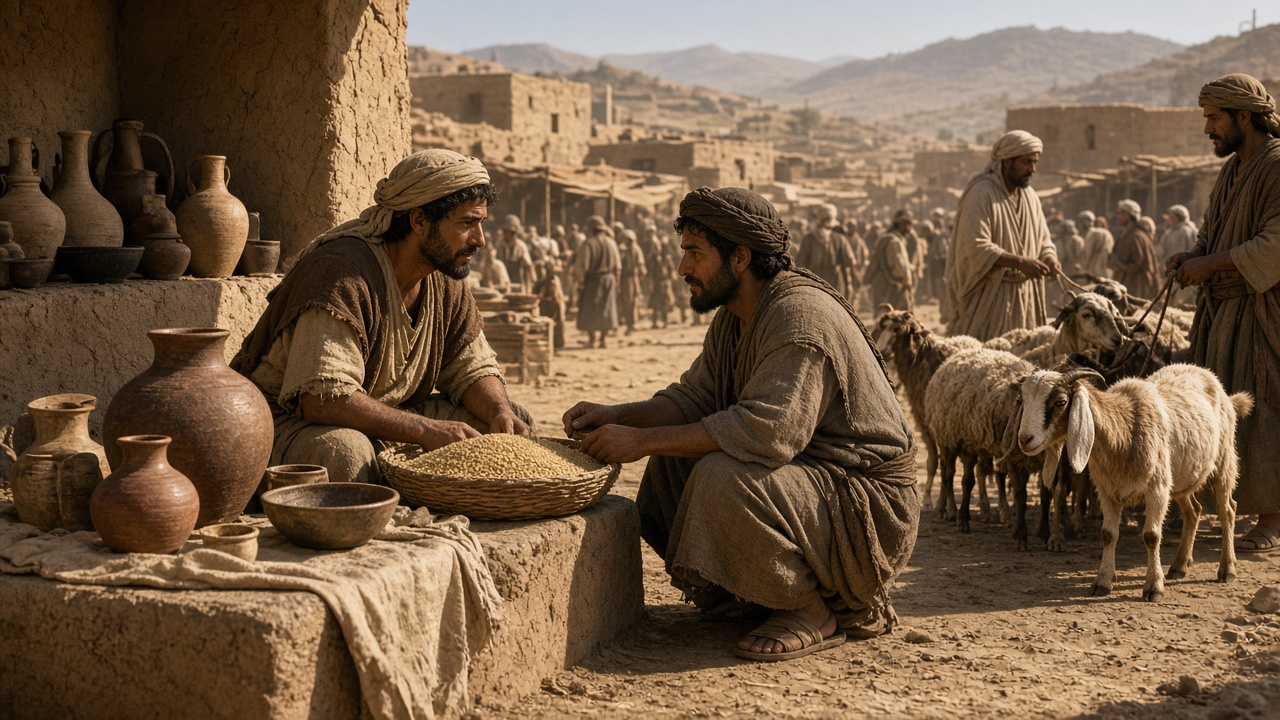
Before shared currency, people traded goods and favours directly. Barter works when both sides want what the other has—but that “double coincidence of wants” made complex markets hard, pushing societies toward commodity money and coins.
Barter era: trade without a common money unit.
Local exchanges of grain, livestock, tools, and crafts.
Commodity money (shells, cattle, grain) bridges pure barter.
Debt and gift economies often coexist with swaps.
Technology Used
Weights & measures: Fair exchange of bulk goods.
Market places: Regular meeting points for trade.
Oral credit: Trust records before written ledgers.
Features
No mint needed: Simple but inflexible.
Matching problem: Hard to specialise deeply.
Still exists: Informal swaps and in-kind wages.
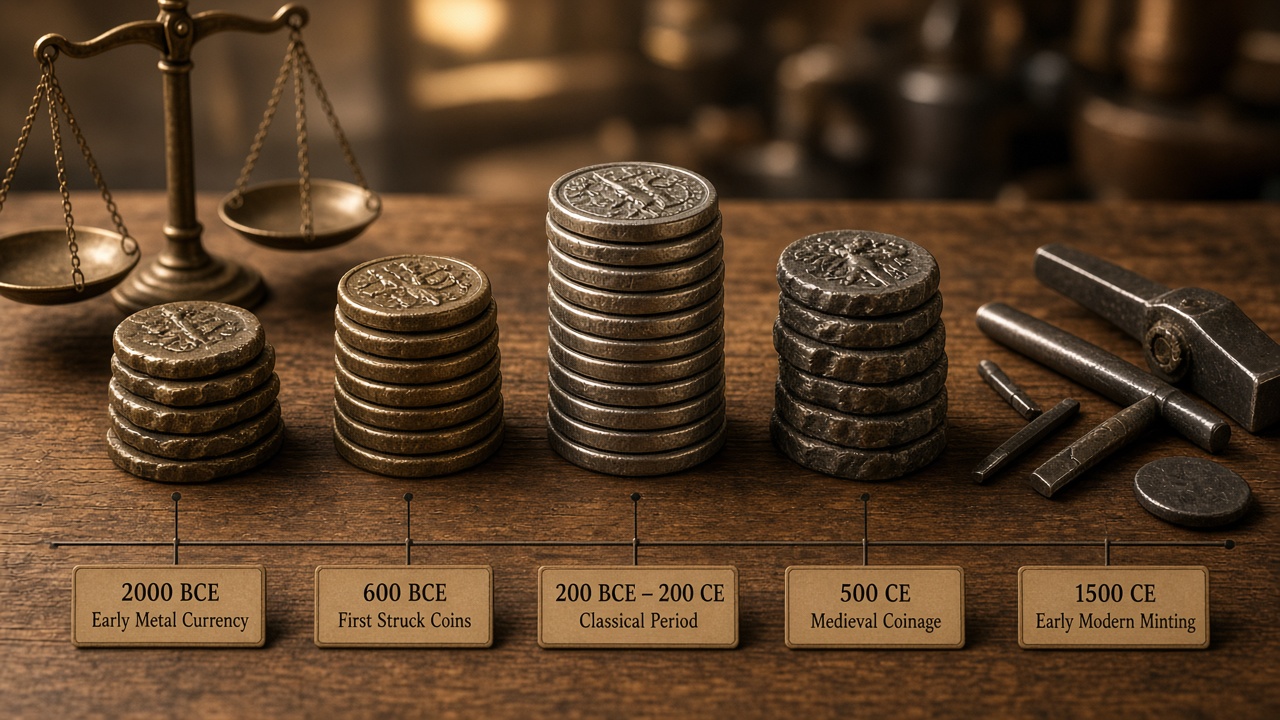
Stamped Metalc. 7th c. BCE - Present
Coins
Stamped coins made value portable and recognisable. From Lydian electrum to Greek, Roman, Indian punch-marked, and Islamic coinages, metal money powered empires, taxes, and long-distance trade.
Coin era: state stamps turn metal into trusted cash.
Authority marks certify weight and purity (in theory).
Debasement and clipping create early monetary politics.
Coins remain everyday cash even in digital ages.
Technology Used
Minting & dies: Stamp designs into blanks.
Alloys & assays: Control metal content.
Scales: Weigh value in bullion economies.
Features
Portable: Carry purchasing power.
Divisible: Denominations for small trade.
Durable: Metal lasts; trust still needs the stamp.
Notes & Promisesc. 7th c. CE - Present
Paper Money
China pioneered paper currency; Europe later adopted banknotes as claims on coin or credit. Paper made large payments lighter—and made inflation, counterfeiting, and convertibility central political fights.
Paper era: trust printed on fibre instead of carried as bullion.
Merchant receipts and state notes expand credit.
Gold/silver standards rise and fall across centuries.
Fiat notes become normal after 20th-century breaks with gold.
Technology Used
Printing & engraving: Security designs.
Watermarks & fibres: Anti-counterfeit features.
Clearing houses: Settle note claims between banks.
Features
Lightweight: Big value, small bulk.
Elastic supply: Can expand for war or growth—or overshoot.
Requires trust: In the issuer and the law.
Money Authorities17th c. - Present
Central Banks
Institutions like Sweden’s Riksbank and the Bank of England pioneered public banking roles. Modern central banks issue currency, set policy rates, backstop banks, and—since the 20th century—target inflation and financial stability.
Central-bank era: the state’s banker and monetary steward.
Lender-of-last-resort ideas grow after panics.
Federal Reserve (1913), RBI (1935), and peers define national money.
Independence vs political control remains debated worldwide.
Technology Used
Payment rails: RTGS, clearing systems.
Policy tools: Rates, reserves, open-market ops.
Data & models: Inflation and growth forecasts.
Features
Monetary monopoly: Issue legal tender.
Stability mandate: Prices and (often) employment/finance.
Crisis role: Liquidity when markets freeze.
Plastic Credit1950s - Present
Credit Cards
Charge cards and revolving credit turned spending into a network product. Magstripes, then chips and contactless, linked merchants worldwide—and made consumer debt a mass-market financial tool.
Card era: spend now, settle later—on global networks.
Mid-century charge cards evolve into bank credit cards.
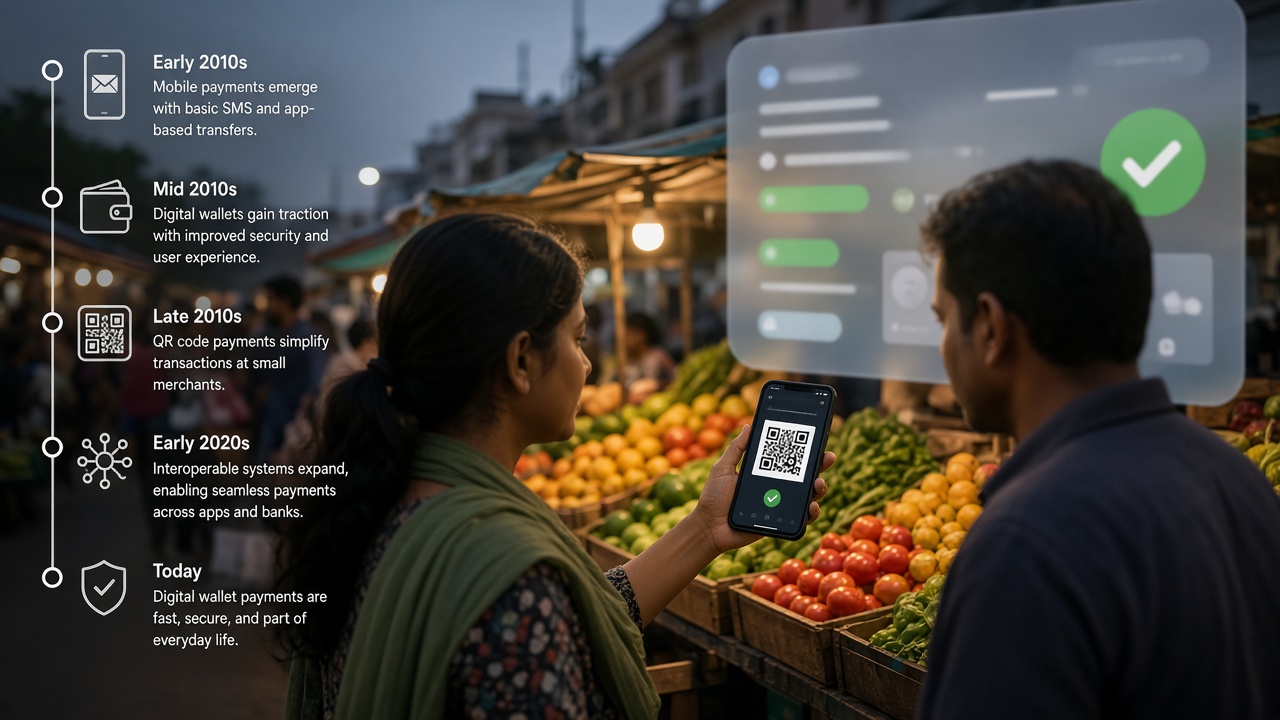
Online banking, mobile money, and app wallets moved balances onto screens. India’s UPI made interoperable QR payments a daily habit; elsewhere, PayPal-style and super-app wallets dominate.
Wallet era: the phone becomes the purse.
Internet payments and mobile money expand inclusion.
UPI / QR rails make tiny merchant payments easy.
Tokenised cards and biometric unlocks add security layers.
Technology Used
APIs & QR: Instant account-to-account transfers.
Smartphones: Ubiquitous wallet hardware.
Encryption & MFA: Protect accounts.
Features
Speed: Settlements in seconds.
Low cash friction: Especially for small tickets.
Digital divide: Needs phones, ID, and connectivity.
Code as Cash?2009 - Present
Cryptocurrency
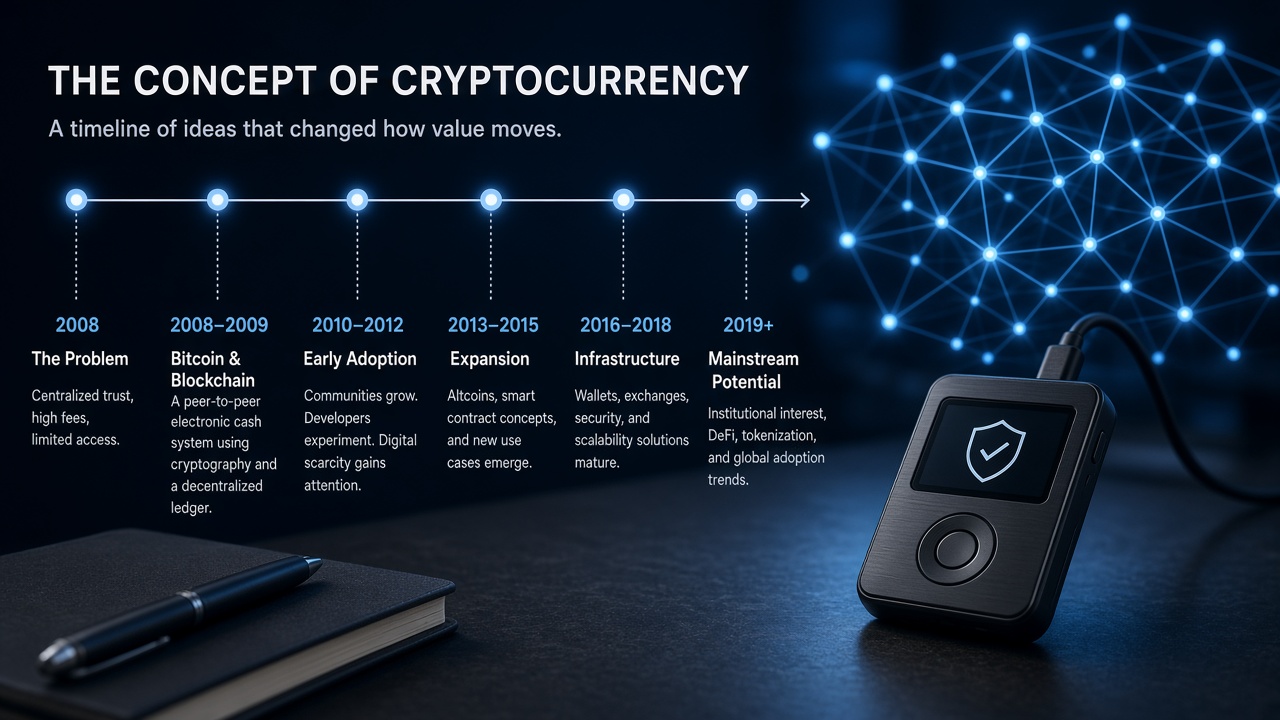
Bitcoin introduced a peer-to-peer electronic cash design secured by cryptography and a public ledger. Thousands of tokens followed—along with speculation, scams, energy debates, CBDCs, and regulation that is still being written.
Crypto era: digital scarcity and open ledgers—still contested money.
Bitcoin genesis (2009) starts the crypto asset class.
States explore CBDCs while regulating private crypto.
Technology Used
Blockchains & consensus: Shared transaction history.
Public-key crypto: Own and sign transfers.
Wallets & exchanges: Custody and trading venues.
Features
Borderless transfers: In theory, without banks.
Volatility: Poor unit-of-account for many users.
Policy fight: Innovation vs consumer protection.
World Money Summary
Era
Milestone
Why it matters
Prehistory
Barter
Trade without shared money.
c. 600 BCE–
Coins
Portable stamped value.
c. 700 CE–
Paper money
Lightweight credit claims.
1600s–
Central banks
Public monetary authority.
1950s–
Credit cards
Networked consumer credit.
1990s–
Digital wallets
Phones as payment devices.
2009–
Crypto
Blockchain digital assets.
Key Historical Events
Event
Year
Significance
Early Lydian / Greco-Asian coinages
c. 7th–6th c. BCE
Stamped coins spread.
Chinese paper money traditions
Tang–Song eras
Notes as state/merchant money.
Bank of England founded
1694
Model modern central banking.
RBI established
1935
India’s central bank begins.
Charge / credit card boom
1950s–70s
Plastic payments go mass.
End of Bretton Woods gold link
1971
Fiat era deepens globally.
Bitcoin whitepaper / network
2008–09
Crypto asset era opens.
UPI launch (India)
2016
Interoperable mobile payments scale.
Forms of Money at a Glance
Form
Strength
Limit
Barter / in-kind
No mint needed
Matching wants
Coins
Durable & portable
Heavy for large sums
Paper / fiat
Light & scalable
Needs issuer trust
Bank deposits
Safe settlement rails
Bank / CB dependence
Cards
Credit + networks
Fees & debt risk
Digital wallets
Instant & inclusive
Tech & ID access
Crypto
Open ledgers
Volatility & regulation
Then vs Now
From marketplace swaps to QR settlements in seconds.
Metric
Then
Now
Medium
Goods / metal
+ paper, plastic, apps, crypto
Speed
Face-to-face
Seconds across cities
Trust
Local reputation
States, banks, networks
Access
Markets & mints
Phones & IDs
Risk
Theft of coin
Fraud, hacks, volatility
Future Predictions
Near term: Wallets and instant payments keep displacing cash for many retail uses.
CBDCs: More pilots; design fights over privacy vs compliance.
Crypto: Stays as a speculative/tech niche unless regulation and stability improve.
Hybrid: Coins and notes persist; most value moves as digital claims.
India spotlight
Money in India
India’s money story runs from punch-marked coins and Mughal rupiya through Company and RBI notes to UPI wallets that reshaped daily payments—while crypto and e-rupee debates continue.
India spotlight: coins, RBI notes, cards, and UPI.
Ancient
Punch-marked & dynastic coins
Metal money circulates across kingdoms and trade routes.
Rupiya
Silver standard traditions
Mughal and later rupee forms shape South Asian money.
1935
Reserve Bank of India
Central banking and note issue modernise.
Cards & ATMs
Plastic & banking boom
Credit/debit networks expand with liberalisation.
2016+
UPI wallets
QR payments become everyday money for millions.
Strength: Public digital payment rails at population scale.
Cash: Still important in many regions and for resilience.
Next: e₹ pilots, crypto rules, and inclusion unfinished.
Test Your Knowledge
20 questions on barter, coins, paper, banks, cards, wallets, and crypto. Click to reveal answers.
Answer: Direct exchange of goods/services without money.
Answer: Both traders must want what the other offers.
Answer: Lydia (Asia Minor), among others.
Answer: China (Tang–Song traditions).
Answer: Money by government decree, not backed by metal convertibility.
Answer: Issue currency, monetary policy, banker to banks/government.
Answer: 1935.
Answer: Spend now, repay later via network credit.
Answer: Harder to clone than magstripes; improve card security.
Answer: App/software that stores payment methods and moves money digitally.
Answer: Unified Payments Interface.
Answer: 2009 (after the 2008 whitepaper).
Answer: A shared, cryptographically linked ledger of transactions.
Answer: Central Bank Digital Currency.
Answer: Common unit of account; easier matching and pricing.
Answer: Reducing precious-metal content while keeping face value.
Answer: Central bank providing emergency liquidity to banks.
Answer: Price volatility (and scams/hacks).
Answer: UPI / mobile wallets using interoperable rails.
Answer: From physical swaps to institutional and digital trust systems.
Classroom activity
Students Tasks
Ten prompts on the history of money for projects, debates, and local research.
EconomicsHistoryTechIndia
Run a classroom barter day: list what worked and what failed.
Jump to any other world history timeline on WorldTimelineHub.
Disclaimer: This content is AI-generated for educational purposes and may contain errors or outdated details. For correct and authoritative information, please refer to official and reliable sources such as government publications, manufacturers, museums, and academic references.