India gave the world cotton cloth thousands of years ago. By the 1990s, though, Indian cotton farmers were losing their crops to bollworms despite spraying huge amounts of
pesticide. In 2002 India approved Bt cotton, its first genetically modified crop — the start of a “Gene Revolution” that doubled cotton production within a decade.
This timeline covers Indus cotton, Dhaka muslin and the charkha, the Bombay cotton boom and mill towns, Hybrid-4, the bollworm crisis, biosafety rules and GEAC, the approval
and spread of Bt cotton, Bt brinjal, pink bollworm resistance, seed-price battles, GM mustard, and genome-edited rice.
Cotton is India’s most important fibre crop. About 60 lakh farmers grow it, mostly on rain-fed land in Maharashtra, Gujarat, Telangana, and other states, and it feeds one of
the world’s largest textile industries. Cotton is also very attractive to insects, so pest control has always decided whether farmers profit or lose. Bt cotton changed
that balance — and started a long debate about GM crops, seed prices, and farmer welfare.
Big picture
India’s cotton story in one view
Ancient India spun and wove the world’s finest cotton. Colonial rule turned it into a raw-cotton exporter for British mills. After independence, India bred the world’s
first cotton hybrid but faced a bollworm crisis. Bt cotton, approved in 2002, brought record harvests — followed by new pests, resistance, and debates over GM crops.
Related timelines:
Green Revolution,
agricultural research,
cotton markets and MSP.
~12.5 Mha
Cotton area, world’s largest
~32 M
Bales produced, 2023–24
>90%
Cotton area under Bt
~60 lakh
Cotton farmers
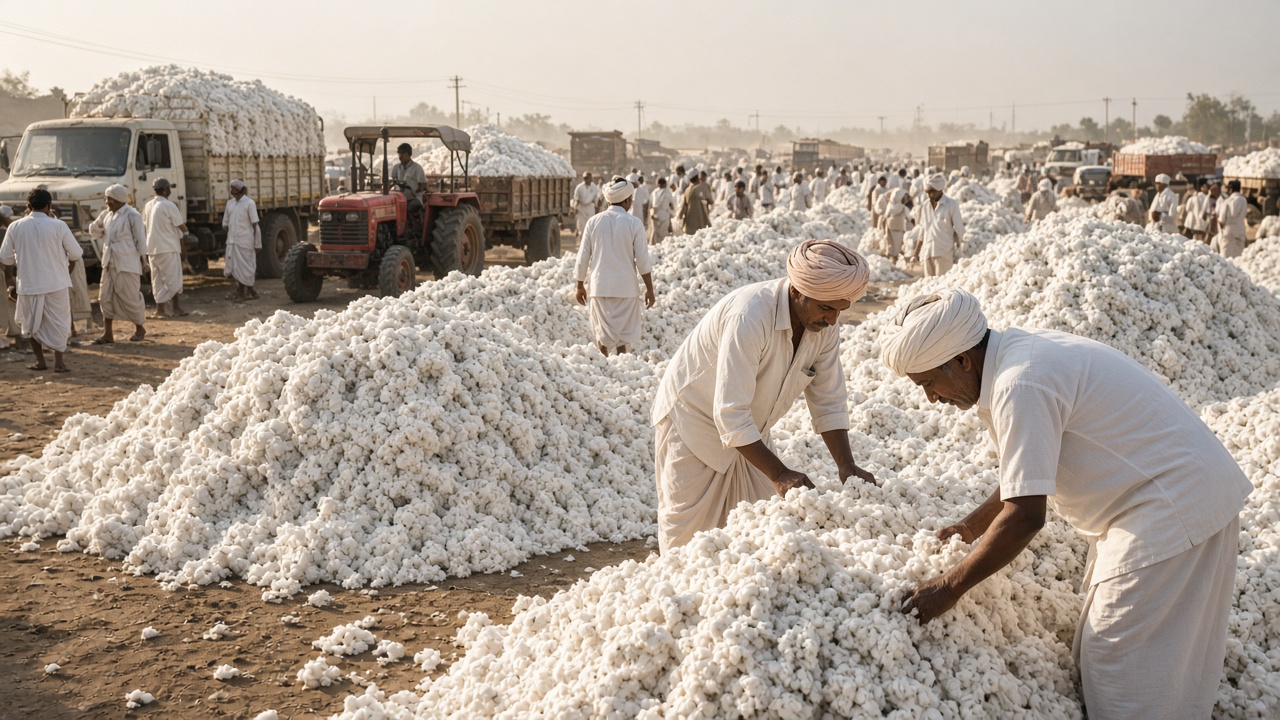
Cotton markets overflow with white cotton during the harvest season (artistic illustration).
🧵 Ancient CottonAncient – 1750
Indus Cotton, Muslin & the Charkha
The Indian subcontinent was one of the first places where cotton was grown and woven. For thousands of years, desi cotton, hand spinning, and handlooms made India the world’s leading maker of cotton cloth.
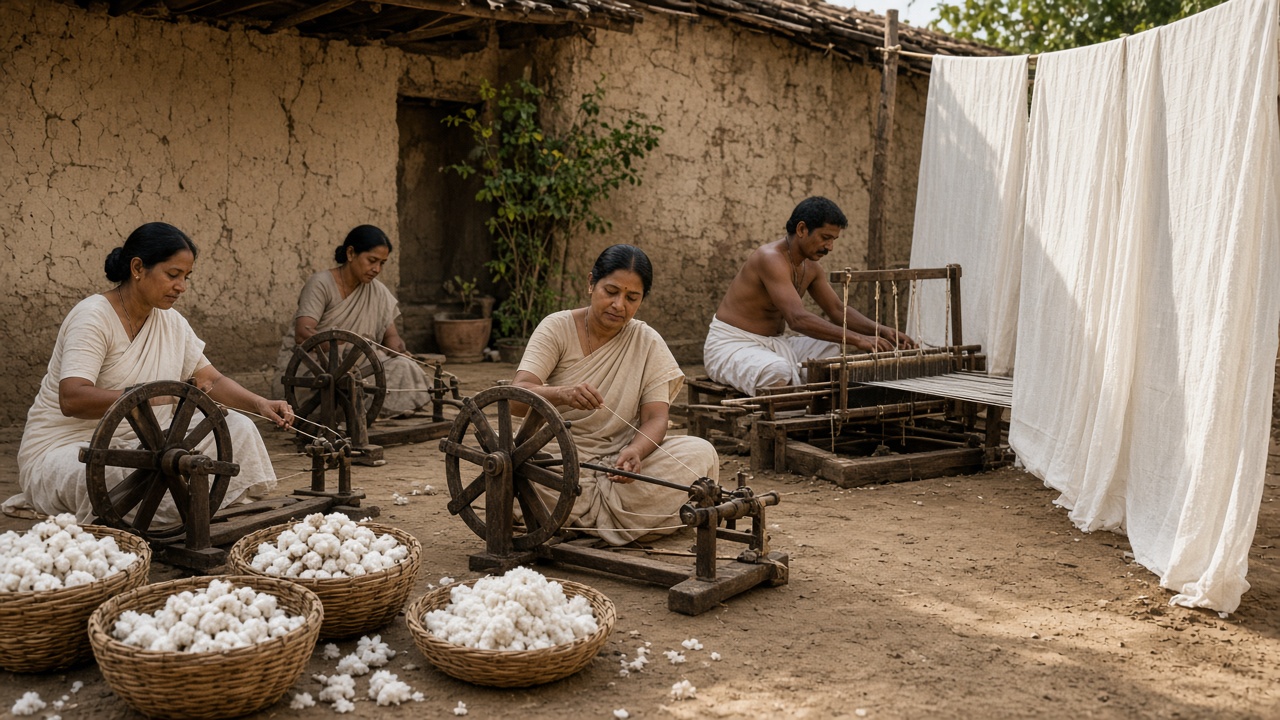
Hand-spun, hand-woven cotton made India famous across the ancient world (artistic illustration).
Around 5000 BCE: Cotton fibres and seeds found at Mehrgarh are among the earliest evidence of cotton use anywhere.
Around 2500 BCE: A fragment of cotton cloth is preserved at Mohenjo-daro; the Harappans grow desi cotton (Gossypium arboreum).
5th century BCE: The Greek historian Herodotus describes Indian trees that bear “wool” finer than sheep’s wool.
Medieval–Mughal period: The charkha and roller gin spread; Dhaka muslin, Gujarat calicos, and Coromandel chintz are traded worldwide.
Technology
Roller gin (charkhi): Separates seeds.
Charkha: Spinning wheel.
Handloom and block printing: Fine fabrics.
Features
Desi cotton: Hardy, short fibre.
World trade: Indian cloth in demand.
Village crafts: Spinners and weavers.
🚢 Colonial Cotton1750 – 1946
American Cotton, Lancashire & Mill Towns
Under colonial rule, India shifted from exporting fine cloth to exporting raw cotton for British mills. American cotton species were introduced, a cotton boom shook Bombay, and Indian textile mills and research bodies were founded.
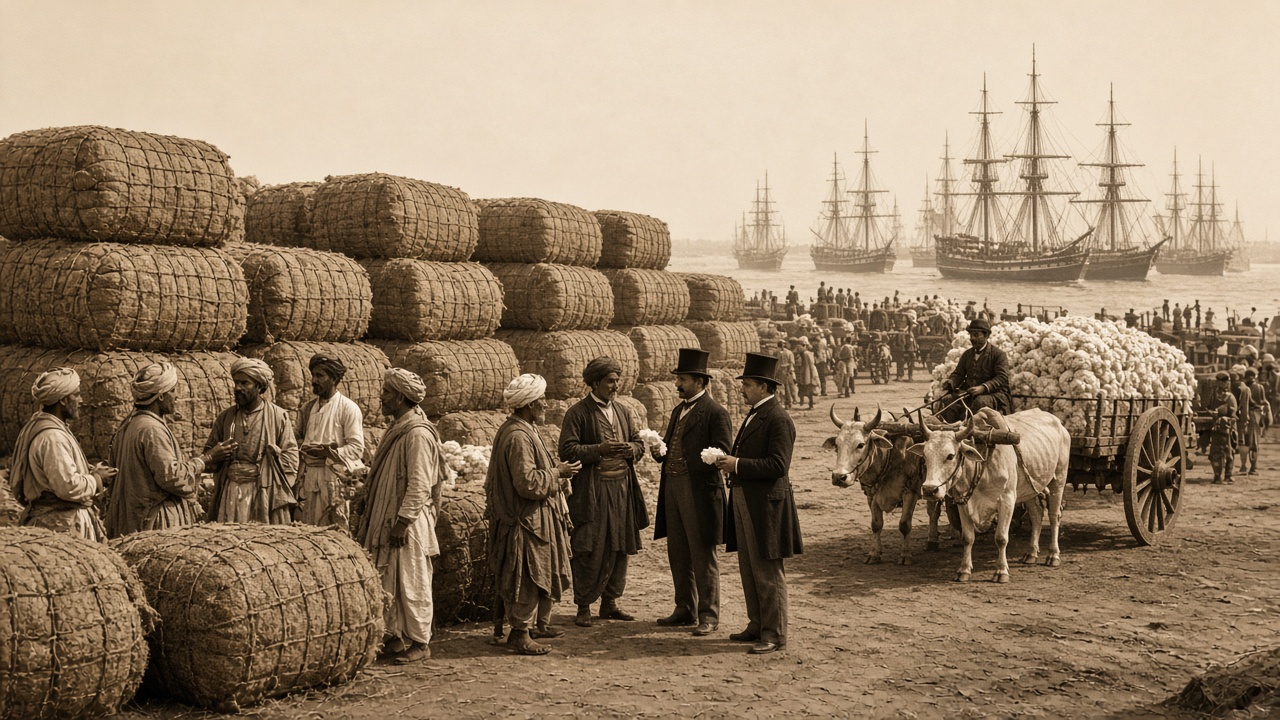
The American Civil War made Bombay’s cotton trade boom in the 1860s (artistic illustration).
Late 18th–19th century: Machine-made British cloth floods India and hand-weaving declines; India exports raw cotton instead.
1840s: The pink bollworm is first described by scientists from Indian specimens; American upland cotton trials begin.
1854–1865: Bombay’s first cotton mill opens (1854); the American Civil War cuts US supplies and sets off the Bombay cotton boom (1861–65).
1921–1940s: The Indian Central Cotton Committee is set up (1921) to improve cotton; Gandhi’s charkha and khadi become symbols of the freedom struggle.
Technology
Saw gins and presses: Bales for export.
Textile mills: Steam-powered spinning.
American upland cotton: Longer fibre.
Features
Raw cotton exports: To Lancashire.
Mill towns: Bombay, Ahmedabad.
Khadi: Symbol of self-reliance.
🌼 Hybrids1947 – 1990
Hybrid-4, CICR & the Bollworm Crisis
Indian scientists created the world’s first commercial cotton hybrid, and hybrids spread quickly. But heavy pesticide use bred resistant bollworms, and by the late 1980s pest attacks were ruining crops and farmers.
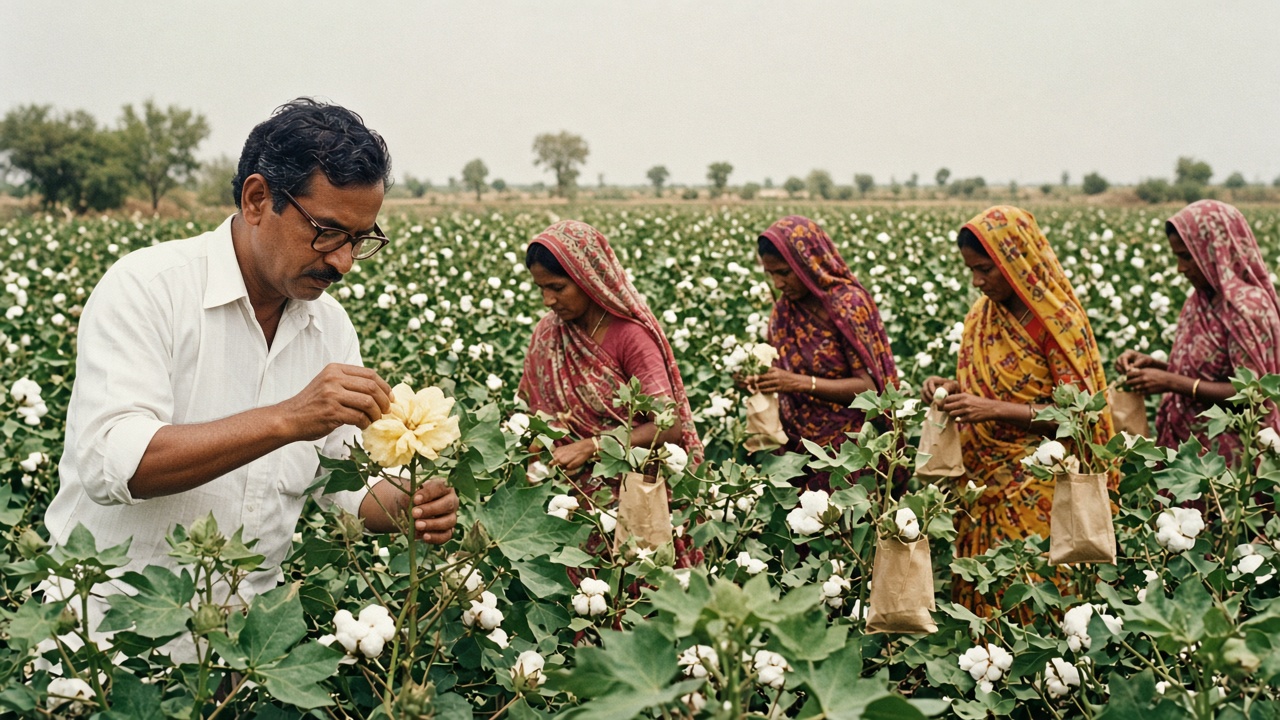
Hybrid cotton seed is made by hand-pollinating each flower (artistic illustration).
1967–1970: The All India Coordinated Cotton Improvement Project begins (1967); the Cotton Corporation of India is formed (1970).
1970–1972: Dr C. T. Patel releases Hybrid-4 at Surat, the world’s first commercial cotton hybrid (1970); Varalaxmi, the first inter-species hybrid, follows (1972).
1976: The Central Institute for Cotton Research (CICR) is set up at Nagpur.
1987–1990: The American bollworm becomes resistant to many insecticides; crop failures in Andhra Pradesh’s cotton belt lead to farmer distress. Cotton uses roughly half of India’s insecticides.
Technology
Hand-pollinated hybrids: Higher yields.
Chemical sprays: Many rounds a season.
Irrigated cotton: Punjab, Gujarat.
Features
Indian first: World’s first cotton hybrid.
Pesticide treadmill: Rising costs.
Resistant pests: Sprays fail.
🧬 Biotech1991 – 2002
Biotech Rules, Field Trials & Bt Approval
India built rules for genetic engineering, and an Indian seed company partnered with Monsanto to put a Bt gene into Indian cotton hybrids. After years of field trials — and an illegal Bt crop discovered in Gujarat — Bt cotton was approved in 2002.
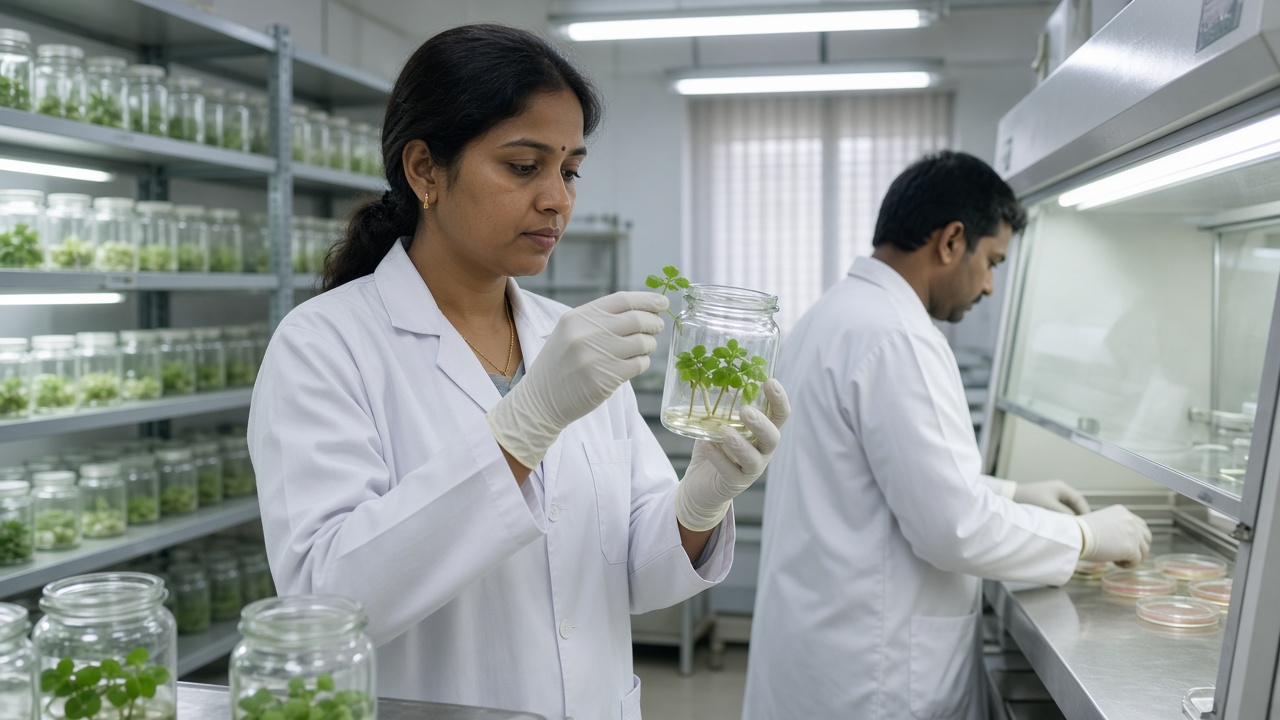
Genes are inserted into plant cells, which are then grown into whole plants (artistic illustration).
1986–1989: The Department of Biotechnology is created (1986); rules under the Environment Protection Act set up the Genetic Engineering Approval Committee (GEAC, 1989).
1995–1998: Mahyco imports Bt cotton seed from Monsanto and breeds the Cry1Ac gene into Indian hybrids; the Mahyco-Monsanto Biotech joint venture is formed and large field trials begin (1998).
2001: Unapproved Bt cotton (Navbharat 151) is found growing on thousands of hectares in Gujarat, showing farmers’ demand.
March 2002: GEAC approves three Bt hybrids — MECH-12, MECH-162, and MECH-184 — India’s first and so far only commercial GM crop.
Technology
Cry1Ac gene: From Bacillus thuringiensis.
Backcross breeding: Gene into local hybrids.
Biosafety trials: Tests on food, feed, soil.
Features
Regulation: GEAC approval needed.
Refuge rule: Non-Bt border rows.
Debate: Safety and seed control.
☁️ Bt Boom2003 – 2014
The Bt Cotton Boom
Bt cotton spread faster than almost any farm technology in Indian history. Bollworm damage and insecticide sprays fell, yields and production roughly doubled, and India became a leading cotton exporter — though problems soon appeared.
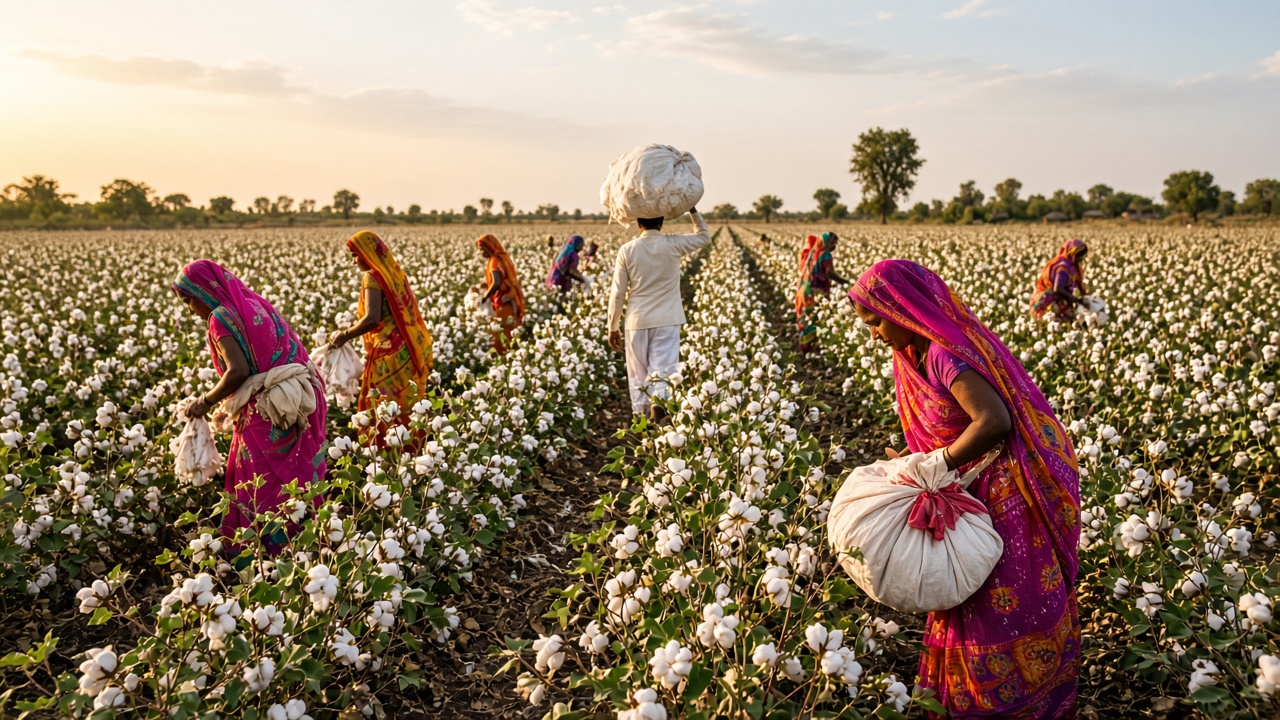
Bt hybrids covered most of India’s cotton fields within a decade (artistic illustration).
2003–2005: Bt area grows rapidly across Maharashtra, Gujarat, and Andhra Pradesh; many seed companies license the Bt gene; states cap Bt seed prices (2006).
2006: Bollgard II, with two Bt genes, is approved; other Bt events from Indian companies are also approved around this time.
2009–2010: GEAC recommends Bt brinjal, but a moratorium is placed on it (February 2010); pink bollworm resistance to Bollgard is detected in Gujarat.
2010–2014: Bt covers over 90% of cotton area; production reaches record levels of around 35–40 million bales, and India becomes a major exporter.
Technology
Bollgard II: Two-gene protection.
Hybrid seed industry: Hundreds of Bt hybrids.
Fewer sprays: Less bollworm spraying.
Features
Record output: Production doubled.
Seed costs: Farmers buy every year.
Sucking pests: Whitefly and jassids rise.
🐛 New Challenges2015 – Present
Pink Bollworm, Seed Battles & Genome Editing
Pests evolved resistance to Bt, whitefly outbreaks struck, and disputes arose over seed prices and illegal herbicide-tolerant cotton. Meanwhile, India cleared GM mustard for field release and released the world’s first genome-edited rice varieties.
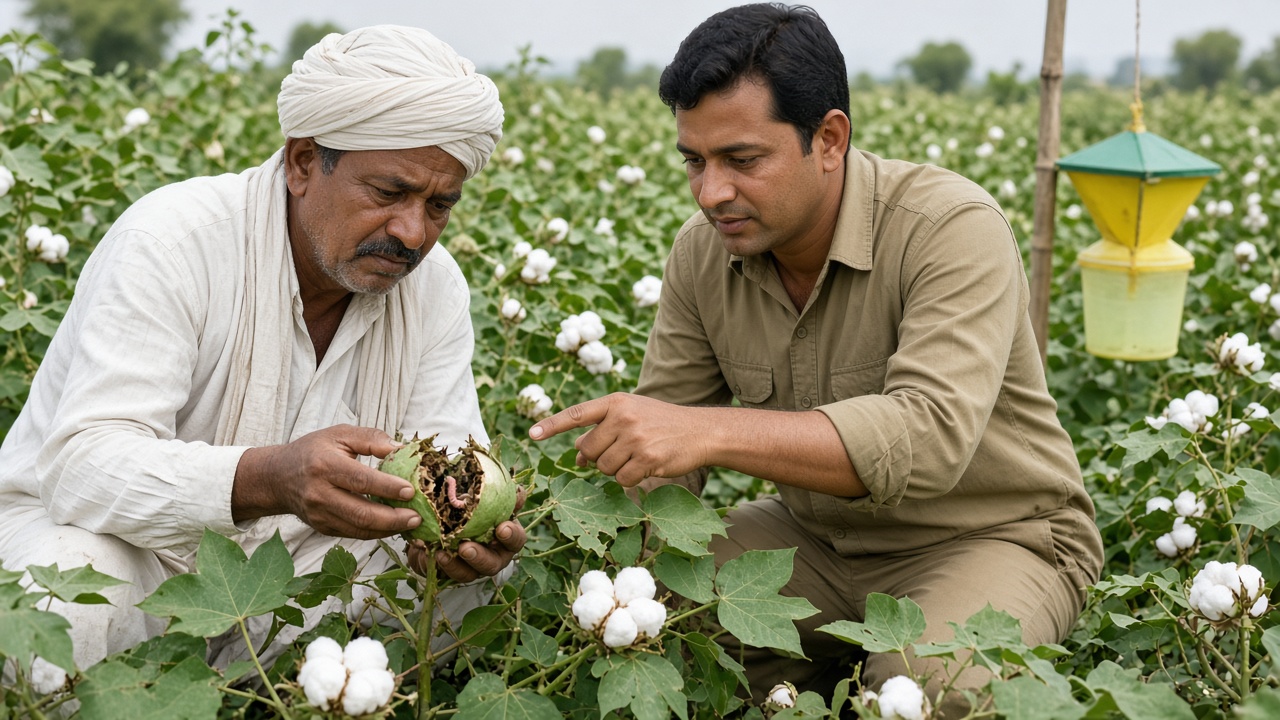
Pheromone traps help farmers track pink bollworm, which now resists Bt (artistic illustration).
2015–2016: A whitefly attack devastates Punjab’s cotton (2015); pink bollworm resistance to Bollgard II spreads; the Cotton Seed Price (Control) Order caps seed prices and trait fees.
2017–2019: Illegal herbicide-tolerant (HTBt) cotton spreads in several states; a long legal fight over Bt trait patents reaches the Supreme Court (2019).
2020–2022: The Kasturi Cotton brand is launched on World Cotton Day (2020); some genome editing without foreign DNA is exempted from GM rules (2022); GEAC clears GM mustard DMH-11 for environmental release (October 2022).
2024–present: India releases two genome-edited rice varieties (May 2024); a Mission for Cotton Productivity is announced (2025) to raise yields and fibre quality.
Technology
Pheromone traps: Monitor pink bollworm.
Genome editing: Precise gene changes.
High-density planting: More plants per acre.
Features
Resistance management: Refuges and short seasons.
Seed price control: Government caps.
Ongoing debate: GM food crops.
Cotton Species and Landmark Varieties
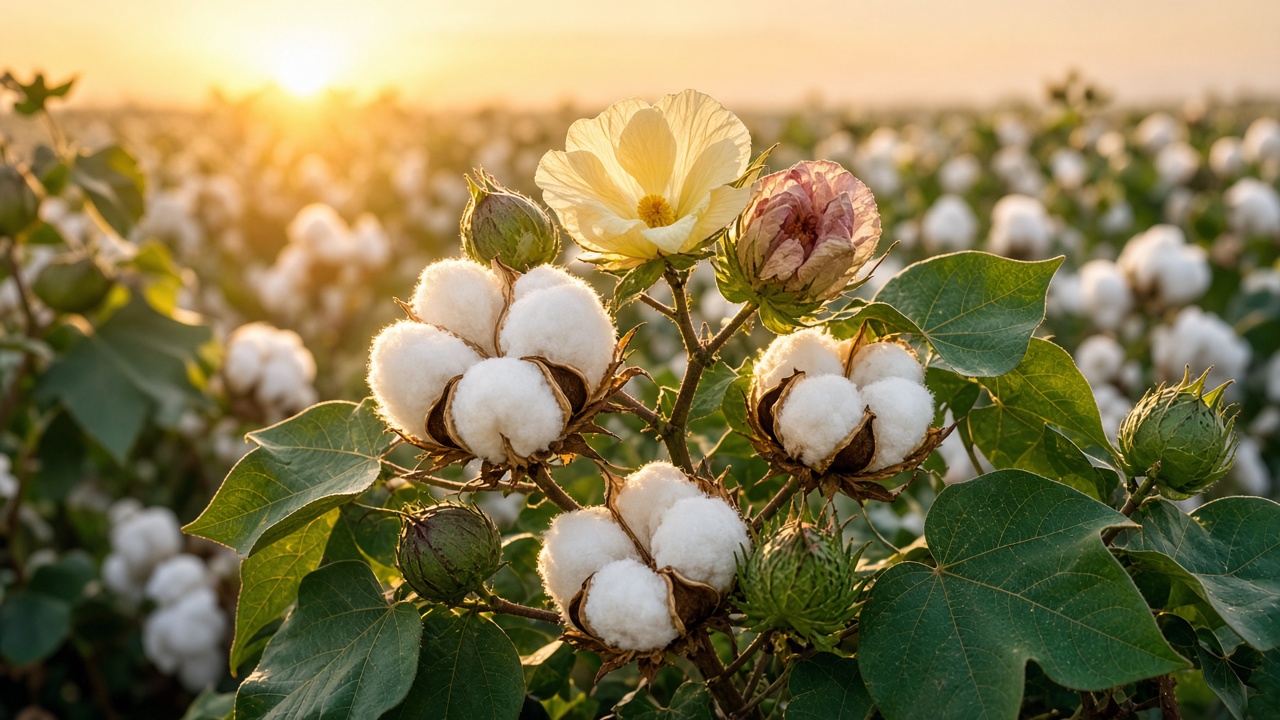
Cotton flowers turn from cream to pink before the boll forms and bursts open (artistic illustration).
Species / variety
Type
Known for
Gossypium arboreum
Desi (Old World) cotton
Grown since Harappan times; hardy, short fibre
Gossypium herbaceum
Desi (Old World) cotton
Traditional in Gujarat and Karnataka
Gossypium hirsutum
American upland cotton
Most of India’s cotton today, including Bt hybrids
Gossypium barbadense
Egyptian / Sea Island cotton
Extra-long fibre; small area in the south
Hybrid-4 (1970)
Intra-species hybrid
World’s first commercial cotton hybrid
Varalaxmi (1972)
Inter-species hybrid
First hybrid between two cotton species
MECH-12, 162, 184 (2002)
Bt hybrids (Bollgard)
First approved GM crop in India
Bikaneri Nerma Bt
Public-sector Bt variety
Farmers can save its seed, unlike hybrids
GM and Gene-Edited Crops in India
Crop / trait
What it does
Status
Bollgard (Cry1Ac)
Kills bollworms
Approved 2002; pink bollworm now resistant
Bollgard II (Cry1Ac + Cry2Ab)
Two-gene bollworm protection
Approved 2006; most cotton today
Herbicide-tolerant cotton (HTBt)
Survives weedkiller sprays
Not approved; illegal planting found
Bt brinjal
Resists fruit and shoot borer
Moratorium since 2010
GM mustard DMH-11
Hybrid system for higher yields
Cleared for environmental release in 2022; under court review
Genome-edited rice
Higher yield, drought and salt tolerance
Two varieties released in 2024
Bt Cotton: Benefits and Concerns
Issue
Benefits
Concerns
Yield
Yields and production roughly doubled after 2002
Yields have stagnated since about 2014
Pesticides
Far fewer sprays against bollworms
More sprays now needed for sucking pests and pink bollworm
Seeds
Many hybrid choices from many companies
Farmers must buy costly seed every year
Pest resistance
American bollworm well controlled
Pink bollworm resistant to both Bt generations
Farmer income
Higher profits in good years
Rain-fed farmers face big losses in bad years
Environment
Less broad-spectrum insecticide
Worries about gene flow and loss of desi varieties
India’s Cotton Production Over Time
Year
Cotton (approx. million bales of 170 kg)
What was happening
1950–51
~3
Mostly desi cotton
1970–71
~4.8
Hybrid-4 released
1990–91
~9.8
Bollworm resistance to sprays
2002–03
~8.6
Bt cotton approved; drought year
2004–05
~16.4
Bt spreads rapidly
2007–08
~26
Bollgard II and many Bt hybrids
2013–14
~36
Near-record production
2019–20
~36
Pink bollworm and seed disputes
2023–24
~32
Yields stagnate; new cotton mission planned
Gene Revolution & Bt Cotton Timeline Summary
Year / Era
Milestone
Around 5000 BCE
Early cotton at Mehrgarh
Around 2500 BCE
Cotton cloth at Mohenjo-daro
Mughal period
Dhaka muslin and Indian calicos traded worldwide
1854
First cotton mill in Bombay
1861–65
Bombay cotton boom
1921
Indian Central Cotton Committee
1970
Hybrid-4, world’s first cotton hybrid; Cotton Corporation of India
1976
Central Institute for Cotton Research, Nagpur
1986
Department of Biotechnology
1989
GM rules and GEAC
1998
Bt cotton field trials; Mahyco-Monsanto venture
2001
Illegal Bt cotton found in Gujarat
2002
Bt cotton approved (March)
2006
Bollgard II approved
2010
Bt brinjal moratorium
2015
Whitefly attack in Punjab; Bollgard II resistance spreads
2016
Cotton seed price and trait fee controls
2019
Supreme Court ruling on Bt trait patent
2020
Kasturi Cotton brand launched
2022
GM mustard cleared for environmental release
2024
Genome-edited rice varieties released
2025
Mission for Cotton Productivity announced
Test Your Knowledge
20 quick questions from the Gene Revolution and Bt cotton timeline. Click each question to reveal the answer.
Answer: Bt cotton.
Answer:Bacillus thuringiensis, a soil bacterium.
Answer: Bollworms (especially the American bollworm).
Answer: Mehrgarh.
Answer: Dhaka muslin.
Answer: The American Civil War.
Answer: The charkha.
Answer: It was the world’s first commercial cotton hybrid.
Answer: Dr C. T. Patel, at Surat in Gujarat.
Answer: Nagpur, Maharashtra.
Answer: The Genetic Engineering Appraisal Committee (GEAC).
Answer: 2002.
Answer: Cry1Ac.
Answer: It has two Bt genes (Cry1Ac and Cry2Ab) instead of one.
Answer: The pink bollworm.
Answer: Bt brinjal.
Answer: Rows of non-Bt cotton planted around Bt cotton to slow the development of pest resistance.
Answer: GM mustard (DMH-11).
Answer: Rice.
Answer: 7 October.
Classroom activity
Students Tasks
Use these prompts for discussion or projects on cotton, Bt cotton, and the Gene Revolution in India.
Timeline understandingBiotechnologyEthics and debateFarmer livelihoods
Mark India’s major cotton-growing states and textile centres on a map.
Make a line graph of India’s cotton production from 1950–51 to 2023–24 using the table on this page.
Explain in simple steps with a diagram how a Bt gene makes a cotton plant resistant to bollworms.
Trace the journey of cotton from field to gin, spinning mill, weaving, and your clothes.
Compare desi cotton, hybrid cotton, and Bt cotton in a table.
Research why pests become resistant to pesticides and Bt crops, and how refuges help.
Hold a class debate: “GM food crops should be allowed in India.”
Interview a farmer or read a news report on how Bt cotton changed farming in one district.
Find out the difference between genetic modification and genome editing.
Compare the Green, White, Yellow, Blue, Silver, Golden, and Gene Revolutions in one table.
Continue exploring
The Gene Revolution is one of India’s colourful farm revolutions. Explore the Golden, Silver, Green, Yellow, White, and Blue Revolutions and other agriculture timelines next.
Click any panel to expand and explore the visual mood.
India’s cotton story in pictures — hand spinning, Bombay’s Cotton Green, hybrid seed fields, biotech labs, Bt harvests, pink bollworm checks, cotton bolls, and market yards.
Hand Spinning
Charkha and muslin
Cotton Green
Bombay boom
Hybrid Seed
Hybrid-4, 1970
Biotech Lab
Gene transfer
Bt Harvest
Record crops
Pink Bollworm
Resistance
Cotton Bolls
White gold
Cotton Market
Harvest season
Explore all agriculture timelines
Jump to any other agriculture timeline on WorldTimelineHub.
Disclaimer: This content is AI-generated for educational purposes and may contain errors or outdated details. For correct and authoritative information, please refer to official and reliable sources such as government publications, manufacturers, museums, and academic references.