Dal is the heart of the Indian meal and the main source of protein for hundreds of millions of people. Yet for decades after the Green Revolution, pulse production barely
grew and India became the world’s biggest pulse importer. A new push from the mid-2010s — the “Protein Revolution” — lifted output to record levels.
This timeline covers pulses domesticated in ancient India, Harappan chickpeas, khichdi, colonial gram fields, stagnation after the Green Revolution, ICRISAT and pulse
research, record imports, the chickpea shift to central India, the National Food Security Mission, the 2015 dal crisis, buffer stocks, and the drive for self-reliance.
Ancient → PresentShortage → Record HarvestsChana · Tur · Moong · Urad · Masoor
Why Pulses Matter
Pulses — dried seeds of legumes such as chickpea, pigeon pea, lentil, moong, and urad — contain about twice as much protein as cereals and are rich in fibre, iron, and
folate. They are the main protein source for India’s vegetarians and for poor families who cannot afford milk, eggs, or meat. Pulses also enrich the soil by fixing
nitrogen, need less water than rice, and are grown mostly by small farmers on rain-fed land.
Big picture
India’s pulses in one view
India domesticated several pulses and has eaten dal for thousands of years. After independence, the Green Revolution favoured wheat and rice, and pulse output
stagnated while people ate less dal each year. Imports, missions, higher support prices, and better varieties finally raised production to record levels.
Related timelines:
Green Revolution,
Yellow Revolution,
MSP and mandis.
~27 MT
Record output, 2021–22
1st
Producer, consumer, importer
~28 Mha
Area under pulses
~45–50 g
Pulses per person per day
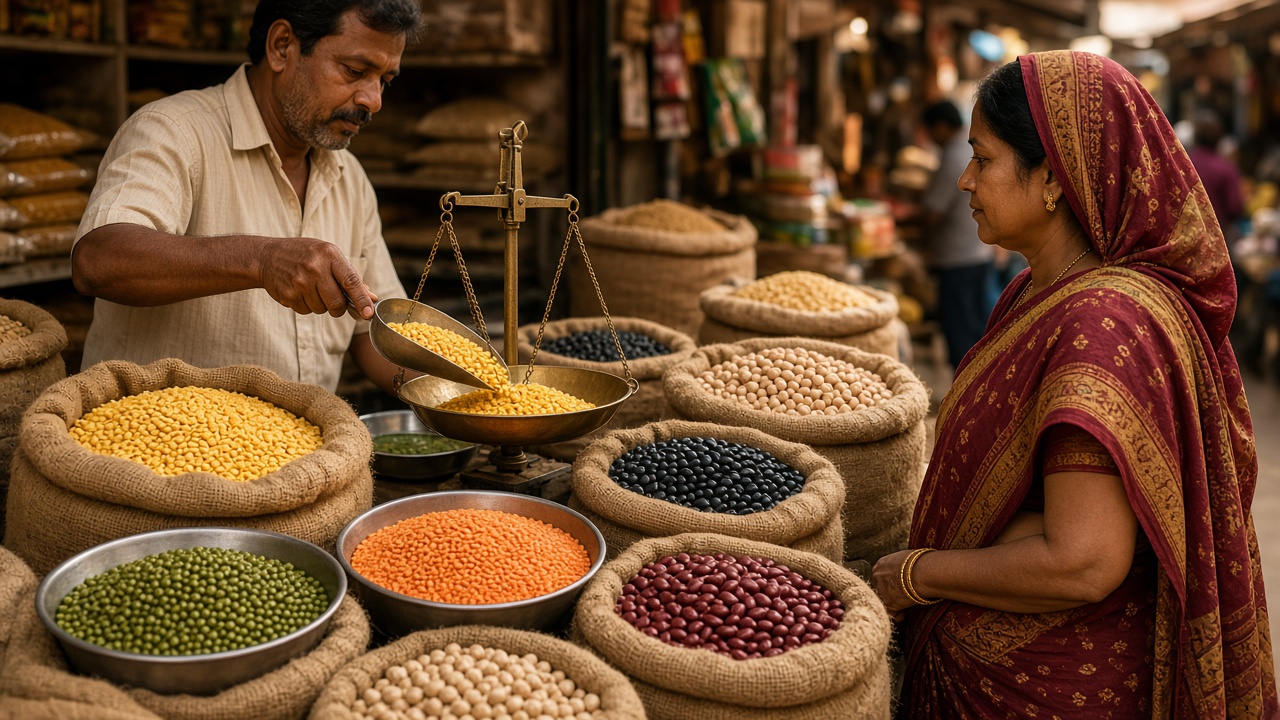
Every Indian bazaar sells a colourful range of dals and beans (artistic illustration).
🫘 Native PulsesAncient – 1750
Native Pulses, Dal & Khichdi
India is one of the homelands of pulses. Moong, urad, horse gram, and pigeon pea were domesticated here, while chickpea, lentil, and pea arrived from West Asia in Harappan times. Dal and khichdi became everyday foods across the land.
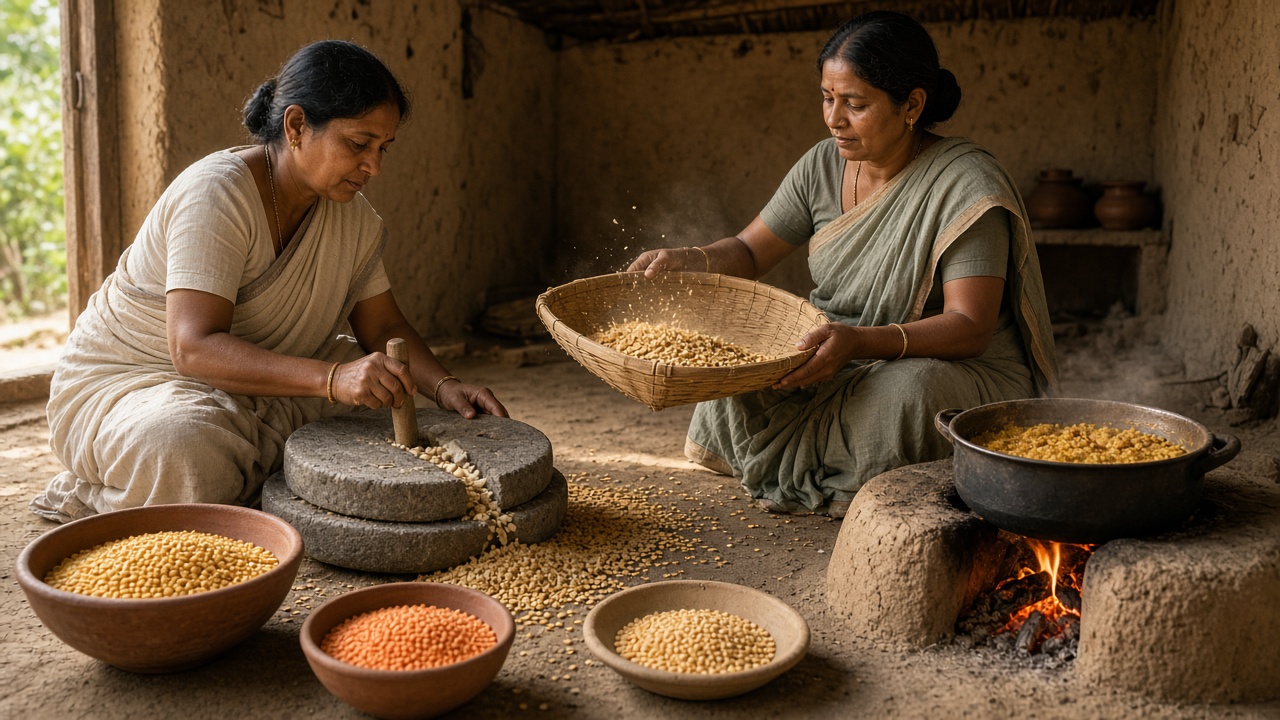
For centuries women split pulses into dal on stone hand mills (artistic illustration).
Harappan era: Chickpea, lentil, and field pea are found at Indus sites; moong and horse gram appear in early farming villages of Gujarat and South India.
2nd–1st millennium BCE: Pigeon pea (arhar or tur) is domesticated in eastern peninsular India; Vedic texts mention mudga (moong) and masha (urad).
Ancient period: Farmers grow pulses mixed with millets and cereals; the Arthashastra and later texts list many pulses and their seasons.
14th–17th centuries: Ibn Battuta describes kishri (khichdi) of rice and moong; Mughal kitchens make rich dals such as dal panchmel.
Technology
Stone chakki: Splitting whole pulses.
Mixed cropping: Pulses with millets.
Sun drying: Safe storage in clay bins.
Features
Dal and rice: A complete protein meal.
Soil care: Pulses restore fertility.
Regional dishes: Sambar, dal, chole.
🌾 Gram Fields1750 – 1946
Gram Fields, Famines & Early Research
Under colonial rule, gram was grown widely in the northern plains, including the new canal colonies of Punjab. Famines exposed how fragile food supplies were, and the first agricultural research stations began studying pulses.
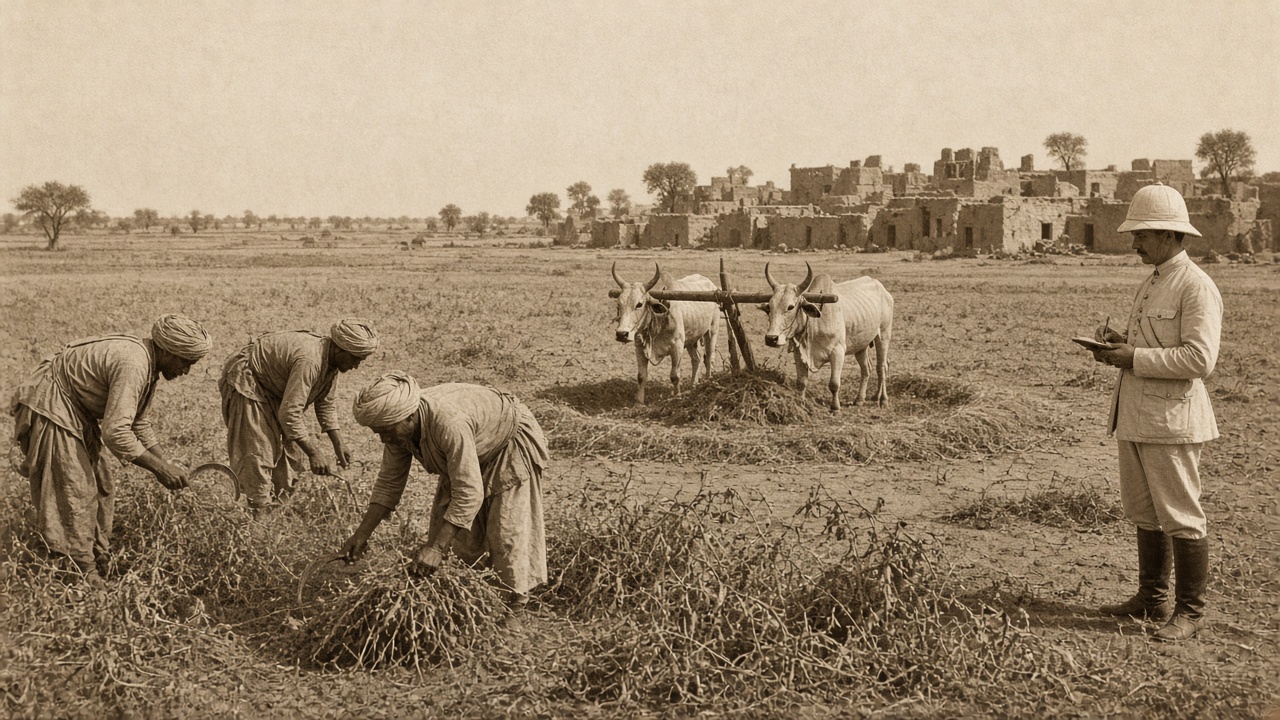
Gram was a major winter crop of the northern plains (artistic illustration).
19th century: Gram, lentil, and pea are major rabi crops in the Indo-Gangetic plains; gram is also used as feed for army horses.
1886–1888: European scientists discover that bacteria in legume root nodules fix nitrogen from the air, explaining why pulses enrich soil.
1905–1940s: The Imperial Agricultural Research Institute at Pusa selects improved gram and pea types; canal colonies in Punjab grow wheat and gram.
Technology
Selection breeding: Better local types.
Bullock threshing: Treading the harvest.
Canal irrigation: New wheat–gram lands.
Features
Rabi staple: Gram with wheat.
Famine food: Hardy dryland crops.
Science begins: Nitrogen fixation explained.
📉 Stagnation1947 – 1990
In the Shadow of the Green Revolution
Wheat and rice got irrigation, fertiliser, and price support, and pulses were pushed onto poor, rain-fed land. Production barely rose while population doubled, so each Indian had less dal to eat. Research institutes and early missions tried to reverse the trend.
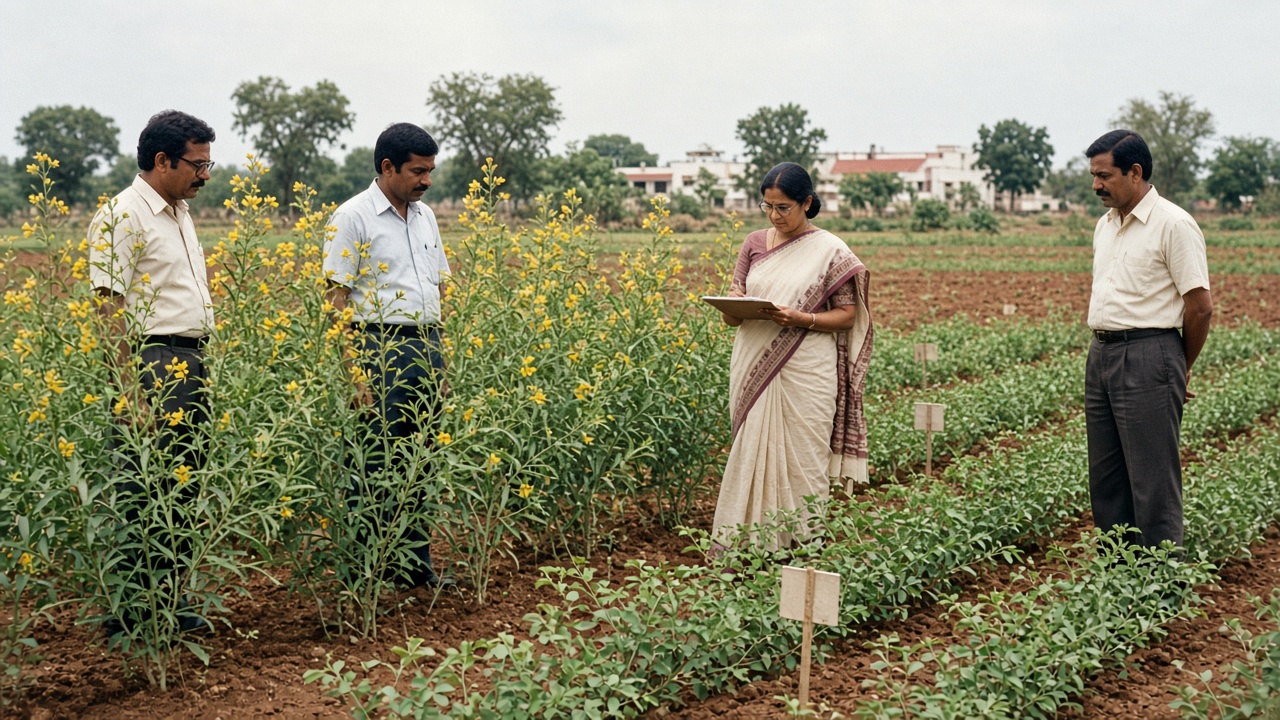
Scientists tested pigeon pea and chickpea varieties for dry regions (artistic illustration).
1951: Net availability of pulses is about 61 grams per person per day; production is about 8–9 million tonnes.
1966–1972: The Green Revolution spreads wheat and rice; an All India Coordinated Pulses Improvement Project begins (1967); ICRISAT is founded at Patancheru (1972).
1984: A Project Directorate of Pulses Research is set up at Kanpur (later the Indian Institute of Pulses Research).
1986–1990: The National Pulses Development Project begins; pulses are added to the Technology Mission on Oilseeds (1990). Per-person availability falls to about 40 grams.
Technology
Short-duration varieties: Fit between crops.
Rhizobium culture: Seed inoculation.
Disease-resistant lines: Against wilt.
Features
Rain-fed crop: Risky yields.
Falling intake: Less dal per person.
Low priority: Wheat and rice first.
🚢 Imports1991 – 2006
Stagnation, Imports & the Chickpea Shift
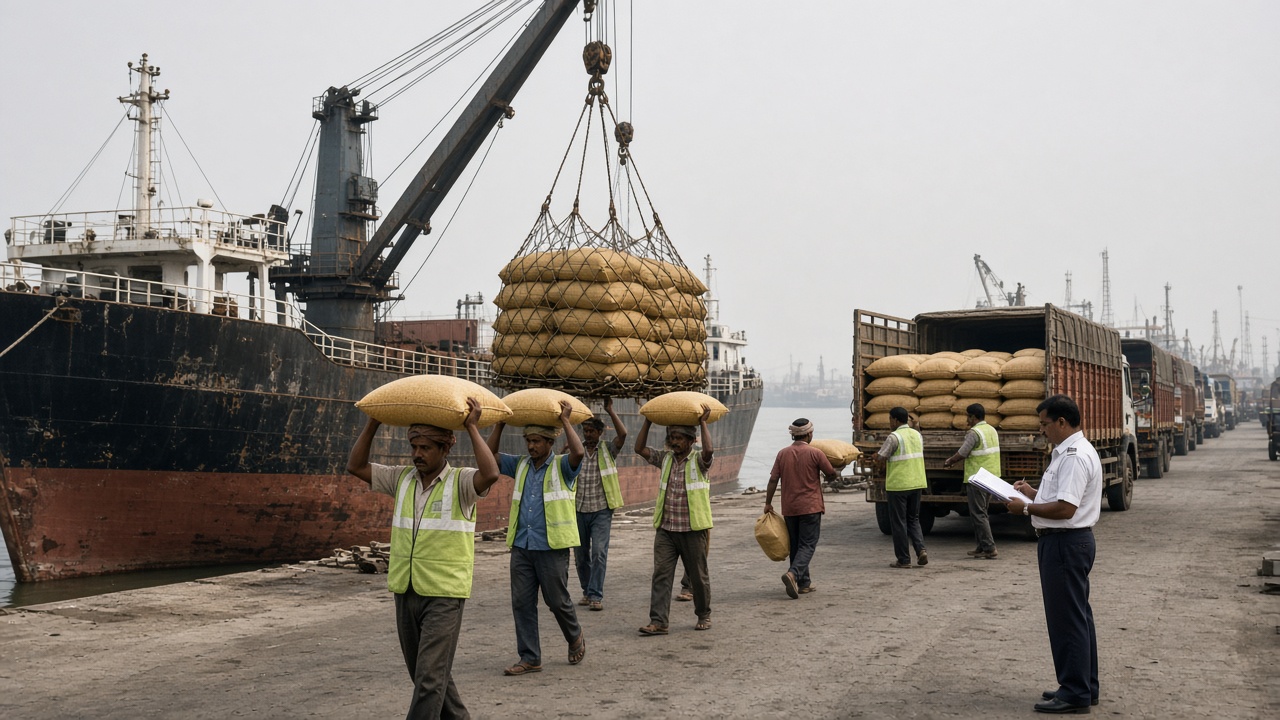
Pulse production stayed stuck at around 11–15 million tonnes. With open trade, India began importing pulses from Canada, Australia, Myanmar, and Africa. Meanwhile, chickpea quietly moved from the north to central and southern India.
India became the world’s largest importer of pulses (artistic illustration).
1990s: Pulse imports are liberalised; yellow peas, lentils, and pigeon peas arrive from Canada, Australia, Myanmar, and East Africa.
1990s–2000s: Chickpea area shrinks in Punjab and Haryana (replaced by wheat) but grows in Madhya Pradesh, Maharashtra, Karnataka, and Andhra Pradesh.
Early 2000s: Summer moong spreads after wheat harvest in Punjab and Uttar Pradesh; net availability drops to about 30–35 grams per person per day.
2004: ISOPOM (Integrated Scheme of Oilseeds, Pulses, Oil Palm and Maize) supports seeds and demonstrations; India is now the largest pulse importer.
Technology
Early chickpea varieties: For warm south.
Summer moong: 60-day crops.
Dal mills: Processing imported pulses.
Features
Import dependence: Price swings.
New regions: Central and south India.
Protein gap: Rising malnutrition concern.
🏭 Missions2007 – 2015
Food Security Mission, Genomes & the Dal Crisis
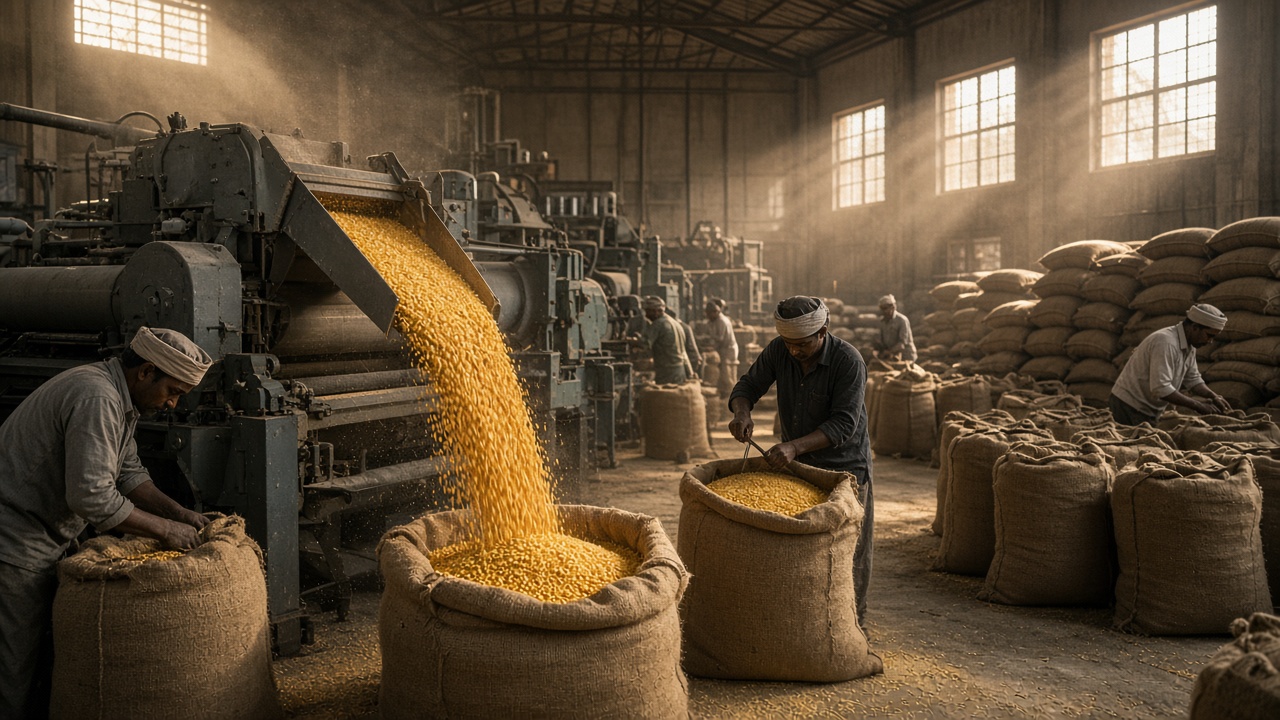
Pulses finally received a national mission, and Indian and international scientists decoded pulse genomes. Production rose, but two droughts in 2014 and 2015 sent dal prices soaring and made pulses a national political issue.
Dal mills split and polish whole pulses for the market (artistic illustration).
2007–2011: The National Food Security Mission includes pulses (2007); an Accelerated Pulses Production Programme follows; production reaches about 18 million tonnes (2010–11).
2010–2013: A hybrid pigeon pea is released from ICRISAT research (around 2010); the pigeon pea (2011) and chickpea (2013) genomes are sequenced with Indian leadership.
2014: The government highlights a “Protein Revolution” as a priority to boost pulses and other protein foods.
2014–2015: Two drought years cut output; tur dal prices rise to about ₹200 per kg; a pulses buffer stock is created and imports are raised.
Technology
Genome sequencing: Faster breeding.
Hybrid pigeon pea: Higher yield potential.
Seed hubs: Quality seed supply.
Features
National mission: Pulses in NFSM.
Price shock: Dal becomes costly.
Buffer stock: Government reserves.
💪 Protein Revolution2016 – Present
Protein Revolution, Record Harvests & Self-Reliance
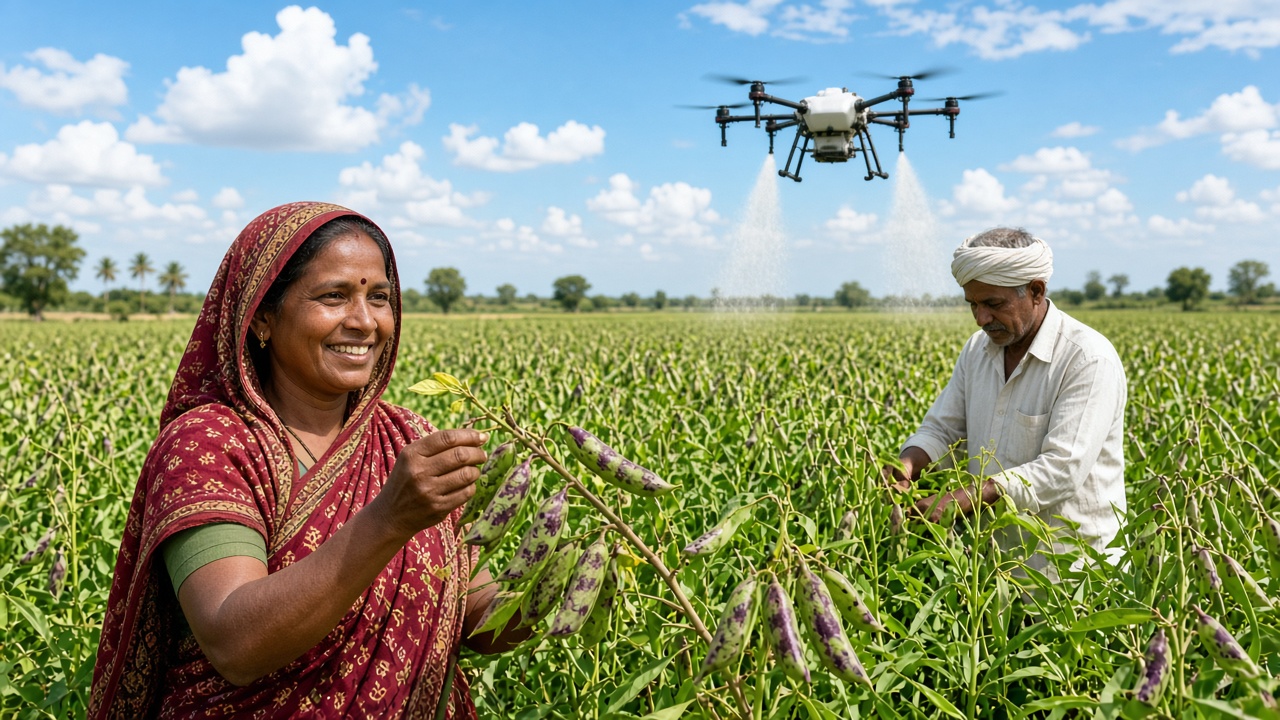
Higher MSPs, government procurement, seed hubs, and good monsoons produced record pulse harvests. Imports fell sharply for a time, and India launched a mission to become self-reliant in pulses.
Better seed, prices, and technology helped farmers grow record pulse crops (artistic illustration).
2016: The UN International Year of Pulses; a government committee recommends higher MSPs and procurement for pulses; imports reach a record of about 6.6 million tonnes (2016–17).
2017–2018: Production jumps to about 25 million tonnes; import limits protect farmers; PM-AASHA (2018) supports procurement of pulses at MSP.
2019–2022: World Pulses Day (10 February) is first observed (2019); production reaches a record of about 27 million tonnes (2021–22).
2023–present: Bharat Dal brand chana dal is sold at subsidised prices (2023); a Mission for Aatmanirbharta in Pulses focusing on tur, urad, and masoor is launched (2025).
Technology
Machine-harvestable chickpea: Taller plants.
Drones and apps: Spraying and advisories.
Seed hubs: New varieties reach farmers.
Features
Record harvests: Around 25–27 MT.
MSP procurement: Support for farmers.
Self-reliance goal: Fewer imports.
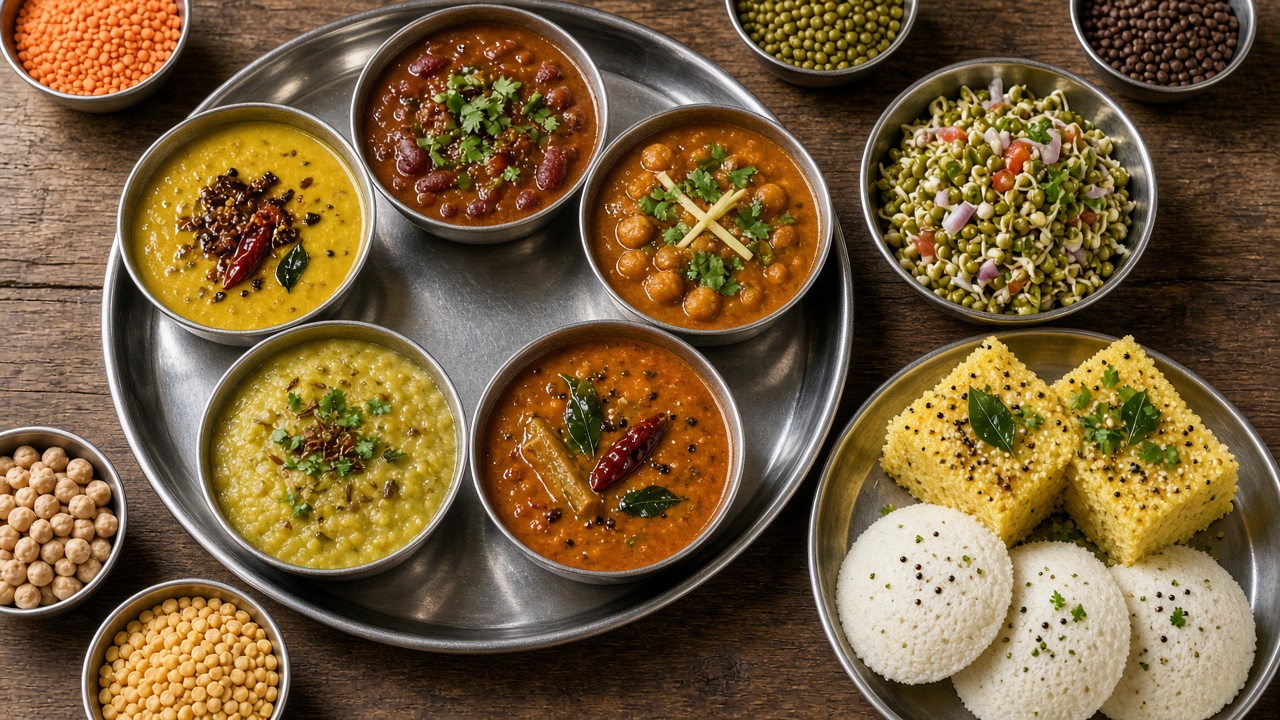
Pulses on the Indian Plate
From dal and sambar to idli and dhokla, pulses are in almost every Indian meal (artistic illustration).
Dish
Main pulse
Region
Dal tadka
Tur or moong
All over India
Sambar
Tur
South India
Idli and dosa
Urad (with rice)
South India
Rajma chawal
Kidney beans
Punjab, Jammu & Kashmir, Delhi
Chole
Chickpea
North India
Dhokla and besan dishes
Chickpea flour
Gujarat and all over India
Khichdi
Moong (with rice)
All over India
Misal
Moth bean sprouts
Maharashtra
Dal baati
Mixed dals
Rajasthan
Sattu
Roasted gram flour
Bihar and Jharkhand
Cholar dal
Chana dal
West Bengal
Major Pulses of India
Pulse
Also called
Season
Leading states
Chickpea
Chana, gram, Bengal gram
Rabi
Madhya Pradesh, Maharashtra, Rajasthan
Pigeon pea
Tur, arhar, red gram
Kharif
Maharashtra, Karnataka, Uttar Pradesh
Green gram
Moong
Kharif and summer
Rajasthan, Madhya Pradesh, Maharashtra
Black gram
Urad
Kharif and rabi
Madhya Pradesh, Uttar Pradesh, Andhra Pradesh
Lentil
Masoor
Rabi
Madhya Pradesh, Uttar Pradesh, Bihar
Field pea
Matar
Rabi
Uttar Pradesh, Madhya Pradesh
Horse gram
Kulthi
Kharif and rabi
Karnataka, Odisha, Tamil Nadu
Moth bean
Matki
Kharif
Rajasthan, Maharashtra
Why Pulses Are Good for People and the Planet
Area
Benefit
Nutrition
About 20–25% protein, plus fibre, iron, and folate
Complete meal
Dal with rice or roti gives a balanced mix of amino acids
Soil health
Root nodules fix nitrogen and reduce fertiliser needs
Water
Need far less water than rice or sugarcane
Climate
Lower greenhouse gas emissions than animal protein
Farming systems
Fit into crop rotations and intercropping
Livelihoods
Grown by small, rain-fed farmers across central and western India
India’s Pulse Production Over Time
Year
Pulses (approx. million tonnes)
What was happening
1950–51
~8.4
About 61 g per person per day
1960–61
~12.7
Before the Green Revolution
1970–71
~11.8
Wheat and rice take priority
1980–81
~10.6
Stagnation on rain-fed land
1990–91
~14.3
Pulses added to Technology Mission
2000–01
~11.1
Drought; imports rise
2010–11
~18.2
National Food Security Mission
2015–16
~16.4
Drought and dal price crisis
2017–18
~25.4
Protein Revolution harvest
2021–22
~27.3
Record production
2023–24
~24.2
Weak monsoon; self-reliance mission planned
Protein Revolution & Pulses Timeline Summary
Year / Era
Milestone
Harappan era
Chickpea, lentil, and pea at Indus sites
2nd–1st millennium BCE
Pigeon pea domesticated; moong and urad in Vedic texts
14th century
Ibn Battuta describes khichdi
1886–1888
Nitrogen fixation by legumes discovered
1905
Agricultural research at Pusa begins
1951
About 61 g of pulses per person per day
1967
Coordinated pulses improvement project
1972
ICRISAT founded at Patancheru
1984
Project Directorate of Pulses Research, Kanpur
1990
Pulses added to Technology Mission on Oilseeds
2004
ISOPOM scheme
2007
Pulses in the National Food Security Mission
2011
Pigeon pea genome sequenced
2013
Chickpea genome sequenced
2015
Dal price crisis; buffer stock created
2016
International Year of Pulses
2017–18
Production jumps to about 25 MT
2018
PM-AASHA procurement scheme
2019
First World Pulses Day
2021–22
Record production of about 27 MT
2023
Bharat Dal launched
2025
Mission for Aatmanirbharta in Pulses
Test Your Knowledge
20 quick questions from the Protein Revolution and pulses timeline. Click each question to reveal the answer.
Answer: Pulses (and other protein-rich foods).
Answer: About 20–25%, roughly twice as much as cereals.
Answer: Any two of moong, urad, pigeon pea (tur), and horse gram.
Answer:Mudga (moong) and masha (urad).
Answer: Ibn Battuta.
Answer: Rhizobium.
Answer: Chickpea (chana or gram).
Answer: Tur, arhar, or red gram.
Answer: Wheat and rice got irrigation and support, while pulses were pushed onto poor rain-fed land with little research and price support.
Answer: About 61 grams.
Answer: Patancheru near Hyderabad, founded in 1972.
Answer: Kanpur, Uttar Pradesh.
Answer: Madhya Pradesh.
Answer: The National Food Security Mission (NFSM).
Answer: Pigeon pea.
Answer: They rose to about ₹200 per kg after two drought years.
Answer: 2016.
Answer: 10 February.
Answer: A government brand of subsidised chana dal launched in 2023.
Answer: Tur, urad, and masoor.
Classroom activity
Students Tasks
Use these prompts for discussion or projects on pulses and the Protein Revolution in India.
Collect samples of ten different pulses, label them with English and local names, and make a display chart.
Make a line graph of India’s pulse production from 1950–51 to 2023–24 using the table on this page.
Uproot a pulse plant carefully and draw its root nodules; explain how they fix nitrogen.
List all the pulse dishes your family eats in a week and estimate how much protein they provide.
Mark India’s leading pulse-producing states on a map and note which pulses each grows.
Explain why pulse production lagged behind wheat and rice after the Green Revolution.
Track the price of tur dal in a local shop for a month and explain the changes.
Debate: “India should grow all its own pulses instead of importing them.”
Grow moong sprouts in class and record their growth each day.
Compare the Green, White, Yellow, Blue, Silver, Golden, Gene, and Protein Revolutions in one table.
Continue exploring
The Protein Revolution is one of India’s colourful farm revolutions. Explore the Gene, Golden, Green, Yellow, White, Silver, and Blue Revolutions and other agriculture timelines next.
Click any panel to expand and explore the visual mood.
India’s pulses in pictures — stone chakkis, colonial gram fields, research plots, imported cargo, dal mills, tur harvests, dal thalis, and bazaar sacks of lentils.
Stone Chakki
Splitting dal
Gram Fields
Colonial Punjab
Research Plots
Chickpea and tur
Imports
Largest importer
Dal Mill
Split and polished
Tur Harvest
Record crops
Dal Thali
Protein on the plate
Pulses Bazaar
Colourful dals
Explore all agriculture timelines
Jump to any other agriculture timeline on WorldTimelineHub.
Disclaimer: This content is AI-generated for educational purposes and may contain errors or outdated details. For correct and authoritative information, please refer to official and reliable sources such as government publications, manufacturers, museums, and academic references.