From handwritten manuscripts and Gutenberg’s press, to the paperback revolution, e-books, audiobooks, and the self-publishing boom.
Scribes -> PressPaperbacksDigital & DIY
Why Book Publishing Matters
Publishing decides who can own knowledge, stories, and textbooks. Each leap—from scribe to press to pocket paperback to digital files—changes price, access, and who gets to be an author.
This timeline follows manuscripts, Gutenberg, the paperback revolution, e-books, audiobooks, and self-publishing as linked turning points.
Big picture
Publishing in one view
Scribes on parchment, movable type that multiplies pages, cheap paperbacks for the crowd, screens full of e-books, stories in your ears, and authors who publish themselves.
From one handwritten copy to anyone publishing online.
Hand-Made BooksPre-print
Manuscripts
Before presses, books were copied by hand—on parchment, palm leaf, birch bark, or paper. Scribes, monasteries, courts, and scholars preserved texts slowly and expensively. Each copy was a craft object; libraries were rare treasures, not everyday shelves.
Manuscript era: one book, many hours of labour.
Copying errors and variants enter the textual tradition.
Illumination and binding add art to knowledge.
India’s palm-leaf and manuscript cultures parallel European scribal worlds.
Movable Type1450s
Gutenberg
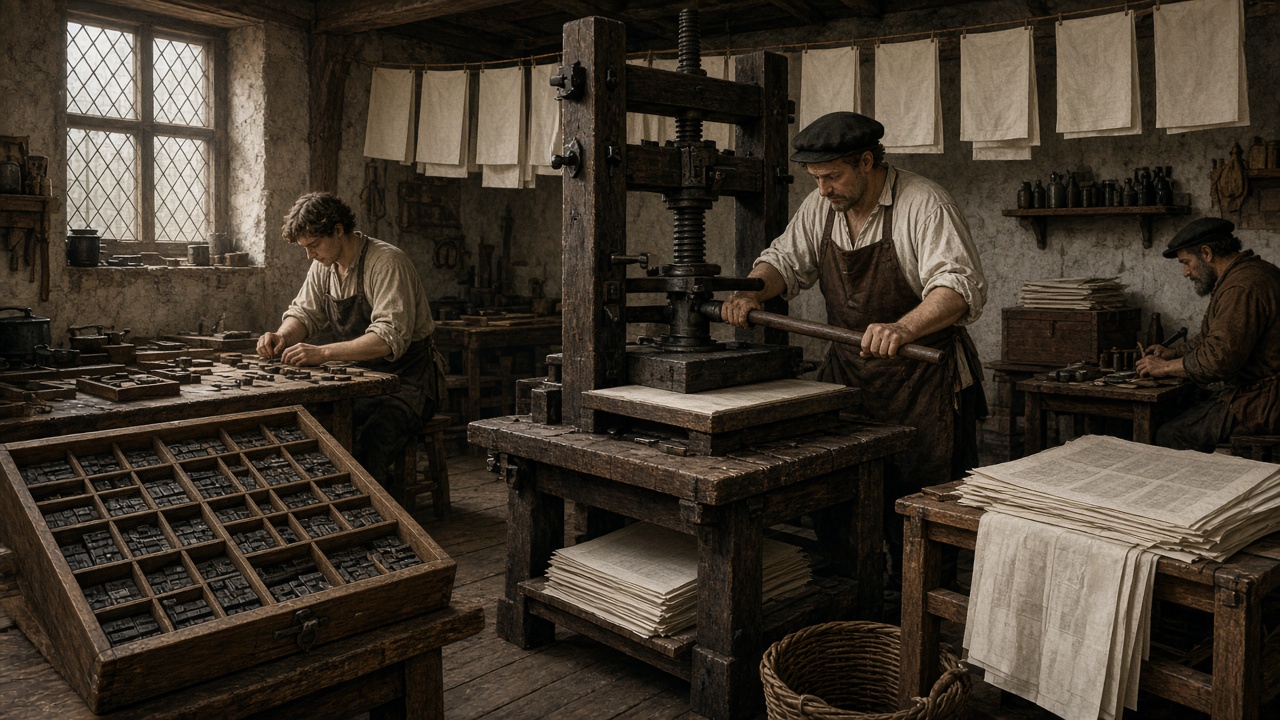
Johannes Gutenberg’s movable-type press made many identical pages practical. Books became cheaper and more numerous; literacy and debate accelerated. Publishing as a trade—printers, booksellers, editions—took shape around the machine.
Gutenberg era: type set once, pages multiplied.
Mass identical copies change religion, science, and politics.
Print shops spread across Europe and later the world.
Copyright and censorship debates grow with the press.
Books for Everyone1900s
Paperback Revolution
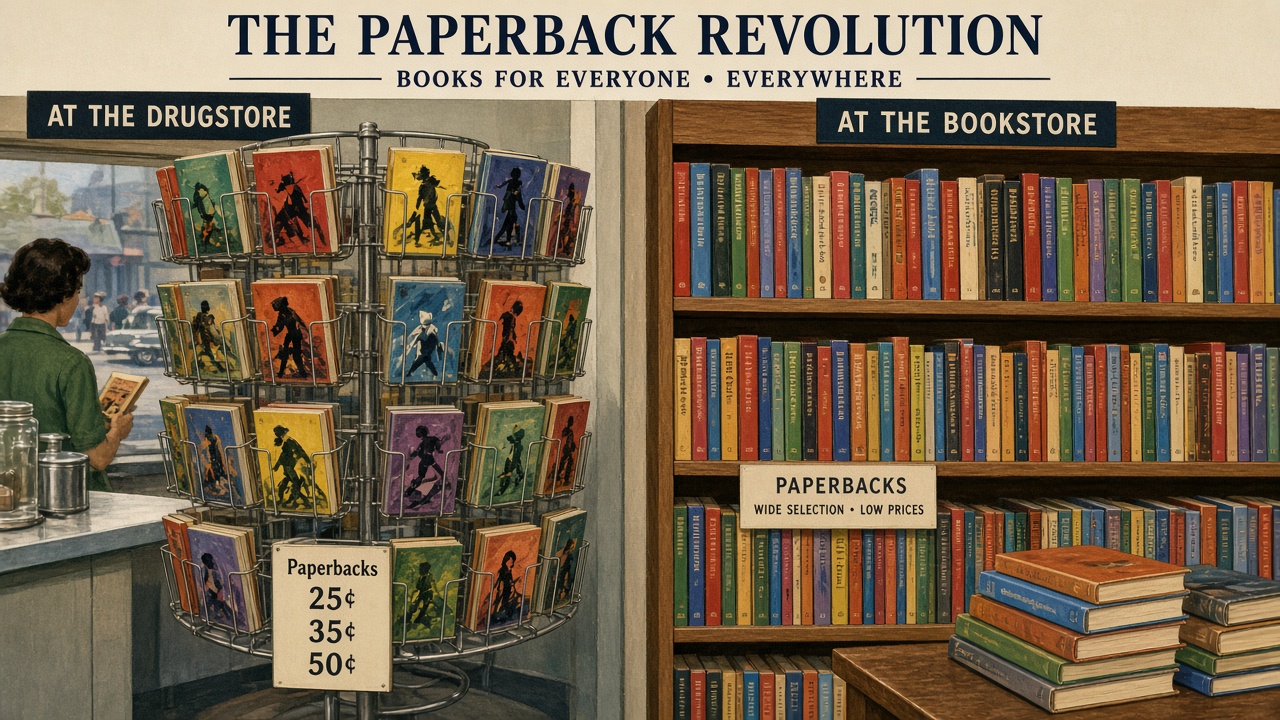
Cheap paper bindings, pocket formats, and mass distribution put novels and nonfiction into stations, drugstores, and schoolbags. The paperback revolution made reading portable and democratic—hardcovers still mattered, but paperbacks owned the everyday market.
Paperback era: low price, high mobility.
Series imprints and cover art drive impulse buys.
Students and travellers adopt pocket editions.
Indian language paperbacks expand middle-class reading.
Books as Files1990s–
E-Books
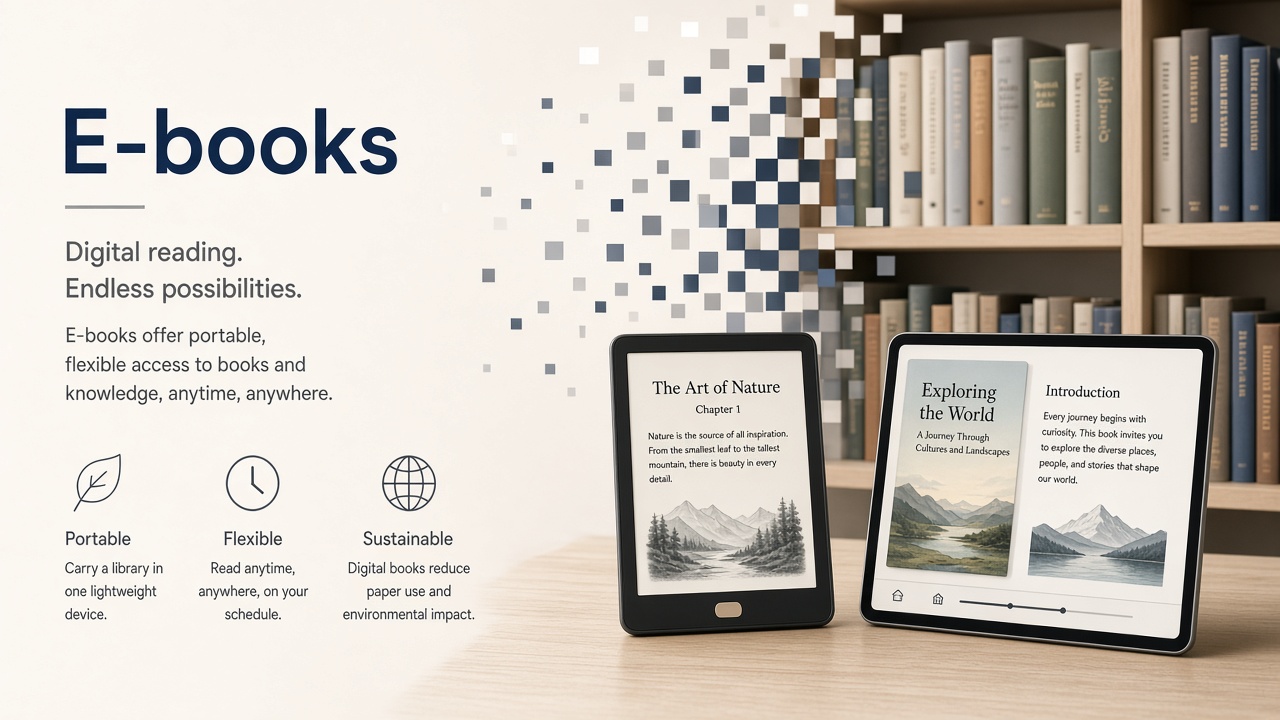
Digital books live as files on e-readers, phones, and tablets. Instant download, search, adjustable fonts, and tiny storage changed how publishers price and distribute—and how readers carry libraries in a pocket.
E-book era: the shelf fits in a device.
Formats (ePub, PDF, Kindle-like) define the market.
Libraries and schools adopt digital lending.
Print remains strong; many readers go hybrid.
Stories in the EarModern
Audiobooks
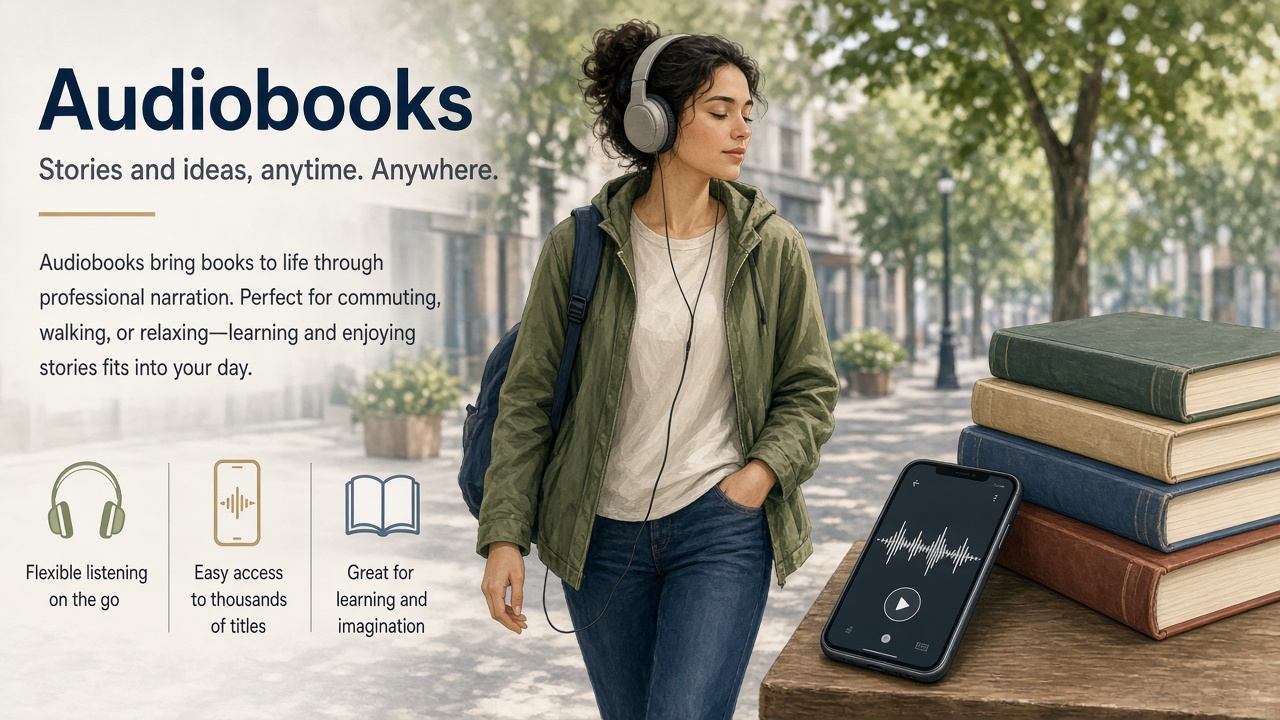
Narrated books turn commuting and chores into reading time. From cassette and CD libraries to streaming apps, audiobooks grew into a major publishing channel—and a lifeline for accessibility and multitasking learners.
Audio era: reading without looking at a page.
Professional narration becomes a craft industry.
Streaming subscriptions expand listening habits.
Supports accessibility and language learning.
Author as PublisherToday
Self-Publishing
Digital platforms and print-on-demand let authors release e-books, paperbacks, and audio without a traditional gatekeeper. Quality varies, but control, speed, and niche audiences flourish—changing what “getting published” means for students and storytellers.
Self-pub era: write, design, upload, ship.
Authors keep rights and higher royalty shares.
Marketing and editing become author responsibilities.
Hybrid careers: self-pub hits then traditional deals (and reverse).
Key Milestones
Milestone
When
Why it matters
Manuscript culture
Ancient–medieval
Knowledge copied by hand.
Gutenberg movable type
c. 1450s
Mass identical books become possible.
Paperback mass market
20th century
Cheap portable reading for many.
E-book platforms
1990s–2000s
Books as downloadable files.
Streaming audiobooks
2000s–
Listening becomes everyday reading.
Self-publishing tools
2000s–
Authors can publish without gatekeepers.
Formats at a Glance
Format
Core idea
Main trade-off
Manuscript
Hand-copied unique/few copies
Slow & expensive
Printed book
Press-made identical editions
Needs capital & distribution
Paperback
Cheap portable binding
Less durable than hardcover
E-book
Digital file on a device
Screen fatigue; DRM issues
Audiobook
Narrated listening experience
Time & narration cost
Self-published
Author-controlled release
Author does marketing/editing
Then vs Now
From rare manuscripts to on-demand author editions.
Metric
Then
Now
Making a copy
Scribe weeks/months
Print run or instant download
Cost to reader
Luxury / elite
Mass market to free e-samples
Gatekeepers
Patrons & printers
Publishers + platforms + self
Formats
Codex / palm leaf
Print + e + audio
Author path
Patronage / house deal
Also DIY self-publish
Future Predictions
Hybrid readers: Print for depth; e/audio for convenience.
AI tools: Help editing and narration; human voice still prized.
Self-pub growth: More niche languages and genres online.
Schools: Mix textbooks, e-libraries, and open educational resources.
India spotlight
Book Publishing & India
India inherits rich manuscript traditions, colonial and modern print industries, a vast paperback market in many languages, growing e-book and audio use, and a lively self-publishing scene for English and regional authors.
India spotlight: manuscripts to multilingual paperbacks and digital.
Ancient+
Manuscripts
Palm-leaf and paper traditions preserve texts.
Print
Presses arrive
Print spreads with colonial and Indian publishers.
20th c.
Paperbacks & textbooks
Mass reading and school books scale up.
Digital
E & audio
Phones become reading and listening devices.
Today
Self-publish
Authors release online across languages.
Strength: Multilingual market and deep reading cultures.
Need: Affordable textbooks and library access.
Debate: Traditional publishing quality vs self-pub speed.
Test Your Knowledge
20 questions on manuscripts through self-publishing. Click to reveal answers.
Jump to any other education timeline on WorldTimelineHub.
Disclaimer: This content is AI-generated for educational purposes and may contain errors or outdated details. For correct and authoritative information, please refer to official and reliable sources such as government publications, manufacturers, museums, and academic references.