From Brahmi inscriptions and Devanagari manuscripts, through colonial language policy and the Hindi–regional debate, to Unicode and digital multilingualism on every phone.
Scripts carry identity, schooling, exams, and citizenship. India’s story is not one alphabet—it is a family of writing systems and a continuous negotiation over which languages get prestige, resources, and digital space.
This timeline follows Brahmi, Devanagari, colonial language policy, Hindi vs regional languages, Unicode, and digital multilingualism as linked turning points.
Big picture
Scripts in one view
Ashokan stone letters, Devanagari headlines, English in colonial classrooms, constitutional language debates, Unicode code points, and phones that switch scripts mid-chat.
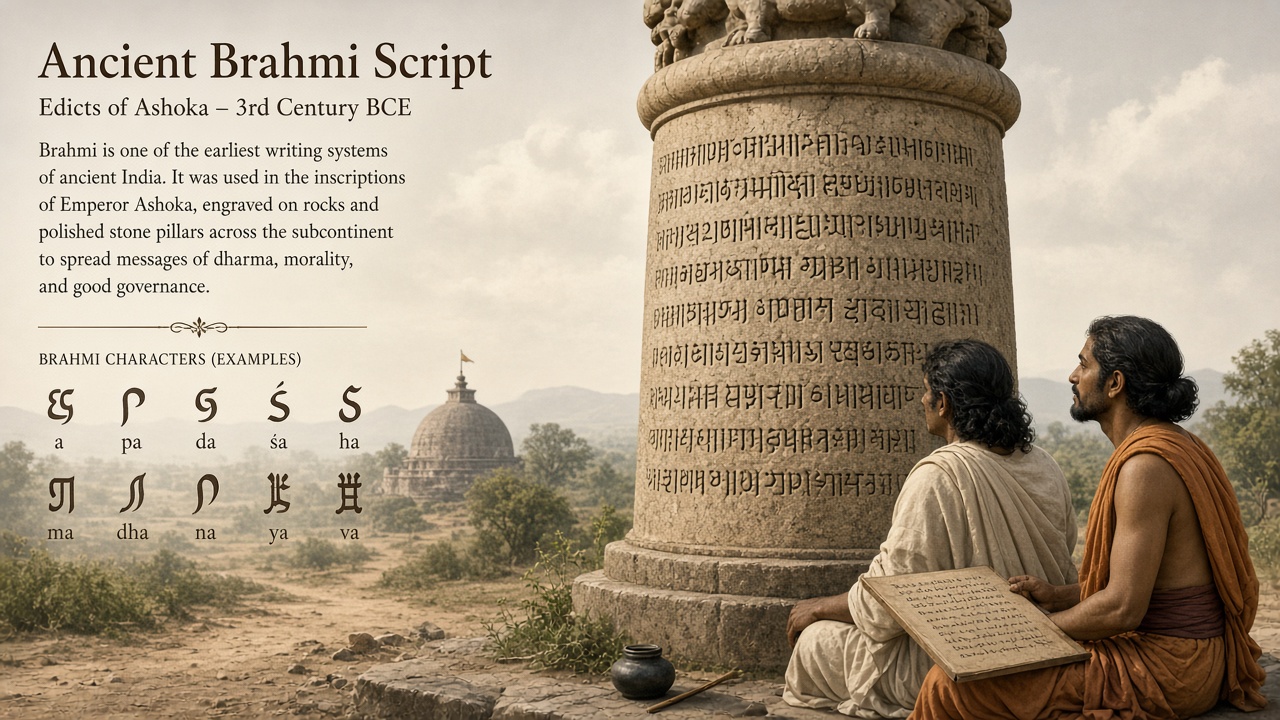
Brahmi appears on Ashokan edicts and other early inscriptions as a foundational Indian writing tradition. From related historical streams grew many later scripts of South and Southeast Asia. Studying Brahmi is studying how India first wrote public power, ethics, and administration in lasting form.
Brahmi era: letters on stone for a public audience.
Ashokan inscriptions make Brahmi widely known.
Ancestor links to many later Indian scripts.
Decipherment opened modern historical linguistics.
Living Headline ScriptClassical+
Devanagari
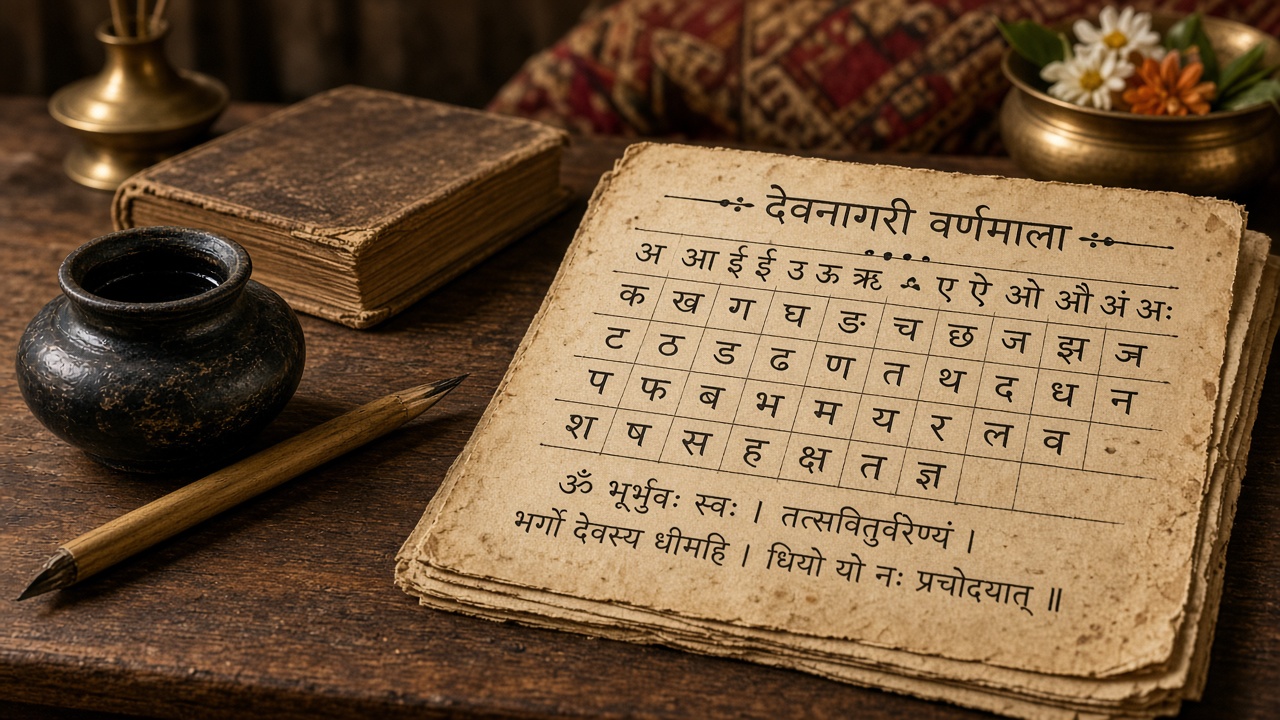
Devanagari became a major vehicle for Sanskrit learning and for modern languages such as Hindi and Marathi. Its shirorekha (headline) and akshara structure define how millions learn to read—while sister scripts (Bengali, Tamil, Telugu, Kannada, Malayalam, Odia, Gurmukhi, and more) carry other languages with equal depth.
Devanagari era: manuscript to modern school books.
Used for Sanskrit and several modern languages.
Print and type design adapt the handwritten forms.
One script among many in India’s linguistic map.
English PrestigeBritish era
Colonial Language Policy
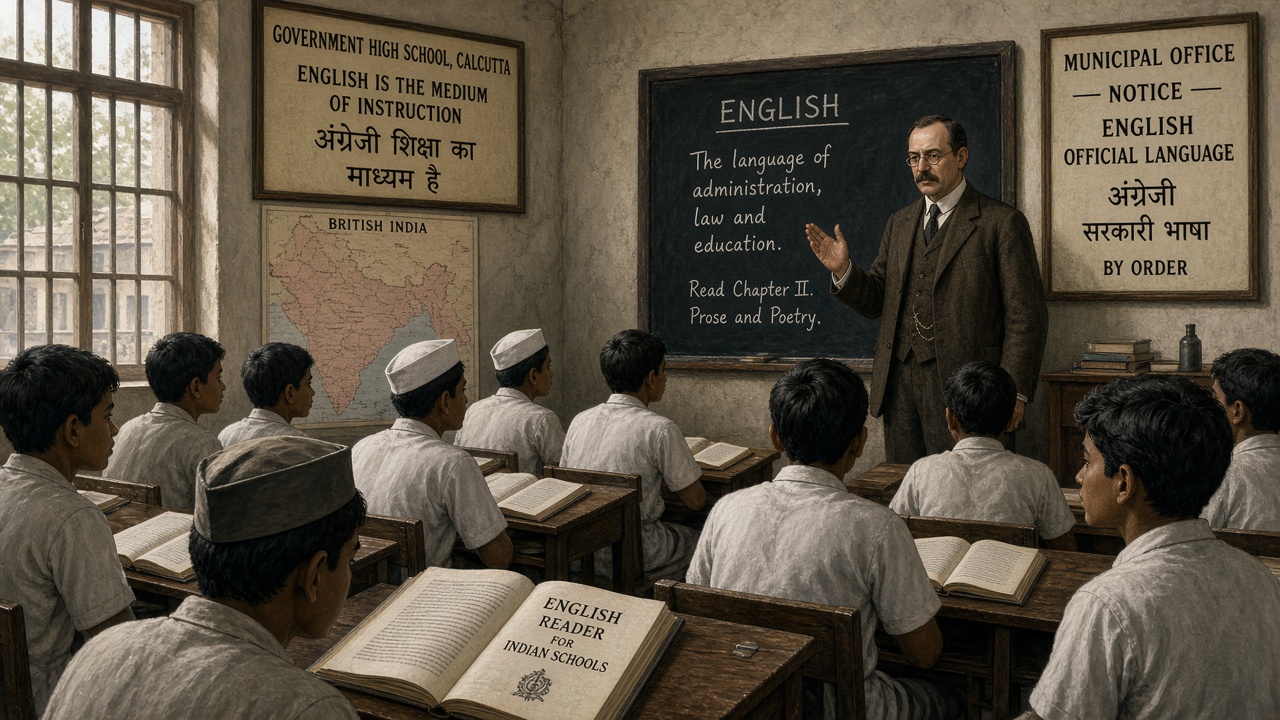
Colonial rule made English the language of higher administration, law, and elite education (often after debates such as Macaulay’s Minute). Indian languages remained vital in homes, vernacular presses, and primary schooling—but English became a ladder for jobs, creating a dual system whose effects still shape classrooms.
Colonial era: English for power; vernaculars for the people.
Independent India debated Hindi as a Union official language alongside English, while states championed Tamil, Bengali, Telugu, Marathi, Kannada, and others. Anti-imposition movements, the Official Languages Act framework, and the three-language formula reflect a core truth: linguistic federalism is part of Indian education politics.
Republic era: equality of languages vs convenience of one link.
Constitution lists scheduled languages; states set official tongues.
Education policy balances Hindi, English, and mother tongue.
Identity and opportunity both drive the debate.
One Code for All Scripts1990s–
Unicode
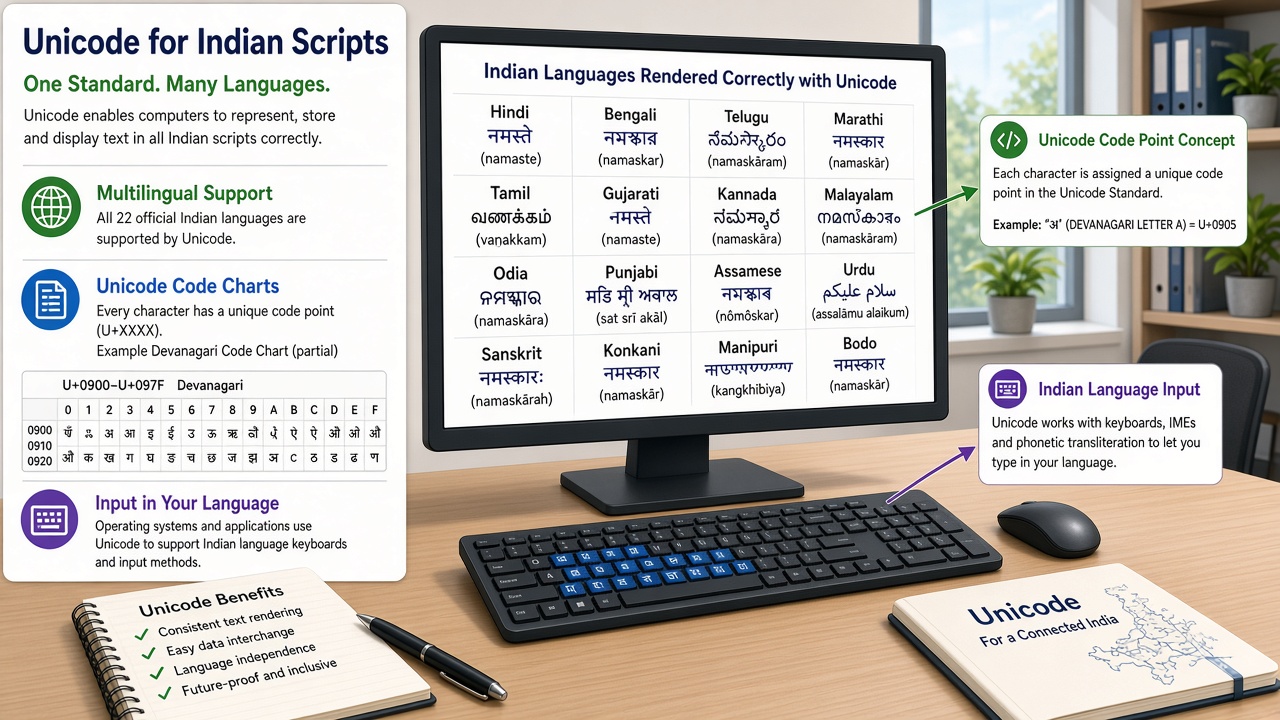
Before Unicode, Indian text often broke across computers because fonts and encodings disagreed. Unicode assigned stable code points to Devanagari, Tamil, Bengali, and other scripts so the same file could display correctly worldwide—unlocking Indic computing for schools, government, and the web.
Unicode era: every akshara gets an address.
Ends most proprietary font-encoding chaos.
Enables Indic websites, SMS, and exam systems.
Fonts and input methods still need good design.
Many Languages On-ScreenToday
Digital Multilingualism
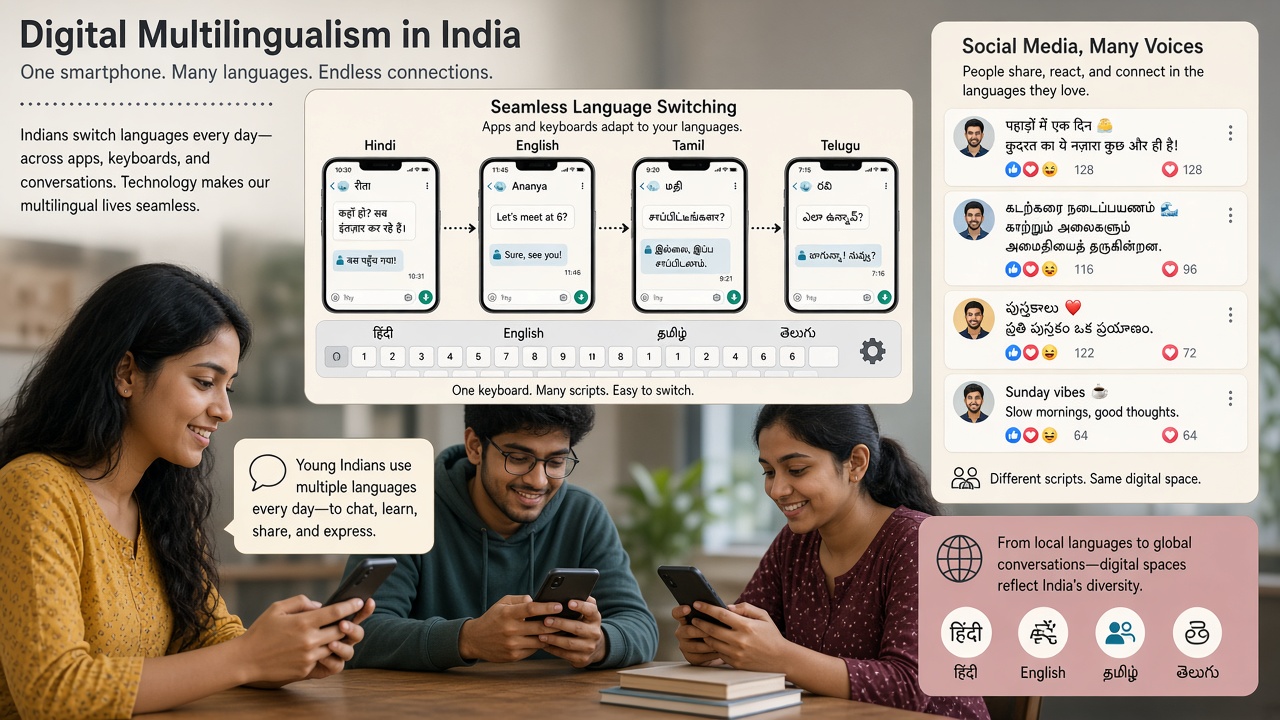
Indians switch scripts mid-message: English for work, mother tongue for home, Hinglish or Tanglish in chats. Indic keyboards, voice typing, local-language apps, and AI translation make multilingual life normal—while education still wrestles with which language builds the strongest foundation.
Digital era: one phone, many scripts.
Mobile keyboards and voice input democratise typing.
Content platforms expand regional-language media.
Classrooms mix mother tongue, Hindi, and English tools.
Key Milestones
Milestone
When
Why it matters
Brahmi inscriptions
Ancient
Early public writing in India.
Devanagari & sister scripts
Medieval–modern
Living scripts for many languages.
English in colonial education
1800s
Prestige language for power & jobs.
Constitutional language framework
1950+
Hindi, English, and scheduled languages.
Unicode Indic blocks
1990s–
Reliable digital display of Indian scripts.
Mobile multilingual apps
2010s–
Everyday multi-script communication.
Layers at a Glance
Layer
Core idea
Main tension
Script (Brahmi family)
How sounds are written
Many scripts, shared roots
Devanagari & others
Living orthographies
Not all languages use one script
Colonial English
Administrative / elite medium
Access vs exclusion
Language policy
Official & school languages
Unity vs diversity
Unicode
Universal digital encoding
Fonts & input still matter
Digital multilingualism
Code-switching online
Mother-tongue strength in schools
Then vs Now
From stone edicts to multi-script keyboards.
Metric
Then
Now
Writing surface
Stone, palm leaf, paper
Screens + print
Script access
Local scribal traditions
Unicode on every phone
Prestige language
Sanskrit / Persian / English eras
English + Hindi + regionals compete
Schooling
Vernacular + colonial English
Three-language / NEP debates
Daily mix
Bilingual oral worlds
Code-switching chats & apps
Future Predictions
Mother tongue first: Early education keeps strengthening home languages.
Content: Regional-language video and text keep growing online.
Policy: Pluralism remains the durable settlement, not one-script nationalism.
India spotlight
Scripts, Languages & India
India is a civilisation of many scripts and languages. Education policy, exams, and digital public goods succeed when they respect that plurality—from Brahmi’s descendants to Unicode keyboards in every state.
India spotlight: plurality is the feature, not a bug.
Ancient
Brahmi world
Inscriptions and early script traditions take root.
Medieval+
Regional scripts
Devanagari and sister scripts flourish in literature.
Colonial
English ladder
Language policy reshapes schooling and careers.
Republic
Federal languages
Hindi–regional debates enter Constitution and classrooms.
Digital
Unicode & phones
Every script can live online side by side.
Strength: Extraordinary linguistic diversity and literacy movements.
Need: Quality mother-tongue materials and teacher training.
Debate: Link language convenience vs cultural rights.
Test Your Knowledge
20 questions on Brahmi through digital multilingualism. Click to reveal answers.
Answer: Ashokan / early Indian inscriptions.
Answer: Linked to many later Indian scripts / early writing.
Answer: Hindi, Sanskrit, Marathi, Nepali, etc.
Answer: Shirorekha (horizontal line).
Answer: English (for admin / higher education).
Answer: No—they thrived in homes, presses, and many schools.
Answer: Debate over Hindi’s national role vs other Indian languages.
Answer: Tamil, Bengali, Telugu, Kannada, Marathi, etc.
Answer: A universal character encoding for world scripts.
Answer: Garbled / incompatible Indian text across systems.
Answer: Using multiple languages/scripts online every day.
Answer: Mixing English and Hindi (or other) in one chat.
Answer: Script is the writing system; language is the spoken/written tongue.
Answer: Yes (historically and in special cases); usually one main script.
Answer: Teach mother tongue / regional, Hindi, and English (broadly).
Answer: Stronger comprehension and learning foundations.
Answer: Let users type Indian scripts on phones/computers.
Answer: It is widely used and an associate official language of the Union.
Answer: His edicts preserve early Brahmi (and other) writing.
Answer: From ancient scripts to policy debates to digital multi-script India.
Classroom activity
Students Tasks
Ten prompts from Brahmi to digital multilingualism for projects and debate.
Jump to any other education timeline on WorldTimelineHub.
Disclaimer: This content is AI-generated for educational purposes and may contain errors or outdated details. For correct and authoritative information, please refer to official and reliable sources such as government publications, manufacturers, museums, and academic references.