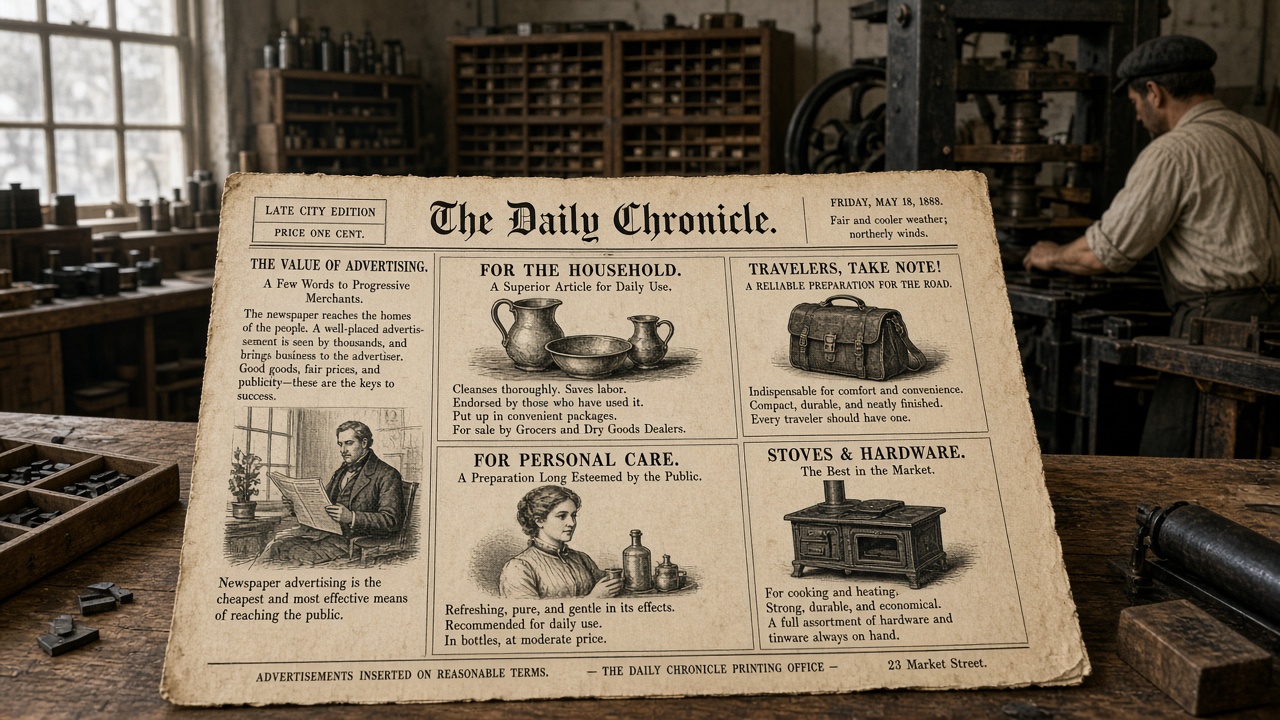
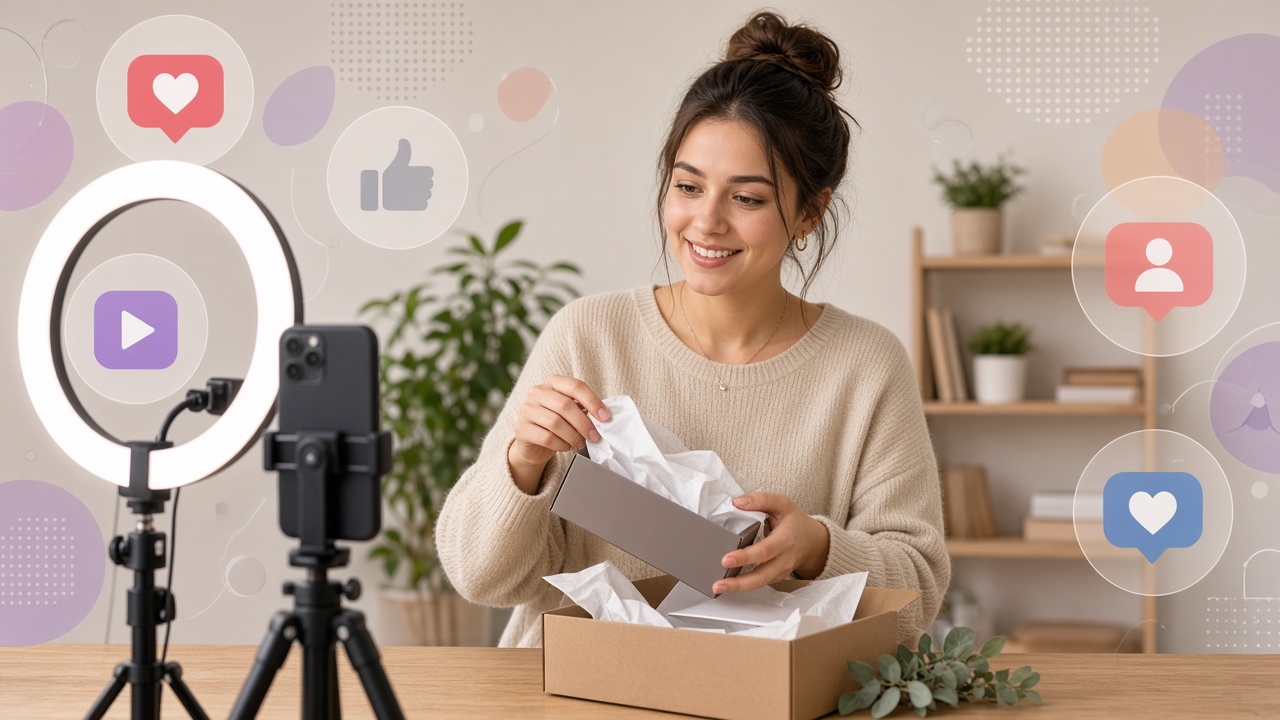
From town criers and print ads, to radio jingles, TV commercials, targeted digital ads, and influencer marketing that turns creators into channels.
Voice -> PrintRadio & TVDigital & influencers
Why Advertising Matters
Ads teach desire, brand memory, and consumer choice—and they fund much of the media people use to learn and stay informed. Understanding advertising is part of media literacy: who pays, what they want, and how messages persuade.
This timeline follows town criers, print ads, radio jingles, TV commercials, digital ads, and influencer marketing as linked turning points.
Big picture
Advertising in one view
Bells in the square, ink on newsprint, earworms on radio, living-room TV spots, tracked digital clicks, and creators who sell with trust.
Before mass literacy and cheap print, town criers rang bells and shouted proclamations—laws, news, lost goods, market days, and sometimes commercial notices. Attention was gathered in public; the message lived only as long as people listened.
Crier era: advertising as live performance.
Bell + voice interrupt daily life for a message.
Reach limited to those present in the square.
Shows ads need attention first, then persuasion.
Ink That SellsPrint age
Print Ads
Newspapers, magazines, posters, and handbills made advertising repeatable and portable. Illustrations, slogans, and classifieds funded publications and taught brands to speak in fixed layouts—a foundation for modern marketing craft.
Print era: ads fund the page and fill the page.
Classifieds and display ads scale with circulation.
Visual design and copywriting become professions.
Agencies emerge to plan campaigns for clients.
Earworms for Brands1920s–
Radio Jingles
Radio brought brands into the home through sound alone. Sponsored shows and short jingles made names stick with melody and rhyme—perfect for listeners cooking, working, or commuting without looking at a page.
Radio era: if you can hum it, you remember it.
Sponsored programmes blur entertainment and ads.
Jingles use music psychology for brand recall.
India later develops a rich radio ad & AIR culture.
Living-Room Theatre1950s–
TV Commercials
Television ads fused story, celebrity, music, and product demos in short spots. Prime-time breaks became shared cultural moments; brands competed for seconds of attention that could define a generation’s slogans and jingles.
TV era: sight + sound + story in one spot.
15–60 second spots dominate brand storytelling.
Mass reach makes TV expensive but powerful.
India’s TV boom multiplies Hindi & regional ad culture.
Targeted & Measurable1990s–
Digital Ads
Search, banners, social, and video ads moved marketing online. Data targeting and instant metrics (clicks, views, conversions) changed budgets and creativity—ads could find niches, retarget shoppers, and update overnight.
Digital era: every impression can be counted.
Search ads match intent; display builds awareness.
Analytics drive testing and optimisation.
Privacy and ad literacy become public debates.
Trust as a Channel2010s–
Influencer Marketing
Creators with follower communities became ad media. Sponsored posts, unboxings, and livestreams sell through parasocial trust—often more persuasive than a classic commercial, and legally expected to disclose when paid.
Influencer era: the messenger is the medium.
Nano to mega creators cover every niche.
Disclosure rules protect audiences from hidden ads.
Blends lifestyle content with brand goals.
Key Milestones
Milestone
When
Why it matters
Town criers & public notices
Pre-mass print
Live attention for messages.
Newspaper / magazine ads
Print age
Scalable, repeatable print persuasion.
Radio sponsorships & jingles
1920s–
Brand memory through sound.
TV commercial culture
1950s–
Mass audiovisual storytelling.
Online & search advertising
1990s–
Targeting + measurable results.
Creator / influencer economy
2010s–
Trust-based social selling.
Ad Forms at a Glance
Form
Core idea
Main trade-off
Town crier
Live public shout
No replay; small radius
Print ad
Fixed text/image on page
Static; print lead times
Radio jingle
Musical brand memory
No visuals
TV commercial
Short audiovisual story
High cost; skip/zap
Digital ad
Targeted online delivery
Privacy & ad blindness
Influencer
Creator endorsement
Authenticity & disclosure
Then vs Now
From one voice in the square to many voices in the feed.
Metric
Then
Now
Channel
Square, print, broadcast
Feeds, search, creators
Measurement
Guesswork / sales lifts
Clicks, views, attribution
Personalisation
Mass same message
Segmented & retargeted
Trust cue
Official / brand voice
Peer & creator voice
Literacy need
Read the claim
Spot paid & targeted content
Future Predictions
AI creatives: Faster ad variants; humans still set brand truth.
Privacy: Less third-party tracking; more first-party & contextual ads.
Creators: Influencer + shoppable video keeps growing.
Literacy: Schools teach how to spot sponsored content.
India spotlight
Advertising & India
India’s ad story spans bazaar announcements and print classifieds, AIR and Doordarshan eras, a booming TV commercial culture, digital-first campaigns, and a huge creator economy across languages.
India spotlight: multilingual ads from print to creators.
Early
Public & print
Announcements, posters, and newspaper ads grow with literacy.
Radio/TV
Broadcast brands
Jingles and commercials enter homes nationwide.
Liberalisation
Agency boom
Satellite TV and brands expand creative industries.
Mobile
Digital first
Search, social, and video ads scale with cheap data.
Today
Influencers
Regional creators become major brand channels.
Strength: Huge multilingual audiences and creative talent.
Need: Clear disclosure and consumer protection online.
Debate: Privacy vs personalisation; celebrity vs micro-creators.
Test Your Knowledge
20 questions on town criers through influencer marketing. Click to reveal answers.
Jump to any other education timeline on WorldTimelineHub.
Disclaimer: This content is AI-generated for educational purposes and may contain errors or outdated details. For correct and authoritative information, please refer to official and reliable sources such as government publications, manufacturers, museums, and academic references.