From cypherpunk precursors and Bitcoin’s genesis block to Ethereum smart contracts, DeFi and NFTs, enterprise ledgers, Layer 2 scaling, and CBDC experiments including India’s digital rupee pilots.
1990s -> PresentBitcoin -> L2CBDC Era
Blockchain Ideas
A blockchain is a shared, append-only ledger where batches of transactions (blocks) are linked with cryptography so earlier history is hard to rewrite without detection. Public networks add incentives and open participation; permissioned ledgers use known members for enterprise workflows.
This timeline follows the path from digital-cash research and Bitcoin to programmable chains, DeFi, NFTs, Layer 2 scaling, regulation, and India’s CBDC and blockchain pilots.
Big picture
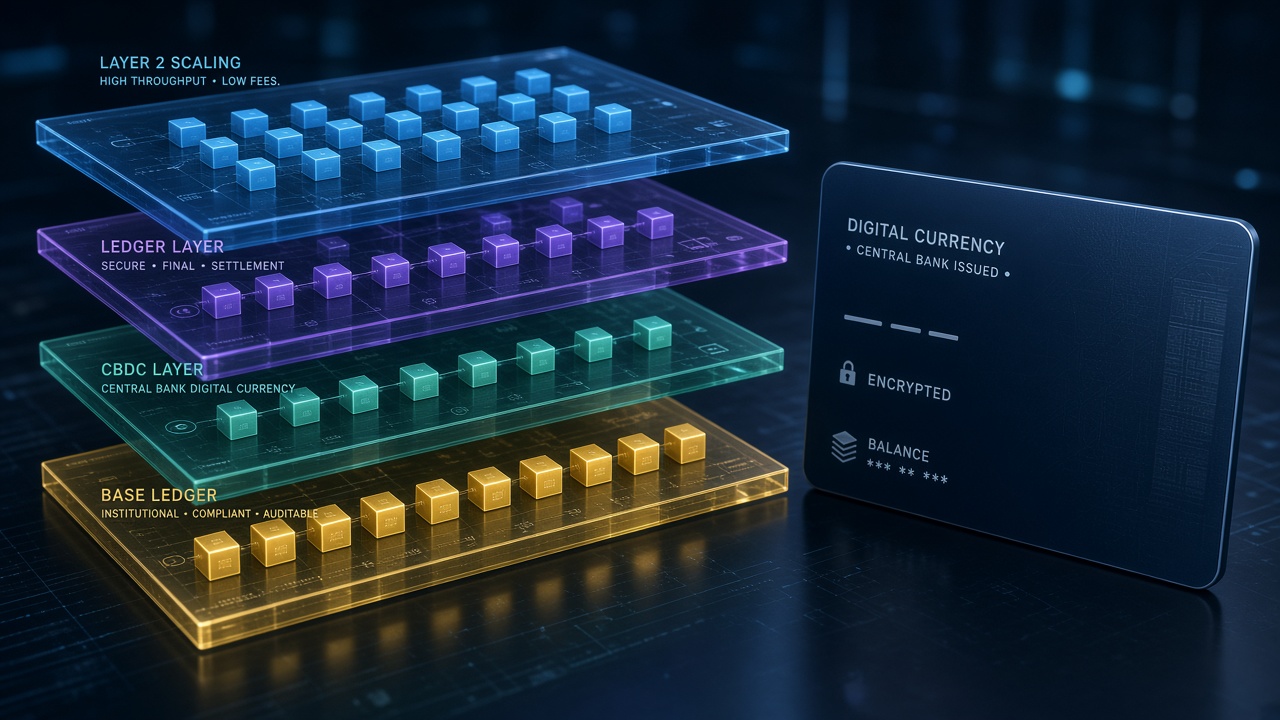
Blockchain evolution in one view
Cryptography and peer networks met money and contracts. Bitcoin proved a public ledger could run without a central operator; Ethereum made the ledger programmable; later eras focused on apps, scale, energy, and rules.
Blocks linked by cryptography: append-only history shared across a network.
RootsTo 2008
Cypherpunk Precursors and Digital Cash
Before Bitcoin, researchers explored anonymous digital cash, proof-of-work for spam resistance (Hashcash), and peer proposals such as b-money and Bit Gold. Public-key crypto and the open internet made those experiments possible.
Cryptography, privacy, and digital-cash research precede public blockchains.
Digital-cash and blind-signature research.
Hashcash-style proof-of-work ideas.
Cypherpunk mailing-list culture of privacy tools.
Takeaway: Blockchain combines older crypto building blocks into a shared ledger design.
Genesis2008 - 2012
Bitcoin Whitepaper and Living Network
In 2008 a paper signed Satoshi Nakamoto described a peer-to-peer electronic cash system. The 2009 genesis block launched a public chain secured by proof-of-work mining, with wallets, exchanges, and early merchants following.
A public chain begins: blocks, miners, and peer nodes.
2008 whitepaper; Jan 2009 genesis block.
Mining, full nodes, and UTXO transactions.
Early exchanges and price discovery—plus security lessons.
Takeaway: Bitcoin showed open consensus could settle value without a single operator.
Many Chains2013 - 2015
Altcoins, Forks and Early Experiments
New coins varied block times, algorithms, and supply rules. Some experiments tested better scripting or privacy. Exchange failures and hacks taught hard lessons about custody and operational security.
Many ledgers explore different rules and trade-offs.
Altcoin wave and community forks.
Growing developer and miner ecosystems.
Custody and exchange risk become central topics.
Takeaway: Open-source ledgers multiply—but security and governance matter as much as code.
Programmable2015 - 2017
Ethereum, Smart Contracts and ICOs
Ethereum launched a general-purpose blockchain with smart contracts—programs that hold assets and enforce rules on-chain. Token standards and crowdfunding ICOs exploded, then cooled under scrutiny after failures and scams.
Programmable ledgers: code that moves value under shared rules.
2015: Ethereum mainnet; Solidity-era contracts.
ERC-style tokens and the 2017 ICO boom.
DAO-era incidents spur security and governance debate.
Takeaway: Blockchains shift from “coins” to platforms for apps.
Apps2018 - 2021
Enterprise Ledgers, DeFi and NFTs
Companies trialled permissioned ledgers for supply chains and settlements. On public chains, DeFi protocols automated lending and swaps, while NFTs tokenised digital collectibles—both bringing mainstream headlines and new risks.
Finance apps, collectibles, and enterprise chains expand use cases.
Hyperledger-style and consortium projects.
DeFi summer and automated market makers.
NFT markets and creator experiments.
Takeaway: Use cases diversify; scams and smart-contract bugs scale too.
Scale & Rules2022 - Present
Proof-of-Stake, Layer 2 and CBDCs
Major networks cut energy use with proof-of-stake; rollups and other Layer 2 systems push throughput. Regulators clarify (and restrict) crypto activity, while central banks pilot CBDCs—India among them with e₹ experiments.
Scaling layers, greener consensus, and official digital currencies.
PoS transitions and rollup ecosystems.
Compliance, taxation, and exchange licensing debates.
CBDC and government blockchain pilots worldwide.
Takeaway: The frontier is scale, law, and how public vs official money coexist.
Blockchain Timeline Summary
Era
Years
Focus
Precursors
to 2008
Digital cash, Hashcash, cypherpunk
Bitcoin genesis
2008-2012
Public PoW chain, wallets, exchanges
Altcoins
2013-2015
Many ledgers, custody lessons
Smart contracts
2015-2017
Ethereum, tokens, ICOs
DeFi & enterprise
2018-2021
Apps, NFTs, permissioned chains
L2 & CBDC
2022-Present
PoS, rollups, regulation, e₹
Then vs Now
Aspect
Then
Now
Purpose
Mostly peer cash experiments
Apps, DeFi, NFTs, enterprise, CBDC
Consensus
Proof-of-work dominates
PoS + many hybrids; L2 for scale
Users
Hobbyists and miners
Institutions, regulators, retail apps
Risk focus
Exchange hacks
Contracts, bridges, compliance, energy
Breakthroughs
Nakamoto consensus: Open mining + longest-chain incentives.
Smart contracts: On-chain programs that hold value.
Token standards: Shared interfaces for assets and NFTs.
Layer 2 rollups: Scale without abandoning L1 security stories.
PoS transitions: Lower energy for major public chains.
Impact on Daily Life
Most people meet blockchain via apps, exchanges, or news about prices and scams—not by running a node. Under the surface, pilots track goods, settle tokens, and test digital currency. The practical lesson is the same as for any financial tech: verify, use trusted rails, and treat irreversible transfers carefully.
Payments, collectibles, supply chains, identity, and public money pilots.
India focus
Blockchain in India
India hosts active crypto trading communities, developer talent, and enterprise pilots, while regulation and taxation evolve. The Reserve Bank of India’s digital rupee (e₹) wholesale and retail pilots explore CBDC design alongside Digital India stack services.
India: developers, exchanges, enterprise pilots, and e₹ experiments.
e₹ CBDC pilots for wholesale and retail use cases.
State and enterprise land, education, and supply-chain pilots.
Tax and compliance frameworks for virtual digital assets.
Strong engineering community around open-source web3 stacks.
Test Your Knowledge
Twenty quick checks on Bitcoin, smart contracts, DeFi, L2, and CBDCs.
Answer: Shared append-only ledger of linked blocks.
Jump to any other technology timeline on WorldTimelineHub.
Disclaimer: This content is AI-generated for educational purposes and may contain errors or outdated details. For correct and authoritative information, please refer to official and reliable sources such as government publications, manufacturers, museums, and academic references.